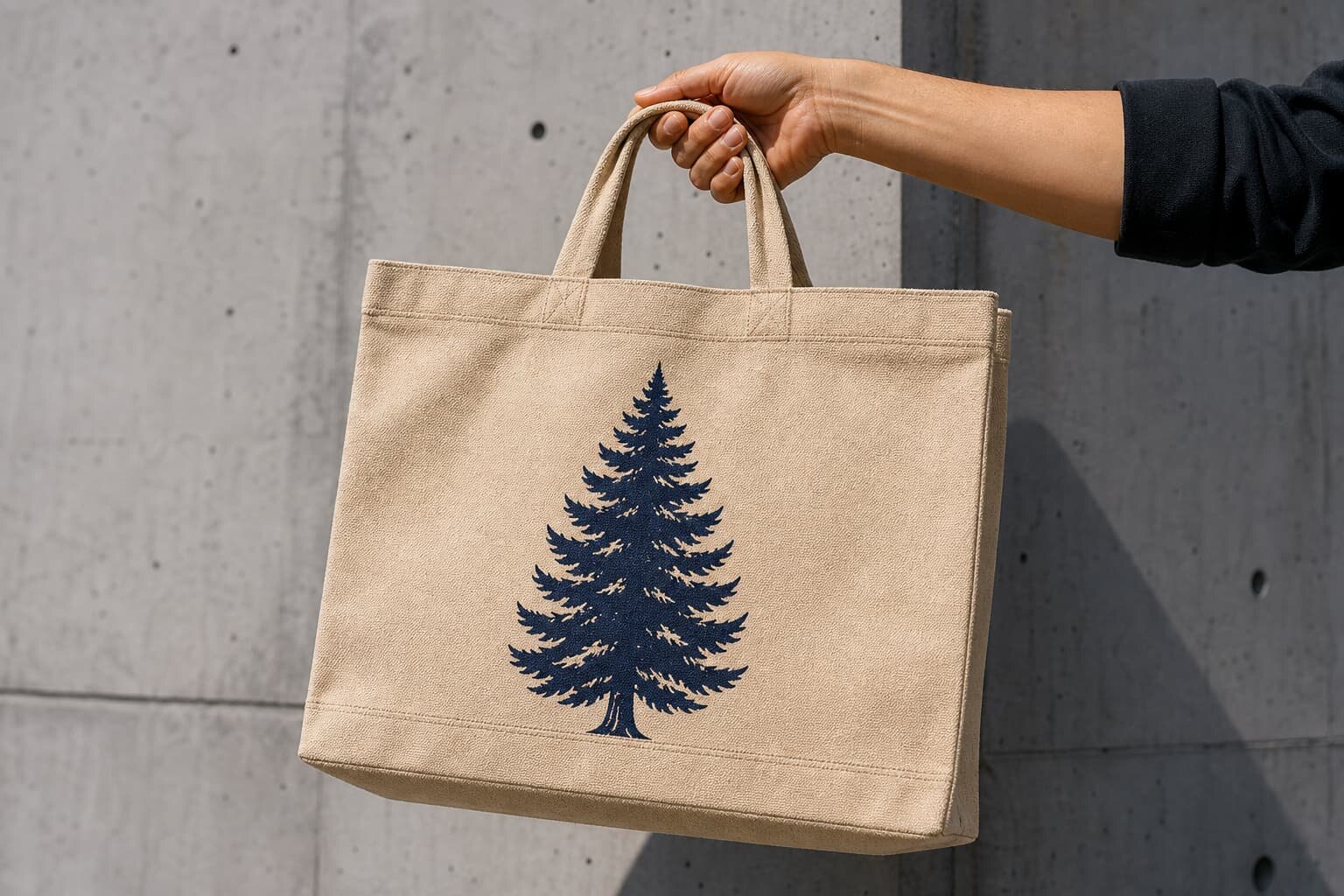
1. Start with the use case, not the fabric name
When buyers ask for a heavy canvas tote, the first sourcing mistake is treating all canvas as the same material. A tote for a bookstore, a supermarket promo, and a premium brand retail line can all be called “heavy canvas,” yet they need different fabric weight, structure, and finish. If you do not define the actual use, suppliers will fill the gap with their own interpretation and you will compare quotes that are not truly comparable.
The cleanest RFQ starts with how the bag will be carried, how long it must last, and what the brand expects the bag to look like after repeated use. That tells the factory whether to propose a stiff 16 oz canvas with bar-tacked webbing handles, a softer washed 12 oz canvas, or a coated version with more structure and higher material cost.
- Retail display bag: focus on shape, surface quality, and print clarity.
- Daily carry bag: focus on handle comfort, seam strength, and abrasion resistance.
- Promo giveaway: focus on unit cost, print speed, and packing efficiency.
- Premium brand tote: focus on handfeel, stitch neatness, and presentation packaging.
2. Understand GSM and ounce weight before you ask for quotes
For a heavy canvas tote for wholesale buyers, fabric weight is usually the first number that changes the quote. Suppliers may quote in ounces, GSM, or both, and the buyer needs to convert those numbers into actual performance. As a rough sourcing range, 12 oz canvas is often around 340 GSM, 14 oz around 400 GSM, and 16 oz around 450 GSM, but exact values depend on weave density and finishing.
Do not approve a spec based only on the weight number. Two bags can both be called 14 oz, yet one feels soft and collapsible while the other stands upright because of yarn count, weave tightness, and washing treatment. Ask the factory for the fabric swatch, the weight tolerance, and whether the bag uses pre-shrunk cloth, because shrinkage changes finished size and print alignment.
- 12 oz / about 340 GSM: good for lighter retail use and lower freight cost.
- 14 oz / about 400 GSM: common balance of structure and cost for wholesale programs.
- 16 oz / about 450 GSM: better for premium or heavy-load positioning, but heavier to sew and ship.
- Always ask for the allowable GSM tolerance and whether it is measured before or after finishing.
3. Fabric construction matters as much as weight
A buyer can get into trouble by ordering a heavy canvas tote based on GSM alone. The weave structure, yarn quality, and fabric finishing affect print result, seam stability, and how the tote folds. A tight plain weave usually gives better dimensional stability and cleaner logo edges than a loose weave with visible gaps.
If the bag needs a premium feel, buyers often ask for a brushed or washed canvas. That can improve handfeel, but it also changes color tone, may reduce rigidity, and can create batch variation if the washing process is not controlled. If your retail line needs consistent shelf appearance, ask the supplier how they control shade and shrinkage after treatment.
- Tight plain weave: better for structured totes and clearer print edges.
- Loose weave: lower cost, but higher risk of distortion and visible irregularity.
- Pre-washed fabric: softer handfeel, but more variation risk across production lots.
- Pre-shrunk fabric: useful when you need stable finished size after laundering or steam exposure.
4. Choose the bag body structure based on how the tote will be sold
The body structure changes both the production price and the buyer’s complaint risk. An unlined open-top tote is the simplest and lowest-cost option, but it may not hold shape well and can expose raw seam finishing. A lined tote looks more premium and protects the inside print or stitching, but it increases sewing time and inspection points.
Bottom gussets, side gussets, and boxed corners all add usable volume, but they also add cutting complexity. If the bag is used for grocery or heavy book carry, a gusset can help load distribution. If the bag is mainly a fashion retail item, the buyer may prefer a cleaner silhouette with a smaller internal volume and stronger visual structure.
- Flat tote: simplest and cheapest; good for lighter, flat items.
- Bottom gusset: adds depth and improves packing capacity.
- Side gusset: useful for wider items and better shape retention.
- Boxed corner or full gusset: more labor, but better load geometry.
5. Handle design is where most heavy tote failures happen
Many wholesale buyers focus on fabric and print, then under-spec the handle. In practice, handles carry the real load. For a heavy canvas tote, the handle fabric can be self-material, cotton webbing, or a blended tape, and the attachment method should match the expected payload. A weak handle may look fine in a photo but fail after a few store uses or at the first overloaded carton.
Ask the supplier to define handle width, finished drop length, stitch pattern, and reinforcement method. Short handles are fine for hand carry, but many buyers need shoulder carry for retail convenience. If the tote is meant for repeated use, request bar-tack reinforcement at both ends and ask how many stitches are in each bar-tack, not just “reinforced handle” as a marketing phrase.
- Self-fabric handle: cohesive look, but may need extra reinforcement layers.
- Cotton webbing handle: usually more comfortable and stronger for carry weight.
- Bar-tack plus box stitch: preferred for repeated-use wholesale programs.
- Check handle symmetry, twist, and stitch penetration on both front and back panels.
6. Print method should follow the fabric, not the artwork file
For a heavy canvas tote, the print method must be chosen after checking the fabric surface. Rough canvas can absorb ink differently than smooth cotton twill, so small type, thin outlines, and close registration may not survive the production process cleanly. If your art is simple, screen printing is usually the most practical option. If you need gradients, very small detail, or a premium effect, you may need embroidery, heat transfer, or a woven label instead of direct ink.
The quote should separate printing from bag construction. Buyers often compare one supplier’s cheap bag price against another supplier’s higher price without noticing that the cheaper quote excludes screens, color matching, or print setup. Ask for the cost by color count, print area size, and whether the price includes one or both sides of the tote.
- Screen print: best for bold logos, low-to-medium color count, and good unit economics.
- Heat transfer: better for detailed art, but check wash and rub performance.
- Embroidery: premium look, but limited by fabric thickness and design size.
- Woven or sewn label: useful when the logo must stay crisp on rough canvas.
7. Use a comparison table to decide what to standardize
Wholesale buyers often lose time because every supplier quotes a different material stack. Standardize the decision points before you send the RFQ, then compare like with like. The table below is the kind of internal tool procurement teams can use before forwarding the final spec to factories.
Once the team locks the fabric weight, structure, and print method, the rest of the quote becomes easier to verify. That reduces false savings, because a low price on a lighter fabric or simpler handle build is not really the same product.
8. MOQ logic, sample checks, and the quote items buyers should verify
MOQ on a heavy canvas tote is usually not just one number. It can change by fabric color, print method, bag size, and accessory choice. Natural canvas often has the lowest MOQ because the base cloth is readily available, while custom-dyed colors, washed finishes, lining, or custom zippers push the order into higher minimums. If a supplier gives a very low MOQ, confirm whether that means stock fabric only, limited print colors, or a simplified packing standard.
Before bulk approval, ask for a pre-production sample, then check more than the logo. Inspect the exact fabric lot, bag dimensions, seam alignment, handle length, and carton packing. If the sample is approved on one fabric batch but bulk production uses another, the final bags can look and feel different even when the supplier says the item is the same.
- MOQ drivers: custom fabric color, fabric finishing, print colors, and packing method.
- Sample checks: color tone, stitch density, handle reinforcement, and finished size.
- Quote line items: material, cutting, sewing, printing, packing, and accessory fees.
- Ask whether sampling cost is refundable or deducted after bulk order confirmation.
9. Packaging and lead time affect landed cost more than many buyers expect
A tote bag may seem simple, but packing can quietly change the landed cost. Folded bags in bulk cartons ship more efficiently than individually polybagged bags, yet some retail programs require a hangtag, barcode, or insert card. If your buyer channel is retail, ask the factory to quote both bulk packing and retail-ready packing so the team can see the actual cost impact before locking the order.
Lead time should also be split into material procurement, sample approval, production, and packing. Heavy canvas often needs more time if the fabric is custom dyed, washed, or coated. If you are comparing suppliers, make sure they are quoting the same material availability assumption. A supplier with stock natural canvas may promise a shorter timeline than one waiting for custom cloth, but that is not a fair comparison if your final brief requires a special finish.
- Bulk folding: lowest carton volume, usually better for import efficiency.
- Individually polybagged: cleaner retail presentation but higher packing cost.
- Carton marks and barcode stickers: confirm exact placement and language requirements.
- Lead time should state sample approval date, not just production days.
10. Use acceptance criteria to prevent production disputes
The best way to avoid disputes is to write acceptance criteria that a factory can actually inspect. For a heavy canvas tote, that means setting measurable limits for size tolerance, GSM tolerance, print placement, handle symmetry, and carton count. If you only say “good quality,” the inspection result becomes subjective and the buyer has little leverage when the shipment arrives.
A practical acceptance standard should also define what is acceptable versus rejectable. For example, minor natural slub may be acceptable on unbleached canvas, but ink smudging, broken stitches, off-center handles, or large shade variation should be rejected. The more specific your standard, the easier it is for the supplier to quote correctly and for quality control to sign off quickly.
- Size tolerance: define finished width, height, and gusset allowance.
- Printing tolerance: define logo centering and edge sharpness.
- Stitch tolerance: define broken stitch count and reinforcement position.
- Packing tolerance: define carton quantity and damage-free fold condition.
Specification comparison for buyers
| Spec decision | Recommended option | When it fits | Buyer risk to check |
|---|---|---|---|
| Fabric weight | 12–16 oz cotton canvas, often 340–450 GSM | Retail tote programs, branded giveaways, reusable shopping bags | Too light for load-bearing claims; too heavy can increase sewing defects and freight cost |
| Weave structure | Plain weave with tight, even yarn count | When the bag must hold shape and print cleanly | Loose weave causes print bleed, distortion, and uneven handle stress |
| Finish | Unbleached natural or pre-shrunk washed finish | When buyers want a premium natural look or reduced shrink risk | Unwashed fabric may shrink after printing or washing; washed fabric may change color batch to batch |
| Handle build | Self-fabric or webbing handles with bar-tack reinforcement | For medium-to-heavy retail use and repeat carrying | Thin handles dig into hands and can fail at stitch points |
| Print method | Silk screen for simple logos; heat transfer or embroidery for detail | When art is limited-color and unit cost matters | Fine lines may blur on rough canvas; some inks crack on heavy use |
| Lamination/coating | Optional PU or water-resistant coating only when needed | For grocery, outdoor, or moisture-sensitive use | Coating can reduce foldability, affect print adhesion, and increase MOQ |
| Lining | Unlined for cost-sensitive programs; light cotton lining for premium structure | When the bag needs cleaner interior finish or better shape | Lining raises sewing labor and can complicate inspection |
| Closure | Open top, snap button, zipper, or magnetic snap depending on use case | Open top for promotion; closure for retail and travel use | Additional hardware adds cost, sourcing risk, and assembly time |
Buyer checklist before sampling
- Confirm target use: retail tote, promo giveaway, grocery carry, or heavy-duty daily bag, then set the minimum load expectation in kilograms or pounds.
- Specify fabric in both oz and GSM, plus whether the canvas is unbleached, dyed, washed, or coated.
- State handle width, handle length, reinforcement method, and whether the tote must be shoulder-carry friendly.
- Choose one print method first, then approve artwork limits based on fabric texture and stitch density.
- Define packing format, fold method, carton quantity, and whether each bag needs a hangtag, barcode sticker, or polybag.
- Ask for pre-production samples, bulk fabric swatches, and one sealed golden sample before production starts.
Factory quote questions to send
- What exact fabric construction are you quoting: yarn count, weave density, GSM, and pre-shrink treatment?
- Is the quote based on cut size, finished size, or stitch size, and how much allowance is included for seam shrinkage?
- Which print method is included, how many colors are priced, and what is the setup or screen fee?
- What handle construction and reinforcement points are included in the quoted structure?
- What is the MOQ by fabric color, print method, and packing type?
- What sample charges apply for fabric swatches, prototype samples, and courier shipment?
- What carton pack quantity, inner packing, and master carton size are assumed in the quote?
- What lead time is based on raw material in stock versus custom-dyed fabric or custom accessories?
Quality-control points to confirm
- Check fabric GSM against the approved spec, not only the supplier description.
- Inspect weave evenness, slub rate, and surface defects before printing approval.
- Measure handle stitch length, bar-tack density, and seam allowance on both sides.
- Verify print placement, ink opacity, edge sharpness, and rub resistance on a fold area.
- Test load bearing with a realistic weight sample before mass shipment approval.
- Confirm carton count, folding direction, and polybag condition match the packing spec.
- Check odor, stain marks, and shade variation under natural light and inspection lamp.