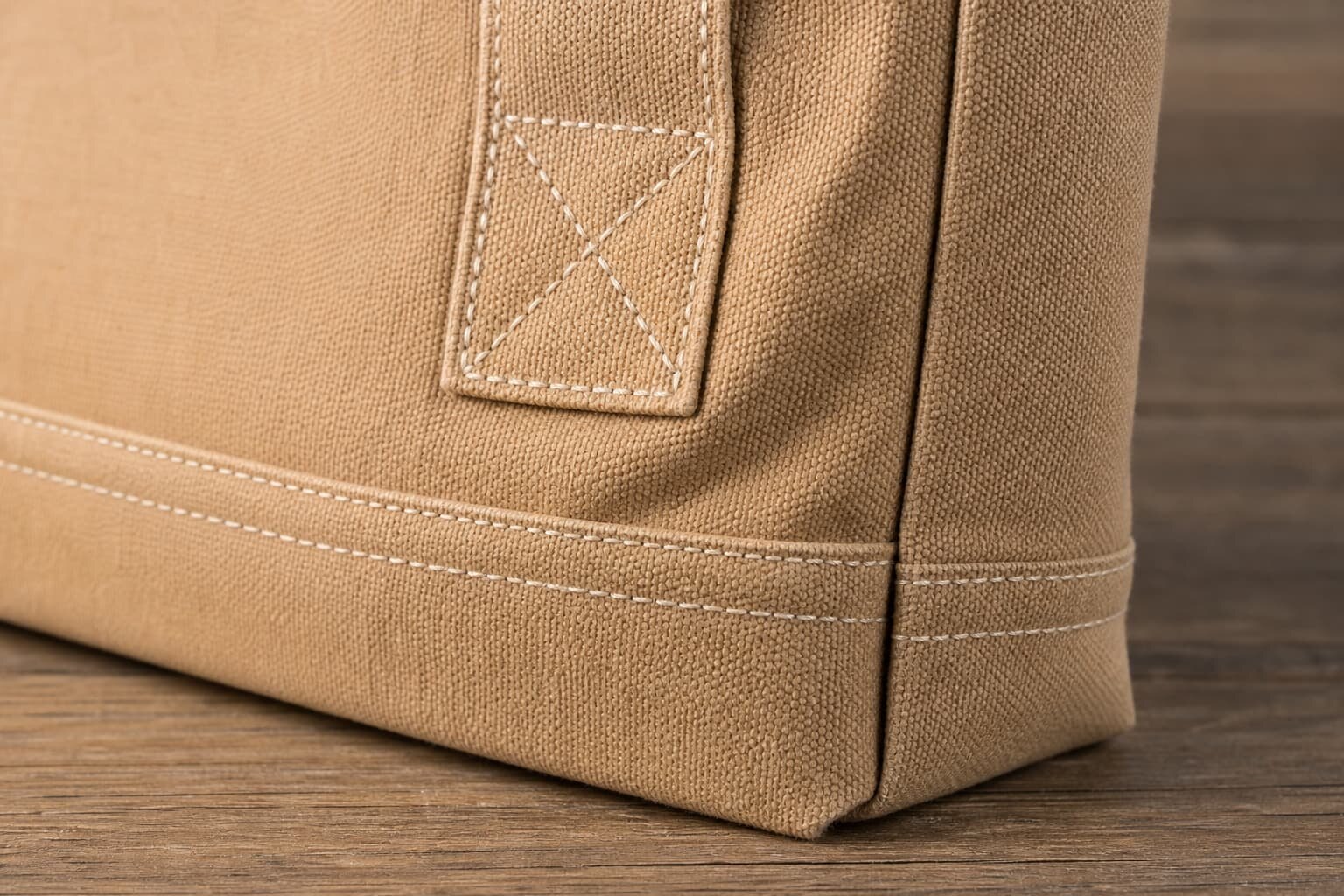
1. The buying problem: a tote that looks simple but quotes unevenly
A heavy canvas tote for event buyers production spec guide is useful because many tote quotations look comparable until the details are checked. One supplier may quote 10 oz natural canvas with simple stitching and bulk packing. Another may quote 14 oz dyed canvas with reinforced handles, individual polybags, and screen setup included. The product name can be the same, but the cost base, production risk, and shipping volume are different.
For events, the pressure is not only unit price. The bag must arrive before a fixed date, look acceptable under venue lighting, carry the event materials without handle failure, and pass brand approval from sponsors or internal marketing teams. A clear production spec helps your team avoid last-minute changes after sampling, unexpected print limitations, and freight surprises caused by heavier fabric or inefficient packing.
- Do not ask only for a quote on a "heavy canvas tote"; define the weight, size, print, handle, packing, and deadline.
- Separate nice-to-have features from must-have features before requesting prices.
- Use the same artwork, dimensions, and packing request for every supplier so quotes can be compared fairly.
- Ask the factory to identify anything assumed in the quote, especially fabric weight and print method.
2. Start with the event use case, not the lowest canvas weight
The correct heavy canvas tote specification depends on what the bag will carry and how long it must be used. A one-day registration bag carrying a brochure and badge does not need the same fabric or handle strength as a trade show tote carrying catalogs, samples, a water bottle, and sponsor gifts. A retail-style event tote sold at a booth also needs a better finish than a basic giveaway.
Procurement teams should ask the internal event owner for the expected contents and distribution method before finalizing the RFQ. If bags will be pre-packed at a warehouse, the opening size and gusset matter. If volunteers will hand them out flat at check-in, carton count and unpacking speed matter. If the tote is part of a paid merchandise package, the buyer should consider heavier fabric, cleaner sewing, and a more durable print.
- Light event kit: 10-12 oz canvas, simple gusset or flat style, solid-color logo.
- Conference or expo tote: 12-14 oz canvas, bottom gusset, reinforced handles, stronger print approval.
- Retail or VIP tote: 14-16 oz canvas, premium finishing, careful color matching, possible inner pocket or snap.
- Catalog or sample carrier: prioritize handle reinforcement and seam strength over decorative details.
- Sponsor logo bag: confirm print area, logo hierarchy, Pantone references, and approval workflow before sampling.
3. Fabric weight: oz and GSM must be made measurable
Canvas fabric is often quoted in ounces, while some sourcing teams prefer GSM. As a practical reference, 10 oz is around 339 GSM, 12 oz is around 407 GSM, 14 oz is around 475 GSM, and 16 oz is around 542 GSM. These numbers are approximate because fabric construction, finishing, humidity, dyeing, and supplier measurement method can affect the actual result. A buyer should not treat the oz label as a complete technical standard.
For most event totes that need a strong hand feel but still reasonable cost and shipping weight, 12 oz canvas is a common starting point. Move to 14 oz or 16 oz when the tote needs a premium retail feel, must carry heavier contents, or will be reused after the event. However, heavier fabric can create thicker seams, slower sewing, higher needle breakage, and larger packed cartons. The quote should show that the factory has included those production realities.
- Ask for composition: 100% cotton, cotton-poly blend, recycled cotton blend, or another material.
- Ask whether the quoted weight is greige fabric, finished fabric, dyed fabric, or washed fabric.
- Request a fabric swatch if the order value is significant or color/hand feel matters.
- For natural canvas, check black specks, seed marks, slubs, and shade variation acceptance.
- For dyed canvas, ask about color tolerance, crocking risk, and whether the factory can match a Pantone reference on fabric.
4. Size, gusset, and handle specs decide real usability
Flat tote dimensions can be misleading. A bag listed as 38 x 42 cm may have very different capacity depending on whether it has no gusset, a 6 cm gusset, or a 12 cm bottom gusset. For event buyers, the contents often include A4 documents, notebooks, bottles, folded apparel, samples, or boxed gifts. The bag opening, bottom width, and handle drop need to match those items.
Handle specs are also a common quote gap. The RFQ should state handle width, handle drop, material, and reinforcement method. A narrow handle may be cheaper but uncomfortable with heavy contents. A long shoulder handle may improve usability but uses more fabric and changes packing. Reinforcement should be visible and measurable, not described only as "strong stitching".
- Common event tote size: around 38 W x 40 H cm, with 8-10 cm bottom gusset for better capacity.
- Handle drop for hand carry: often around 18-22 cm, depending on the buyer's requirement.
- Handle drop for shoulder carry: often around 25-30 cm, but test comfort with packed contents.
- Handle width: 2.5-4 cm is common; wider handles feel better with heavier loads.
- Reinforcement: cross stitch, box stitch, bartack, or double stitching should be specified in the quote.
5. Print method: choose for artwork, fabric, and deadline
Screen printing is usually the most practical method for heavy canvas event totes when the artwork is a solid logo, event name, or sponsor mark in one to three colors. It gives good coverage on natural canvas and can be cost-effective for larger runs. The buyer should provide vector artwork, print size, Pantone colors, and exact placement. If the canvas is dark, an underbase may be required, which affects cost and hand feel.
For full-color artwork, gradients, or many sponsor logos, digital printing or DTF transfer may be considered. These methods need more sample checking because canvas texture can reduce sharpness, and transfer edges or hand feel may not meet every brand standard. Embroidery can work for premium small logos but is not usually the best choice for large event artwork on heavy canvas because stitch count, puckering, and backing must be controlled.
- Best for simple logos: screen print with approved ink color and production fabric test.
- Best for multi-color small batch: DTF transfer after checking edge, flexibility, and wash/rub performance.
- Best for premium small mark: embroidery or woven label, with clear size limits.
- Avoid approving print only from a digital mockup; canvas texture changes the final look.
- State print position in millimeters from top edge, side seam, or center line to reduce placement disputes.
6. MOQ logic: the bag MOQ is not the only MOQ
Event buyers often ask for 500, 1,000, 3,000, or 10,000 pieces, but MOQ depends on several production steps. A factory may accept a low sewing quantity if fabric is in stock, but custom-dyed fabric may require a higher fabric MOQ. Screen printing may have setup costs that make very small quantities inefficient. Individual packing, barcode labels, and special carton marks can also create minimum requirements.
When comparing quotes, ask suppliers to separate the MOQ drivers. This prevents a common problem: one quote looks cheaper because it assumes stock natural canvas and bulk packing, while another includes custom color fabric and retail-style packing. If your quantity is below the ideal MOQ, ask what specification changes can reduce cost without damaging the event requirement.
- Fabric MOQ: stock natural canvas usually gives more flexibility than custom dyed canvas.
- Printing MOQ: screen setup makes sense when the same artwork repeats across enough units.
- Trim MOQ: snaps, zippers, custom woven labels, and special webbing may have separate minimums.
- Packing MOQ: printed belly bands, barcode stickers, and custom cartons may need minimum print runs.
- Color split MOQ: multiple fabric colors or artwork versions can increase handling cost and risk.
7. Sampling: approve the product the factory will actually make
A sample is not useful if it uses substitute fabric, a different print method, or temporary handle reinforcement. For event totes, the pre-production sample should use the intended fabric weight, color, handle construction, logo printing, and packing style where possible. If the first sample is only for size and construction, label it clearly as a development sample, not final approval.
The most common sampling mistake is approving a beautiful sample without checking whether the bulk production will use the same fabric source and print setup. Ask the factory to confirm when bulk fabric is ordered, whether the sample is made from available stock, and what may change in mass production. Keep one signed or sealed approved sample for QC comparison.
- Check finished measurements with a tape, not only by appearance.
- Place real event contents inside the tote and test comfort, sagging, and handle stress.
- Inspect print sharpness on canvas texture and confirm logo size with a ruler.
- Check whether the print cracks when the bag is folded along the printed area.
- Review packing sample if volunteers or warehouse teams need fast distribution.
- Record every approved sample change in writing before bulk production starts.
8. Packing and logistics: heavy canvas changes cartons and freight
Heavy canvas totes take more carton space and add more gross weight than light nonwoven or thin cotton bags. A change from 10 oz to 16 oz may improve perceived value but can materially increase air freight cost and reduce carton loading efficiency. For event orders with fixed deadlines, packing data should be requested before the purchase order is confirmed, not after production is finished.
Packing style affects both cost and event operations. Bulk packing is efficient and reduces plastic, but bags may need more careful carton lining to avoid dirt. Individual polybags keep bags cleaner but add labor, material, and unpacking time at the venue. Paper belly bands can help distribution teams count batches, but they add a printing and packing step. The best option depends on the event workflow.
- Ask for carton quantity per carton, carton size, gross weight, and net weight.
- Confirm whether bags are packed flat, half-folded, or folded into individual bags.
- Use carton marks that match venue receiving rules, distributor warehouse codes, or event allocation lists.
- If shipping by air, avoid unnecessary individual packing that increases volume.
- If bags are pre-kitted, confirm the tote opening and gusset can handle the packing line process.
- Request moisture protection for sea shipments where climate or transit time creates risk.
9. Lead time planning: count approvals, not only sewing days
A factory lead time is often quoted after sample approval and deposit, but event buyers may hear it as total calendar time. The real schedule includes artwork preparation, sample making, sample shipping, buyer approval, fabric booking, printing, cutting, sewing, trimming, final inspection, packing, export documents, and freight booking. If any sponsor logo approval is slow, the production schedule can lose several days before the factory begins.
For a time-sensitive event, ask the supplier for a milestone schedule rather than one general lead time. The schedule should show the latest artwork approval date, sample approval date, production start, printing date, sewing completion, inspection window, and dispatch date. If you need delivery to a venue, add buffer for customs clearance, local trucking, warehouse sorting, or weekend restrictions.
- Do not place the purchase order while artwork, quantity split, or packing is still uncertain.
- Ask when fabric must be locked to keep the delivery date.
- Confirm whether production can start before final sample approval and what risk that creates.
- Reserve time for third-party inspection if required by your company.
- For repeat events, approve a carryover spec early and only update logo or packing details.
10. Quote comparison: force every supplier to price the same bag
A useful heavy canvas tote quote should read like a production summary, not just a unit price. At minimum it should state material, fabric weight, bag dimensions, handle dimensions, print method, print colors, print area, packing, carton data, MOQ, sample terms, lead time, and payment terms. If the quote does not mention a feature, assume it may not be included.
The best way to compare suppliers is to issue a controlled RFQ and ask them to mark deviations. This keeps a lower quote from winning only because it removed reinforcement, reduced fabric weight, changed packing, or excluded screen setup. When the order is connected to an event date, also compare communication speed, sample clarity, and willingness to answer technical questions. A slightly cheaper quote can become expensive if production assumptions are discovered after approval.
- Ask suppliers to quote one base option and one value-engineered option if budget is tight.
- Request cost impact for changing 12 oz to 14 oz, adding gusset, adding inner pocket, or changing packing.
- Ask whether the quote is valid for a fixed period and whether fabric price may change.
- Confirm incoterm: EXW, FOB, CIF, DDP, or another agreed term.
- Keep a quote comparison sheet with one line for each spec, not only unit price.
- Before PO release, send a final spec sheet and require written confirmation from the factory.
Specification comparison for buyers
| Spec decision | Recommended option | When it fits | Buyer risk to check |
|---|---|---|---|
| Main fabric weight | 12 oz / about 407 GSM cotton canvas for most event totes | Good balance for sponsor gifts, conference kits, retail-style event merchandise, and repeated use | Confirm whether the supplier quotes finished fabric GSM, greige fabric, or nominal ounce weight; check shrinkage after washing if required |
| Premium heavy fabric | 14-16 oz / about 475-542 GSM canvas | Higher perceived value, heavier giveaways, retail resale, or trade show bags carrying catalogs and samples | Higher unit weight increases freight cost; thick seams may need stronger needles and larger carton dimensions |
| Handle construction | Self-fabric handles with reinforced cross stitch or bartack | Clean retail look and strong load performance for most branded events | Ask handle width, finished length, stitch density, and whether reinforcement is included in the quoted price |
| Print method | Screen print for solid 1-3 color logos on natural or dyed canvas | Best for clean brand marks, sponsor logos, event names, and large front-panel prints | Fine details can fill on rough canvas; request artwork line thickness and test print on production fabric |
| Full-color artwork | DTF transfer or digital print on suitable canvas after factory testing | Small batches, gradients, photo-style artwork, or multiple sponsor colors | Hand feel, wash resistance, edge marks, and color shift must be approved on a physical sample |
| Bag structure | Bottom gusset 8-12 cm with side seam construction | When buyers need the tote to stand better and hold folders, bottles, or boxed gifts | Flat dimensions may look large but usable capacity depends on gusset depth and seam allowance |
| Packing method | Flat packed with paper belly band or bulk polybag by carton | Event distribution teams need fast counting and clean storage before the venue date | Individual polybags add labor, plastic cost, carton space, and unpacking time at the event |
Buyer checklist before sampling
- Define finished bag size, gusset size, handle drop, fabric weight, color, print size, and print position in the RFQ instead of sending only a reference photo.
- State the real usage: conference kit, retail merchandise, sponsor gift, VIP package, sample carrier, or registration bag.
- Ask whether fabric weight is quoted in oz or GSM and whether it is measured before or after dyeing and finishing.
- Confirm natural canvas, bleached canvas, dyed canvas, recycled cotton blend, or organic cotton before comparing prices.
- Specify acceptable color tolerance for fabric and print, especially when matching brand colors or event sponsor guidelines.
- Request a pre-production sample using actual production fabric, actual printing method, and final handle reinforcement.
- Check sample seam strength at handle joins, upper hem, side seam, and bottom gusset before approving mass production.
- Confirm print artwork file format, print size in millimeters, number of colors, Pantone references, and underbase needs.
- Ask for packed carton quantity, carton size, gross weight, and whether bags are flat packed, folded, or individually polybagged.
- Build approval time, sampling time, production time, QC time, and freight booking time into the event delivery schedule.
Factory quote questions to send
- What exact fabric will be used: composition, yarn type if known, oz or GSM, weave, color, and finishing process?
- Is the quoted fabric weight measured before or after dyeing, washing, or finishing?
- What is the finished bag size, gusset depth, handle width, and handle drop included in this price?
- What handle reinforcement is included: cross stitch, bartack, double stitch, or only box stitch?
- Which print method are you quoting, and what is the maximum print area for this bag size?
- Are screen setup charges, sample charges, artwork adjustment, and Pantone matching included or separate?
- What MOQ applies to the bag body, fabric dyeing, printing, and packing style separately?
- Can you provide one pre-production sample using bulk fabric and actual print before mass production starts?
- What is your estimated sample lead time, bulk production lead time, and packing time after sample approval?
- What are the carton dimensions, carton weight, and loading quantity estimate for air freight or sea shipment?
Quality-control points to confirm
- Measure finished bag width, height, gusset, handle width, and handle drop against approved tolerance before shipment.
- Verify fabric hand feel, thickness, and color against approved sample under consistent lighting.
- Check print placement from top edge and side seam, not only by visual centering.
- Rub test the printed logo lightly when dry and, if relevant, after damp contact to check ink transfer risk.
- Inspect handle attachment for skipped stitches, weak bartacks, loose thread ends, and uneven reinforcement.
- Load test a sample bag with a realistic event weight, such as folders, bottle, notebook, and gift items.
- Open and close the bag repeatedly if it includes snaps, zipper, inner pocket, or other added trims.
- Check for oil stains, weaving slubs, dirty fold lines, needle holes, and black specks on natural canvas.
- Confirm carton count, inner packing count, carton marks, barcode labels, and event allocation labels before dispatch.
- Retain one approved pre-production sample and one random shipment sample for future reorder comparison.