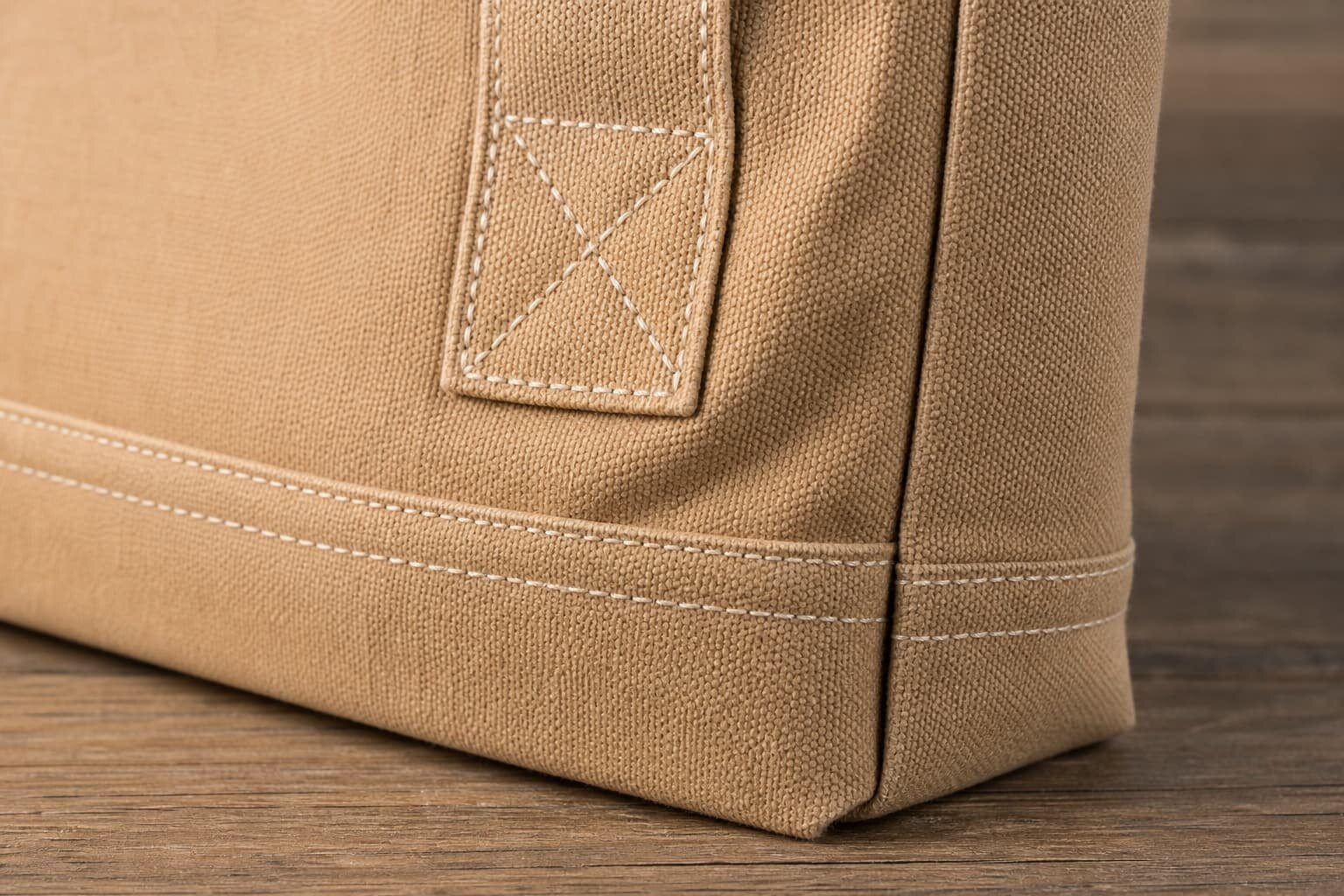
1. Start with the ecommerce use case, not only the tote size
A heavy canvas tote for an ecommerce brand can be used in several different ways, and each use changes the factory specification. A tote sold as a merchandise SKU needs better finishing, stronger packing, clearer barcode control, and more consistent appearance than a free insert packed inside a subscription box. A tote used as premium customer packaging may need a larger gusset and cleaner folding so it looks good when unboxed.
Before asking for a factory quote, define how the bag will move through your supply chain. Will it be shipped flat to a 3PL, packed inside another product carton, sold in retail stores, or sent directly to customers? This affects fabric weight, packing method, carton size, label requirements, and inspection criteria. Many quote problems start because the buyer asks for a tote, but the factory does not know the selling channel.
- For merch SKU: prioritize consistent size, clean print, retail packing, barcode accuracy, and carton protection.
- For gift-with-purchase: prioritize cost control, reasonable strength, fast packing, and acceptable visual quality.
- For subscription box: prioritize folded size, low dust, no strong odor, and predictable carton loading.
- For premium packaging: prioritize hand feel, structure, brand color accuracy, and presentation after unfolding.
2. Specify heavy canvas by GSM, oz, finish, and shrinkage
Heavy canvas is often described as 12 oz, 14 oz, 16 oz, or 18 oz, but oz alone is not enough for procurement comparison. Some suppliers refer to fabric weight per square yard, some convert to GSM, and some quote the greige fabric before washing or dyeing. A 16 oz canvas from one mill can feel different from another if yarn count, weave density, finishing, and softening treatment are different.
For most ecommerce brand totes, 12 oz to 16 oz canvas is a practical range. Around 12 oz can still feel substantial while keeping shipping weight and cost under control. Around 14 oz is often a strong middle point for retail merch. Around 16 oz gives a more premium feel but increases material cost, sewing difficulty, carton weight, and sometimes MOQ. If the brand wants a rigid boutique look, ask for the fabric hand feel and structure, not only the numerical weight.
- Ask for actual GSM together with oz, such as 380 GSM, 450 GSM, or 540 GSM depending on supplier standard.
- Confirm whether the tote is natural canvas, bleached canvas, dyed canvas, washed canvas, or coated canvas.
- Ask expected shrinkage if the bag is washed, dyed, or heat treated after cutting.
- Request fabric swatches from the same mill or fabric lot planned for production when color and hand feel matter.
- Do not approve fabric only from a photo. Heavy canvas texture and stiffness must be checked by hand.
3. Choose the construction that matches product value and shipping reality
The cheapest heavy canvas tote is usually a flat bag with two handles and a simple bottom seam. It works for flyers, apparel, books, and low-volume inserts, but it may not look premium in product photos or carry bulky ecommerce items well. A boxed bottom or side gusset improves capacity and shelf presentation, but it adds cutting, sewing time, fabric usage, and inspection points.
For ecommerce brands, the bag shape should support both the customer experience and the warehouse process. A deep gusset may be useful for cosmetics bundles or pantry products, but it may fold thicker and increase carton size. A wide bag may display a large logo well but can look awkward when customers carry it. Handle length also matters: short handles suit hand carry, while longer drops allow shoulder carry but put more stress on stitching.
- Flat tote: lower cost, thinner packing, simple production, suitable for light retail or promotional use.
- Boxed bottom tote: better capacity and presentation, suitable for premium merch and reusable shopping.
- Side gusset tote: useful for bulky goods, but confirm folding method and carton volume.
- Internal pocket: adds value but increases labor and creates additional seam inspection points.
- Closure options such as zipper or magnetic snap add cost and require more quality checks than an open-top tote.
4. Match logo method to artwork, fabric texture, and order quantity
Logo execution is where many heavy canvas tote orders lose brand value. Thick canvas is textured, absorbent, and less smooth than polyester or coated non-woven material. Fine lines can break, small letters can fill in, and light ink on dark canvas may require an underbase. The best print method depends on artwork complexity, color count, size, and the effect the brand wants.
Screen printing is usually the most practical choice for solid logos, bold text, and one to four color artwork. Heat transfer can handle gradients and photo-like artwork, but the hand feel and wash durability should be tested. Embroidery gives a premium look for smaller logos, but large embroidery on heavy canvas can distort panels and increase cost. Woven labels, side labels, leather patches, or cotton labels are good options when the brand wants subtle identification instead of a large front print.
- Screen print: best for bold brand marks, strong opacity, and repeat ecommerce merch programs.
- Discharge or water-based print: softer hand feel, but test on dyed canvas and confirm color result.
- Heat transfer: useful for multi-color art, but check edge bonding and cracking after folding.
- Embroidery: premium for small logos, not ideal for huge filled artwork on stiff canvas.
- Woven or cotton label: good for minimal branding, side seam detail, or SKU identification.
5. Understand MOQ logic before comparing factory quotes
MOQ for a heavy canvas tote is not a single fixed number. It is driven by fabric availability, fabric color, bag size, logo process, label type, packing method, and production line setup. A factory may accept a lower MOQ if you use stock natural canvas, standard handle width, one-color print, and bulk carton packing. MOQ rises when you request custom dyed canvas, multiple SKUs, special hardware, individual retail packing, or special print effects.
When comparing suppliers, do not judge only by the lowest MOQ. A low MOQ quote may use available fabric with a slightly different GSM, a simplified seam, or a smaller print area. That may be acceptable for a test order, but it must be visible in the quote. For a new ecommerce launch, buyers often control risk by starting with a standard size and stock fabric, then moving to custom color or upgraded packing after demand is proven.
- Stock natural canvas usually supports lower MOQ than custom dyed canvas.
- One logo position is easier to schedule than front, back, side, and inner label branding.
- Multiple colorways split production efficiency and may raise per-unit cost.
- Custom labels, hangtags, and barcodes can create separate MOQ from label suppliers.
- Ask whether MOQ is per order, per color, per size, per artwork, or per packing style.
6. Build the RFQ around cost drivers, not a vague target price
A useful RFQ lets the factory calculate the same product you expect to receive. If you only send a photo and say heavy canvas tote with logo, the quote will be based on assumptions. One supplier may quote 12 oz flat tote with narrow handles and bulk pack. Another may quote 16 oz boxed-bottom tote with wide handles and individual polybag. The price gap may look like supplier difference, but it is actually specification difference.
Break the quote into cost drivers where possible. Fabric weight, bag dimensions, gusset, handle length, print size, print colors, labels, packing, and carton requirements all affect the final price. You do not need to know the factory cost structure in detail, but you should force the quote to show what is included. This prevents surprises when sample approval moves into bulk production.
- Bag body size: width, height, depth or gusset, and finished measurement tolerance.
- Fabric: GSM, oz, color, finish, and whether fabric is stock or custom made.
- Handles: material, width, length, reinforcement style, and same color or contrast color.
- Branding: print method, print size, number of colors, label, hangtag, and artwork position.
- Packing: individual bag, kraft band, barcode sticker, insert card, carton quantity, and carton marks.
- Commercial terms: MOQ, sample fee, bulk lead time, payment terms, quote validity, and shipping handover point.
7. Approve samples with production-style checks, not only visual approval
A heavy canvas tote sample should be treated as a production control tool, not a gift sample. The pre-production sample should use the actual fabric weight, actual logo method, actual stitch style, actual label, and intended packing. If the sample uses substitute fabric or a temporary print, mark it clearly and do not treat it as final approval for bulk production.
Your sample review should include measurement, load, folding, print, and packing checks. Put items inside the tote that are similar to your real customer use, such as apparel stacks, books, bottles, or cosmetic boxes. Check whether the handles feel comfortable, whether the bottom holds shape, whether the print cracks when folded, and whether the tote looks acceptable after being packed for several days.
- Measure finished width, height, gusset, handle drop, and handle width against the spec sheet.
- Check whether the tote stands, folds, or photographs as expected for ecommerce product pages.
- Rub the print gently with a dry and slightly damp white cloth to see if obvious color transfer occurs.
- Load test using an agreed weight and carry time that reflects actual use, not unrealistic extreme claims.
- Review packing by opening a packed sample after several days to check creasing, odor, dust, and presentation.
8. Define packing for your selling channel and warehouse process
Packing is not a minor detail for ecommerce brands. The same tote can be packed bulk in a carton, individually in a polybag, folded with a paper band, tagged for retail, or barcode-labeled for a 3PL. Each method changes labor cost, material cost, carton volume, and receiving accuracy. If packing is not specified in the RFQ, the factory may choose the lowest-cost method, which may not match your warehouse process.
For direct-to-consumer or marketplace inventory, SKU separation and barcode accuracy are often more important than decorative packing. For retail, hangtags, inner labels, and neat folding matter more. For subscription boxes, folded size and lack of dust may be critical. Also confirm carton weight limits, especially for 16 oz or heavier totes. A carton that is too heavy may create handling issues and damage during inland trucking.
- Bulk pack: lowest packing cost, suitable when bags are inserted later by your warehouse.
- Individual polybag: better dust protection and SKU handling, but adds plastic use and labor.
- Kraft paper band: cleaner retail presentation, but less protection against dust and moisture.
- Barcode sticker: useful for 3PL receiving, but placement and SKU accuracy must be inspected.
- Master carton marks: should include PO number, SKU, color, quantity, gross weight, net weight, and carton number if required.
9. Set realistic lead time stages and approval gates
Lead time for a heavy canvas tote is not only sewing time. It includes fabric sourcing or weaving, dyeing if needed, lab dip approval, sampling, print setup, cutting, printing, sewing, trimming, inspection, packing, and delivery to the forwarder or port. A standard natural canvas tote with one-color print may move quickly if fabric is available. A custom dyed 16 oz tote with multiple labels and retail packing needs more planning.
Procurement teams should ask the factory to separate lead time by stage. This helps you see where delay risk sits. For example, lab dip approval may delay custom color before fabric is even cut. Print approval may delay production if artwork is not vectorized. Barcode data delays can stop packing even after bags are sewn. A simple order calendar with approval deadlines is often more useful than a single promised ship date.
- Sampling stage: artwork confirmation, material selection, sample making, and buyer review.
- Material stage: fabric booking, dyeing or finishing, shrinkage control, and fabric inspection.
- Production stage: cutting, logo printing, sewing, trimming, and inline checks.
- Packing stage: label attachment, folding, individual packing, carton packing, and carton marking.
- Shipment readiness: final inspection, document preparation, forwarder booking, and warehouse handover.
10. Compare quotes using acceptance criteria, not only unit price
The lowest unit price can become expensive if it causes rework, late launch, poor reviews, or unusable inventory. For heavy canvas totes, compare what the supplier is actually including. A better quote should show fabric weight, finished size, construction, print method, packing, carton data, sample terms, lead time, and quality standard. If those details are missing, the buyer carries more risk.
Use acceptance criteria before placing the PO. Define what counts as a major defect, minor defect, and acceptable variation. Heavy canvas is a natural fabric, so small slubs or slight texture variation may be normal. But oil stains, wrong logo color, crooked handles, open seams, severe size deviation, bad odor, and barcode mistakes should be rejected or repaired according to the agreed standard.
- Acceptable variation: small natural cotton slubs if they do not affect appearance or strength.
- Major defects: broken handle stitching, open seams, wrong fabric weight, wrong logo, wrong SKU packing, or severe stains.
- Print defects: heavy ink bleeding, low opacity, misplacement beyond tolerance, cracking, or color outside approved standard.
- Packing defects: mixed SKUs, wrong barcode, incorrect carton quantity, damaged cartons, or over-compressed bags.
- Documentation: final inspection photos, packing list, carton dimensions, and any required compliance documents should match the PO.
Specification comparison for buyers
| Spec decision | Recommended option | When it fits | Buyer risk to check |
|---|---|---|---|
| Fabric weight | 12 oz to 16 oz cotton canvas, roughly 380 to 540 GSM depending on mill standard | Ecommerce merch, gift-with-purchase, retail tote SKU, premium subscription box add-on | Do not compare only by oz. Ask actual GSM, yarn count, shrinkage, and whether weight is before or after washing |
| Bag structure | Boxed bottom with side gusset and reinforced handle stitching | Brands that need the tote to stand better in photos and carry apparel, books, cosmetics, or small grocery items | Flat totes are cheaper but may look less premium and carry less volume than expected |
| Handle design | Self-fabric canvas handles, 2.5 to 3.8 cm wide, cross-stitch reinforced | Most ecommerce brand totes where comfort and durability matter | Narrow handles reduce cost but feel cheap under load and may cause more seam stress |
| Print method | Screen print for solid logos, heat transfer for complex color art, embroidery for small premium marks | Brand logos, launch graphics, capsule collections, influencer merch, loyalty gifts | Thick canvas absorbs ink differently. Approve a real print sample, not only a digital proof |
| Color choice | Natural, black, dyed brand color, or washed canvas depending on brand positioning | Natural for eco look, black for fashion, dyed canvas for retail collections | Dyed heavy canvas can have shade variation between lots. Confirm tolerance and lab dip approval process |
| MOQ logic | Start from fabric availability, color, print method, and packing style, not only bag quantity | Importers consolidating SKUs or ecommerce teams testing new merchandise | Low MOQ may use stock fabric and standard sizes; custom dyed fabric and custom hardware usually raise MOQ |
| Packing | Individual polybag, kraft band, or carton bulk pack based on selling channel | Direct-to-consumer fulfillment, wholesale retail, marketplace shipments, warehouse replenishment | Overpacking increases cost and carton volume; underpacking can cause dust, creasing, or barcode handling issues |
| QC standard | AQL inspection with defined measurement tolerance, print placement tolerance, and load test | Orders shipped to multiple warehouses, retailers, or 3PLs | If defects are not defined before production, the factory and buyer may disagree after inspection |
Buyer checklist before sampling
- Confirm the selling use: retail SKU, gift-with-purchase, subscription box insert, ecommerce packaging, or wholesale merchandise.
- Specify fabric as both oz and GSM, and ask whether weight is greige, finished, washed, or dyed fabric weight.
- Provide exact bag dimensions: width, height, gusset, handle width, handle length, and measurement tolerance.
- Decide whether the tote needs a flat bottom, boxed bottom, internal pocket, zipper, magnetic snap, or no closure.
- Send logo artwork in vector format and define print size, color references, placement, and acceptable placement deviation.
- Request one pre-production sample using actual fabric, actual print method, actual handle reinforcement, and intended packing.
- Define carton packing: pieces per carton, individual bag or bulk pack, barcode or no barcode, carton marks, and carton weight limit.
- Ask the factory to quote sample cost, bulk unit cost, mold or screen cost, packing cost, inland freight to port, and validity date.
- Agree on lead time stages: material booking, sample approval, bulk cutting, printing, sewing, packing, inspection, and shipment readiness.
- Set QC acceptance points for fabric stains, loose threads, broken stitches, print defects, size tolerance, handle strength, and carton condition.
Factory quote questions to send
- What is the exact fabric weight in oz and GSM, and is this weight measured before or after dyeing, washing, or finishing?
- Is the canvas stock fabric or custom woven and dyed fabric? What MOQ changes if we choose a custom Pantone dyed fabric?
- Can you quote two construction options: flat tote and boxed-bottom tote, with the same fabric and print, so we can compare real cost impact?
- What handle width, handle length, and reinforcement stitch pattern are included in the quote?
- Which print method do you recommend for our artwork, and what are the setup charges, color limits, and print size limits?
- Can you make the pre-production sample with actual bulk fabric and actual logo process, not substitute material?
- What is the estimated lead time for sampling, material preparation, bulk production, packing, and inspection after sample approval?
- How many pieces per export carton, what carton size and gross weight do you estimate, and can you support our 3PL barcode requirements?
- What AQL level do you normally support, and can you provide an inline inspection report or final inspection photos before shipment?
- What quote items are excluded, such as screen charge, label cost, individual polybag, hangtag, customs documents, or delivery to forwarder warehouse?
Quality-control points to confirm
- Fabric weight and hand feel match the approved pre-production sample within agreed tolerance.
- Finished tote measurements meet the approved size spec, including width, height, gusset, handle drop, and handle width.
- Canvas has no unacceptable stains, weaving holes, oil marks, severe slubs, heavy creases, or color panels outside approved shade range.
- Handle attachment uses the approved reinforcement stitching and passes the agreed load test without seam tearing or broken stitches.
- Print color, print size, opacity, edge sharpness, and placement match the approved sample and artwork file.
- Seams are straight, secure, and trimmed; no open seams, skipped stitches, sharp thread ends, or loose handle corners.
- Labels, hangtags, barcodes, and inserts are correct for SKU, color, size, and destination.
- Individual packing and carton packing follow the approved method, with correct carton marks and no over-compressed bags.
- Random cartons are checked for quantity accuracy and mixed SKU mistakes before shipment.
- Final inspection photos include full bag view, close-up print, handle stitching, bottom construction, label, packing, and carton marks.