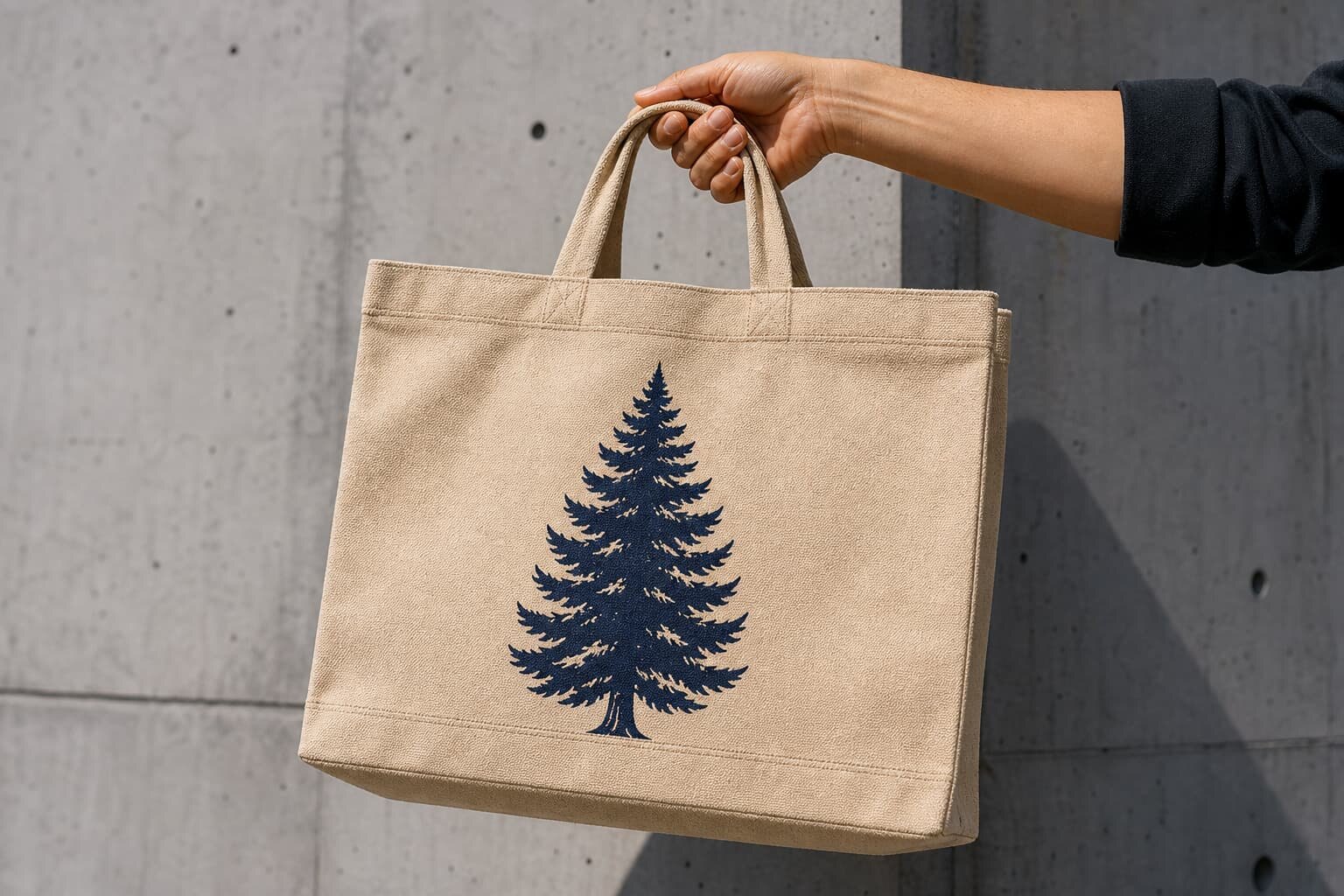
1. The buying problem: your first tote order must be built for reorders
Many startup brands buy heavy canvas totes as if the first purchase is a one-time project. They ask for the lowest MOQ, approve a quick logo sample, and only later discover that the reorder cannot match the first run. The fabric feels different, the handle length changes, the print black looks warmer, or the carton packing creates different freight costs. These are not unusual factory mistakes. They usually happen because the original RFQ did not define the tote as a repeat inventory item.
A heavy canvas tote for startup brands needs a bulk reorder plan before the first purchase order is placed. The purpose is not to overcomplicate the order. It is to record the few specifications that control repeatability: fabric weight, construction, print method, MOQ basis, sample standard, packing, and lead time. If these details are clear, your procurement team can compare supplier quotes properly and place reorders without renegotiating the whole product every season.
- Treat the first order as the production standard for all future reorders.
- Ask every supplier to quote the same fabric, same size, same print, same packing, and same inspection basis.
- Do not compare a cheap pilot order against a later bulk quote unless the fabric source and construction are identical.
- Keep an approved sample and a written spec sheet after the first run.
2. Define the tote use before choosing canvas weight
Heavy canvas is not one fixed material. Buyers often say 12 oz, 14 oz, or 16 oz, but factories may interpret ounce weight differently depending on fabric width, weave, and market convention. For better comparison, ask for both ounce and GSM. As a practical range, many heavy canvas tote programs use around 12 oz to 16 oz canvas, roughly 400 to 540 GSM, but the actual hand feel depends on yarn, weave density, washing, and finishing.
The correct fabric weight depends on how the tote will be used. A retail merchandise tote that customers buy and reuse needs a different hand feel from a gift-with-purchase bag that mainly carries lightweight apparel. Very heavy fabric may look premium but can increase sewing difficulty, carton weight, freight cost, and MOQ. For a startup brand, the best fabric is usually the one that is strong enough, repeatable, printable, and available for reorder without forcing a large fabric commitment.
- For light merchandise or packaging: consider 10 oz to 12 oz if the brand does not require a very structured body.
- For a strong brand tote: 12 oz to 14 oz is often a practical balance of durability and cost.
- For premium retail bags: 16 oz or heavier can work, but confirm sewing, print, and freight impact.
- For custom dyed canvas: expect higher MOQ and longer lead time than natural or black stock canvas.
3. Specify size, gusset, and handle strength in finished dimensions
A canvas tote quote should be based on finished dimensions after sewing, not only cutting dimensions. For example, a tote listed as 38 x 42 cm may not carry the same as a 38 x 42 x 10 cm tote with a bottom gusset. A gusset changes fabric consumption, sewing steps, folding shape, carton volume, and user experience. If the bag must hold shoeboxes, folded apparel, books, or wine bottles, the gusset is not a cosmetic decision.
Handle construction is another area where startup brands often under-specify. A heavy fabric body with weak handle attachment is a common quality risk. The buyer should define handle width, handle length, handle drop, material, stitch pattern, and reinforcement. X-stitch, box-stitch, bartack, or extended handles sewn down the body all create different strength and appearance. If your brand expects customers to reuse the bag regularly, handle specification deserves as much attention as the logo print.
- State finished size as width x height x gusset, with tolerance such as plus or minus 1 cm where appropriate.
- Record handle width, total handle length, and handle drop from top edge to handle peak.
- Request close-up photos of handle reinforcement on the sample and bulk production.
- For heavier carrying use, ask the factory what load test method they can perform and document.
4. Choose a print method that can repeat, not just a print method that is cheap
For heavy canvas totes, screen printing is usually the most practical method for solid brand logos, simple artwork, and repeat orders. It gives good opacity, clean edges, and stable cost when the artwork has limited colors. If your startup brand has a one-color logo in black, white, or a Pantone brand color, screen printing is often easier to control across reorders than more complex decoration methods.
Heat transfer, digital printing, embroidery, woven labels, and leather or paper patches may also be suitable, depending on the artwork and order size. However, every method has a reorder risk. Heat transfer can vary in film hand feel and edge finish. Digital printing may shift color on textured canvas. Embroidery may pull or distort thinner panels. Woven labels require separate label MOQ and lead time. The correct RFQ should ask the factory to recommend a method based on artwork, fabric, order quantity, and future repeatability.
- Provide vector artwork and Pantone color references, not only a JPG or website logo.
- Define print size in centimeters and distance from top edge, side seam, or bottom edge.
- Ask whether ink is water-based, plastisol, discharge, or another type suitable for canvas.
- Confirm curing and rub resistance expectations before bulk production.
- For reorders, ask the factory to keep print screen data or artwork placement records where possible.
5. Understand MOQ logic before negotiating the first purchase order
MOQ is not only a sales number. It comes from several production constraints: fabric availability, dye lot size, cutting efficiency, printing setup, sewing line allocation, label production, packing material, and carton ordering. A supplier may offer a very low MOQ if using available natural canvas and simple screen print. The same tote in custom dyed canvas with a woven side label and individual retail packing may require a much higher minimum.
For startup brands, the mistake is to negotiate only the lowest first order MOQ without checking the reorder tiers. A pilot run of 200 pieces may be possible from leftover fabric, but a reorder of 1,000 pieces may use a new fabric lot with a slightly different shade and hand feel. Better practice is to ask for a quantity ladder using the exact same specification. This shows where the real cost breaks happen and whether the supplier can support growth.
- Ask for quotes at your test quantity, expected reorder quantity, and mature bulk quantity.
- Separate the MOQ for blank tote production from the MOQ for custom print or label items.
- Check whether the quoted price assumes stock natural canvas, black canvas, custom dyed fabric, or washed canvas.
- If a supplier quotes far below others, ask which specification has been simplified.
6. Build a reorder calendar around sample approval, not around the ship date
A reliable reorder plan starts from the date you can approve the pre-production sample, not the date you want goods to leave the factory. Heavy canvas tote production includes fabric booking or fabric preparation, cutting, printing, curing or drying, sewing, trimming, inspection, folding, packing, and export carton preparation. If there is a custom label, hangtag, barcode sticker, or retail polybag, those materials also need time.
When procurement teams wait until inventory is almost gone, they force factories to rush the steps where quality control matters most. Printing may be pushed before fabric relaxes, sewing lines may be assigned without enough sample review, and final inspection may happen too close to shipment. Instead, create a reorder trigger based on weekly sales or distributor demand. The trigger should include production lead time, freight lead time, customs buffer, and a safety stock level.
- Set an internal reorder point based on average weekly usage plus lead time buffer.
- Confirm whether factory lead time begins after deposit, artwork approval, or physical sample approval.
- Allow extra time for custom dyed fabric, washed canvas, retail labels, and holiday season production.
- Do not approve a reorder only from old photos if any material, print, or packing detail has changed.
7. Sampling: what to approve before bulk cutting
For a simple heavy canvas tote, one sample may not be enough. A blank sample can confirm size, fabric, handle, gusset, and sewing. A logo sample confirms print color, position, and artwork scale. A pre-production sample confirms the final approved combination before bulk cutting. Not every order needs all three, but the buyer should know which risk each sample controls.
The most important rule is to approve a physical standard when the tote will be reordered. A digital mockup is useful for layout discussion but does not show fabric stiffness, print edge, ink absorption, seam balance, handle comfort, or folding marks. Keep one sealed approval sample with your procurement records and ask the factory to keep one as well. During reorder, compare new bulk production to that sample rather than relying on memory.
- Check finished dimensions with a tape measure, including handle drop and gusset depth.
- Rub the print surface after curing and check whether the ink cracks, flakes, or transfers.
- Inspect inside seams, thread trimming, and bottom corner alignment.
- Fill the tote with realistic contents and check handle comfort and body shape.
- Photograph the approved sample with measurement points for future supplier communication.
8. Packing decisions affect freight, shelf condition, and reorder cost
Packing is often treated as an afterthought, but it can change the total landed cost more than buyers expect. A heavy canvas tote can be flat packed, folded once, folded multiple times, or individually packed in polybags. Each option affects carton size, carton weight, crease marks, warehouse handling, retail cleanliness, and freight chargeable volume. For distributor or ecommerce inventory, packing should match how the goods will be stored and picked.
If the tote is sold as a retail product, individual packing may protect the surface and keep barcodes clean. If it is used as a packaging insert or event bag, bulk packing may be more efficient and less wasteful. The RFQ should request pieces per carton, carton dimensions, gross weight, folding method, carton mark details, and whether desiccant is used if needed. Without this information, two supplier quotes may look similar at unit price but differ after freight calculation.
- Ask for packed carton data before confirming sea, air, courier, or truck freight estimates.
- Define whether polybags need warning text, suffocation warning, barcode label, or recycled material content.
- For natural canvas, confirm packing protects against dirt and moisture during storage and transport.
- Request carton drop or handling guidance if the totes include rigid patches, hangtags, or retail packaging.
9. Quote data that lets you compare suppliers fairly
A useful heavy canvas tote quotation should show more than unit price. It should state fabric composition, oz and GSM, finished size, construction, print method, number of print colors, packing, MOQ, sample cost, sample time, bulk lead time, payment term, Incoterm, carton information, and quote validity. If any of these details are missing, the quote is not ready for real comparison.
When comparing suppliers, look for specification alignment before price ranking. One factory may quote 12 oz stock canvas with bulk packing while another quotes 16 oz custom canvas with individual polybags. One may include a woven side label and another may not. One may quote FOB port while another quotes EXW factory. A startup brand can lose margin quickly if the cheapest quote is cheaper only because it excludes the specification needed for the reorder program.
- Use one RFQ sheet and ask all suppliers to fill in missing data instead of sending informal messages.
- Request a quantity ladder so you can see cost movement at 500, 1,000, and 3,000 pieces.
- Ask suppliers to mark any assumed specification clearly.
- Compare landed cost, not only factory unit price.
- Keep the final approved quote attached to the purchase order.
10. Common production mistakes and how to prevent them
The most common heavy canvas tote mistakes are predictable. The fabric weight is described loosely, the tote size is measured before sewing, the handle drop is not confirmed, the print color is approved only from a screen, or the packing method is changed after the freight quote. These issues are not difficult to prevent, but they must be controlled before bulk production starts.
A good reorder plan uses acceptance criteria. Define what is acceptable for size tolerance, print position tolerance, color reference, stitch quality, loose thread level, carton quantity, and label placement. This gives both buyer and factory a practical standard. It also makes reorder discussions faster because the factory knows which details cannot drift from the approved sample.
- Avoid saying only 'heavy canvas'; specify oz, GSM, color, finish, and approved sample reference.
- Avoid approving only a digital logo layout; approve a physical print sample when color and texture matter.
- Avoid changing packing after production starts; it may affect carton count and shipping cost.
- Avoid assuming reorder price will stay the same if quantity, material market, exchange rate, or packing changes.
- Avoid mixing several artwork versions in one order without confirming print setup cost and production sorting.
Specification comparison for buyers
| Spec decision | Recommended option | When it fits | Buyer risk to check |
|---|---|---|---|
| Fabric weight | 12 oz to 16 oz canvas, roughly 400-540 GSM depending on weave | Brand merchandise, retail packaging, gift-with-purchase, and repeat ecommerce orders | Do not compare only by oz; confirm GSM, yarn count, shrinkage, and whether fabric is washed or unwashed |
| Construction | Bottom gusset with reinforced X-stitch handles | Totes expected to carry apparel, books, bottles, or retail purchases | Weak handle attachment is more common than fabric tearing; request handle pull test and stitch photos |
| Print method | Screen print for solid logos; heat transfer only for complex small runs | Startup brands with one to three brand colors and future reorders | Color drift between reorders if Pantone, ink type, and curing standard are not recorded |
| MOQ structure | Pilot order at factory minimum, then reorder tiers at 500, 1,000, 3,000+ pieces | Brands testing demand but expecting recurring inventory | Low first MOQ may use different fabric stock than later bulk runs unless locked in the quote |
| Packing method | Individual polybag only when retail presentation or cleanliness is required; otherwise bulk pack by carton | Wholesale distribution, subscription boxes, trade show stock, or retail shelves | Carton weight, carton size, and folding method affect freight cost and crease appearance |
| Sampling route | Pre-production sample approved before every major reorder change | Logo, fabric, handle length, gusset, or packing changes between runs | Approving only a digital mockup leaves no control over hand feel, print edge, or handle strength |
Buyer checklist before sampling
- Define whether the tote is a retail product, packaging item, event giveaway, or reorderable brand merchandise.
- Specify fabric by both ounce and GSM, and ask whether the canvas is stock fabric, custom dyed, washed, or unwashed.
- Record finished size after sewing, not just cutting size, including width, height, gusset, and handle drop.
- Confirm handle fabric, handle width, handle length, reinforcement method, and acceptable load expectation.
- Choose print method based on reorder consistency, not only the cheapest first order quote.
- List Pantone colors, print size, print position, ink type, and whether the print should pass rub or wash checks.
- Ask the factory to quote the first order and at least two reorder quantities using the same specification.
- Confirm MOQ logic for fabric, printing, sewing, packing, and carton marking separately.
- Approve a physical sample or pre-production sample before bulk cutting.
- Request packed carton dimensions, gross weight, pieces per carton, and folding method before shipping quote approval.
Factory quote questions to send
- Is the quoted heavy canvas fabric stock fabric or made-to-order fabric, and what are the exact oz, GSM, and composition?
- Will the same fabric construction be available for reorders, or can the mill change yarn count, shade, or hand feel?
- What is the MOQ for the tote as specified, and which part of the order creates the MOQ: fabric, dyeing, printing, sewing, or packing?
- Can you quote 300, 500, 1,000, and 3,000 pieces with the same fabric, same print, same packing, and same carton assumptions?
- What sample types are included: blank sample, logo sample, pre-production sample, or random production sample?
- What print method do you recommend for this artwork, and what artwork file format, Pantone code, and print tolerance do you need?
- What is the expected production lead time after sample approval, and does that include fabric booking, printing, sewing, QC, and packing?
- What are the finished size tolerances, print position tolerances, and acceptable color difference standard?
- How many pieces per export carton, what carton dimensions, and what gross weight should we use for freight estimation?
- Can you keep the approved sample, production record, and print screen data for future reorders?
Quality-control points to confirm
- Measure finished tote width, height, gusset, handle length, and handle drop against approved sample and tolerance.
- Check fabric GSM and hand feel against the approved sample, especially when reordering from a previous production lot.
- Inspect seams, top hem, side seam, bottom corner, gusset alignment, and loose threads.
- Perform handle pull checks or static load checks according to expected use.
- Check print color, curing, registration, edge sharpness, print placement, and rub resistance.
- Compare bulk production to the sealed approval sample under consistent lighting.
- Review needle marks, skipped stitches, thread color, and reinforcement stitching on handle joints.
- Confirm folding method, polybag quality if used, carton quantity, carton marks, and inner packing sequence.
- Verify barcode, hangtag, woven label, or side label placement when the tote is retail-ready.
- Keep inspection photos from each reorder so future quality disputes are based on records, not memory.