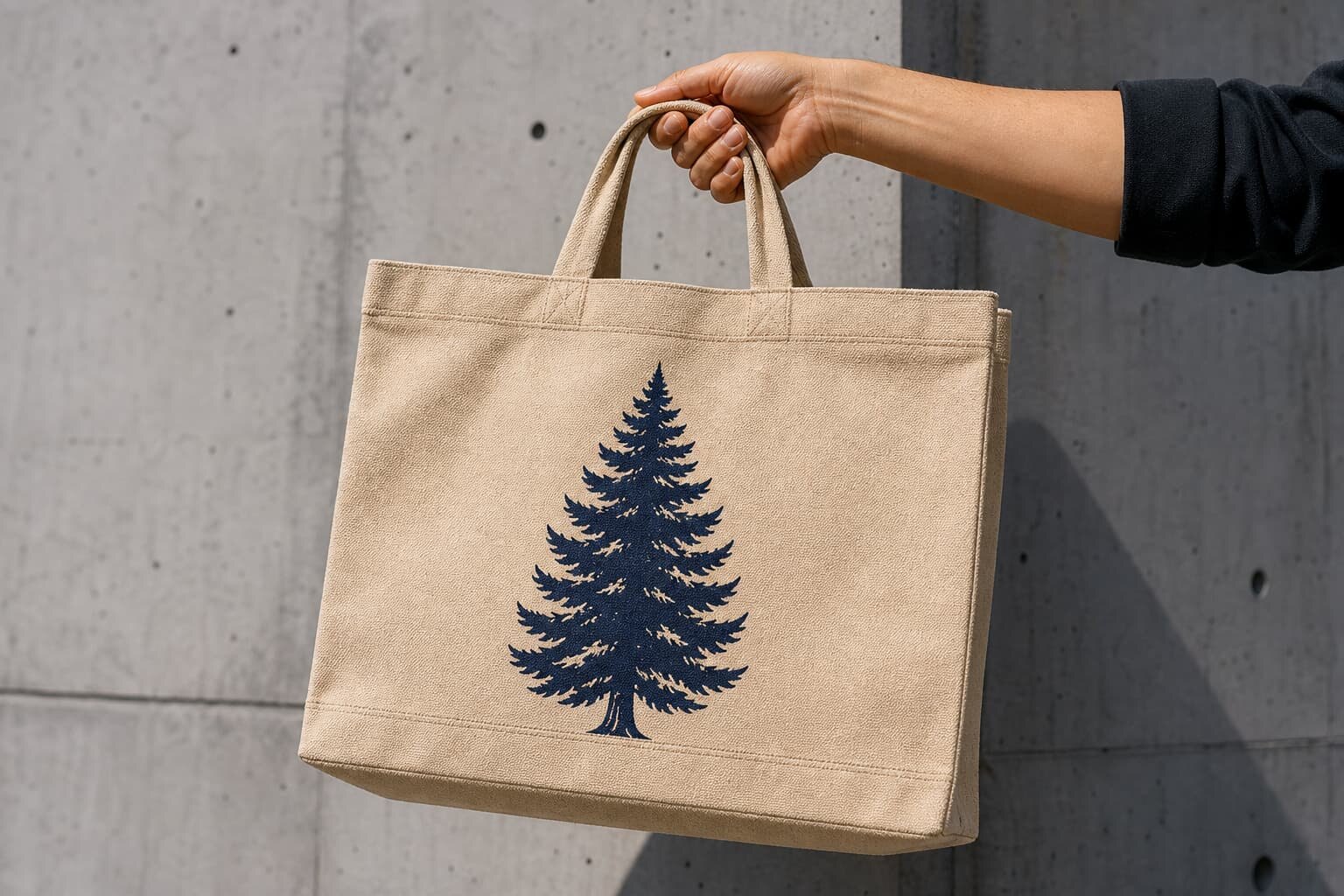
1. Define the reorder around commercial use
A heavy canvas tote reorder should begin with the business job the bag has to perform, not with a vague repeat of the last product name. Procurement teams often inherit descriptions like “heavy cotton tote” or “same as previous order,” but those phrases do not protect price, quality, or delivery. The supplier needs to know whether the tote is a resale item, an event giveaway, a staff kit bag, a store carry bag, a distributor replenishment item, or a daily-use utility bag. Each use case changes the right fabric weight, handle strength, print method, and packing plan.
For a heavy canvas tote for procurement teams bulk reorder plan, the most important first step is to identify what must match the last order and what can change. If the tote is sold at retail or used as part of a branded program, consistency matters. The next shipment should feel, fold, carry, and print like the approved master sample. If the tote is a promotional item, procurement may have more room to simplify print or packing to control cost, but it should still protect the functional spec.
A strong RFQ gives the factory fewer opportunities to make assumptions. Instead of asking for a general quote, state the expected load, required appearance level, repeat order history, target delivery window, artwork count, and packing method. If the tote must carry books, samples, bottled products, or boxed kits, name that use case clearly. A bag that looks fine empty can fail commercially when the handle drop is uncomfortable, the bottom seam stretches, or the carton pack crushes the folded shape.
- State the purpose: retail sale, promotion, trade event, internal kit, warehouse replenishment, or distributor stock.
- State the expected carrying weight, such as 3 kg, 5 kg, or 7 kg, and whether the load is occasional or daily.
- Confirm whether the reorder must match an existing sealed sample, previous PO, product page, or store fixture requirement.
- Separate negotiable items from locked items before suppliers quote.
2. Lock fabric weight, finish, and tolerance
Heavy canvas is a buying range, not a single material. In tote sourcing, a practical heavy canvas range is usually 12 oz to 14 oz, about 407 to 475 GSM. A 12 oz canvas can be suitable for many retail and branded promotion programs because it offers a substantial feel without making the bag too stiff or expensive. A 14 oz canvas usually gives a firmer hand, better structure, and a more premium impression, but it increases fabric cost, carton weight, and freight impact.
Procurement teams should require suppliers to quote both oz and GSM because factories, mills, and buyers may use different conventions. The quote should also state whether weight is measured before or after washing, dyeing, coating, or finishing. A washed canvas may feel softer and look more casual, while unwashed canvas may feel sharper and more structured. A coated canvas can add body or moisture resistance, but it may change print adhesion, recyclability expectations, and hand feel.
Avoid accepting “thick canvas” as a specification. Ask for a target fabric weight and an allowed tolerance. For many commercial tote programs, plus or minus 5 percent is a practical starting point, but the buyer and supplier should agree in writing. If the brand needs a very consistent retail hand feel, set a tighter standard or require bulk fabric approval before cutting. The approved sample should include a fabric swatch record so the next reorder is not judged only from memory.
- Use 12 oz, 13 oz, or 14 oz canvas with approximate GSM stated beside it.
- Define natural, bleached, dyed, washed, coated, or uncoated canvas in the PO.
- Ask whether the quoted material is stock fabric or requires custom weaving, dyeing, or finishing.
- Record fabric tolerance and shade tolerance before deposit or material booking.
3. Make dimensions and handles measurable
Finished dimensions are where many tote reorders drift. A supplier may quote from cut panels, while the buyer expects finished size after sewing. A few centimeters can change usability, print placement, carton count, and how the bag looks on a shelf. A procurement-ready spec should state finished width, finished height, gusset depth, bottom construction, handle width, handle drop, and whether measurements are taken with the bag flat or opened.
Handle construction deserves its own line in the quote. Self-fabric handles often give a consistent canvas look and can be strong when reinforced properly. Cotton webbing handles may be comfortable and efficient, but color, width, and weave should be specified. For heavier use, ask for box-x stitching, cross stitching, or reinforced bar tacks at the attachment points. A simple straight stitch may be acceptable for a light promotional tote, but it is a weak choice for a heavy canvas reorder expected to carry real load.
Buyers should define handle drop according to how the tote will be used. A short handle may work for hand carry, while a shoulder tote needs enough drop to sit comfortably over outerwear. For many shoulder totes, procurement teams should check the actual drop on a physical sample rather than relying on a drawing. The finished opening must also remain usable after the handles are attached and the top hem is sewn.
- Specify finished width, height, gusset, top hem, bottom seam, handle width, and handle drop.
- Set a dimension tolerance, such as plus or minus 1 cm on major dimensions unless the product requires tighter control.
- Require the same handle construction on sample and bulk production.
- Check handle symmetry by laying the tote flat and measuring both sides from the same reference point.
4. Compare quote drivers before choosing the lowest unit price
A low unit price is only useful when every supplier is quoting the same bag. Heavy canvas tote quotes can vary because one factory uses lighter fabric, one quotes a smaller print area, one excludes individual packing, and another assumes a simpler handle stitch. Procurement should compare quote drivers line by line before negotiating. Otherwise, the cheapest quote may simply be the least complete quote.
The comparison table in this article is designed for RFQ alignment. It helps buyers identify which choices affect cost, MOQ, lead time, and inspection. For example, a move from 12 oz to 14 oz may look like a fabric upgrade, but it also changes carton weight and possibly freight cost. Adding a retail insert card may seem minor, but it changes packing labor and inbound receiving requirements. Changing natural canvas to dyed canvas may trigger a higher MOQ and a longer material lead time.
A good quote comparison scenario is to ask three suppliers to price the same 12 oz natural canvas tote, then ask for controlled alternates: 14 oz canvas, one extra print color, individual polybag, and woven side label. The first quote shows the base product; the alternates show how each factory prices complexity. This makes negotiation more practical because procurement can reduce cost by removing a feature rather than weakening the core bag.
- Compare base price and alternates separately, not as one blended conversation.
- Ask suppliers to list exclusions so hidden packing, label, or setup costs surface early.
- Use the same Incoterms, payment terms, and delivery assumptions across suppliers.
- Treat quote validity dates seriously when cotton fabric prices or shipping schedules are moving.
5. Choose print method by artwork, volume, and durability
For most bulk heavy canvas tote reorders, screen printing remains the practical default. It is economical at volume, repeatable for simple logos, and suitable for one to three solid colors. It also gives procurement a clear setup structure: screens, ink color, print position, and print area. If the artwork uses gradients, photo detail, many colors, or frequent seasonal changes, a transfer or digital method may be considered, but it should be tested on the actual canvas before production approval.
Canvas is not a flat paper surface. The weave can soften logo edges, change perceived color, and create small gaps in large solid areas. Buyers should approve a physical print strike-off or pre-production sample rather than relying only on a digital proof. The sample should show final canvas shade, final print size, final print position, and final curing method. If the bag folds through the printed area, test the fold line for cracking or visible stress.
Print durability should be written into QC, not discussed after defects appear. For a simple commercial standard, ask for dry rub testing with a white cloth and visual review for ink transfer. If the tote will be used outdoors, around food packaging, or in wet conditions, add a wet rub check. For large prints, check whether the hand feel becomes too stiff. A technically correct print can still be a poor buying decision if the bag no longer folds cleanly or feels unpleasant to carry.
- Use screen print for repeat logos, solid colors, and better cost control at scale.
- Use heat transfer or digital methods only when artwork complexity justifies the added approval risk.
- Confirm Pantone references, print size, print placement tolerance, and whether an underbase is included.
- Test print adhesion, rub resistance, edge sharpness, and color on the actual production fabric.
6. Build MOQ logic around fabric, color, print, and packing
MOQ is rarely one clean number for canvas tote procurement. The factory may have one minimum for natural stock canvas, another for dyed canvas, another for custom webbing, and another for labels or packaging. Printing also changes the calculation because each artwork version may need its own screen or setup. A buyer asking only “what is your MOQ?” will not learn which part of the order is driving the minimum.
For reorders, the smartest MOQ question is whether the supplier can combine versions without disrupting production. If several branches, departments, or distributors use the same bag size and fabric but different one-color logos, the factory may be able to cut and sew one main run, then print separate versions. That can protect fabric pricing while adding setup costs per artwork. If each version requires a different canvas color, handle color, or packing format, the MOQ and lead time may change significantly.
Procurement should also ask about reorder economies. Screens, labels, and approved patterns may be reusable if stored correctly, but not every factory holds them indefinitely. Ask whether previous screens remain available, whether there is a screen storage period, and whether a repeat setup fee applies. For woven labels or hangtags, ask whether leftover stock exists and who owns it. Small details like this can explain why a reorder price is not identical to the previous invoice.
- Request MOQ by fabric color, size, artwork version, print method, label, and packing style.
- Ask whether natural canvas stock supports lower minimums than dyed or custom-finished canvas.
- Confirm whether multiple logos can share one cut-and-sew run.
- Ask whether repeat screens, labels, patterns, or packing materials are available from the last order.
7. Use samples as approval gates, not decoration
Samples should function as procurement controls. A photo sample can help with early alignment, but it cannot prove hand feel, handle comfort, fabric weight, print adhesion, or load performance. A heavy canvas tote reorder should normally move through a clear sample path: fabric swatch if material is uncertain, print strike-off if artwork is new or changed, pre-production sample before bulk production, and sealed sample retained for inspection.
The pre-production sample should be reviewed against a written checklist. Measure finished size, gusset depth, handle drop, handle width, stitch density, print placement, and label position. Put the sample under realistic handling: fill it with the expected load, lift it by both handles, wear it on the shoulder if that is the intended use, fold it as it will be packed, and check whether the print or seams distort. Appearance matters, but function is what prevents reorder complaints.
Approval records should be specific. Instead of writing “sample approved,” record what was approved: 12 oz natural canvas, finished size, handle drop, box-x stitching, one-color screen print at a named size and position, flat fold bulk pack, and carton count. If something is approved with a note, such as “slight natural cotton flecks acceptable,” write that down too. This protects both buyer and factory from disagreement during final inspection.
- Approve physical samples before bulk production when fabric, print, packing, or construction changes.
- Mark the approved sample date, supplier, material weight, artwork version, and packing format.
- Keep one sealed master sample with procurement or quality control, not only with the factory.
- Do not approve mass production until sample comments are closed in writing.
8. Put packing and carton data into the RFQ
Packing is a commercial specification, not a shipping afterthought. A heavy canvas tote can be flat folded in bulk, placed in inner polybags, packed individually, tagged for retail, or prepared with barcode labels for warehouse receiving. Each option changes labor, material cost, carton dimensions, gross weight, and receiving efficiency. If packing is not included in the RFQ, the quote will not reflect the real landed cost.
For bulk replenishment, flat fold with a controlled carton count is often efficient. For retail or e-commerce handling, individual polybags, insert cards, barcode labels, or hangtags may be necessary. Procurement should decide whether the goal is lowest handling cost at origin, easiest warehouse count, best store presentation, or cleanest consumer-facing pack. Those goals do not always point to the same packing format.
Carton data should arrive before the PO is finalized: units per carton, carton dimensions in centimeters, net weight, gross weight, carton material, shipping marks, and whether cartons can be stacked without deforming the product. Overstuffed cartons may reduce freight cost at first glance, but they can crease bags, distort handles, burst during handling, or slow down warehouse receiving. For repeat orders, compare planned carton data with the previous shipment and investigate any major difference.
- Ask for carton quantity, carton size, net weight, gross weight, and carton marking method in the quote.
- Define whether each tote is bulk folded, inner packed, individually polybagged, tagged, or barcode labeled.
- Confirm barcode type, label position, and scan readability if the tote enters a retail or warehouse system.
- Inspect one fully packed carton before mass packing continues.
9. Split lead time into real approval checkpoints
A single lead time number can hide the actual schedule risk. When a supplier says production takes 25 or 35 days, procurement should ask when the clock starts. It may start after deposit, after artwork approval, after sample approval, after fabric arrival, or after all packaging materials are confirmed. A reorder plan should split the timeline into sample, material booking, print setup, cutting, sewing, packing, inspection, and shipping handover.
A practical reorder timeline might look like this: 3 to 7 days for fabric swatch or print strike-off if needed, 7 to 12 days for a pre-production sample, 3 to 5 days for internal buyer approval, 5 to 15 days for material booking depending on stock or custom dyeing, 20 to 35 days for bulk production depending on order size, and 1 to 3 days for final inspection and carton correction. Actual timing varies by factory and season, but the structure helps procurement see where delays are most likely.
The buyer should also define approval responsibility internally. Many tote delays happen because artwork, packaging, or barcode data is not ready when the factory is ready to proceed. If procurement needs marketing approval for logo color, warehouse approval for carton labels, and finance approval for deposit, those steps belong in the reorder calendar. A supplier can protect production time only after buyer-side approvals are complete.
- Ask whether quoted lead time starts after deposit, artwork approval, sample approval, or material arrival.
- Put sample approval, fabric approval, artwork approval, and packing approval into the calendar.
- Confirm the final inspection date before goods are packed for shipment.
- Build extra time when changing canvas color, print method, label, packing, or carton marks from the last order.
10. Set QC standards before the purchase order is placed
Quality control should be agreed before production, not negotiated during a dispute. For heavy canvas totes, the core inspection areas are dimensions, fabric weight, shade, sewing, handle strength, print quality, cleanliness, labels, quantity, and packing. Procurement should ask the factory what in-house checks they perform and whether third-party inspection is allowed. For larger or higher-risk orders, an AQL plan gives both sides a shared language for defect acceptance.
Measurable tolerances make inspection more useful. A buyer may allow plus or minus 1 cm on finished width and height, plus or minus 0.5 cm on handle drop, plus or minus 3 mm to 5 mm on print placement, and around plus or minus 5 percent on fabric weight if agreed. Stitch density can be checked against an agreed standard, often around 7 to 9 stitches per inch for sturdy canvas sewing. Load testing can be defined as suspending 5 kg to 7 kg for 30 minutes, then checking handle attachments and seams for tearing, broken stitches, or excessive distortion.
AQL examples should be adjusted to order value and risk, but procurement can start by discussing AQL 2.5 for major defects and 4.0 for minor defects. Critical defects should have zero tolerance. Critical issues may include wrong artwork, wrong bag color, unsafe hardware, broken handles, severe mold, severe contamination, or units that cannot function as bags. Major defects may include incorrect dimensions beyond tolerance, loose handle stitching, poor print adhesion, visible stains, wrong labels, or incorrect packing. Minor defects may include small loose threads or slight natural cotton flecks if they do not affect function and were accepted in the sample standard.
Final inspection should include packed cartons, not only loose units from the sewing line. Count cartons, confirm carton marks, scan barcodes, weigh selected cartons, and open cartons from different parts of the lot. For reorders, compare the bulk units to the sealed sample and previous production record. If anything changed, document whether it was approved. That discipline is what turns a tote reorder from a hopeful repeat into a controlled procurement process.
- Define AQL, critical defects, major defects, and minor defects before production starts.
- Use measurable checks for dimension, GSM, stitch density, load test, print rub, and print placement.
- Inspect cartons, labels, pack count, and shipping marks as part of product quality.
- Keep inspection reports and approved samples linked to the PO for the next reorder cycle.
Specification comparison for buyers
| Spec decision | Recommended option | When it fits | Cost impact | MOQ implications |
|---|---|---|---|---|
| Fabric weight | 12 oz to 14 oz heavy cotton canvas, about 407 to 475 GSM, with quoted tolerance | Retail programs, branded resale, office kits, utility bags, and repeat-use promotions | Higher GSM increases fabric cost, carton weight, and freight; lower GSM may reduce cost but can weaken perceived value | Natural stock canvas may support lower MOQ; dyed or custom-finished canvas usually raises MOQ |
| Finished size and gusset | Quote finished dimensions after sewing, with gusset depth and tolerance stated | Any reorder that must match previous stock, fixtures, insert cards, or shelf presentation | Larger panels and deeper gussets increase fabric consumption and carton volume | Multiple sizes may require separate cutting markers and separate MOQ lines |
| Handle construction | Self-fabric or cotton webbing handles with box-x stitching, reinforced bar tack, or cross stitch | Bags expected to carry 3-7 kg, retail goods, books, samples, or daily-use items | Wider handles, reinforced stitching, and extra layers add labor and material cost but reduce failure risk | Special handle material or dyed webbing may carry separate material MOQ |
| Print method | Screen print for 1-3 solid colors; transfer or digital method only when artwork requires it | Repeat bulk orders with logo consistency, simple brand art, or seasonal color updates | More colors, larger coverage, underbase, and special inks increase unit cost and setup fees | Each artwork version or colorway may need its own screen/setup minimum |
| Closure and hardware | Open top as default; zipper, snap, or magnetic closure only when security is required | Retail carry bags, corporate kits, document bags, or higher-value merchandise programs | Closures add material, labor, inspection points, and replacement risk if hardware fails | Hardware may have its own MOQ and color availability limits |
| Labeling and branding | Printed logo, woven label, side label, hangtag, or barcode label specified separately | Retail replenishment, distributor stock, resale packaging, and internal inventory control | Woven labels and hangtags add setup and handling cost; barcode labels add packing labor | Custom labels can have MOQ separate from bag MOQ; leftovers should be tracked for reorders |
| Packing format | Flat folded bulk pack, inner polybag, individual polybag, or retail-ready pack stated in RFQ | Warehouse replenishment, e-commerce kits, store delivery, or trade event distribution | Individual packing increases labor and packaging cost; overpacked cartons can raise damage risk | Special inserts, barcodes, and retail packaging may have vendor MOQ |
| Carton data | Units per carton, carton dimensions, gross weight, net weight, and shipping marks included in quote | Any order where freight, inbound receiving, or warehouse slotting matters | Lower carton efficiency increases freight and storage cost even if unit price looks low | Carton packing can limit practical order multiples and split-shipment planning |
Buyer checklist before sampling
- Confirm the commercial use: resale, promotion, staff kit, distributor stock, retail carry, or daily utility bag.
- State the finished bag width, height, gusset, handle drop, handle width, and target loading weight.
- Specify 12 oz, 13 oz, or 14 oz canvas, plus approximate GSM and acceptable production tolerance.
- Define whether canvas is natural, bleached, dyed, washed, coated, or uncoated.
- Ask whether the supplier price is based on finished size after sewing, not only cut fabric size.
- Send vector artwork and define logo size, print location, Pantone references, and allowed placement tolerance.
- Separate unit cost, print setup, label setup, packing cost, carton cost, sample cost, and tooling or screen charges.
- Request MOQ by fabric color, bag size, print version, label type, and packing format.
- Approve one physical pre-production sample before bulk production and keep a sealed master sample for comparison.
- Confirm sample lead time, material booking time, production lead time, inspection window, and shipping handover date.
Factory quote questions to send
- What exact canvas weight are you quoting in oz and GSM, and what production tolerance do you allow on bulk fabric?
- Is the fabric natural stock canvas, custom dyed canvas, washed canvas, coated canvas, or another finish?
- Is your quoted price based on cut size or finished size after sewing, and what tolerance applies to finished dimensions?
- What handle material, handle width, handle drop, stitch pattern, and reinforcement method are included in the price?
- How many print colors, print positions, and square centimeters of print coverage are included in the unit price?
- What is the extra cost for additional print colors, larger print area, underbase, PMS matching, or new screens?
- What is the MOQ by fabric color, bag size, print artwork, label, and packing format?
- Can multiple artwork versions share one fabric production run, and what setup cost applies to each version?
- What packing is included: bulk fold, inner polybag, individual polybag, insert card, hangtag, barcode label, or carton label?
- What are the planned units per carton, carton dimensions, net weight, gross weight, and carton marking method?
Quality-control points to confirm
- Measure finished dimensions after sewing. A practical tolerance is often plus or minus 1 cm for width and height and plus or minus 0.5 cm for handle drop, unless the buyer sets tighter limits.
- Verify fabric weight against the approved 12-14 oz or 407-475 GSM target. Record the accepted tolerance in the PO, commonly around plus or minus 5 percent if the supplier agrees.
- Check fabric shade against the approved swatch under consistent light. For dyed canvas, define whether slight lot variation is acceptable before bulk production begins.
- Inspect weave consistency, obvious slubs, holes, oil marks, stains, and yarn contamination. Minor natural cotton flecks may be acceptable only if approved on the master sample.
- Check stitch density on main seams and handle attachments. A common practical range is about 7-9 stitches per inch for strong cotton canvas construction, but confirm the factory standard before approval.
- Inspect handle attachment for box-x, cross stitch, or bar tack placement. Reject loose reinforcement, skipped stitches, broken thread, twisted handles, and visibly uneven handle drops.
- Run a load test using the agreed use case. For example, suspend the tote with 5 kg to 7 kg for 30 minutes, then check handle stitching, side seams, and bottom corners for tearing or distortion.
- Check print placement tolerance, often within plus or minus 3 mm to 5 mm from the approved position for standard logo printing, depending on bag size and artwork.
- Perform a dry rub test on the print using a white cloth for repeated strokes, then check for visible ink transfer, cracking, or peeling. Add a wet rub test if the use case involves rain or frequent handling.
- Confirm print cure or adhesion on actual canvas, especially over seams, folds, or coarse weave. Do not approve bulk production from a paper proof alone.