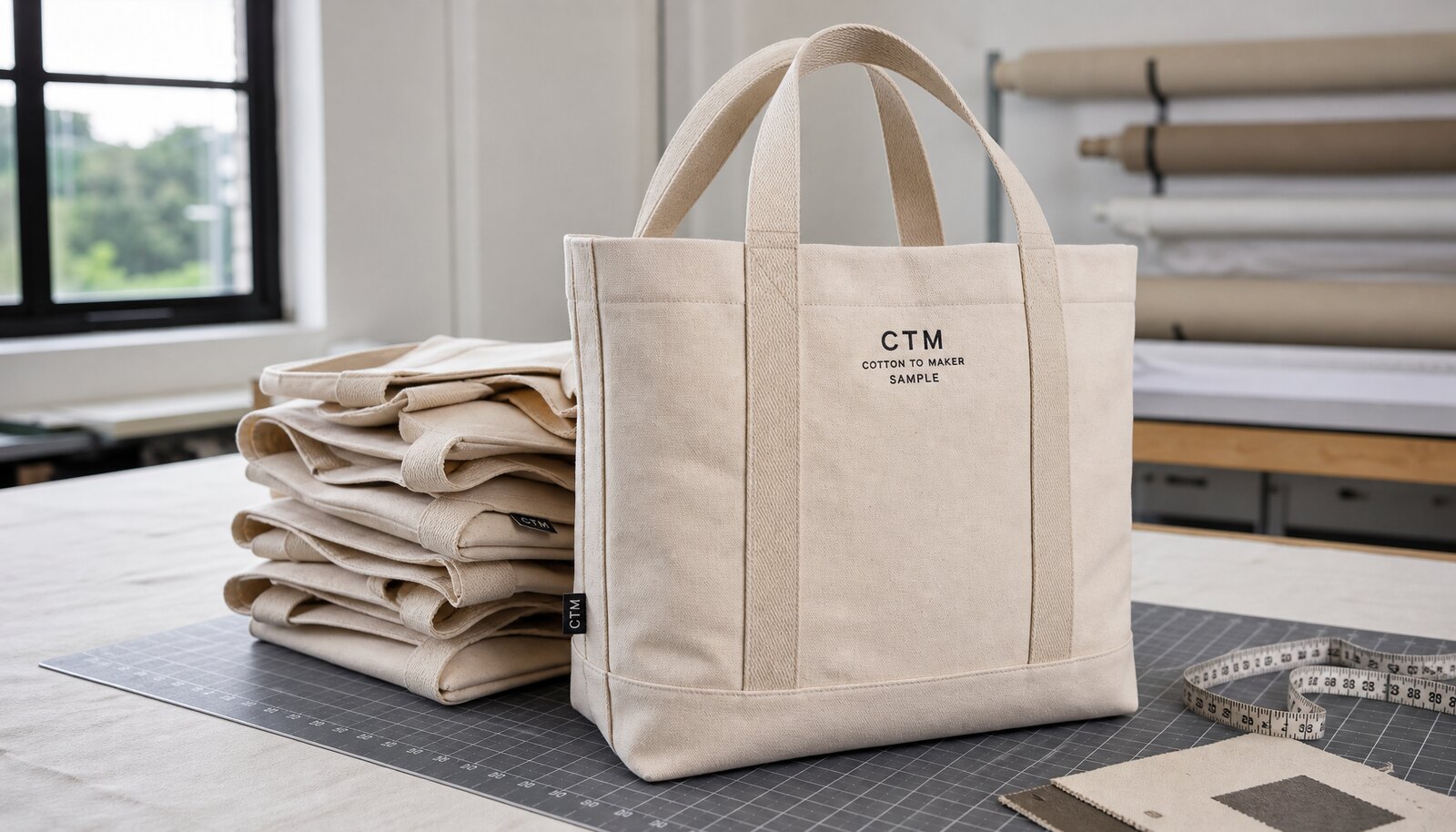
What winery event giveaways really need from a canvas tote
For winery events, a giveaway tote is not just a branded bag. It needs to survive a busy tasting room, carry brochures, a corkscrew or small merch item, and still look presentable when a guest reuses it later. That is why heavy canvas tote bags for wineries event giveaway planning usually start with structure, not decoration. If the bag collapses when empty or twists under a bottle, the giveaway feels cheap even if the print is good.
Procurement teams often overfocus on artwork and under-spec the body fabric. For this use case, the practical target is usually 12 oz to 14 oz canvas, sometimes up to 16 oz if the bag is expected to carry bottles regularly. The right choice depends on whether the tote is a one-time event handout, a membership incentive, or a merchandise add-on that may be resold later.
- Prioritize shape retention over ultra-low cost.
- Match bag capacity to the event payload, not just the logo size.
- Decide early if the bag must support bottle weight or only printed collateral.
Choosing the right canvas weight, size, and handle build
Canvas weight changes the way the tote feels in hand and how it behaves on the production line. A 10 oz bag can be acceptable for light literature, but it may wrinkle sharply and show the contents. A 12 oz or 14 oz bag gives a better flat surface for print and more stiffness at the side seams. If the tote is intended to hold a bottle and a folded catalog, a heavier canvas or a stronger seam construction is safer than relying on the print to make the bag look premium.
Size should follow the giveaway format. Many winery teams prefer a medium tote that is easy for guests to carry through an event without feeling oversized. Common working dimensions are around 35 x 40 cm with a 10 to 12 cm gusset, but the real decision is whether the bottle stands upright without pushing the bottom seam. Handle drop matters as much as size; if the handles are too short, the bag is awkward over a shoulder, and if they are too long, the bag swings too much in crowd flow.
- 12 oz–14 oz is the most balanced range for premium event giveaways.
- Use reinforced handle attachment with bar tacks for bottle loads.
- Keep dimensions close to the actual contents so the bag does not look overbuilt or underfilled.
Print method choices that survive busy event handling
Most winery giveaways do not need complicated decoration. A clean one-color or two-color screen print often gives the best balance of cost, clarity, and durability on heavy canvas. Screen print works well when the artwork has solid shapes, simple text, and a clear brand mark. For smaller runs or designs with more color variation, heat transfer can be practical, but it should be tested carefully because some transfers sit too much on the surface and can crack when the bag folds repeatedly.
If the branding is intentionally minimal, a woven label or sewn side label can be a stronger commercial choice than a large print. That route can make the bag feel more retail-like and avoid the cost of multiple print screens. The buyer tradeoff is visibility: a tiny label looks premium, but it may not create the same event impact as a front-panel logo. For vineyard events where the bag is handed out directly to guests, visible branding usually wins.
- Use screen print for simple logos and hard-edged typography.
- Use heat transfer only when the artwork needs more detail and the fabric is already approved for it.
- Consider woven label branding if the bag must remain reusable beyond the event date.
Supplier routes: factory direct, trading company, or local converter
The sourcing route changes more than the quote format. A direct factory usually gives you better control over fabric weight, sewing details, and packing sequence, which matters when the bag has to hold up under event use. A trading company may be useful if you need mixed products, such as tote bags plus wine pouches or display items, but the buyer should expect an extra layer between the specification and the workshop floor. Local converters can be useful for very tight delivery windows, yet their prices often rise quickly once you add custom fabric, print setup, and freight.
For heavy canvas tote bags for wineries event giveaway planning, the best route depends on your timeline and the importance of repeatability. If the tote will be reordered across multiple events, factory direct sourcing is usually easier to standardize. If the purchase is a one-off event with a hard deadline, a responsive converter with stock fabric may be faster, but only if the buyer accepts fewer options on GSM and dimensions.
- Factory direct is strongest for spec control and reorder consistency.
- Trading companies can simplify multi-item programs but add margin layers.
- Local converters can reduce transit time but may limit fabric and print options.
What drives the quote: the real cost stack
A tote quote is usually shaped by more than fabric. The main cost drivers are canvas weight, bag size, number of print colors, handle construction, inner finishing, and packing format. If the bag has a gusset, heavier top stitching, or a sewn-in label, each of those details increases labor time. Artwork also matters: a single large logo can be cheaper than a small multi-position print because every extra placement adds setup and alignment risk.
Buyers should compare quotes on a landed-cost basis, not just unit price. A lower ex-factory number can hide setup fees, carton mark charges, sampling fees, or a packing upgrade that shifts the total. Example: two suppliers may both quote a similar base price, but one includes polybag packing and carton labeling while the other charges separately. That difference can matter once the order is scaled across event inventory and multiple distribution points.
- Use a quote line that separates fabric, sewing, print, packing, and freight assumptions.
- Watch for hidden charges on artwork changes, label changes, or rush production.
- Compare the complete landed value, not the headline bag price.
MOQ logic and how to avoid overbuying event inventory
MOQ should be set by actual event demand and artwork complexity, not by a generic factory minimum. For a single logo and standard canvas size, many factories can work in the 1,000 to 3,000 piece range per design, while simpler stock-based programs may go lower. Once the order includes multiple colors, special handles, or sewn labels, the MOQ usually rises because each variation adds a separate production setup. If the winery team wants the same bag for spring release, harvest festival, and member event, it may be smarter to create one base spec with optional seasonal print changes.
Overbuying is common when buyers plan only for the first event. The better approach is to estimate consumption by venue attendance, conversion rate, and a small replacement buffer for rejects or VIP handouts. If the tote is likely to be reused in retail or shipping programs, a slightly higher MOQ can actually lower the long-term cost because it protects future reorders from a full setup charge. But if the event is a one-time sponsorship activation, a modest MOQ with a tighter spec is safer.
- Set MOQ by design version, not just by bag style.
- Use one base construction and vary only the print when possible.
- Build a 3% to 5% replacement buffer into the order quantity.
Sample approval: what must be right before bulk production starts
A sample is not just a formality. It is the only practical way to verify how canvas weight, stitch density, and print registration behave together. For winery giveaways, the sample should show the final canvas texture, the approved handle length, the actual print size, and any label placement. If the bag will hold a bottle, put a real bottle or equivalent weight into the sample and observe the stress points at the handle base and bottom seam. That simple test catches many failures that look fine on paper.
The most useful sample review is visual plus functional. Visual means the logo is centered, the ink coverage is even, and the color sits close to the brand target under normal light. Functional means the bag opens correctly, stands reasonably flat, and does not distort when loaded. If the sample has loose threads, uneven seam allowance, or a handle that pulls at an angle, it should be corrected before production. Do not approve a sample only because the artwork looks good in isolation.
- Test the sample with actual contents, not an empty bag only.
- Verify the logo placement in the same light used at the event or receiving area.
- Sign off on dimensions, print position, and seam appearance together.
Packing, cartonization, and event-ready receiving
Packing affects labor on both ends of the supply chain. If the totes are destined for an event warehouse, flat-packed bulk cartons are usually the most efficient option. If they are going directly to a retail shelf or tasting-room display, you may need a cleaner inner polybag or folded presentation that takes more packing labor but improves shelf appearance. For a giveaway program, the priority is usually clean, efficient packing that protects the bag from dust and moisture without overinvesting in display packaging.
Carton design should be part of the quote. Buyers should know how many bags fit per carton, what the carton weight will be, and whether the carton dimensions are efficient for freight. Weak cartons or poor fold discipline can create wrinkles that make the first impression worse at the event. It is also worth confirming whether the factory uses moisture protection for sea freight or humid warehouses, because natural canvas can pick up odors and surface marks if packing is too loose.
- Request flat-packed cartons with clear outer labels for fast receiving.
- Align carton size to freight efficiency and warehouse handling limits.
- Protect canvas from humidity, dust, and oil marks during transit.
Schedule risk: where tote projects lose time
Most delays happen before production starts, not during sewing. Artwork revisions, sample corrections, and color approval usually consume more time than the stitching itself. If the event date is fixed, build a realistic schedule that includes artwork lock, sample approval, production, quality check, and shipping buffer. Even a standard tote order can slip if the buyer changes the handle color or print size after sample approval. Small changes can require a fresh layout or a new print screen, which resets the timing.
Lead time should be quoted in stages so the buyer can see where the risk sits. A clean standard order may need about 7 to 10 days for sampling and 25 to 35 days for production after deposit and sample approval, but that number is only useful if artwork is final and fabric is available. If the supplier is still sourcing canvas or matching a dyed shade, the schedule gets longer. Procurement teams should push for a production start date tied to approved artwork and approved sample, not a vague promise from the sales stage.
- Use a schedule with gates: artwork lock, sample approval, mass production, packing, shipment.
- Treat post-approval changes as schedule risks, not minor edits.
- Keep freight booking and warehouse receiving in the timeline from day one.
A practical landed-cost comparison for event planning
When buyers compare suppliers, it helps to think in three layers: ex-factory cost, logistics cost, and receiving cost. Ex-factory is the bag price plus setup and packing assumptions. Logistics includes inland transport, export cartons, and freight mode. Receiving cost is the work needed to count, sort, and distribute the bags at the destination. A quote that looks cheaper at the factory can be more expensive if the packing is awkward or if the cartons are not suited to your warehouse workflow.
For winery event programs, distribution efficiency matters because the bags often move from a central warehouse to multiple venues or seasonal activations. A well-packed tote may save labor at each receiving point, especially when several people need to hand them out on the same day. That is why the quote should include carton count, bag count per carton, and whether the bags arrive folded consistently. A buyer comparing suppliers should favor the option that reduces handling time, not only the one that lowers unit cost by a few cents.
- Compare ex-factory, freight, and receiving effort together.
- Ask for carton loading details before price approval.
- Choose the quote that reduces event-day handling, not only purchase order spend.
Specification comparison for buyers
| Spec decision | Recommended option | When it fits | Buyer risk to check |
|---|---|---|---|
| Fabric weight | 12 oz–14 oz cotton canvas, 340–475 GSM | Event giveaways that need structure, better print surface, and a bag that feels premium at tasting rooms or member events | Too-light fabric can sag, wrinkle badly, or show weak seam performance after repeated use |
| Canvas finish | Natural bleached or dyed canvas with consistent shade band | When the bag is part of a branded winery program and color consistency matters across reorders | Shade variation between lots can cause rejection if the buyer expects tight brand matching |
| Handle build | Cross-stitched handles with 20–28 cm drop and bar-tack reinforcement | When guests will carry bottles, brochures, and small merchandise in one bag | Short handles reduce usability; weak handle stitching is one of the first failures in field use |
| Print method | 1–2 color screen print or heat transfer for smaller artwork; woven label for minimal branding | When the artwork is simple and the order needs clean alignment at reasonable cost | Fine gradients, tiny text, or full-color art may lose clarity on coarse canvas |
| Supplier route | Direct factory with canvas bag experience | When you need control over GSM, stitching, and packing details rather than a trading-company middle layer | Factories vary in trimming, printing consistency, and communication speed; verify actual production photos and sample control |
| MOQ strategy | Start at 1,000–3,000 pcs per design for customized production | When the winery is testing an event series, seasonal campaign, or multi-location rollout | Very low MOQs often raise unit cost and can hide setup fees that distort landed cost |
| Packaging format | Bulk packed in polybags with carton labels or flat packed in master cartons | When you want efficient freight and easy receiving at distribution centers | Retail-ready packing can add labor and cost; loose packing risks dirt, moisture, and deformation |
| Lead time route | Sample approval first, then 25–35 days production after deposit for standard orders | When the event date is firm and you need realistic scheduling with shipping buffer | Rushed orders without approved pre-production samples often lead to misprints or shipment delays |
| Compliance evidence | Material spec sheet, carton loading plan, and inline QC photos | When procurement needs a cleaner audit trail and fewer surprises at arrival | Missing documentation makes it harder to prove what was ordered if the delivered bags differ from the approved sample |
Buyer checklist before sampling
- Confirm the target GSM or ounce weight, handle length, bag size, and whether the bag must hold one or two wine bottles without distortion.
- Lock the artwork limits: number of print colors, print size in millimeters, and whether the winery logo needs a front-only, front-and-back, or side-label application.
- Define the use case: tasting room giveaway, VIP event gift, member signup incentive, or retail add-on. The use case changes fabric weight, packing, and acceptable unit cost.
- Decide whether you need natural canvas, dyed canvas, or recycled canvas. Reorder consistency is easier when the base fabric is specified by weight and finish, not just by appearance.
- Request a pre-production sample and a production-reference sample if the design has more than one color or a specific seam requirement.
- Set acceptance criteria for stitching, print registration, lint, loose threads, odor, and carton labeling before placing the order.
Factory quote questions to send
- What exact canvas weight are you quoting in oz and GSM, and what tolerance do you allow on the finished fabric?
- Is the price based on screen print, heat transfer, embroidery, woven label, or a mixed decoration method? What is the setup fee for each?
- What is the MOQ by color and by artwork version, and does changing handle color or inner label create a new MOQ?
- Can you provide the carton count, carton size, gross weight, and estimated loading quantity for a standard container or LCL shipment?
- What is included in the quoted price: sampling, artwork adjustment, printing plates, inner polybag, desiccant, barcode label, and outer carton mark?
- How long from artwork approval to pre-production sample, and from sample approval to finished goods readiness?
- What inspection photos or QC records can you provide before shipment, especially for print alignment, seam strength, and carton packing?
Quality-control points to confirm
- Fabric weight must match the agreed spec with no visibly thin spots, slubs, or uneven weave that affects print clarity.
- Handle stitching should be straight and reinforced at load points; bar tacks must be consistent and free of skipped stitches.
- Print registration should stay within agreed tolerance, with no smearing, pinholes, or color bleeding into the canvas weave.
- Bag dimensions should remain within tolerance after sewing; check width, height, gusset if any, and handle drop against the approved sample.
- Loose threads, oil marks, lint, and off-cut debris should be removed before packing.
- Cartons must be labeled with style, quantity, color, and purchase order number; carton count should match the packing list.
- For event giveaways, each bag should open cleanly and sit flat enough for efficient stacking and distribution at the venue.
- A random carton check should confirm that the first, middle, and last cartons in a lot match the same print and sewing standard.