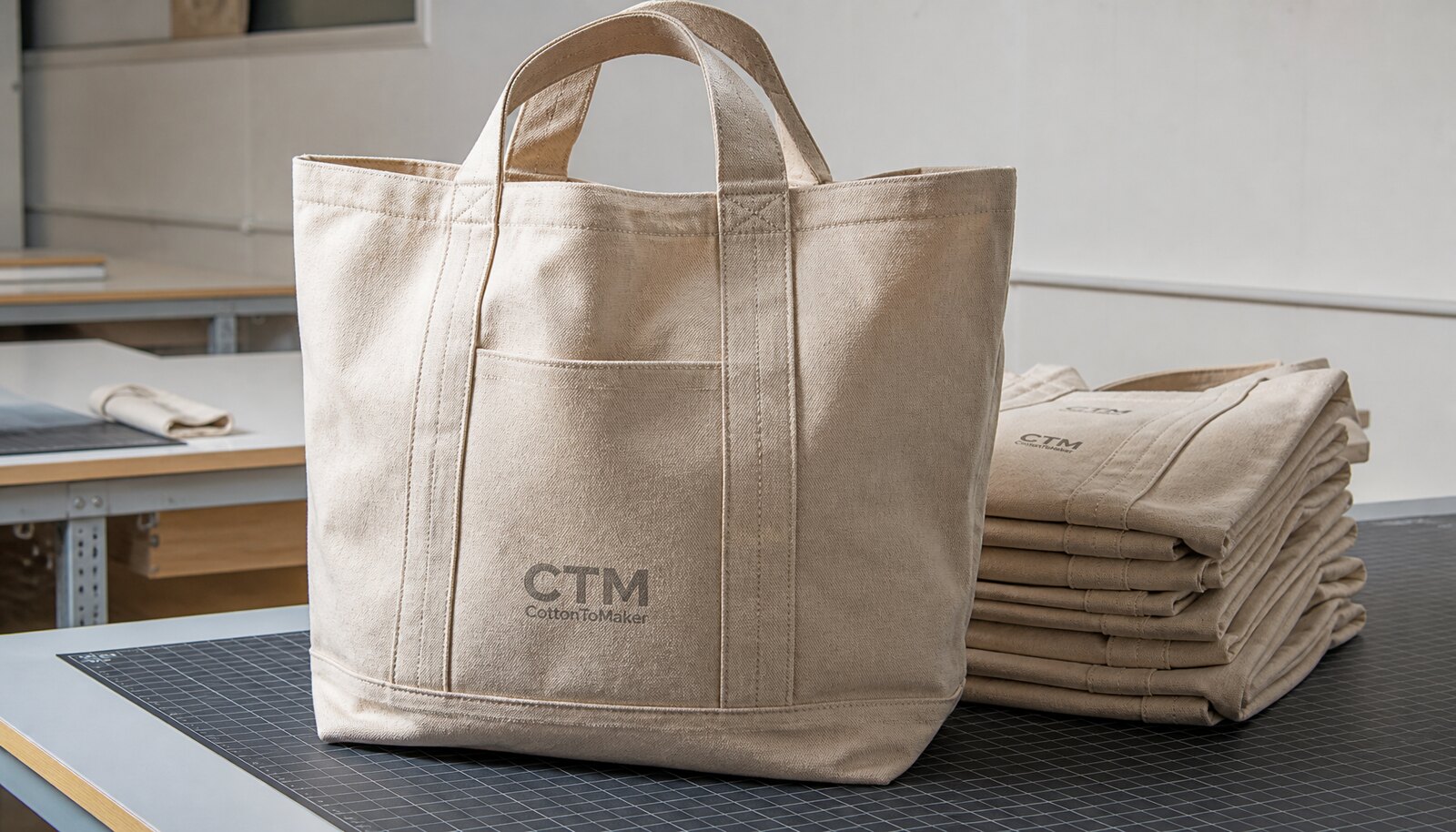
Why reorder planning matters more than the first tote order
For subscription boxes, the first tote order is usually the easiest one. The real issue appears on the second or third replenishment, when the artwork is already approved, the packaging team expects the same fold, and the warehouse has a fixed receiving window. Heavy canvas tote bags look simple, but repeat orders expose every gap in the original spec: vague fabric weight, missing handle length, unclear print tolerance, or carton counts that do not match your pick-and-pack process.
A reorder planning memo should focus on what changes between batches. If the bag is part of a monthly or quarterly subscription program, the tote becomes a standardized component, not a creative one-off. That means procurement should write the RFQ like a production document, not a design brief. Lock the physical spec, define acceptable variation, and make sure your supplier understands whether the tote is a cost center, a branding asset, or both.
- Repeat orders fail most often on consistency, not creativity.
- Treat the tote as a packaging component with fixed fit and packing rules.
- The best RFQ for a reorder reduces room for interpretation.
Set the fabric spec first: GSM, body, and reuse expectations
Heavy canvas for subscription boxes usually sits in the 340 to 450 GSM range, roughly 12 oz to 16 oz depending on weave and finishing. That range gives enough stiffness for a premium feel and enough structure to hold inserts, product bundles, or a box insert without collapsing. If the tote needs to be reused beyond the box delivery, lighter fabric often feels disposable and can weaken the brand impression after a few uses.
The right weight depends on the tote's job. A tote that carries a bookish, lifestyle, or home goods bundle may justify 14 oz or higher. A tote that is mainly a branded add-on inside a tightly costed subscription box may be better at 12 oz to 13 oz to protect freight and sewing cost. The mistake is quoting only by ounce number without linking it to use. A 16 oz bag with a weak seam is still a weak bag.
- Specify oz and GSM if possible; some factories talk in one unit and buyers budget in another.
- Ask whether the quoted weight is finished fabric weight or pre-finished fabric weight.
- If the tote is unbleached natural canvas, expect some shade and slub variation.
Choose the right sourcing route for a repeat program
For a subscription box reorder, the supplier route matters as much as the spec. Direct factories with canvas tote expertise usually give better control over handle reinforcement, cutting accuracy, and carton packing. Trading companies can be useful if you need multiple product types bundled into one shipment, but they may hide the actual factory capability until sampling starts. A sourcing route that works for one-off promotions may be too loose for a recurring box program.
If your program includes several bag colors or seasonal art changes, prefer a factory that keeps stable fabric channels and can show previous production photos of similar heavy canvas work. When the supplier cannot explain their sewing line setup, seam finishing, or trim sourcing, the order is at risk even if the quote looks attractive. The lowest price often comes with weak control over dimensional repeatability and packing discipline.
- Direct factory: better for repeatability and cost transparency.
- Trading route: useful for mixed-category consolidation, but inspect production ownership carefully.
- Ask for photos of actual similar production, not just sample-room images.
Use the comparison table to narrow the quote before sampling
Procurement teams often collect three to five quotes that are not actually comparable. One supplier prices a 12 oz bag with one-color screen print and loose bulk packing; another quotes a 14 oz bag with reinforced handles and individual polybags; a third uses a different size altogether. That is why the spec decisions below matter. If the quote basis is different, the unit price is not a fair comparison.
The most useful comparison is to group suppliers by manufacturing route and production intent: direct factory versus generalist sourcing, standard canvas versus custom-dyed canvas, screen print versus digital or transfer, and flat-packed bulk carton versus retail-ready inner packing. Once you align those choices, you can compare not only unit price but also landed cost, risk, and the probability of a clean reorder.
- Do not compare quotes until fabric weight, size, print method, and packing are aligned.
- A cheaper quote may be missing reinforcement or packing labor.
- Ask the factory to note every assumed spec in writing.
Price drivers that change the real landed cost
Heavy canvas tote bags for subscription boxes are costed by more than fabric. Cutting waste, handle material, stitch time, print setup, and packing labor all move the final number. For example, a self-fabric handle may be cheaper than webbing in one factory but more expensive in another if the sewing line is built for tape handles and not body-fabric handles. The same is true for print: one-color screen print is usually efficient at volume, but if your art includes fine gradients, the factory may switch to a slower method that changes the unit price quickly.
Freight and carton design are often ignored during quote review. A bag that folds neatly into standard cartons can reduce cubic volume and improve warehouse receiving speed. A bag that ships with bulky individual packaging may add cost beyond the FOB figure. When comparing quote data, procurement should calculate landed cost using the actual carton dimensions, carton count, and expected defect allowance, not just the factory price per piece.
- Fabric weight affects both material cost and sewing speed.
- Handle type changes labor and durability.
- Carton cube can matter as much as unit price in subscription box replenishment.
Comparison table: sourcing routes for subscription box tote reorders
The table below is designed to help buyers compare supplier options, not just product specs. Use it when one supplier is a tote specialist, another is a general promotional bag vendor, and a third is a trading route that bundles multiple items. The goal is to make sure you are comparing the same production reality before issuing a reorder approval.
For repeat programs, the safest route is often the one that gives the most stable match to your approved sample, even if the ex-factory price is slightly higher. A tote that lands late, arrives wrinkled, or prints inconsistently can cost more than the difference between two quotes.
- Write decisions in measurable language, not only descriptive wording.
- Ask for sample photos plus one physical approval sample for important orders.
- Keep quotation, sample approval, and inspection notes tied to the same spec version.
Sample approval should prove construction, not only artwork
A print proof is not a production sample. For heavy canvas, you need to see how the bag actually sits, how the handles are sewn, and whether the artwork still looks clean once the fabric is folded and stitched. Request a blank construction sample first if there are any changes to size, seam allowance, handle length, or gusset depth. Then approve a printed strike-off or pre-production sample with the exact method that will be used in bulk.
During sample approval, focus on the points that can hurt reorders later: print placement from the top edge, handle symmetry, seam puckering, and folding behavior. If the bag is meant to sit inside a subscription box, check how it folds to the required pack size and whether the handles distort the top opening. A good sample process saves time on every repeat order.
- Approve blank construction before print when the size or seam structure changes.
- Check bag shape after folding, not just when it is open on a table.
- Compare the sample against the actual box insert or bundle layout.
Packing details that prevent warehouse mistakes
Packing is a production decision, not an afterthought. Subscription box teams usually need predictable carton counts, easy counting on receipt, and minimal wrinkling. The simplest packing method is often flat-folded totes in bulk polybags, then master cartons with clear size and quantity marks. If the tote is going into a premium box unboxed, a clean fold pattern matters more than retail hangtag presentation.
If your warehouse or fulfillment partner has strict receiving rules, include them in the RFQ. Some teams need cartons under a certain weight for manual handling. Others need palletized shipments to speed dock intake. If the supplier cannot match your packing requirement, the quote is incomplete even when the unit price looks good.
- State whether each tote should be individually polybagged or bulk packed.
- Include carton marks, carton count, and fold direction if your team uses pre-kitting.
- Define whether the product should arrive palletized or loose-loaded.
Lead time and schedule risk for reorder programs
Lead time for heavy canvas tote bags usually splits into sample time, material booking, printing, sewing, and final packing. Repeat orders can move faster if the fabric, color, and print setup stay unchanged, but any change to artwork or trim can reset the schedule. A reorder that looks simple on paper can still slip if the supplier needs new printing plates, a different dye lot, or a fresh handle material purchase.
Procurement should build a lead-time plan around the subscription calendar, not around the factory's fastest promise. Leave room for sample approval, pre-production confirmation, and correction if carton counts or seam details need revision. If the tote is tied to a monthly shipment date, a missed dock date is usually more expensive than a modest unit price increase from a more stable supplier.
- Blank samples, printed samples, and bulk production each need separate timing.
- Artwork changes can affect plate making and print alignment.
- Repeat orders still need a short pre-production confirmation step.
How to write a clean RFQ for the next tote reorder
A strong RFQ for heavy canvas tote bags should read like a build sheet. Start with fabric weight, size, handle construction, print method, and packing format. Then state the approved sample reference and the specific changes, if any. The supplier should be able to price from that document without guessing. If they come back with questions on basics like size or print area, the RFQ is not tight enough yet.
Include enough detail that the quote can be compared line by line. Ask for ex-factory price, sample cost, sample lead time, bulk lead time, packing format, and any extra charge for additional colors or extra carton marks. If you want a repeatable reorder process, the RFQ should produce a repeatable answer.
- Reference the approved sample by date, photo, or item code.
- State exact print colors and number of print locations.
- Request separate pricing for blanks, printed bags, and packing upgrades.
Specification comparison for buyers
| Spec decision | Recommended option | When it fits | Buyer risk to check |
|---|---|---|---|
| Fabric weight | 12 oz to 16 oz cotton canvas, typically 340 to 450 GSM | Subscription boxes that need a premium reusable bag and good print hold | Too light and the bag loses body; too heavy and freight and sewing cost climb fast |
| Supplier route | Direct factory with tote specialization | Repeat programs with stable artwork and packaging requirements | Some generalists quote low but miss handle reinforcement, carton pack count, or color consistency |
| Print method | Screen print for one to three solid colors; heat transfer or digital only for short runs or complex art | Logo-led retail or membership boxes with repeat volume | Fine line art can blur on rough canvas; confirm ink coverage and wash rub expectations |
| Handle construction | Self-fabric or webbing handles with box-X or bar-tack reinforcement | Boxes where the tote will be reused daily | Thin stitching at the handle root is a common failure point in heavier loads |
| Size planning | Flat tote around 14 x 16 in to 15 x 18 in with 4 to 5 in gusset | Most subscription contents, inserts, and flat branded packaging | Over-sizing increases carton cube and freight; under-sizing causes bulging and poor shelf presentation |
| MOQ route | Mixed-color MOQ if factory has stock greige or standard dye lots; otherwise single-color MOQ | Programs with multiple seasonal shades or launch testing | Low MOQ often means higher unit price, limited carton optimization, or longer waiting for trim |
| Packing method | Each tote flat-folded with size sticker; bulk packed in poly and master carton with clear carton marks | When warehouse receiving speed matters | Loose packing creates wrinkles, random counts, and damaged corners on arrival |
| Sample approval | Pre-production sample after print strike-off and stitched construction sample | Any reorder with changes in size, handle length, ink, or packing | Approving from artwork alone hides fit, drape, seam strength, and print placement issues |
Buyer checklist before sampling
- Define the tote's job in the subscription box: carry home, reuse daily, or act as a premium keepsake; do not spec the bag before the use case is clear.
- Lock fabric weight in GSM or oz and note whether you want natural, bleached, dyed, or recycled canvas.
- State finished size, gusset, handle length, and handle drop in the RFQ instead of relying on a flat artwork sheet.
- Specify print method, number of colors, print area, and whether the bag needs front-only or both-side decoration.
- Request sample photos, construction photos, and carton packing photos before approving mass production.
- Confirm carton count, inner poly bag requirement, and whether cartons must be palletized for your warehouse or forwarder.
- Build in a reorder buffer for print plate changes, wash tests, and trim replenishment if your box schedule is seasonal.
Factory quote questions to send
- What exact canvas weight are you quoting, in oz and GSM, and is the weight finished fabric or greige fabric?
- What handle reinforcement do you use at the stress point, and can you share a close-up photo of the stitching method?
- Is the quoted price based on one-color screen print, and what is the add-on cost per extra color or extra print location?
- What is the MOQ by color and by print design, and does the MOQ change if we choose stock fabric instead of custom-dyed fabric?
- What is included in the packing quote: individual polybag, size sticker, carton mark, desiccant, palletizing, or none of these?
- How many days do you need for blank sample, printed sample, and bulk production after sample approval?
- What tolerance do you apply for size, print placement, and stitch defects, and how do you handle overage or shortage at shipment?
Quality-control points to confirm
- Fabric weight tolerance should be stated in the quote, with buyer acceptance set before bulk production; request actual lab-weight or cut-piece confirmation if the order is critical.
- Handle stitching must be even and secure at both ends; box-X or bar-tack reinforcement should be visible and consistent across the lot.
- Print placement should be measured from seam and top edge, not estimated visually; approve a clear placement spec with tolerance in millimeters.
- Seam allowance should be uniform; puckering at side seams or gusset corners usually signals rushed sewing or inconsistent cutting.
- Bag opening and finished dimensions should be checked after pressing and packing, because a tote that looks right on the table may shift after folding.
- Carton pack count should be counted by inner bag and master carton, with weight and dimensions recorded for freight planning.
- If a recycled or washed canvas is used, shade variation should be defined as acceptable range, not treated as a defect unless your brand needs exact color match.