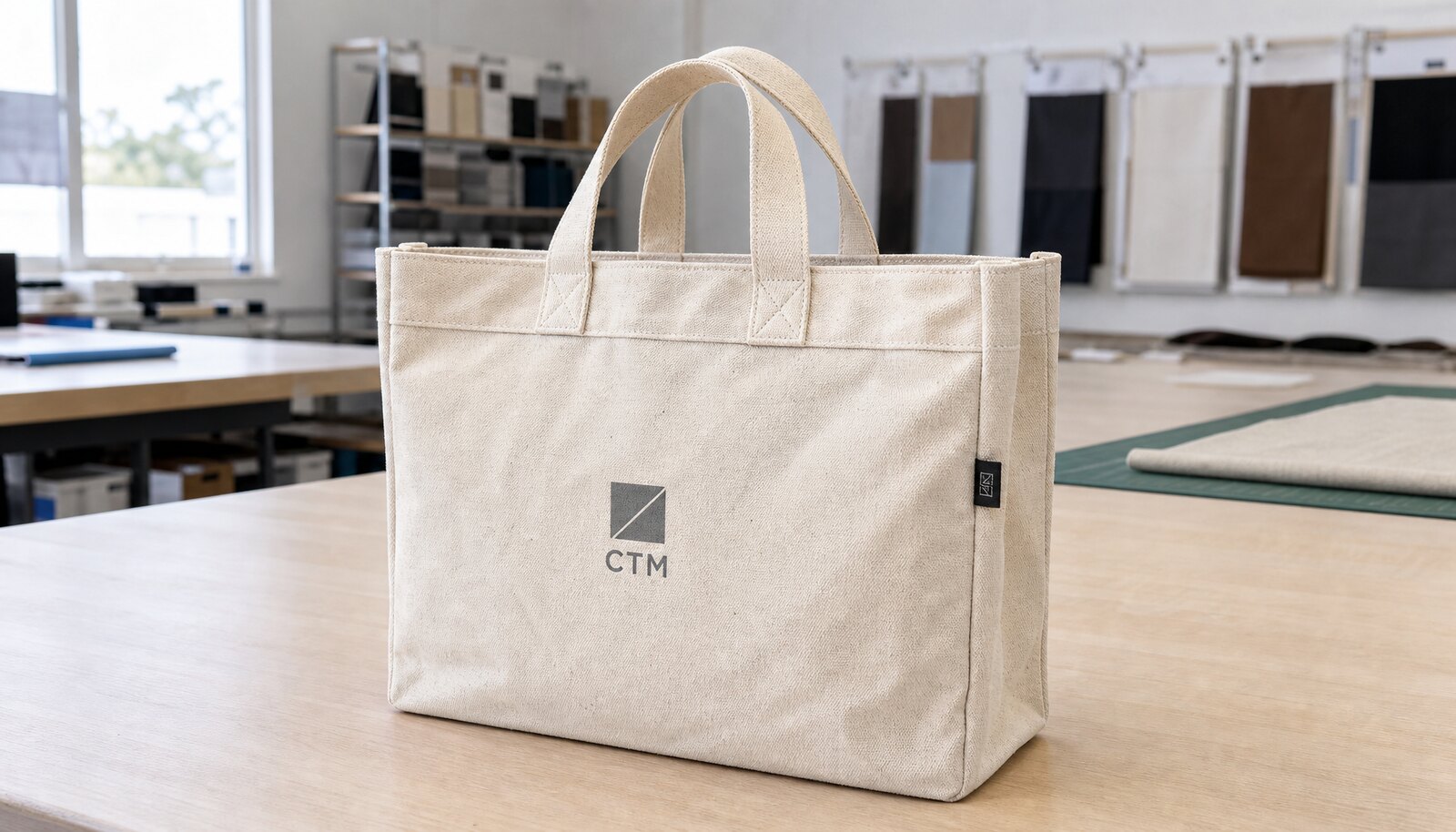
Why museum tote buying is different from general retail sourcing
Museums buy canvas totes for more than one reason. The same item may serve as a bookstore bag, a membership gift, a gift-shop resale item, an exhibition souvenir, or a simple visitor carry bag. That creates a different sourcing problem than a general promotional tote. The bag has to look good on a shelf, carry books without feeling flimsy, and still fit a retail margin that often leaves little room for hidden freight or rework. For a buyer, the real question is not just whether the bag looks nice in a sample photo. It is whether the bag can be repeated at the same standard across seasons, exhibitions, and replenishment orders.
A museum buyer also needs to think about audience and use pattern. Some stores sell lighter totes for postcards, catalogs, and small gifts. Others need a heavy canvas construction because visitors leave with hardback books, boxed sets, or bundled items. If the bag feels too soft, it can read as cheap on the shelf. If it is too heavy or stiff, it may become inconvenient to fold, store, or sell at the right price point. The procurement job is to set the quality level exactly where the shop needs it, not where the factory is happiest quoting.
That is why the phrase heavy canvas tote bags for museums bulk pricing plan should be treated as a sourcing brief, not a search phrase. It implies a commercial program with a target margin, a repeat order possibility, and a need to compare suppliers on the same technical basis. Before sending RFQs, define the sales channel, the target retail price, the expected basket of items the tote must hold, and whether the tote needs to feel premium enough to justify a higher shelf price. Once those use cases are clear, the rest of the quote process becomes much easier to evaluate.
A practical museum tote brief should include four decision points: the load target, the shelf presentation, the decoration style, and the reorder plan. The load target tells the factory how much seam strength and handle reinforcement are required. The shelf presentation tells you whether the bag needs to stand upright, keep a crisp silhouette, or arrive pre-folded in a certain way. The decoration style affects print cost, minimums, and lead time. The reorder plan matters because a supplier who can hold fabric or maintain print consistency is often more valuable than the one who offers the lowest first run.
- Retail-facing museum bags need better hand feel than event giveaways.
- Book-carrying use pushes you toward stronger seams and better handle reinforcement.
- Reorder consistency matters because exhibitions and shop assortments often repeat seasonally.
Set the bag spec first: size, load, and fabric weight
The fastest way to overpay for museum totes is to ask for a quote before the spec is clear. Fabric weight is only one part of the equation, but it is usually the first cost driver buyers can control. In bulk tote sourcing, 12 oz canvas is often the lower end of a serious retail bag, while 14 oz and 16 oz are more common when the bag needs a substantial hand feel and better book-carrying confidence. Some suppliers will call almost anything “heavy canvas,” so the buyer should ask for the measurement basis in writing. If the factory says 14 oz, clarify whether that means finished fabric weight, greige cloth weight, or a post-treatment measurement. Those are not interchangeable.
For museum retail, 14 oz is often a sensible starting point for general bookstore carry, gift items, and moderate daily use. It gives a strong enough body without making the tote feel overly rigid. A 16 oz bag is worth considering when the shop wants a premium silhouette, heavier load capacity, or a more durable impression for higher-priced retail. The tradeoff is obvious: the heavier the canvas, the higher the sewing difficulty, unit cost, and freight weight. There is also a hand-feel issue. Some buyers like a stiffer bag that holds its shape; others want a more flexible bag that folds neatly into a shopper’s arm or a display basket. Neither is automatically better. The right answer depends on how the tote will be sold.
Size matters as much as weight. A museum tote that is too shallow can feel decorative but fail in real use. A tote that is too wide may consume too much carton volume and increase shipping cost without improving value. Buyers should specify finished width, height, and gusset depth, plus handle length and handle drop. Handle drop is especially useful for museum use because visitors often carry purchases over coats or shoulder bags. A comfortable handle drop can be the difference between a tote that sells repeatedly and one that only looks good in a mockup.
For a bulk pricing plan, it helps to identify one core size and one secondary size rather than scattering the program across too many variants. If you need a small format for postcards and a larger one for books, quote both as separate SKUs instead of blending them into one vague request. That makes supplier comparisons cleaner and protects you from hidden price inflation caused by mixed specs.
- 12 oz: workable for lighter retail items and lower-budget programs.
- 14 oz: balanced choice for museum retail, general bookstore carry, and a stronger shelf feel.
- 16 oz: better for premium display, heavier loads, and a firmer silhouette.
- Always specify finished dimensions and handle drop, not just the nominal bag size.
How bulk pricing is built: fabric, sewing, print, packing, and freight
A museum tote quote is not one number. It is a stack of cost components, and each one can move the final landed cost in a different direction. Fabric weight drives the base material cost. Cut-and-sew labor changes with construction complexity, lining, gussets, internal pockets, and reinforcement details. Decoration cost changes with the print method and the number of colors. Packing changes the labor count and the carton cube. Freight then reacts to both gross weight and volume. When a quote looks low but the packaging is bulky, the total cost can quickly erase the apparent savings.
For procurement teams, the most useful comparison is not unit price alone, but a price curve at realistic volume steps. Ask the factory to quote 500, 1,000, 3,000, and 5,000 units using the same canvas weight and the same packing format. This shows whether the supplier has a good manufacturing cost structure or is just using one aggressive number to win the inquiry. Some vendors price a small test run attractively but flatten out at larger volume, while others may look more expensive at first and then reward scale. For a museum program that may replenish, the shape of the curve matters as much as the headline price.
The price also changes materially with print coverage. A one-color logo placed in a small area is usually cheaper than a full-front graphic or a large multi-color illustration. Tight registration, half-tones, or fine line art increase setup care and can create a higher reject rate. The same is true for edge-to-edge artwork or large printed surfaces that require more ink and more control over hand feel. If the design team wants richer art, the buyer should insist on a clear quote split: base bag price, print setup, per-color charge, and any added cost for larger print area. That separation is what turns a vendor quote into a usable procurement comparison.
Do not ignore packing and carton handling. Heavy canvas bags are durable, but they can still arrive wrinkled, dirty, or crushed if the cartons are overfilled or the bags rub heavily against one another. A cheap bulk pack may save a few cents per unit but create rework at receiving or presentation problems in the shop. If a museum store team has to re-fold, re-bag, or de-crease each tote, the savings disappear quickly. Buyers should ask for carton dimensions, gross weight, and the number of pieces per carton before accepting the quote. Freight often reacts more to carton cube than to the sewn bag itself.
- Material cost rises with fabric weight and any finishing treatments.
- Print setup and color count can materially change the economics of a small run.
- Packing choice affects labor, carton cube, and the condition of the bag at receipt.
- A good RFQ asks for separate lines for bag body, decoration, packing, and freight assumptions.
A real sourcing-route comparison: factory, trader, sourcing office, or local converter
The right supplier route depends on how the museum program works. A direct factory is usually the best fit when the buyer has a stable spec, repeat orders, and enough volume to justify clear technical control. The payoff is usually better base pricing and better visibility into materials and sewing. The cost is that the buyer must be more disciplined: technical specification, sample approval, defect rules, and timeline control need to be handled properly. Direct factory sourcing can produce excellent results, but only when the buyer is ready to run it like a production project rather than a casual merchandise purchase.
A trader or trading company can be useful when the museum needs lower quantities, mixed options, or help coordinating communication. This route often carries a margin, so the unit price is usually higher than direct factory, but the operational friction can be lower. For smaller institutions, that can be a sensible tradeoff if the buying team does not have deep sourcing staff. The key procurement question is whether the trader is actually controlling the factory, the artwork, and the QC process, or simply relaying messages. If they cannot tell you who owns the production line and inspection plan, they are not reducing enough risk to justify the added price.
A sourcing office or agent is often the best middle ground when the buyer wants factory comparison, local language support, and shipment oversight. This route is especially useful for institutions that care about quality but do not want to manage every line of communication. The downside is that a fee or commission may be embedded in the price. That does not automatically make the route expensive if it lowers reject rates, reduces sample churn, or helps secure better carton and freight planning. Buyers should ask whether the service fee is transparent and whether QC responsibility is defined in writing.
A domestic converter or local decorator can be the best option for urgent timelines, very small orders, or highly localized graphics. However, domestic decoration often comes with a higher unit cost and a narrower range of canvas weights, shapes, and reinforcement options. It can be useful for a temporary exhibition shop or a quick retail launch, but it is not usually the best route for a long-running bulk pricing plan.
The best sourcing route is the one that matches the buyer’s internal capability. If your team can manage technical specs and inspection, direct factory is usually strongest. If you need flexibility and lower internal workload, a trader or sourcing office may be the better commercial fit. If speed matters more than unit economics, a local converter may win. The important thing is to compare the real tradeoffs instead of assuming one route is always cheapest.
- Direct factory: best for repeatable specs and scale, but requires tighter buyer control.
- Trader: helpful for small or mixed orders, with a margin built into the price.
- Sourcing office: useful when you want oversight and communication support.
- Local converter: practical for urgency, but often not the lowest landed cost.
Printing choices that survive museum retail handling
Decoration is not just branding; it is part of the tote’s durability and retail value. For most museum programs, screen printing remains the best balance of cost, consistency, and visual clarity. A simple logo, exhibition title, or one-to-three-color museum identity usually prints cleanly on heavy canvas, and the method scales well across replenishment orders. It also tends to be easier to repeat because the screen, ink behavior, and placement can be controlled in a more predictable way than some digital alternatives.
Heat transfer can work for shorter runs or more detailed art, especially when the buyer wants a complex illustration or a limited seasonal design. The tradeoff is durability. Some transfers look very sharp initially but can crack, lift, or show wear after folding, abrasion, or repeated shop handling. That risk matters more in a museum than in a one-time event because retail bags are handled, folded, and sometimes reused. If transfer is the only way to achieve the art direction, the buyer should ask for a fold-and-rub test on samples before approving the run.
Embroidery can create a premium effect, but it is not always the right answer for a heavy canvas tote. It can add unit cost, slow production, and in some cases distort the bag body if the stitch density is high or the logo is large. Embroidery works best when the artwork is simple, the logo area is modest, and the buyer explicitly wants a tactile premium look. For very large museum identity graphics, screen print often gives a cleaner commercial result.
Print cost drivers should be broken out clearly in the quote. Ask for the setup charge by color, the per-piece print price, whether there is an extra charge for a larger print area, and whether a second print location changes the price. A one-color front print is a very different production event from a two-location logo with registration requirements. If the museum uses multiple exhibition graphics on the same bag body, ask whether the print screens can be shared across versions or whether each version triggers fresh setup. That one detail can change the true economics of the program.
For procurement review, the easiest way to compare decoration options is to ask for the same bag body with three print scenarios: blank, one-color logo, and the maximum intended artwork. That gives a clean read on how much branding contributes to the total, and it helps merchandising teams decide whether a more ambitious print is worth the margin impact.
- Screen print: strongest balance of cost, repeatability, and logo clarity.
- Heat transfer: useful for short runs or detailed art, but test fold and wear behavior.
- Embroidery: premium feel, but higher cost and potential distortion on larger logos.
- Ask for setup charge, per-color charge, and any extra price for a larger print area.
MOQ and assortment planning: how to avoid small-run price traps
Museum buyers often need variety. One season may require a core logo tote, a special exhibition design, and a members-only version. That flexibility is valuable commercially, but it can be expensive if each variation carries its own minimum. A supplier might quote a friendly total MOQ and still require a separate minimum for each color, print version, or packing type. In practice, that means the buyer may think they are ordering 2,000 bags, but the factory is really pricing four different 500-piece runs with four sets of setup costs.
The cleaner way to plan the bulk pricing program is to identify the one version that will repeat most often and build the quote around that base style. Then ask the supplier to price variants separately so the buyer can see the incremental cost of changing the artwork, print color, or packaging. This allows merchandising to decide whether the second design is truly worth it or whether a core bag plus a seasonal sleeve or belly band would be more economical. For museums, that is often a smarter structure than running many tiny bag variants.
Assortment planning should also consider color consistency. Natural canvas is usually easier to maintain than dyed canvas, but even natural fabric can vary by lot if the supplier changes yarn, finish, or bleaching method. If your shop relies on a stable look for reorders, ask whether the factory can reserve fabric or hold a standard greige source for repeat production. That is especially helpful when exhibition graphics repeat every quarter or when a museum store wants to refill the same bestseller without visual drift.
A useful buyer question is not just “what is the MOQ?” but “what is the MOQ by style, colorway, print version, and pack-out?” A transparent supplier will answer each part separately. A less organized supplier may bundle the numbers together, which makes comparison difficult. If you cannot tell which part of the order is driving the minimum, you cannot tell where the price risk sits. That is exactly where procurement teams lose budget on low-volume variants.
- A low total MOQ can still hide separate minimums by color or artwork version.
- Quoting the core style first makes variant pricing easier to compare.
- Ask whether the supplier can reserve fabric or maintain a repeatable base source.
- If variants are many, consider one body style with changing inserts or sleeves instead of many full tote SKUs.
What to inspect in samples before you approve production
Sample approval should be treated like a gate, not a formality. For heavy canvas totes, the blank sample tells you whether the canvas weight, handle feel, size, and seam build match the brief. The printed sample then confirms artwork placement, ink behavior, and visual balance. If the order is important, a production-top sample can provide one more layer of protection because it comes from the actual line conditions rather than a special sample-making setup. That matters when the museum expects repeatability across a larger order.
A serious sample check should include both visual and functional review. Start by measuring the finished bag against the approved size spec, including height, width, gusset, handle length, and handle drop. Then check whether the tote stands properly, folds correctly, and closes or stacks the way the museum store expects. Place the item on a shelf or counter if that is how it will be displayed. A bag can be technically correct but still look awkward in retail presentation if the body collapses or the handles sit badly.
Next, stress the weak points. Load the tote with books, catalog weight, or the actual retail bundle it is meant to carry. Lift it several times, walk with it, and inspect the top edge, handle anchors, and side seams afterward. A sample that looks fine on a table may still fail under practical use. Look for stitch pop, handle twisting, seam puckering, or print cracking after folding. If the tote is intended for resale, even minor cosmetic issues can matter because they affect shelf perception. If it is meant as a gift or event bag, functional reliability may matter more than minute cosmetic perfection.
A good sample record should include photos, measurements, comments, and a clear approval note. If a defect is acceptable, write that down. If it is not, define what the factory must correct. Do not rely on vague instructions like “make it cleaner” or “improve the print.” Procurement teams get better results when the sample feedback is specific enough that the factory can correct it on the next revision without guesswork. That saves both time and dispute risk.
- Approve size, handle drop, seam finish, and print placement separately.
- Test the tote with the actual load pattern, not an arbitrary weight only.
- Use blank, printed, and if needed production-top samples as distinct checkpoints.
- Write corrections in measurable terms, such as “move print up 8 mm” rather than “center it better.”
Packing, carton cube, and warehouse handling can change the real cost
Packaging is one of the easiest parts of the tote quote to underestimate. A heavy canvas bag can be shipped in bulk, but the way it is folded and boxed affects appearance, labor, and freight. If the museum store wants the bag to arrive ready for retail display, the buyer may need a more controlled folding method or a protective layer such as tissue, belly band, or polybag. Each of those choices adds labor and often increases carton volume. That is why packaging must be quoted as part of the total program, not as an afterthought.
A practical packing decision starts with the receiving workflow. If the museum has a backroom team that can open cartons and merchandize the bags, bulk pack may be the best economics. If the bags will go directly onto a polished retail shelf, a belly band or polybag may protect the print face and improve presentation. If the tote is part of a premium visitor gift, insert cards or branded packaging may be justified even though the unit cost goes up. The right choice is the one that fits the shop operation, not the one that looks cheapest on paper.
Carton dimensions are critical because freight pricing often reacts to volume and gross weight together. For example, a well-packed heavy canvas tote can fit efficiently if the supplier avoids overstuffing the carton. If the carton is overfilled, the bag body may crease, handles may deform, and the cube may actually become less efficient because the carton has to be larger to prevent damage. Buyers should ask the supplier to state the estimated units per carton, internal packing method, gross weight, and carton dimensions in the quote. If the order is going by air or courier, these details matter even more because the freight charge can be dominated by dimensional weight.
If your team is comparing suppliers, normalize the quote to landed cost per sellable unit. That means the bag price, plus packing cost, plus freight estimate, plus any receiving labor or damage allowance. A supplier that quotes a low sewn price but ships in bulky cartons can lose badly against a slightly more expensive bag with efficient packing. In museum procurement, the total cost of ownership is often more meaningful than the unit sewing cost alone.
- Bulk packing is cheapest, but presentation and damage control may need additional protection.
- Belly bands, polybags, and insert cards should be priced separately.
- Ask for carton dimensions and gross weight because freight reacts strongly to cube.
- Overpacked cartons can crease canvas and create receiving issues.
Lead time planning, reorder timing, and schedule risk
A museum tote schedule usually has five stages: specification, sample approval, material reservation, production, and shipping. The production lead time is only one part of the calendar. Buyers often see a 30- to 45-day production window for a custom heavy canvas tote after artwork lock, but that number is only credible if the factory already has the right fabric, the print process is straightforward, and the packing plan is clear. If the order uses multiple artwork versions, special packing, or a difficult canvas finish, the schedule can stretch. If the order lands near a holiday season or a major exhibition opening, the shipping risk increases further.
The most common delay is not sewing capacity. It is late decision-making. When retail, marketing, and merchandising all need to approve the artwork, the buyer should build an internal sign-off calendar before the order is even sent. A factory can only hold a schedule if the artwork is frozen and the sampling round is closed. Changes to handle length, print color, or packaging after sample approval usually push the shipment more than the actual sewing time does. That means the procurement team should treat artwork lock as a production milestone, not just a design milestone.
For repeat museum programs, reorder planning deserves its own conversation. Ask whether the supplier can keep the same paper pattern, print screen, fabric source, or packing standard for later orders. The goal is not just speed; it is consistency. A museum bookstore may need the same tote six months later, and even a small shift in canvas tone or print placement can make the reorder look different on the shelf. If the supplier cannot reserve materials or maintain a repeatable process, the buyer should expect more sample work on every reorder.
A good schedule plan should include a cushion for samples, approvals, and transit. That is especially important if the tote is tied to an exhibition opening or seasonal retail campaign. The earlier the buyer freezes the spec, the more room there is to handle small corrections without paying for air freight or accepting a rushed run. Procurement teams that include a schedule buffer usually end up with better pricing because they can use ocean freight or standard production windows instead of urgent premium service.
- Sample review time is part of the project schedule, not a side task.
- Freeze the spec before the factory buys material or prints screens.
- Build buffer time for exhibition launches, holiday peaks, and any reorder continuity issues.
- If the factory quotes a rush lead time, ask what steps are being skipped to make it happen.
How to compare landed cost and quote quality without getting misled
A good museum buyer compares quotes by landed cost, not by factory price alone. Landed cost includes the sewn bag, decoration, packing, freight, duty if applicable, customs or brokerage fees, and domestic handling. If the supplier offers different carton sizes or packing methods, the comparison should be adjusted to the actual number of sellable bags that arrive intact. This matters because a cheap quote can hide expensive logistics. A heavier canvas tote may cost more to sew, but if it packs efficiently and reduces damage, it can be the better commercial choice.
The most useful comparison framework is simple. First, normalize the quotes to the same bag size, same canvas weight, same print method, and same packing style. Second, compare the price curve by volume tier rather than a single quantity. Third, estimate freight using carton cube and gross weight. Fourth, add any decoration setup and packing extras. Finally, assess supplier risk: sample quality, communication clarity, QC evidence, and reorder reliability. That last layer often determines whether a slightly higher quote is actually the safer and cheaper option.
Here is a practical way to structure the comparison internally: one column for factory price, one for decoration, one for packing, one for freight estimate, one for customs or inland handling, and one for risk notes. The risk notes should record whether the supplier gave clear carton data, whether the sample matched the spec, and whether the supplier explained tolerances. If a quote is missing these details, it is not really comparable, even if the price looks attractive. Procurement teams save money when they compare apples to apples instead of comparing marketing numbers.
For museums, landed cost should also be considered against retail return. If the tote is sold in the shop, the bag must support margin after freight and shrinkage. If it is a gift or membership item, the cost must fit the program budget without forcing quality compromises. In either case, a slightly better construction or more efficient packing plan can be more valuable than a marginal savings on fabric. The right answer is the quote that balances quality, timeline, and total delivered cost, not simply the lowest sewn price.
- Compare quotes on the same spec, not on different assumptions.
- Include freight, duty, inland delivery, and any receiving labor in your analysis.
- Ask for carton cube and gross weight so logistics can be estimated early.
- Record sample quality and QC clarity as part of the commercial decision.
Specification comparison for buyers
| Sourcing route | Best fit for museums | Typical pricing behavior | Tradeoffs buyers should check |
|---|---|---|---|
| Direct factory | Repeat programs, custom specs, higher volumes, stable reorders | Lowest base price at scale, but setup, sampling, and freight must be managed closely | Requires clear technical spec, stronger PO discipline, and better supplier QA |
| Trader / trading company | Smaller programs, mixed items, shorter internal approval cycles | Higher unit price than factory, but often easier for lower MOQs and mixed artwork | Margin is embedded; confirm whether they are controlling production or brokering it |
| Sourcing office / agent | Buyers needing local language support, factory comparison, and shipment oversight | Service fee or commission may be added, but landed cost can improve if quality issues drop | Check who owns QC responsibility, sample approval, and claims handling |
| Domestic converter / decorator | Urgent timelines, very small quantities, or localization requirements | Usually the highest unit cost, but lower freight complexity and faster turnaround | Often limited on fabric weight, construction depth, and print scale |
| Hybrid model: factory + local decorator | Programs with blank bag stocking and variable museum graphics | Can reduce lead time on repeat graphics while keeping body cost competitive | Needs tight control of blank inventory, print consistency, and forecasting |
| Material | 8-12 oz cotton canvas, 120-220 gsm cotton, recycled cotton, or blended fabric selected by use case and target price | Before price comparison | Different cloth weights, backing, or certification claims make quotes hard to compare |
| Construction | bag size, gusset, handle drop, seam allowance, stitch density, reinforcement patch, and loading expectation | Before sampling | Weak stress points create returns and failed inspections |
| Decoration | screen print, heat transfer, embroidery, woven label, or hangtag matched to fabric texture and brand durability needs | Before artwork approval | The wrong method can crack, bleed, pucker, or fail on the chosen fabric |
Buyer checklist before sampling
- Write the tote spec before seeking quotes: canvas weight target in oz or GSM, finished size, gusset depth, handle length, handle drop, and expected load.
- State whether the tote is for retail resale, membership gifting, education events, or bookstore carry; each use case changes the quality threshold.
- Separate pricing by bag body, decoration, packaging, and freight so you can compare suppliers on the same basis.
- Ask for quote breaks at 500, 1,000, 3,000, and 5,000 units if the program may repeat.
- Request samples in the right order: blank sample, printed sample, and if the order is critical, a production-top sample.
- Confirm carton count, carton dimensions, gross weight, and whether the print face is protected during packing.
- Define acceptable variation in canvas weight, print registration, and stitching before production starts.
- Ask for close-up photos or videos of seam reinforcement, bar-tacks, print screens, and finished packing before approval.
- Set a deadline for artwork lock and sample sign-off so production lead time is not eaten up by internal review.
- Clarify whether the supplier will hold fabric for replenishment, because this affects color consistency and reorder speed.
Factory quote questions to send
- What is the exact fabric weight in oz or GSM, and is it measured on finished fabric, greige fabric, or a post-wash sample?
- Which construction details are included: side seams, bottom seam type, handle reinforcement, bar-tacks, and top hem width?
- What decoration method do you recommend for this artwork, and what are the setup charges by color count or print location?
- Can you quote 500, 1,000, 3,000, and 5,000 units with the same packing specification so we can compare the price curve?
- What is the tolerance range for bag size, handle length, and print placement, and how do you handle pieces outside tolerance?
- What sample cost, sample lead time, and production lead time should we plan for after artwork approval and payment?
- What carton size, units per carton, and gross weight do you expect, and how many pieces can be packed without crushing the tote body?
- Can you provide photos of previous museum, bookstore, or retail tote orders with similar canvas weight and print coverage?
- What is your recommendation for landed-cost optimization: bulk pack, belly band, polybag, or insert card?
- If we reorder the same bag later, what can you freeze in advance to protect color consistency and speed?
Quality-control points to confirm
- Fabric weight should match the agreed specification within the stated tolerance; if no tolerance is stated, buyers should require it in writing before PO release.
- Inspect for thin spots, slubs, dye streaks, weave gaps, or oil marks on at least a defined sampling plan from each carton or lot.
- Stitching should have consistent SPI or stitch density appropriate to the construction, with no skipped stitches, loose threads, or seam puckering at stress points.
- Handle anchors should pass a practical pull test on a loaded sample; look for bar-tacks, cross-stitching, and no stitch pop at the top edge or bottom corners.
- Print registration should stay within the agreed tolerance; for simple logo work, buyers should specify allowable shift in millimeters rather than using vague language like 'centered'.
- For multi-color logos, inspect color-to-color alignment, ink opacity, edge sharpness, and rubbing resistance after folding and light handling.
- Require a wash, rub, or fold test only if the tote is expected to be reused; otherwise, a carry and crease test may be more relevant to the museum use case.
- Cartons should match the approved count, size, and orientation, and should not be overfilled to the point that handles deform or printed faces rub heavily.
- AQL-style sampling can be used for acceptance planning; for many retail tote programs, buyers commonly set tighter limits for major defects and more forgiving limits for minor cosmetic issues.
- Record defect thresholds in advance: for example, rejected pieces may include broken seams, wrong size, wrong print, visible stain, or handle attachment failure; cosmetic variation should be defined separately from functional failure.