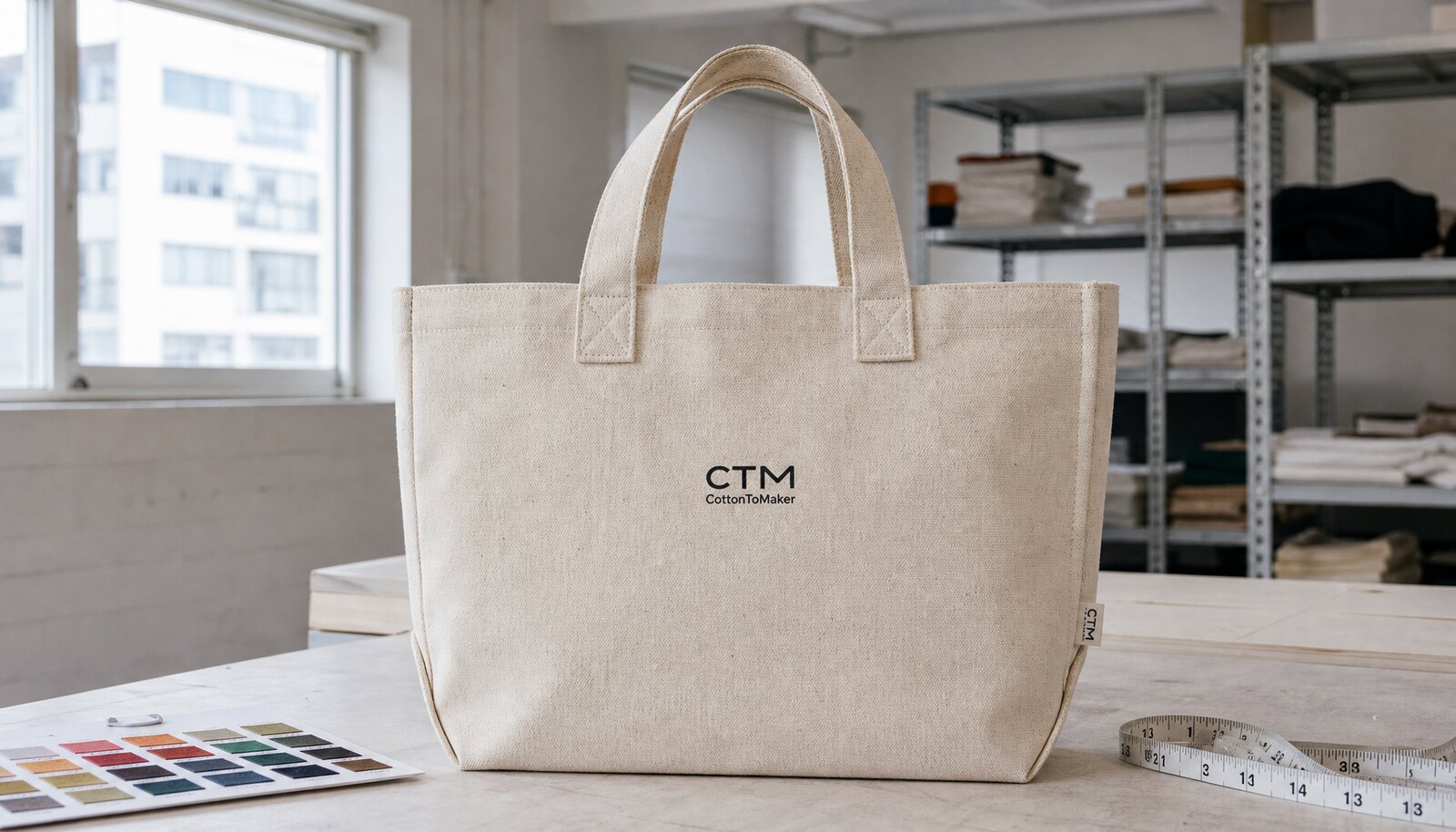
Why wellness brands need a different tote spec
Wellness buyers usually want a tote that looks calm, premium, and durable at the same time. The bag often carries towels, skincare bottles, supplements, candles, studio retail, or event kits, so the construction has to look clean on shelf and survive regular use. That means a standard promotional tote is often too flimsy, while a luxury fashion tote may be overbuilt and overpriced for the program.
For this category, the buying problem is not simply finding a canvas bag. It is matching the fabric weight, handle build, logo method, and packing style to the brand’s use case. If you write the RFQ as a generic tote request, you will get quotes that are hard to compare and samples that do not reflect real retail performance.
- Think in terms of load, presentation, and repeat use, not only print area.
- Wellness bundles often need a bag that holds shape when displayed or photographed.
- The best spec is usually the lightest bag that still passes your in-house handling test and retail presentation requirement.
Choose the right canvas weight before you price the order
For heavy canvas tote bags, a practical starting point is 14 oz to 16 oz canvas, which is roughly 475 to 540 GSM. That range usually gives enough body for structured retail use without driving cost and carton volume too far. If the bag must stand upright, resist corner sag, or carry a dense gift set, this weight class is usually the safest quote benchmark.
If you go lower, ask whether the factory is using the same yarn count and finishing standard for every production run. Two bags that both claim “heavy canvas” can behave very differently in hand. One may feel dense but collapse at the base, while another may be stiff yet noisy or prone to crease marks after printing. The spec should be written in measurable terms, not marketing language.
- Useful spec language: 14 oz, 16 oz, or exact GSM plus weave description.
- For lighter wellness merch, 12 oz may work, but it is a different buyer decision and should be quoted separately.
- Ask for fabric width, shrinkage allowance, and whether the cloth is pre-shrunk or finished after weaving.
Logo method affects cost, appearance, and lead time
Most wellness brands use a simple logo or short message, which makes screen print the default comparison point. A one-color screen print is usually the most cost-efficient for medium and larger runs, especially on natural canvas. It gives strong coverage and is straightforward to inspect, provided the artwork is not too fine. If the logo has soft gradients, small type, or a multi-color design, print risk rises fast.
Heat transfer can be useful for limited runs or more detailed artwork, but buyers should treat it as a different wear profile. Transfers can look clean at first and still crack or lift after repeated folding. Embroidery looks premium but adds cost, changes the hand feel, and may distort lighter fabric. For a wellness tote order, the right method is the one that matches the brand’s selling channel and expected use, not just the prettiest sample.
- Simple one-color logo: best for repeat orders and quote clarity.
- Multi-color or detailed art: expect higher setup cost, slower approval, and tighter placement control.
- If the tote is dark-colored, ask whether underbase ink is needed and how that changes hand feel and price.
How to compare supplier routes without getting trapped by headline price
The lowest unit price is rarely the safest route if you need consistent retail quality. A direct factory quote often gives the best control over canvas weight, handle reinforcement, and print process, but the buyer must manage artwork clarity, sample approval, and packing details more actively. A trading company can simplify communication when the order combines multiple product lines, but there is usually less transparency on fabric source and process control.
A local decorator or print shop may seem attractive for low MOQ, yet it can be weak on bulk packing, carton efficiency, and export documentation. For importers and distributors, the real comparison is not only price per tote. It is price per acceptable tote delivered to the receiving center with the right carton count, clean print, and usable lead time.
- Direct factory: stronger for repeat programs and tighter spec control.
- Trading route: useful when you need consolidated sourcing or mixed SKUs.
- Local print route: only makes sense when MOQ is very low and international freight would erase the savings.
Supplier comparison table for wellness tote sourcing
Use the sourcing route that fits your procurement risk, not just the one with the lowest quote. The table below compares practical options buyers usually face when ordering custom logo heavy canvas totes for wellness programs, retail resale, or promotional bundles.
If your order is moving into a chain store, distributor network, or multi-region rollout, ask every supplier to quote the same fabric, same handle build, same print method, and same pack format. Otherwise, you are comparing different products with the same name.
- Standardize the RFQ before collecting prices.
- Separate sample cost, freight, and setup charges from unit price.
- Use the same artwork version and carton spec across all quotes.
What the factory quote must include to be comparable
A meaningful quote should tell you exactly what is included and what is not. For this product, quote drift usually comes from fabric weight ambiguity, print setup, handle substitution, and packing assumptions. If one supplier includes polybagging and another does not, the apparent price difference may disappear once you add receiving and relabeling cost.
The strongest quote is the one you can turn into a purchase order with minimal rewriting. That means the supplier should state fabric GSM or oz, finished size, handle length, print area, packing quantity per carton, and production lead time after sample approval. If any of those are missing, you are buying uncertainty along with the tote bag.
- Ask for line-item clarity on sample, setup, print, packing, and carton charges.
- Require the same currency basis and incoterm across all quotes.
- If the supplier proposes a cheaper fabric, ask for a physical swatch and a weight measurement.
Sample approval should test use, not just appearance
A sample pass is more than a neat logo and straight seams. For wellness brands, the tote should be judged in the same way the customer will use it: carrying a bundle, being folded and refolded, sitting in a retail display, and being packed in carton quantities that make sense for your warehouse. A pre-production sample is the right checkpoint once artwork and fabric are final.
At minimum, compare the sample to the approved spec sheet under normal light. Check handle drop, gusset shape, logo placement, print coverage, and how the bag stands when partially loaded. If your program includes bottle-heavy kits or event kits, put weight inside the sample before approving. Many tote issues only appear after the base starts to splay or the handle attachment pulls at the seam.
- Use a blank swatch to confirm fabric feel, color, and weave before print approval.
- Approve a printed proto only after checking placement, opacity, and edge sharpness.
- For repeat orders, save a sealed control sample and a photo record with measurements.
Packing choices change landed cost and warehouse handling
Heavy canvas looks simple, but packing decisions can add real cost. Flat packing reduces volume and usually improves freight efficiency. A polybag per tote improves cleanliness for retail distribution but increases labor and plastic use. Tissue, belly bands, or hang tags may be needed for premium wellness retail, but those details should be priced from the start rather than added after production begins.
Retail buyers should also care about carton content and carton dimensions. If your warehouse works best with 20 or 25 pieces per carton, say so in the RFQ. The wrong carton count can slow receiving, create rework, and make the shipping quote misleading because cubic volume rises quickly on a heavy canvas tote with stiff structure.
- Ask for carton dimensions, net weight, gross weight, and pieces per carton.
- Decide whether the bag ships folded, flat, or with a board insert.
- If cleanliness matters, specify the inner polybag thickness and whether it should be resealable.
Lead time risk is usually caused by artwork and packing changes
For a standard custom logo heavy canvas tote, a realistic production window is often around 30 to 45 days after pre-production approval, assuming fabric is available and the print is one color. The schedule gets longer when the order needs shade matching, special wash effects, multiple logos, or custom retail packing. Buyers should separate sample lead time from bulk production lead time so the internal launch calendar is not built on an optimistic assumption.
The main schedule risk is not the sewing line; it is late decision-making. When artwork changes after sample approval, the factory may need new screens, new labels, or new cutting layouts. If the destination market has a fixed launch date, build a buffer for these revisions and avoid approving a sales forecast before the spec is locked.
- Plan an internal approval deadline before the factory’s promised ship date.
- Freeze artwork before pre-production sampling.
- If there are multiple colors or channels, schedule them as separate production lots when necessary.
Buyer QC thresholds that keep the tote usable in real retail
Quality control for this product should focus on defects that buyers actually see and feel: crooked print, weak handles, distorted base shape, and dirty packing. Canvas tolerances can be wider than apparel tolerances, but the bag still needs to look consistent on a shelf and carry weight without failure. If the bag is used in wellness retail, presentation matters almost as much as strength.
Set a clear acceptance band for size and placement before production starts. For example, allow reasonable sewing tolerance, but not visible skew in the front logo or obvious mismatch in handle length. The best QC programs reject the right defects early, before the entire run is packed. That is cheaper than sorting finished cartons at the warehouse.
- Measure a sample set for size, logo placement, and handle symmetry.
- Inspect stitching on handle ends and bottom corners under tension.
- Reject dirt, oil spots, broken threads, and print smudges before final packing.
Specification comparison for buyers
| Spec decision | Recommended option | When it fits | Buyer risk to check |
|---|---|---|---|
| Fabric weight | 14 oz to 16 oz canvas, usually about 475 to 540 GSM | Premium wellness retail, yoga studio merch, spa gift sets, and bags that must stand upright with bottles or folded apparel | Too-light cloth collapses in transit; too-heavy cloth raises cost and can make print registration less forgiving |
| Handle construction | Self-fabric handles or 25 mm to 38 mm cotton webbing with bar-tack reinforcement | When the bag carries skincare kits, towels, supplements, or retail bundles | Thin handles stretch under load; weak bar-tacks fail first in drop testing |
| Logo method | 1-color screen print, water-based print, or heat transfer for short runs | When the logo is simple, large, and color accuracy matters less than clean coverage | Fine gradients, tiny text, or dark fabric may need a different method; print cracking can appear after folding |
| Supplier route | Direct factory for repeat programs; trading company for mixed-category consolidation; local printer for very low quantities | When procurement needs control over spec, pricing, or combined shipments | Trading layers can hide the actual fabric spec and increase quote drift |
| MOQ strategy | Start with 500 to 1,000 pcs per color/style for custom production; sample first if artwork or handle build is new | When you need retail-ready bags but are still testing sell-through | Low MOQ often means fewer size options, fewer print colors, or higher unit cost |
| Internal reinforcement | Bottom gusset plus optional cardboard insert or internal lamination-free stiffener | When the tote must display well on shelves or hold rigid gift sets | Over-stiff construction can wrinkle at fold points and increase carton volume |
| Packing format | Bulk packed in export cartons with one polybag per piece only if retail cleanliness requires it | When destination is wholesale, distribution center, or controlled retail receiving | Excess retail packing increases cube, carton count, and unpacking labor |
| Lead time plan | Approve sample, then allow about 30 to 45 days for production after pre-production approval | When order is standard fabric, one print color, and normal carton packing | Artwork delays, shade matching, and hardware substitutions push the schedule |
| Cost driver focus | Fabric GSM, handle material, print area, number of colors, lining, and packing method | When buyers need a realistic quote comparison instead of a headline price | The cheapest quote often excludes setup, sampling, carton specs, or hidden packing charges |
Buyer checklist before sampling
- Confirm fabric weight in GSM or oz, plus whether the canvas is bleached, natural, or dyed.
- Define finished size, gusset depth, handle length, and whether the tote must stand upright on shelves.
- Specify logo method, artwork file format, print colors, and approved Pantone references if needed.
- State target MOQ by color and by artwork version, not only total order quantity.
- Request sample type: blank material swatch, printed proto, or pre-production sample with final packing.
- Set carton pack quantity, inner polybag requirement, and master carton marks before PO release.
- Agree on acceptable tolerances for size, shade, stitch count, and print placement.
- Ask for production lead time, sample lead time, and the earliest ship date based on PP approval.
Factory quote questions to send
- What is the exact fabric spec in oz or GSM, and is the canvas single-ply or double-ply at the base or handles?
- Is the quoted price based on one-color print, one-side print, or both sides? What is the setup charge per color?
- What handle material and handle reinforcement are included, and what load test standard do you use internally?
- Does the quote include sample cost, sample freight, carton cost, and export packing, or are these separate line items?
- What is the MOQ per color and per artwork version, and can mixed colors share the same print plate or screen?
- What is the production lead time after pre-production sample approval, and what factors typically extend it?
- Can you provide a measurement tolerance sheet and a pre-shipment inspection checklist for this style?
- How are bags packed for shipment: flat packed, folded with tissue, or polybagged, and how many pcs per carton?
Quality-control points to confirm
- Fabric GSM tolerance: confirm the mill or converter range before cutting, especially if the bag must hold heavy wellness kits.
- Stitching: inspect handle attachment, bar-tack density, side seams, and bottom seam alignment under load.
- Print placement: measure logo height and offset from centerline; reject obvious skew or ink bleed on textured canvas.
- Color consistency: compare bulk production against approved sample under daylight and warehouse lighting.
- Dimensions: verify finished width, height, gusset, and handle drop on at least AQL-style sample sets or agreed lot checks.
- Packing integrity: carton count, carton strength, and compression resistance should match the distributor or retailer receiving process.
- Odor and cleanliness: reject bags with excessive oil smell, lint contamination, or visible stain marks before packing.