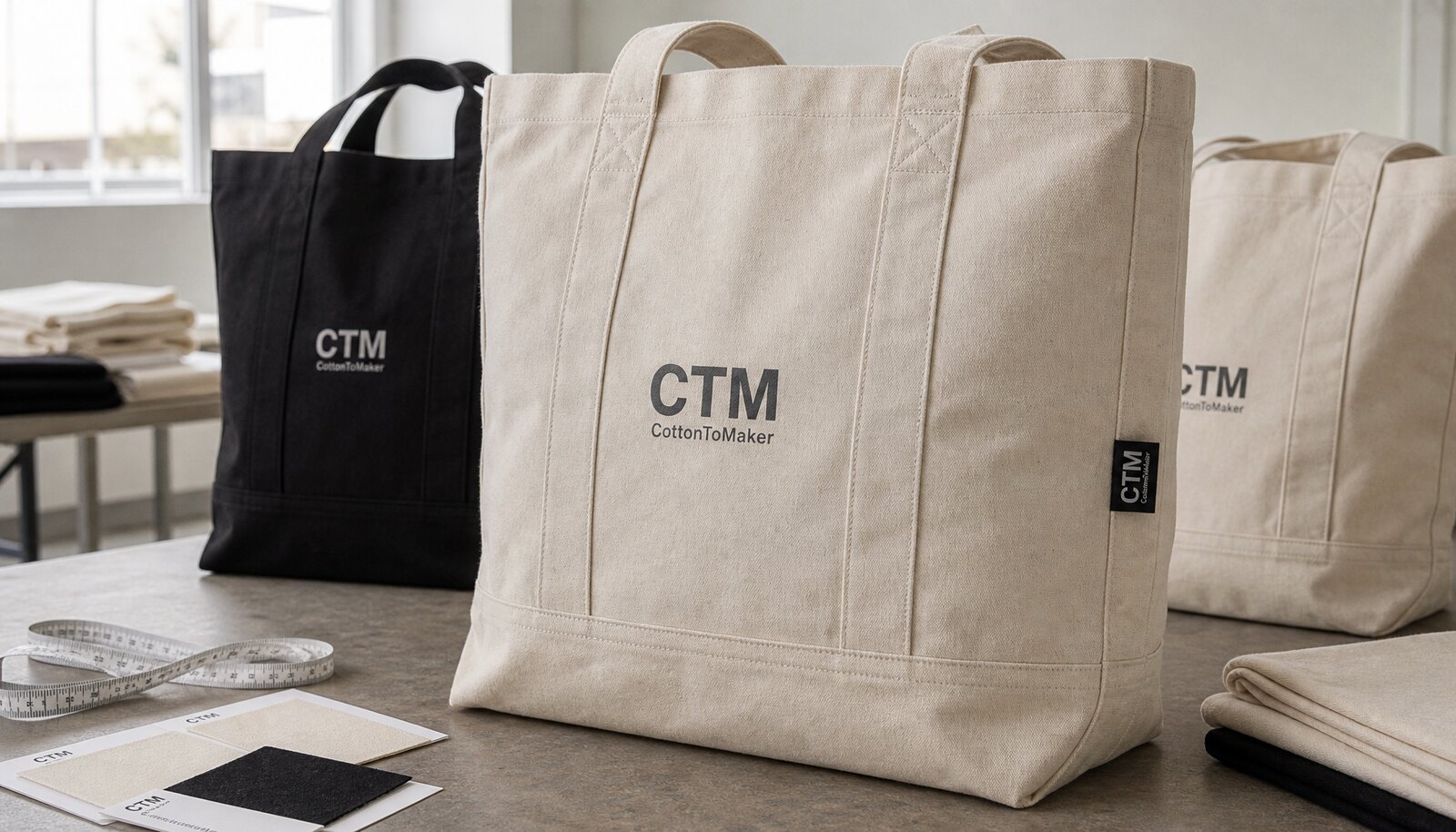
Why trade show canvas bags fail when the spec is too loose
For trade shows, the tote is usually the first branded item a visitor touches and the last one they carry out. That means the bag has to do two jobs at once: look clean on the table and survive being stuffed with catalogs, samples, or bottles. A lightweight canvas that looks fine in a photo can collapse on the show floor, while an overly heavy fabric can push the landed cost above what the event budget can absorb.
The buying mistake is usually not the bag style; it is the missing spec. Procurement teams often approve a sample that looks acceptable, then receive bulk bags with a different fabric hand, weaker handles, or print that sits too low because the artwork file was not locked to a clear construction sheet. If the order is for multiple shows or regions, that inconsistency becomes a repeat issue rather than a one-time defect.
- Trade show totes need structure, clean print registration, and fast packing.
- The right spec balances durability, event presentation, and import cost.
- A short RFQ usually causes preventable variation in canvas weight, handle reinforcement, and packing.
Choosing the right canvas weight for event use
For heavy canvas tote bags for trade shows sustainable packaging comparison, the most practical starting point is 12 oz to 16 oz cotton canvas. In this range, the bag feels substantial, holds shape better, and takes print more cleanly than very light fabric. A 14 oz canvas is often the middle ground for brands that want a premium reuse value without moving into the price and stiffness of utility-grade canvas.
GSM matters when you compare suppliers across regions. If one quote uses oz and another uses GSM, convert them before making a decision. Buyers should also clarify whether the fabric is raw, pre-shrunk, or washed, because those choices affect finished size and post-wash stability. If the tote must stay square on a retail display, a slightly heavier weave and a bottom gusset can matter more than just the headline weight.
- 12 oz: better for simpler giveaways and lower total spend.
- 14 oz: common event balance for structure and cost.
- 16 oz: more premium hand-feel, higher fabric and sewing load, often better for retail-style presentation.
Print method drives both cost and brand durability
Most trade show tote programs use one- or two-color logos, which is why screen print remains the default option. It is efficient, durable, and usually the cleanest choice on coarse canvas. Screen print also gives better unit economics once the run is beyond a small sample order, because setup cost spreads well across volume.
Complex art changes the sourcing equation. If the logo includes gradients, fine lines, tiny text, or full-color imagery, a buyer may have to move to heat transfer or another decoration method. That can be acceptable for short-run programs, but the buyer should compare abrasion resistance, print hand-feel, and turnaround time. On canvas, the risk is not only color match; it is whether the print cracks, fills in, or loses detail after folding and use.
- Screen print is best for simple event logos and repeat bulk orders.
- Heat transfer can work for smaller runs or more complex artwork, but it needs abrasion testing.
- Ask for actual material strike-offs, not just a PDF proof.
Supplier routes: direct factory, trader, or local converter
When buyers compare supplier routes, the lowest unit quote is not always the lowest landed cost. A direct factory can give better control over fabric, stitch detail, and pack count, but only if the factory actually owns or tightly manages the print and packing steps. A trader or sourcing office may simplify communication and multi-item coordination, but it can add margin and reduce visibility on where the real quality risk sits.
For trade show programs, direct factory sourcing usually wins when the buyer needs consistent specifications across multiple shipments. Local converters can be useful for urgent replenishment or smaller regional runs, especially if the event calendar changes often. The correct route depends on how much technical control the procurement team wants versus how much flexibility they need in color, packing, and delivery sequencing.
- Direct factory: best for repeat specs, larger volumes, and tighter control.
- Trader/sourcing office: useful for multi-category programs and communication consolidation.
- Local converter: helpful for urgent turns or last-mile packaging, but usually higher unit cost.
Comparison table: what buying route fits which trade show program
The right sourcing route depends on event count, print complexity, and whether the buyer needs the bags shipped directly to a forwarder, distributor, or show warehouse. The table below compares the common routes buyers use for heavy canvas tote bags for trade shows sustainable packaging comparison, with the risk points that usually show up in quote review.
Use the route that matches your workflow, not only the route with the best headline price. A cheaper quote that ignores packing detail, sample timing, or artwork handling can create more cost after the bags leave the factory.
- Direct factory: best for repeat specs and tight control.
- Trader/sourcing office: helpful for multi-category programs.
- Local converter: useful for urgent turns and small regional runs.
MOQ logic: how factories price event totes
MOQ on canvas totes is rarely a single number. Factories usually build MOQ around fabric color, print design, and setup time. One-color natural canvas may have a much better minimum than a dyed black canvas with a two-color logo and woven side label. If the program includes several event colors or regional versions, the buyer should ask for MOQ by color and artwork version rather than accepting one blended number.
A useful quote should also show whether the factory is charging for screens, plate setup, sampling, and special packing separately. That matters because a low per-bag price may hide a heavy setup burden. For procurement teams, the right question is not only the unit price at 5,000 pieces, but the break-even point where the second or third design becomes inefficient. That is how you avoid over-fragmenting the order.
- Request MOQ by fabric color, print color count, and size.
- Separate one-time setup charges from recurring unit cost.
- Watch for hidden costs tied to special folding, insertion, or retail packing.
QC thresholds that prevent ugly surprises at receiving
Canvas tote QC should be practical. Buyers do not need cosmetic perfection in every bag, but they do need consistency where it affects brand presentation and usability. That means measuring finished size, checking print alignment, testing handle reinforcement, and reviewing stitch quality on a random sample from production. If the bag will be handed out at a trade show, a weak handle or crooked print can become visible immediately in front of customers.
Set acceptance criteria before production begins. For example, define allowable size tolerance, print shift, and carton shortage rate in writing. Then make sure the factory understands that the outer carton count, polybag count, and label text are part of QC. Many shipment issues are not sewing defects; they are packing mismatches and count errors that create shortages at the event forwarder.
- Measure finished size and handle length on pre-production and bulk samples.
- Inspect seam strength at the handle joins and bottom seam.
- Verify packing count and carton labels before shipment release.
Sample approval: what to review before bulk goes live
A sample is not just a visual approval; it is the reference for bulk production. The buyer should use the sample to lock the material hand-feel, color, print placement, and pack style. If possible, approve a physical pre-production sample on the actual fabric and with the actual artwork, not a prototype made from substitute cloth. Even small changes in weave or coating can change how the print sits on the surface.
Sample review should include how the tote behaves when filled. Put in a realistic load such as brochures, a notebook, or a bottle and see whether the handle stitches distort or the bottom seam twists. If the bag is meant to be reused, this is where the factory can still change reinforcement before a full run starts. Once bulk cutting begins, simple changes become expensive.
- Approve fabric, print, size, handle, and packing as a set.
- Test the bag with a realistic event load.
- Do not release bulk on artwork proof alone.
Packing, folding, and carton specs that affect landed cost
Packing is one of the easiest places to lose money in a tote program. Individual polybags, folded inserts, barcode stickers, and retail-style cartons all add labor and volume. If the bags are going to a trade show forwarder or distributor warehouse, bulk packing in larger master cartons may be the better commercial choice. If the brand wants retail-ready presentation, then the buyer should accept the extra packing cost and reflect it in the landed-cost comparison.
The carton spec should be treated as part of the product, not an afterthought. Carton dimensions affect freight volume, while a poor fold spec can create permanent crease lines across the logo area. Buyers should also decide whether the bags will be bundled by color, by SKU, or by event location. That decision matters for warehouse efficiency and can reduce sorting errors before dispatch.
- Bulk pack lowers labor and freight volume.
- Retail-ready packing improves shelf presentation but increases cost.
- Carton count, net weight, and bundle logic should be written into the PO.
Sustainable packaging comparison: where the claim is real and where it is not
Many buyers use canvas totes as a sustainability alternative to single-use plastic, but the claim only holds if the whole package makes sense. A reusable canvas bag with heavy plastic sleeves, excessive inserts, or oversized cartons may weaken the packaging story. The most credible approach is usually a durable cotton canvas bag with simple kraft packing, minimal labeling, and a clear reuse message that does not overstate environmental performance.
Procurement teams should separate product sustainability from packaging sustainability. The tote itself may be reusable, but the packaging route can still be wasteful. A practical comparison should include the number of handling steps, carton volume, and whether the factory can supply plain polybags, recycled-content outer cartons, or reduced packing formats. That is the difference between a marketing claim and a sourcing decision.
- Favor durable reuse value over vague eco wording.
- Minimize packaging layers where possible.
- Keep sustainability claims limited to what the supplier can support in writing.
Specification comparison for buyers
| Spec decision | Recommended option | When it fits | Buyer risk to check |
|---|---|---|---|
| Fabric weight | 12 oz to 16 oz cotton canvas, with 14 oz as the common trade show balance | Reusable event bags that need structure, better print registration, and a premium hand-feel without going into utility-bag pricing | Lower than 12 oz can look flimsy; above 16 oz raises cost and stitch stress if reinforcement is weak |
| Source route | Direct factory order with print and packing under one PO | You need control over fabric shade, handle length, print placement, and carton pack count | If print is outsourced, quality and packing accuracy can slip unless the print partner is named in the RFQ |
| Print method | Screen print for simple logos; heat transfer only for short-run complex artwork | Most trade shows use one to three spot colors on canvas; screen print gives the best cost-to-durability ratio | Fine lines, gradients, and tiny text may fill in on coarse canvas; approval should be on actual material |
| Handle construction | Self-fabric handles with X-box or bar-tack reinforcement | Bags that will hold catalogs, samples, or bottled items at a booth | Flat stitching without reinforcement can twist, tear, or elongate after repeated carrying |
| Closure style | Open top for fast handout; zipper or snap only when contents must stay secure | Literature kits, on-floor giveaways, and branded retail events where packing speed matters | Closures add cost, sewing steps, and lead time; they can also slow stuffing at the event organizer's warehouse |
| Packaging route | Bulk packed in polybags by count, then master cartons with one carton spec sheet | Importers and distributors who re-pack locally or ship to event forwarders | Retail-ready individual packing increases labor and volume; careless carton counts cause shortages at final distribution |
| Sustainability claim | Reusable natural canvas with plain kraft packing and no exaggerated eco claim | Brands that want a practical reusable item and cleaner packaging presentation | Avoid broad sustainability language unless you can support material content and packaging format |
| MOQ approach | Tiered MOQ by color and print count, not a single all-in number | When buying multiple event colors or dividing between regional shows | A low headline MOQ may hide high per-color setup charges or force mixed lots that complicate QC |
| Lead-time structure | Prototype sample first, then bulk after artwork lock and pack confirmation | Launch dates with fixed event handoff windows | Skipping sample approval to save time often creates artwork shifts, handle mismatch, or carton-label errors |
Buyer checklist before sampling
- Confirm the fabric weight in oz and GSM, the weave density, and whether the tote must stand upright when empty.
- Lock finished size, handle drop, handle width, and reinforcement method before artwork is released.
- Choose print method based on artwork complexity, required opacity, and expected abrasion during event use.
- Specify whether the bags are open-top, snap closure, or zipper closure, and whether closure affects stuffing speed.
- Set packaging detail: individual polybag yes/no, carton pack count, carton dimensions, and master carton markings.
- Request pre-production sample photos or a physical sample with print alignment, seam construction, and color approval.
- Ask for the factory's normal bulk lead time plus sample lead time separately, including peak-season risk.
- Define acceptable shade variation, stitch defects, print tolerance, and carton shortage tolerance in writing.
Factory quote questions to send
- What is the exact canvas weight in oz and GSM, and what finished bag weight should we expect by size?
- Is the quote based on raw canvas, pre-shrunk canvas, or washed canvas, and how does that affect final size tolerance?
- Which print method is included, how many colors are covered, and what is the setup charge per artwork or per screen?
- What handle reinforcement is standard, and can you provide stitch detail photos or a construction drawing?
- What is the MOQ by color, by print design, and by size if we order a mixed program?
- What are the sample charges, sample lead time, and what changes are allowed before bulk starts?
- How are the bags packed inside the carton, and are carton counts and net/gross weights listed on the packing list?
- What is the standard bulk lead time after sample approval, and what causes delay during peak season?
- Which QC points are inspected before shipment, and can the factory provide an AQL-based inspection report?
- Are any eco or sustainability claims included in the quote wording, and what supporting material is available for those claims?
Quality-control points to confirm
- Fabric weight tolerance should be controlled against the approved swatch, not only the catalog description.
- Finished dimensions should be measured after sewing and before packing, with a practical tolerance set by bag size and intended insert load.
- Handle bar-tacks or X-box reinforcement should be even, aligned, and free from skipped stitches or loose thread ends.
- Print registration should match the approved sample, with no major shift on seam edges, folds, or pocket areas.
- Seam strength should be checked at side seams, bottom seams, and handle joins, especially if the tote will carry catalogs or bottles.
- Stitch density should be consistent, with no broken needles marks, oil stains, puckering, or thread tension issues.
- Carton pack count, carton label accuracy, and inner packing method should match the approved packing list exactly.
- For bulk shipments, random finished bags should be opened to check odor, dust, crease marks, and hidden print rub-off.