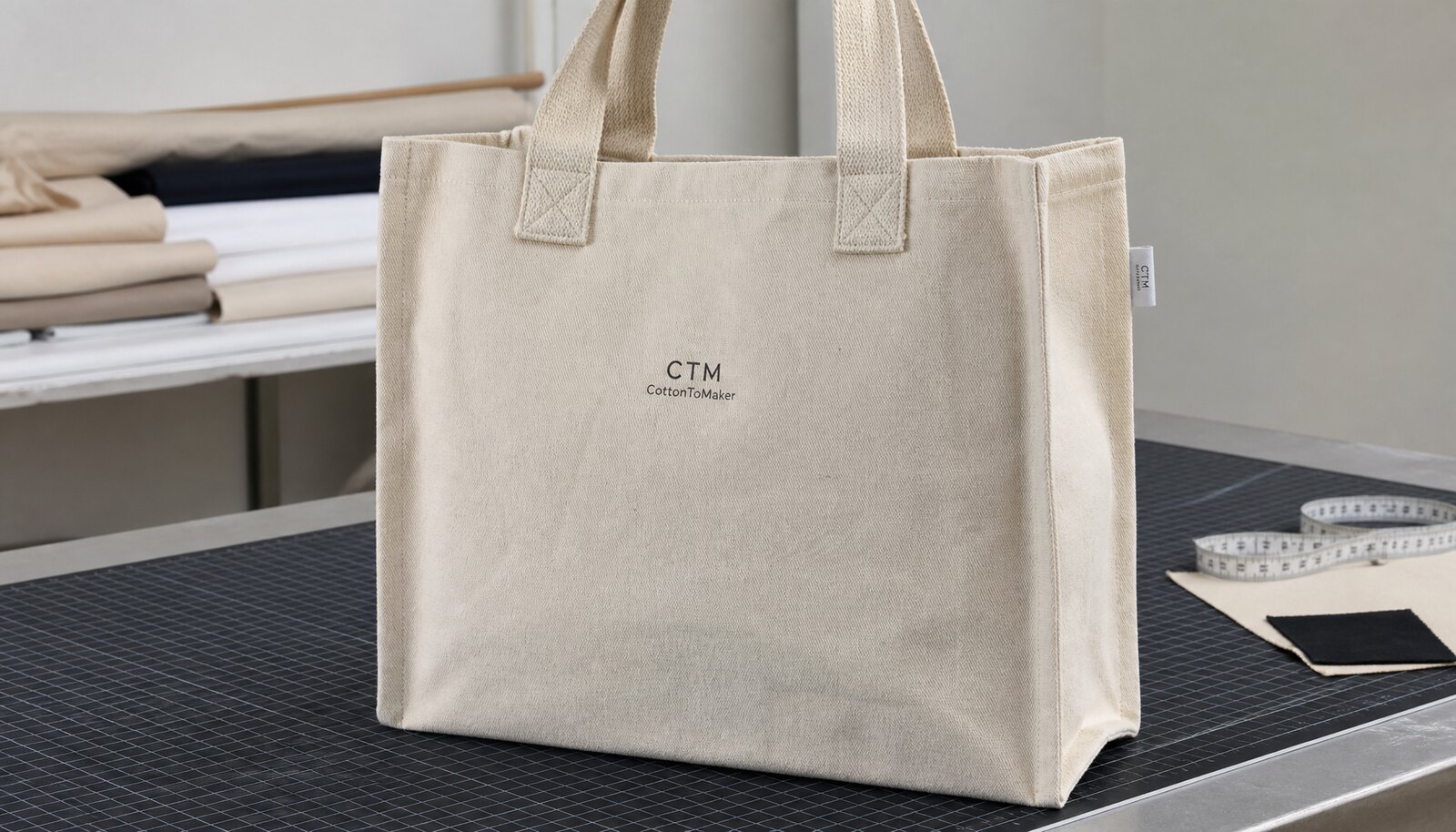
Why heavy canvas works in subscription box programs
Heavy canvas tote bags are used in subscription programs when the tote is meant to feel like a reusable product rather than a disposable insert. That distinction matters to procurement teams because the bag is part of the customer experience, the freight plan, and the defect risk profile. A thin promotional tote may lower unit cost, but it can also fold poorly, feel underbuilt, and collapse once the customer adds books, packaged foods, beauty items, or other bundled goods. When the tote is included in a box that ships on a recurring schedule, a small mistake in build quality can repeat every month.
The buying question is therefore not simply whether a tote is 'nice enough.' It is whether the tote can survive fulfillment handling, survive the customer’s first use, and still look credible alongside the rest of the subscription contents. Heavy canvas is popular because it adds body, supports print opacity better than flimsy cotton, and gives the bag a more retail-ready feel. It can also be easier to position as a branded keepsake if the structure is stable and the seams are clean. But more weight is not automatically better. A tote that is too heavy can raise freight cost, make folding harder, and force a larger carton footprint. For procurement, the practical sweet spot is the canvas weight and construction level that match the product load without overbuilding the spec.
That is why a factory quote for this type of bag should be based on a full use case, not just a logo and rough size. The best quotes clearly connect the bag’s role in the subscription box to the material, sewing, decoration, packing, and inspection choices. If the supplier cannot explain those tradeoffs, the buyer is usually looking at a quote that was built for sales speed rather than repeat production control.
- Use heavy canvas when the tote is expected to be reused, not just unboxed.
- Match construction to the contents the bag will actually carry.
- Avoid overbuilding the tote if freight cube or price sensitivity is high.
Build the RFQ around a complete tote specification
Many sourcing problems start with an incomplete request for quotation. A buyer sends 'heavy canvas tote bag' and a logo file, then receives three prices that cannot be compared because each supplier assumed a different fabric weight, handle style, print method, or folding plan. Procurement teams get better results when the RFQ reads like a production brief. It should identify the finished dimensions, bag orientation, fabric weight, canvas color, handle length, handle width, reinforcement style, decoration method, and packing format. If the bag has a gusset, the gusset depth should be written as a measured value rather than a descriptive phrase. If the logo must sit a specific distance from the top edge or side seam, that too should be stated clearly.
It helps to think in terms of what the factory needs to cut, sew, print, and pack without guessing. For example, if the bag is intended to sit upright in the box, the bottom panel and seam structure matter more than a generic 'large tote' description. If the tote must be folded flat to fit a specific shipper carton, the folding method should be part of the spec. If the artwork is near a seam, the safe print zone should be defined so the factory does not move the logo during production and claim it is within tolerance. The more you define up front, the less time you spend later negotiating over what the quote 'meant'.
A solid RFQ also makes room for verification. Ask the supplier to quote on the same version number of the spec sheet and artwork, and ask them to acknowledge that any deviation needs written approval. That simple discipline is one of the easiest ways to reduce rework on tote projects.
- Issue one spec sheet version and require supplier acknowledgment.
- Write dimensions, handle drop, and gusset depth as measurable values.
- Define print-safe zones and folding method before price comparison begins.
Fabric weight, finish, and weave: the first cost and quality decision
Canvas weight is the most visible line item in tote buying, but it should not be treated as a standalone number. Buyers need to know whether the quoted oz or GSM refers to raw fabric or finished fabric, because finishing can change the feel and stability of the material. A 12 oz canvas can behave very differently from another 12 oz canvas if one is tightly woven and the other is looser or more open. Weave density, yarn count, and finishing method affect structure, print appearance, and how the bag folds in a carton. If the supplier can provide a fabric spec sheet, mill information, or at least a clear internal material description, it makes the quote much easier to validate.
For many subscription programs, 14 oz is a practical middle ground because it gives body without becoming overly stiff or expensive. But there is no universal answer. A beauty box insert that needs a premium presentation may justify a more substantial hand feel, while a lifestyle box that ships in high volume may need a lighter construction to control freight. The finish matters too. Natural canvas creates a more rustic look, bleached canvas can improve print brightness, and dyed canvas may help the tote align with a brand palette. Each option changes shade control, shrink behavior, and the risk of lot variation. If the tote will be printed, ask the supplier whether the fabric is pre-shrunk or whether there is an expected dimensional change after production or humidity exposure.
Procurement teams should also ask how the factory controls material consistency. If the order is large enough to require multiple fabric rolls or lots, the supplier should explain how shade and weight variation are managed. A quote that ignores this issue may look cheap initially, but it can create visible inconsistency in production and complicate reorders. In a repeat subscription program, material consistency is not a nice-to-have; it is part of the operating model.
- Confirm whether the quoted weight is raw or finished fabric.
- Ask for weave density or material documentation if available.
- Choose a finish that supports the print method and the brand look.
- Ask how lot-to-lot shade and weight variation will be controlled.
Construction details that determine whether the tote lasts
A heavy canvas tote should be judged as a sewn product, not just a fabric sheet with handles. The strength of the side seams, bottom seam, top edge finishing, and handle attachment points determines whether the bag can survive daily use. For procurement buyers, the factory quote should identify the seam type, reinforcement method, and any stitch-density assumptions. If the tote is expected to carry boxed goods or heavier inserts, bar-tacks or X-stitch reinforcement at the handle joins are often worth specifying. Without that detail, a supplier may sew a sample that looks acceptable but gives the production line too much freedom to reduce labor time where it matters most.
The handle is one of the most overlooked parts of the spec. Handle width affects comfort; handle length affects shoulder or hand carry; attachment length affects load spread. Self-fabric handles can fit a natural, minimalist style, while cotton webbing can improve durability and reduce edge curling. Either can work, but the buyer needs to be explicit. If the tote must sit neatly inside a subscription box, handle bulk matters too. A thick webbing handle or a folded-and-stitched self-fabric handle may change the fold profile enough to increase carton height or reduce units per carton. That should be part of the quote math, not a surprise during packing.
Do not overlook edge finishing and interior cleanliness. Loose thread ends, uneven seam allowances, and poorly trimmed inside edges may not show in a quick sales sample, but they become visible during warehouse handling and customer use. A professional quote should include the construction method in enough detail that the buyer can compare one supplier’s offer against another without relying on a marketing description.
- Specify seam type, reinforcement, and expected stitch density where relevant.
- Define handle width, handle length, and attachment style.
- Check whether handle bulk affects folding and carton count.
- Ask the supplier how they control loose threads and seam trim quality.
Decoration choices: what looks good on canvas and what actually quotes cleanly
Decoration is where heavy canvas can either look premium or become expensive very quickly. Screen printing is often the most efficient choice for simple logos because it balances setup cost, clarity, and repeatability. On coarse canvas, a clean one- or two-color print usually gives the best combination of brand visibility and factory control. If the design is small or the tote uses a very minimal brand mark, a woven label or side label may be cleaner than forcing a complex graphic onto a textured surface. Embroidery can work when the artwork is simple and the program is positioned as premium, but it can add stiffness and may not be the best fit for large filled areas.
The practical procurement point is that decoration is not only about image quality; it also affects quote structure. Each additional color can create screen or setup charges, registration risk, and more time in production. Fine lines, gradients, and small text are often poor candidates for canvas because the weave will interrupt the image. If the logo must be placed close to a seam, the supplier should confirm the actual safe area and how the image will sit after sewing. Ask for a strike-off or a pre-production print on the exact fabric weight and finish, not on a generic sample cloth. This is especially important when the bag is natural or dark-colored, because ink opacity and color brightness can vary more than buyers expect.
If a brand wants the tote to look retail-ready, the quote should also make clear whether the print is one side only or both sides, whether a woven label is included, and whether the label placement affects the fold or packing method. A quote that treats decoration as a single line item can conceal many small additions. Procurement teams should request those additions explicitly so they can compare like with like.
- Use screen print for simple logos and volume efficiency.
- Use labels when the artwork is small or the weave is too coarse for fine detail.
- Ask for strike-off approval on the exact canvas and finish.
- Clarify one-side versus two-side decoration before comparing unit prices.
How to compare supplier routes without being misled by price
A supplier quote is only useful if you know who is actually controlling the material and the process. A direct factory quote, a trading-company quote, and a local decorator quote can all look similar in a spreadsheet, but the risk profile is very different. The direct factory route usually provides the best visibility into fabric source, sewing operations, print control, and packing discipline. That matters when the tote program is recurring and the buyer wants stable replenishment. A trading route can be convenient for smaller programs or mixed-product baskets, but it may add another layer between the buyer and the actual manufacturer, which can reduce transparency if a quality issue appears later.
Procurement teams should ask for evidence of capability, not only promises. Useful proof can include production photos, machine capability descriptions, recent inspection records, sample photos of similar sewn products, or documentation that shows the factory really makes canvas tote bags at the scale being quoted. If a supplier is vague about where the bags are sewn, who prints them, or how packing is managed, the quote should be treated as incomplete. It is also worth asking whether the factory is using in-house printing or sending that step out to another shop. Outsourced decoration is not automatically a problem, but it should be visible because it affects lead time, defect responsibility, and escalation if misprints occur.
For subscription box buyers, the best sourcing route is usually the one that can prove repeatability. That means clear ownership of the spec, stable material access, and a practical response plan if a defect appears before shipment. If the factory cannot explain how it tracks artwork versions, fabric lots, and packing instructions, the lowest price may be the most expensive option once the order is live.
- Compare the actual manufacturing route, not just the headline price.
- Ask for capability proof such as production photos or similar product samples.
- Confirm whether printing is in-house or outsourced and who owns defect responsibility.
MOQ, price tiers, and the real meaning of a low quote
MOQ is often presented as a simple threshold, but in tote sourcing it actually tells you how the factory spreads cost across the order. Cutting labor, sewing labor, print setup, carton purchasing, label application, and admin time all need to be absorbed somehow. A quote can look attractive at one quantity and become less competitive at another because the setup cost is not spreading efficiently. For that reason, procurement teams should always request price breaks by quantity rather than accepting one flat unit price. If the program is likely to reorder, ask for a replenishment price as well as the launch price.
The more important question is whether the MOQ is tied to a single style, color, or print version. A factory may quote a low MOQ if all bags are the same color and the same print placement. If you need multiple colors, seasonal artwork, or alternating brand messages, that same factory may add charges per variant. Some suppliers also reduce quoted price by simplifying the tote: thinner canvas, less reinforcement, looser packing, or fewer labeling steps. Those adjustments may be acceptable if they are written into the spec, but they should not be hidden inside a low quote. Procurement teams should treat the quote as a complete package of material, labor, and control assumptions.
A useful discipline is to ask the supplier what has been excluded from the price. That one question often reveals whether the supplier is offering a truly comparable quote or simply a base price that will grow during sampling and production. If the answer is not clear, ask for the quote to be revised with all required accessories, labels, and carton details included.
- Request price tiers by quantity break and reorder volume.
- Confirm whether MOQ applies per style, color, or print version.
- Ask what has been excluded from the quoted price.
- Watch for hidden spec reductions that make the unit price look lower than it really is.
What a factory quote should include for a tote program
A useful factory quote should read like a production plan. It should state the finished dimensions, fabric weight, fabric color, handle material, handle length, reinforcement, print method, number of colors, label plan, packing method, carton count, MOQ, sample type, lead time, and shipping assumptions. If any one of those items is missing, the buyer may be comparing two quotes that only appear to be equivalent. In tote procurement, omission is often where the hidden cost sits. The quote should also show whether the unit price assumes a single fabric lot, a specific folding method, or a particular carton size.
It is also wise to require assumptions to be written down, not just inclusions. For example, if the supplier assumes a flat-pack tote with polybag and barcode sticker, that should be visible. If the carton count is fixed, that should be visible too. This matters because warehouse intake, freight cube, and customer-facing presentation all depend on the packing method. A quote that hides the packing assumption can break the landed-cost model later, especially if the tote is bulkier than expected and the carton volume is higher than planned.
The best quotes also include a simple approval path. They identify what sample will be made, what document version controls production, and what happens if the final mass-production bag differs from the approved sample. That may sound administrative, but it is exactly the sort of detail that saves time when the buyer is managing a seasonal launch or recurring subscription cycle.
- Require the quote to show dimensions, construction, decoration, packing, MOQ, and lead time.
- Make assumptions visible, not just inclusions.
- Tie the quote to a versioned spec sheet and approval sample.
Sample approval should test function, not just appearance
A tote sample can look impressive and still fail in real use. That is why sample approval for heavy canvas bags should test function as well as appearance. The right approval sample is a pre-production sample made with the final fabric, final decoration, final labels, and final packing method. A sales sample is useful for early discussion, but it is not enough to release production because it may use a different fabric lot or a different print process. If the bag is going into a subscription box, the sample should also be checked in the same folded state and carton configuration that the factory plans to use in mass production.
During sample review, procurement teams should inspect handle comfort, seam alignment, bag opening width, bottom support, fold behavior, and print position. Open and close the bag several times. Look at the inside seams and the handle attachment points. Measure the tote after it has been folded and refolded, because a bag that is technically the correct size may still be awkward to pack if the handles create too much bulk. If the bag has a label or woven tag, make sure it does not interfere with folding or customer-facing orientation.
It also helps to document what will be accepted and what will not. If a slight tonal variation in natural canvas is acceptable, write that down. If a crooked print or a visible stain is not acceptable, write that down too. The more explicit the sample approval notes are, the easier it is to defend the order later if the factory asks for leniency on production deviations.
- Approve only a pre-production sample made with final materials and packing.
- Check function: handle strength, foldability, opening width, and seam alignment.
- Write acceptance notes for acceptable variation and rejectable defects.
QC checklist: the defects that matter most on heavy canvas totes
Quality control for canvas totes should be specific enough that both buyer and factory understand what is being inspected. The most common issues are not mysterious: they are weak seams, poor print registration, loose threads, stains, odor, dimensional drift, and crushed packaging. A strong QC plan separates cosmetic variation from functional failure. A small slub or minor shade variation may be acceptable if the fabric is natural and the buyer agreed to a rustic look. A broken stitch at the handle, a print that runs into the seam, or a tote that misses the target opening width is a different matter because it affects use and brand presentation.
For a practical factory quote checklist, ask the supplier to name the inspection basis. Many buyers use AQL inspection because it gives a shared framework for sampling and defect classification. The exact AQL level should be agreed before production, along with the definitions of critical, major, and minor defects. That avoids later argument about what counts as a reject. Also ask for the inspection checklist to include the same things that matter in the quote: fabric weight, stitch quality, print placement, carton count, and packing integrity. If the factory only inspects visual appearance, it may miss functional problems that show up in the warehouse or at the customer door.
Packaging deserves special attention because subscription box programs are sensitive to first impression. If the tote arrives with deep fold lines, crushed corners, or bag contamination from packaging dust, the value perception drops quickly. For that reason, the QC plan should include the state of the folded bag, the quality of the polybag if used, carton markings, and whether the outer carton can survive transit without compressing the tote beyond the acceptable look. If the program is shipping across long distances, buyers can even specify a simple drop-test or transit-handling expectation for the packed carton, especially if the bag has a stiff print or a structured body that can crease permanently.
- Use AQL or another agreed inspection method and define defect classes in advance.
- Inspect seams, handle joins, print placement, size tolerance, stains, and odor.
- Add packaging checks for fold quality, carton marking, and transit compression risk.
- If needed, specify a drop-test or handling expectation for the packed carton.
Specification comparison for buyers
| Spec decision | Recommended option | When it fits | Buyer risk to check |
|---|---|---|---|
| Fabric weight | 12–16 oz cotton canvas, with 14 oz often the practical balance point | Subscription box inserts that need structure, reusability, and a premium hand feel | Too light gives a floppy bag; too heavy can increase carton weight, fold difficulty, and landed cost without improving utility |
| Fabric finish | Natural, bleached, or dyed canvas with controlled shrinkage and consistent lot shade | When the tote is part of a lifestyle, beauty, book, or retail-friendly subscription presentation | Uncontrolled shrinkage can distort print placement, change the opening width, and create rework after humidity or wash exposure |
| Construction | Double-needle seams, reinforced handle joins, and bar-tack or X-stitch reinforcement at stress points | For bags carrying boxed inserts, books, jars, or bundled items | Weak reinforcement may pass a visual sample but fail in real use after repeated carrying |
| Print method | 1–2 color screen print for broad logos; woven label, heat transfer, or embroidery only when artwork and budget support it | When branding is simple and order volume is stable | Fine lines can break on coarse weave; dark canvas may need more opaque ink; embroidery can stiffen the bag |
| MOQ structure | One fabric, one decoration setup, one packing spec for the first quote round | Recurring programs with predictable replenishment | Low-MOQ offers may hide fabric changes, simplified packing, or extra charges for variants |
| Sample stage | Pre-production sample made with final fabric, final artwork, and final packing spec | When size, logo placement, and carton count matter to launch timing | Sales samples often use a different lot or decoration method and can mislead approval |
| Packing method | Flat pack in polybag with carton count and folding method fixed in the quote | When warehouse intake efficiency and freight cube matter | Loose packing increases damage risk; over-compression can crease the tote and reduce shelf appeal |
| Supply route | Direct factory quote with clear spec sheet and document trail | For brands and importers managing repeat orders and QC directly | Trading-only quotes can obscure factory changes, limit audit visibility, and complicate defect responsibility |
| Inspection standard | AQL-based inspection with measurable seam, print, dimension, and carton rules | For orders where defect control matters across reorders | If defect criteria are vague, the factory and buyer may disagree after production |
Buyer checklist before sampling
- Confirm finished tote size, usable opening width, bottom gusset, and handle drop before requesting pricing.
- Specify fabric weight in oz or GSM, fabric color, and whether the canvas should be raw, bleached, dyed, washed, or enzyme-finished.
- State the print method, number of colors, print location, logo size, and whether artwork must stay clear of seams, topstitching, or folds.
- Define handle material, handle width, handle length, attachment method, and reinforcement detail at the stress points.
- Set packing requirements: flat packed or stuffed, polybagged or bulk packed, silica gel or not, and the target carton count.
- Request a pre-production sample using final fabric, final artwork, final label set, and final packing method, not a sales sample.
- Ask for an inspection plan that names AQL level, defect classifications, and the measurements to be checked at final inspection.
- Compare MOQ, unit price tiers, tooling/setup charges, carton dimensions, gross weight, and freight assumptions as one landed-cost package.
- Ask the supplier to confirm whether all units come from one fabric lot and whether shade variation is possible across lots.
- Verify whether any decorative labels, barcode stickers, warning inserts, hangtags, or inner bags are included or charged separately.
Factory quote questions to send
- What exact canvas weight will you use, and is that weight measured before or after finishing, washing, or dyeing?
- Will the order use one fabric lot or multiple lots, and how do you control shade consistency across lots?
- What is the fabric composition, weave density, and yarn count if available, and can you provide a mill or material spec sheet?
- What construction details are included in the quoted unit price: side seams, bottom seam type, handle attachment, bar-tacks, and topstitch count?
- What print method is included, how many colors are priced, what is the setup charge per color or per side, and what is the color matching tolerance?
- Can you provide a strike-off, pre-production sample, or lab-dip approval for fabric color if the canvas is dyed or bleached?
- What is the MOQ per style, per color, and per print version, and can the MOQ be split across sizes or artwork versions?
- What carton size, gross weight, units per carton, and folding method are assumed in the quote?
- What is the expected production timeline after sample approval, and which steps depend on fabric booking, decoration queue, or carton procurement?
- What defect standard applies to seams, stitch skips, loose threads, print alignment, stains, odor, dimensional tolerance, and packaging damage?
Quality-control points to confirm
- Fabric weight tolerance: set an acceptable range around the quoted oz or GSM and reject unapproved substitutions. Require the factory to state whether the tolerance applies to raw fabric or finished fabric.
- Fabric appearance: check shade consistency, slub level, lint, stains, oil marks, and visible weave irregularity against an approved reference sample.
- Seam strength: inspect side seams, bottom seams, handle attachment points, and top edges for skipped stitches, seam puckering, broken threads, or uneven seam allowance.
- Stitch count and reinforcement: specify expected stitch density where needed, and require bar-tacks or X-stitches at handle joins and stress points if the bag is intended for repeated carrying.
- Dimensional tolerance: measure finished width, height, gusset depth, handle drop, and opening width on a representative sample of cartons; define the allowable variance before production starts.
- Print placement: verify logo position, stroke thickness, registration, and ink coverage against an approved strike-off or pre-production sample.
- Print durability: ask whether the print is cured for rub resistance and whether the ink is suitable for the intended hand feel and usage cycle.
- Color tolerance: for dyed or printed items, define the acceptable range using a physical approved sample or a color standard; do not rely on vague terms like 'close match'.
- Odor and cleanliness: reject bags with oil smell, chemical odor, dust contamination, excess lint, or visible stain marks.
- Packaging rules: confirm polybag size, suffocation warning if required by market, barcode placement, carton markings, and unit count per carton.