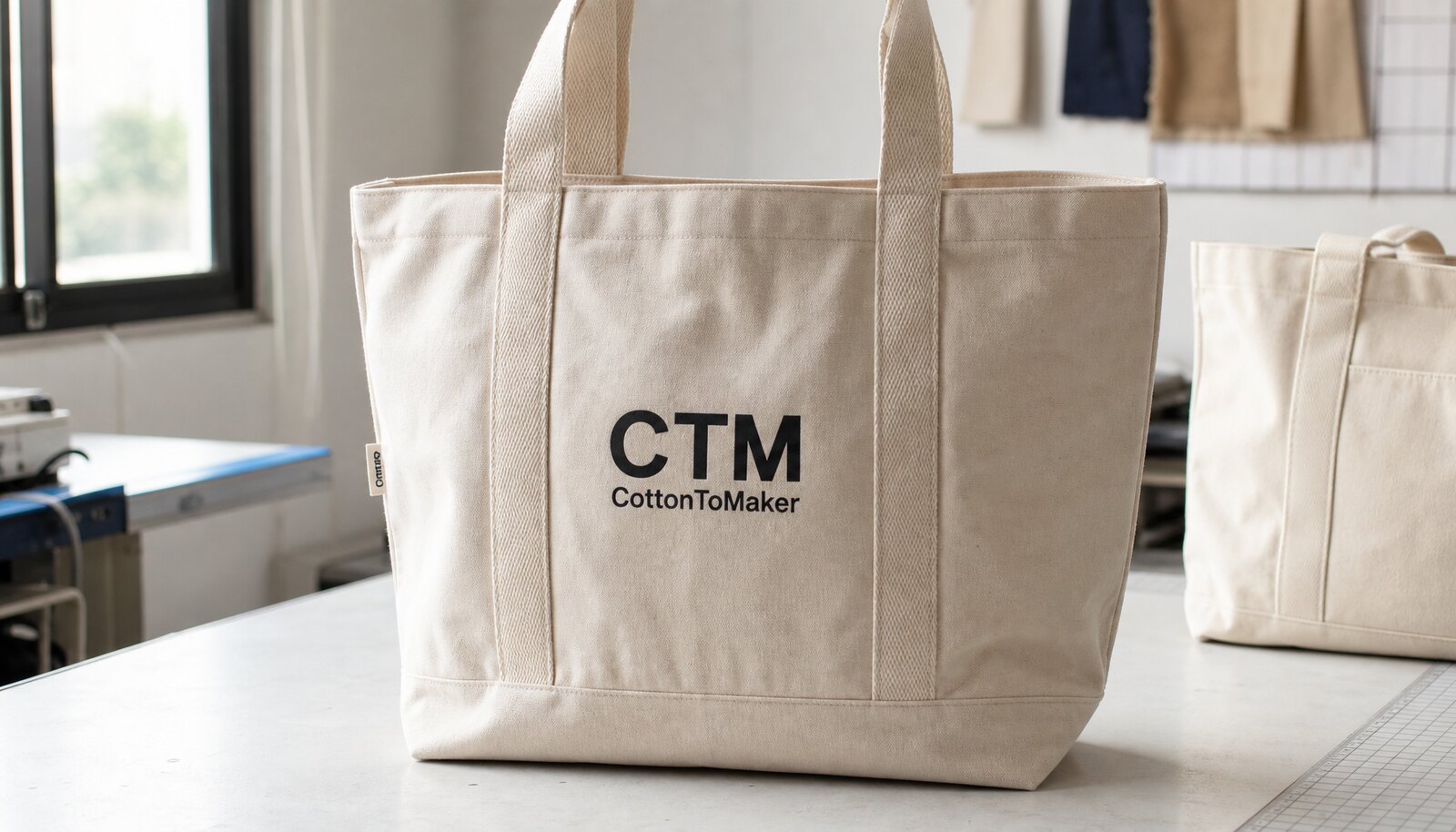
1. Start with the bag’s job in the subscription program
A heavy canvas tote for subscription boxes is not the same purchase as a retail shopping tote or a giveaway bag. In a subscription program, the bag has to work as part of the pack-out system. It may need to fold into a fixed footprint, protect the contents during transit, look good when the customer opens the box, and remain usable after unboxing. That means procurement has to define function before decoration.
The first question is whether the tote is carrying product inside the subscription box, replacing outer packaging, or acting as a premium extra that the customer uses later. Those uses lead to different specs. A bag that only needs to lie flat can be lighter and simpler. A bag that carries jars, books, or multiple inserts needs more body, better seam reinforcement, and handles that can survive repeated use.
This is where many quotes go wrong. Suppliers often answer with a standard bag size and a print price, but they do not ask how the tote will be packed or what the customer will do after delivery. Buyers should answer those questions before requesting samples. The stronger the use case is defined, the fewer revisions you will need later.
For procurement teams, a useful starting brief should include: the product mix inside the box, the target pack sequence, whether the tote must fold down to a set size, and whether the tote is a recurring branded item or a one-time campaign insert. Those details shape the whole buying process, from fabric weight to carton count.
- Define the tote as packaging, promo item, or retail-value add-on before comparing suppliers.
- State the box size or bag insertion space if the tote must ship inside the subscription kit.
- List the heaviest likely contents so the supplier can recommend seam and handle reinforcement.
- Decide whether the tote must look premium at first touch or just perform well in transit.
2. Choose fabric weight based on structure, not just price
Fabric weight is the most important cost-and-performance lever on a heavy canvas tote. Buyers often default to a single number such as 10 oz or 12 oz without checking whether the bag needs to stand up, resist collapse, or hold weight. For a subscription box, that choice affects not only durability but also how the bag sits in the carton and how much cube it consumes in freight.
A practical rule is that lighter canvas works for simple inserts and short-term promo use, while heavier canvas becomes more useful when the tote is expected to last, look structured, or carry mixed items. A 12 oz bag is often a workable baseline for many subscription programs. A 16 oz bag is more suitable when the customer is likely to reuse it often or when the bag needs to feel substantial at first touch. Heavier than that can be appropriate, but only if the value story supports the added freight and unit cost.
The buyer should also ask what the quoted weight really means. Some suppliers quote greige fabric weight before finishing, while others quote finished fabric after washing, dyeing, or coating. That difference can make two quotes look equal when they are not. Ask for the measurement basis, weave density, and expected shrinkage. If the bag is washed or softened, the hand-feel may change, and the final fit inside the box may shift too.
A good sourcing conversation should always connect weight to outcome. If the tote needs to stand upright in a photo, do not buy it like a flat shopper bag. If it has to hold heavy hard goods, do not buy it like a soft promotional piece. The bag should be specified by use case, not by habit or a generic marketing standard.
- 10 oz to 12 oz: practical for lighter subscription inserts, lower-cost campaigns, and bags that only need moderate structure.
- 12 oz to 16 oz: better for shape retention, stronger hand-feel, and more repeat use after unboxing.
- 16 oz and above: consider when the tote must feel premium, support heavier products, or act as a retail-grade reusable bag.
- Ask for fabric basis weight, weave count or density, shrinkage, and whether the bag is washed, bleached, or dyed.
3. Compare construction details that affect wear and pack-out
Two tote quotes can look similar on paper and perform very differently in real use. The difference is usually construction. A bag with a clean body but weak seams can fail under load. A bag with a nice logo but poor handle attachment may look fine in a sample photo and still cause returns or complaints after a few uses.
For heavy canvas tote bags, ask about gusset depth, bottom construction, seam finish, and reinforcement. A gusseted body gives more usable volume and usually packs better if the tote needs to hold multiple items. Reinforced bottom seams matter when the contents are heavy or angular, because corners are where stress appears first. Bound seams or clean overlock finishes also improve the inside presentation and reduce loose threads that can scratch packed goods.
Handle design is another area where buyers under-specify. Long shoulder handles may be more useful for a reusable subscription giveaway, but if the tote must fit inside a box, handle length and fold behavior must be checked together. A handle that is too long can be awkward in packing. A handle that is too short may reduce customer utility and make the bag feel less premium.
The most useful supplier responses are specific: seam type, reinforcement method, handle stitch pattern, and whether the bag is double-stitched at stress points. Procurement teams should treat those details as commercial terms, because changing them after sample approval often means new cost, new lead time, and new quality risk.
- Ask for gusset depth, bottom seam style, and whether the corners are boxed or reinforced.
- Require a defined handle attachment method, not just “strong handle.”
- Check the interior finish for loose threads, rough edges, and visible overlock quality.
- Confirm whether the bag folds flat without the handles springing open in the carton.
4. Match the decoration method to the artwork and reorder plan
Decoration should follow the artwork, the fabric, and the expected reorder pattern. For most subscription-box totes, screen printing remains the most practical choice when the logo is simple and the buyer expects repeat orders. It works well on canvas, is easy to approve visually, and usually gives stable unit economics once the setup is paid. If the brand only needs one or two colors, screen print often offers the best balance of cost and durability.
Woven labels and embroidery are more useful when the buyer wants a more elevated presentation. A woven label can look neat and controlled without covering much surface area. Embroidery can signal premium value, but it is not ideal for tiny type or complex artwork. Thick canvas can also make embroidery feel bulky, so the buyer should check whether the backside remains neat enough for the customer to use the bag comfortably.
Transfer methods can help when the artwork is more complex, when the first run is small, or when the team is testing a concept. The tradeoff is durability and texture sensitivity. On heavy canvas, fine lines, gradients, or very small text may not hold up as cleanly as they would on a smoother substrate. Buyers should ask for minimum line thickness and a clear rub-resistance expectation before approving transfer decoration.
The right answer is not “best method in general.” It is “best method for this art, this bag, and this replenishment plan.” If the design will be reordered, choose a decoration process with predictable repeatability. If the artwork will change every season, the setup cost and turnaround time matter more than the finest decorative effect.
- Screen print: best for simple logos, repeat runs, and stable unit pricing.
- Woven label: useful for a clean retail feel with limited artwork coverage.
- Embroidery: stronger premium signal, but check small text and backside finish carefully.
- Transfer print: useful for complex art or pilots, but validate rub resistance and line clarity first.
5. Build supplier options around MOQ, control, and speed
There is no single best sourcing route for canvas totes. The right route depends on the stage of the program. Direct factory sourcing is usually the strongest option for buyers who already know the spec and want control over fabric, sewing, and reorder consistency. Trading companies can reduce communication burden, especially for smaller procurement teams or bundled sourcing projects. Stock-body customization works well when the program is still being tested and speed matters more than perfect customization.
Low MOQ quotes deserve extra scrutiny. A supplier can often lower MOQ by using stock fabric, standard dimensions, or limited decoration choices. That is not automatically bad, but the buyer needs to know what changed. If the vendor is using a pre-made body size or pre-dyed material, the quote may not support the same repeatability on a later reorder. Ask whether the same fabric lot can be replenished and whether the artwork placement remains stable across runs.
A useful commercial test is to ask the supplier to quote three versions of the same bag: a sample unit, a pilot order, and a reorder price. If the pricing structure changes sharply or the spec shifts between quotes, compare the options as different products rather than different suppliers. That approach prevents procurement teams from choosing the cheapest line item when the underlying product is not comparable.
For subscription-box programs, speed can matter as much as price. If the launch date is fixed, a lower-cost offshore option may not be the best commercial choice if it creates schedule risk. In contrast, if the tote is part of an ongoing recurring kit, direct factory control and stable reorders usually matter more than shaving a few cents off the first order.
- Direct factory: best for custom specs, stronger repeatability, and higher order discipline.
- Trading company: useful when internal bandwidth is limited or several items are being sourced together.
- Stock-body customization: useful for pilots and seasonal tests, but verify size and decoration limitations.
- Ask for pilot, sample, and reorder pricing so you can see whether the low MOQ is hiding a different product structure.
6. Compare quotes on landed cost and hidden commercial drivers
Unit price is only one part of the decision. On heavy canvas tote bags for subscription boxes, the bag may be inexpensive enough that packing, freight cube, or setup fees become the real cost drivers. That is why a procurement team should compare quotes on a landed-cost basis whenever possible. The comparison should include the unit price, decoration setup, sample fees, pack-out materials, carton specs, and freight assumptions.
Some quotes appear cheaper because they exclude important extras. A supplier may leave out screen setup, label attachment, individual polybags, or the carton spec your warehouse requires. Another supplier may charge a slightly higher unit price but include better packing, fewer receiving errors, and lower freight due to more efficient carton dimensions. On a subscription program, those differences can matter more than the headline bag price.
One useful exercise is to calculate a simple delivered cost per usable bag: factory price plus setup spread across volume, plus packing, plus inbound freight, plus duty assumptions where relevant. Then compare that to the cost of mis-packs, damaged prints, or oversized cartons. If one route causes warehouse rework, the savings can disappear quickly. Buyers should not let the first quote win simply because it is the shortest.
A realistic commercial discussion also includes tradeoffs. A 16 oz bag may cost more but reduce complaints and last longer in customer use. A screen print may require setup but give better repeat economics than a one-off transfer method. A direct factory may quote lower, but a domestic decorator may reduce lead-time risk. Procurement value comes from making those tradeoffs visible rather than pretending they do not exist.
- Compare quotes on unit price, setup, packing, freight, and duty assumptions.
- Ask whether setup fees recur on every reorder or only on the first run.
- Check whether the bag is quoted with polybag, insert card, barcode, or carton marking.
- Treat carton efficiency as part of the price, not just a warehouse detail.
7. Use a real supplier comparison table before you request samples
A supplier comparison table should help buyers make a commercial decision, not just confirm that two vendors both sell tote bags. Before requesting samples, compare the route that fits your launch stage, approval process, and reorder plan. In many cases the decision is not about which vendor is “better,” but which one matches the program’s timing and risk profile.
For a subscription-box tote, the biggest sourcing error is assuming that any bag vendor can make any version of the product equally well. If the bag must be folded to fit a rigid kit, the supplier needs to understand pack dimensions. If the logo is small and high contrast, the printer needs to understand line thickness and registration limits. If the order is large and recurring, the factory needs to support the same spec later without hidden substitution.
Use the table below as a commercial filter. It is more useful than a spec sheet because it shows where the supplier route can help or hurt your buying plan. If the quote does not tell you how the bag is made, packed, and controlled, the missing information should be treated as risk, not as an administrative detail.
- Use route comparison to decide who to sample, not just who to quote.
- Prefer suppliers who can explain the manufacturing process in the same terms your team uses internally.
- Treat unclear spec language as a cost risk and ask for a revised quote before sample approval.
8. A practical supplier comparison table for procurement decisions
Below is a buyer-focused comparison that helps procurement teams separate supplier routes by commercial value. It is useful when you are deciding whether to launch with a stock-body solution, move to a direct factory, or use a local decorator for speed. The point is to connect sourcing route to business need, not to assume one option is always superior.
Use the table to decide which route deserves sample budget and internal approval time. In many buying projects, the first sample request is the most expensive mistake because it is sent to the wrong type of supplier. The comparison below reduces that risk by showing where each route tends to work best and where it tends to create friction.
- If your launch date is fixed, prioritize lead time and packing fit over minor unit-cost differences.
- If reorders matter most, prioritize repeatability and material control over launch speed.
- If the bag is a one-time campaign item, consider stock-body customization before committing to full cut-and-sew development.
9. Sample approval should test fit, finish, and pack-out together
A tote sample should never be approved on appearance alone. For subscription-box use, the sample must prove three things at once: it fits the box or kit, it looks acceptable to the customer, and it can be produced consistently in bulk. That means the buyer should place the sample into the actual pack sequence and inspect the bag after folding, after insertion, and after removal from the carton.
Start with fit. Check finished size, folded thickness, and handle behavior. A tote can meet the nominal dimensions and still fail in pack-out if the handles rebound or the gusset expands too much in the box. Then check construction: seam straightness, handle symmetry, stress-point reinforcement, and whether the inside finish is clean enough to present as a premium reusable item. Finally check print quality: logo position, color match, edge clarity, and whether the artwork is legible on the textured canvas surface.
The sample stage is also the right time to define your grading standard. Many buyers do not get specific enough here and then discover that the bulk order contains defects they would have rejected on the sample. Create a short acceptance sheet with measurable pass/fail items: size tolerance, print window, thread-end limit, smell limit, and carton count accuracy. If the supplier cannot agree to that sheet, bulk production is already at risk.
Ask for at least one pre-production sample and, if the project is important, keep a retained approved sample signed off by both sides. That retained sample becomes the benchmark if there is a dispute later over color, stitching, or print placement.
- Test the tote in the real box or fulfillment insert, not just on a desk.
- Measure finished dimensions after sewing and after folding.
- Approve only when fit, finish, print, and pack-out all pass together.
- Keep a retained reference sample for reorder comparison.
10. Set measurable QC standards before bulk production
Quality control is most useful when it is measurable. For heavy canvas tote bags, the QC plan should include fabric, stitching, print, size, odor, and packaging standards. A bag can look acceptable in a photo and still fail in use if the seams are weak or the print rubs off in transit. Good QC starts by defining what the buyer will measure and what variation is acceptable.
For construction, ask the factory to state stitch density on load-bearing seams and the reinforcement method at handle attachments. For example, you may request a specific stitches-per-inch target or an equivalent stitch count in metric terms. You can also ask for bar tacks or box stitches at the stress points. This matters because a bag that is frequently opened and closed or loaded with heavy contents will fail at the handle area first if reinforcement is weak.
For appearance, define tolerances for print position, logo sharpness, and thread cleanliness. The common issue on canvas is not dramatic failure but small defects that become obvious in customer hands: a slightly off-center logo, a crooked seam, a loose thread, or lint trapped in the fold. Those are the defects that lower perceived quality in a subscription box, where the tote is often the first reusable item the customer touches.
For packaging, define piece count per carton, carton markings, and compression control. A tote that is packed too tightly can crease the print. A tote packed too loosely can arrive out of shape or with folded handles that do not spring back cleanly. QC should therefore cover both the bag and the way the bag survives shipment. That is especially important if the item is moving through multiple handling points before it reaches the subscriber.
A practical QC request is to ask the supplier for an inspection report or at least a documented in-line check list. If they cannot produce one, then the buyer should add third-party inspection or a stronger receiving check at destination. The goal is not perfection; it is to prevent avoidable surprises on a bag that is simple in appearance but surprisingly easy to get wrong.
- Specify a seam and handle reinforcement standard, not just “strong stitching.”
- Ask for rub resistance or colorfastness evidence when dark print or dyed fabric is used.
- Set visible defect limits for loose threads, stains, odor, and print misalignment.
- Confirm carton count, SKU labeling, and fold consistency for every bulk shipment.
Specification comparison for buyers
| Supplier route | Best fit | Commercial upside | Commercial downside / risk |
|---|---|---|---|
| Direct factory | Repeat programs, custom size/spec, and buyers who need tighter control over fabric and sewing details | Better control of fabric weight, stitch standards, and reorders; easier to lock a stable spec once approved | Usually higher MOQ discipline; slower if your spec changes late; communication is only as good as your documentation |
| Trading company | Teams that want one contact point, help with multi-item sourcing, or less internal procurement bandwidth | Can simplify coordination, consolidate shipping, and help source accessories or packaging alongside the tote | Less transparency on the actual factory, wider quality variation risk, and possible markup on top of production cost |
| Stock-body customization | Launch tests, seasonal campaigns, and buyers trying to reduce MOQ or speed up a pilot | Fastest route to sample, lower startup friction, and often less tooling or development work | Restricted sizes, limited color control, and a higher chance the bag does not pack cleanly in your subscription box |
| Local converter / decorator | Short lead times, domestic replenishment, or programs where duty and freight risk matter more than pure factory cost | Can reduce transit time, simplify approvals, and improve communication for small reorders | Unit price may be higher; fabric choice and construction options can be narrower than at a cut-and-sew factory |
| Offshore cut-and-sew factory | Custom branded programs with stable forecasts and buyers that care about unit cost at scale | Best path for full customization of fabric, size, trim, and print packaging once the spec is frozen | Longer lead time, more exposure to shipment delays, and higher need for disciplined QC and clear carton specs |
| Material | 8-12 oz cotton canvas, 120-220 gsm cotton, recycled cotton, or blended fabric selected by use case and target price | Before price comparison | Different cloth weights, backing, or certification claims make quotes hard to compare |
| Construction | bag size, gusset, handle drop, seam allowance, stitch density, reinforcement patch, and loading expectation | Before sampling | Weak stress points create returns and failed inspections |
| Decoration | screen print, heat transfer, embroidery, woven label, or hangtag matched to fabric texture and brand durability needs | Before artwork approval | The wrong method can crack, bleed, pucker, or fail on the chosen fabric |
Buyer checklist before sampling
- Decide whether the tote is a packaging component, a reusable gift, or a retail-value add-on; those three uses usually require different fabric weights and packing rules.
- Confirm finished bag size, gusset depth, handle length, and whether the tote must fit inside the subscription box or ship outside as a separate item.
- Specify canvas weight in a clear unit, such as oz or GSM, and ask the supplier to state whether the measurement is pre- or post-finishing.
- Lock artwork before quote comparison: file format, print colors, logo placement, minimum text size, and whether Pantone matching is required.
- Request at least one pre-production sample, and if the bag is printed, ask for a print strike-off or lab dip equivalent for color approval.
- Ask how the tote will be packed: flat folded, folded with tissue, polybagged, bundled by count, and how many pieces per inner pack and carton.
- Request carton dimensions, gross weight, piece count per carton, and whether cartons are single-wall or double-wall.
- Ask for sample grading criteria before bulk approval: size tolerance, seam tolerance, print position tolerance, and acceptable defect limits.
- Compare quotes as landed cost, not EXW only, including setup, sample fees, inner packing, cartons, freight, and any duty assumptions.
- Ask for lead time broken into stages: sample, approval, bulk production, inspection, and shipment booking.
Factory quote questions to send
- What is the exact fabric basis weight, weave type, and finished shrinkage allowance in the quoted bag? Please state whether the quote is based on oz, GSM, or both.
- Is the quoted canvas greige, bleached, dyed, or washed? If dyed, what color standard do you use for matching and what is the acceptable shade tolerance?
- Does the price include screen setup, embroidery digitizing, woven label sewing, or any other decoration setup fee? Which of those are one-time charges versus repeat charges on reorder?
- What is the MOQ by color, by artwork version, and by decoration method? Does the MOQ change if we adjust handle length, gusset width, or size?
- Can you provide a pre-production sample made with the same materials and sewing line planned for bulk production, or is the sample made separately?
- What are your accepted tolerances for finished size, seam allowance, print position, handle alignment, and thread defects?
- How many stitches per inch do you target on critical seams, and what reinforcement do you use at handle attachment points and bottom stress points?
- What is the pack format: flat fold dimensions, polybag size, piece count per inner pack, and carton count per outer carton?
- Can you quote the same item in FOB and landed-cost format so we can compare supplier routes consistently?
- What inspection standard do you use for bulk goods, and can you share how you classify major, minor, and critical defects?
Quality-control points to confirm
- Fabric weight must be stated clearly and checked against the approved sample. If the factory supplies oz weight, ask for the measurement basis and a tolerance range; if they supply GSM, convert only after confirming the same test method.
- For heavy canvas tote bags, a practical finished-size tolerance is usually tighter than buyers expect. Ask the supplier to state allowable variation for width, height, and gusset depth, then measure the pre-production sample after sewing, not just the cut panel.
- Stitch density on load-bearing seams should be specified. For a heavy tote, ask for stitches per inch or stitches per 3 cm on handles, side seams, and bottom seams so you can compare factories on construction quality, not appearance alone.
- Handle attachment points should have reinforcement. Check for box stitching, bar tacks, or another defined reinforcement method at the stress points, and verify both handles sit evenly so the bag does not twist when loaded.
- Seam strength matters more than a clean look. Ask the supplier what seam standard they can support and inspect for skipped stitches, popped corners, loose thread ends, and uneven seam allowance.
- Print quality should be checked with measurable criteria: print placement window, line thickness, small-text readability, edge sharpness, and rub resistance. On textured canvas, thin lines and small copy are the first items to fail.
- Colorfastness and rub resistance should be requested when the tote uses a dyed body, dark ink, or a bold solid logo. Ask whether the supplier can support dry rub and wet rub testing, especially for dark-on-light or light-on-dark combinations.
- Odor, dust, and oil marks are common packaging complaints on canvas goods. Add a simple incoming standard for smell, staining, lint, and surface contamination, because these defects are visible to the end customer immediately.
- Carton count and packing consistency should be checked on every sample stage and on bulk. Random carton inspection should confirm piece count, fold direction, label accuracy, and no print scuffing from overcompression.
- If the tote must fit into a subscription box, verify the folded dimensions against the actual packing sequence. A bag that meets cut size on paper can still fail if the folded stack is too thick or the handles spring open during pack-out.