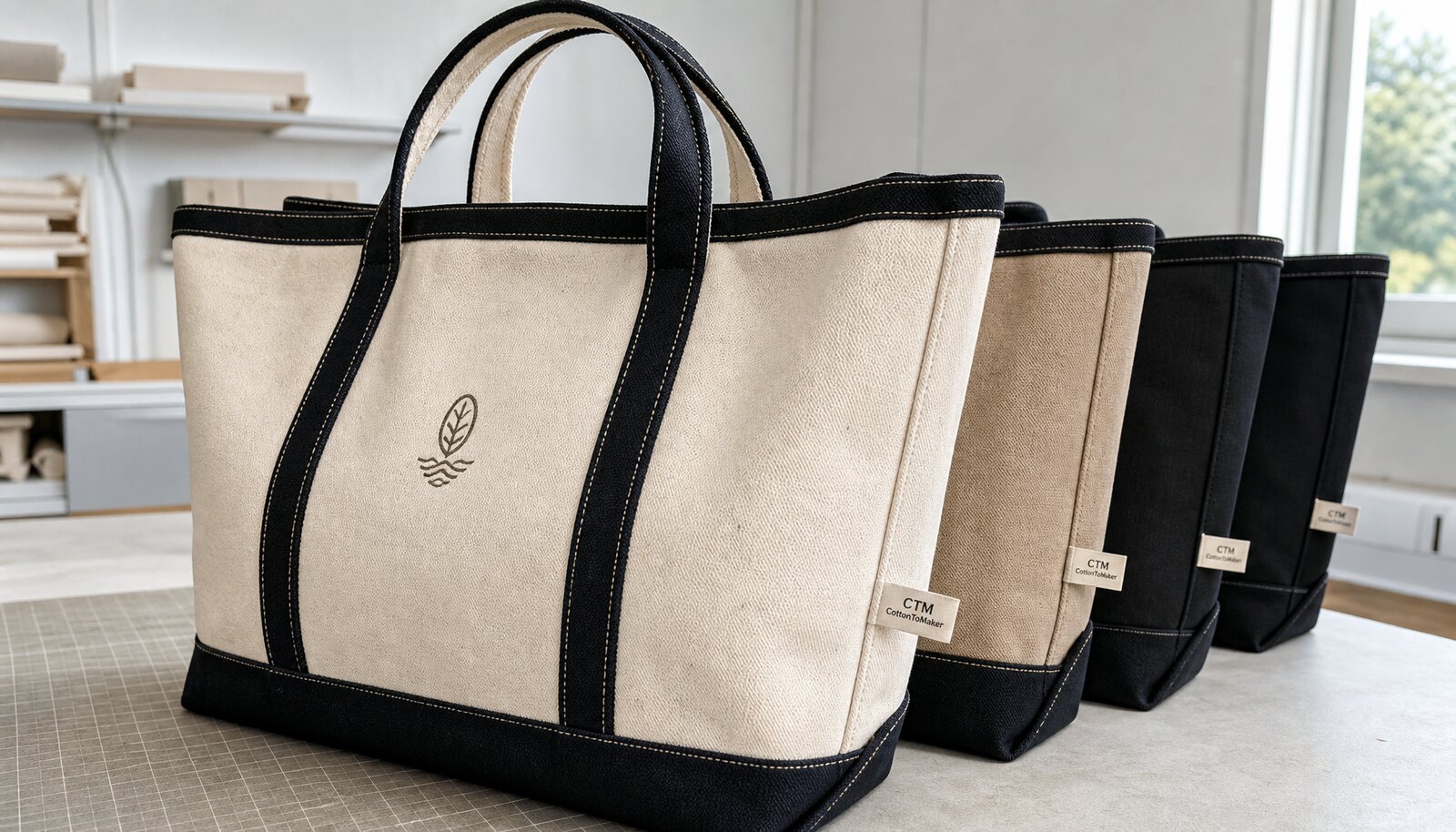
1. Start with the hotel use case before you compare tote prices
Heavy canvas tote bags for hotels wholesale buying looks simple until the same phrase is used for very different buying jobs. A welcome bag placed in a guest room, a retail bag sold at the spa, a laundry tote used repeatedly by housekeeping, and a beach bag handed out seasonally do not need the same spec. If the brief is vague, every quote will be built on the supplier’s assumptions instead of your actual requirement, and that is where most procurement mistakes begin.
The fastest way to tighten the RFQ is to define what the guest will carry, how often the bag will be reused, and what matters most: appearance, load capacity, pack efficiency, or resale presentation. For a light amenity pack, the bag may only need to hold brochures, slippers, and a bottle of water. For a retail or beach program, the tote should keep its shape, survive repeated handling, and still look presentable after folding and unpacking. Those are different engineering targets, not just different marketing descriptions.
It also helps to decide whether the bag is meant to be seen as a disposable add-on or a keep-worthy item. That affects fabric weight, handle reinforcement, logo method, and finishing level. A hotel chain with premium branding may prefer a tote that can be reused as a shopping bag after the stay. A conference hotel may simply need a dependable carry bag at a stable landed cost. The spec should reflect that decision before any factory quote is compared.
If you want suppliers to quote accurately, give them the use case in one sentence and then add the hard numbers. State the target load, the expected contents, whether the tote needs to stand upright, and whether repeated use or retail presentation matters. Once those are clear, the rest of the buying checklist becomes far easier to apply.
A practical rule: if the buyer cannot describe what will go inside the bag, the factory probably cannot quote the right canvas weight, reinforcement method, or packing format. The use case comes first; the material choice follows it.
- Welcome bag: prioritize clean branding, stable dimensions, and reasonable unit cost.
- Spa or retail bag: prioritize shape retention, finish quality, and repeat use.
- Beach or laundry tote: prioritize handle strength, gusset depth, and abrasion resistance.
- Conference or event tote: prioritize delivery schedule, packing efficiency, and low defect risk.
2. Choose canvas weight by load, structure, and print behavior
Fabric weight is the core technical decision for any heavy canvas tote bag program, but it should not be chosen from a catalog alone. In hotel sourcing, the right canvas depends on how the bag will be handled. A tote that only carries light guest items can work at 12oz, while a bag expected to carry bottles, shoes, or multiple purchases usually needs 14oz or more. If the hotel wants a stiffer, more premium silhouette, 16oz may be appropriate, but it should be justified by the use case rather than chosen automatically.
As a procurement buyer, avoid treating oz and GSM as interchangeable marketing terms without asking how the supplier measures them. Fabric weight can be stated in different ways, and finishing can change the perceived hand feel. A canvas described as 12oz may still feel heavier if the weave is tight and the yarn is dense. Ask the factory to confirm the construction, not only the nominal weight. That includes weave type, yarn count, whether the cloth has been washed or pre-shrunk, and whether the lot is from one mill or mixed sourcing.
The fabric’s behavior under printing matters too. Coarse canvas can make fine logo details lose sharpness, while overly stiff cloth can make fold marks more visible after packing. If the logo includes small text, thin lines, or tightly spaced icons, ask for a strike-off on the actual fabric. That way, you can judge whether the ink sits cleanly on the surface or sinks into the weave and blurs the edges.
A useful procurement benchmark is to match the canvas weight to the expected life of the bag. Lower weight is acceptable when the bag functions as part of a welcome kit and is not expected to carry much weight after checkout. Heavier canvas is more defensible when the hotel wants the tote to behave like a reusable shopper or brand carry bag. In other words, weight should support the role of the bag, not the other way around.
If a supplier pushes a heavier fabric without explaining why, ask for the tradeoff. More canvas increases cost, sewing difficulty, fold bulk, and freight volume. That is acceptable only when it solves a real problem such as sagging, poor standing structure, or weak perceived quality.
- 12oz canvas: suitable for light amenity packs and lower-cost welcome bags.
- 14oz canvas: often the best balance for premium hotel programs and reusable carry bags.
- 16oz canvas: useful when the bag must hold shape, resist sagging, or feel more substantial.
- Pre-shrunk or washed canvas: helpful when repeat orders must match the approved sample closely.
3. Compare sourcing routes before you compare price
The cheapest quote is only useful if the supplier is quoting the same product and can repeat it consistently. For hotel tote programs, direct factory sourcing usually gives buyers better control over the canvas source, stitch method, and printing workflow. That is especially important when the bag will be reordered across several properties or seasons. A factory can more easily lock a repeatable production process, while a middleman may be able to quote quickly but may not control the details that affect long-term consistency.
Trading companies are not automatically a bad choice. They can be useful when the buyer needs mixed-category consolidation, a very small pilot run, or help coordinating several factories. But the buyer should be careful about who actually owns the material spec and the corrective-action process. If the quote comes through an intermediary, ask who confirms the fabric lot, who approves the print strike-off, and who is responsible if the next batch changes color or stitch behavior.
Another practical difference is transparency. A factory is more likely to break down the quote into fabric, decoration, labor, and packing. That makes it easier to compare landed cost and to understand what is driving the price. If one quote seems lower than the rest, check whether the supplier is using a stock blank bag, thinner reinforcement, fewer stitches, or cheaper packing. None of those differences show up in the unit price unless you ask for a line-by-line spec.
For procurement teams, the real sourcing question is not only who can make the first order. It is who can repeat the same bag with the same look and the same fit six months later. If the supplier cannot explain how they protect repeatability, the first shipment may be fine while the second becomes a different product.
In hotel sourcing, repeatability is part of quality. The best supplier is the one that can keep the approved sample, production quote, and final shipment aligned without turning each reorder into a new project.
- Direct factory: better spec control and clearer corrective action.
- Trading company: useful for mixed orders or small pilot programs.
- Local decorator: useful for urgent runs, but fabric consistency may be less stable.
- Integrated manufacturer: strongest option when canvas, print, and packing must stay synchronized.
4. Use a quote comparison table that reveals the real tradeoffs
Procurement buyers often waste time comparing total prices when the underlying specs are not equal. A quote for a 12oz plain tote with one screen print is not the same as a quote for a 14oz tote with lining, a reinforced base, and a woven label. If the RFQ does not force suppliers to quote on the same terms, the cheapest number can hide the weakest construction. That is why a comparison table is more useful than a simple price list.
The table should show what the supplier is actually offering, what use case it fits, and what risk the buyer needs to check before moving forward. For heavy canvas tote bags for hotels wholesale buying, the tradeoff is usually between fabric body, print durability, packing efficiency, and order flexibility. A decision matrix helps the buying team explain why one supplier is better even if another looks cheaper on paper.
When comparing, do not just ask for one unit price. Ask for 500, 1,000, 3,000, and 5,000 pcs so you can see the breakpoint where the price starts to improve. That tells you whether the supplier is genuinely efficient at volume or simply using a broad estimate. Also request separate pricing for sampling, decoration setup, and packing upgrades. Those charges can distort the real landed cost if they are hidden inside the unit price.
If you are buying for more than one hotel, write the quote version on every document. The approved sample, artwork file, measurement sheet, and carton spec should all reference the same revision number. Otherwise, procurement can end up comparing a quote from one spec with a sample from another.
The purpose of a comparison table is not to make the decision for you. It is to expose which decisions are actually driving the cost and the quality risk so the buyer can negotiate on facts, not assumptions.
- Normalize all quotes to the same fabric weight, size, print method, and packing method.
- Ask for multiple quantity breakpoints so the MOQ logic is visible.
- Tie the approved sample to one numbered spec revision so later reorders stay consistent.
5. Write an RFQ that gives the factory enough detail to quote accurately
A strong RFQ saves time because it removes the most common guesswork. For tote bags, that means specifying the finished dimensions, handle drop, gusset depth, canvas weight, decoration method, and pack format at the start. If the hotel wants a side label, lining, bottom insert, or custom patch, those items must be listed separately because they affect labor and material consumption. A vague note such as “premium finish” does not help the factory price the job and usually creates confusion later.
The RFQ should also say how the bag will be used. A hotel welcome bag, retail tote, and laundry tote are not interchangeable. The supplier needs to know whether the bag must be presentable on arrival, suitable for gift presentation, or durable enough for repeated carrying. That changes how the factory chooses thread, seam reinforcement, and packing density. It also affects whether a sample should be judged on appearance only or on load handling as well.
To improve quote accuracy, give the supplier artwork in vector format and define logo placement in millimeters. Do not rely on “centered on front panel” if the panel is wide or the gusset changes the visual balance. Include the acceptable placement tolerance if the logo needs to sit in a specific zone. If the bag includes a hotel mark, ask whether the print will be screen print, embroidery, woven patch, or heat transfer, because each method carries different setup costs and durability risks.
You should also state the forecast volume and reorder expectation. A one-time pilot order can be quoted differently from a chain-wide replenishment program. If there is a possibility of repeat business, tell the factory. It may allow a lower setup cost or a more stable fabric reservation. Just as important, ask for the supplier’s lead time assumption: cutting, printing, sewing, packing, and final inspection should be visible in the quote process.
A detailed RFQ is not about making the supplier do more work. It is about making the quote comparable, reducing back-and-forth, and giving procurement a clean basis for commercial negotiation.
- Provide finished dimensions and tolerances in millimeters.
- Specify use case, expected load, and whether the tote must stand upright.
- Include vector artwork, print method, and exact logo placement.
- Separate sampling, production, and packaging costs in the quote request.
- State whether the order is a pilot, a one-time purchase, or a planned repeat program.
6. Understand MOQ logic before you accept the first minimum order
MOQ for heavy canvas tote bags is usually driven by fabric usage, print setup, sewing efficiency, and whether the design can be made from a standard production pattern. A simple tote with one color logo and standard dimensions is far easier for a factory to price than a custom bag with lining, extra pockets, metal hardware, or an unusual silhouette. Once the spec becomes more complex, the minimum order tends to rise because the production line has to stop and change more often, and rejection risk increases.
The key for procurement is not only the stated MOQ, but the MOQ breakpoint. A supplier may quote a low entry minimum, yet the unit price might only become competitive at a much larger quantity. In that case, the low MOQ is really a test-run price, not a production price. Ask for price tiers at several quantities so you can see where the economics actually work. If the price barely changes with volume, the supplier may be using a stock blank or leaving out labor items that will appear later as add-ons.
A realistic procurement approach is to decide which custom elements are essential and which can be standardized. For example, if the hotel only needs a clean branded tote, it may be smarter to keep one panel logo, one canvas color, and a standard handle size. That allows the factory to quote a lower MOQ and improves the chance of repeatability. If the bag is meant for premium resale, extra features may be worth the higher MOQ, but the buyer should then insist on more exact QC and sample control.
Also ask how the MOQ interacts with fabric color. Common natural canvas is usually easier than a custom dyed shade. If a brand-specific color is required, the supplier may need a higher order or a longer lead time to match the shade consistently. The same applies to special trims, zippers, labels, and metal components. Each added custom part increases the chance that the bag will leave the standard production lane.
For procurement teams, the simplest question is: what can we standardize without losing the hotel’s brand goal? Every item you standardize usually improves MOQ, lead time, and consistency.
- Keep one bag shape, one logo position, and one main canvas color where possible.
- Ask for price tiers at 500, 1,000, 3,000, and 5,000 pcs to identify the real breakpoint.
- Treat complex features as MOQ multipliers, not decorative extras.
- Ask whether custom color matching or special trims will change lead time or minimums.
7. Specify print and decoration standards so the bag still looks good after use
Decoration is one of the easiest places to lose quality on a hotel tote. The logo may look fine in a proof and still fail on the actual canvas because the weave is coarse or the print method is not matched to the fabric. For most hotel programs, screen print remains the most practical choice for one- or two-color logos because it balances price, coverage, and durability. It is usually the strongest starting point when the brand wants a clean front-panel mark and the order volume is large enough to justify the setup.
Embroidery can create a more premium feel, but it is not automatically better. On thinner canvas it can pucker the panel, and on heavier fabric it can create a stiff patch that may not drape well. Heat transfer can work for low-volume or more detailed art, but it should be tested for cracking, edge lift, and wear after repeated folding. Woven labels and sewn patches are often good for understated branding and repeated orders because they avoid some of the print-finish variation that can happen with ink.
Whatever the method, the buyer should write clear acceptance criteria before production starts. Define the logo size, placement distance from edges or seams, and color target. If the design includes small type, ask the supplier to confirm the minimum readable size on the actual canvas. If the bag is dark, ask whether the decoration needs an underbase or a light panel so the logo does not disappear. If the artwork contains fine lines, do not assume the factory can reproduce them cleanly without a strike-off.
Ask for a durability check on the chosen method. A basic rub or tape test on a sample can reveal weak adhesion, and a fold test can show whether the decoration cracks or wrinkles when the bag is packed flat. For hotel use, the bag will be handled, folded, and unpacked repeatedly; that is the real test, not a single presentation photo.
The goal is not just to make the logo visible. It is to make sure the bag still looks intentional after the guest has folded it, carried it, and used it more than once.
- Screen print is usually the best default for simple hotel branding.
- Embroidery is premium-looking, but test for puckering and stiffness.
- Heat transfer needs fold and adhesion testing before bulk approval.
- Ask for a strike-off or printed sample on the actual canvas, not on paper or a substitute fabric.
8. Sample approval should test fit, finish, and fold behavior, not just the logo
A sample approval process that focuses only on appearance is too weak for procurement. The sample should show how the tote behaves as a product, not only how it looks in a photo. Check the symmetry of the panels, whether the bag sits square on a table, whether the handles are the same length, and whether the corner seams pull or wrinkle. If the tote twists, collapses unevenly, or looks baggy at the base, that is a design and workmanship issue, not just a cosmetic one.
The approval sample should also be tested with the items the hotel will actually put inside it. If the bag is for guest welcome packs, load it with brochures, bottles, or boxes of similar weight. If it is for retail, test the bag with merchandise that approximates the heaviest expected carry. This helps the buyer see whether the handles feel comfortable, whether the bottom sags, and whether the bag retains its shape after being handled a few times. It is much easier to reject a weak design at sample stage than after the full order has been sewn.
Record measurements on the sample after pressing and packing, not only on a loose unpressed bag. Fabric can shift slightly during finishing, and the final appearance after folding is what the guest sees. If the hotel expects a neat presentation, include the folding method in the sample approval. The way a bag is folded can change crease lines, handle memory, and the visual quality inside the carton.
Use the sample phase to approve or reject the details that are expensive to change later. Those details include reinforcement length, stitching style, logo placement, lining color, label position, and the feel of the canvas. Once bulk cutting starts, these items are difficult to fix without delay or waste.
Procurement should treat sample approval as a control gate. If the sample does not meet the agreed standard, do not move to bulk just because the price is good or the deadline is tight.
- Measure the sample after pressing and folding, not only before packing.
- Test the tote with real contents and realistic carry weight.
- Check handle alignment, seam symmetry, and bottom shape.
- Approve the folding method so the carton presentation stays consistent.
9. Packing, carton loading, and lead time are part of landed cost
Packing can quietly change the real cost of a hotel tote order. A flat-packed canvas tote usually ships more efficiently than one packed loosely or partially stuffed, but the folding method should be controlled. If the bag is folded too tightly, it can hold hard crease lines that look poor at retail or in a guest room. If it is packed too loosely, the carton cube increases and the freight cost rises. The best packing method is the one that protects the bag without wasting space.
The carton plan matters just as much as the unit price. Ask the supplier for the carton dimensions, gross weight, and how many bags go into each inner and outer carton. Then compare that with your freight mode. A small change in carton size can create a meaningful difference in volumetric charge, especially on air freight or mixed consolidation shipments. Procurement should not wait until after packing to find out that the carton density is inefficient.
Lead time should also be broken into stages. For a heavy canvas tote, the path usually includes artwork approval, sample production, sample feedback, bulk fabric reservation, cutting, printing, sewing, inspection, and final packing. If the supplier has to source a special canvas color or a custom trim, the schedule can slip before production even starts. Ask which step is the likely bottleneck and whether any material is already available in stock.
When you calculate landed cost, include more than the ex-factory price. Add sampling, packaging, carton labels, inspection, inland handling, and freight. For hotel buyers, the real comparison is often between suppliers who quote a slightly higher unit price but give better carton density, lower reject risk, and clearer documentation. That can produce a lower landed cost than a cheaper bag with poor packing efficiency or a higher defect rate.
A procurement team that controls carton size, packing count, and lead time usually has much better cost visibility than one that only negotiates the unit price.
- Confirm inner pack and master carton quantities before production.
- Approve carton dimensions before booking freight.
- Ask for the production timeline from fabric cutting through final inspection.
- Include sampling, packing, freight, and receiving costs in landed-cost calculations.
10. Lock QC thresholds into the PO so hotel receiving is predictable
Quality control for hotel tote bags should be practical, measurable, and tied to the approved sample. The first step is to define which defects are critical, major, and minor. Critical defects are the ones that make the bag unusable or unacceptable at arrival, such as broken handles, torn seams, missing logo, or severe size errors. Major defects are those that damage appearance or function, such as misaligned print, weak reinforcement, visible stains, or large shade differences. Minor defects are issues that do not stop use but still require control, such as loose threads or small fold marks within tolerance.
Use written tolerances rather than broad language. A useful starting point for tote programs is a clear measurement window for the finished bag, handle length, and gusset depth, plus a stitch standard for the reinforcement points. The exact tolerance should depend on the design, but it should be written down before production. If the tote has a visible logo, define the acceptable placement shift and any rotation or misregistration limit. This avoids disputes later over whether the print is “close enough.”
For repeat programs, an AQL-based inspection is usually the best structure. A common starting point is AQL 2.5 for major defects and 4.0 for minor defects, with zero tolerance for critical defects. That is not a magic number; it is a practical baseline that can be tightened for premium retail orders or relaxed slightly for lower-risk promotional use. The point is to have a standard that both sides understand before the order ships.
QC should also include simple functional tests. Check stitch integrity at the handle root, inspect print adhesion with a rub or tape test, compare measured size against the approved sample, and verify packing count per carton. If the order is split across multiple hotel properties, inspect carton marks, destination labels, and quantity allocation carefully. Many delivery failures happen in packing and documentation rather than in the bag itself.
The most useful QC plan is the one that the factory can actually execute and the buyer can actually enforce. If the defect definitions are clear, the sample is approved, and the inspection method is written into the PO, the order is far more likely to arrive without arguments.
- Use a critical/major/minor defect ladder with written examples.
- Start with AQL 2.5 for major defects and 4.0 for minor defects unless the program needs tighter control.
- Set size and placement tolerances in the PO, not in email comments.
- Require final inspection photos showing bag, print, carton marks, and pack count.
Specification comparison for buyers
| Spec decision | Recommended option | When it fits | Buyer risk to check |
|---|---|---|---|
| Fabric weight | 12oz–14oz canvas for most hotel programs; 16oz only when you need a stiffer silhouette or higher perceived value | Welcome kits, spa retail, beach carry, event gifting, and amenity packs where the tote needs body but not board-like rigidity | Do not accept a quoted oz/GSM without the test method. Ask whether the supplier measured before or after finishing, and whether the fabric was washed or pre-shrunk. A 12oz claim from one mill can feel very different from another. |
| Fabric structure | Plain-weave canvas with even yarn count, firm selvedge control, and consistent yarn thickness | When the bag must print cleanly, cut square, and keep panel dimensions stable across the run | Loose weave can bleed ink, distort stitching lines, and create size variation after cutting. Ask for fabric photos under light and a close-up of the weave, not only a finished-bag shot. |
| Handle build | Self-fabric handles with dense reinforcement, or webbing handles where load and comfort matter more than a fully matching look | Hotel retail bags, beach bags, laundry bags, and repeat guest use where handles will be pulled hard | A short bar tack alone is usually not enough for a heavy canvas program. Check handle width, fold-back length, stitch pattern, and whether reinforcement is doubled at the root. |
| Bottom and side reinforcement | Reinforced base panel, bar-tacked corners, and optional gusset structure | When the tote needs to stand up on a counter, hold boxed items, or survive repeated filling and emptying | If the bottom is unreinforced, the bag may sag even when the canvas is heavy. Ask the factory for a load test photo or sample with weight inside. |
| Print method | Screen print for one- or two-color hotel branding; embroidery or woven patch only when brand positioning justifies the extra cost | Simple logos, large flat panels, repeat orders, and programs that need stable ink coverage | Fine text can fill in on coarse canvas. Heat transfer can crack if the tote folds often. Ask for a rub test and a fold test before bulk approval. |
| Lining choice | Unlined for cost-sensitive welcome bags; cotton or polyester lining for premium retail or darker contents | When the contents may show through the bag, when the hotel wants a cleaner interior finish, or when items could snag on internal seams | Unlined canvas can still reveal dark items under light. A lining also changes labor time, seam bulk, and sample approval criteria, so it must be quoted explicitly. |
| Decoration mix | Keep to one primary decoration method, unless the bag is a premium retail item with a clear margin target | When procurement wants predictable cost, shorter lead time, and fewer failure points | Each extra decoration adds rejection risk. A woven label plus print is often enough; adding embroidery, patchwork, and metal hardware can push the quote into a different manufacturing class. |
| MOQ strategy | Standard bag dimensions, one print position, and one canvas color for the cleanest MOQ and price structure | Pilot hotel launches, first orders, and programs with uncertain reorder volume | If a supplier offers a low MOQ but the bag has many custom elements, ask whether they are using stock blanks, hidden surcharges, or a one-off setup that will not repeat cleanly. |
| Packing format | Flat pack in a controlled count per inner bag and master carton, with carton dimensions agreed before production | Import programs, distributor orders, and hotel chains that need efficient freight planning and clean receiving | Too much compression can crease the tote and crush handles; too little packing density inflates freight. Confirm carton cube, not only carton count. |
Buyer checklist before sampling
- Define the hotel use case first: welcome kit, spa retail, beach carry, laundry, conference, or merchandise resale. Do not request a generic "heavy canvas tote" without load expectations.
- Lock the finished size, gusset depth, handle drop, and target fill weight before requesting quotes. Ask the factory to confirm all measurements in millimeters.
- Specify canvas weight, weave type, finish, and whether the fabric is pre-shrunk or washed. Request both the supplier’s stated oz/GSM and the test basis used to measure it.
- State the required reinforcement: handle fold-back length, bar tack count or X-box pattern, bottom reinforcement, and any seam double-stitch requirement.
- Send vector artwork and define logo size, placement, print colors, and allowed registration tolerance. If color matching matters, include Pantone references and approval conditions.
- Ask for one pre-production sample or strike-off before bulk approval, and test the sample with real contents the hotel will actually use.
- Confirm packing method, inner polybag count, carton count, carton dimensions, barcode/hangtag needs, and outer marks before production starts.
- Request defect thresholds in writing: loose threads, staining, misprint, seam failure, uneven handles, measurement tolerance, and acceptable shade variation.
- Ask for the supplier’s inspection plan: AQL level, sample size, measurement method, stitch checks, print adhesion check, and photo reporting format.
- Ask whether the quote includes any hidden items such as labels, washing instructions, sewing thread upgrades, insert boards, or carton testing.
Factory quote questions to send
- What exact canvas construction is included in this quote: fabric weight, weave type, yarn count, finish, and whether the material is pre-shrunk or washed?
- Please separate the price for the blank bag, printing, labels, packaging, and any special reinforcement so we can compare like-for-like quotes.
- What are the handle specifications: width, finished length, fold-back length, stitch pattern, bar tack count, and whether the reinforcement is doubled at the root?
- Which dimensions are quoted as finished dimensions, and what tolerance do you guarantee for width, height, gusset depth, and handle drop after pressing?
- What is the MOQ at this exact specification, and how does the price change at 500, 1,000, 3,000, and 5,000 pcs?
- What is the sample policy: sample fee, sample lead time, approval process, and whether the sample charge is refundable or credited against bulk order?
- Which decoration method is quoted, and what is included in the setup cost: screens, plates, digital proofing, or embroidery digitizing?
- What print durability checks do you perform before shipment: rub test, tape test, wash test, or fold test? Please state the method used.
- What inspection standard do you use before shipment, and what AQL level, sample size, and defect classification will apply to this order?
- What are the packing details: inner pack quantity, master carton quantity, carton dimensions, gross weight, and carton mark requirements?
Quality-control points to confirm
- Measure the approved sample and lock the tolerance sheet before bulk production. Typical buyer tolerances for tote bags are tight enough to keep the product looking consistent, but not so tight that normal sewing variation becomes a dispute. A practical starting point is ±5 mm for handle length and gusset depth, and ±10 mm for overall height and width, unless the design is highly structured.
- Check stitch quality at the handle root, side seams, bottom corners, and gusset joins. Look for skipped stitches, broken thread ends, thread tension problems, and seam puckering. For heavier programs, request a minimum stitch density target in the PO rather than relying on visual judgment alone.
- Confirm reinforcement details against the approved sample: bar tacks, X-box stitch pattern, seam overlap, and handle fold-back length. A handle that looks fine in a photo can still fail if the reinforcement is too short or the stitches do not penetrate all layers.
- Test print adhesion on the actual canvas used for production. At minimum, inspect for misregistration, bleeding, cracking, and poor edge definition. If the bag will be folded repeatedly, ask the supplier to perform a tape or rub test on a production-like sample before bulk release.
- Inspect for shade variation across the lot, especially if the order will ship to multiple hotels or be replenished later. Compare against the approved sample under consistent light. If the supplier uses multiple fabric lots, request lot separation or a color-control note in the production file.
- Check for stains, oil marks, broken yarns, fraying edges, loose threads, and seam holes. Define whether loose threads are trim-only or a repair issue. Many buyers use a minor/major/critical defect ladder so the factory knows which issues trigger rework or rejection.
- Verify carton pack count, carton dimensions, and outer marks against the packing list. Carton compression should not distort handles or crease the print area. Ask for carton photos from the final packing stage, not just a warehouse shot after the fact.
- Use AQL-based pre-shipment inspection for repeat programs. A common starting point is AQL 2.5 for major defects and 4.0 for minor defects, with any critical defect set to zero tolerance. Adjust only if the risk profile and order value justify it.
- Request an inspection report that includes measured dimensions, defect counts by type, photo evidence, and the serial/lot reference for the fabric and print run. That makes corrective action easier if the next order needs a change.
- For hotel programs with multiple delivery points, verify label accuracy, carton marking consistency, and quantity per destination. Receiving errors often happen because the bag itself is correct but the shipping docs, packing breakdown, or carton label are not.