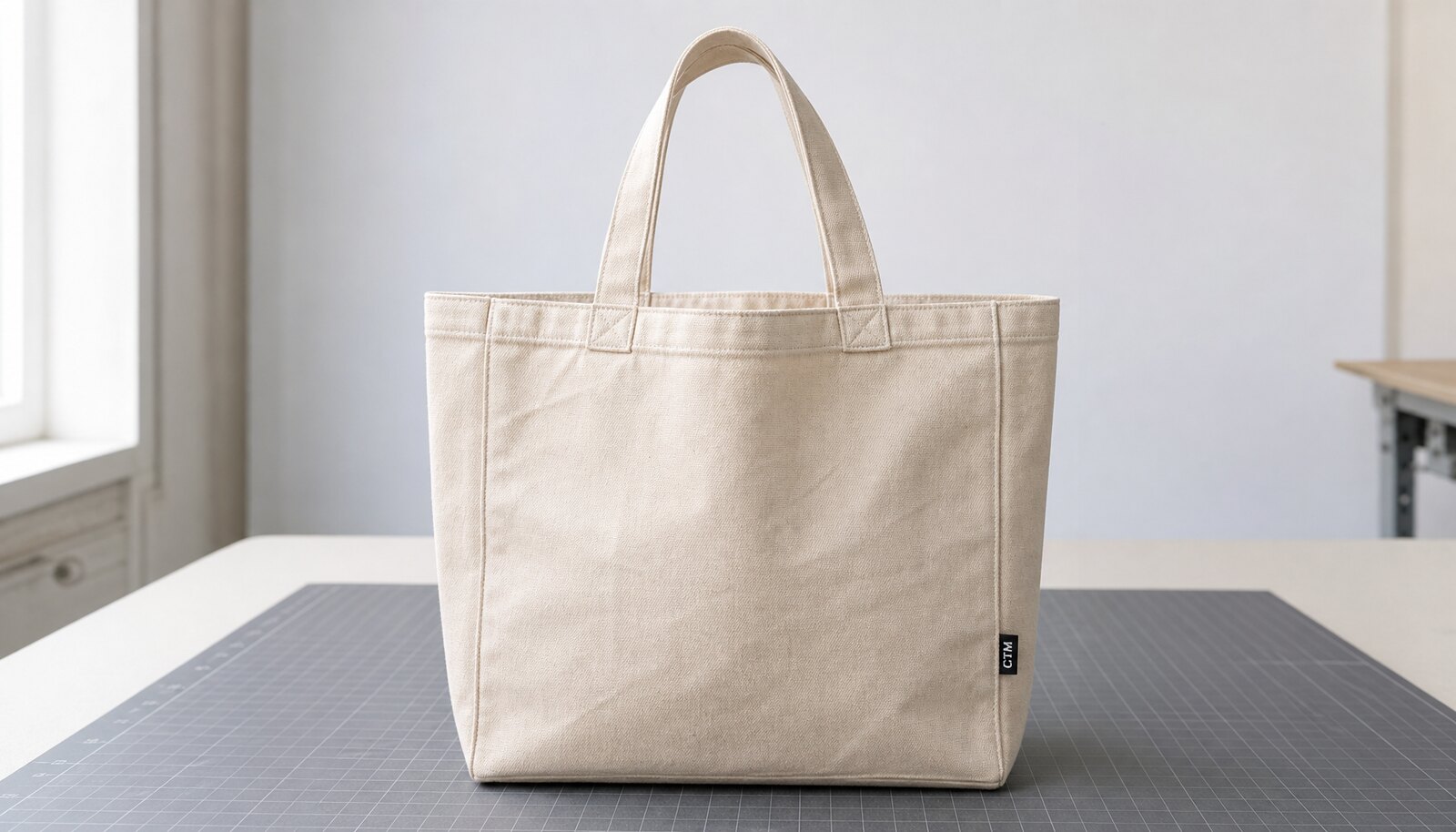
1) What hotels actually need from a heavy canvas tote
When a hotel buyer searches for heavy canvas tote bags, the real use case is usually more specific than “a tote with a logo.” The bag may hold a welcome pack, spa items, retail merchandise, event brochures, or guest purchase carry-outs. In procurement terms, those are different jobs. A welcome-kit carrier needs clean presentation and a controlled pack size. A retail tote needs stronger construction, a more premium hand feel, and a finish that looks intentional rather than promotional. A conference tote may prioritize volume and print visibility, while a boutique hotel gift-shop bag may need to survive repeated reuse and still look presentable after travel.
That is why the first RFQ line should not be the logo artwork. It should be the use case and the expected load. If the hotel needs a tote for a light amenity set, the bag can sometimes stay in the 12 oz range, provided the handles are reinforced and the bag keeps its shape. If the bag will be sold in a hotel shop or used to carry heavier retail items, 14 oz to 16 oz canvas is usually a more realistic quoting band. If the hotel wants a washed or softened finish, the buyer should say so early because washing affects shrinkage, color tone, final size, and lead time.
In practice, a strong RFQ explains the guest moment as well as the product spec: where the bag will be used, what it will carry, whether it will be seen by guests on arrival, and whether it is disposable packaging or a reusable item. That distinction matters because factories price reusable bags differently from event giveaways. The more honest the use case, the more useful the quote.
- Define the bag’s job: amenity carrier, retail bag, event gift bag, or in-room resale item.
- State the expected load: brochures only, folded apparel, toiletries, slippers, or mixed retail goods.
- Decide whether the hotel wants a structured look or a softer drape before asking for quotes.
- Clarify whether the bag is a guest-facing brand asset or a transport bag hidden inside a kit.
- If multiple departments will use it, list the heaviest expected contents, not just the prettiest use case.
2) Choose the canvas weight that matches the hotel’s real use
Fabric weight is one of the fastest ways to compare quotes, but it is also one of the easiest specs to misunderstand. Some factories quote by oz, some by GSM, and some use a marketing phrase like “heavy duty” without a measurable basis. For hotel tote sourcing, a practical quoting range is 12 oz to 16 oz unfinished canvas, or roughly 340 to 450 GSM depending on weave density and finishing. If the bag is washed, garment-dyed, or enzyme-treated, the finished gsm can differ from the raw fabric spec, so the RFQ should say which measurement the factory must use.
Heavier fabric gives better body, better print opacity, and better handle stability. It also raises sewing resistance, thread consumption, and carton weight. A 16 oz bag is not automatically better if the bag only carries lightweight welcome material and will be tucked into an amenity pack. On the other hand, a thin 10 oz canvas often looks acceptable in photos but can feel too soft, wrinkle badly, and lose perceived value once guests touch it. That is why procurement should compare fabric weight together with use, not in isolation.
The safest approach is to ask each supplier to quote the same finished weight concept and then back it up with a material description. If a factory quotes by GSM, ask whether the figure is measured before washing or after finishing. If a supplier cannot explain that difference, they may be quoting from a generic spec sheet rather than the actual cloth they will cut. For hotel programs, consistency matters more than a round number, because reorders need to match the approved sample.
- 12 oz: acceptable for light welcome kits and low-load event use.
- 14 oz: balanced choice for most hotel branded totes with decent structure.
- 16 oz: preferred for retail resale, heavier contents, and a more premium hand feel.
- If the quote uses GSM, confirm whether the number refers to raw fabric or finished fabric after treatment.
- Ask for a swatch that shows both front and back of the exact cloth to check weave density and surface appearance.
3) The RFQ details that change price more than buyers expect
Many tote quotes look similar at first glance, but the actual cost changes with small specification choices. Handle width, seam reinforcement, gusset depth, and inside finishing all affect labor. Print coverage and artwork colors affect setup, screen count, and waste. Even the packing method changes price because individual polybagging adds labor, film, and carton volume. If you do not specify these points, factories will fill the gaps with their own assumptions, and you will end up comparing different products under the same style name.
The most common procurement mistake is requesting “heavy canvas tote bags for hotels” as a photo-based inquiry. That approach produces fast answers but weak comparability. A better RFQ fixes the dimensions, material weight, handle build, and print area, while leaving only clearly stated options open. For example, a 38 x 42 x 10 cm tote with a 60 cm webbing handle and one-color screen print can be compared across suppliers. But if one quote includes a lined interior, a woven label, and retail folding, while another quote is for an unlined bulk-packed bag, the unit price is not meaningful.
It is also worth separating mandatory specs from optional upgrades. If a hotel needs a tote for in-room use, maybe the inside finish can be simple. If the tote is going to a shop, the buyer may need neat top hemming, a cleaner internal seam, and a better logo method. Write those priorities into the RFQ so suppliers do not price unnecessary extras or omit essentials.
- Finished size, gusset depth, and tolerance.
- Fabric weight and whether the quote includes pre-shrinking or washing.
- Handle material: self-fabric or cotton webbing, plus reinforcement type.
- Print artwork color count, print area in centimeters, and number of print locations.
- Packing method: bulk, polybag, insert card, barcode, or retail-ready finish.
- Whether the price includes sampling, artwork setup, carton marks, and export carton specification.
4) Compare supplier routes before comparing unit price
For hotel buyers, the cheapest quotation often comes from the least transparent route. A trader may offer a low headline price but later add charges for revisions, packing, carton changes, or sample remakes. A direct factory quote is usually easier to audit because the sewing, printing, and packing steps can be separated. That separation helps you see whether one supplier is actually using heavier fabric or simply trimming the spec. It also helps you decide where the risk sits if the order changes after sampling.
Supplier route matters as much as the bag itself. A factory with in-house cutting, sewing, printing, and packing can usually control color consistency better, especially when the same tote is rolled out to multiple properties. A sourcing agent can still be useful if you need multi-category consolidation, but then the RFQ must force them to disclose where the bag is made, who prints it, and who performs final inspection. If a supplier cannot clearly name the production site, the buyer does not have enough visibility for a repeat order.
A good quote comparison should go beyond unit price and ask what is actually under control. Some suppliers own the sewing line but outsource the printing. Others cut and sew in one workshop but pack in another warehouse. That is not automatically a problem, but it is a problem if it is hidden. Hotel procurement needs traceability, because the next reorder only works if the same factory can repeat the same process.
- Direct factory: best for spec control, repeat runs, and margin clarity.
- Trading company: useful for mixed-category sourcing but verify who owns production control.
- Local decorator: better for very small quantities, but often higher unit price and fewer fabric options.
- Always compare total landed cost, including carton volume, packing labor, testing, and sample charges.
- Ask which parts are in-house and which are outsourced before you request final approval.
5) A comparison table that helps you choose the right quote structure
The table below is the practical version of a procurement comparison: it is built around spec decisions that change the actual bag, not just the headline price. Use it to separate a quote you can really compare from one that is missing too many assumptions. If a supplier cannot answer the “when it fits” and “buyer risk” columns cleanly, the quote is not ready for approval.
For hotel tote programs, comparison should happen at two levels. First, compare the spec itself: fabric, handle, print, finish, and packing. Second, compare the risk profile: what can go wrong in use, in inspection, or in repeat orders. A quote that looks inexpensive but hides uncertainty is not a bargain. It is a future rework claim, especially when the bags are delivered to multiple hotel sites.
- Write decisions in measurable language, not only descriptive wording.
- Ask for sample photos plus one physical approval sample for important orders.
- Keep quotation, sample approval, and inspection notes tied to the same spec version.
- If a supplier quotes an alternate spec, ask them to label it clearly as an option, not as the base offer.
6) How to make sample approval useful instead of ceremonial
A hotel tote sample is not approved by looking at it on a table. It should be measured, filled, carried, and compared to the buyer’s packing needs. The pre-production sample should confirm finished dimensions, handle length, print placement, and the way the bag stands or folds. If the bag is intended for retail sale, the sample also needs to pass the visual standard from the guest’s point of view, not just the buyer’s.
The most common mistake is approving a sample that looks right but was made from a different fabric lot or with a different handle process. For this reason, ask the factory to state whether the sample is a true production sample or a one-off hand sample. If the sample uses a better fabric than bulk, the quote is not trustworthy. If the sample is hand-finished but production will be machine-sewn at scale, ask the factory to show you where the process changes. That is where quality drift usually starts.
Sample approval should also include a simple use test. Put the actual hotel contents into the bag or a realistic weight equivalent, close the bag if applicable, and carry it for a short period. Then inspect the handle attachment points, top edge, side seams, and print surface. This is not laboratory testing, but it is enough to catch obvious mistakes before bulk cutting begins.
- Measure the body, gusset, and handle drop after production-style finishing.
- Check print alignment against the center line and side seam.
- Fill the bag with the actual hotel contents or a weight equivalent to real use.
- Confirm whether the sample is a production-reference sample or a presentation sample.
- Record the sample version, date, and approval sign-off so the factory cannot swap materials later.
7) QC thresholds that prevent avoidable hotel complaints
For tote bags, quality issues show up in use, not in the carton. A weak handle stitch may survive packing but fail when a guest carries toiletries or a retail purchase. A poor print can look acceptable at first but rub off after friction in baggage handling or repeated reuse. This is why QC notes should define measurable thresholds rather than generic language like “good quality.” A factory needs to know exactly which defects are minor, which are reworkable, and which are rejection-level defects.
A practical buyer specification should include size tolerance, stitch appearance, print durability, cleanliness, and seam integrity. If you can get the factory to confirm an AQL plan and share their in-line inspection points, you reduce the chance of end-of-line surprises. For hotel programs, consistency across hundreds of bags matters more than making each bag perfect by hand. The goal is not luxury-goods perfection. The goal is repeatable, presentable, load-bearing bags that do not create guest complaints.
QC should also be tied to defect categories. For example: minor loose thread at a hidden seam may be acceptable if it is trimmed; a visible stain on the front panel is not acceptable; a crooked logo may be acceptable only within a pre-agreed tolerance; any handle slippage, broken stitch, or seam opening is a functional reject. If a supplier does not want this level of detail, they are not ready for a controlled hotel order.
- Handle reinforcement: bar-tack or X-box at both ends, no loose thread bundles.
- Stitch density: consistent enough that seam gaps are not visible from normal viewing distance.
- Print durability: no major flaking, peeling, or offset after light rub testing.
- Dimension tolerance: define acceptable deviation before production starts.
- Cleanliness: no oil stains, loose fibers, or cutting dust inside the bag.
- Reject visible front-panel stains, missing stitches at load points, and any seam opening that affects carrying strength.
8) QC details buyers should ask a factory to write down
The right QC conversation is not “do you do inspection?” It is “what exactly do you inspect, at what stage, and what is the reject threshold?” Ask the factory whether they inspect incoming fabric, in-line sewing, print alignment, and final packing. Ask who signs off the first three pieces from the line and whether they keep a sealed reference sample during production. These details matter because canvas tote bags often fail at predictable points: handle attachment, top hem alignment, gusset corners, and print registration.
A stronger QC plan includes a simple defect map. Cosmetic defects might include a few loose threads that can be trimmed. Major defects include a visible stain, misprinted logo, wrong size, or a handle sewn off-center but still attached. Critical defects include broken carrying strength, a split seam, or print that is completely wrong. If the supplier can separate those categories in writing, you can inspect faster at the factory and argue less at the port.
Buyers should also ask for evidence of factory control beyond a sales deck. That means the actual production location, the line responsible for the order, and one or two recent photos of the sewing and inspection area. You do not need a glamorous audit report to start. You do need enough proof that the seller can make the product at the quoted standard, not just source it from somewhere else when the order lands.
- Ask for incoming fabric check, in-line sewing check, and final pack-out check points.
- Request a defect classification list: minor, major, and critical.
- Confirm whether a sealed golden sample will stay on the line during production.
- Ask for photos of the actual sewing floor, print area, and packing area, not only sales-room images.
- Require the factory name, address, and process map if a trader is involved.
9) Packing matters because hotels pay for neatness and speed
Packing is not a minor detail for hotels. If the bags are being placed in guest rooms, bulk-packed cartons may be fine because housekeeping will distribute them. If the bags are going to a retail shop or distributor warehouse, each unit may need a barcode, size sticker, and consistent fold direction. The quote should show whether packing labor is included or charged separately, because the difference can be material once you scale to a multi-property rollout.
The carton plan affects freight more than many buyers expect. A heavy canvas tote is bulky even when folded, so over-packing can increase cubic volume and raise landed cost. If your distributor wants master cartons with inner polybags, confirm the exact pack count, moisture protection, and whether the factory can keep the print face clean during packing. A neat bag that arrives with wrinkles, pressure marks, or dirt on the front panel creates unnecessary rework at the destination.
For hotel programs, packing instructions should be written as part of the purchase order, not left as a verbal note. Say whether the logo should face out, whether the bag should be folded once or twice, whether silica gel or an insert card is needed, and whether the carton needs a barcode label on two sides. These are small details, but they affect receiving speed and presentation quality.
- Bulk pack: lowest packing cost, best for hotel internal distribution.
- Individual polybag: better for retail and cleaner presentation, but adds labor and plastic cost.
- Barcode sticker or hangtag: needed when the hotel shop uses SKU tracking.
- Carton marking: should match PO, style, color, and pack count exactly.
- State fold direction and logo-facing position so the first carton matches the approved sample.
10) Lead time, supplier verification, and how to avoid false capability claims
Lead time for heavy canvas tote bags is usually driven by fabric availability, print setup, and packing complexity. If the fabric is standard greige or stock dyed canvas, the schedule can be relatively stable. If you need custom dyeing, washed finishing, woven labels, or special retail folding, the calendar shifts quickly. Buyers often lose time because they approve artwork late or change the bag size after sampling, which resets cutting and print planning. A useful quote should separate sample lead time from bulk production lead time and show what changes restart the clock.
The more important sourcing question is capability verification. Do not stop at “we can print and pack in-house.” Ask who actually cuts the fabric, who makes the handles, where the printing happens, and where the final inspection occurs. Ask for recent photos of those areas and the factory name on the business registration or shipping documents if possible. If the answer keeps shifting, the supplier may be a broker. Brokers are not automatically bad, but they must be managed as brokers: with clearer proof, tighter sample control, and more conservative lead times.
A basic verification step can be simple and effective. Ask for one finished sample, one fabric swatch, one carton photo, and one production-floor photo with a dated note. Then ask the supplier to explain how they would repeat the same tote in three months. If they cannot describe the repeat process clearly, they probably cannot manage a hotel reorder well. For procurement, repeatability is as important as the first order price.
- Ask for a clear sample lead time and a separate bulk production lead time.
- Identify which changes are cosmetic and which changes require resampling.
- Build time for approval, not just manufacturing.
- Do not compare a fast quote with a detailed quote unless the spec scope is identical.
- Verify the actual factory site, process flow, and sample ownership before you issue a PO.
Specification comparison for buyers
| Spec decision | Recommended option | When it fits | Buyer risk to check |
|---|---|---|---|
| Fabric weight | 12 oz to 16 oz unfinished canvas, or 14 oz to 18 oz finished/washed canvas | Welcome kits, spa retail, conference gifting, and guest-use totes where the bag must feel substantial | Light fabric can collapse, show print through, or distort after loading brochures, slippers, or amenity packs |
| Weave and finish | Tightly woven plain canvas, greige or dyed, with optional enzyme wash or garment wash only if the hand-feel matters | When the hotel wants a natural look, a softer drape, or a slightly premium retail feel | Washed fabric can change size, hand feel, and color consistency, so bulk should be approved against the same finishing route |
| Supplier route | Direct factory with in-house cutting, sewing, printing, and packing | You need quote transparency, custom dimensions, and repeat orders across multiple hotel properties | Trading layers can hide fabric origin, sample consistency, and sewing control; compare landed cost, not just unit price |
| Print method | 1-color or 2-color screen print for bold logos; woven label, woven patch, or debossed patch for premium branding | Hotel branding with simple artwork, low color count, and large batch repetition | High-detail artwork can blur on thick canvas; ask for setup charges and color registration tolerance in writing |
| Handle build | Double-fold handles with X-box or bar-tack reinforcement, 50–60 cm total drop depending on carry style | Heavier retail loads, amenity kits, or guest purchases expected to exceed light promo use | Short stitching or weak handle anchoring causes early failure and chargebacks if bags are sold or reused |
| Inside finish | Clean overlocked seams with bottom gusset and optional top hem reinforcement | If the tote will be reused, displayed in-room, or sold in hotel gift shops | Raw edges or poor seam trim create lint, weak seams, and a low-end appearance |
| MOQ structure | 500–1,000 pcs per color/spec for standard builds; higher for multi-color print, special dyeing, or washed fabric | Projects with stable room count, planned event dates, or retail replenishment forecasting | Low MOQs usually come with higher piece price, limited print options, or less flexible packing |
| Packing method | Bulk polybag with carton divider or individual polybag with barcode and size sticker | Warehouse distribution, hotel group rollouts, or retail resale with SKU control | Loose packing raises scuff risk; over-packaging increases labor and carton volume charges |
| Quality level | AQL-based inspection with seam strength, print adhesion, and measurement tolerances defined in writing | Any hotel program where visual consistency matters across multiple properties | If acceptance criteria are vague, factories may ship usable-looking but inconsistent bags that fail in use |
Buyer checklist before sampling
- Confirm finished bag size, not just flat width and height; include gusset depth and tolerance.
- State fabric weight in oz or GSM, and specify whether the weight is before or after washing.
- Define handle length, handle width, and reinforcement method at the top and at stress points.
- Choose print method by artwork complexity, not by habit; request print sample photos on similar canvas.
- Set acceptance criteria for stitch count, seam allowance, and maximum allowed needle skips.
- Specify packing format, carton count, barcode labeling, and whether inserts or tags are needed.
- Ask for sample lead time, bulk lead time, and what changes restart the clock.
- Request a full quote split: fabric, print, sewing, packing, carton, testing, and freight terms.
Factory quote questions to send
- What is the exact fabric specification, including weight, weave type, yarn count if available, and whether the quote is based on greige, dyed, prewashed, or garment-washed canvas?
- How many stitch operations are included for the handles, side seams, bottom gusset, top hem, and reinforcement points? Please identify which steps are manual and which are machine-run.
- What print method is included in the quote, how many colors are priced, what is the setup charge per artwork version, and what is the tolerance for placement and color shade?
- What is the MOQ per color, per print, and per packing style, and how does the price change at 500, 1,000, 3,000, and 5,000 pcs?
- What sample will you provide first: material swatch, pre-production sample, or finished size sample, and what happens if the approved sample differs from bulk materials?
- What carton size, pack quantity, gross weight, and carton cube should we use for freight comparison and warehouse planning?
- What QC standard will you follow for dimensions, stitching, print defects, cleanliness, and needle damage, and can you share the inspection checklist or AQL plan?
- What items are excluded from the unit price, such as hangtags, inserts, barcode labels, testing, sewing thread color changes, export cartons, or special folding instructions?
- Can you confirm your factory capability for cutting, sewing, printing, inspection, and packing on-site, and which processes are outsourced if any?
- Can you provide recent photos of your production line, inspection area, and packing area, plus the name of the factory that will actually make this order?
Quality-control points to confirm
- Finished dimensions should stay within agreed tolerance, typically +/- 1 cm for small totes and tighter if the bag is retail-sold or packed into a fixed-size hotel amenity set.
- Use a tape measure on the approved sample and record body width, body height, gusset depth, handle drop, handle length, and top hem width; do not rely on supplier photos.
- Handle attachment should survive a real load test; for hotel totes, the failure point is usually the handle bar-tack, the handle-to-body stitch line, or the side seam near the top edge, not the fabric body.
- A practical pull-test benchmark for a heavier cotton canvas tote is a staged load test that matches use: start with the hotel’s actual contents or an equivalent weight, then check for stitch distortion, seam opening, and handle slippage; if your tote is meant to carry retail purchases, ask the factory to state the test weight they use and how long it is held.
- Stitch density should be consistent enough that seam gaps are not visible from normal viewing distance; look for skipped stitches, broken thread tails, back-tacking errors, and uneven seam allowance at the gusset corners.
- Reject bags with exposed raw edges at the gusset corners, loose overlock tails inside the bag, or top hem waviness that makes the bag look distorted on a shelf.
- Print should resist surface rubbing; a basic dry-rub test on dark ink over light canvas should not leave obvious smearing, transfer, or flaking, and wet-rub results should be reviewed if the bag may contact damp items.
- Reject print that is misaligned relative to the center line, heavily banded, ghosted, or too translucent to read clearly at normal guest distance.
- Fabric should not show severe slubs, holes, dye streaks, stain marks, oil spots, or uneven wash marks unless that rougher look is part of the approved design intent.
- For seams and reinforcements, ask the factory to define the stitch count per inch or per centimeter used on the approved sample, then check that bulk production stays visually consistent; if the sewing density drops noticeably, treat it as a process drift issue.