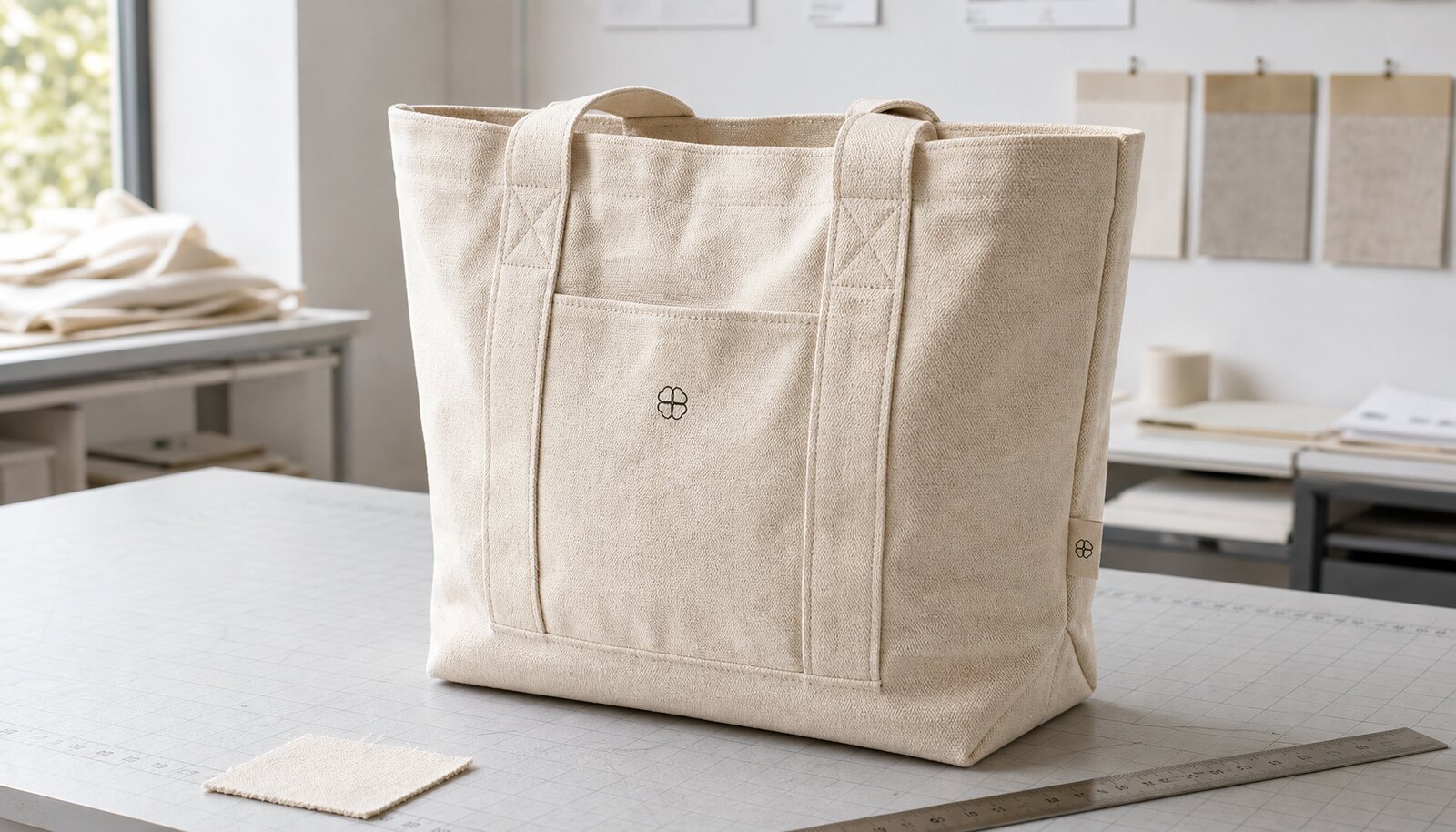
Why print method matters more on cosmetic totes than on generic totes
For cosmetic brands, a heavy canvas tote is not just a carry bag. It often works as gift packaging, a retail add-on, or a branding surface that sits next to premium skincare, fragrance, or makeup. That means the print method affects more than appearance. It changes how the bag feels in hand, how it folds in a carton, how stable the logo looks over time, and how much margin remains after freight and packing.
The wrong decoration choice usually shows up in one of three places: the logo looks cheap on thick canvas, the factory quote hides setup charges, or the first bulk run has alignment issues because the supplier treated the bag like a promo item instead of a retail product. Buyers comparing heavy canvas tote bags for cosmetic brands print method comparison should build the RFQ around the intended selling channel first, then choose the decoration process that matches the channel economics.
- Retail-ready cosmetic tote: prioritize logo sharpness, fabric body, and repeatability.
- Gift-with-purchase tote: prioritize controlled cost, fast approval, and packing efficiency.
- Seasonal campaign tote: prioritize artwork flexibility and low risk on short runs.
Start with the base bag: fabric weight, structure, and surface behavior
Heavy canvas usually means 14 oz to 16 oz, which is roughly 475 to 540 GSM. That range gives the tote enough body to stand up in retail display, hold a cosmetic kit without sagging, and carry print without showing through on light colors. Below that range, the bag may be cheaper, but the print often looks less premium because the weave telegraphs through the ink and the body collapses when folded or packed.
For cosmetic brands, the surface matters as much as the weight. A coarse weave gives a rugged look but can break fine lines and small text. A tighter weave, sometimes paired with a light wash or surface treatment, helps screen print edges stay clean. If you want full-bleed graphics or small serif text, the supplier should show a fabric swatch with the exact print method before you approve the run.
- 14 oz canvas: acceptable for value-led retail or lighter gifting.
- 16 oz canvas: better for premium perception and stable print registration.
- Lining, lamination, or inner pocket can improve structure, but it changes cost and lead time.
Print method comparison for cosmetic-brand buying decisions
Screen printing is still the default for most heavy canvas tote bags because it keeps unit cost controlled once the artwork is set. It works best for one to three solid colors, logos with clean edges, and repeat replenishment orders. The main risk is not the technique itself, but poor control of mesh count, ink thickness, and cure temperature. On coarse canvas, a weak setup gives you fuzzy edges or uneven fill; on dark fabric, a low-opacity ink may require a second pass and a higher scrap rate.
Heat transfer and digital transfer are useful when the brand needs frequent artwork changes, small test runs, or complex gradients. They reduce setup burden, but the feel can be less premium on a heavy canvas tote, and edge durability becomes a real issue if the bag will be handled often. Embroidery and appliqué are the premium options. They look strong, but they need reinforcement under the decoration area and they are not the best choice for very large logos or tightly costed bulk programs.
- Use screen print when the artwork is simple and the order is repeatable.
- Use transfer methods when SKU variation is high and quantities are limited.
- Use embroidery only when the brand story supports a tactile premium finish and the panel can handle the needle density.
How to compare supplier quotes without getting fooled by unit price
A useful quote for heavy canvas tote bags should separate fabric, sewing, print setup, decoration, packing, and carton cost. Many suppliers quote one simple unit price, but that number can hide a low fabric weight, a weak print method, or a cheap packing spec that damages the bag during transit. When comparing offers, make sure each supplier is quoting the same base cloth, same handle reinforcement, same print area, and same packing count. Otherwise the lowest price is often just the least complete spec.
For procurement teams, the real comparison is landed cost per sellable bag. One factory may be slightly more expensive on ex-works price but save money through better carton loading, fewer defective prints, and lower rejection rates at receiving. If your retail program depends on a clean shelf presentation, a 3% to 5% savings on the quote can disappear quickly if the print is off-register or the bags arrive crushed.
- Request separate line items for fabric, sewing, printing, packing, and cartons.
- Normalize all quotes to the same fabric weight and the same decoration area.
- Ask whether the quoted price includes one sample revision or only one production sample.
Supplier route comparison: direct factory, trading company, or print specialist
The right sourcing route depends on control, not just the headline price. A direct factory with an in-house print room is usually the safest route for repeat cosmetic programs because sewing and decoration can be aligned inside one production schedule. If there is a defect, responsibility is clearer and the sample-to-bulk match is easier to hold. This route is often the best choice when the brand expects multiple replenishment orders or needs strict logo consistency across regions.
A trading company can be useful when you need mixed product sourcing, lower-friction communication, or a broader supplier base. The tradeoff is that the printing and sewing may be split across different subcontractors. That can work, but the buyer needs better documentation on who owns color control, who signs off the final sample, and who pays for rework if the print shifts after sewing. A specialist print shop can be attractive for artwork-heavy campaigns, yet it may not understand tote construction details like handle bar-tacks, gusset alignment, or retail packing needs.
- Direct factory: best for consistency and responsibility control.
- Trading company: best when sourcing convenience matters more than process transparency.
- Print specialist: best for complicated artwork, but verify bag construction quality separately.
MOQ logic, setup charges, and where custom print cost actually comes from
MOQ is not only about how many bags you need. It is also about how many print setups the factory must run. Screen printing often has a setup cost per color and sometimes per side. That means a one-color logo on one side can be commercially efficient even at moderate quantities, while a four-color front-and-back design can become expensive quickly on small runs. Buyers should compare the MOQ against the total setup burden, not just the bag count.
As a practical rule, the lower the quantity, the more attractive transfer methods can look on paper. But if the tote will be handled often or sold as a premium item, the higher decoration cost of screen print may still be better value over time. For example, a cosmetic brand ordering a short campaign run may accept a slightly higher unit price if the print survives shelf handling and the bag feels like a retail product instead of a promotional giveaway. The quote should show where cost rises: screen count, artwork complexity, extra color passes, special ink, or post-print curing time.
- One-color screen print usually gives the best cost-to-durability ratio.
- Each additional color increases setup time and the chance of registration error.
- Short runs can justify transfer or digital methods when reorders are uncertain.
Sample approval: what to test before you release bulk production
The pre-production sample should use the final fabric, final decoration method, final logo placement, and final packing. A white-body sample with a loose printed patch does not prove the production result. Buyers should inspect the sample under daylight-like lighting, then compare it to the signed master sample from the supplier. On a heavy canvas tote, small issues like print drift, handle twist, or uneven gussets become obvious when the bag is filled and folded, not just when it is lying flat.
For cosmetic brands, sample approval should include both visual and handling checks. Load the bag with a representative product kit or weight equivalent and see whether the print area distorts, whether the handle anchors strain the top edge, and whether the bag still folds cleanly for packing. If the tote will sit in retail packaging, check whether tissue or insert cards leave marks on fresh ink. That kind of detail saves the first bulk run from becoming a rework job.
- Compare print position against a measured centerline.
- Rub test the print after full curing if the supplier claims strong ink adhesion.
- Open and close packed samples to see whether folding damages the print area.
QC thresholds that matter in bulk, not just at inspection
Quality control for canvas totes should be tied to use, not just appearance. The fabric weight should stay within a practical tolerance around the approved spec, and the bag should not feel dramatically softer than the sample. Handle length, seam symmetry, gusset depth, and top hem width need numeric tolerances. If the sample was approved on a crisp 16 oz cloth but the bulk run lands closer to a loose 14 oz feel, the print may still pass visually while the bag fails at retail presentation.
Print quality needs its own acceptance criteria. For simple spot-color logos, buyers should define edge sharpness, color tolerance, and alignment tolerance before production begins. If the logo is centered and sized for a wide front panel, a few millimeters of drift may be acceptable; if the logo sits close to a seam or pocket edge, the tolerance should be tighter. Also include a rejection rule for smudging, ghosting, under-cure tackiness, and any visible ink cracking in folded zones.
- Set a master sample and keep it signed by both sides.
- Use numeric tolerance for placement, size, and seam consistency.
- Reject cartons if fresh print is sticking, blocking, or transferring to tissue.
Packing, carton loading, and how to avoid damage before the bags reach shelf
Packing is a hidden cost driver for heavy canvas tote bags. Because the fabric is thick, folding method and carton count affect both freight density and print damage. If the bag is folded too tightly, the printed area can crease permanently or pick up board marks. If it is packed too loosely, the carton volume grows and the freight cost rises. The factory should propose a fold size that protects the logo and still fits the target carton dimensions.
For retail or distribution programs, ask the supplier to state the polybag count, tissue use, insert card use, desiccant if needed, and outer carton specification. If the bags are for cosmetic gifting, a clean inner pack matters because buyers often inspect presentation before distribution. A master carton should also be labeled clearly by color, print design, and quantity so receiving teams can reconcile the shipment without opening every inner pack.
- Use a fold that keeps the print off the sharpest crease lines.
- Confirm carton dimensions against pallet or warehouse storage constraints.
- Avoid over-compressing fresh ink during packing and outbound loading.
Lead time, schedule risk, and where projects usually slip
A realistic schedule for a branded heavy canvas tote usually depends on three gates: sample approval, material readiness, and print slot availability. If the supplier has the fabric in stock, the project can move faster, but brand buyers should still protect time for artwork correction and sample sign-off. The common delay is not sewing; it is redoing the print sample because the first version looked different on canvas than on the screen file.
When a cosmetic launch date is fixed, build schedule margin into the RFQ. Ask the supplier when the screens are made, when the first strike-off will be ready, and whether the sewing line and print line are in the same facility. If decoration is outsourced, the schedule risk rises because the bags may wait between operations. A cleaner plan is a single factory ownership chain with a clear production calendar from material cut to final carton seal.
- Protect time for color approval and one corrective sample cycle.
- Confirm whether the supplier can hold fabric and print capacity during peak season.
- Treat outsourced decoration as a schedule risk unless responsibility is documented.
Specification comparison for buyers
| Spec decision | Recommended option | When it fits | Buyer risk to check |
|---|---|---|---|
| Bag fabric weight | 14 oz to 16 oz canvas, usually about 475 to 540 GSM | Cosmetic brands want a premium feel, good shape retention, and less show-through on dark print | If the bag is too light, print distortion and panel waviness increase after packing |
| Main print method | Screen print for most brand runs | Solid logos, 1 to 3 spot colors, repeat orders, and tight unit cost control | Fine lines can fill in on coarse canvas if mesh and ink viscosity are not controlled |
| Small-lot decoration | Heat transfer or digital transfer | Launch tests, seasonal drops, many SKUs, or frequent artwork changes | Transfers can crack, edge-lift, or feel plasticky if wash resistance is not proven |
| Premium finish | Embroidery or appliqué on a reinforced panel | Higher-end cosmetic gifting or VIP sets where tactile presentation matters | Need denser backing and stitch density control; otherwise panel puckering appears |
| Artwork format | Vector logo with simple spot colors | Best for screen printing and consistent color matching across suppliers | Rastor files or gradients raise prepress cost and increase shade variation risk |
| MOQ route | Standard factory run with one print setup per colorway | When the same tote will sell across multiple channels and seasons | Low MOQ may hide setup cost inside unit price, making comparison quotes misleading |
| Packing method | Bulk packed with tissue or insert card, then outer carton | Wholesale, distribution, or retail replenishment where cost and carton efficiency matter | Overfolding can crease printed areas and create board marks on fresh ink |
| Sample approval level | Pre-production sample with actual fabric, actual print, and final packing | Any branded cosmetic tote sold at retail or used in gift-with-purchase programs | Color approval on unprinted fabric only does not protect against final print mismatch |
| Supplier route | Direct factory with in-house print room | When lead time, consistency, and print accountability matter more than the absolute lowest quote | Outsourced printing can create unclear responsibility if defects appear between sewing and decoration |
Buyer checklist before sampling
- Specify canvas weight in oz or GSM, plus whether you need pre-washed, raw, or enzyme-treated fabric.
- State the exact print area size, number of colors, and whether the logo must sit centered, low, or over a seam.
- Confirm whether the bag needs reinforced handles, gusset, lining, bottom board, or a cosmetic insert pocket.
- Request a pre-production sample using final fabric, final print method, and final packing, not a generic sample.
- Ask suppliers to separate fabric cost, print setup, accessory cost, packing cost, and carton cost in the quote.
- Define acceptable color tolerance, print edge sharpness, and alignment tolerance before mass production starts.
- Specify whether cartons must fit retail shelf plans, master carton pallet patterns, or e-commerce ship-ready handling.
- Collect a top- and side-view sample photo of the approved sample with measured dimensions before approval.
Factory quote questions to send
- What exact canvas weight, weave count, and finish are you quoting, and is the weight measured before or after washing?
- Which print method is included in the price, and what are the setup charges, plate charges, or screen charges by color?
- What is the MOQ by colorway, by print design, and by packing method?
- Can you make a pre-production sample with final fabric, final logo position, and final carton count before bulk production?
- What are the accepted alignment tolerance, print color tolerance, and sewing tolerance for this bag?
- How many pieces are packed per polybag or inner bundle, and what outer carton size and gross weight do you recommend?
- What is the standard lead time after sample approval, and what production steps are on your critical path?
- If the artwork changes after sampling, what rework cost and schedule impact should we expect?
Quality-control points to confirm
- Fabric weight tolerance: keep the bulk run within a practical range of about ±5% of the confirmed GSM or oz target.
- Color match: approve one master reference under daylight-like inspection and keep a physical signed sample at the factory.
- Print registration: logo placement should stay within the agreed tolerance, commonly around ±3 to ±5 mm for simple placement jobs.
- Ink coverage: no pinholes, smeared edges, ghosting, or patchy fill on large solid areas.
- Stitching: handle anchors, side seams, and top edges must be straight, secure, and free of skipped stitches.
- Bag symmetry: tote body should stand reasonably square; twisted handles or uneven gussets create retail rejection risk.
- Odor and finish: no sharp chemical odor or sticky print surface at packing time.
- Packing integrity: folded size, tissue placement, and carton count should match the approved packing spec without crushing print zones.