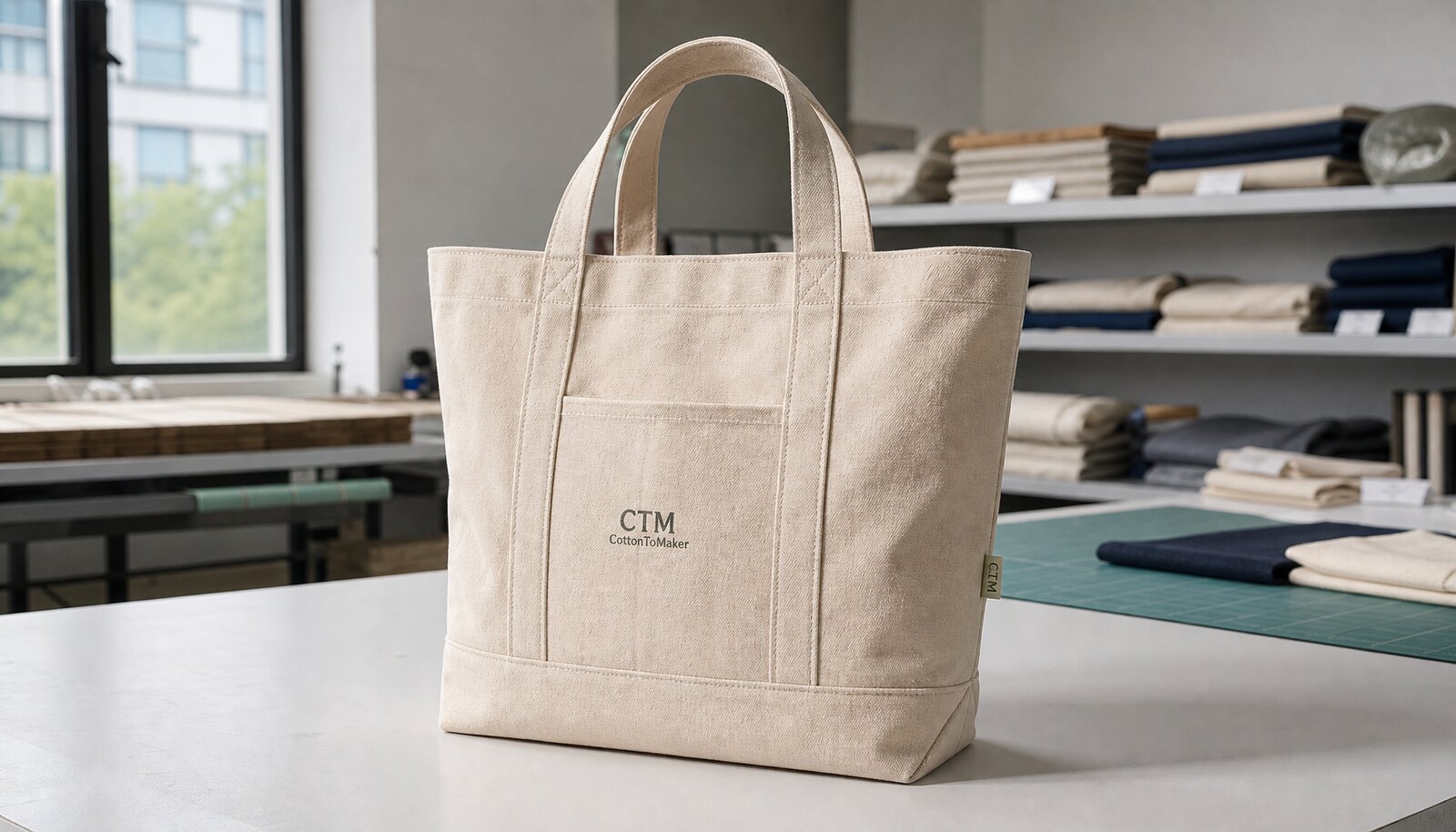
Why sample approval controls the real cost of corporate event totes
For heavy canvas tote bags used at corporate events, the sample is not a courtesy item. It is the only practical way to confirm whether the supplier can produce the bag that was priced. On paper, most tote quotes look similar: same fabric weight, logo on the front, reinforced handles, and packed for shipment. In the sample stage, the differences appear fast. The canvas may be lighter than described, the print may sit too high, the handles may be cut shorter than expected, or the carton pack may be much less efficient than the buyer assumed.
Corporate event buyers usually manage three things at once: brand presentation, functional carry performance, and a hard delivery date. If the tote is used in a conference registration kit, a sponsor pack, or a VIP event bag, a weak sample can create a chain reaction. The bag might still be usable, but if the logo looks cramped, the body collapses when filled, or the fold creates scuffs in transit, the program becomes more expensive and more stressful than planned.
A disciplined approval process helps separate visual approval from production approval. The tote can look good on a desk and still fail on seam strength, handle reinforcement, or size consistency. Procurement teams should treat the sample as the production benchmark, not as a display piece. If the supplier cannot reproduce the same material, print, trim, and pack format at scale, the sample is not a valid approval reference.
This matters most when the order is tied to a fixed event schedule. There is no time to redesign the tote after the event collateral has already been printed or packed. The better commercial outcome is to make the supplier commit to a repeatable spec before bulk sewing begins. That is why the checklist in this article focuses on approval workflow, measurable QC, and supplier verification rather than general tote shopping advice.
- Use the sample to confirm what the quote really includes, not just how the tote looks.
- Approve only a version made from final or production-intent fabric, trim, decoration, and packing.
- Write the difference between acceptable cosmetic variation and rejection criteria before production starts.
Choose the canvas weight around the event load, not the phrase “heavy canvas”
The phrase heavy canvas sounds precise, but suppliers use it loosely. For procurement, the useful question is not whether the tote feels sturdy in hand. It is whether the cloth weight and weave support the actual event use case. A registration tote carrying a notebook, brochure stack, water bottle, and small giveaway needs different structure from a branded handout bag that mostly sits on a chair or desk. If the event bag is meant to carry a laptop or a hard-backed folder, the spec should be set with that in mind from the start.
Most buyers begin somewhere in the 12–16 oz range, which is roughly 400–550 GSM depending on weave, finishing, and fabric density. That range usually delivers enough body for a more premium look than a light cotton tote and gives the bag a better chance of standing up when packed. Lower weights can reduce cost, but they also increase the risk of a floppy shape, more visible print distortion, and lower perceived quality. Higher weights improve structure, but they can also make sewing harder, increase carton weight, and affect freight cost.
Do not approve the fabric by weight alone. Two canvases with the same GSM can behave differently if one is loosely woven, heavily bleached, coated, or pre-shrunk. For example, a dense 14 oz canvas may feel more substantial than a softer 16 oz cloth if the finish is different. That is why procurement should ask for the fabric type, finishing method, and whether the approved sample was made from the exact same cloth that will be used in bulk. If not, the quote and sample should be marked as reference only, not approval basis.
A practical buyer test is simple: ask the supplier to compare the sample against the bulk fabric, not just to quote a number. If the sample uses a different weave density or finish, the bag may look similar but behave differently in real use. For corporate events, consistency usually matters more than chasing the biggest fabric number. The goal is a tote that looks premium, carries the expected load, and stays within the approved size after packing and handling.
- 12 oz / ~400 GSM: suitable for lighter event packs and tighter budgets.
- 14 oz / ~480 GSM: a common balance between structure, handfeel, and cost.
- 16 oz / ~550 GSM: better for premium kits, heavier contents, or a bag that must stand upright.
- If the tote must stay upright on a table or registration desk, ask about a stiffer weave or a base insert.
Use this comparison table to narrow the right tote construction before quoting
A real comparison table should help you choose between tote constructions, not mix sourcing routes with generic material descriptions. Procurement teams need to compare the bag itself first: what the body is made of, how it is reinforced, and how it will behave in use. Once that is clear, sourcing route and supplier type can be evaluated separately. This distinction makes RFQ review cleaner and reduces the chance of comparing unlike bags as if they were equivalent.
When reviewing options, focus on the consequences of construction choices. A single-layer body is easier to produce, but may need stricter handle reinforcement. A lined tote can feel more finished, but lining also adds alignment risk and can hide defects until the bag is in hand. A base insert can improve shape, but it may add carton volume and change the way the tote folds. The best option is the one that fits the event and the approval standard, not the one with the most features.
The table below is meant to support an approval decision, not to replace a supplier quote. Use it as a pre-quote filter so you can ask the right questions the first time and avoid revising the spec after samples arrive.
Select the decoration method around the artwork, then lock it into the sample
The best decoration method depends on the artwork, quantity, and appearance target. For most corporate event bags, screen printing remains the most practical option when the logo is bold, the color count is limited, and the print area is flat enough for consistent coverage. It is usually the best fit for conference logos, sponsor marks, and campaign messaging because it is repeatable and cost-efficient once the setup is approved.
Heat transfer works when the artwork has more detail, the run is smaller, or the logo includes gradients or fine elements that screen printing cannot hold cleanly. However, it brings a different set of risks: adhesive behavior, edge lift, surface texture, and how the print behaves after repeated folding. If the tote will be packed, unpacked, and carried during a multi-day event, ask the supplier what rub resistance and peel resistance they expect, and whether they can show a decorated sample that reflects that use.
Embroidery gives a more premium feel, but it is not the safest choice for every logo. Very small text can fill in, and dense stitching can distort the canvas if the design is too compact. Embroidery also changes the handfeel of the panel, which may be acceptable for a premium gift bag but not ideal when the bag needs a smooth front panel for a large sponsor mark. Procurement buyers should ask for the exact thread colors, stitch density, backing method, and logo size that will be used in production.
The key rule is simple: do not let the supplier substitute a different decoration method for the sample just because it is convenient. The approved sample should show the final decoration type, final placement, and final size. If the artwork needs to be simplified for the chosen method, that decision should be made before approval. Once the bulk order starts, decoration changes become expensive and can delay the event schedule.
- Screen print works best for bold logos, flat panels, and repeatable medium-to-high quantities.
- Heat transfer is useful for smaller runs or more detailed art, but check adhesion and surface wear.
- Embroidery is premium but needs enough logo size and stitch space to remain legible.
- If the program includes multiple event variants, confirm whether each colorway needs a separate setup charge.
What a procurement-grade quote must show before you ask for samples
A useful quote lets you compare suppliers without guessing what the price really covers. For heavy canvas tote bags, the quote should not be a vague all-in number if the buyer is expected to approve a sample and release a bulk order. The quote needs enough detail to show where the cost sits: fabric weight, sewing construction, decoration setup, packaging, and any special handling. Without that, the buyer may choose the cheapest line and then discover missing costs later.
Ask for the quote to break out the bag body, handles, decoration, labels, inserts, and packaging. If the supplier wants to keep some elements bundled, ask for a note explaining exactly what is included. A bag with an inner pocket, woven side label, or premium fold spec should not be compared directly with a bare unlined tote unless the differences are visible in the quote. Event buyers need this because the tote is part of a larger program, and a few cents hidden in packing or labeling can affect total campaign spend across thousands of units.
A quote should also show the commercial assumptions behind the price. Is the order fully custom, based on stock fabric, or built from existing tote dimensions? Is the sample charge refundable? Are there price breaks at 500, 1,000, 3,000, or 5,000 pieces? Does a mix of sizes or colors trigger a surcharge? These are the questions that determine landed cost, not just unit price. If the order will be shipped by air for a fixed event date, carton dimensions and gross weight matter too, because freight can erase any savings from a low factory price.
One practical rule helps procurement teams avoid bad comparisons: if two suppliers are not quoting the same material, decoration method, packing spec, and tolerance standard, they are not quoting the same bag. Ask each supplier to quote against the same written sample sheet. That makes the review easier, creates a cleaner approval trail, and reduces the chance that the chosen supplier later argues the sample was only “for reference.”
- Request separate lines for fabric, sewing, print, labels, insert, and packing where possible.
- Ask whether setup charges are one-time or charged again for artwork revisions, color changes, or reorder campaigns.
- Compare carton dimensions and gross weight because they affect freight, warehousing, and event-site handling.
- Confirm whether the sample charge is refundable or credited against bulk production and under what conditions.
How to verify whether you are dealing with a real factory or a trading company
Supplier type matters because it affects control, traceability, and escalation. A direct factory usually gives buyers better visibility into sewing, print, and quality control, especially when the sample is made by the same team that will run the bulk order. That does not guarantee better quality by itself, but it does make the approval process easier to manage because the buyer is dealing closer to the production source.
A trading company or sourcing agent can be useful when the buyer needs flexibility, mixed product coordination, or a smaller initial order. The tradeoff is that responsibility can become layered. The person quoting the bag may not be the one controlling fabric, cutting, printing, or final carton packing. If the sample is late or the bulk tote differs from the approved version, the buyer needs to know who can fix it and who can authorize the change. Without a clear escalation path, problems bounce between sales and factory teams.
There is also a middle case: a factory that outsources decoration or a sourcing office that manages several specialized factories. This can work well if responsibilities are explicit. It becomes risky when the buyer does not know who owns the screen, who checks print color, or where the final QC happens. For corporate event buyers, the question is not simply “factory or trader?” It is “who can prove the bag will be built and inspected the same way in bulk as it was in sample form?”
To verify a supplier properly, ask for the factory name, the exact production location, and the role of each party in the supply chain. Request audit documents if available, photos of sewing or printing capability, and the name of the person responsible for sample revisions. If the supplier cannot explain who signs off the first article and who stops the line when the sample standard is missed, the operational risk is higher than the quote may suggest.
- Ask who owns the final specification: sales, production, or quality control.
- Request the factory name if a trader is quoting the order, and confirm where the bag will actually be sewn.
- Define an escalation path for missed sample standards, late approvals, and unexpected material substitutions.
- For time-sensitive events, favor the route that gives you the clearest control over sample-to-bulk continuity.
Turn the sample approval checklist into a sign-off form, not a note list
A useful sample approval checklist should behave like a controlled approval form. It should not just be a list of comments. For heavy canvas tote bags for corporate events, the form should capture version control, pass/fail decisions, and the names of the people who approved each section. That makes the sample usable as a production reference and protects procurement if the supplier later argues that a visual comment was not a formal approval.
The form should be organized around three decision layers: appearance, construction, and function. Appearance covers color, artwork placement, logo size, and visual balance. Construction covers seams, reinforcement, handle attachment, pocket alignment, and edge finishing. Function covers carry comfort, usable volume, shape retention, and how the tote behaves under the expected event load. Separating these areas lets different teams comment without turning the review into one long argument about the bag in general.
A sign-off form also helps when multiple stakeholders are involved. Marketing may focus on brand presentation. Procurement may focus on cost and supplier reliability. Operations may focus on packing and distribution. The form gives each team a clear place to approve or reject instead of relying on a meeting summary. The result should be one record that states whether the sample is approved, approved with conditions, or rejected, and why.
Keep a physical golden sample or a sealed retention sample and label it with the approved version number. Record the fabric weight, decoration method, dimension sheet, and carton spec on the approval form. If the same tote is reordered later, the company should be able to compare against the retained sample rather than relying on memory or email history.
Use measurable QC thresholds instead of general comments
The most common sample review mistake is giving feedback that is too broad to be useful. Comments like “looks good,” “make it stronger,” or “the color is a bit off” do not help production. For heavy canvas tote bags, the QC standard should be specific enough that the factory can reproduce it without guessing. That means defining dimensions, tolerances, stitch quality, decoration quality, and packaging criteria before bulk sewing starts.
For dimensions, set tolerances that reflect the visibility of the area. Many buyers use a tighter range for handle drop and print placement than for overall body size because those measurements affect appearance immediately. If the tote is part of a coordinated event kit, even a small shift can make the logo look off-center or make the bag sit badly in a carton. The more visible the front panel, the more exact the placement should be.
For stitching, inspect the handle ends, gusset seams, pocket corners, and top edges separately. Look for skipped stitches, uneven stitch length, loose thread clusters, seam puckering, and raw-edge exposure. If the bag has lining, a base insert, or an interior pocket, check those details too, because they often reveal rushed workmanship. A sample should also be pulled slightly by hand at the stress points to see whether the reinforcement feels secure or just looks neat.
For print quality, judge the sample under the same lighting used during approval whenever possible. Define whether minor registration drift, edge softness, or a small amount of texture show-through is acceptable. If the logo has small text, the text should remain legible at normal viewing distance. For screen print, check registration and edge crispness. For embroidery, check stitch density, backing cleanup, and whether the logo remains readable without distortion.
Packaging deserves the same discipline. Specify fold method, polybag status, carton count, master carton marks, and any retail labeling requirement. For event programs, packaging mistakes can be costly because they slow warehouse handling and distort freight calculations. A tote that looks right but ships in the wrong carton format can still fail the program, which is why packaging criteria belong on the same checklist as the bag itself.
- Use a written tolerance on body width, height, gusset depth, handle drop, and pocket size.
- Inspect handle reinforcement, seam finish, pocket corners, and top-hem symmetry.
- Define print acceptance by placement, clarity, color density, and registration, not only by general appearance.
- Approve the fold, carton count, and carton mark as part of the same sign-off.
Quality control for tote samples: use fieldable checks, not generic promises
QC is where many tote articles become vague, but procurement teams need practical checks that can actually be used at sample stage and first production. A good tote QC plan should include sample quantity, test method, and pass/fail points. The goal is not laboratory perfection. The goal is to catch common failures before they move into bulk production and event distribution.
For sample inspection, ask for at least a visual review of the pre-production sample plus a first-article check from the production line if the order is time-sensitive. If the order size justifies it, inspect a small random lot from the first batch rather than only a single piece. A practical reference is an AQL-style review for appearance and workmanship, combined with a functional test on a few units. The exact AQL level should be aligned internally, but the supplier should know that the buyer expects a defined inspection approach rather than a casual visual check.
For pull testing, use a simple controlled method on the sample and first article: fill the bag with the expected event load, then lift by the handles and hold briefly while observing seam stability, handle distortion, and any sign of thread opening. This is not a substitute for a lab test, but it is enough to reveal weak reinforcement or poor handle attachment. If the handles stretch, twist, or open the seam during this simple test, the bag is not ready for approval.
For seam testing, inspect the handle base, top hem, side seams, bottom corners, and pocket joins. A small pull at the seam line should not produce visible opening, popping thread, or excessive movement. For print rub testing, do a dry rub and, if relevant, a lightly damp rub with a clean white cloth on a non-critical area of the sample. If color transfers heavily, the decoration method or curing process needs correction. For carton verification, check one packed carton for count, fold consistency, carton strength, and whether the bag scuffs or shifts when handled. A drop or handling check on the packed carton is useful because event programs often fail in transit, not in the sewing room.
Keep the QC record short but specific. Note the sample size inspected, the test method, the exact defect found if any, and the corrective action required. A supplier can work with that. “Looks poor” is not a useful QC note; “handle base fails under short hold test, threads opening at left X-box” is useful and actionable.
- Inspect a defined sample quantity rather than a single piece only.
- Use a simple load-and-hold pull test on handles and reinforcement points.
- Perform a dry rub and light damp rub check on printed areas if the artwork uses ink or transfer.
- Verify carton count, carton strength, and packed condition with a handling or drop check.
Plan quote comparison around sample charge, MOQ breakpoints, and landed cost
Procurement teams often compare tote quotes as if every supplier is starting from the same baseline. They usually are not. One factory may offer a low unit price but charge more for setup. Another may have a higher sample cost but include more items in the base price. A third may be using stock material with a lower MOQ, which can work for a pilot event but not for a national rollout. To compare accurately, build the review around total cost, not just unit cost.
Sample charges should be treated as part of the commercial test. A paid sample is normal, but the buyer should know whether it is refundable or credited against the final order. If the supplier expects multiple sample rounds, ask who pays for revisions. That matters because corporate event artwork often changes after internal review. A supplier that hides revision charges in the fine print can look inexpensive at first and become expensive after the first round of comments.
MOQ breakpoints matter because many tote programs are tested in stages. A buyer may want a few hundred pieces for an executive event, then several thousand for a larger conference, or multiple colorways across regional events. Ask the supplier how the price changes at standard breakpoints and whether mixed-color or mixed-size orders trigger extra costs. Also ask whether the decoration setup is charged per design or per order. If the same tote is reused for several events, the best quote is the one that supports reorders without repeated setup pain.
Landed cost includes freight, cartons, warehousing, and any event-site redistribution. Canvas bags are bulky even when the fabric cost is modest, so carton size may influence freight more than the bag itself. For international orders, do not approve a quote until you understand how carton count and gross weight affect freight mode. A slightly more expensive bag with a tighter pack can be cheaper overall than a lower-price bag that ships inefficiently.
This is also the point where buyers should ask about substitution risk. If the fabric color, thread, or trim has to change because of sourcing constraints, what happens to the price and lead time? The answer should be written, not verbal. A clear quote framework gives procurement something to defend internally when stakeholders ask why one sample is worth approving over another.
- Compare unit price and setup cost together, not separately.
- Ask for the sample charge policy, including whether revision samples are billable.
- Check price breaks at standard volume thresholds and for multi-color or multi-SKU orders.
- Include freight, carton cube, and warehouse handling in landed-cost thinking.
Specification comparison for buyers
| Option | What procurement buyers gain | Key risk to manage | Best fit | Approval checks to request |
|---|---|---|---|---|
| 12 oz / ~400 GSM cotton canvas | Lower cost, lighter carton weight, easier to fold and pack, acceptable for simple conference inserts | Can feel soft or floppy if the weave is loose; print may show more show-through; base may not stand upright | Budget-friendly registration bags, short-life event handouts, light sponsor packs | Confirm actual fabric weight from a cut swatch or finished sample, ask whether the cloth is raw or pre-shrunk, and test loaded shape retention with the planned event contents |
| 14 oz / ~480 GSM cotton canvas | Balanced structure and handfeel; often a good compromise for corporate events | Can still sag if handle reinforcement and seam specs are weak; price can climb if finish is upgraded | General corporate events, seminar kits, branded giveaways that need a more premium look | Check weave density, seam allowance, handle attachment method, and whether the bag sits upright with the expected load |
| 16 oz / ~550 GSM cotton canvas | Better body, better visual premium, stronger perception of durability | Higher sewing difficulty, heavier freight, and more chance of bulk size drift if fabric is not stabilized | VIP events, premium gifting, retail-style brand carry bags, heavier inserts | Ask for cut-size vs finished-size measurement, pull testing at stress points, and carton weight verification before approval |
| Washed or pre-shrunk heavy canvas | More predictable after finishing, softer premium handfeel, usually less post-production shrink risk | Can shift color tone or change the way print sits on the fabric; may cost more and require a separate approval sample | Events where appearance matters and the bag must keep its size after handling | Request shrink test results or at least the supplier’s pre-shrink process note, plus approval of the exact finished sample rather than a raw cloth reference |
| Laminated or coated canvas | Better surface wipeability, more structure, stronger shelf presence | Print compatibility, cracking at fold lines, odor, and a less natural handfeel if coating is too heavy | Premium branded totes, short-run promotional bags, events where durability and presentation matter equally | Confirm coating type, smell/finish acceptance, print adhesion method, and fold-line behavior after repeated handling |
| Canvas with lining, pocket, or base insert | Improved function, cleaner interior, better pack presentation | Adds more sewing steps and more points for misalignment or rejected workmanship | Conference kits, executive events, bags carrying mixed-format items | Approve interior dimensions, pocket alignment, base insert fit, and the final folded pack format |
| Stock body with custom decoration | Fastest route to sample and easiest MOQ entry | Limited control over size, handle length, and pocket position; stock dimensions can look generic | Tight timelines, pilot programs, and lower-risk event trials | Verify stock dimensions, available decoration area, and whether inventory is reserved for your reorder window |
| Fully custom build | Best control over brand presentation and functional spec | More sample rounds, higher setup cost, and more chance of quote drift if the spec is not tight | Premium corporate programs, multi-event brand systems, long-term procurement | Lock the tech pack, version control, approval sign-off, and first-article inspection before bulk release |
Buyer checklist before sampling
- Confirm the fabric weight in both oz and GSM, and state whether the canvas is raw, washed, pre-shrunk, coated, or laminated.
- Approve the exact bag dimensions with tolerance ranges for body width, height, gusset depth, handle drop, and pocket size.
- Lock the decoration method, logo placement, Pantone references, artwork version, and any underbase, border, or embroidery density requirements.
- Confirm the handle specification: strap width, fold count or ply count, attachment method, reinforcement pattern, and any acceptable twist or lay-flat requirement.
- State the functional load target in writing: what the tote must carry, how long it must carry it, and whether it must stand upright when loaded.
- Write the acceptance criteria for stitch quality: no skipped stitches, no loose thread bundles, no seam puckering, and no open seam edges beyond the agreed finish.
- Define the color approval method: physical swatch, Pantone target, approved sample reference, or both, and name the lighting condition used for sign-off.
- Specify packaging: fold method, inner polybag or no polybag, carton count, master carton marks, barcode or hangtag requirements, and whether the bag must survive event-site distribution.
- Record odor, finish, and surface feel acceptance criteria, especially for coated, printed, or laminated variants.
- Identify the sample owner, the retained golden sample, the version number, and the internal approver who can release production or reject revisions.
Factory quote questions to send
- What exact canvas weight are you quoting in oz and GSM, and is it woven canvas, duck canvas, or another construction?
- Is the sample made from final production fabric and production decoration, or is it a reference sample only? If it differs, specify exactly what changes in bulk.
- What is included in the unit price: fabric, sewing, handles, reinforcement, print or embroidery, labels, inserts, polybag, carton, and internal QC?
- What are the setup charges for each decoration method, including screens, plates, embroidery digitizing, label weaving, and artwork revisions?
- What is the MOQ by design, by color, and by decoration method? Are there price breaks at 300, 500, 1,000, 3,000, or 5,000 pieces?
- What is the sample charge, is it refundable against the bulk order, and what is the charge for a second or revised sample?
- What dimension tolerance will you hold after cutting, sewing, pressing, and packing? Please state the tolerance in writing.
- What reinforcement method will you use at the handle ends, top edge, and gusset corners, and what internal load test do you use?
- What is the full lead time after sample approval, and what milestone starts the clock: artwork sign-off, deposit receipt, or PPS approval?
- What carton pack count, carton size, and gross weight are you quoting, and how will those affect freight planning and warehouse handling?
Quality-control points to confirm
- Confirm fabric weight from a finished swatch or production sample, not just a mill claim; if the supplier cites GSM/oz, ask what test basis they used and whether the cloth was measured before or after finishing.
- If the supplier states pre-shrunk, washed, or coated canvas, verify that the approved sample and bulk sample are measured after the same treatment, not before it.
- Measure body width, body height, gusset depth, handle drop, and pocket dimensions against the signed sample; a practical procurement target is often ±0.5 cm for visible placement dimensions and up to ±1.0 cm on non-critical body dimensions if the supplier can hold repeatability.
- Inspect seam lines for skipped stitches, uneven stitch length, loose thread clusters, seam puckering, and exposed raw edges; check the top hem, side seams, bottom gusset corners, and pocket corners separately.
- At handle stress points, confirm reinforcement by X-box, bar-tack, or equivalent method; inspect both sides for symmetry and test whether the thread lock is secure when the handle is pulled by hand.
- Use a simple pull-test method on the sample and first production piece: load the bag with the planned event weight, then hold or lift it by the handles for a short controlled test and look for seam opening, handle distortion, or stress whitening.
- For print, compare placement, size, edge clarity, and color density with the approved artwork; define in advance whether slight ink variation, overspray, or fabric texture show-through is acceptable.
- For embroidery, check stitch density, backing cleanup, legibility at normal viewing distance, and whether small text remains readable; if the logo is too fine, require artwork simplification before bulk approval.
- Check print rub resistance by a simple dry rub and light damp rub on the approved sample or first article; if color transfers easily, do not approve bulk until the supplier changes ink, curing, or surface prep.
- If the tote has lining, pockets, inserts, or a base board, inspect the internal dimensions after sewing and after loading the sample, not just the cut size.