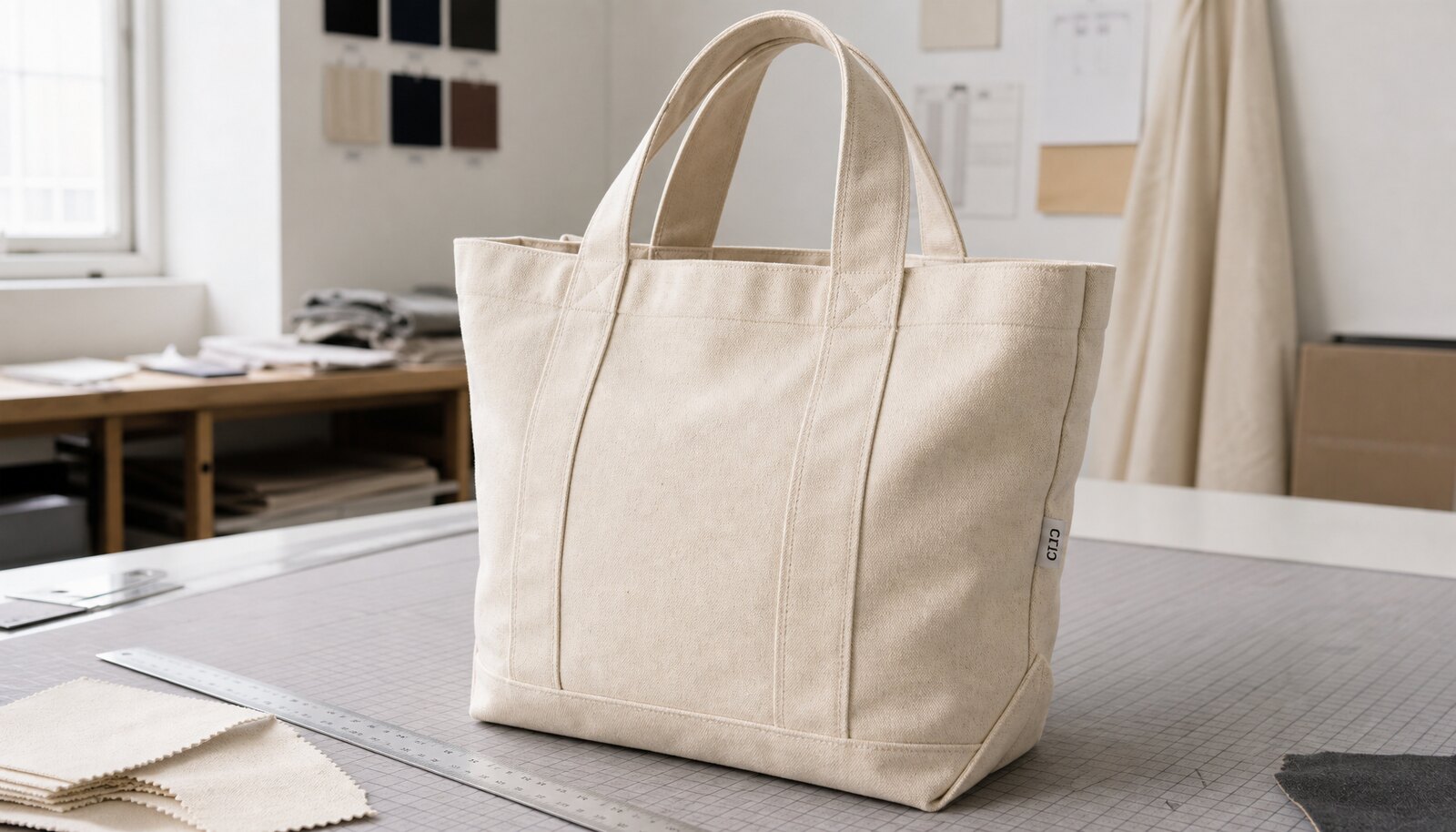
Start With the Bag’s Real Job, Not the Logo
Heavy canvas tote bags for coffee brands do more than carry a logo. They sit on retail shelves, ride along with bean purchases, show up in cafe photos, and often become a walking reminder of the brand long after the original sale. That is why the quote should begin with use case, not artwork. A tote that exists as an impulse-buy counter item has a different shape, packing method, and cost target than a tote meant to hold a bag of beans, a mug, and a small accessory set.
Coffee buyers often over-spec the front graphic and under-spec the rest of the product. The factory cannot quote accurately if it does not know whether the tote needs to stand upright, fold flat, fit into a subscription box, or withstand repeated shoulder carry. For procurement teams, the right question is not “How big should the logo be?” The better question is “What job is this bag doing in the customer’s hands and in our warehouse?”
If you build the RFQ around the real job, you also compare suppliers more cleanly. A factory that can make a visually strong tote may not be the best choice if your program depends on precise folding, carton density, or repeated replenishment across multiple coffee origins. The buyer who defines the bag’s role early usually gets faster quoting, fewer change orders, and fewer surprises after sample approval.
- State whether the tote is for retail merch, cafe counter sale, wholesale gift, ecommerce, or subscription insert.
- Define the typical contents: beans, apparel, mug, sample set, promo materials, or mixed retail items.
- Say whether the bag must stand upright, fold flat, or present a premium shelf profile.
- Confirm whether the tote is seasonal, evergreen, or meant for reorders across multiple launches.
Choose Fabric Weight by Hand Feel, Structure, and Use Load
For coffee brands, heavy canvas usually starts around 16 oz, which is often the most practical baseline for a premium-feeling tote that still ships efficiently. If the bag is meant to feel more structured, hold its shape on a retail shelf, or support heavier contents, 20 oz is often the more appropriate choice. A 24 oz canvas can make sense when a buyer wants a very rigid, utility-style tote, but that choice should be deliberate because it affects cost, sewing difficulty, and freight weight.
Fabric weight alone does not tell the full story. Two canvases with the same nominal ounce weight can perform differently depending on weave density, yarn quality, finishing, and shrink control. A loose weave may feel bulkier but less stable; a tighter weave may hold shape better but require more careful sewing. Ask the factory to quote finished GSM, not just an old-style ounce label, and ask how the fabric behaves after washing, pressing, or any stabilizing finish.
If the bag is being sold beside premium beans or apparel, shape retention matters as much as raw thickness. A tote that slumps over in the first week looks cheap even if the logo is well printed. On the other hand, a bag that is too stiff may be awkward to fold, harder to pack, and more expensive to ship. The right choice is the one that matches the customer experience and the way your warehouse actually handles the item.
- 16 oz: a strong baseline for premium merch and regular daily use.
- 20 oz: better for structure, shelf presence, and heavier content loads.
- 24 oz: use when stiffness and durability matter more than foldability or freight efficiency.
- Ask for finished GSM, not only a nominal ounce reference.
- Confirm whether the fabric is pre-shrunk, washed, resin-finished, or otherwise stabilized.
Ask Where the Canvas Comes From and How the Finish Changes the Quote
Two tote quotes can look similar and still come from very different material inputs. The biggest drivers are fabric origin, yarn count, weave density, and finishing treatment. A buyer who only asks for “heavy canvas” can end up comparing different cloths that feel close on a sample table but behave differently in production. That difference shows up in shrinkage, stitching speed, handle distortion, and even how the print cures on the surface.
If the factory can tell you the fabric origin or mill reference, use that information. It helps you understand whether the cloth is a stock greige item, a custom weave, or a locally purchased fabric that may be harder to repeat later. Yarn count matters because it affects the cloth body and the way the weave closes up under stress. A higher-count yarn in a tight weave can produce a cleaner print face and more consistent seam behavior, while a coarser yarn may add texture but create more variation from lot to lot.
Finishing treatment changes both appearance and quote variance. Pre-shrunk or stabilized fabric usually costs more than untreated cloth, but it can reduce the risk of dimensional movement after sewing or after consumer use. A washed or enzyme-softened canvas may feel more premium and less boardy, but it also changes the fabric hand, can affect shade consistency, and may expand the sample-to-bulk gap if the wash process is not tightly controlled. Resin or stiffness finishes can improve shelf structure, though they may increase needle resistance and make defect marks easier to see. When you ask for price, ask which finish is being quoted and whether the same finish can be repeated on reorder without a new lot approval.
- Ask for yarn count or count range if the factory can provide it.
- Confirm weave density and whether the fabric is woven tighter for print clarity or softer for hand feel.
- Clarify if the canvas is natural, bleached, dyed, washed, pre-shrunk, or resin-finished.
- Ask whether fabric is sourced from a regular stock mill or a custom dye lot.
- Request a note on shrink control and whether the finish changes size after pressing or laundering.
Specify the Construction Details That Protect the Seams
A heavy canvas tote usually fails at the construction points before it fails at the body fabric. That means the quote must spell out handle attachment, top edge build, side seam type, and bottom reinforcement. If the supplier only offers a unit price, you still do not know whether the bag uses a simple stitched fold, bar-tack reinforcement, a boxed corner, or another method that changes both durability and cost.
Handle design deserves more attention than it usually gets. A wider handle distributes pressure better and feels more substantial, but it also changes sewing speed and material usage. Handle drop affects how the bag hangs on the shoulder, how it sits in a carton, and where the print area ends up in relation to the top edge. For retail tote programs, the buyer should quote the exact handle length, handle width, and drop height, not a loose description like “long handles.”
The bottom construction also matters. A tote that carries a bag of beans or a mug set will see concentrated stress at the corners and seams every time it is lifted from a counter or car seat. Ask whether the bag uses boxed corners, folded corners, tape reinforcement, or double-stitching. If the factory cannot explain its load path clearly, the quote is not ready for comparison.
- Ask for handle width, length, and drop separately.
- Require reinforcement at the handle attachment points.
- Confirm whether side seams are single, double, or taped.
- Ask how the bottom corners are built to resist pull-out and stretch.
Pick a Decoration Method That Matches Artwork and Wear
For coffee brands, the most dependable decoration route is often one- or two-color screen print on natural canvas. It is simple to quote, visually clean, and usually the best balance of cost and retail appearance for repeat runs. Woven labels and sewn side labels work well when the mark is small or when you want a more understated, premium finish. Embroidery can be effective on heavy canvas, but it should be reserved for designs that can tolerate stitch texture and a higher unit cost.
The design itself should drive the method, not the other way around. Fine lines, tiny type, gradients, or photographic art can look fine in a mockup and still print poorly on canvas. Coffee buyers are often tempted to preserve a complex label design on a tote, then discover that the print needs extra screens, edge cleanup, or a more expensive process to remain legible. If the artwork is not naturally tote-friendly, simplify it before quoting.
For many coffee programs, the strongest solution is a clear front logo plus a secondary label for origin, roast style, or care instructions. That gives the product a retail-ready look without pushing the bag into a fragile print process. The quote should state the maximum print area, the number of colors, the ink type if relevant, and whether the supplier is recommending print on the body, on a pocket, or on a separate label panel.
- Use screen print for clean logo work and predictable reorders.
- Use woven or sewn labels for smaller branding areas or a more restrained finish.
- Use embroidery only when the fabric weight and design size support it.
- Ask the factory to flag line thickness, small-text, and gradient limitations before sample production.
Compare Quotes on Equal Terms, Not Just on Unit Price
A serious RFQ should separate the one-time setup costs from the recurring bag cost. For tote bags, setup can include screen preparation, print registration, label sourcing, artwork adjustment, and packing configuration. If the supplier quotes a low bag price but hides a setup charge in print or packing, the apparent savings may disappear as soon as you place the order. Procurement buyers need the same cost basis across suppliers or the comparison is unreliable.
The most common quote mismatch happens when one supplier assumes natural canvas, one assumes bleached canvas, and another assumes a heavier or lighter weave. The same issue appears with packing: one quote may include flat-fold packing and barcodes, while another only prices the bag itself. To compare fairly, use one line-item structure and require every supplier to answer the same fields: finished size, GSM, reinforcement, decoration method, inner pack, carton count, shipping term, and sample cost.
For first orders, a simple spec usually gives the cleanest commercial read. One body color, one print setup, and one standard packing format reduce noise in the quote. Once the bag is proven in market, you can test a second color or a more premium label. That sequencing helps you learn whether the product itself is working before you add complexity to the supply chain.
- Separate setup cost from per-piece cost.
- Compare finished size, GSM, packing, and shipping term on the same basis.
- Avoid mixing multiple colorways or decoration setups in the first quote round unless the launch truly needs them.
- Ask whether screens, labels, or patterns can be reused on reorders.
What a Real Factory Quote Must Contain
A useful factory quote should read like a production brief, not a sales flyer. It should show the exact bag specification, material basis, decoration method, sample cost, packing method, and lead time assumption behind the price. If the quote only lists a unit price, you cannot tell whether the supplier understood the same product you had in mind. That is how a “cheap” quote turns into a change-order conversation later.
The quote should also say what is not included. Freight, duties, testing, special inserts, hangtags, art revisions, rush surcharges, and rework costs should be called out explicitly. If the bag is going to a coffee retail program, even minor add-ons can affect landed cost materially. A buyer who receives a quote without exclusions is left guessing where the final invoice will land.
For equal comparison, insist that every supplier responds to the same data points. That includes finished dimensions, fabric GSM, handle build, print placement, carton pack count, and the shipping basis used for the price. If one factory quotes on EXW and another on FOB, those numbers are not truly comparable until freight and origin costs are normalized.
- Finished dimensions with tolerance.
- Fabric GSM and finishing treatment.
- Decoration method, number of colors, and placement.
- Packing method, inner pack, carton count, and carton dimensions.
- Sample cost, sample type, and sample lead time.
- Incoterm or shipping basis and what is excluded.
Use Sample Approval to Prove the Bag Can Be Produced Reliably
A sample is not approved because it looks close enough in a photo. It is approved because it proves the factory can repeat the result in bulk. The right sample process starts with measurement, then moves to visual review, then to a simple use test. Check the bag against the written spec: size, handle length, print position, stitch appearance, and fold behavior. A tote can look attractive on the sample table while still being too floppy, too stiff, or too hard to pack at scale.
The practical test for a coffee tote should mirror how customers will use it. Fill the bag with the planned retail contents or an equivalent load, carry it, set it down, and inspect the seams, handles, and print after stress. If the bag is intended for front-of-store retail, check whether it folds back neatly after handling and still looks premium when reopened. If it will go through ecommerce fulfillment, make sure the pack-out process does not crush the structure or create uneven creases.
A strong approval process also keeps a sealed reference sample. That reference becomes the standard for bulk comparison and helps avoid disputes over shade, print edge, or handle length. Without a sealed sample, the buyer is relying on memory and emails, which is a weak foundation for a commercial order. The best practice is simple: approve the sample only after the factory, buyer, and any inspector agree that it is the gold standard for production.
- Measure the sample against the written spec, not just by eye.
- Test the bag with realistic load and handling.
- Approve a sealed reference sample before bulk production.
- Confirm that the same material source and decoration method will be used in bulk.
Packing and Shelf Readiness Affect the Quote More Than Buyers Expect
Packing is not a finishing detail; it is part of the product economics. A flat-packed tote with a barcode and size sticker may be ideal for wholesale and warehouse receiving. A simple polybagged tote may be enough for a cafe counter display. If the bag needs hangtags, retail stickers, care labels, or special inserts, those elements should be built into the quote from the start rather than added later as exceptions.
Coffee brands should also think about how the tote sits next to beans and accessories. Clean folding, consistent carton count, and legible labels reduce store-level work and make replenishment faster. If the receiving team needs to reopen cartons and re-count because the pack-out is inconsistent, the program loses efficiency even if the unit price looked good on paper. Ask the factory how bags are folded, how many go into each inner pack, and how the outer carton is marked for barcode and quantity control.
Packing specs also matter for shipping density. A bag that folds neatly can reduce carton volume and improve freight efficiency; a bag packed too loosely may shift in transit, while one packed too tightly may crease permanently. That is why the buyer should ask for pack-out photos or a packing sample before bulk release if the bag is going into retail distribution or ecommerce fulfillment.
- Confirm fold method, inner pack count, and whether polybags are required.
- Specify barcode, size sticker, hangtag, or retail label placement before quoting.
- Require carton markings that match warehouse receiving needs.
- Ask for pack-out photos or a packing sample for retail or ecommerce programs.
Set QC Thresholds Before Production Starts
Quality control should be written before the first bulk cut, not after the shipment is ready. For heavy canvas tote bags, the common failure points are shade variation, seam inconsistency, handle pull-out, print misalignment, and poor packing. Buyers should define what is acceptable in each category and make that standard part of the purchase order or approval record. Without explicit thresholds, a supplier may believe the lot is acceptable while the buyer sees obvious retail defects.
A practical QC framework helps everyone speak the same language. Critical defects are issues that affect safety or function, such as a handle detaching or a seam opening under normal use. Major defects affect retailability or performance, such as a badly misprinted logo, extreme shade mismatch, or a bag that is visibly off-size. Minor defects are cosmetic issues that do not break use but still matter at a certain rate, such as stray threads or small folds. The exact AQL numbers should be agreed with the supplier and inspector, but the categories themselves should be non-negotiable.
For this product category, load testing is worth spelling out. Do not just say “strong enough.” State the planned load or a comparable test weight, the number of lift cycles, and what counts as failure. A tote intended to carry bean bags, mugs, and accessory packs should withstand a realistic lift-and-carry cycle without tearing at the handle point or deforming so much that it no longer presents well in retail. If the factory cannot support that test plan, the buyer should treat that as a sourcing warning.
Inspection should happen in stages. An in-line check catches early sewing or print drift. A mid-run check catches material or setup issues before the lot is finished. A final random inspection using an agreed AQL framework confirms whether the completed order can ship. That process is much more reliable than only inspecting the final carton stack. Keep a defect photo library and a sealed sample so the factory knows exactly what is being judged.
- Classify defects as critical, major, or minor before production starts.
- Use an agreed AQL plan for final random inspection.
- Define a realistic load test with weight, lift cycles, and failure criteria.
- Inspect first output, mid-run output, and final cartons rather than relying on one end-stage check.
- Keep a golden sample and defect photo references on file.
Specification comparison for buyers
| Spec decision | Recommended option | When it fits | Commercial variables to confirm | QC implications |
|---|---|---|---|---|
| Supplier type | Direct cut-and-sew factory | Best for repeat coffee merch programs, custom fabric weight, and handle reinforcement | Factory ownership, whether the sample room and sewing line are in-house, and whether the same line will make bulk | Better material traceability and repeatability, but the approved sample must match the bulk line |
| Supplier type | Trading company or sourcing agent | Useful when you need coordinated sourcing or a mixed-product order | Who the real factory is, how they control fabric and decoration changes, and whether reorders use the same mill lot | Higher risk of spec drift unless material, print, and packing traceability are written into the order |
| Fabric construction | 16 oz canvas, pre-shrunk or stabilized | Good baseline for merch, retail add-on sales, and everyday carrying | Finished GSM after finishing, weave density, shrinkage expectation, and whether the cloth is natural, bleached, or dyed | Can still distort after sewing if shrink control is poor; measure after pressing and folding |
| Fabric construction | 20 oz canvas for premium structure | Better for shelf presence, heavier contents, and a more substantial hand feel | Yarn count, weave tightness, finishing method, and the cost impact of dye lot size | Stronger appearance, but stitch marks and seam unevenness become more visible |
| Fabric construction | 24 oz or reinforced heavy canvas | Only when stiffness and utility matter more than foldability and freight efficiency | Whether the bag truly needs this weight, the added carton weight, and the buyer’s target retail price | Requires stronger reinforcement and stricter load testing at handles and corners |
| Decoration route | 1-2 color screen print | Best for clean logos, repeat orders, and predictable artwork pricing | Ink type, print area, number of screens, cure method, and whether the artwork includes small text or thin lines | Watch for bleed, edge sharpness, and cure quality; wash/rub resistance matters if bags are handled often |
| Decoration route | Woven label or sewn side label | Good for understated branding or a premium retail finish | Label size, placement, edge fold, stitch type, and whether the label stock is standard or custom | Check label fraying, stitch tension, and placement consistency across the lot |
| Decoration route | Embroidery on heavy canvas | Works for small marks or premium capsule collections | Stitch count, backing material, logo size limits, and whether the surface is flat enough for stable embroidery | Can pucker dense logos; inspect for distortion, pull, and thread breaks |
| Sample timing | Pre-production sample + photo approval + sealed reference sample | Best for first orders and new artwork | Sample fee, turnaround, revision limits, and whether bulk uses the same fabric source and decoration method | Without a sealed reference, later disputes over shade, size, and placement are hard to resolve |
Buyer checklist before sampling
- Define the bag’s end use before asking for price: retail merch, cafe counter sale, wholesale gift, subscription insert, ecommerce add-on, or event resale.
- Lock finished size, gusset depth, handle length, handle drop, and intended carry load before issuing RFQs.
- Specify fabric as finished GSM and ask the supplier to state whether the canvas is natural, bleached, dyed, washed, pre-shrunk, or resin-stabilized.
- Ask for yarn count, weave density, and fabric origin or mill reference when the supplier can provide it, especially if you need repeatability across reorders.
- Choose one primary decoration method for the first quote round, then quote any backup method separately instead of mixing methods in one line item.
- Provide vector artwork and state the exact print area, placement, number of colors, and any small-text or fine-line limitations.
- Ask for MOQ by style, color, decoration setup, and packing configuration, not just one overall MOQ number.
- Request sample type, sample fee, sample lead time, and whether the sample is made from the same material source as bulk production.
- Ask the factory to confirm how the bag is reinforced at the handles, top edge, side seams, and bottom corners.
- Set acceptance tolerances for dimensions, shade, print placement, and stitch appearance before the order is placed.
Factory quote questions to send
- What is the exact finished size, gusset, and handle drop, and what tolerance do you guarantee on each dimension?
- What is the finished fabric GSM, and can you confirm whether it is pre-shrunk, washed, or stabilized after finishing?
- What is the yarn count and weave density of the canvas, and can you share the fabric source or mill reference if available?
- Which reinforcement method do you use at the handle attachments, top edge, side seams, and bottom corners?
- Which decoration method do you recommend for this artwork, what is the maximum print area, and what detail limits should I expect?
- What is the MOQ by color, by decoration setup, and by packing configuration?
- What is included in the quoted unit price: blank bag, print, label, packing, inner pack, carton, and any pre-production work?
- What fabric options change the quote most: natural, bleached, dyed, washed, resin-finished, or pre-shrunk canvas?
- What is the sample process, how much does each sample type cost, and how long does it take from artwork approval?
- Can you provide a pre-production sample, a sealed reference sample, and final production photos before shipment if needed?
Quality-control points to confirm
- Confirm the approved sample against a written spec sheet: finished size, fabric GSM, handle dimensions, print position, carton count, and packing method must all match the order record.
- Measure finished dimensions on a representative sample set after pressing and folding, because canvas can relax or tighten after sewing and finishing.
- Inspect seam quality at the handle connection, top edge, bottom corners, and side seams for skipped stitches, loose thread bundles, needle damage, or uneven bar-tacks.
- Use a practical load test based on intended use: fill the bag with the planned retail contents or a comparable weight, then lift and carry it multiple times to check seam slippage, handle stretch, and deformation.
- Set an acceptance benchmark for load performance before bulk production; for a heavy canvas tote, a failure in the first handling cycle should trigger review rather than shipment.
- Check print quality under normal retail viewing distance and close inspection: alignment, edge sharpness, opacity, cure, color consistency, and whether fine text remains legible.
- Confirm that print, label, and any care or barcode stickers are located within the agreed offset tolerance and are aligned consistently across the lot.
- Inspect the fabric for visible stains, oil marks, dye smudges, odor, weave flaws, or shade variation that would be obvious on a shelf display.
- Review the fold and pack-out method on several cartons, not just one sample carton, to ensure the bag sits consistently, counts accurately, and opens without permanent creasing.
- Verify carton quality, master carton marking, and pallet or shipper readiness so the product can move through warehouse receiving without relabeling or repacking.