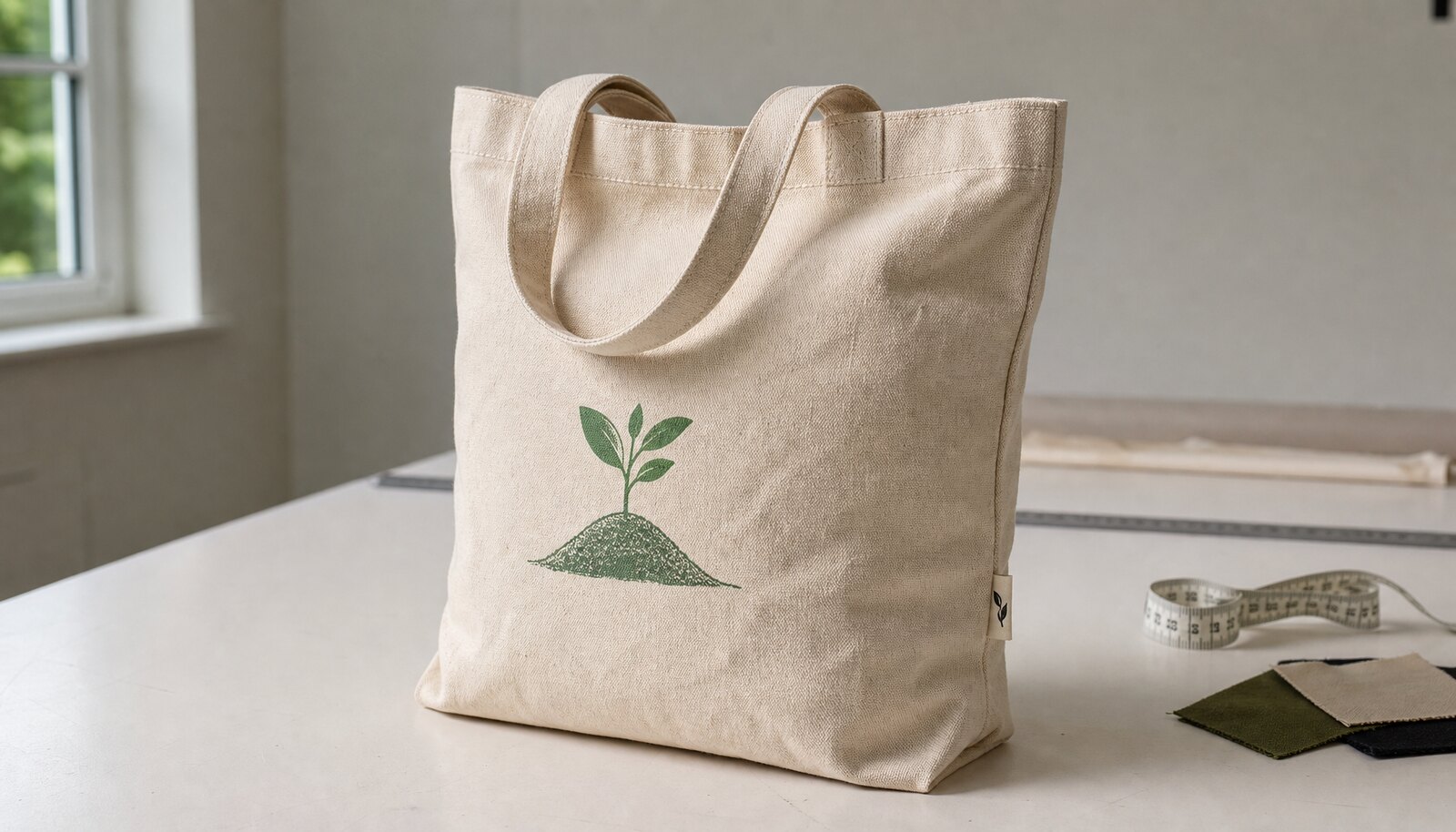
Define the campaign use before the bag spec
Heavy canvas tote bags only make sense for a charity campaign when the use case is clear. If the bag is a donor premium handed out with a pledge card, 12 oz / 340 gsm can be enough and still feel substantial. If the bag will be sold in a gift shop, loaded with books, or reused as a daily carry, 14 oz / 400 gsm becomes the safer default. The common mistake is to buy on visual weight alone. Canvas that looks thick on a screen can still fail if the weave is loose, the handles are underbuilt, or the print cracks after repeated folding.
Set the carry load and distribution method before you lock the artwork. A good charity tote should hold shape, keep the logo readable after handling, and survive shoulder carry without handle creep. If the bag must stand on a table, the bottom seam and gusset need more attention than the print. If it will be mailed flat, the pack format matters as much as the fabric. The acceptance standard should be practical: straight seams, no obvious distortion, no loose thread clusters, and no visible stress at the handle anchor after load testing.
- Choose 12 oz / 340 gsm for high-volume handouts where cost and light reuse are the main goals.
- Choose 14 oz / 400 gsm when the bag must feel premium and survive repeated carrying.
- Choose 16 oz / 450 gsm when the bag is part of a retail offer or a long-life sponsor item.
Compare sourcing routes before you compare unit price
The lowest quote is not useful until you know who is actually making the bag. A direct factory can usually control fabric, sewing, print, and packing in one flow, which is the best route for repeat campaigns and tight quality control. A trading company can help if you need multiple trim items in one shipment, but you should expect margin on top of the factory cost and less visibility into where the work is done. A domestic decorator is useful for rush orders and small drops, but custom fabric options are usually narrower and the unit cost rises quickly. Stock distributors are fast, yet you give up most of the control that matters on a custom charity run.
Before you compare quotes, ask for evidence that the supplier can actually produce the bag you want. Product photos should show their sewing line, actual canvas weights, print setup, label application, and carton marking. If they cannot show a matching production sample, their price is only a placeholder. For importers and procurement teams, the real question is not which supplier is cheapest on paper. The real question is which route can give you the same spec every time without hiding defects in subcontracted work.
- Direct factory: best for repeat buys, custom size control, and consistent QC.
- Trading company: useful when you need bundled sourcing, but compare the margin and the actual factory source.
- Domestic decorator or stock distributor: better for speed, weaker for fabric choice, pricing control, and scale.
Set fabric weight and structure to the actual load
For heavy canvas tote bags, fabric weight is only part of the decision. A dense 12 oz canvas with a tight weave can outperform a loose 14 oz fabric that was cut to save cost. For charity campaigns, 100 percent cotton canvas is still the most straightforward choice when you want a natural look and an easy print surface. If the campaign needs wrinkle resistance or sharper price stability, a cotton-poly blend may be acceptable, but be careful not to dilute the brand story if sustainability is part of the message. If the brief is simple and the budget is tight, undyed natural canvas is usually the safest commercial option.
Structure is what keeps the bag useful after distribution. A 4 to 6 inch gusset gives the bag capacity without turning it into a boxy shape that folds badly. Handles should be wide enough to spread the load and long enough for shoulder carry if the event expects gift inserts or books. For self-fabric handles, insist on folded construction and reinforcement at the join. For webbing handles, make sure the stitching pattern is not treated as a decoration. Handle construction is load-bearing hardware in textile form, and buyers should treat it that way.
- A 12 oz canvas bag is a practical baseline for giveaways and short-use charity packs.
- A 14 oz canvas bag is the better default when the tote will be reused often.
- A 16 oz canvas bag is worth the extra cost when shape retention and retail presentation matter.
Choose a print method that survives event handling
Print method should follow artwork and usage, not preference. Screen printing is the workhorse for charity tote bags because it handles simple logos, strong contrast, and large quantities with stable unit cost once the setup is done. It also gives you better opacity on natural canvas than many direct digital methods. If the design has fine type or multiple tones, remember that the texture of heavy canvas can soften small details. Ask the supplier to print on the exact canvas weight you intend to buy, because a proof on smoother fabric is not a valid reference for a rougher weave.
For short-run campaigns with full-color art, heat transfer can be workable, but the buyer must accept a different failure mode. The print can look good on day one and still become a durability issue if the transfer edge starts to lift under folding or abrasion. Woven patches and embroidery are better for premium marks and limited designs, but they add cost and can make the bag feel more corporate than charitable. For most campaign tote bags, the best answer is still one or two spot colors, a clear logo, and line work that stays legible at arm's length.
- Use screen print for simple logos, 1 to 3 colors, and repeatable volume.
- Use heat transfer only when the campaign needs short-run full color and can accept a different wear profile.
- Use embroidery or a woven patch when the tote is part of a premium donor pack or retail resale item.
Use sample approval to lock the real standard
A charity tote should never go into production from a PDF alone. The right sample path starts with an artwork proof, then a strike-off or print sample, then a pre-production sample made with the final fabric, label, and trim. If the order is large, ask for a first-off inspection from production so the team can catch drift early. The sample should become the benchmark for color, print placement, handle feel, seam finish, and packing format. If the supplier sends a sample made from a different fabric lot or a different handle method, that difference needs to be written down before approval.
Approval should focus on measurable points. Dimension tolerance matters because a tote that grows too wide can lose its shape and create freight waste. Print placement matters because a logo that shifts a few millimeters can look careless on a plain canvas field. Handle stress matters because the tote will be lifted, swung, and overfilled in the real world. If the sample is approved, save one golden sample on both sides. Procurement should keep that sample with the PO file, so there is no argument later about what was actually agreed.
- Treat the pre-production sample as the signed reference for size, color, print, and packing.
- Record any allowed variation in fabric shade, print density, or stitch spacing before production starts.
- Keep a physical golden sample with the purchase order file and the inspection record.
Treat packaging as part of the sustainability decision
Sustainable packaging comparison should be part of the RFQ, not an afterthought. For controlled charity distribution, bulk packing in recycled master cartons is usually the best balance of cost, waste, and handling efficiency. It reduces plastic, lowers packing labor, and makes palletization easier. If the bags are going through retail shelves or a branded gift shop, a recycled paper sleeve can improve shelf order without forcing the supplier into full individual bagging. Individual polybags are only worth the environmental cost when you need moisture protection, barcode control, or e-commerce fulfillment.
Do not let the packaging choice hide damage risk. Heavy canvas can rub against itself in transit, especially when printed areas are stacked face to face. If the design includes a snap button, metal eyelet, or thick woven label, add an interleaf or a thin paper wrap where abrasion is possible. Cartons should be the right size for the pack count so the bags do not collapse into a crushed stack. If you are importing by sea, specify recycled corrugate, carton marks, and a pack pattern that keeps the cube efficient. Sustainability only works when the pack plan also survives transport.
- Bulk carton packing is the default choice for campaign distribution and warehouse allocation.
- Paper sleeves work when shelf presentation matters but full retail polybags are not necessary.
- Individual polybags should be reserved for moisture-sensitive, barcode-driven, or e-commerce orders.
Plan MOQ and lead time around artwork and trims
MOQ for heavy canvas tote bags is usually driven by three things: fabric source, print setup, and trim complexity. A simple one-color campaign tote can often be quoted at a lower MOQ than a bag with woven labels, snaps, or multiple print positions. If you split the order into several artwork versions, the supplier may treat each version as a separate run because print setup, cutting, and packing all change. That is why the quote should state the quantity by style and by color, not just one total number. Buyers who hide the split often get a number that looks good but is impossible to execute cleanly.
Lead time should be planned from approval, not from inquiry. A realistic sequence is artwork proof, sample development, sample approval, bulk production, and packing. For many canvas tote programs, bulk production after approval may run in the 20 to 35 day range, with sample development taking 5 to 10 days depending on trim and print complexity. Add time if you need custom dyeing, special wash treatment, or retail-ready packing. For a charity campaign, schedule risk usually comes from late artwork, delayed sample sign-off, or a packaging change after the quote is already issued.
- Expect higher MOQ when the order uses custom trim, multiple print versions, or special packing.
- Expect longer lead time when the fabric is dyed, washed, or sourced to a narrow color target.
- Expect schedule slips when artwork approval is not controlled by one person.
Compare landed cost, not only FOB
A buyer who looks only at factory price can miss the real cost of the campaign. The lower unit quote may require more cartons, more labor, more packing material, or a larger freight cube. A slightly higher FOB can still win if the bag packs tighter, uses less overpackaging, and reduces rework. Heavy canvas can move freight cost because fabric weight, carton count, and compression efficiency all matter. If the order is large, the difference between a compact pack-out and a loose one can show up clearly in ocean or air cost, warehouse receiving time, and allocation work after arrival.
The landed-cost view should also include destination handling. Charity campaigns often split into multiple branches, event centers, or donor fulfillment points, which means carton labels, pallet marks, and pack counts matter. If the bags will be re-labeled or re-bagged after import, that labor belongs in the comparison. Buyers should compare the same fabric weight, the same print method, and the same pack-out before they decide. If those variables are loose, the quote comparison is not commercial analysis. It is just noise.
- Include FOB, sample cost, print setup, packaging, freight, duty, and warehouse handling in the comparison.
- Compare carton cube and packed weight, not just unit price.
- If the bags will be split to multiple destinations, include relabeling and internal distribution labor.
Build an RFQ that produces comparable quotes
If you want useful numbers, send a clean RFQ package. The supplier needs finished size, canvas weight, artwork, print colors, handle construction, pack instructions, destination, and delivery target in one place. Do not leave the pack format vague if sustainable packaging comparison matters to the decision. Ask each supplier to quote the same three pack options if you want a real read on cost and waste: bulk carton, paper sleeve, and individual recycled polybag. That reveals where the packaging cost sits and which route is actually efficient for your channel.
The RFQ should also tell the factory what is fixed and what can move. If the bag size is locked but the handle width can change, say so. If the logo is fixed but the bag color can move between natural and bleached, say so. The tighter the brief, the more comparable the quotes will be. Procurement teams that do this well get fewer surprise charges, fewer sample revisions, and less back-and-forth on trim allowances. The objective is not to produce the cheapest quote. The objective is to get one quote structure that can be compared without guesswork.
- Attach finished dimensions, artwork files, and Pantone references.
- State whether the supplier may substitute fabric weight, trim, or packing format.
- Request separate line items for sample, print setup, packaging, and carton charges.
Specification comparison for buyers
| Spec decision | Recommended option | When it fits | Buyer risk to check |
|---|---|---|---|
| Supplier route | Direct factory with sewing, print, and packing in one site | Repeat campaigns, custom size, and tighter QC control | Watch for subcontracted printing that changes color and hand-feel |
| Fabric weight | 12 oz / 340 gsm for giveaways, 14 oz / 400 gsm as the default, 16 oz / 450 gsm for premium reuse | When the bag will carry books, groceries, or sponsor gifts | Light fabric can twist, show print bleed, and shorten handle life |
| Print method | Screen print for spot colors; woven patch or embroidery for premium marks | Simple logos and strong brand contrast on natural canvas | Small text can fill in, and multi-color art can drive setup cost |
| Handle construction | Folded self-fabric handle with cross-stitch and box-X reinforcement | Bags expected to carry heavier inserts or repeated daily use | Single tack stitching can fail at the stress point near the seam |
| Bottom and gusset | 4-6 inch gusset with a flat bottom seam | When product volume and shelf presence matter | Loose cutting tolerance makes the bag skew or stand unevenly |
| Closure choice | Open top for handout programs; snap button for retail resale | Charity packs with quick distribution or premium merchandise bundles | Closures add parts, labor, and an extra defect point |
| Packing route | Bulk master carton with carton label and size sticker | Controlled warehouse distribution or palletized import | Overpackaging raises cost and creates avoidable waste |
| Sample stage | Pre-production sample made with the final fabric, print, and trim | New supplier, new artwork, or new packing format | Approving a flat mockup hides real sewing and print issues |
Buyer checklist before sampling
- Final finished size, not flat cut size, with an acceptable tolerance range.
- Target canvas weight in oz or gsm, plus any minimum hand-feel or opacity requirement.
- Fabric color decision, natural, bleached, or dyed, and the allowed shade variation.
- Artwork file format, Pantone references, print colors, and maximum text size that must stay readable.
- Handle length, handle width, reinforcement method, and the load the bag must carry.
- Packing format, carton pack count, and whether individual polybags are allowed or prohibited.
- Destination port or warehouse, delivery window, and whether the shipment must be palletized.
- Inspection standard, sample approval owner, and the exact point where production can start.
Factory quote questions to send
- What exact fabric weight and weave will you use, and what tolerance applies to that material?
- Is printing done in-house or subcontracted, and what setup charges apply per color or per side?
- What is the MOQ by color, by print version, and by packing format?
- Which sample stages are included, and what does each stage cost if artwork changes?
- What packing options can you quote, including bulk carton, paper sleeve, and individual bagging?
- What is the production lead time after sample approval, and what steps can extend it?
- What carton size and pack count do you recommend to protect the bags and control freight cube?
- Can you provide pre-shipment photos, carton marks, and an inspection report before dispatch?
Quality-control points to confirm
- Measure finished dimensions at the top opening, body height, and gusset depth against the approved sample.
- Verify fabric weight, weave density, and color consistency against the signed-off reference.
- Inspect print opacity, placement, and edge quality on actual canvas, not on a paper proof.
- Pull-test handles and inspect the box-X, bar-tack, or seam reinforcement at the stress point.
- Check seam allowance, stitch density, skipped stitches, loose threads, and any needle damage.
- Confirm that labels, side tags, snaps, and woven marks are secure and positioned correctly.
- Review odor, stains, oil marks, folded creases, and any fabric damage before packing.
- Count carton quantity, carton labeling, and master-pack configuration before shipment release.