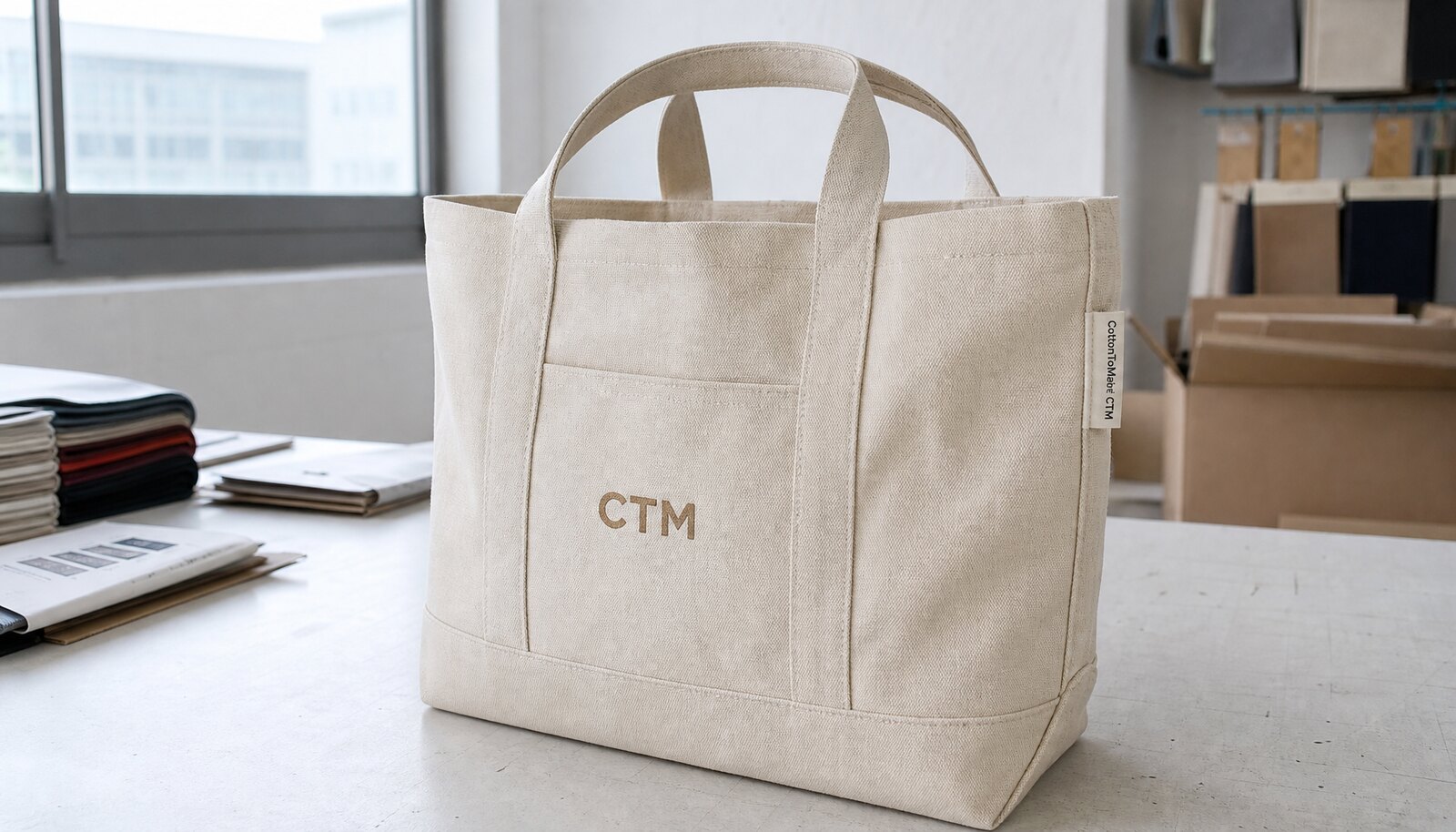
Why a charity reorder needs tighter control than the first run
A charity campaign usually starts with a first release, then turns into a second or third replenishment when the bags get used for volunteer kits, donor gifts, auction items, or on-site sales. That is where problems begin. The first order is often approved from a sample and a clean quote, but the reorder has to match the same fabric weight, the same print behavior, and the same pack count even when the factory has already moved on to other jobs. If you treat the second run as a new product, cost and quality drift will creep in quickly.
The buying mistake is assuming that a tote bag is simple enough to reorder from memory. Heavy canvas is not one universal spec. The same language can hide different yarn counts, weave density, pre-shrink treatment, and finish. For a charity campaign, consistency matters more than chasing the lowest unit price. The real objective is to preserve the approved bag so the next batch reaches volunteers, donors, and sponsors without a visual mismatch or a packing surprise.
- Keep one sealed golden sample and label it with date, fabric spec, print method, and carton pack.
- Record the approved artwork file version so a small logo or sponsor change does not reset the whole order.
- Plan the reorder from remaining stock and production lead time, not from a rough sales guess.
Choose the fabric weight before you compare quotes
Heavy canvas tote bags are usually discussed in ounces, but serious buyers should also ask for GSM and weave details. A 12 oz class bag is commonly a workable baseline for charity campaigns that need structure without overbuilding the bag. A 14 oz class bag feels more substantial and tends to hold shape better in a retail-style donation program. A 16 oz class bag is better when the tote is meant to be reused often or when the charity wants a more premium donor gift. The problem is that ounce labels alone do not tell you whether the bag will stand upright, flex well, or hold a sharp print edge.
For reorder planning, the point is not to pick the heaviest possible fabric. It is to match the load and lifespan of the campaign. If the bag carries brochures, a T-shirt, or light merchandise, a 12 to 14 oz class is usually enough. If it will be used as a grocery tote after the event, go heavier and specify stronger handle reinforcement. Ask the factory to quote the same bag with and without a bottom board, because that one change affects cost, print look, and carton count more than many buyers expect.
- Ask for both oz and GSM so the quote can be compared across suppliers.
- State whether the canvas should be raw, bleached, or pre-shrunk before printing.
- Require reinforced handle joins and bar-tacks if the tote will carry heavier event items.
- Confirm the finished bag shape, especially if a gusset or base board is part of the approved sample.
Match the print method to the artwork and the reorder pattern
Screen printing is still the most practical option for most charity tote programs because it gives strong coverage on canvas and handles simple logos well. It works best when the art is one or two spot colors, the lines are bold, and the campaign needs a durable print that can survive handling and folding. If the design has fine text, gradients, or frequent sponsor updates, a transfer method may look easier at the sample stage but can become a repeatability problem later. Embroidery can work for a small mark on a pocket or corner, but it is rarely the right choice for a large charity tote panel.
A reorder memo should define the decoration method in production terms, not just in design language. Specify the actual print area, the placement measured from the top edge or seam, the color reference, and the acceptable line thickness. If the campaign wants changing dates, donor names, or city references, put that variable content on a hangtag, side label, or insert rather than remaking the bag body every time. That keeps the reorder stable and protects the production schedule.
- Use screen print for bold logos and durable coverage on natural canvas.
- Use transfer print only when the artwork changes often or contains complex detail that screen print cannot hold cleanly.
- Keep small text above a readable minimum line width so it does not fill in after curing.
- Lock a physical color reference, not only a screen-based artwork file.
Read supplier routes and MOQ logic the right way
The comparison table here is not about spec trivia. It is about which sourcing route gives you the best control for a charity reorder. Direct factory sourcing is the cleanest option when the bag body and print are both stable, because one factory owns the fabric, cutting, sewing, and decoration flow. A trading company can help when the program has several SKUs or a complicated logistics setup, but the buyer should expect another layer of margin and a longer approval path. Blank import plus local print can be fast, but it is only useful if the blank bag exactly matches the approved finished bag after decoration and any shrinkage.
MOQ is often misunderstood as a single number. In practice, the factory may separate MOQ by fabric color, print screen, carton configuration, and even by the way the bag is folded for packing. A quote that says 1,000 pieces may still require enough fabric to run a separate loom lot or dye lot, which changes the real cost structure. For repeat charity programs, ask which parts of the setup are reusable on the next order and which parts are reset every time. That is where the reorder advantage lives.
- Ask for MOQ by component: fabric, decoration, and packing should each be stated clearly.
- Confirm whether the factory can hold the same screen or plate for a repeat run.
- If the supplier offers a cheaper alternative fabric, require a fresh sample before accepting it.
Build a quote sheet that lets procurement compare apples to apples
A useful factory quote should read like a build sheet, not a loose email. It should state the finished size, cut size if available, fabric weight in oz and GSM, handle length, gusset depth, print area, print count, and the type of reinforcement used at the handles and seams. If a supplier only gives a unit price without those details, the quote is not comparable. The cheapest number can hide a smaller bag, lighter fabric, or a simpler pack format that will fail at the next reorder meeting.
For a repeat charity campaign, also ask for the line items that usually get buried. That includes sample fees, screen or plate fees, setup fees, carton charges, and any special folding or labeling cost. The quote should show tier pricing at meaningful volumes such as 1,000, 3,000, 5,000, and 10,000 pieces so the buyer can see where the cost curve actually changes. This is especially useful when planning next year’s campaign, because a reorder often crosses a different threshold than the original launch.
- Request separate prices for the base tote, decoration, packing, and freight-ready carton spec.
- Ask whether the quote includes a repeat-order discount if the same screen and pattern are reused.
- Verify whether setup charges apply again if artwork moves by only a small amount.
Approve samples with measurement rules, not just visual approval
A photo approval is not enough for a repeat charity tote. You need a pre-production sample that can be measured, handled, and compared under the same light each time. The first sample should verify the bag body, print placement, stitch direction, handle balance, and the way the fabric drapes when folded. If the factory sends a revision, compare it to the sealed golden sample rather than to memory. That is the only way to catch small shifts in size or finish before they hit the full order.
Set acceptance criteria before bulk production starts. For example, body dimensions can be held within about plus or minus 1 cm, handle length within about plus or minus 1.5 cm, and print placement within about plus or minus 5 mm if the art is centered. Fine tolerances can be tighter, but they must be written down in the order memo. On natural canvas, minor fiber flecks are normal, but oil marks, weak seams, uneven print saturation, or visible puckering are not. If the tote is intended for reuse, a simple wash and rub test is worth doing before release.
- Measure at least three sample bags so one lucky unit does not hide a process problem.
- Approve under daylight and indoor light because canvas and ink can shift in appearance.
- Sign off on the golden sample only after the packaging format is also correct.
Packing is not a back-office detail in a charity campaign
Charity campaign totes often move straight from carton to volunteer table, donation booth, or fulfillment center. That means packing needs to be designed for speed, cleanliness, and count control. Decide early whether the bags should be folded flat, bundled by ten, packed loose inside the carton, or individually polybagged. Over-wrapping slows distribution and adds waste. Under-wrapping can lead to dirty bags, mixed counts, and damaged print corners if the cartons are handled roughly in transit. The right answer depends on whether the tote is going to a retail-facing audience, a warehouse pickup, or a direct event handout.
The carton spec should be part of the quote, not an afterthought. Ask the factory to state the carton count, inner pack count, carton dimensions, and gross weight so the logistics team can plan pallet height and manual handling. If the cartons will be moved by hand, keep them in a practical weight range rather than chasing maximum fill. For ocean freight or humid routes, a moisture barrier and clean carton labeling matter more than many buyers realize, because damp canvas can pick up odor or show crease marks that look like quality issues later.
- Define carton count and inner pack count before production starts.
- Use clear carton marks for SKU, color, quantity, and campaign version.
- Keep fold direction consistent so the print face does not rub against rough seams.
- Add desiccant only when the route, climate, and carton construction justify it.
Plan lead time around approval gates, not just the ship date
A reorder is only fast if the approval path is stable. The schedule should start from the date the sample is approved, not the date the PO is issued. If the factory already has the same fabric, the same screen, and the same cutting pattern, the repeat order can move faster than the first run. If any of those elements change, the lead time expands again, even if the quote sheet looks similar. Buyers often lose days because they wait to review artwork changes until after the fabric is already committed.
For planning, set the reorder trigger before the stock gets thin. A practical rule is to reorder when 30 to 40 percent of the first batch remains, or earlier if your production and transit time exceed the number of days left in campaign coverage. This is especially important for charity programs with one hard date, such as a walk, gala, or donor drive. Safety stock is not just about selling through. It protects you from sample delays, print rework, and a late change in sponsor branding.
- Keep one calendar for artwork approval, sample approval, production, and freight booking.
- Reserve factory capacity after the first run if the campaign is likely to repeat.
- Add buffer for holidays, port congestion, and peak season disruption.
Compare landed cost, not just ex-works price
The lowest factory quote is often not the lowest landed cost. A proper comparison should include fabric weight, decoration setup, packing, inland freight, ocean or air freight, import duty, warehouse handling, and the cost of any rework if the sample does not hold. A blank import plus local print route can be attractive when the campaign needs speed and the art is still changing. A direct factory route can be better when repeatability and exact spec control matter more than a short-term savings line on paper. The right route depends on how often the same tote will be reordered, not only on this month’s quote.
The most common mistakes are predictable. Buyers change the artwork after the sample is approved, accept a lighter fabric because the unit price is lower, or switch suppliers without revalidating the seam and print standard. Another problem is failing to track overrun and underrun tolerances, which can leave a campaign short on the day it launches. Keep one master spec and one reorder memo so the next purchase order compares against the same approved baseline. That is the simplest way to keep a charity tote program from becoming a new sourcing project every year.
- Compare ex-works, freight, duty, and warehouse handling together.
- Measure landed cost per usable bag, not just per shipped unit.
- Do not accept material substitutions without fresh sample approval.
- Keep one archive of spec sheets, photos, carton labels, and final approvals.
Specification comparison for buyers
| Spec decision | Recommended option | When it fits | Buyer risk to check |
|---|---|---|---|
| Direct factory with in-house printing | Best default for repeat charity campaigns that need stable color and repeatable construction | You already approved a golden sample and want the same bag across multiple reorders | Confirm the factory owns both sewing and print control, not a hidden subcontractor chain |
| Direct factory with outsourced specialty decoration | Use when the art needs embroidery, transfer, or a decoration the sewing line cannot handle | The logo changes often or the bag needs multiple decoration methods on one program | Schedule slips and quality gaps appear if the print partner is not locked before approval |
| Trading company with multi-factory sourcing | Use when procurement needs one contact point for mixed SKUs or split shipment lanes | Your charity program includes several tote sizes, pack styles, or destination markets | Margins can hide inside the middle layer, and responsibility can blur during defect claims |
| Blank bag import plus local printing | Best for urgent replenishment or late sponsor changes | You need fast turnaround and can tolerate a separate blank source plus domestic decoration | Blank fabric may not match the approved finished bag after shrinkage or finishing |
| Regional cut-and-sew supplier | Best when freight time is tight and sea lead time is the main risk | Your campaign is regional and volume is moderate enough to justify nearby production | Fabric cost can be higher, and lot-to-lot shade variation may be easier to miss |
| Stock blank program with reserved capacity | Best for annual charity events with predictable repeat demand | The bag body stays fixed while only the campaign print changes each cycle | Make sure the reserved stock is real and contractually held, not only promised verbally |
| Dual-source split between two factories | Best for larger programs that need risk reduction and backup capacity | You want one primary factory and one qualified fallback for the same spec | Shade, handle length, and pack count can drift between lots if the spec control is weak |
| Spot-buy wholesaler | Use only for test runs, tiny local drives, or emergency fill-ins | The order is small and speed matters more than exact repeatability | You usually lose control of fabric weight, print consistency, and future reorder matching |
Buyer checklist before sampling
- Lock one golden sample with the final fabric weight, size, handle length, print method, and carton pack recorded on the sample card.
- Prepare artwork in vector format and define the print count, placement, Pantone reference, and minimum line thickness before requesting quotes.
- State the target fabric weight in oz and GSM, and confirm whether the mill uses raw canvas, bleached canvas, or pre-shrunk fabric.
- Define the finished size tolerance for body, gusset, and handles so the factory knows what counts as acceptable variation.
- Confirm whether the decoration is screen print, heat transfer, embroidery, woven label, or a mixed method, and who owns each process.
- Choose the packing format in advance, including fold direction, inner pack count, carton count, and whether polybags are required.
- Set the reorder trigger point based on remaining inventory and production lead time, not only on campaign sales velocity.
- Collect sample photos, measurement notes, and carton photos from the first run so the next buyer can compare against the same standard.
Factory quote questions to send
- What is the actual finished fabric weight in oz and GSM, and is that measured before or after finishing?
- Is the print method in-house, and if not, who controls the decoration schedule and color approval?
- What MOQ applies separately to fabric color, print setup, and carton pack configuration?
- What are the sample fees, setup fees, and screen or plate charges, and are any of them credited back on order?
- What are the finished size tolerances for body width, body height, gusset depth, and handle length?
- What lead time should I plan from approved sample to ex-factory shipment, not from PO date?
- What overrun or underrun range do you allow, and how do you price partial quantity changes?
- What carton count, carton size, and gross weight should I use for freight and warehouse planning?
Quality-control points to confirm
- Check fabric weight and weave density against the approved reference, and reject thin spots or uneven yarn distribution.
- Measure body dimensions, gusset depth, and handle length on at least three units from each lot.
- Inspect stitch quality at side seams, handle joins, and stress points for skipped stitches, loose thread ends, or weak bartacks.
- Verify print position, registration, and opacity under daylight and indoor light, not only from a digital photo.
- Rub-test the print lightly after curing to confirm the ink is properly set and does not smear or powder.
- Confirm the bag is clean, dry, odor-free, and free from oil marks, dust, and visible contamination.
- Check carton count, inner pack count, carton marks, and SKU labels before freight release.
- Compare the bulk lot against the sealed golden sample for color, hand feel, and overall construction.