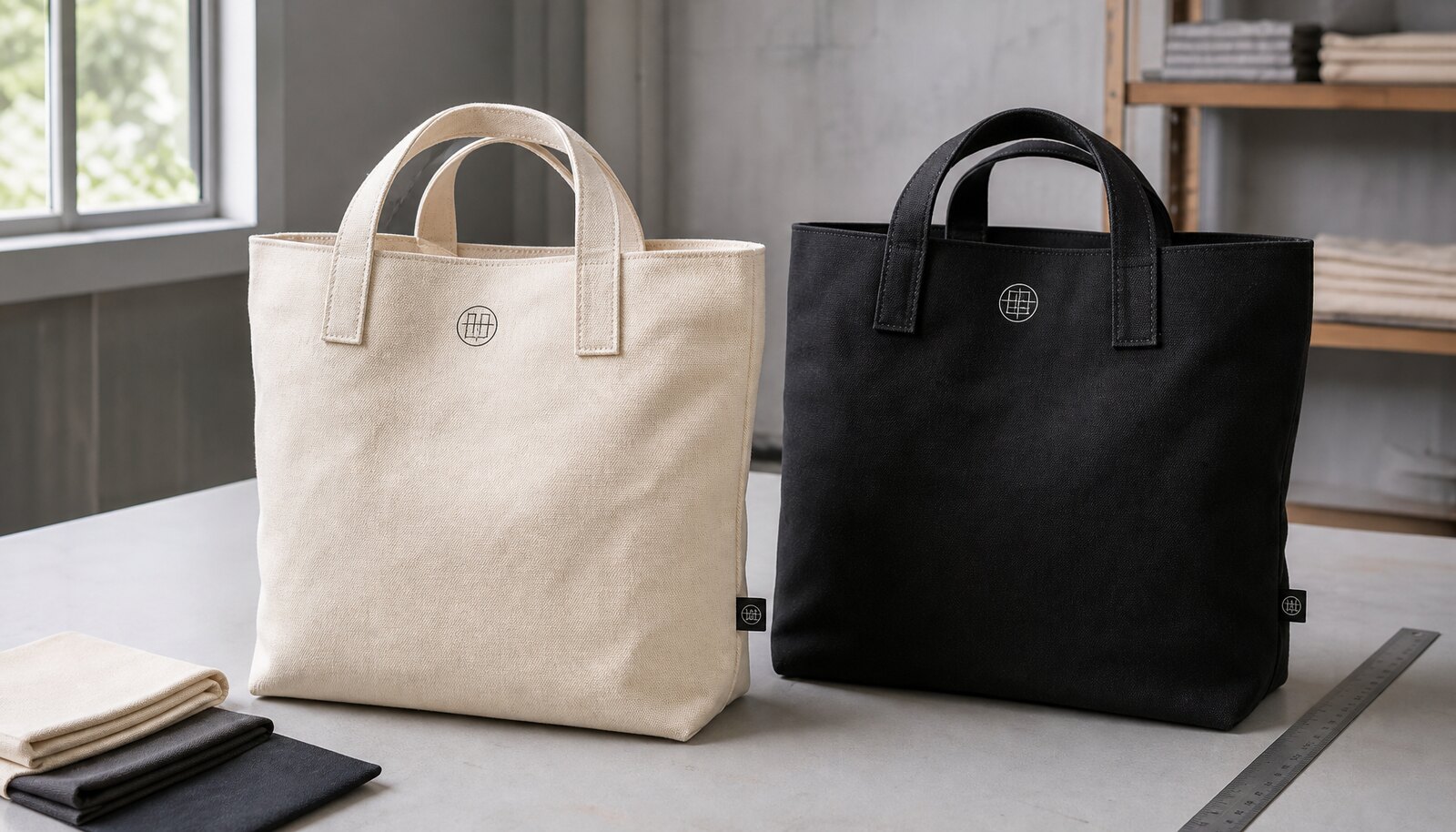
Executive summary: what changes when the tote becomes a reorder program
A boutique tote is easy to source once and much harder to repeat well. The first order often gets attention because everyone is focused on the sample. The reorder is different: it depends on whether the supplier can reproduce the same body structure, print clarity, handle feel, and packing density without hidden changes in fabric lot or production method. For procurement, that means the real job is not finding a tote maker; it is controlling repeatability across orders.
The most useful reorder memo starts with the assumptions that usually break margins. Lead time stretches because a fabric lot is missing. The print changes because the factory switches screens or inks. Freight increases because the carton count was not planned early. A strong refill plan should answer four questions before the buyer sends an RFQ: what exact sample are we copying, how many weeks of stock remain, what quality standard will be used at receiving, and how much change can the business tolerate before the tote stops matching the boutique presentation?
If you are evaluating heavy canvas tote bags for boutiques, keep the language of the memo commercial and measurable. Avoid broad phrases like “premium quality” unless you also define the basis weight, reinforcement, and tolerance band. That is what makes a reorder quote comparable across suppliers and keeps the next production cycle from becoming a style reset disguised as a replenishment.
- Treat the approved sample as the commercial baseline, not as a reference image.
- Build the reorder schedule backward from stock-out date, not supplier ship date.
- Compare only same-spec quotes so landed cost means something.
- Use QC standards that match the tote’s retail role, not just its utility function.
Why boutique reorder programs fail even when the first order sold well
The first run can succeed for reasons that have little to do with supply chain discipline. A tote may sell because the art looks fresh, because the boutique floor staff likes it, or because it landed during a strong season. On reorder, however, buyers are judged on continuity. If the cloth feels thinner, the print appears softer, or the handle drop changes by even a small amount, the product can look like a different item to the shopper even if the SKU name is unchanged.
Repeat orders commonly fail in the gap between commercial memory and production reality. The buyer remembers the approved sample, but the factory remembers the last machine setting. The warehouse remembers the carton count, but not the exact fold method. None of those are enough on their own. For a tote program that is supposed to replenish a store display, the procurement file should carry the spec sheet, retained sample reference, inspection notes, and packing rules as one package. That is what keeps a reorder from drifting.
The commercial risk is bigger than the unit price variance. A tote that arrives late can force a boutique to substitute packaging, reduce basket add-ons, or lose a seasonal display opportunity. A tote that arrives with visible variation can create markdown pressure because buyers lose confidence in continuity. That is why the reorder memo needs defect history, inventory timing, and supplier documentation—not just the next PO quantity.
If the original order sold through, ask one practical question before re-quoting: what happened in the first run that you never want repeated? The answer is usually not a theoretical design issue. It is something specific—crooked top edges, ink rub, carton crush, or a fabric hand feel that did not match the retail promise. Put that issue into the RFQ so every supplier quotes against the same risk.
- Record the first-order defect history before requesting a new quote.
- Capture any store feedback on grip, carry comfort, print wear, and shelf shape.
- Do not reorder from memory; reorder from measured and documented approval data.
- Treat late delivery, not just workmanship, as a quality problem when stock continuity matters.
Choose the heavy canvas spec that matches the boutique’s real selling job
Heavy canvas does not have a single “best” weight. It has a best fit for the way the tote is used. In boutique retail, the bag usually has to do three things at once: look substantial on the shelf, carry enough weight for practical use, and keep printing crisp enough to support the brand. In most programs, the practical range sits between 12 oz and 16 oz, with 14 oz often becoming the middle-ground spec because it balances structure, cost, and handling.
At 12 oz, the bag is easier to price and lighter to ship. That may suit promotional retail, event giveaways, or items that are sold mainly for brand visibility rather than long-term daily use. At 14 oz, the tote usually feels more composed in hand and stands up better on a display table. At 16 oz, the bag delivers stronger structure and a heavier hand feel, but the buyer should expect higher fabric cost, more sewing effort, and greater freight weight. For a reorder, changing weight is not a small tweak; it can change the sell-through story because the shopper feels the difference immediately.
Construction finish matters as much as weight. A pre-shrunk, bio-washed, or enzyme-washed canvas will generally behave more predictably than untreated cloth. The goal is not a fancy process for its own sake. The goal is dimensional stability and a cleaner print surface. When sourcing, ask the factory whether the stated weight is the fabric basis before or after finishing. Also ask whether the quote assumes a raw cloth hand feel or a softened finish, because those details change how the tote looks in boutique merchandising.
A procurement memo should spell out the exact approved spec in practical terms: cloth weight, weave type, final dimensions, gusset depth, handle material, and whether the bag must stand upright when empty. That last point matters. A tote that collapses on the shelf can make a premium boutique display look less intentional, even when the print itself is good.
- 12 oz: lighter, lower freight, better for promo-heavy or lower-load use.
- 14 oz: balanced option for most boutique retail programs.
- 16 oz: strongest shelf presence, but higher cost and heavier carton weight.
- Ask for basis weight, finish type, and whether the bag is pre-shrunk or softened.
- If the tote must stand on a shelf, state that requirement in the RFQ.
Decoration choices should be driven by durability and repeatability, not art convenience
For most boutique reorders, screen printing remains the most practical decoration method when the art is simple and the color count is low. It gives good edge clarity on heavy canvas and tends to hold up well through repeated customer use. If the first order sold because the logo looked clean and bold, the safest route is usually to keep the same print method and repeat the same placement. Reorders are not the time to reinvent the decoration unless there is a specific production issue to solve.
Heat transfer is useful when the artwork is more detailed or the quantity is too low to justify a full screen setup, but buyers should be aware of the tradeoff. On thick canvas, transfers can create a slightly different surface feel and may age differently under abrasion. Embroidery can signal a more premium finish for a small mark or monogram, but it changes the drape and adds cost and lead time. The right method is the one that supports the product’s retail role and keeps the re-order stable over time.
The question to ask suppliers is not “what can you print?” but “what can you reproduce consistently at the required quality level?” Ask for a strike-off or pre-production sample if any of the following changed: print position, ink color, cloth color, or artwork scale. If the logo must remain visually identical to the first run, request a sample under the same lighting and compare it with a retained approved piece before release. That is especially important when the boutique uses the tote as a brand object rather than just a shopping accessory.
A good RFQ should name the print standard in commercial terms: number of colors, placement, maximum print area, ink type if relevant, and the acceptable color reference. If the supplier can only quote vaguely on “logo printing,” expect the later sample process to reveal avoidable differences.
- Use screen print for simple, repeatable boutique artwork.
- Reserve transfer methods for detailed art or lower-volume programs where durability is acceptable.
- Use embroidery only when the small premium look justifies higher cost and longer lead time.
- Require a strike-off whenever artwork placement, scale, or fabric color changes.
- Specify the print standard in the RFQ: colors, placement, area, and reference sample.
MOQ and order sizing: how to avoid paying for flexibility you do not need
MOQ is often presented as a simple factory rule, but in reality it reflects setup cost. Heavy canvas tote bags require fabric cutting, sewing line changeover, decoration setup, and packing labor. Every variation you add—another color, another print placement, another handle variation—adds complexity. The cheapest quote is often the one with the most simplified production path, not necessarily the lowest fabric price. That is why a reorder should start with one core construction and one repeatable decoration setup whenever possible.
For boutiques, the commercial goal is usually continuity, not experimentation. If the original tote is already approved by the market, splitting the reorder into many small color runs can create slow-moving inventory and weaken the ability to replenish the best seller on time. In some cases, combining two colorways makes sense, but only if both can share the same cloth basis, handle construction, print screen logic, and packing method. If not, the buyer may be paying to create complexity rather than value.
Ask the supplier how MOQ changes with each of the following: fabric color, print color count, second print placement, packaging change, and custom label addition. The answer will tell you where the true cost drivers are. Also ask whether the MOQ assumes stock fabric or mill-dyed fabric. Stock fabric may lower the threshold, but it can also limit color control and repeatability. For a boutique reorder, consistency usually matters more than chasing a slightly lower minimum.
A practical order-sizing rule is to protect the core color first and treat secondary colors as controlled variations, not equal peers. That keeps replenishment simple and reduces the chance that one color sells out while another sits idle. It also helps procurement compare reorders across seasons because the base style stays stable.
- Simplify the construction path before you optimize the price.
- Ask what changes the MOQ: color, print count, placement, label, or packaging.
- Use stock fabric only if color repeatability is still acceptable.
- Keep the best-selling color as the core replenishment item and treat other colors as limited variants.
Supplier comparison should focus on repeatability, documentation, and hidden process differences
A reorder quote should not be judged by price alone. Two factories can quote the same tote and still produce different results because they are using different cloth sources, different sewing tolerances, or different packing logic. Procurement buyers need a decision method that separates the vendor’s sales language from the actual production path. The best comparison is based on reproducibility: can the supplier make the same bag again without drift?
The strongest option is usually the original factory, if the first run was clean and the spec records are complete. That factory already knows the cutting allowances, print registration, and packing rhythm used on the style. If you need a second source, compare only factories that can match the same fabric basis and provide a sample approval path that you can audit. A lower-cost quote from a weaker process is rarely cheaper once rework, delays, or retail inconsistency are included.
Look closely at what suppliers do not mention. If a quote omits finish type, handle reinforcement detail, or carton count, those items are often where hidden differences show up. Ask for production photos of the sewing stage, not just the final sample. Ask for documentation on fabric lot approval and print strike-off approval. Ask whether the quoted delivery date assumes existing fabric in stock or a new mill order. Those details are commercial, not administrative, because they decide whether the reorder lands on time and matches the first run.
For a buyer memo, the supplier comparison should note four things: quote basis, documentation quality, tolerance control, and process visibility. That gives procurement a way to explain why one supplier is safer even when another looks cheaper on paper.
- Prefer the original factory if its first-order record is clean and complete.
- Ask for process evidence: fabric lot approval, strike-off approval, sewing photos, and packing photos.
- Compare only same-spec offers; otherwise the price gap is not meaningful.
- Check whether the ship date assumes in-stock fabric or a new cloth order.
Decision table: what to compare when one tote supplier looks cheaper than another
Use this comparison table as a procurement filter, not as a generic spec list. A quote that is cheaper at the factory can become more expensive once freight cube, rework risk, and display quality are counted. The table below helps buyers separate hard cost from execution risk.
If you are sourcing multiple suppliers, require each one to quote the same finished size, cloth basis, print method, packing style, and approval sample standard. Without that discipline, the quotes are not truly comparable.
- Insist on same-spec quoting before comparing suppliers.
- Capture both unit cost and process risk in the same review.
- Use the retained sample and the written spec together as the approval basis.
Sample approval: the fastest way to prevent a quiet spec drift
A retained sample is more valuable than a product photo because it captures the real look and feel of the approved tote. For a repeat order, keep one sample labeled with style code, fabric weight, print version, approval date, and the person who signed off. That sample becomes the tie-breaker when a factory says the new run is “close enough.” In a boutique program, close enough is often not acceptable because customers notice subtle changes in hand feel and shape.
The approval process should include both visual checks and measurement checks. Visually, verify body shape, side seam alignment, top edge straightness, and print placement. Measured checks should include body width, body height, gusset depth, handle length, handle drop, and top hem width. If the tote is intended to stand upright in store, test that condition on a flat table and confirm the base remains stable. That may seem minor, but it affects presentation and shelf value.
Also ask for a pre-production sample when any of the following changes: factory, fabric lot, finishing process, print method, or packing method. A pre-production sample is not a formality; it is the point where the order can still be corrected without rework. If a supplier cannot produce a sample that matches the retained reference, do not assume bulk production will be better. In repeat manufacturing, the sample is usually the clearest predictor of the lot.
The approval file should contain three items at minimum: a retained physical sample, a measured spec sheet, and a dated approval note. If the reorder later develops a dispute about print position or body size, those records are what protect the buyer from a “we followed the normal standard” explanation.
- Keep a labeled retained sample for every core style.
- Measure the tote after pressing, not only before packing.
- Require a pre-production sample if anything in the production path changes.
- Store a dated approval note with the sample and spec sheet.
Packing, carton count, and freight cube can erase a good unit price
Heavy canvas may seem straightforward, but packing is one of the easiest places to lose margin. A tote packed too loosely increases cube. A tote folded inconsistently looks wrinkled on arrival. A tote placed in a retail insert without a clear fold standard can create labor at receiving. For procurement, the packing method should be negotiated as deliberately as the product spec because it affects freight cost, receiving time, and appearance.
Bulk packing usually provides the best cube efficiency. It is often the right choice when the tote is replenishment stock rather than gift-ready merchandise. If the boutique needs shelf-ready or e-commerce-ready presentation, individual polybags, barcodes, and color or size labels may be required. That is acceptable, but the cost and volume impact should be included in the quote comparison. Ask the supplier to state carton dimensions, units per carton, gross weight, and whether the carton is single-wall or double-wall. If you are shipping long distance, that carton specification can matter as much as the bag itself.
The carton should also be tested for handling reality, not just factory neatness. Ask whether the supplier has a standard drop test or compression test, especially if the cartons will pass through multiple warehouses. A strong memo can specify that cartons must remain intact after a 1-meter drop on the most vulnerable corners and that the internal fold should prevent body creasing beyond the accepted appearance standard. This is not overkill; it is a practical safeguard when the tote is part of a premium boutique display.
Packing is also where order quantity is often distorted. A supplier may offer a lower unit price but more units per carton only because the fold is tighter and the bag is more compressed. That can save freight, but it can also cause stronger creasing or a slower open-up at store receiving. Compare the whole packed presentation, not just the price line.
- Quote carton dimensions, gross weight, and units per carton before comparing suppliers.
- Use bulk packing when replenishment efficiency matters more than gift presentation.
- Require a consistent fold method so the tote opens cleanly and looks retail-ready.
- Ask for carton handling strength if the shipment will travel through multiple warehouses.
Lead time planning should be built from stock-out risk, not optimism
A reorder calendar should begin with the date the customer will see the bag run low, not the date the factory says it can ship. That difference matters because sample approval, fabric sourcing, sewing capacity, printing queue, and packing all consume time before transit even begins. A buyer who waits too long loses negotiating leverage and may have to accept air freight or rushed production. Once that happens, the “cheap” tote becomes expensive very quickly.
The right planning method is simple but strict. Start with current on-hand inventory and average weekly sell-through. Add the replenishment lead time from order confirmation to delivery. Then include a safety stock buffer for the best-selling color and for any stores that reorder irregularly. If the tote is seasonal, use the earlier of two dates: the date inventory would fall below display minimums or the date after which the tote no longer belongs in the merchandising plan.
For heavy canvas tote bags for boutiques, the most common timing surprise is not sewing. It is fabric availability. If the cloth is custom dyed or softened, the mill lead time can be the longest part of the order. Print queues can also create delays if the supplier batches similar orders. Ask each supplier to state whether the quoted delivery date assumes stock fabric, in-house fabric, or outside mill production. That single question often exposes the real schedule risk.
When a style is proven and the aim is replenishment, consider smaller but earlier reorders instead of waiting for one larger order. This reduces the chance of stock-out and keeps the boutique display consistent. It also helps the buyer learn more from each replenishment cycle because the delivery interval stays manageable rather than becoming a seasonal emergency.
- Calculate reorder timing from sell-through, not from hope.
- Include sample approval, fabric lead time, print queue, packing, and transit in the timeline.
- Keep extra safety stock for the top-performing color and size.
- Ask whether the ship date assumes stock fabric or a new mill run.
Specification comparison for buyers
| Spec decision | Recommended option | When it fits | Buyer risk to check |
|---|---|---|---|
| Fabric weight | 12–16 oz canvas; 14 oz is the most flexible middle ground | When the bag must feel substantial on the shelf, keep its shape in display, and still stay practical on freight cost | Ask the supplier to state weight in oz or GSM and confirm whether that number is before or after washing/finishing |
| Weave and finish | Tight plain weave with a pre-shrunk, bio-washed, or enzyme-washed finish | When repeat dimensions matter and the print needs a flatter, cleaner surface | Untreated heavy canvas can shrink, skew seams, or change the look of the logo after steam pressing or washing |
| Handle construction | Cotton webbing or self-fabric handles with box-X stitching plus bar-tacks at load points | When shoppers may carry books, gifts, or mixed merchandise and the bag must feel retail-premium in hand | Thin webbing, short stitch length, or weak reinforcement can fail under repeated use and create returns |
| Decoration method | Screen print for 1–3 spot colors; embroidery only for small premium marks; transfer only when detail outweighs durability | When the artwork is simple, the sell-through is repeatable, and visual consistency matters more than complex graphics | Thick canvas can soften fine detail; low-grade transfers may crack or peel faster than the buyer expects |
| Closure option | Open top for shopping totes; zipper or snap only when the merch program clearly needs closure | When the tote is used as a retail carryall, event bag, or gift-with-purchase item | Closures add labor, hardware risk, and another defect point without always improving sell-through |
| MOQ route | Single-style reorder with one fabric spec and one print setup | When the style already proved demand and the buyer wants the lowest execution risk | Splitting the order into too many colors or sizes raises setup cost and weakens pricing leverage |
| Color strategy | Natural, black, or one seasonal branded color maximum | When the goal is inventory continuity and easy replenishment planning | Too many colorways create slow-moving stock and make consolidated reorders harder to plan |
| Packing method | Bulk polybag with size label, carton mark, and consistent fold; retail insert only if store-ready presentation is required | When receiving efficiency, cube optimization, and low damage risk matter more than gift presentation | Inconsistent folding increases carton volume and can make the tote look wrinkled or misshapen on arrival |
| Supplier choice | Use the original factory first if the spec history and inspection record were clean | When the first order sold through and you need the closest possible repeat result | Switching factories can change cloth hand feel, shrinkage, print density, and carton count even if the style code stays the same |
Buyer checklist before sampling
- Match the reorder to the approved sample: fabric weight, finished dimensions, handle length, handle drop, print size, color name, and fold method.
- Rebuild the reorder date from actual sell-through, supplier lead time, production queue, packing time, transit time, and a safety-stock buffer.
- Lock the same construction basis before quoting: cloth weight, weave finish, handle material, reinforcement method, print method, and packing format.
- Use one retained sample as the appearance standard and one spec sheet as the measurable standard; photos alone are not enough for a repeat order.
- Ask the supplier to confirm whether any fabric lot change, wash treatment change, or dye-house change would alter shrinkage or color appearance.
- Check whether the original reorder risk comes from defect history, not price: if returns were caused by print rub-off, seam weakness, or color drift, solve that first.
- If the tote is a core boutique item, keep one version highly stable and avoid introducing new colors or construction changes at the same time as the replenishment order.
Factory quote questions to send
- Please quote the exact finished size, fabric weight, weave/finish, handle material, reinforcement method, print method, and packing method from the attached retained sample.
- What is your MOQ by color and by print version, and what changes if we combine two boutique colors in one production run?
- What shrinkage allowance do you build into cutting, and what finished size tolerance can you hold after sewing and pressing?
- How many print colors are included in the price, what is the surcharge for a second placement, and what happens if we increase print coverage?
- Can you share your carton dimensions, carton gross weight, and standard units per carton so we can compare freight cube between suppliers?
- What is your standard lead time after sample approval, and which step usually causes delay: fabric availability, printing, sewing capacity, inspection, or packing?
- Can you provide your in-house inspection method, AQL level, and the documents you include with each shipment: production sample photos, inspection report, packing list, and carton marks?
- If you source the fabric externally, who approves the mill lot and how do you verify color consistency before cutting begins?
Quality-control points to confirm
- Use an AQL 2.5 major / 4.0 minor inspection standard unless your internal policy requires something stricter for retail presentation.
- Measure finished size after pressing and compare against a tolerance band such as ±1 cm for body dimensions and ±0.5 cm for handle length unless the style requires tighter control.
- Check stitch density and consistency at seams and handles; for heavy canvas, ask for a documented stitch count target and inspect for skipped stitches, loose thread ends, and crooked topstitching.
- Require bar-tacks or box-X reinforcement at all load points and verify both handles are symmetrical in length, placement, and reinforcement density.
- Use an approved color standard such as a retained sample under D65 lighting or a Pantone reference for printed artwork; do not approve color from a phone photo.
- For print, verify placement with a ruler and check registration, edge sharpness, ink density, and rub resistance on the first production sample.
- Add a carton drop test requirement if the order is travel-heavy or warehouse-handled: confirm outer cartons remain intact after a 1-meter drop on the most vulnerable corners.
- Reject shipments with visible oil marks, broken stitches, fabric holes, crooked side seams, collapsed handles, or print defects visible from normal retail viewing distance.
- Confirm carton count, inner pack count, and barcode or style label accuracy before shipment release so warehouse receiving does not become a manual rework task.