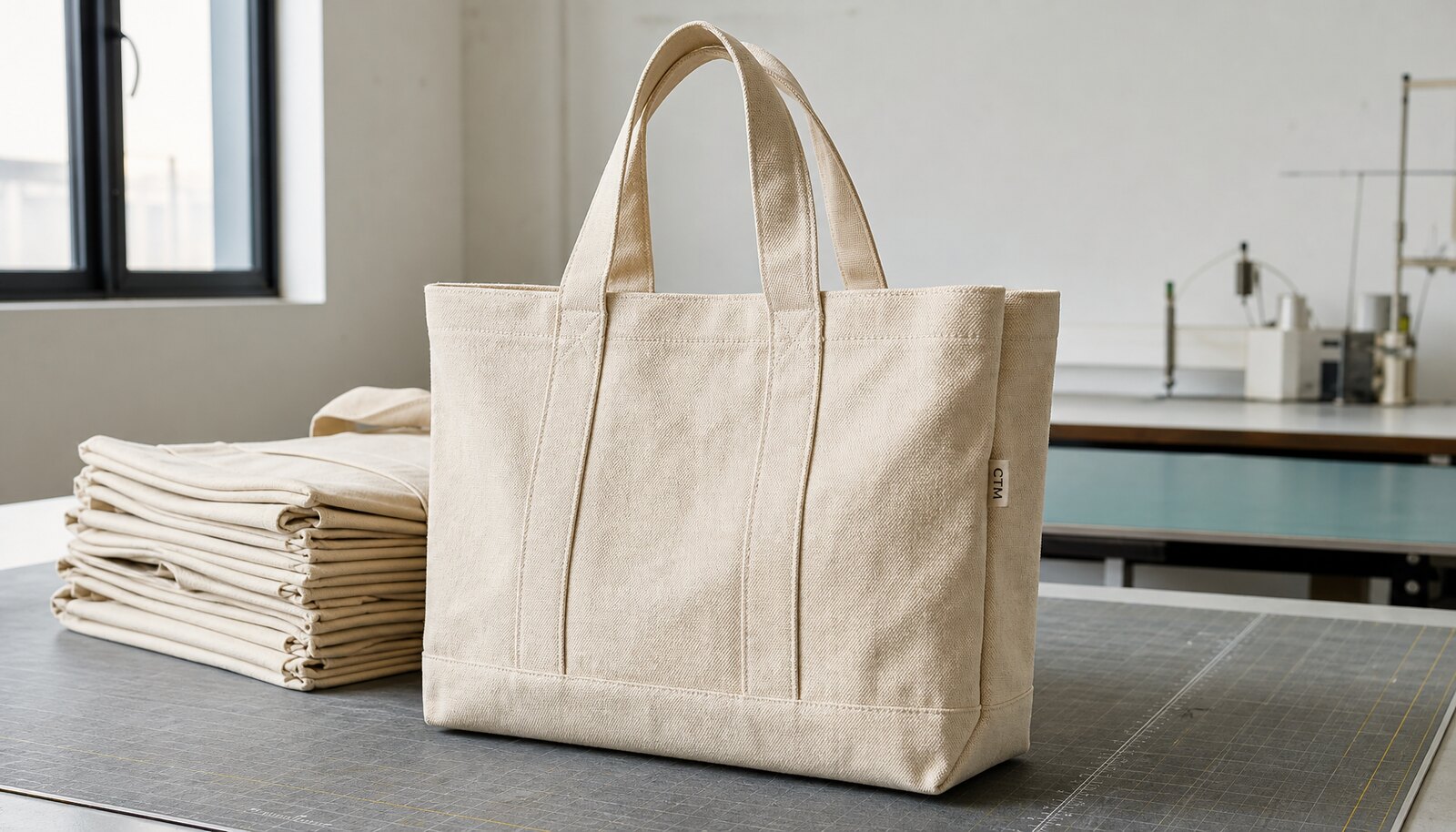
Why bookstore buyers need a different tote spec than event bags
A bookstore tote is not just a giveaway item. It sits at the intersection of retail merchandising, packaging, and daily carry performance. It has to hold hardcovers, notebooks, journals, and mixed impulse purchases without looking flimsy at the point of sale. That means heavy canvas tote bags for bookstores usually need a more stable body, stronger handle reinforcement, and a print area that remains readable from the shelf and in checkout queues. If the bag collapses or curls in display, it loses retail value before the customer even uses it.
The buyer challenge is that a bookstore tote can play three different roles: checkout carry bag, retail merchandise item, or branded packaging for memberships, events, and author campaigns. Each role changes the spec. A checkout tote prioritizes strength and speed of packing. A retail tote needs a cleaner silhouette and better shelf presentation. A promotional tote may accept a simpler print or lighter finishing if the budget matters more than long-term retail display. Procurement should define the primary use case first, then quote the bag against that actual job rather than a generic 'bookstore tote' label.
The sustainability angle matters, but only when it is tied to how the bag and packaging are actually sourced. A heavy canvas bag can help reduce dependence on disposable carry packaging, but the buyer still needs to compare material, finishing, carton packing, and final disposal story. If the order is intended to support a sustainability program, the supplier should not be asked only for an eco-friendly promise. They should be asked for the exact material spec, packaging format, and documentation that can be kept on file for internal review.
For procurement teams, the practical outcome is simple: do not buy by appearance alone. Buy by load case, display need, and packaging route. If those are defined early, quotes become easier to compare and the risk of a hidden cost increase drops sharply.
- Retail tote: needs shelf appeal, clean logo placement, and a premium handfeel.
- Checkout tote: needs stronger stitching and a practical size for books and boxed items.
- Promo tote: may accept simpler print and flatter packaging if cost control is the priority.
- Membership gift tote: often benefits from a more premium finish and tighter packaging controls.
Fabric weight and construction: where durability is actually decided
For most bookstore programs, 12oz to 14oz cotton canvas is the practical starting point. Twelve-ounce canvas gives a balanced unit cost and a familiar retail feel. Fourteen-ounce canvas usually performs better when the tote is expected to carry heavier stacks of books, or when the buyer wants the bag to stand up more cleanly on shelving and at point of sale. Some buyers use 10oz canvas if they specify a tighter weave, wider seams, and reinforced handles, but that choice leaves less margin for sewing variation and less forgiveness if the bag is loaded heavily on a regular basis.
Do not evaluate canvas by weight alone. Weave density, yarn quality, pre-shrink treatment, and whether the fabric is raw or washed all affect final performance. Two bags that both read '12oz' can feel and behave differently if one is a looser weave or has more shrinkage after finishing. A usable quote should state the fabric weight basis clearly, such as oz per square yard or GSM equivalent, plus the expected shrinkage range after finishing and whether any washing or pre-shrinking is included. If the supplier only says 'heavy canvas,' the comparison is too vague for procurement use.
Construction details matter almost as much as the fabric. A gusseted body with a double-stitched seam usually handles bookstore loads better than a plain body with light stitching. Handle width, handle length, and top reinforcement should be specified before the order is priced. In procurement terms, the goal is not to make the bag as heavy as possible; it is to align the fabric and sewing method with the actual book load and retail presentation requirement.
If you are comparing suppliers, ask them to quote the same structure, not just the same dimensions. A 12oz bag with reinforcement can outperform a 14oz bag with weak seam treatment. That is why buyers should ask for the fabric spec, seam style, and handle reinforcement together instead of treating them as separate options.
- 12oz canvas: common for bookstore retail and daily carry.
- 14oz canvas: better shape retention and stronger premium perception.
- 10oz canvas: acceptable only with tighter spec control and lighter loading expectations.
- GSM references help, but the supplier should still state the actual fabric construction.
- Pre-shrunk or washed canvas should be identified in the quote because it affects size and handfeel.
Sustainable packaging comparison: what changes cost and what really reduces waste
The sustainability discussion around canvas totes often gets oversimplified. A heavy canvas bag can be a better long-use item, but the packaging route still affects waste, freight volume, and landed cost. Flat bulk packing in a master carton is usually the most efficient option for importers because it reduces air, lowers carton count, and avoids unnecessary plastic. Individual polybags may be needed for retail presentation or dust protection, but they increase labor and add material that many bookstore buyers are trying to reduce. The correct choice depends on how the bags move through your supply chain, not only on the environmental message.
For a bookstore program, the most useful comparison is between three common packaging routes: bulk flat pack, individual polybag with barcode label, and retail insert packaging with branded hangtag or belly band. Bulk flat pack wins on cost, cube efficiency, and distribution-center handling. Individual polybag wins when the store wants cleaner shelf presentation or when the tote will be sold through e-commerce and needs cleaner first-touch appearance. Retail insert packaging can improve merchandising, but it also increases assembly time, carton volume, and the chance of packing mistakes. In other words, the most sustainable route is not always the prettiest one, and the prettiest one is not always the most economical.
Procurement should also watch the language used in sustainability claims. Avoid terms like 'eco-friendly' unless the supplier can support them with factual documentation. Better language is specific: cotton canvas weight, recycled content if applicable, recycled or FSC-certified paper components, reusable pack format, and reduced plastic packaging where verified. If a bag or its packaging uses certified materials, request the certificate number, the issuing body, and the claim wording you are allowed to use internally or in customer-facing materials. That keeps the sustainability story defensible and easier for legal or compliance teams to review.
A practical rule for buyers is to treat packaging as part of the product spec, not an afterthought. If a quote leaves out folding method, bag count per carton, or label format, the landed cost comparison is incomplete. The low quote may simply be missing material and labor that will appear later as a revision charge.
- Bulk flat pack: lowest cube, best for importers and distribution centers.
- Polybag per piece: cleaner retail handling, higher packing and material cost.
- Belly band or hangtag: better shelf storytelling, but requires controlled assembly.
- Ask for recycled-content or certified-paper documents before using sustainability language.
- Avoid vague eco claims; tie any claim to a named material, packing method, or certificate.
Supplier routes: factory direct, trader, or mixed sourcing
Procurement teams often compare a factory-direct quote with distributor or trading-company offers, but those routes are not interchangeable. A factory is usually better for repeatable canvas weight, custom sewing, and controlled print placement. A trader may be useful for smaller quantities, mixed SKUs, or urgent sourcing, but the buyer should expect less control over fabric consistency, packing details, and change management. For bookstore buyers, the wrong route can create a bag that looks fine in a sample but varies too much by shipment.
The decision is not only about unit price. It also involves setup fees, sample behavior, after-approval changes, and how the supplier handles packaging revisions. A quote that is cheaper by a few cents can become more expensive once you add screen charges, carton label changes, or extra sample rounds. In commercial procurement, the cleaner comparison is the total landed value of the entire package: bag construction, print, packing, compliance documents, and delivery timing. That is why a low headline quote should never be accepted before you know what it excludes.
Factory-direct sourcing usually works best for repeat programs, retail merch, or chain-store replenishment because the buyer can lock a spec and repeat it across seasons. Trader-led sourcing can be useful when speed matters and the buyer needs flexibility across multiple styles. Mixed sourcing can also work: one supplier for the core bag body and another for packaging or local finishing. However, mixed routes require tighter control documents so the final bag still matches the signed approval sample. If your team is managing multiple bookshop locations, consistency is usually more valuable than a very small unit-price difference.
The key takeaway is that route choice should follow use case. If the bags are part of a regular retail line, factory direct generally gives the best control. If the program is a short run or a campaign with uncertain demand, a trader may reduce commitment risk. The quote should reveal which route you are actually buying from, because the QC and lead-time expectations are different.
- Factory direct: best for repeatability and spec control.
- Trader/distributor: useful for low volume or urgent orders, but verify the real source.
- Mixed sourcing: workable only if the approval sample and packaging spec are tightly controlled.
Decision table for bookstore buyers: comparing spec, cost, and sustainability tradeoffs
Use the comparison below to align the sourcing route with the actual bookstore use case. It is written for procurement teams comparing real quotes, not for a generic product brochure. The key is to compare the same package of decisions, because canvas tote pricing changes quickly when fabric weight, print method, and packing format shift together. A quote should not be judged by price alone unless the construction, pack format, and documentation are identical.
If your team is running a sourcing review, record the sample version, carton spec, and claimed sustainability basis alongside the price. That makes the decision auditable later if there is a dispute about whether the factory delivered what was approved.
- Write decisions in measurable language, not only descriptive wording.
- Ask for sample photos plus one physical approval sample for important orders.
- Keep quotation, sample approval, and inspection notes tied to the same spec version.
Quote drivers that move price more than buyers expect
On heavy canvas tote bags for bookstores, the biggest cost drivers are usually fabric weight, print method, reinforcement at the handle, and packing format. A 14oz canvas bag with a complex multi-color print and individual polybagging can cost materially more than a 12oz flat-packed bag with one-color screen print, even when the bag size is identical. Buyers often focus on dimensions first, but the factory is pricing sewing time, setup, packing labor, and carton handling just as heavily. If those items are not separated in the quote, the buyer may not understand why a small design change creates a large price change.
MOQ logic matters because the factory usually spreads setup costs across quantity tiers. If you ask for several sizes, different print colors, special woven labels, or mixed packaging in one small order, the unit price rises fast. A cleaner way to manage it is to separate what must be customized now from what can be standardized. For example, standardize the canvas body and handle length, then change only the logo print or label for early retail tests. That gives your team one stable base spec while still letting merchandising test a campaign or seasonal design.
Another common price variable is print complexity. Screen printing is usually efficient for one- or two-color logos at scale. Embroidery creates a premium look, but it often increases cost and lead time, especially if the artwork has fine lines or large filled areas. Digital transfer may look attractive for short runs, but the buyer should confirm rub resistance, wash stability if applicable, and the factory’s acceptable reject rate. For bookstore use, a simple, durable print on a good canvas base is often a better commercial choice than a fancy decoration on weak construction.
Packaging can move price as much as the bag itself. Flat packs are efficient. Polybags, belly bands, cards, and hangtags all add labor. If a quote is for a retail-ready pack, ask the factory to state whether the labor for folding, inserting, labeling, and final packing is included. Hidden packing labor is one of the easiest places for quotes to look comparable when they are not.
- Screen print setup is efficient for one- to two-color logos at scale.
- Embroidery adds texture and premium feel but usually raises cost and lead time.
- Custom lining, inserts, or retail hangtags add labor and packaging complexity.
- Mixed SKUs in one PO often increase carton sorting and assembly errors.
- Packing labor should be separated from bag manufacturing in the quote when possible.
Sample approval should test function, not just appearance
A sample that looks correct in a photo can still fail in use. Bookstore buyers should test the pre-production sample with real books, not just an empty bag. Load it with hardcovers, a notebook, and a small accessory item, then inspect handle stretch, seam movement, and print cracking after folding. This matters more than a simple visual approval because bookstore totes are handled repeatedly at checkout, carried across town, and stuffed into backpacks or car seats. A bag that looks premium on the table but fails after a few loads will hurt the store’s retail experience.
The sample should match the intended bulk production method. If the sample uses a heavier fabric, a different thread count, a more careful print pass, or a cleaner finishing process than the production run, it is not a valid approval sample. Ask for the sample to reflect the exact material, print method, label placement, and packing format. If any detail changes after sample sign-off, the factory should re-confirm the impact on price and timing before production starts. This is especially important when the tote is part of a branded bookstore line and the finished appearance needs to stay consistent across stores or seasons.
For inspection, use a simple but repeatable method. Check one sample under daylight or a consistent white inspection light. Measure the bag width, height, gusset, and handle drop. Inspect seam edges, the inside finish, thread trimming, and print position. Then perform a short load test by carrying a defined weight of books or equivalent packed goods for a short interval and re-checking for handle stretch or seam distortion. The point is not to design a laboratory test; it is to make the sample represent real use conditions as closely as possible.
If the tote will be sold in retail, consider also how it looks after folding. Some heavy canvas bags recover well; others keep a hard crease. That affects shelf display and customer perception, especially in stores where the tote is visible near the till or on wall hooks.
- Test with actual book weight, not empty-hand inspection only.
- Check handle length against how customers carry bags in-store.
- Inspect print opacity on natural canvas, where the fabric shade can affect logo clarity.
- Verify fold memory and crease recovery if the bag will be shelf-displayed.
- Use one signed physical sample and keep the approval record tied to the PO revision.
Packing and carton logic: the hidden part of the landed cost
Packing affects more than warehouse convenience. It changes carton size, freight cube, labor, and the risk of crease marks or print rub. For bookstore programs, a flat-packed tote usually ships efficiently and is easy to count by carton. If the buyer wants retail-ready display, the factory should quote the added labor for folding, inserting a card, applying a barcode, or polybagging. Those items are not small details; they can change export carton count, loading efficiency, and the final landed cost. If the factory gives you a bag price but no packing spec, you do not yet have a complete comparison.
A good packing spec should define the folded size, bundle count, master carton quantity, and carton label format. If the bags are destined for chain stores, carton markings and SKU separation matter as much as the tote itself. For distribution buyers, it also helps to ask how the factory prevents rubbing between printed surfaces during packing. A cheap quote that ignores this often creates scuffed prints by the time the cargo reaches the DC. The buyer should ask whether the factory inserts tissue, separates layers, or nests bags in a way that protects the print face. Those details are easy to overlook and expensive to fix after shipment.
Carton quality is part of quality control, not just logistics. Ask for carton dimensions, gross weight limits, and whether the supplier can meet a target such as carton integrity through normal export handling. If cartons are too heavy, the risk of crush and handling damage rises. If cartons are too large and underfilled, freight cost rises and the bags can shift during transit. The right carton spec sits between those two extremes and should be written into the order confirmation.
For high-volume bookstore programs, request a packing photo before shipment. One photo of the finished carton stack, one of the carton label, and one of the packed unit arrangement can save time if a receiving discrepancy occurs. It is much easier to resolve a packing issue before the goods leave the factory than after the boxes are in the receiving bay.
- Agree folded dimensions so warehouse receiving is predictable.
- State whether each bag needs a polybag, tissue, hangtag, or none.
- Set carton count by SKU to reduce picking errors at the destination.
- Specify if carton drop-test expectations apply for long-distance freight.
- Request carton size, gross weight, and pack photos before shipment.
Lead time, production risk, and how to avoid schedule slips
A realistic lead time for custom heavy canvas tote bags is often 30 to 45 days after sample approval, but only when the artwork is final and the fabric is available. If the supplier needs to weave or dye a custom canvas shade, or if the buyer changes print colors after sampling, the timeline stretches quickly. A procurement team should treat lead time as a chain of steps: material preparation, sewing, printing, finishing, packing, inspection, and export booking. The date on the quote is only useful if each step has enough time built in.
Most delays come from rework, not sewing capacity. Artwork revision, label correction, packaging changes, or uncertainty about carton marking can each add several days. The safest schedule is built by freezing the spec early and leaving room for one approval round. For seasonal bookstore campaigns, especially those tied to author events or holiday launches, the buyer should place the order against the latest acceptable arrival date, not the ideal production date. That allows time for customs, inland transport, and store receiving.
Risk control starts before production. Ask the factory when it books fabric, when it creates screens or embroidery files, and when it schedules final packing. If the supplier cannot identify those milestones, the buyer has less visibility into where delays may appear. For larger programs, it can also help to ask whether the factory conducts a pre-production meeting to confirm the spec and carton count. A five-minute alignment on the front end can prevent days of confusion later.
If there is a fixed launch window, prioritize suppliers that can commit to a clear milestone schedule and communicate deviations early. The best supplier is not always the one with the shortest quote. It is the one that can hold the approved spec and deliver on time without surprise substitutions.
- Material availability is the first schedule risk, not sewing speed.
- Print setup is a frequent delay point when art files are not production-ready.
- Late changes to packing specs can force carton relabeling and repacking.
- Bookstore launch dates should include freight and receiving buffers, not just factory completion.
- Ask for milestone dates for fabric booking, printing, packing, inspection, and ex-factory release.
What a usable RFQ should include before a buyer asks for price
The best RFQ for bookstore tote bags is short but specific. It should define the bag size, fabric weight, print method, handle reinforcement, packing style, and sample requirements. That gives the supplier enough information to quote on the same base, which is the only way to compare offers cleanly. If the RFQ is too vague, the buyer gets a low number that may not include the actual construction needed for bookstore use. Procurement teams end up spending more time reconciling the offer than they would have spent writing the spec properly in the first place.
The RFQ should also separate the desired spec from the acceptable alternative. For example, if the buyer wants 14oz canvas but can accept 12oz with reinforcement, state that clearly. Suppliers can then show price tiers rather than hiding substitutions. That makes internal approval easier because procurement can explain why one quote is higher without losing the commercial logic. It also avoids one of the most common sourcing mistakes: comparing a premium build against a lighter build that only looks similar in a spreadsheet.
A strong RFQ should include artwork readiness and documentation needs. Ask for the print file format, color count, Pantone references if relevant, and whether the final proof should be digital or physical. If the tote needs sustainability language on a hangtag or insert card, include the approved claim wording in the RFQ so the supplier does not invent its own wording later. The same applies to barcode placement, SKU labels, and carton markings. The more of these details that are written upfront, the less likely they are to become unpriced extras.
For bookstore procurement, a good RFQ is not long. It is complete enough that the supplier can quote, sample, and produce the item without guessing. That is the standard that makes quote comparison meaningful and keeps the buying process efficient.
- State exact dimensions, canvas weight, and handle style.
- Specify print artwork file type and color count.
- Define packing and label requirements.
- Request sample timing and bulk production lead time.
- Ask for a quote breakdown instead of one lump sum.
- Include acceptable alternates separately from preferred spec.
Specification comparison for buyers
| Decision area | Recommended spec / route | Cost impact | Risk severity if wrong | Bookstore use case fit |
|---|---|---|---|---|
| Fabric weight | 12oz to 14oz cotton canvas; 10oz only with tighter weave and reinforced seams | Medium to high: heavier fabric raises material and sewing cost | High: bag may sag, distort, or feel too flimsy under book weight | Best for checkout totes, retail merch, and membership gifts |
| Bag structure | Gusseted body with double-stitched seams and reinforced handle attachment | Medium | High: weak seams fail first under repetitive book loads | Best for daily carry and stacked paperback/hardcover mixes |
| Handle construction | Self-fabric or reinforced canvas handles with X-box or cross-stitch reinforcement | Low to medium | High: handle stretch and tear are common failure points | Good for bookstore bags expected to carry heavier items |
| Print method | 1-color screen print for most logos; digital transfer only for short runs or complex art | Low to medium | Medium: print mismatch, cracking, or poor opacity on natural canvas | Best for brand marks, literary quotes, and simple campaign graphics |
| Packing format | Flat packed in master cartons; add polybag only when retail presentation or dust protection is required | Medium | Medium: unnecessary packaging raises cube, labor, and waste | Best for distribution centers, chain replenishment, and importers |
| Sustainability route | Use factual material and packing claims only; prefer documented fiber and packaging sources | Low to medium | High: vague eco claims can create compliance or buyer-trust issues | Best for buyers needing a cleaner story without overpromising |
| MOQ structure | Tiered MOQ by size, color, and print method rather than one flat MOQ | Low | Medium: hidden setup fees can make low-MOQ quotes less competitive | Best for multi-SKU bookstore programs and seasonal tests |
| Lead time plan | 30 to 45 days after sample approval for standard custom orders, plus freight buffer | Low to medium | Medium to high: schedule slips hit seasonal launches and author-event dates | Best for planned campaigns with locked artwork and pack specs |
| Quality control | Pre-production sample + in-line checks + final carton inspection | Low to medium | High: small defects scale quickly across a bookstore order | Best for any order above test quantity |
Buyer checklist before sampling
- Confirm final canvas weight in oz and/or GSM, plus whether the quote is for raw, pre-shrunk, or washed canvas.
- Lock the bag dimensions, gusset depth, handle length, and seam allowance before requesting final pricing.
- Specify handle reinforcement exactly: X-box, bar-tack count, cross stitching, or double-row topstitching.
- Approve the print method against the artwork complexity, number of colors, and expected order quantity.
- Require a packing spec with folded size, bundle count, master carton count, barcode format, and whether each bag is polybagged.
- Ask for a pre-production sample made from the same fabric, thread, print method, and label placement as bulk goods.
- Request tolerance targets for print position, finished size, seam width, and carton count; reject quotes that do not state them.
- Ask for a carton packing note showing how many units per carton, gross/net weight, and whether cartons need drop-test compliance.
- Compare quotes on the same basis: material, sewing reinforcement, print setup, packaging, sample fees, and shipping terms.
- Keep one signed approval sample and tie the PO, spec sheet, and inspection notes to the same revision number.
Factory quote questions to send
- What exact fabric weight, weave density, and shrinkage range are included in this quote, and is the basis oz per square yard or GSM?
- Is the handle sewn with cross stitching, X-box reinforcement, bar-tack only, or a double-stitch combination?
- What is the MOQ by size, color, and print method, and how does unit pricing change at the next quantity tier?
- Can you quote separate prices for flat packing, individual polybag packing, belly bands, hangtags, and carton insert packaging?
- What sample type will you provide before bulk production, and what changes are still allowed after sample approval?
- What is the standard lead time after sample approval, and what events usually extend it by one to two weeks?
- Which part of the price covers screens, plates, embroidery setup, color matching, and label tooling?
- What inspection standard do you use for stitching, print position, odor, carton count, and final packing before shipment?
- Can you share the carton size, units per carton, gross weight, and loading plan so we can estimate freight cube accurately?
- If we need a sustainability claim, what supplier documents can you provide for fiber source, recycled content, packaging material, or certification reference?
Quality-control points to confirm
- Fabric weight tolerance: agree a practical tolerance band for canvas weight and reject quotes that do not state the basis of measurement. For buying decisions, ask the supplier to define whether tolerance applies before or after finishing, because washed canvas and raw canvas do not behave the same.
- Finished size tolerance: define acceptable deviation for width, height, and gusset depth. For a retail tote, a common procurement approach is to set a tighter tolerance on width and print placement than on unprinted seam allowance, because shoppers notice front-panel distortion first.
- Stitching strength: inspect handle junctions, bottom seams, and gusset joins for skipped stitches, loose thread ends, seam puckering, and broken thread tails. A bag should not show opening at the stress points after moderate hand load testing and repeated lifting.
- Handle attachment: require a visible reinforcement pattern and agree the acceptable number of stitches or bartacks per attachment point. A handle that looks neat but lacks reinforcement is a common failure mode in bookstore use, where books concentrate weight in the center.
- Print alignment: logo placement should stay within the agreed tolerance and not drift bag to bag on large runs. Ask the factory how it measures print position and whether it checks first-piece, mid-run, and final cartons.
- Print durability: confirm cure method for screen print, rub resistance expectations, and whether the ink remains stable after folding. Natural canvas can hide or exaggerate print defects depending on weave and ink opacity, so the sample should be viewed under the same light used for inspection.
- Color consistency: confirm whether natural canvas shade variation is acceptable or whether a bleached or dyed base is required. If a bookstore brand needs a clean merchandising look, set a reference standard for shade range instead of accepting generic 'natural color' language.
- Odor and contamination: tote bags must arrive free from oil marks, dust, mildew, and strong chemical smell that can transfer to retail stock. Add a simple acceptance note that rejects visible contamination, greasy marks, or odor that would be noticeable at store receiving.
- Packing integrity: master cartons should hold shape, with labels matching carton count, size, and SKU details. If cartons are overfilled or underfilled, the buyer should flag it because this often predicts bent edges, scuffed prints, or count mismatches.
- Sample match: bulk production should match the approved sample in fabric handfeel, handle length, print density, label position, and folded size. If the bulk run differs materially, the supplier should document the deviation and get written approval before shipment.