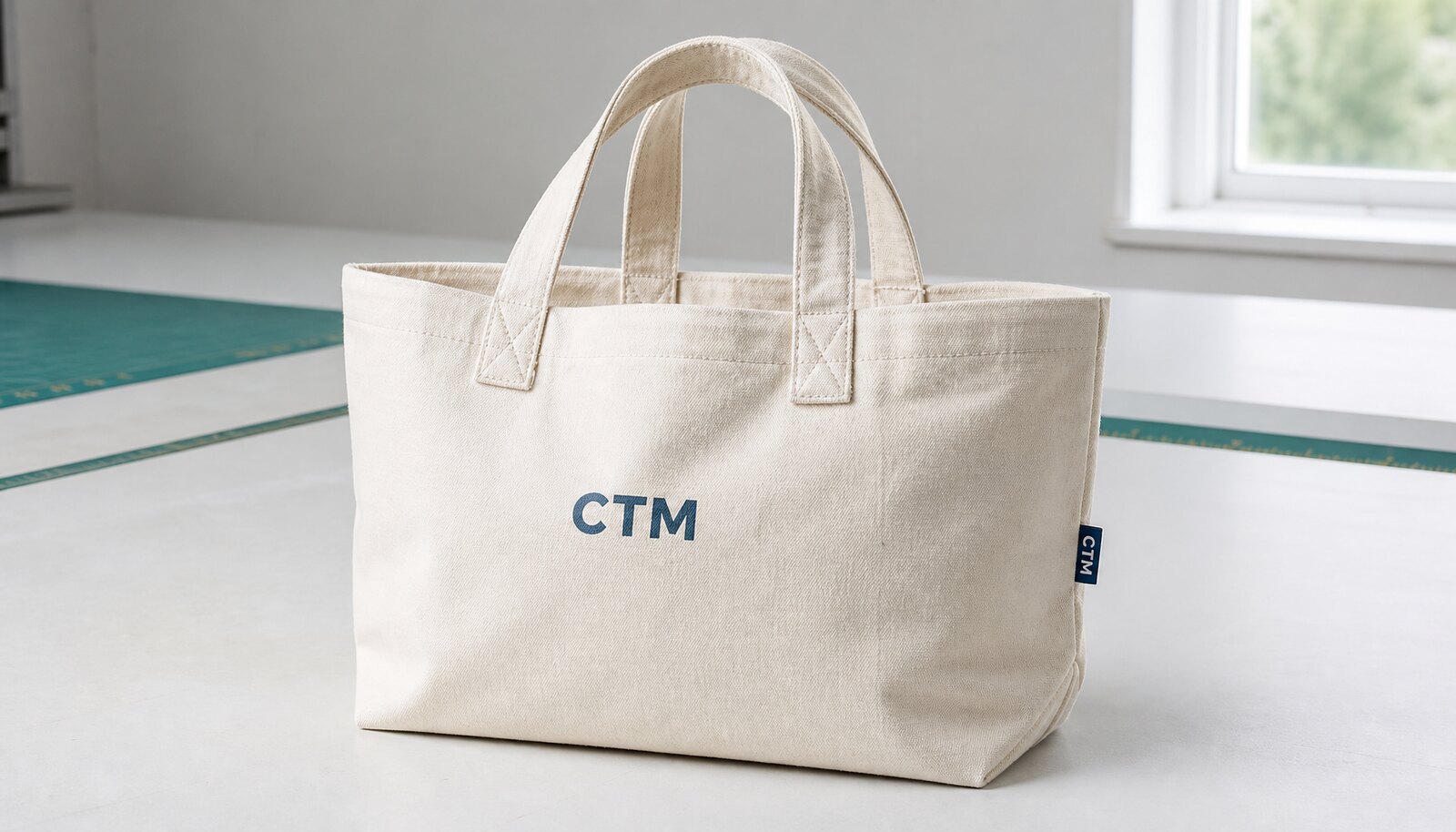
Why bookstore tote bags need a stricter inspection standard than generic promo totes
A heavy canvas tote for a bookstore is not just a giveaway item with a logo. It sits at the point of sale, gets handled by customers in public, and often carries hardcovers, paperbacks, notebooks, or gift items in the same trip. That combination creates a very different failure profile from a light promotional bag. A tote that looks fine in a sample photo can still create returns, complaints, or brand damage if it collapses, twists at the handles, or prints poorly after a few uses.
For procurement teams, the mistake is usually to treat the bag as a simple sewn item instead of a retail-facing product with load, presentation, and reorder requirements. Bookstores care about how the tote stands on a shelf, how it feels in the hand, whether the logo reads cleanly under store lighting, and whether the bag can survive repeat daily use. That means the inspection checklist has to cover fabric, sewing, print, packing, and repeatability, not just appearance.
The risk is especially high when the tote is used as an impulse retail item. If the first batch has uneven dimensions, sloppy prints, or weak handles, the store may discount it quickly or stop reordering. For a buyer managing multiple locations, a weak tote can also create inconsistent shelf presentation: one carton looks premium, the next looks rough. That inconsistency is often more damaging than a single isolated defect because it undermines the buyer’s control over the assortment.
- Retail-facing totes need cleaner seam lines and better print consistency than backstage use bags.
- Heavy books shift stress to the handle root, side seams, and bottom corners.
- Inconsistent first deliveries create both customer-return risk and store-level merchandising problems.
Start with a size brief that matches book formats and shelf behavior
The fastest way to create a weak RFQ is to write only “large tote” or “bookstore bag.” Bookstores stock different formats, and the tote has to work with the store’s actual basket of purchases. If the bag is intended for standard paperbacks, the footprint can be modest. If it needs to hold hardcovers, children’s books, journals, and a small impulse item together, the bag needs a wider body, a stable gusset, and enough handle drop for comfortable shoulder carry.
A practical starting point for many bookstore programs is around 38 x 42 cm with an 8–12 cm gusset, then adjusted for the product mix. This size usually gives enough surface area for branding, enough depth to keep books upright, and enough structure to display neatly at checkout. A tote that is too shallow can tip books over and make the bag feel cramped. A tote that is too wide can waste fabric, increase freight volume, and look sloppy on the shelf.
Handle drop matters as much as body size because it affects carry behavior. A short handle may work for hand carry but frustrates customers carrying a mix of books and gifts. A longer handle improves usability, but if it is too long, the bag may drag near the ground or feel loose when held at the side. When quoting, ask suppliers to specify body width, body height, gusset depth, handle length, and handle drop together so the comparison is meaningful.
- Match the bag to the store’s typical book mix, not to an arbitrary standard size.
- Keep gusset depth in the spec so the bag shape stays stable on shelves.
- Specify handle drop as a buyer requirement, not a factory assumption.
Fabric weight is important, but weave quality decides whether the tote feels premium
For heavy canvas tote bags for bookstores, the usual procurement range is 12–16 oz canvas, or roughly 400–550 GSM depending on the weave and finish. The lower end can be suitable for lower-cost retail programs or lighter loads. The upper end is more appropriate when the tote will routinely carry hardcovers, gifts, or repeated daily purchases. If the tote is meant to signal a premium bookstore brand, slightly heavier canvas often produces a better hand feel and a more stable silhouette.
Fabric weight alone is not enough. Two fabrics with the same nominal weight can behave very differently if one has a tight, even weave and the other has a looser structure with more slubs or yarn gaps. Tight weave improves print clarity and reduces the chance of seam puckering at the handle and gusset. A loose weave may look rustic, but it can create uneven ink absorption, weaker abrasion resistance, and a less controlled retail appearance.
When suppliers quote “heavy canvas,” buyers should ask what that means in measurable terms. Does the quoted weight refer to finished fabric or pre-finished fabric? Is the GSM taken after washing or before finishing? Does the supplier have an internal tolerance on roll-to-roll variation? Those details matter because a bag can pass a visual sample review and still ship with fabric that feels noticeably lighter or less stable than the approved piece.
- Use 12 oz as an entry point when budget matters and load demand is moderate.
- Use 14–16 oz when the tote should feel premium or carry heavier books regularly.
- Ask for measured GSM, not a marketing description of “thick” or “sturdy.”
Construction details that decide whether the bag survives bookstore use
Handles and seams are where most heavy canvas tote failures start. For a bookstore tote, the handles should not simply be attached; they should be engineered to transfer load into the body panel without tearing or twisting. A double-layer handle with box-X reinforcement or a strong cross-stitch pattern is typically a better commercial choice than a decorative topstitch alone. The visible stitch line may look clean in a sample, but the real test is how the reinforcement behaves when the bag is filled and lifted repeatedly.
The bottom seam is the next critical zone. When customers drop in a stack of books, the base corners take the initial shock. If the seam allowance is too narrow or the stitch density too low, the tote can burst at the bottom edge even though the fabric itself is acceptable. Buyers should ask the supplier to identify the seam type, seam allowance, thread type, and the stitch count used on critical joins. Those are not minor details; they directly affect field performance.
The gusset controls both capacity and shelf shape. A gusset that is too small may flatten the tote and make the bag awkward for mixed purchases. A gusset that is too large can make the bag balloon, which increases fabric use and can make the tote look oversized or unstable. For bookstore retail, the goal is usually a structured but not boxy shape. That is why the approved sample should be checked on a flat surface and also when partly loaded, not only when empty.
- Use double-layer handles and reinforce the attachment point, not just the top edge.
- Check handle symmetry so one side does not carry more load than the other.
- Ask for seam type, seam allowance, and stitch density on all load-bearing joins.
Print method should be selected from artwork complexity and reorder plan, not from habit
For most bookstore programs, screen printing is still the commercial default because it balances durability, cost, and repeat order consistency. It works best on heavy canvas when the artwork is simple: a bookstore name, a short reading slogan, a single logo, or a limited two-color design. Screen print usually handles large solid areas well and produces a clean retail look if the ink is properly cured and the mesh selection suits the fabric texture.
But not every design should be forced into screen print. If the artwork is very small, uses delicate linework, or needs a premium tactile feel, a woven label or embroidery may be more appropriate. Even then, buyers should compare cost, production time, and placement risk carefully. Embroidery can add thickness and make the bag sit unevenly. Woven labels can look sharp, but they do not replace a large graphic imprint if the brand needs visible shelf impact.
The point for procurement is to align the decoration method with the commercial purpose of the tote. If the bag is a low-volume event item, a premium embellishment might make sense. If it is a repeat retail SKU sold across branches, the safer choice is often the method that the supplier can repeat with the least variation. In all cases, require a print strike-off or embellishment sample before production. A digital mockup cannot show ink density, edge bleed, or how the weave will affect fine details.
- Screen print is usually best for one- or two-color bookstore logos.
- Use embroidery or woven labels only when the design and price point support them.
- Do not approve fine text, gradients, or small icons without a physical strike-off.
How to compare supplier quotes without getting fooled by a low unit price
A quote for heavy canvas tote bags is only useful if it is structured enough to compare like-for-like. The most common procurement problem is that one supplier includes only the sewn bag, while another includes fabric booking, print setup, labels, individual polybags, and carton markings. The unit price may look lower, but the scope is not the same. Buyers should insist on a line-by-line quote that separates fabric, cutting, sewing, print, packing, testing, and any setup or proofing charges.
A useful quote comparison also asks for option pricing. For example, what is the cost difference between 12 oz and 14 oz canvas? What is the change from one color print to two colors? How much does a larger gusset add? How much does individual polybagging add per unit? These deltas reveal whether the supplier understands the real cost drivers and help the buyer plan future reorder tiers.
The supplier route matters too. Factory-direct sourcing usually gives better visibility into sewing and print control, especially if the factory owns the critical processes in-house. Trading-company sourcing can work well when the supplier manages a network of factories carefully, but the buyer needs clearer evidence of process control, inspection responsibility, and factory identity. If the quote does not say who sews, who prints, and who signs the final inspection report, the apparent savings may disappear the first time a defect appears.
A comparison sheet is more helpful than a simple price list. Add columns for fabric source, print method, MOQ, sample lead time, mass production lead time, inspection standard, packing method, and whether the supplier can produce a sealed reference sample. That framework makes the commercial tradeoffs visible instead of forcing the buyer to judge only on price.
For bookstores, the lowest quote is often not the best decision if it risks uneven shelf presentation or early handle failure. A slightly higher unit price may be justified if the supplier gives better repeatability, clearer defect records, and more dependable packing. Those factors reduce the hidden costs of rework, returns, and store complaints.
- Ask for a fully itemized quotation, not a single rolled-up price.
- Compare option deltas for fabric weight, print colors, and packing format.
- Confirm who owns sewing, printing, inspection, and final shipment accountability.
Sample approval should lock construction, print, and retail appearance before production starts
A proper sample workflow for bookstore totes needs at least two physical checkpoints: a construction sample and a print strike-off. The construction sample confirms the bag’s actual dimensions, seam behavior, handle placement, gusset depth, and folded appearance. The strike-off confirms color, registration, print sharpness, and whether the canvas texture changes the look of the artwork. If the supplier sends only a digital render, the buyer is still guessing.
The sample should be measured, photographed, and compared against the buyer’s spec sheet before approval. Record the actual body size, handle length, handle drop, and any deviation from the drawing. If the bag has multiple colors or a dyed base, ask the supplier to note whether the sample is representative of the intended bulk material or merely a proof piece. That distinction matters because sample fabric is sometimes more controlled than full production fabric.
Keep one sealed reference sample after approval. That sample becomes the standard for receiving inspection at destination. Without a sealed reference, teams tend to argue over whether a bulk tote is “close enough.” With a reference sample, the warehouse or quality team can compare print position, color tone, stitch neatness, and fold presentation against an approved standard. This is especially useful when the tote is distributed to several bookstores or retail DCs and consistency matters across locations.
If there is any change after approval, such as a new logo placement, different handle tape, or a revised packing format, reset the sample process. Small changes can affect stitch layout, print registration, and lead time more than buyers expect. The cost of a fresh strike-off is usually lower than the cost of accepting a misunderstood production run.
- Approve a physical construction sample and a print strike-off.
- Measure the sample and document actual dimensions before releasing bulk production.
- Seal one approved reference sample for future receiving and dispute checks.
Quality inspection needs concrete thresholds, not just general advice
A useful inspection checklist turns vague terms like “good quality” into measurable standards. For heavy canvas tote bags for bookstores, the most important dimensions are fabric weight, size tolerance, handle symmetry, seam strength, print quality, cleanliness, and packing accuracy. If the buyer does not define thresholds, the inspection becomes subjective and difficult to enforce. The supplier may claim the bags are acceptable while the bookstore receives units that look uneven on the shelf.
Many buyers use AQL-based final inspection, which is the right idea, but the plan should be spelled out in the PO or QC agreement. State the inspection level, the sample size basis, and the defect classification. For example, a critical defect could include a hole, a torn seam, or a missing handle attachment. A major defect could include a print misalignment outside tolerance or a seam that looks insecure. A minor defect could include a loose thread or slight fold mark if it does not affect use. The exact thresholds should match the bookstore’s tolerance for retail presentation and customer use.
Load testing should be practical. There is no need to invent a laboratory-style test if the tote will be used to carry books. A better approach is to load the bag with books or a standardized weight equivalent and hold it by the handles for a defined period, then check for seam opening, handle distortion, and fabric stretch. If the bag is intended to be carried daily, ask for a repeated lift or hang test that reflects customer use rather than a one-time lift only.
Print inspection should be equally concrete. Check ink coverage, edge crispness, registration, curing, and rub resistance after handling. If the print is tacky, cracks when flexed lightly, or smears on contact, it should not pass. For natural canvas, also check how the color appears under normal retail lighting, because a print that looks fine in a sample room may read differently under warm store lights.
Finally, inspect cleanliness and carton accuracy with the same seriousness as sewing. Bookstore customers see the bag immediately, so oil marks, dust, needle holes, or crooked folds are not acceptable just because the bag is functional. The final carton count should be verified against the purchase order, and carton labels should be readable by the distribution team. A bag that is well made but poorly packed still creates cost for the buyer.
- Define critical, major, and minor defects before inspection starts.
- Use AQL sampling and keep the chosen level written into the order file.
- Perform a practical load test with books or a realistic weight equivalent.
- Check both the first and last cartons so quality drift is visible.
- Reject any print that is tacky, cracking, or visibly misregistered beyond tolerance.
Packing, carton design, and warehouse receiving rules should be written into the spec
Packing is often treated as an afterthought, but it strongly affects receiving speed and product condition. A heavy canvas tote should fold consistently, fit the carton count exactly, and arrive without excessive wrinkles or deformation. For chain bookstores, carton labels, barcode format, and clear quantity markings are not optional. They reduce receiving errors and make replenishment easier for distribution staff.
The buyer also needs to decide whether each tote will be individually bagged, bundled, or packed loose in the carton. A polybag can help keep the tote clean during shipping, but it adds cost and may conflict with sustainability preferences. If polybags are not used, then moisture protection and carton cleanliness become more important. The right decision depends on route, season, and how the stores or DCs receive the product.
Carton quality matters because canvas bags are often bulk-shipped and stacked. Weak cartons can crush, split at the corners, or deform during transit, which affects the presentation even when the sewing is perfect. Ask the supplier about carton board grade, carton gross weight limits, and whether palletization is available if the route requires it. If cartons are being shipped into a warehouse with barcode scanning, label placement should be standardized so that the receiving team does not need to rotate every carton manually.
For procurement, packing rules should be as detailed as the bag spec itself. State the fold method, units per carton, maximum carton weight, inner packing, master carton marks, and whether desiccant or other moisture control is required. That keeps the shipment consistent and reduces the chance of mixed packing methods across production lots.
- Write the fold method and carton count into the PO or packing spec.
- Decide individually bagged versus loose-packed before production starts.
- Check carton strength and label readability before final shipment release.
Lead time risk usually comes from late changes, not from sewing itself
Buyers often focus on the factory’s quoted production days, but the real schedule risk is usually earlier: sampling, artwork revision, fabric booking, and print correction. If the buyer changes the logo position after the strike-off is approved, the factory may need a new screen or new tooling. If the fabric color changes, the order may need a different material allocation. These shifts are where tote projects lose time.
A realistic lead time plan separates the project into stages: sample development, sample approval, material reservation, cutting, sewing, printing, final inspection, and dispatch. Each stage should have an owner and a target date. That makes it easier to see whether the project is on track before the final week. It also helps the buyer decide whether to place a repeat order from approved stock or to run a new custom batch.
For bookstore buying, the schedule should be aligned with the merchandising calendar. If the totes need to arrive before a holiday, author event, book fair, or seasonal promotion, leave room for corrections. Expediting a wrong order is usually more expensive than building in a buffer from the start. This is especially true when the order includes custom print colors, dyed canvas, or special packing requirements.
A good supplier will be able to explain where delays usually occur and what documents they need before cutting starts. If the supplier cannot identify the risk points, the buyer is taking on the schedule risk alone.
- Lock artwork before sample approval and avoid late position changes.
- Confirm fabric availability before issuing the PO.
- Build time for strike-off review, final inspection, and rework if needed.
- Align delivery dates with bookstore promotions and replenishment windows.
Specification comparison for buyers
| Procurement decision | Recommended spec or method | Why it matters for bookstores | What to verify in quotes or samples |
|---|---|---|---|
| Fabric weight | 12–16 oz canvas, typically about 400–550 GSM | Supports hardcovers, keeps shape on shelves, and reduces return complaints from weak bags | Ask whether the weight is finished fabric or greige fabric, and request GSM test method plus tolerance |
| Weave and yarn quality | Tight, even weave with low slub variation and no visible holes | Improves print clarity and reduces seam stress in daily carry use | Request weave density, yarn count if available, and inspection photos of full-width fabric rolls |
| Handle construction | Double-layer handles with box-X or reinforced cross-stitch; confirm handle drop | This is the most common failure area when bags are loaded with books | Verify stitch pattern, stitch length, thread type, and reinforcement dimensions at the attachment point |
| Bottom and side seams | Double-stitched seams with controlled seam allowance and clean corner turning | Prevents seam burst at the bottom corners when books are dropped in or carried by one handle | Ask for seam type, stitch count per inch/cm, and practical load test method |
| Print method | 1–2 color screen print for most bookstore programs; embroidery or woven label only for premium/limited designs | Keeps unit cost manageable while maintaining readability on textured canvas | Check print strike-off, curing method, color tolerance, and wash/rub durability expectation |
| Main size | Common retail sizes around 38 x 42 cm with 8–12 cm gusset, adjusted to book format | A tote that fits the store’s typical assortment reduces awkward customer carry and shelf clutter | Confirm final body size, gusset depth, handle drop, and whether the tote can hold A4/book-sized items flat |
| MOQ structure | Stock-fabric or shared-fabric production for standard programs; custom dye only when volume justifies it | Prevents cost spikes from over-customization that bookstores may not reorder often | Request MOQ by color, print color, and whether pre-production materials are included |
| Inspection method | Inline check plus final AQL inspection with reference sample and defect photo log | Catches issues before cartons leave the factory and reduces disputes at receiving | Ask which AQL level is used, what is counted as major vs critical, and whether reports include carton-by-carton traceability |
| Packing format | Flat-packed with carton count control, barcode label, and moisture protection where needed | Supports bookstore distribution centers and chain replenishment | Verify polybag policy, carton gross/net weight, master carton label, and palletization if applicable |
Buyer checklist before sampling
- The specification states fabric weight in oz and GSM, plus whether the number refers to finished fabric or raw fabric before finishing.
- The tote size, gusset width, and handle drop are matched to the bookstore’s typical book formats, gift items, and display needs.
- The weave is tight and even, with no obvious holes, weak slubs, or thin spots in the approval sample.
- Handle reinforcement is defined in writing, including stitch pattern, stitch count, thread type, and the exact reinforcement area.
- The supplier provides a construction sample and a print strike-off before bulk approval, not only a digital mockup.
- Artwork is supplied in vector format, with print position, color references, and acceptable registration tolerance.
- The quote separates fabric, sewing, print, labels, packing, carton work, testing, and any setup charges.
- The inspection standard states which defects are critical, major, and minor, with pass/fail thresholds for each class.
- Packing rules define fold style, units per polybag or bundle, carton count, barcode content, and moisture protection if needed.
- Lead time is broken into sample development, material booking, cutting, sewing, printing, inspection, and dispatch milestones.
Factory quote questions to send
- Please confirm the exact fabric weight in oz and GSM, and tell us whether the measurement is for finished fabric or greige fabric.
- What weave density or yarn specification do you normally use for heavy canvas tote bags intended to carry books daily?
- Do you weave the canvas in-house, buy it from a mill, or source it through a trading partner? Who checks it before cutting?
- What handle construction do you recommend for a tote that must carry hardcovers without handle twist or root tearing?
- How many stitches per inch or cm do you use on the handle and side seams, and what reinforcement pattern is standard?
- Which print method is the best fit for this artwork if we want durability, clean edges, and reasonable unit cost?
- Can you provide a construction sample, a print strike-off, and one sealed approved sample for future receiving inspection?
- What are your MOQ and price breaks by fabric color, print color count, and order quantity?
- What is included in the quoted price: fabric, labor, print setup, labels, individual polybags, carton marks, and testing if required?
- What tolerances do you guarantee for finished size, handle length, handle drop, and print position?
Quality-control points to confirm
- Measure finished bag dimensions against the approved drawing: body height, body width, gusset depth, and handle drop. Use a ruler or template on a flat surface and record both average and out-of-tolerance units.
- Check fabric weight on the actual production lot, not only on the sample. Ask the supplier how they measure GSM or oz and whether the result is taken before or after finishing.
- Inspect weave consistency across multiple panels and rolls. Reject fabric with visible holes, uneven slubs, streaking, thin spots, or obvious tension marks that could affect print or strength.
- Verify handle attachment with a close visual and tactile check. The handle should sit symmetrically, with no twisting, no skipped stitches, and no loose reinforcement at the stress point.
- Count stitch density on critical seams and compare it with the approved sample. If your spec calls for a stronger seam, state the minimum stitch count per inch/cm and check that the factory follows it.
- Perform a practical load test using books or a weighted substitute that reflects real bookstore use. Hold the tote by the handles, lift, and observe whether the handle root, side seam, or bottom seam distorts or opens.
- Check print quality under normal viewing distance and close inspection. Look for edge sharpness, registration, ink coverage, pinholes, smudging, tackiness, or cracking after light flexing.
- If the order includes dyed canvas, inspect color consistency across cartons and across different panels of the same bag. Shade difference between front, back, gusset, and handles should be within the approved range.
- Inspect cleanliness carefully. Reject units with oil marks, dust, needle damage, trim residue, fabric stains, or dark spots on visible panels, especially on natural canvas.
- Verify folding and packing discipline. Randomly open cartons to confirm unit count, carton count, fold direction, barcode accuracy, and whether any bags are deformed by over-compression.