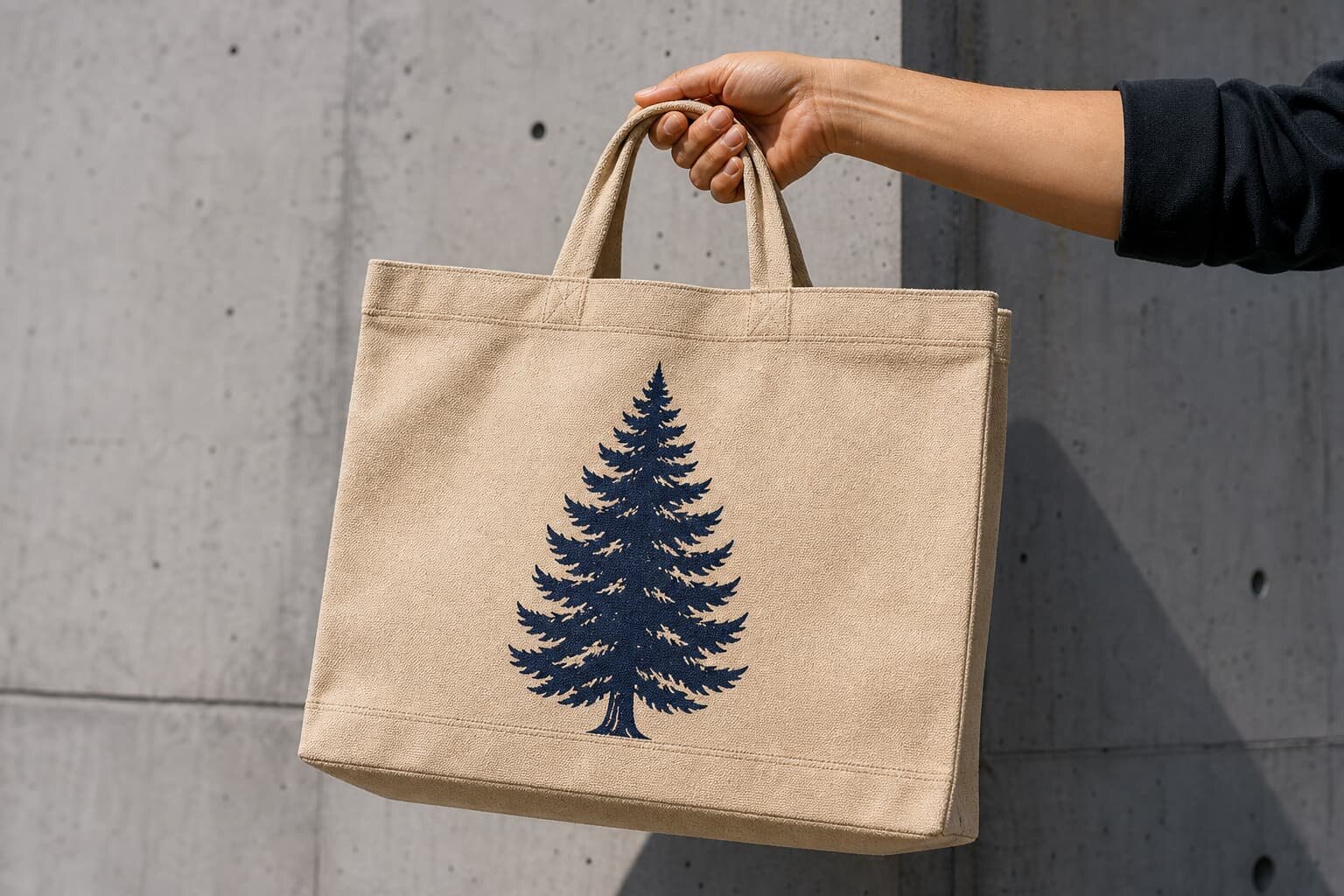
Why a Supplier Audit Matters Before a Heavy Canvas Tote Order
A heavy canvas tote bag looks simple, but the purchasing risk is usually hidden in fabric definition, stitching strength, print compatibility, and packing method. Two suppliers can both quote a natural canvas tote with the same size and logo, yet one may use lighter finished fabric, weaker handle reinforcement, or a cheaper print process that does not survive warehouse handling. A supplier audit is how a buyer checks whether the quote is supported by real production control, not only a low unit price.
For procurement teams, the audit should answer one practical question: can this factory repeat the approved sample at bulk scale with the same fabric, construction, logo result, packing, and delivery plan? The best audit is not a long paperwork exercise. It is a focused review of the decisions that affect cost, quality, and claim risk before deposit is paid.
- Use the audit before placing a first order, changing fabric weight, changing print method, or increasing order quantity.
- Audit both production capability and quote assumptions, because many quality disputes start from an unclear RFQ.
- Treat the pre-production sample as part of the audit, not as a separate decorative approval step.
- Document every approved detail in writing so the supplier cannot substitute a cheaper method during bulk production.
Start With Fabric Weight, Not Only Bag Size
Heavy canvas tote bag quotes should always state fabric weight in a way that can be checked. Many buyers ask for 12 oz, 14 oz, or 16 oz canvas, but suppliers may interpret ounce weight differently. Some quote based on grey fabric before dyeing or finishing, while others describe a market grade without testing. For comparison, 12 oz canvas is often around 400 GSM, 14 oz around 470 GSM, and 16 oz around 540 GSM, but the real number depends on weave density, yarn, shrinkage, and finishing.
During the audit, ask the supplier to show how fabric is received, inspected, stored, and matched to orders. A capable factory should be able to provide a cutting swatch, roll label, fabric inspection record, or at least a clear internal control method. If the supplier cannot explain whether the quoted weight is finished GSM or nominal ounce, you may receive a bag that looks acceptable in photos but feels thinner than the approved sample.
- Ask for fabric weight in both oz and GSM, with a permitted tolerance such as plus or minus 5 percent.
- Confirm natural, bleached, dyed, washed, or pigment-dyed finish because finishing changes shrinkage and handfeel.
- Check whether the fabric is cotton canvas, recycled cotton blend, cotton-poly blend, or another material.
- Require the bulk cutting fabric to match the approved swatch in color, thickness, weave density, and stiffness.
- For dyed canvas, ask how the supplier controls shade variation between fabric lots.
Audit Sewing Capability for Load, Shape, and Repeatability
Heavy canvas totes are often used for books, groceries, bottles, catalogs, samples, and retail merchandise, so handle construction is not a cosmetic detail. The audit should review the sewing line’s ability to handle thick seams, folded top hems, gussets, and reinforced handle attachments without skipped stitches or distorted corners. A factory that mainly sews light nonwoven bags or thin cotton pouches may struggle with 14 oz or 16 oz canvas, especially at cross seams.
Ask to see actual machines and current production if possible. For thick canvas, the factory needs appropriate needles, thread, presser foot setup, and operator experience. A common failure is a neat-looking handle with poor internal seam allowance, or a box-X stitch that does not catch enough handle material inside the top hem. This may pass a quick visual check but fail during customer use.
- Define handle width, handle length, handle drop, and handle fabric weight in the spec sheet.
- Specify reinforcement style, such as cross-stitch, box-X, bartack, or double-row stitching.
- Check stitches per inch and thread thickness against the approved sample.
- Inspect top hem thickness and whether handle ends are securely inserted inside the folded hem.
- Ask for a practical load test method if the tote is expected to carry heavy goods.
Check Logo Process Against the Canvas Surface
Logo printing on heavy canvas needs more attention than printing on smooth fabric. The weave texture can break fine lines, absorb ink unevenly, or make small text hard to read. Screen printing is usually suitable for solid brand logos and simple artwork. Heat transfer may help with gradients or photographic detail, but it can feel less natural on heavy cotton and may not match the buyer’s sustainability preference. Embroidery, woven labels, and sewn side labels can work well for premium programs, but they change cost, lead time, and MOQ logic.
The audit should include a print process review, not only a sample photo. Ask whether printing is done in-house or subcontracted. If subcontracted, confirm how color standards, artwork files, and production timing are controlled. A print strike-off is useful before the full pre-production sample, especially for dark ink on natural canvas, light ink on dyed canvas, or fine-line artwork.
- Provide vector artwork and Pantone references, but accept that canvas texture affects visual color.
- Define logo size, placement from bag edges, print orientation, and tolerance.
- Ask whether print curing time is included in the lead time.
- Check rubbing, cracking, pinholes, ink bleeding, and registration before bulk production.
- Avoid placing detailed logos across seams, folds, or heavy gusset areas unless tested first.
Use MOQ Logic to Detect Weak Quotations
A good supplier can explain MOQ by fabric, color, printing, packing, and production setup. A weak quote often gives one simple MOQ without telling you what drives it. For heavy canvas tote bags, MOQ may change because fabric mills have minimum dye lots, natural canvas stock may be easier to source, and custom color canvas may require higher yardage. Logo method also matters: screen printing has setup cost per color, embroidery has digitizing and machine time, and woven labels may require a separate label MOQ.
During the audit, compare the supplier’s MOQ explanation with your order plan. If you need three bag colors, two logo versions, and individual barcode labels, the real MOQ is not only total pieces. It may be MOQ per color, per artwork, per label, or per carton marking version. Clarifying this before quotation prevents a common problem: the buyer approves a low sample quote, then discovers that the bulk order price increases because the actual SKU split is more complex.
- Ask for MOQ per fabric color, per logo design, per print color count, and per packing style.
- Separate sample cost, setup cost, material MOQ, and bulk unit price in the quote.
- For repeat programs, ask whether unused labels, dyed fabric, or print screens can be held for reorder.
- If testing a new supplier, start with a realistic pilot order instead of forcing an MOQ that creates rushed production.
- When comparing factories, make sure each quote uses the same SKU mix and same packing assumptions.
Sample Review Is Part of the Supplier Audit
The sample stage should prove the factory can interpret the RFQ, not only that it can sew one attractive bag. A blank fit sample can confirm size, gusset, handle drop, and overall structure. A print strike-off can confirm logo method and color direction. A pre-production sample should combine bulk fabric, final construction, final logo, final thread, final label, and final packing. Buyers should not approve a sample made from convenient stock fabric if the bulk order will use different canvas.
A useful audit question is how the factory records sample changes. If the buyer asks for a longer handle, thicker fabric, lower logo position, or different folding method, the supplier should revise the spec sheet and quote if cost or packing changes. Many production mistakes happen when sample comments remain in email threads and never reach the cutting table, print room, or packing line.
- Measure sample width, height, gusset, handle drop, pocket, and logo position with a tape measure.
- Compare sample fabric to the quoted GSM and approved swatch.
- Photograph approved stitch details and print details for later inspection reference.
- Sign or seal the approved sample if possible before bulk production.
- Do not approve bulk production until all sample comments are closed in a revised spec sheet.
Quote Data Buyers Should Require Before Comparing Suppliers
Heavy canvas tote bag quotations are only useful when they include enough data to compare like for like. A low unit price without fabric GSM, bag dimensions, handle specification, print method, packing quantity, carton size, and incoterm is not a complete commercial offer. It is a starting estimate. Procurement teams should force each supplier to quote against the same specification so the price difference shows real efficiency, not missing details.
Ask suppliers to break down the cost drivers that may change after sample approval. This does not mean every factory must disclose full internal costing, but it should explain what is included. For example, the quote should state whether artwork setup, sample charge, print screen charge, label charge, inner packing, export carton, final inspection support, and domestic transport to port are included or excluded.
- Include finished bag size, fabric weight, fabric color, handle size, gusset size, and pocket details.
- State logo method, number of colors, print size, print position, and artwork file requirement.
- Define packing: pieces per carton, individual polybag or bulk pack, barcode labels, and carton marks.
- Request lead time split into sample time, material preparation, bulk sewing, printing, QC, and packing.
- Confirm incoterm, loading port, payment terms, quote validity, and sample cost treatment.
Packing and Carton Details Affect Claims and Landed Cost
Heavy canvas totes can create avoidable freight and receiving problems when packing is not specified. A thicker tote takes more carton space, especially with gussets, heavy handles, inner pockets, or stiff fabric. If the carton is overfilled, the bags may arrive with deep creases, distorted corners, or crushed handles. If the carton is too large or weak, it may collapse during export handling. Packing also affects warehouse labor when barcode placement, carton marks, and SKU separation are unclear.
During the audit, ask how the supplier decides folding method, pieces per carton, carton board strength, moisture protection, and carton weight. For natural cotton canvas, moisture and odor should be controlled carefully. If individual polybags are not required by your channel, bulk packing can reduce plastic use, but the carton must still protect the bags from dirt and compression.
- Define whether bags are flat folded, half folded, rolled, or packed open for premium retail presentation.
- Set maximum carton gross weight based on your warehouse handling rules.
- Confirm carton dimensions early because heavy canvas can increase shipping volume.
- Ask for carton drop resistance or at least a carton strength suitable for export stacking.
- Specify carton marks, SKU labels, barcode position, and any retailer routing requirements.
Lead Time Audit: Where Delays Usually Start
Lead time for heavy canvas tote bags is not only sewing time. Delays often start with fabric sourcing, dyeing, printing approval, label production, or unclear sample comments. Natural canvas may be faster if the supplier keeps stock fabric, but custom dyed canvas or special GSM may need mill scheduling. Multi-color screen printing, embroidery, woven labels, zipper additions, or special retail packing can also add days that are not visible in a simple quote.
Ask the supplier for a production calendar after sample approval. A practical calendar should include material ordering, fabric inspection, cutting, printing or embroidery, sewing, trimming, internal inspection, packing, final inspection, and shipment booking. If the supplier only says production takes a certain number of days without showing the sequence, procurement teams should treat the schedule as approximate.
- Separate sample lead time from bulk production lead time.
- Confirm whether the lead time starts after deposit, after artwork approval, or after pre-production sample approval.
- Ask which materials are in stock and which must be ordered after PO confirmation.
- Build time for buyer sample review, print strike-off approval, and final inspection booking.
- For seasonal retail orders, agree on a cut-off date for artwork, labels, and packing data.
Build Acceptance Criteria Before the Purchase Order
The audit should end with written acceptance criteria. Without clear criteria, final inspection becomes a subjective argument about what is acceptable for a heavy canvas tote. Canvas is a natural material, so minor slubs and texture variation may be normal, but stains, holes, broken seams, wrong logo placement, severe shade difference, or weak handles should not be accepted. Define what matters before production starts.
For professional buying, the acceptance criteria should connect the approved sample, spec sheet, and inspection plan. If you use AQL inspection, identify critical, major, and minor defects. If you do not use formal AQL, at least define measurement tolerance, print tolerance, fabric defect limits, stitching requirements, and packing requirements. This gives the supplier a clear target and gives your inspector a fair standard.
- Set measurement tolerance for bag width, height, gusset, handle drop, and logo placement.
- Classify broken handle stitching, wrong fabric weight, wrong logo, mold odor, and mixed SKU packing as serious defects.
- Allow reasonable natural canvas texture variation but reject stains, holes, heavy weaving defects, and oil marks.
- Inspect goods from multiple cartons, not only top samples prepared by the factory.
- Keep approved sample, signed spec sheet, and packing instruction together for final inspection.
Specification comparison for buyers
| Spec decision | Recommended option | When it fits | Buyer risk to check |
|---|---|---|---|
| Fabric weight | 12 oz to 16 oz cotton canvas, roughly 400-540 GSM depending on weave and finish | Retail totes, promotional premium bags, bookstore bags, grocery totes, event merchandise | Supplier may quote ounces based on grey fabric, not finished fabric; ask for GSM test result and cutting sample |
| Handle construction | Self-fabric canvas handles with cross-stitch or box-X reinforcement | Orders carrying books, bottles, catalogs, uniforms, or heavier retail goods | Weak bartack length, narrow seam allowance, or handle ends sewn only into the top hem |
| Logo method | Screen print for solid logos, heat transfer for gradients, embroidery or woven label for premium detail | Brand programs needing repeat color control and reasonable unit cost | Print cracking on heavy weave, poor ink penetration, wrong Pantone target, or logo distortion across seams |
| Bag body structure | Bottom gusset with side seams overlocked and top hem folded cleanly | Reusable shopping bags, boutique packaging, corporate merchandise | Gusset depth tolerance not defined, bottom corners puckered, or seam allowance trimmed too narrow |
| Sample approval | Pre-production sample using bulk fabric, bulk handles, actual print method, and final packing style | Any first order, rebrand, new fabric weight, or new artwork placement | Approval sample made with stock fabric or digital print while bulk uses different material or process |
| Packing method | Individual polybag only if required, otherwise bulk folded in export carton with moisture control | Retail replenishment, distributor orders, e-commerce kitting, warehouse receiving | Over-compressed cartons causing crease marks, missing inner labels, or cartons exceeding buyer handling limits |
Buyer checklist before sampling
- Confirm the supplier manufactures canvas tote bags in-house or clearly identifies which steps are subcontracted, including weaving, dyeing, printing, sewing, washing, packing, and final inspection.
- Ask for fabric weight in both ounces and GSM, and confirm whether the value is before washing, after washing, or after finishing.
- Request photos or video of fabric roll inspection, cutting table, sewing line, printing area, needle detection if required, and packed export cartons.
- Check whether the factory can produce the exact tote structure you need: flat tote, bottom gusset, side gusset, zipper top, lining, inner pocket, or reinforced base.
- Review handle strength method, including handle width, length, seam allowance, reinforcement stitch shape, and load test target.
- Require one controlled pre-production sample using bulk fabric, final logo method, final thread color, final size, and final packing.
- Compare quotes using the same assumptions for fabric GSM, dimensions, print colors, packing, carton size, inspection level, and incoterm.
- Ask how the supplier controls shrinkage, color difference, canvas slub, print registration, needle holes, stains, and loose threads.
- Confirm realistic MOQ logic by fabric color, fabric weight, logo method, and sewing complexity instead of accepting a vague MOQ number.
- Define acceptance criteria before deposit: measurement tolerance, print tolerance, stain limits, broken stitch limits, carton marking, and AQL or inspection standard.
Factory quote questions to send
- Is the quoted canvas weight based on finished fabric, grey fabric, or nominal market ounce? Please provide GSM range and test method if available.
- What is the exact fabric composition, weave type, yarn count if known, shrinkage range, and finishing process?
- Which production steps are done inside your factory and which are subcontracted, especially printing, dyeing, washing, embroidery, and packing?
- What is the MOQ for this exact fabric weight, color, bag size, logo process, and packing method?
- Can you quote the same bag at 12 oz, 14 oz, and 16 oz canvas so we can compare cost, handfeel, and carton weight?
- What print method do you recommend for our artwork, and what are the limits for Pantone matching, fine lines, gradients, and print size?
- What sample types are included before production: blank fit sample, print strike-off, pre-production sample, or packed sample?
- What is the estimated timeline for material preparation, sample approval, bulk production, internal QC, final inspection, and export packing?
- What are the carton dimensions, gross weight, pieces per carton, folding method, and carton marking layout for this quote?
- What defects are considered critical, major, and minor for canvas tote bags in your internal inspection?
Quality-control points to confirm
- Verify finished bag dimensions against the approved sample, including width, height, gusset, handle drop, pocket size, and logo position.
- Check fabric GSM and handfeel against approved cutting sample, not only against supplier description in the quotation.
- Inspect canvas surface for oil marks, weaving bars, heavy slub concentration, dye streaks, mold odor, and visible contamination.
- Pull-test handles and inspect reinforcement stitching for skipped stitches, thread breakage, seam slippage, and uneven box-X shape.
- Rub-test printed logos when relevant, especially dark ink on natural canvas or light ink on dyed canvas.
- Confirm logo color, size, placement, registration, and orientation before bulk packing begins.
- Check inner seams, overlock quality, top hem folding, loose thread trimming, and corner shape on random samples from different cartons.
- Review packing condition, folding direction, polybag size if used, warning text if required, carton strength, carton tape, and shipping marks.
- Compare final packed quantity against purchase order, carton list, barcode requirements, and distributor receiving instructions.
- Keep a sealed approved sample and signed spec sheet available during final inspection to prevent subjective disputes.