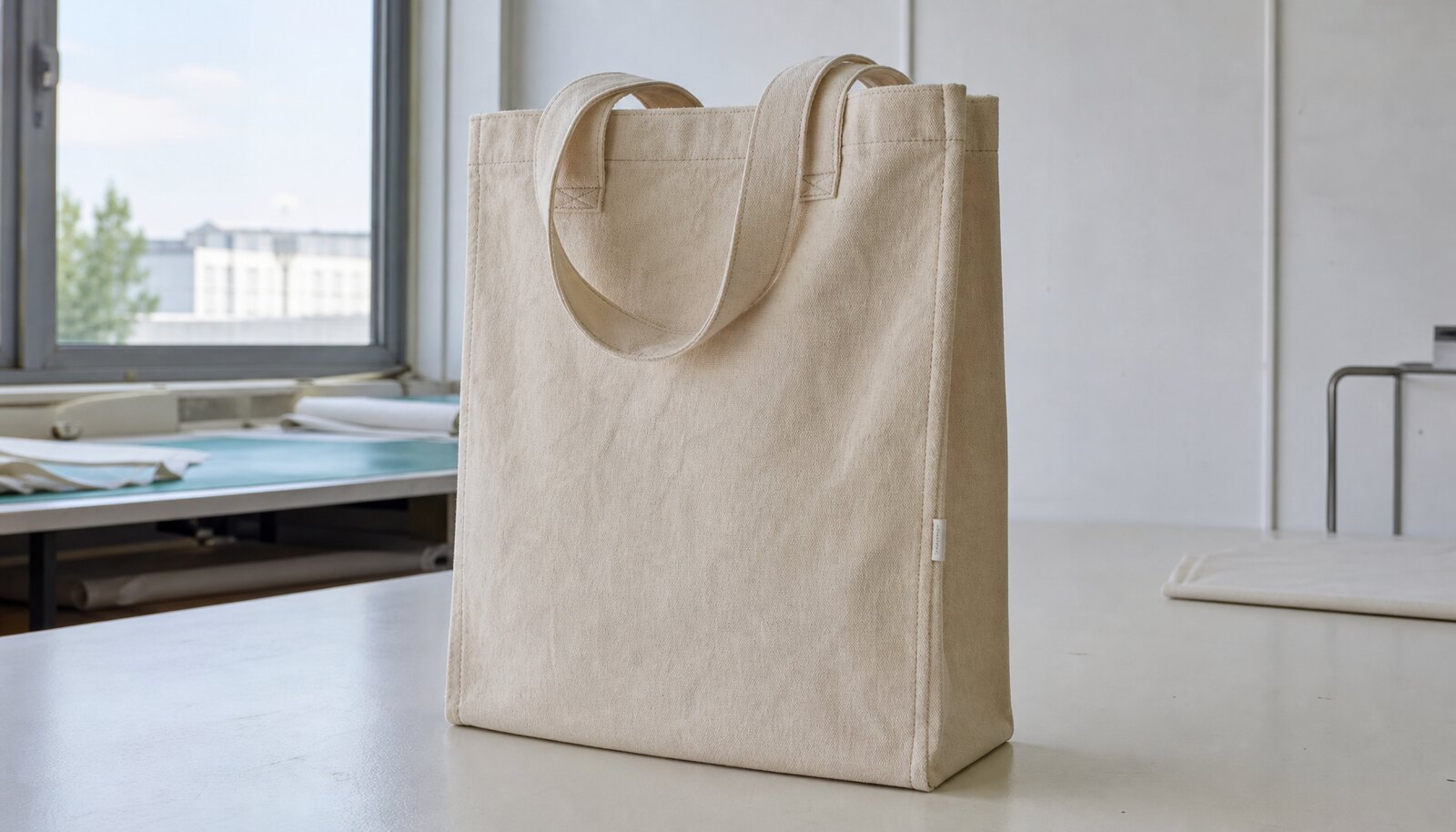
Why sample approval matters more than the first quote
For heavy canvas tote bags, the first quote is only a starting point. It tells you what the supplier intends to sell, not whether they can build a tote that will hold up in retail use. Sample approval is where the commercial promise becomes a controlled specification, and for apparel brands that step is usually more important than the unit price itself.
The reason is simple: a tote can look correct in a photo and still fail once it moves through real buying, packing, and customer use. Fabric that feels strong can still be too soft after print. Handles that look reinforced can still stretch under load. A bag that is visually clean can still arrive with loose threads, uneven seams, or poor carton packing that creates receiving complaints. The sample needs to be treated as the production benchmark, not as a presentation piece.
Buyers should also test the sample against the actual use case. A tote used as a retail purchase bag has different requirements from a gift-with-purchase item or an event giveaway. If the bag needs to hold folded apparel, inserts, or lookbooks, the sample should be checked with those contents inside it. That is the easiest way to see whether the construction, handle length, and packing format make sense before the order is released.
The most useful sample process documents what was tested, who reviewed it, what was approved, and what would trigger a rejection in bulk. If the team cannot point to those records later, the sample approval was too vague to protect the order.
- Use the sample as the production benchmark, not as a marketing prototype.
- Test the tote with the actual contents and carrying conditions it will face in market.
- Write down the sign-off owner, the approval date, and the exact approved sample reference.
Lock the use case before asking for price
A clear use case improves every other sourcing decision. Before requesting quotes, define what the tote is supposed to do. Is it a retail carrier, a premium gift bag, a seasonal launch item, or a bundled packaging component for apparel sales? The answer determines fabric weight, handle strength, print coverage, interior finish, and how much effort can be justified in packing.
This is also where many RFQs stay too vague. A buyer may ask for a heavy canvas tote bag without stating the target load, desired handfeel, print area, or whether the bag must stand upright on shelf. That leaves the supplier free to choose a cheaper construction that technically meets the description but does not meet the brand need. The quote will look competitive, but the comparison is not real because each factory may be pricing a different product.
A good sourcing brief gives the supplier enough detail to price the right version. Include target dimensions, intended contents, whether the bag should be structured or relaxed, whether the tote must fold flat, and whether the bag is meant to be resold, given away, or inserted into another apparel order. If the tote is seasonal, you should also state the launch date and the latest approval date. That helps the supplier judge whether the program fits stock fabric or requires a longer production cycle.
When the use case is defined early, the quote becomes more useful. It becomes easier to compare unit cost, lead time, and risk rather than comparing vague promises.
- Define the tote's job first: retail carrier, gift item, campaign giveaway, or packaging insert.
- State the expected load, fold size, and whether the bag must stand upright.
- Put the launch date and final approval deadline in the RFQ if the tote is tied to a calendar.
Choose canvas weight and fabric finish with repeatability in mind
For apparel brands, fabric weight is one of the biggest drivers of both perception and repeatability. In many retail programs, 12 oz to 14 oz canvas is the safest starting point because it gives enough body for a structured look without becoming difficult to sew or unnecessarily heavy on freight. Ten-ounce canvas can work for lighter-value or promotional programs, but it usually reads as less premium unless the construction is very clean. Sixteen-ounce canvas can feel excellent, but it can also raise cost and make stitching more demanding.
Finished GSM or ounce weight matters more than the label alone. Two suppliers can both call a fabric 12 oz and still produce different results if one uses a looser weave or a different finishing process. Ask for the finished weight, weave description, shrinkage expectation, and whether the cloth is greige, pre-shrunk, washed, or bio-finished. If the supplier cannot describe those points clearly, the quote is not yet procurement-ready.
The finish should match the brand position. A crisp retail tote generally benefits from a stable weave and controlled shrinkage. A washed or softened look can be acceptable if the brand wants a more relaxed feel, but then the buyer needs to understand how the finish changes size stability, print clarity, and panel shape. This is especially important if the bag must look consistent across multiple reorders.
For bulk approval, the sample and production cloth should be the same whenever possible. If the sample is made from one cloth and bulk from another, the approved result is not a reliable production standard. That is a common source of avoidable disputes.
- 12 oz to 14 oz is usually the safest band for structured retail totes.
- 10 oz can work for lighter programs, but it usually feels less substantial.
- Ask for finished GSM, weave type, and shrinkage expectation, not only the nominal weight.
Match construction to carrying load and retail role
A tote's construction should match its intended use, not just its target price. An open-top bag with simple side seams is usually the lowest-cost and fastest-to-produce option, which can be fine for certain campaigns. But if the tote needs to carry folded apparel, inserts, or heavier customer purchases, the bag may need a gusset, stronger seams, or additional internal finishing to hold shape and reduce failure risk.
Every added feature changes the commercial profile. A gusset increases capacity but also increases cutting and sewing sensitivity. A lining improves presentation and can protect contents, but it adds labor and more inspection points. A zipper, snap, or magnetic closure can make sense for premium or travel use, but it introduces hardware sourcing and another possible defect source. Buyers should ask which features are functional and which are only aesthetic, then remove anything that does not support the retail use case.
Handle construction deserves separate attention. The sample should show exactly how the handles are attached, whether the reinforcement is a bar-tack, boxed stitch, cross-stitch, or another approved pattern, and how the inside finish looks at the join. A tote can look impressive from the outside and still fail at the handle root if the reinforcement is too light or the attachment point is too narrow.
The goal is not to maximize features. The goal is to choose the minimum construction that reliably supports the brand's actual use case and commercial target. That keeps the RFQ honest and the sample useful.
- Open-top construction is the simplest and usually the lowest-cost route.
- Gussets improve capacity but raise sewing complexity and inspection sensitivity.
- Lining and closures should be added only when they support a specific retail requirement.
Pick the decoration method by artwork, volume, and durability
Decoration should be selected based on artwork complexity, expected quantity, and the durability standard you need in bulk. Screen print is usually the most practical choice for simple logos or repeat seasonal artwork because it offers strong color, good repeatability, and predictable unit economics once the setup cost is spread across the run. If the design is one or two colors and likely to repeat, it is usually the first method worth quoting.
Digital print and transfer methods are useful when the art is complex or the run is small. They can shorten the sampling path, but a clean-looking sample does not automatically mean the method is ideal for bulk. Buyers should ask how the print behaves on textured canvas, whether it crosses seams or folds, and whether the sample uses the same ink, curing, or transfer process that will be used in production. A sample can look sharp and still fail rub or adhesion expectations.
Embroidery can be a premium choice for small logos or side marks, but it changes the construction risk. Dense embroidery on canvas can cause puckering if the cloth is not stabilized correctly, and large embroidered graphics are rarely the most efficient answer for tote programs. If embroidery is part of the brief, ask for stitch density, backing method, and the exact placement rules so the supplier cannot improvise in bulk.
The key procurement point is consistency. The approved artwork should include placement, size, color reference, and the acceptable registration tolerance. Without those details, the bulk lot can drift even if the sample looked clean.
- Screen print usually gives the best unit economics for simple repeat artwork.
- Transfers are useful for short runs or complex art, but durability should be checked.
- Embroidery works best for smaller marks, not large graphics on textured canvas.
Turn the sample into a pass-or-fail procurement tool
A sample is only useful if it produces a decision. That means the team needs a checklist that goes beyond visual appeal. Design can review the look, but procurement needs a sample that can be compared with bulk, audited later, and used to resolve disagreements. The best practice is to create a pass-or-fail matrix before approval so the team does not end up debating every detail after the bag arrives.
Start by separating defects into three categories. Critical defects are deal-breakers: wrong fabric weight, incorrect dimensions beyond tolerance, handle pullout, major print error, or the wrong construction. Major defects are issues that affect presentation or consistency, such as uneven seam allowance, visible puckering, or label placement that drifts enough to matter. Minor defects are cosmetic issues like small thread ends that do not affect use or retail acceptance. This structure keeps the conversation focused on commercial impact rather than opinion.
The sample record should include the actual measured dimensions, a photo set of key details, and one retained golden sample. If the order is repeated later, the retained sample becomes the comparison standard. It also helps if the approval email states whether the sample is approved as-is, approved with notes, or rejected pending revision. Those three outcomes are easier to manage than loose language like “looks good.”
The most reliable approval process also names the final sign-off owner. In many apparel businesses, design, merchandising, and procurement all care about the tote, but only one person should control the release trigger. Without that, the order can move forward with unresolved exceptions.
- Create critical, major, and minor defect categories before approval.
- Keep one retained golden sample and a photo record of the approved version.
- State whether the sample is approved, approved with notes, or rejected pending revision.
Set QC thresholds that bulk can actually meet
Quality control becomes useful when it is measurable. The supplier should not just be told to make the tote look good; the supplier should be given a specific standard for fabric weight, finished dimensions, stitching, print, and packing. The more measurable the requirement, the easier it is to compare the sample to bulk and spot drift before the shipment leaves the factory.
A practical QC plan starts with dimensions after sewing. Check body width, height, gusset depth if present, handle length, and handle drop. Small components usually need tighter control than large panels, but the exact tolerance should be agreed in writing. Stitch density should also be defined for load-bearing seams, especially at the handle root and top edge. If the bag is supposed to carry folded apparel or gift inserts, the load test should reflect that use case rather than a random test weight that has no commercial meaning.
Print control needs equal discipline. Ask for the allowed registration deviation, the acceptable edge clarity, and the standard for any artwork that crosses seams or folds. The sample may look fine on a flat table, but if the logo is too close to a seam or fold line it can distort in production. The same logic applies to inside finishing. Loose threads, raw edges, and needle damage may not show in a hero photo, but they can create snagging and warehouse complaints.
When bulk arrives, acceptance should be binary. Either the lot matches the approved standard, or it does not. If the issue is minor, document it; if it is major or critical, stop and classify the corrective action before goods enter stock.
- Check finished dimensions after sewing and compare them to the approved tolerance band.
- Require a defined stitch standard on load-bearing seams and inspect the handle root carefully.
- Use a realistic load test and reject seam opening, handle pullout, or excessive twisting.
Use MOQ and lead time as sourcing tools, not just price filters
MOQ and lead time both carry hidden meaning. A low MOQ can be useful for a first test or a small retail program, but it often comes with a higher unit price, less control over fabric sourcing, and less leverage on revision support. A custom spec with more control over cloth, print, and packing usually requires more volume and a longer planning horizon. Buyers should compare what is actually included in the MOQ, not just the number on the quote.
Lead time should be staged across the process. Blank sample, printed sample, pre-production sample, and bulk production do not take the same amount of time. Each stage can fail for a different reason: fabric availability, print setup, sewing line capacity, inspection backlog, or carton packing. If the tote is tied to a launch date, the supplier should also confirm the real production start trigger. Some factories treat verbal approval as enough; others need a signed email and retained sample reference. That difference matters when the schedule is tight.
It also helps to compare commercial options in a practical way. A stock-fabric, blank-body tote may be faster and cheaper to sample, but it may lock the brand into limited color or finish choices. A fully custom tote may better fit the brand, but it deserves a longer approval cycle and a more detailed RFQ. If two suppliers quote similar unit prices, the better decision is usually the one with clearer control of fabric, print, reinforcement, and packing, not the one that simply promises the shortest lead time.
The goal is to prevent the program from being cheap in the quote and expensive in the calendar.
- Treat MOQ as part of the production design, not only as a pricing hurdle.
- Stage lead time by sample type and bulk approval, because each step has different risks.
- Define the production-start trigger in writing so there is no dispute later.
Verify the factory and finalize packing before release
Supplier verification is not a formality. If you cannot confirm where the tote is actually made, bulk quality can drift away from the approved sample without warning. Direct factories usually provide better traceability into sewing, cutting, print, and final inspection. Trading companies can still be useful for multi-category or consolidated programs, but they add an extra layer between the buyer and the actual production line. That means more questions, not fewer.
A useful verification request is practical, not abstract. Ask for photos or video of similar canvas tote work, inside seam finishing, handle reinforcement, and finished packing. Confirm the factory address, whether the print is done in-house or outsourced, and which machines will be used for cutting and sewing. If the supplier cannot explain how the sample was made step by step, the risk is not just quality; it is traceability and repeatability.
Packing should be approved with the same seriousness as construction. Flat-pack instructions need a defined fold size, carton count, carton marks, and moisture protection if the freight route or storage conditions justify it. Polybag use may be unnecessary for some programs and essential for others. The point is to make the packing method intentional, because packing affects freight cost, warehouse efficiency, and the condition of the bag when it reaches the buyer or consumer.
Before release, the approved sample, the spec sheet, the final quote, and the packing instructions should all match. If any one of those documents conflicts, the order is not ready for bulk.
- Verify the actual maker, the factory address, and whether the sample came from the same process as bulk.
- Ask for photos or video of similar tote production, including inside seams and reinforcement points.
- Approve fold method, carton quantity, carton marks, and moisture protection before production starts.
Specification comparison for buyers
| Spec decision | Options to compare | Typical cost / lead-time impact | Buyer acceptance check |
|---|---|---|---|
| Fabric weight | 10 oz vs 12-14 oz vs 16 oz | Heavier cloth usually adds about 5-15% in material cost. If the mill weight is stock, lead time is usually unchanged; custom cloth can add 1-3 weeks. | Ask for finished GSM or ounce weight, not just a marketing description, and approve the handfeel against the retail use case. |
| Fabric finish | Greige / pre-shrunk vs washed / bio-finished | Stable finishes usually have little or no lead-time impact. Special finishing often adds 3-10 days and can increase shrinkage control work. | Approve after any intended washing or finishing step so the bulk lot does not change shape, density, or print clarity. |
| Print method | Screen print vs digital / transfer vs embroidery | Screen printing has setup cost but usually the best unit economics at repeat volume. Transfers reduce setup but can carry durability risk. Embroidery adds 1-2 extra sewing operations and often 3-7 days. | Request a rub or adhesion check where relevant, plus exact placement rules across seams, folds, and pocket edges. |
| Handle reinforcement | Plain top seam vs bar-tack / box stitch | Reinforcement adds small labor cost and usually minimal lead-time impact, but it reduces failure risk in use. | Require a load test using a realistic contents weight and inspect both the inside and outside of the handle root. |
| Closure | Open top vs zipper / snap / magnet | Closures add hardware sourcing, extra sewing steps, and often 3-7 days. They also increase defect risk. | Check alignment, pull strength, and whether the closure changes the bag's usable opening or folded pack size. |
| MOQ route | Stock fabric / blank body vs fully custom spec | Stock components can lower MOQ and speed sampling, but the unit price is often higher and the color / finish control is narrower. Fully custom runs usually need more volume and more time. | Confirm which elements are stock and which are custom: fabric, trim, print, label, and packing. |
| Packing | Flat pack / polybag vs retail fold / no bag | Better packing adds labor but can reduce warehouse damage and customer complaints. Moisture protection is a small added cost with a useful risk reduction. | Approve the fold method, carton count, carton marks, and moisture protection before PO release. |
| Supplier route | Direct factory vs trading company | Direct factories usually offer better traceability and fewer handoffs. Trading companies can simplify multi-item programs but may add response delay. | Verify the actual maker, factory address, and whether the sample came from the same line and process that will make bulk. |
Buyer checklist before sampling
- The tech pack states the fabric construction, finished GSM or ounce weight, and the allowed bulk tolerance band.
- Finished dimensions are approved after sewing, including body width, height, gusset depth, handle length, and handle drop.
- Handle reinforcement is approved on the sewn sample, including the stitch pattern, stitch density, and attachment method.
- Artwork file, print method, Pantone reference if relevant, placement map, and allowed registration tolerance are approved.
- The sample passes a load test based on the actual retail use case, not a generic weight picked for convenience.
- Seam allowance, edge finishing, and thread trimming standards are approved before bulk fabric is cut.
- Label placement, woven tab position, care label orientation, and any side mark are approved with a retained photo reference.
- Packing style, fold method, carton quantity, carton marks, polybag use, and moisture protection are approved in writing.
- Revision count, sign-off owner, and the bulk-start trigger are documented before production begins.
- A retained golden sample and a side-by-side sample photo set are stored for bulk comparison and dispute resolution.
Factory quote questions to send
- What is the exact fabric construction, finished GSM or ounce weight, and allowable tolerance you are quoting for this tote?
- Is the quoted sample made from the same fabric, finishing process, print method, handle reinforcement, and packing method that will be used in production?
- What is the MOQ by color, artwork version, label application, and construction type, and how does price change at different volume tiers?
- How many sample rounds are included, and which changes trigger a new sample charge or new tooling cost?
- What are the lead times for blank samples, printed samples, pre-production samples, and bulk production after final approval?
- What inspection standard do you use for stitch count, seam allowance, print registration, size tolerance, and needle damage?
- Which steps are done in-house and which are outsourced for cutting, printing, sewing, and final packing?
- Can you share photos or video of a similar tote run, including inside seams, reinforcement points, and finished carton packing?
- Can you identify the actual factory location and confirm whether the sample came from the same site and line that will produce bulk?
- What carton size, piece count, and gross weight are included in the quote, and do you apply any moisture protection or polybag spec?
Quality-control points to confirm
- Fabric GSM or ounce weight should stay within the agreed tolerance band, and the approved sample should be the benchmark for bulk handfeel.
- Finished dimensions should be checked after sewing, not just at cut stage; many brands use a small tolerance band for handles and a slightly wider one for body panels, but the number must be written into the spec.
- Stitch density should be consistent on load-bearing seams, with no skipped stitches, broken thread, or loose loops at the handle root and top edge.
- Seam allowance should stay even enough that the tote does not twist, bow, or shift print placement after sewing.
- Handle attachment should use the approved reinforcement pattern, and the inside of the bag should be inspected for exposed needle holes, raw edges, or frayed corners.
- Print should stay legible across weave texture, seam crossings, and fold lines, with registration inside the agreed tolerance.
- Load testing should use a realistic contents weight and should not show handle pullout, seam opening, or excessive body twist.
- Labels and brand marks should match the approved placement, orientation, and size consistently across cartons.
- Packing counts should be verified carton by carton, with no mixed SKUs, missing pieces, or unapproved substitutions.
- If bulk output differs from the golden sample, classify the issue as critical, major, or minor before deciding on rework, remake, partial acceptance, or rejection.