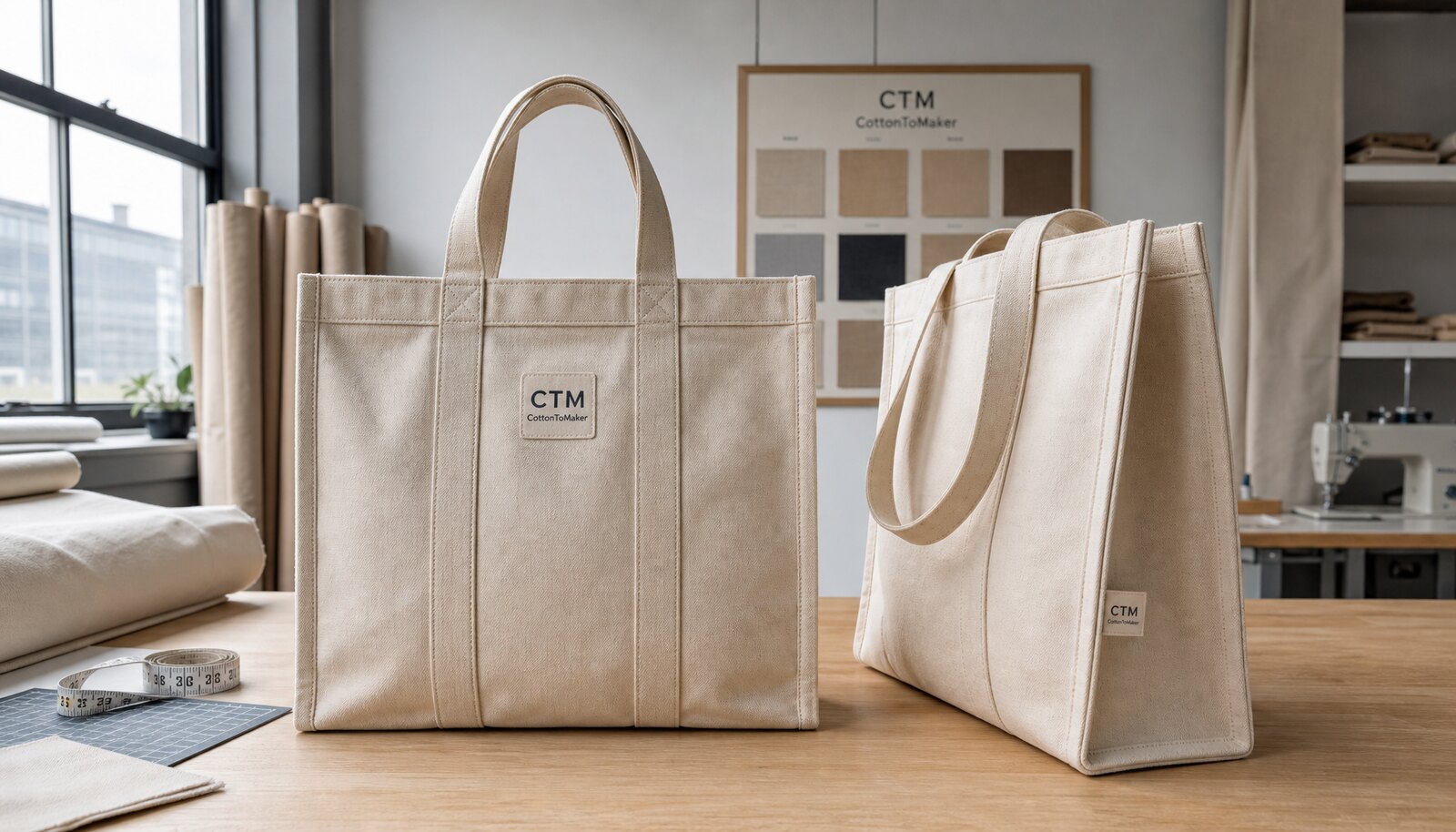
Start with the job the tote must perform
A useful RFQ starts with the store use case, not the artwork. Heavy canvas grocery totes for zero waste shops do different work from fashion totes or event bags. They carry refill jars, produce, bottles, and mixed pantry goods. They also need to survive repeated handling at the counter, in the basket, and in the customer's car. If the buyer does not define the tote's job, the supplier will fill in the gaps with its own assumptions, and the quote will be built on guesses.
The first decision is the commercial role of the bag. A retail SKU needs cleaner finishing, better carton presentation, and a spec that stays stable across reorders. A checkout carrier needs load strength and quick replenishment. A staff utility bag may need less decoration but more durability. Once that use case is fixed, the rest of the procurement file becomes easier to compare because the suppliers are quoting the same problem instead of similar-looking products.
- State the primary use: retail product, checkout bag, gift, or utility tote.
- Name the heaviest item the bag must carry without seam or handle failure.
- Specify whether the tote must stand upright, fold flat, or fit a display box.
- Record whether the buyer wants a bag for daily carry or occasional use.
Choose fabric weight and structure for actual grocery loads
Canvas weight is only useful when it is tied to function. Two suppliers can quote the same oz or GSM and still deliver different behavior if one uses a denser weave, a different finish, or a weaker seam build. For grocery programs, the bag needs to hold shape when empty, resist slumping when loaded, and avoid transparency or thin spots under light. That is why fabric weight should be treated as one input, not the entire spec.
For premium grocery use, a 12 oz to 14 oz canvas body is a practical place to start because it usually gives better body, better shelf appearance, and more forgiveness when the bag is repeatedly loaded. Lighter 10 oz to 11 oz cloth can work when the tote is meant for produce, dry goods, or lighter daily carry, but it should be tested in the finished construction. Flat base and gusset decisions matter as much as the cloth weight because a strong fabric can still collapse if the pattern is too loose or the base is poorly reinforced.
- Write the target fabric weight in GSM or oz and make the lot tolerance explicit.
- Capture whether the cloth is greige, dyed, washed, or pre-shrunk.
- Choose a base structure that matches the load: flat, gusseted, or boxed.
- Check how the tote behaves when filled, set down, and folded after loading.
Match supplier type to the order profile and region
Supplier selection should follow the order profile, not a generic lowest-price rule. A direct factory is the cleanest fit when the buyer cares about repeatability, because cutting, sewing, and packing sit under one control structure. That makes it easier to trace defects back to a specific operation. A factory with stock canvas can be efficient for simple, repeatable shapes, but the buyer still needs to prove that the blank tote and the printed tote share the same body construction and finish.
Region matters because it changes cost drivers and risk. Large Asian factories usually offer the best scale for standard canvas totes, but freight timing and sample cycles need tighter planning. Turkey or nearby Mediterranean suppliers can shorten transit for European buyers and support smaller replenishment runs, though price sensitivity shifts toward labor and finishing. Mexico, Central America, or domestic North American suppliers can be useful when speed, tariff exposure, or low inventory are more important than absolute unit cost. Trading companies are useful only when they can name the actual plant and define who owns claims, rework, and replacement stock.
- Use a direct factory when process control and reorder stability matter most.
- Use a stock-fabric program when the shape is standard and the print is the main variable.
- Use a regional supplier when transit time or tariff exposure is the main constraint.
- Treat trading companies as coordinators, not as the source of quality accountability.
Request documents that show the factory can hold the spec
Catalog photos do not prove production capability. Buyers need documents that describe the exact tote being quoted. A useful spec sheet names the canvas weight, construction, handle build, print method, measurement points, pack count, and tolerance targets. If the supplier will not state those details in writing, the quote is not ready for comparison. The point is not paperwork for its own sake; it is to make sure that the same tote is being priced, sampled, and eventually received.
Process ownership matters as much as the product sheet. If sewing happens in one site, printing in another, and packing in a third, the buyer should expect more variation and should require tighter final inspection. Ask for in-house versus outsourced process flow, the actual factory name, and at least one recent photo set from the production floor. A supplier that can show cutting markers, sewing lines, carton labels, and a completed production carton is easier to manage than one that only answers in broad terms.
- Collect a product spec sheet with construction, dimensions, and print method.
- Record whether cutting, sewing, printing, and packing happen in one plant or across sites.
- Ask for line photos and carton markings from the actual production environment.
- Request a recent inspection summary or defect report for a similar tote.
Approve the sample as a control standard, not a visual example
The pre-production sample should become the control standard for the order. That means the buyer measures it, loads it, and records it before giving approval. Body width, height, gusset depth, and handle drop should be measured on the same sample, using the same method that will be used on production units. If the sample drifts outside the agreed range, the pattern needs correction before bulk sewing starts. A tote that only looks acceptable on a table can still fail when it is put into service.
Functional testing should reflect real use. Load the bag with groceries or equivalent weight, then check handle pull, seam behavior, and base stability. Fold the tote along its normal retail fold and see whether the print cracks, the edges curl, or the body distorts. If the bag will be washed or exposed to damp handling, run that test before approval. The sample is not only a shape reference. It is the proof that the construction can survive the retail environment.
- Measure critical dimensions before sample approval and keep the record with the PO file.
- Load-test the sample with real items or a defined equivalent weight.
- Check handle pull, base flattening, and seam behavior under use.
- Retain the approved sample or a marked reference unit for production comparison.
Use QC thresholds that can be passed or failed on the floor
A useful quality plan needs hard thresholds, not only general language. Separate defects into critical, major, and minor categories before production starts. Handle attachment failure, open seams, severe print misplacement, and dimensions outside tolerance are major or critical because they affect use and brand presentation. Loose thread ends, minor fold marks, or small cosmetic variation can stay in the minor bucket if they do not change performance. If every issue is treated the same, the supplier has no clear boundary for release.
Buyers should also define test methods. One practical incoming check is a static load test using a filled bag at the approved working load for 60 seconds. Any visible seam opening, handle slippage, or distorted base is a fail. For stitches, the buyer should count the density on the approved sample and verify the same look on production units, especially at handle ends and base seams. For print, the minimum standard should include rub testing and a fold test on the actual canvas weight. If ink transfers, flakes, or cracks across the logo strokes, the lot should not be released.
- Classify defects before production: critical, major, or minor.
- Use a static load test at the agreed working load for 60 seconds.
- Reject any visible seam opening, handle slippage, or base distortion during load testing.
- Run rub and fold tests on the actual tote canvas, not only on proof paper.
- Treat missing reinforcement, serious misprint, and size drift as release blockers.
Inspect the tote the way a shopper will use it
Inspection should focus on the parts that carry stress in real use. The handles and base are the first places to fail, so they need the strongest attention. Check whether the reinforcement matches the approved build, whether the bartacks or box-X stitches are placed correctly, and whether the seam lines are clean and closed. The buyer should sample from multiple cartons, not just the top layer of the first carton. Top-picked units can hide an uneven sewing run or a packing issue deeper in the lot.
Print placement also needs a use-based check. A logo can look centered in a flat photo but appear off once the tote is filled and handled. Measure the print from the top edge and from the side seam, then compare both sides if the print is double-sided. If the tote uses a woven label or sewn patch, inspect the stitch cleanup around the label so it does not create a snag point. The goal is not cosmetic perfection. The goal is a consistent, retail-ready tote that behaves the same way across the shipment.
- Inspect handles, base seams, and side seams first.
- Pull sample units from multiple cartons and multiple carton layers.
- Measure logo position from fixed edges, not from visual center alone.
- Check label finishes so edges do not snag or curl.
Choose decoration and branding methods that survive retail use
Decoration should be chosen with the tote's life cycle in mind. For many zero waste shop programs, a one-color screen print or a sewn label is the lowest-risk option because it is durable, easy to repeat, and less sensitive to setup drift. If the design is more complex, the buyer should require a strike-off or pre-production print on the actual canvas weight. Artwork that looks sharp on paper can behave differently once it lands on a coarse woven surface.
The approval focus should be registration, opacity, and durability. A multi-color print can be acceptable, but it demands more control over alignment and curing. The buyer should specify whether the print must stay soft, whether the bag will be folded for shelf display, and whether the tote is expected to be washed. If the decoration cannot survive the expected handling cycle, it is the wrong process even if it looks good on day one.
- Select the decoration method before quoting so the factory prices the right process.
- Require a strike-off or decorated sample on the actual canvas weight for complex artwork.
- Check alignment, opacity, and edge cleanliness after folding and rubbing.
- Set a rule for whether the print must tolerate washing, moisture, or repeated folding.
Control packing, carton load, and retail presentation
Packing is part of product quality. Heavy canvas totes can arrive crushed, wrinkled, or bent if the fold style and carton specification are weak. Buyers should decide whether each tote ships naked, tissue-wrapped, polybagged, or with a hangtag and barcode. That choice changes retail handling, warehouse receiving, and the risk of scuffing. For zero waste shops, the packaging decision often carries brand sensitivity, so it should be settled before the factory starts packing.
Carton design matters because it affects both freight and warehouse labor. A carton that is too heavy slows receiving and can damage the bag during repacking. A carton that is too loose can shift the bags and mark the print. Ask for carton dimensions, gross weight, and the fold direction that keeps the print face from rubbing against seam allowances. If the supplier proposes palletization, require moisture protection and clear carton markings for SKU, color, size, and PO reference.
- Set the fold direction so the print face does not rub against seams.
- Choose naked, tissue, polybag, or hangtag packing based on retail presentation.
- Keep carton weight and cube compatible with warehouse handling limits.
- Require clear carton labels for SKU, color, size, and purchase order.
Compare lead time and landed cost on identical assumptions
Lead time should be broken into discrete stages so the buyer can see where the schedule can slip. Sample approval, fabric booking, cutting, sewing, printing, packing, and dispatch are not the same thing. When a supplier gives only one total number, the buyer cannot tell whether the risk sits in raw material sourcing or in line capacity. A better quote shows the timeline by stage and makes the production bottleneck visible before the order is placed.
Landed cost also needs matching assumptions. Two quotes are not comparable if one uses stock canvas, one assumes mill-order fabric, one includes cartons, and one does not. Buyers should compare unit price only after the fabric weight, decoration method, packing method, and freight assumptions are aligned. If the cheapest offer creates rework, air freight, or customer complaints, it is not the lowest-cost choice. For procurement, the target is the lowest reliable total cost for a tote that meets the retail and quality standard.
- Break lead time into sample, production, inspection, packing, and dispatch.
- Compare quotes only after fabric, print, and packing assumptions match.
- Include cartons, local trucking, and freight in the landed-cost view.
- Treat unusually fast promises as a risk until the factory shows capacity and process control.
Specification comparison for buyers
| Spec decision | Recommended option | When it fits | How to verify supplier claims |
|---|---|---|---|
| Direct factory with in-house cutting and sewing | Best for repeatable grocery tote programs | Use when you need stable dimensions, one accountable production line, and clear defect ownership | Request process photos, line capacity, and the name of the person signing off final cartons |
| Factory with stock canvas and custom print | Fastest route for standard tote shapes | Use when the body pattern is simple and the main variable is logo or color | Confirm the blank and printed tote use the same fabric lot, stitch pattern, and wash finish |
| Trading company managing multiple plants | Useful for mixed programs or smaller buys | Use when you need flexibility across colors, packaging, or finishing methods | Ask for the actual factory name, subcontracting policy, and who pays for rework |
| Regional printer or decorator buying blanks | Good for urgent replenishment | Use when freight speed and local service matter more than the lowest unit cost | Check blank tote seam strength and whether curing distorts the body or print |
| 12 oz to 14 oz canvas body | Preferred for premium grocery use | Use when the tote must hold jars, bottles, and mixed loads without slumping | Require fabric weight by GSM or oz plus the supplier's stated lot tolerance |
| 10 oz to 11 oz canvas body | Lower-cost option for lighter baskets and dry goods | Use when the bag is not expected to carry heavy bottle loads | Test loaded shape retention, base stability, and seam behavior after folding |
| Reinforced handles with bartack or box-X stitching | Recommended for frequent retail carry | Use when the tote will see repeated load cycles or heavier items | Inspect handle fold width, reinforcement pattern, and pull-test results on a finished sample |
| One-color screen print or sewn label | Lowest-risk decoration choice | Use when the program values durability and controlled setup | Review ink coverage, edge sharpness, and adhesion on the actual canvas weight |
| Multi-color or full-art print | Only when brand impact justifies tighter control | Use for launches or campaign bags with enough lead time for proofing | Check color match, registration, and flex-crack behavior on the approved strike-off |
Buyer checklist before sampling
- State the tote's job first: checkout carrier, retail product, membership gift, or staff utility bag.
- Write the target carry load into the spec, including the heaviest common grocery item.
- Lock finished dimensions, handle drop, gusset depth, and whether the tote must stand upright.
- Choose the fabric weight and note whether the cloth is greige, dyed, washed, or pre-shrunk.
- Select the decoration method before pricing so the quote includes the right setup and curing steps.
- Require a pre-production sample from the same fabric, thread, print, and packing method as the order.
- Set dimensional tolerances and the sample measurement method before sample approval.
- Define pass/fail rules for seams, handles, print placement, shrinkage, and carton condition.
- Specify carton pack count, carton size, gross weight, and retail labeling needs.
- Capture defect photos and counts by defect type for any rejected sample or shipment.
Factory quote questions to send
- What exact canvas weight are you quoting, in GSM or oz, and what lot tolerance do you hold in production?
- Is the cloth pre-shrunk or washed, and what dimensional change should we expect after the agreed test cycle?
- What is the finished build: single layer, lined body, bottom gusset, boxed base, or flat construction?
- How are the handles built, and what reinforcement do you use at each attachment point?
- Which print method is included, how many colors are covered, and what setup charges apply if artwork changes?
- What minimum order applies by size, color, and artwork version, and can variants share one production run?
- Which dimensional tolerances do you guarantee for width, height, gusset depth, and handle drop?
- What inspection standard do you use for sewing, print placement, and visual defects, and can you share the acceptance rule?
- Can you provide a pre-production sample, photos from the actual line, and one recent inspection record for a similar tote?
- What carton pack count, carton dimensions, palletization method, and moisture protection do you recommend for export or regional delivery?
Quality-control points to confirm
- Fabric weight matches the approved spec within the supplier's stated tolerance, or within +/- 5% of the approved sample if no published tolerance exists.
- Canvas weave is even, with no holes, broken yarn clusters, thin streaks, or visible weak patches when held to light.
- Finished width, height, and gusset depth stay within the agreed tolerance, typically +/- 0.5 cm on smaller bags and no looser than +/- 1 cm on larger formats.
- Handle length and handle drop match each other within 0.5 cm, and both handles sit level on the bag.
- Seams are straight and fully closed, with no skipped stitches, open seam sections, or puckering at stress points.
- Stitch density is consistent on the body and handle attachments, and the finished bag matches the approved sample construction.
- Handle reinforcement uses the approved method, such as bartack or box-X, and covers the full stress area at each end.
- Print placement stays within 5 mm of the approved position, with no obvious tilt, ghosting, or color mis-registration.
- Printed areas pass a dry rub test and a fold test without visible cracking, flaking, edge lift, or transfer to the test cloth.
- If shrinkage is part of the contract, the finished bag stays within the agreed limit after the specified wash, steam, or moisture test.