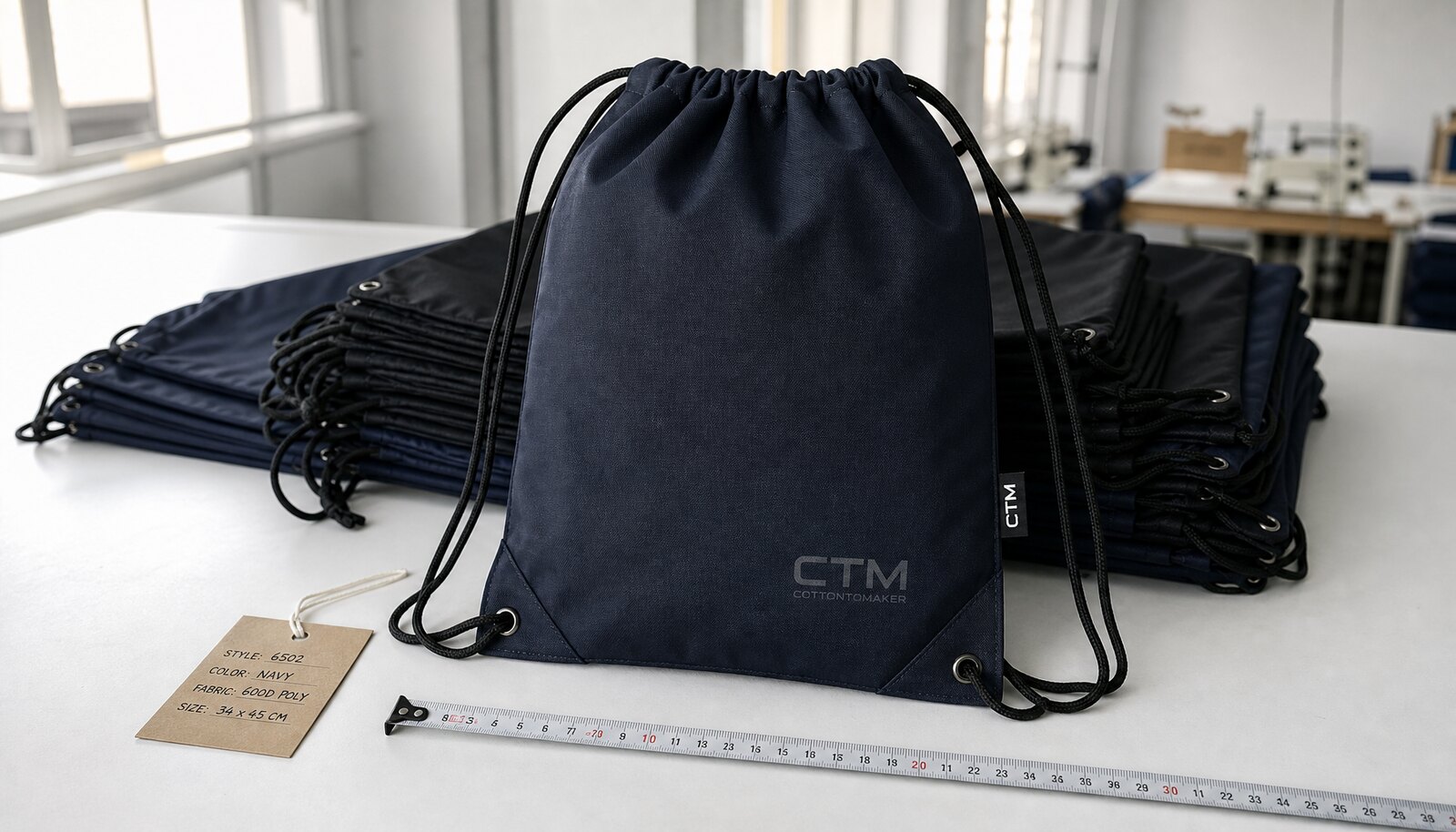
Why event buyers choose gym drawstring backpacks
Gym drawstring backpacks work well for events because they are light, easy to pack, and cheap to move compared with structured bags. For race kits, fitness activations, school sports days, and trade show giveaways, they create usable carry volume without adding much freight weight. That matters when the bag is part of a larger kit and the buyer is trying to keep the landed cost under control.
The real sourcing problem is not the bag shape. It is matching the bag to the event load, decoration method, and schedule. A bag that looks fine in a sample room can fail in the field if the fabric is too soft, the cord is too thin, or the logo breaks up when folded and stuffed. Buyers need a spec that the factory can repeat, not just a nice-looking sample.
- Best for lightweight event kits, shoes, towels, brochures, and branded merch.
- Usually easier to print and pack than tote bags with lining or structure.
- The lowest unit price often comes from simple construction, not from cutting fabric weight too far.
Start with the use case, not the artwork
Before requesting quotes, define what the bag must carry and how long it needs to last. A participant bag for one-day events can usually use 210D polyester or similar light fabric. A bag for gym members or retail resale often needs better texture, stronger seams, and a more stable print surface. If the bag may be reused many times, the construction standard should move up, even if the artwork stays simple.
Size also affects the quote more than many procurement teams expect. A wider bag uses more fabric, but the bigger hidden cost is often the reinforcement needed at the top edge and corner stress points. If the event pack includes a water bottle, towel, and spare shirt, a small format will create complaints later even if the price looked attractive on paper.
- Event giveaway: optimize for price, fast print, and simple folding.
- Participant kit: prioritize usable capacity and seam strength.
- Retail or member gift: prioritize fabric hand-feel, print durability, and repeatability.
Fabric choices that change cost and performance
For gym drawstring backpacks for events, 210D polyester is a common base option because it balances cost, weight, and printability. It is usually light enough for mass distribution and strong enough for normal event use if the corners and top hem are reinforced. If the buyer wants a slightly firmer hand or better resistance to creasing, 300D polyester is a practical step up. For more premium programs, 600D polyester panels can improve appearance, but they increase material cost and freight weight.
Fabric spec should be written in a way the factory can measure. If the supplier quotes polyester without denier, coating, or GSM reference, two bags that look alike can be built from very different cloth. For RFQs, include fabric weight or denier, finish, and whether you accept stock colors or need a custom-dyed shade. If water resistance matters, state whether you need light splash resistance or a coated surface, because that changes both cost and print behavior.
- 210D polyester: common event choice, low cost, easy to fold and pack.
- 300D polyester: better body, slightly more premium appearance, more stable under print.
- 600D polyester: stronger visual presence, but higher cost and freight impact.
- Ripstop fabric: useful when puncture resistance matters, but confirm print results on the texture.
Print method comparison for event branding
The print method should follow the artwork, not the other way around. For one- or two-color event logos with bold shapes, screen printing usually gives the best cost-to-clarity ratio at scale. It also tends to be the simplest to approve if the buyer wants a clean white logo on dark fabric. When the artwork has gradients, sponsor details, or multiple colors, heat transfer or digital transfer may be more practical, especially for smaller batches.
The tradeoff is durability and consistency. Screen print can look strong, but on soft polyester it still depends on ink type, fabric tension, and curing control. Transfer methods can reproduce more detail, yet some fail later if the adhesive layer cracks during repeated folding. Buyers should specify the decoration goal: short-life event exposure, repeated gym use, or retail-facing display. That determines which method is acceptable.
- Screen print: best for simple logos and larger volumes.
- Heat/digital transfer: better for complex artwork or smaller runs.
- Embroidery: usually less common on low-cost drawstring backpacks due to cost and fabric distortion.
- Woven label or side label: useful as a secondary brand mark when print area is limited.
Table: sourcing routes compared for event backpack buyers
The same bag can be bought through different sourcing routes, and the route affects risk as much as price. A factory direct quote is usually better for repeat programs because the buyer can control fabric, print, and packing details more tightly. A trader or consolidated sourcing partner can help when the PO includes mixed SKUs, but the buyer needs clearer accountability on fabric substitution and final QC. Local print-on-demand can be useful for urgent events, though the unit cost often rises quickly once volume increases.
Use the comparison below to decide whether your program should start with stock blank bags, custom factory production, or a mixed route. The cheapest quote is not always the cheapest landed result when you include setup charges, carton volume, and rework risk.
How to read a quote so you can compare suppliers fairly
A useful quote should separate the unit bag cost from setup, print, sample, packaging, and freight assumptions. Many buyers get misled when one supplier includes a simple one-color print and another quotes a blank bag only. That is not a real comparison. The RFQ should state the same bag size, fabric spec, print count, packing method, and destination terms so you can compare like with like.
Watch the small-cost items because they move the total more than expected. Screen setup, color matching, carton marks, extra inner bags, and individual folding can each add cost. MOQ logic also matters: if the factory’s true fabric MOQ is higher than the print MOQ, a low quote may only apply to a stock color that does not fit your brand palette. Buyers should ask for a price ladder at 1,000, 3,000, 5,000, and 10,000 units when volume is uncertain.
- Separate blank bag price, print setup, print unit charge, and packaging charge.
- Confirm whether the quote is based on stock fabric or custom-dyed material.
- Ask for price breaks by quantity, not just the first MOQ number.
- Check if the supplier included carton labeling, polybagging, or extra folding labor.
MOQ logic: where event programs save money or get stuck
MOQ should be tied to the production method. If the supplier is using stock cloth and one simple screen print, the MOQ can be relatively low and turnaround faster. If the order needs custom fabric color, custom cord color, or special woven labels, the minimum may rise because the factory must reserve material and setup time. Buyers planning seasonal events should not assume the same MOQ applies across all colors and designs.
One common mistake is splitting an order by event and then discovering each sub-order falls below the factory’s efficient run size. That creates a higher unit cost and can also increase shade variation across batches. If multiple events use the same base bag, it is often cheaper to place one larger production order and split the delivery by carton label or release schedule. This is especially true when the artwork stays the same.
- Lower MOQ usually means stock fabric, limited colors, and simpler printing.
- Custom components usually increase MOQ, lead time, and shade risk.
- Consolidating multiple event dates into one production run usually improves pricing.
Sample approval: what to inspect before mass production
A sample should do more than show the logo. It should prove that the factory can hit the required size, print placement, seam strength, and cord function. Check the bag flat and filled, because some bags look acceptable when empty but distort when loaded. Measure the actual panel size, eyelet spacing, logo position, and cord length. If the bag is for shoes or sportswear, test with a real load and close the bag several times to see whether the top channel binds or pulls unevenly.
For larger orders, the approved sample should become a reference point for production and final inspection. Save a signed seal sample if the event is important or the artwork is sensitive. If you approve from photos only, the risk is higher, especially for color matching and print registration. A good sample process also records what was accepted: fabric weight, cord diameter, label type, and carton packing, so the supplier cannot quietly switch materials later.
- Measure size tolerance against the agreed spec, not against a generic standard.
- Inspect print clarity after folding and light rubbing.
- Test cord pull, corner stress, and top hem stability with a real filled load.
- Keep one signed sample for production reference.
QC thresholds that prevent event-day failures
The failure points on drawstring backpacks are usually predictable: the top hem opens, the eyelet area tears, the cord frays, or the print cracks after handling. Set practical acceptance criteria before production starts. If the bag will be handed out in large volumes, a small cosmetic defect may be acceptable, but functional defects are not. Buyers should distinguish between appearance issues that can be tolerated and structural issues that cannot.
A factory QC plan should cover material, sewing, print, and packing. The most common hidden problem is inconsistent stitching density at stress points. Another is poor print curing, which may not appear in a visual check but shows up when bags are stacked, folded, or rubbed during transport. If the order is for a public event, carton count accuracy matters too, because missing quantities create last-minute shortages that are expensive to fix.
- No skipped stitches at the top hem, side seams, or cord tunnel.
- No mixed shade lots unless the buyer approved an assortment.
- Print should stay sharp after folding and light abrasion.
- Cartons should be counted and labeled by style, color, and PO.
Packing, carton size, and freight cost control
Packing has a direct effect on landed cost. Drawstring backpacks can be packed flat in bulk cartons, which helps reduce volume and freight cost. If the supplier inserts paper or individual polybags automatically, the pack-out may look neat but the added volume can be expensive on ocean or air freight. For event kits, buyers usually need a balance: protect the print, keep the bags flat, and avoid unnecessary packaging layers.
Ask the factory to quote carton details, not just unit price. Carton dimensions, gross weight, and units per carton influence container loading and warehouse handling. If the bags are being shipped to a distributor or kitting center, carton marks should be clear and consistent. For seasonal events, palletization and mixed-carton planning can matter more than a tiny unit price difference because the real cost shows up in labor and scheduling.
- Flat bulk packing is usually the lowest-cost freight option.
- Individual polybags should be justified by print protection or retail presentation needs.
- Carton count accuracy matters for event release planning and warehouse receiving.
- Good carton labeling prevents mix-ups when multiple colors or sizes ship together.
Specification comparison for buyers
| Spec decision | Recommended option | When it fits | Buyer risk to check |
|---|---|---|---|
| Body fabric | 210D polyester or 300D polyester | Short event giveaways, sports activations, and mass mailers where low weight and low cost matter | Too thin fabric can show print strike-through, tear at corners, or look limp after stuffing |
| Premium feel option | 210D ripstop polyester or 600D polyester panels | Retail-linked events, paid participant kits, and branded programs needing better hand-feel and structure | Heavier fabric raises freight and may require stronger cord and seam reinforcement |
| Print method | 1-2 color screen print for large logo areas | High-volume event orders with simple artwork and stable color targets | Fine text, gradients, and small details can blur or lose definition on soft fabric |
| Print method for complex art | Heat transfer or digital transfer | Multi-color branding, sponsor lockups, or variable data on smaller batches | Transfer durability can vary; test rubbing, folding, and wash/abrasion resistance |
| Closure style | Drawcord with metal eyelets and reinforced top hem | General event bags carrying shoes, apparel, brochures, or light sports gear | Weak stitching around eyelets leads to tearing when the bag is overfilled |
| MOQ route | Blank stock with local printing for urgent runs | Tight schedules, last-minute event confirmations, or pilot orders | Stock color availability may be limited and print cost per unit can be higher |
| MOQ route | Custom production from dyed fabric and custom trims | Larger campaigns needing brand color matching and consistent repeat supply | Higher MOQ can trap working capital if event counts change |
| Packing method | Bulk packed in cartons with size labels and inner polybags only if needed | Price-sensitive import programs and warehouse distribution | Loose packing can scuff print; overpacking raises carton volume and freight cost |
| Supplier route | Factory direct for repeat custom programs; trader only when consolidating mixed SKUs | Buyers who need direct control over material, print approval, and QA | Trading channels can hide fabric substitution, unclear lead time, or inconsistent QC responsibility |
Buyer checklist before sampling
- Define the event use case clearly: shoes only, apparel, mixed promo kit, or participant gift, because load expectation drives fabric, cord, and seam construction.
- State the target size in centimeters and usable capacity, not just 'standard size', so suppliers quote the same bag.
- Specify fabric weight, print area, color count, and whether the logo must be on one side or both sides.
- Ask for sewn sample photos showing eyelets, corner reinforcement, and top hem stitching before approval.
- Confirm carton pack-out, inner polybag requirement, and whether bags are folded flat or pre-packed with inserts.
- Get a written lead time split between sample, production, and transit readiness, not one blended promise.
- Require a pre-production sample or signed seal sample for repeat orders above your risk threshold.
- Ask how the supplier handles print alignment, fabric shrink, and cord tension on the final inspection.
Factory quote questions to send
- What is the exact fabric spec, including GSM/denier, coating if any, and whether the quoted price assumes stock cloth or custom woven cloth?
- Which print method is included in the unit price, how many colors, and what are the plate, screen, or setup charges?
- What is your MOQ by fabric color and by print design, and can you offer mixed color packing within one PO?
- What are your tolerances for size, stitch length, color shade, and print position, and can you share the inspection standard?
- How are corners reinforced, what cord diameter is used, and are the eyelets metal or sewn gusset style?
- What is the carton pack count, gross weight, carton size, and whether the price includes master carton marks and shipping labels?
- Can you provide a reference sample or photos of a similar event backpack with the same print method and fabric weight?
- What lead time applies to sample approval, production, and rework if the first sample misses the artwork or color target?
Quality-control points to confirm
- Fabric weight and hand-feel match the approved sample; no visible thinning, skewed weave, or inconsistent coating.
- Stitching at side seams, top hem, and cord tunnel is straight and secure with no skipped stitches or loose threads in high-stress points.
- Eyelets or cord holes are centered and reinforced; pull test should not deform the opening or rip the fabric after repeated tension.
- Logo placement is within the approved position tolerance, and artwork edges are sharp without smearing, cracking, or washout.
- Bag size is within agreed tolerance for width and height, especially if it must fit shoes, towels, or event inserts.
- Cord length is even on both sides, knots are secure, and cords do not slide excessively through the channel.
- Carton count matches packing list, and master cartons are labeled with style, color, quantity, and PO reference.
- No mixed shade lots in the same carton unless the buyer has accepted a deliberate assortment.