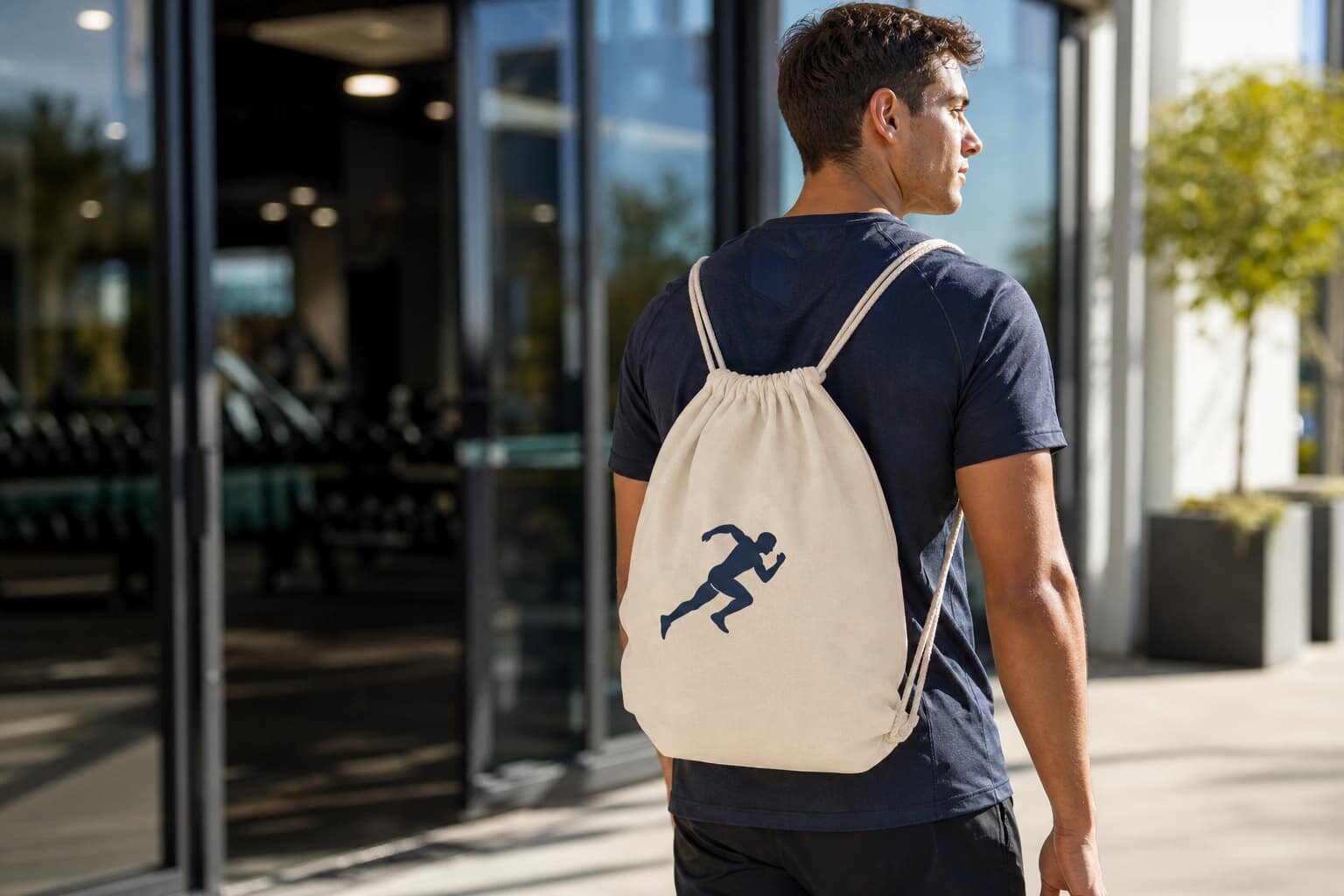
Start With the Bag Spec, Not the Supplier Name
A gym drawstring backpack supplier audit checklist works only if the product spec comes first. A factory can be a strong sewing partner and still be the wrong fit for your program if the bag is too light, the print method is wrong, or the packing format creates avoidable damage. The buyer problem is usually not finding a factory; it is finding one that can make the same bag every time and quote it on the same terms as everyone else.
Before you ask for a price, write the use case in plain language. Is the bag for promo handouts, retail shelves, sports club merchandising, or a heavier daily-carry gym program? That answer drives fabric weight, logo durability, seam reinforcement, and carton packing. If the supplier sees only a picture and a logo, you will get a loose quote that is hard to compare and even harder to enforce later.
- State target user and expected daily load in the RFQ.
- Define size, cord style, print area, and closure details before sampling.
- Ask the factory to quote one complete build, not a bare shell with optional extras.
- Make the approved sample the reference for bulk production and inspection.
Audit Fabric Weight, Not Just Fabric Type
For drawstring backpacks, fabric type is only half the story. A supplier may say polyester, canvas, or nylon, but you still need the actual weight and finish. For a light promo bag, 210D polyester or a similar light woven body may be enough. For a gym bag that carries shoes, towel, water bottle, and accessories, 300D polyester or a heavier woven construction is usually a safer quote to compare. For premium retail or eco-led programs, 10-12 oz cotton canvas can work well, but only if you are ready to manage weight, shrinkage, and a different hand feel.
Do not let denier replace a proper spec sheet. Ask for fabric GSM where relevant, weave construction, coating or lamination if any, and colorfastness expectations. If the bag will see damp clothes or locker-room use, a water-resistant finish may matter more than the raw fabric weight. If the program is brand-sensitive, ask for the same fabric lot or a lot-control plan so shade variation does not appear halfway through the order.
- Request actual GSM or denier and not a generic fabric name only.
- Check whether the quote includes coating, lining, or water-resistant treatment.
- Ask how the factory controls shade consistency across bulk rolls.
- Confirm wash behavior if the bag is cotton or a cotton blend.
Check the Construction Where the Bag Fails First
Most gym drawstring backpack failures show up at the same places: cord anchors, lower corners, top hem, and any stress point where the bag is pulled open and shut every day. A pretty sample can hide weak construction if the stitch density is low or the reinforcement is only cosmetic. When you audit a supplier, ask where load is transferred and what the factory does to keep the cord from cutting through the fabric over time.
A real factory answer should mention bar-tacks, seam allowance, thread type, and how many passes are used at the high-stress points. If the supplier cannot explain those details, they are probably quoting a style they have seen before rather than one they have engineered. For bulk orders, that difference turns into broken bags, customer complaints, and chargebacks.
- Inspect bar-tacks at cord anchors and lower corners on every sample.
- Ask for stitch density and seam allowance in the spec sheet.
- Pull-test the sample with a realistic gym load, not just an empty bag.
- Check that the top hem, cord channel, and side seams are clean and even.
Verify Print and Branding Capability Before You Compare Quotes
Logo method changes cost, lead time, and failure risk more than many buyers expect. Screen print is usually the cleanest route for one to three solid colors on a flat panel. Heat transfer can work for short runs, multiple colors, or artwork that needs sharp detail. Sublimation is useful on polyester when you need full-coverage color, while woven labels, embroidery, or a sewn patch can be a better fit for premium branding. The factory should recommend the method based on your artwork and order size, not just the equipment they have sitting idle.
Ask for the exact print location, size, and file requirement before sampling. A logo that looks good on a laptop screen can fail on a curved drawstring panel if the artwork is too detailed or the placement conflicts with seams and cord channels. You should also ask for wash and rub expectations, because a gym bag is handled often and may be exposed to sweat, damp clothes, or regular wiping.
- Approve artwork size and placement against the actual bag pattern.
- Confirm how many print colors are included and whether setup charges apply.
- Request a strike-off or pre-production sample before bulk print begins.
- Ask whether the logo is on the body, side label, patch, or woven tag.
Use MOQ Logic to Expose Hidden Cost Drivers
A useful supplier audit does not just ask for MOQ; it asks what drives the MOQ. On drawstring backpacks, MOQ can move because of fabric color minimums, print setup, cutting efficiency, accessories, or packaging choices. A factory may quote a low unit price but hide the fact that one logo version, one colorway, or one label change forces a much higher minimum. That is fine if you know it upfront and bad if you discover it after sample approval.
The buyer move is to separate the quote into variables. Ask for MOQ by fabric color, by print method, and by packaging format. If you plan to run several SKUs, see whether the factory can combine them into one fabric lay or one print run. For importers and distributors, this is where the order either stays flexible or becomes expensive fast.
- Ask for MOQ by style, color, and logo version separately.
- Check whether tooling or print screens are tied to one order only.
- Clarify sample charges and whether they are deducted from bulk later.
- Keep one written spec per SKU so the factory cannot blend assumptions.
Ask for Packing Data That Matches Your Sales Channel
Packing is not a side note. It affects damage rate, carton efficiency, warehouse handling, and freight cost. For a gym drawstring backpack, the factory should tell you whether each unit goes into an individual polybag, whether labels sit on the bag or the polybag, and how many units go into each master carton. If the bag has cords that tangle easily, the inner packing method matters as much as the outer carton count. A bad packing spec can deform the bag, crush the print, or leave you with wrinkled product that looks used before it reaches the shelf.
Ask for exact carton dimensions, gross weight, and any moisture-control steps if the shipment will travel by sea. If your channel uses barcodes, request the label placement early so the code is readable and not hidden by folds or polybag glare. If you are shipping retail-ready product, confirm whether the factory can pack by SKU, store set, or mixed assortment without mixing labels or counts.
- Confirm individual pack format, carton count, and carton size before bulk.
- Ask where the barcode goes: polybag, hangtag, carton, or all three.
- Check that packing will not bend cords, flatten prints, or crease labels.
- Request final carton marks and pallet pattern if your warehouse requires them.
Read Lead Time as a Production Schedule, Not a Promise
Lead time only means something if you know what starts the clock. Some suppliers count from inquiry date, some from sample approval, and some from deposit receipt. For a gym drawstring backpack order, the real schedule usually includes artwork approval, fabric booking, sample approval, cutting, sewing, printing, packing, and final inspection. A factory that gives only one number without explaining the steps is usually hiding either capacity limits or process risk.
This matters more during peak season, when the same factory may be serving school programs, sports promotions, and retail replenishment at once. Ask how many lines they run, whether your fabric is already in stock, and which operations are in-house versus subcontracted. If printing is outsourced, or if the carton shop is separate, the schedule can slip even when sewing is on time. A good audit confirms the slowest step, not just the headline date.
- Define lead time from artwork approval and deposit to ready shipment.
- Ask which steps are in-house and which are outsourced.
- Request a milestone schedule for sample, bulk start, inspection, and packing.
- Check whether peak season or color-matching work changes the timeline.
Compare Quotes on the Same Apples-to-Apples Spec
If two factories quote different numbers, that does not automatically mean one is expensive or one is cheap. It often means they quoted different bags. One may include heavier fabric, bar-tacks, branded labels, better packing, or a cleaner print process. The buyer job is to force the comparison back onto the same spec sheet. Without that discipline, procurement ends up chasing the lowest unit number and then paying later in revisions, rework, or freight waste.
The fastest way to compare is to build one simple quote template and require the supplier to answer every line. Ask for fabric, print method, logo count, reinforcement, packing, sample charge, tooling charge, carton data, and Incoterms. If the factory refuses to itemize, treat that as a risk signal. Clear quote data is a preview of how the supplier will handle production data later.
- Separate fabric, sewing, print, packing, and tooling in the quote.
- Check whether the supplier priced the approved sample or a cheaper substitute.
- Ask for carton dimensions and packing quantity so freight can be checked.
- Compare not only unit price but also rework risk, packing efficiency, and consistency.
Run the Supplier Audit Like a Buyer, Not a Visitor
A remote or on-site audit should focus on proof, not presentations. Ask to see the cutting room, printing area, sewing line, in-process QC, and finished-goods storage. You want to know whether the factory can trace a bag from fabric roll to packed carton and whether they can show defect handling, rework rules, and line inspection records. If everything looks perfect only in the sample room, keep digging. The sample room is where the nicest pieces live; production is where the process is proven.
Look for practical red flags: vague answers on fabric weight, reluctance to show rejected pieces, mismatch between sample and bulk construction, or no clear owner for final QC. The best audit question is often a simple one: what would make you stop the line? A supplier who can answer that clearly usually understands production control. A supplier who cannot may still be fine for simple promo runs, but not for a brand-sensitive retail order.
- Request live or in-person proof of cutting, sewing, print, and packing.
- Ask to see rejected units and how the factory records defects.
- Verify that the bulk line can match the approved sample construction.
- Check whether one person owns final release before shipment.
Set Acceptance Criteria Before You Release the Order
The final step is to write down what counts as acceptable. For a gym drawstring backpack, that usually means approved fabric weight, approved logo method, agreed size tolerance, defined reinforcement points, correct carton count, and a golden sample that the factory must match. If you skip this, every problem later becomes an argument about taste. If you define it early, the factory can self-check before packing and your inspector has something objective to compare against.
You do not need an overcomplicated QA manual to get control. You need a clean release rule. The order should not ship until the bulk goods match the sample, the packing matches the spec, and the carton labels match the PO. When procurement and merchandising use the same sign-off standard, supplier comparisons become much easier on the next round.
- Approve one golden sample and treat it as the bulk reference.
- Use clear tolerance bands for size, logo position, and stitch quality.
- Hold shipment if carton count, labels, or artwork deviate from the spec.
- Keep the approved sample, photo record, and quote sheet together for reorders.
Specification comparison for buyers
| Spec decision | Recommended option | When it fits | Buyer risk to check |
|---|---|---|---|
| Body fabric | 210D or 300D polyester with clear GSM/denier spec | Promotional or everyday gym use where weight and cost matter | Quote must state actual fabric weight, weave, and coating; 'polyester' is too vague |
| Premium body fabric | 10-12 oz cotton canvas or heavier woven cotton blend | Retail, lifestyle, or eco-positioned programs that need a sturdier hand feel | Check shrinkage, color variation, and wash behavior before bulk approval |
| Logo method | Screen print for one to three solid colors; heat transfer for short runs; woven label or embroidery for premium trim | When logo durability, color count, and order size differ by channel | Confirm artwork size, placement, wash resistance, and any setup charge |
| Reinforcement | Bar-tacks at cord anchors and lower corners plus reinforced top hem | Gym bags expected to carry shoes, towel, bottle, and small gear | Inspect stitch density, thread quality, and whether the sample matches bulk construction |
| Packing format | Individual polybag with master carton count and barcode label plan | Retail, distributor, and mixed-SKU shipments | Avoid packing specs that crush cords, distort the body, or leave carton marks unapproved |
Buyer checklist before sampling
- Confirm end use, target load, and whether the bag is for promo, retail, or daily gym carry
- Lock body fabric with actual GSM or denier, not a vague fiber name only
- Approve logo method, placement, size, and artwork file format before sample making
- Set size tolerance, cord length, and reinforcement points in the spec sheet
- Ask for a pre-production sample that matches the intended fabric, print, and packing
- Request MOQ by fabric color, logo version, and packaging configuration
- Get lead time stated from artwork approval and deposit, not from inquiry date
- Confirm inner pack, master carton count, carton size, and barcode location
- Require defect photo evidence or inspection records before shipment release
- Compare all quotes on the same sheet so hidden setup, packing, or tooling fees are visible
Factory quote questions to send
- What exact fabric, weight, weave, and coating are you quoting for this gym drawstring backpack?
- What is the MOQ by color, print method, and logo version?
- Can you separate sample charge, tooling charge, print setup, and bulk unit price?
- Which reinforcement points do you build into the bag, and what stitch standard do you use there?
- What print method do you recommend for my artwork, and why is it the best fit for this order size?
- What are your size tolerances for body width, height, cord length, and logo placement?
- How do you pack each bag, how many units go into a master carton, and what carton marks do you use?
- What is the production lead time from artwork approval and deposit to ready shipment?
- What quality checks do you perform before packing, and can you share the checklist or inspection photos?
- What documents will you provide with the shipment, including carton list, final inspection record, and sample references?
Quality-control points to confirm
- Fabric weight and hand feel match the approved swatch and written spec
- Print color, registration, and placement match the approved artwork sample
- Cord length, cord finish, and stopper or knot security are consistent on every unit
- Bar-tacks, seam allowance, and corner reinforcement hold under load test
- No skipped stitches, needle damage, loose threads, oil marks, or fabric holes
- Bag dimensions fall within agreed tolerance after sewing and after packing
- Polybag, label, and carton count match the approved packing sheet
- Bulk production matches the golden sample in construction and appearance