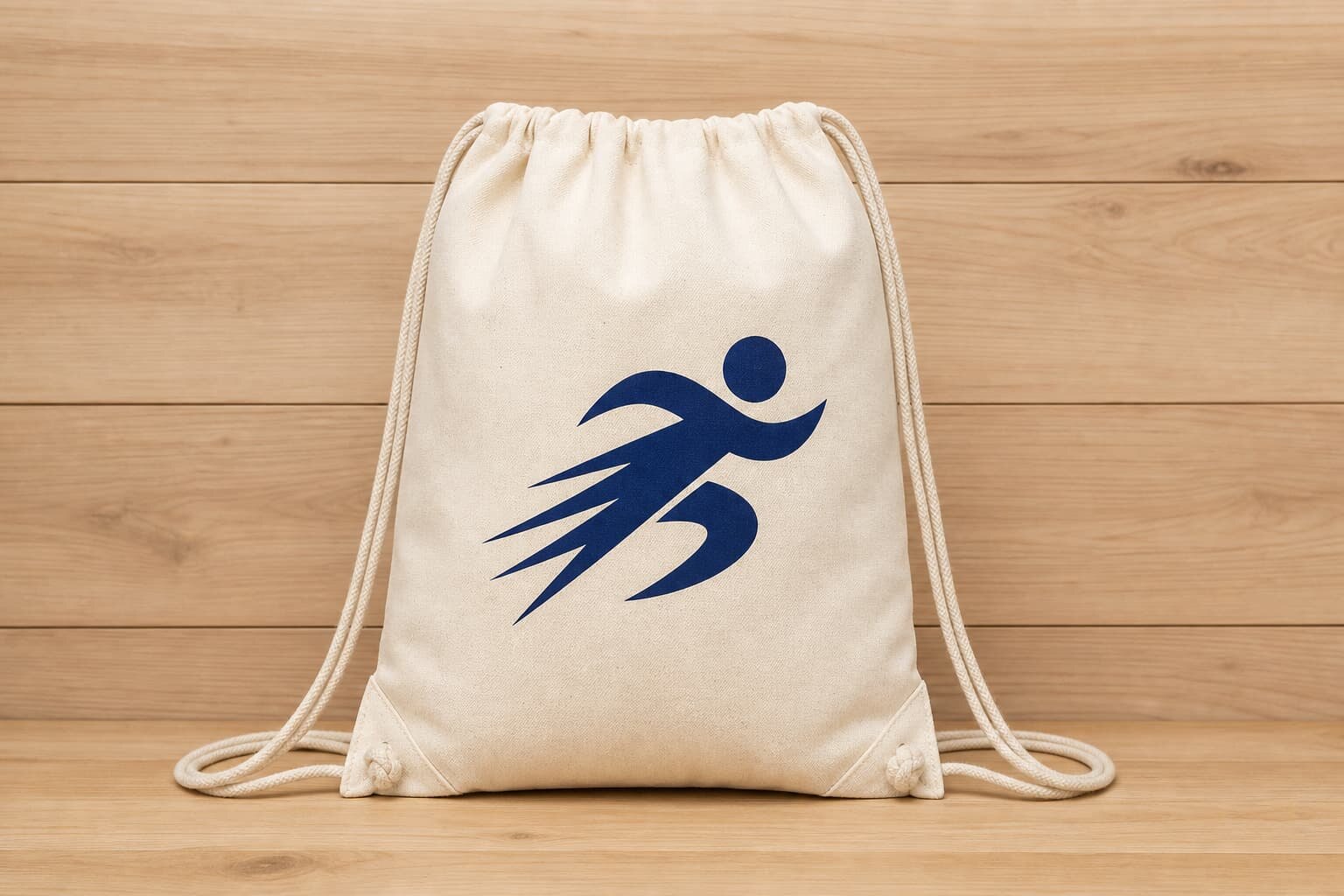
Why Gym Drawstring Backpack Quotes Are Hard to Compare
A gym drawstring backpack looks simple, so many buyers expect the quote comparison to be simple too. In practice, factories can quote the same bag description with very different assumptions. One supplier may price 210D polyester with basic stitching and no eyelets. Another may price 300D polyester with reinforced corners, thicker cord, individual polybags, and a larger screen print. The lower unit price may not be cheaper once you normalize the specification.
The buying problem is not finding a factory that can make a drawstring bag. The problem is making sure every factory quotes the same construction, same logo method, same packing, and same delivery responsibility. If your RFQ says only 'gym drawstring backpack, custom logo, 10,000 pcs,' the factory must guess too much. Those guesses become price differences, sample delays, and arguments during inspection.
- Compare quotes only after fabric, size, cord, logo, reinforcement, packing, and incoterm are aligned.
- Do not treat product photos as specifications; photos rarely show GSM, stitch density, or packing method.
- Ask suppliers to list exclusions, not only included items.
- Keep one master specification sheet and send the same version to every factory.
Start With the Usage Standard, Not the Lowest Unit Price
For gym use, the bag may carry shoes, a towel, sportswear, water bottle, shaker cup, or small accessories. That is different from a one-day event giveaway carrying brochures. Before comparing factory quotes, define the expected load and service life. A bag used for a six-week fitness campaign can be lighter than a retail item sold as a reusable sports accessory.
This usage standard affects fabric weight, cord quality, seam strength, and reinforcement. If you do not define it, a factory may quote a promotional construction to win the order, while your retail team expects a stronger product. The difference may be only a few cents per piece at quotation stage, but it can become a high complaint rate after shipment.
- For short-term giveaways, a light 210D polyester bag may be acceptable if the logo and seams are controlled.
- For gym membership welcome packs, 210D or 300D polyester with reinforced cord exits is usually safer.
- For retail or lifestyle programs, consider heavier polyester, cotton canvas, or blended canvas with better hand feel.
- For youth sports, check cord safety, length, and whether closures meet the market's compliance expectations.
Normalize Fabric GSM, Denier, and Hand Feel Before Price Review
Fabric is the largest cost driver and the easiest area for quote confusion. Polyester drawstring backpacks are often described by denier, such as 190T, 210D, 300D, or 600D, while cotton and canvas options are usually described by GSM or ounce weight. A 6 oz cotton canvas and a 12 oz cotton canvas are both 'canvas bags,' but they do not feel, sew, or cost the same.
Ask the factory to state composition, weight, coating, color source, and whether the fabric is in stock. For polyester gym bags, check whether the fabric has PU coating, water-resistant finish, or no coating. For cotton canvas, ask if it is natural, bleached, dyed, or washed. Natural cotton canvas may show seed flecks and shade variation, which can be acceptable for an eco look but not for a clean corporate uniform program.
- Light polyester: often around 80-100 GSM for simple promotional gym sacks.
- Medium polyester: often around 130-170 GSM for better opacity and stronger hand feel.
- Cotton canvas: often around 200-340 GSM depending on ounce weight and weave.
- Jute or blended natural fabrics: useful for eco positioning but less smooth for sportswear contact.
- Custom dyed fabric: higher MOQ, longer lead time, and color approval risk.
Compare Construction Details That Do Not Show in the Headline Quote
Two gym drawstring backpacks can use the same fabric but perform differently because of construction. The cord channel may be folded once or twice. The side seams may be single stitched or double stitched. Bottom corners may use metal eyelets, stitched tabs, triangle reinforcement, or no reinforcement at all. These details determine whether the bag survives repeated pulling and loading.
When a buyer receives a cheap quote, the first check should be the load-bearing points. The top channel, side seams, and lower cord exits take most of the stress. If the bag is intended for gym use, ask the factory to explain the reinforcement method in writing and show a close-up sample photo. A production drawing or marked sample photo is better than a general product image.
- Specify cord diameter, material, color, and whether the cord is round, flat, braided, or cotton.
- Ask whether metal eyelets are rust-resistant and whether they are tested for pull-out strength.
- For canvas bags, confirm seam allowance because thicker fabric needs enough bite at the stitch line.
- For polyester bags, check whether the edge is hemmed, overlocked, or heat cut to reduce fraying.
- Request bar tacks at stress points if the bag will carry shoes or bottled drinks.
Logo Method Changes Both Price and Production Risk
Most gym drawstring backpack quotes include a basic one-color screen print unless the buyer says otherwise. Screen printing is cost-effective for solid logos and slogans, especially on polyester or cotton canvas. However, it needs artwork separation, screen setup, ink matching, curing control, and correct placement. A large print on flexible fabric can crack if the ink layer is too thick or not cured properly.
Heat transfer is useful for gradients, photo-style artwork, or small MOQ with multiple colors, but buyers should check film feel, edge lifting, and wash or rub resistance. Embroidery gives a premium look on heavier fabrics but may pucker thin polyester. Woven labels are a good option when the logo must look clean on multiple fabric colors, but label lead time and sewing placement must be included in the quote.
- Screen print: good for spot-color logos and larger volumes; check Pantone match and curing.
- Heat transfer: good for complex graphics; check hand feel, peeling, and edge durability.
- Embroidery: better on heavier canvas or 300D-plus fabric; check puckering and backing.
- Woven side label: clean for brand programs; confirm label MOQ and sewing position.
- Reflective print: useful for sports programs; ask about reflectivity standard and durability.
Understand MOQ Logic Before Rejecting a Higher Quote
MOQ is not only a sales rule. It is linked to fabric roll quantity, dye lot, print setup, cord sourcing, label production, and packing labor. A factory may offer a low MOQ when using stock black 210D polyester and one-color print. The same factory may require a much higher MOQ for custom Pantone fabric, custom dyed cord, or a special woven label.
When comparing quotes, separate factory MOQ from economic MOQ. The factory may technically accept 500 pcs, but the unit price may be high because setup and material loss are spread over a small quantity. For importers and distributors, the practical question is not only 'Can you make it?' but 'At what quantity does the unit cost, sample cost, and lead time become stable?'
- Stock fabric plus one logo usually gives the lowest MOQ and fastest sampling.
- Custom fabric color can require fabric mill MOQ and lab dip approval.
- Multiple logo versions increase setup cost and packing complexity even if total quantity is high.
- Mixed colors may be possible if the colors use stock fabric rolls.
- Small orders should confirm whether the factory will use the same production line standard as bulk orders.
Read the Quote Data Line by Line
A useful factory quote should do more than show a unit price. It should show product size, material, fabric weight, logo method, print size, cord type, accessories, packing, carton quantity, sample charge, production lead time, payment terms, incoterm, quote validity, and excluded charges. If these items are missing, the buyer cannot compare the quote fairly.
A common mistake is comparing FOB price from one supplier with EXW price from another, or comparing individual polybag packing with bulk packing. Another mistake is ignoring sample, screen, mold, plate, and barcode fees until after the purchase order is issued. These are not always large charges, but they create internal approval problems when the landed cost changes.
- Check whether the price is EXW, FOB, FCA, CIF, DDP, or another incoterm.
- Confirm whether export carton, carton marks, barcode labels, and moisture protection are included.
- Ask whether logo setup is charged once per design, per color, per position, or per reorder.
- Record quote validity because fabric and freight assumptions can change.
- Ask for estimated packed carton size and gross weight before calculating landed cost.
Use Samples to Confirm the Quote, Not to Redesign the Product Late
Sampling should prove that the quoted specification works. It should not be the first time the buyer decides fabric weight, logo size, cord type, and reinforcement. If the sample stage becomes a design exploration process, the factory quote will need revision and the lead time will move. That creates pressure later, especially for campaign launches or seasonal retail drops.
For a gym drawstring backpack, a full pre-production sample is usually better than only a print strike-off. The buyer should check the actual fabric, cord length, wearing comfort, print position, stitching, inside finish, and packing presentation. If the order has multiple colors, at least one approved sample should represent the most difficult color and logo combination.
- Approve fabric swatch or roll cutting before the factory cuts bulk fabric.
- Check logo size with a ruler, not only by visual appearance in photos.
- Load the sample with realistic gym contents and pull the cords repeatedly.
- Fold the printed area to see whether ink cracks or transfer edges lift.
- Record all sample comments in one revision sheet with photos and measurements.
Packing and Carton Details Affect Cost, Freight, and Claims
Packing is often treated as a small detail, but it affects labor cost, carton volume, inspection efficiency, and customer complaints. A distributor may prefer bulk packing by 100 pcs per carton to reduce packaging waste and speed warehouse handling. A retail buyer may need each bag in an individual polybag or paper band with barcode label and color sticker. These are different packing jobs and should not be compared under one unit price.
Gym drawstring backpacks are flexible, so they can be compressed, but over-compression may crease prints, deform cords, or make retail presentation poor. If the logo is freshly printed, poor stacking can cause blocking or ink transfer. For cotton canvas bags, moisture control matters because natural fiber can absorb humidity during storage and ocean transport.
- Confirm unit packing: bulk, individual polybag, paper band, header card, or retail-ready pack.
- Define carton quantity by SKU so warehouse receiving does not need manual sorting.
- Ask for carton dimensions and gross weight to estimate freight and pallet loading.
- Use desiccants when natural fibers or humid shipping routes create moisture risk.
- Require carton marks that match purchase order, SKU, color, and destination requirements.
Lead Time Should Be Built From Approval Steps
A factory lead time is only meaningful if the start point is clear. Many quotes say '25 days production,' but that may mean 25 days after deposit, final artwork, fabric confirmation, sample approval, and packing approval. If one of these approvals is delayed, the factory cannot keep the same shipment date without overtime, air freight, or reduced inspection time.
For quote comparison, ask each factory to break lead time into material preparation, sample making, sample approval, bulk cutting, printing, sewing, finishing, inspection, and packing. This makes delays easier to manage. It also shows whether the supplier understands the real production flow or is giving a generic answer to win the inquiry.
- Blank stock material sample can often be faster than a full printed pre-production sample.
- Custom dyed fabric needs lab dip approval and bulk dyeing time before cutting.
- Large screen prints may need longer curing and stacking control.
- Multiple colors or logo versions increase line changeover and packing time.
- Final inspection should be scheduled before the vessel closing date, not on the same day.
Specification comparison for buyers
| Spec decision | Recommended option | When it fits | Buyer risk to check |
|---|---|---|---|
| Main fabric | 210D polyester, 300D polyester, 6-8 oz cotton canvas, or 10-12 oz canvas for premium use | 210D for event giveaways, 300D for retail sports promotions, cotton canvas for lifestyle or eco-positioned gym bags | Quotes using only 'polyester' or 'canvas' are not comparable; request denier, GSM, coating, and shrinkage expectations |
| Fabric weight | Approx. 80-100 GSM for light 210D polyester, 130-170 GSM for 300D polyester, 200-340 GSM for cotton canvas | Use lighter fabric for low freight cost and high-volume campaigns; use heavier fabric for retail feel and longer service life | A cheaper quote may reduce GSM by 15-25 percent, causing see-through panels, weak seams, and logo distortion |
| Cord system | 5-7 mm polyester cord, cotton cord, or flat webbing with reinforced eyelets or sewn corner tabs | Polyester cord is durable and smooth for gym use; cotton cord fits natural canvas programs | Check cord length, colorfastness, knot security, and whether metal eyelets are included or replaced by stitched loops |
| Logo method | Screen print for solid logos, heat transfer for gradients, embroidery or woven label for premium positioning | Screen print is best for most gym backpacks with one to three spot colors; heat transfer fits detailed brand art | Confirm print size, placement tolerance, ink type, curing, stretch cracking, and whether setup charges are included |
| Reinforcement | Double-stitched side seams, bar tacks at cord exits, reinforced bottom corners for higher load use | Needed when buyers expect shoes, towel, bottle, or sportswear to be carried repeatedly | Many low quotes omit reinforcement and only show it in photos; ask for stitch count and reinforcement construction |
| MOQ logic | MOQ tied to fabric color, logo method, and material availability rather than one fixed number | Stock fabric colors can support lower MOQ; custom dyed fabric or custom cord requires higher MOQ | A very low MOQ on custom fabric may mean the supplier is using substitute material or charging hidden fabric loss |
| Packing | Individual polybag or paper band, master carton by color and design, carton marks matching purchase order | Retail buyers need clean unit packing; distributors may prefer bulk packing to reduce waste and cost | Compare carton quantity, carton size, gross weight, barcode handling, desiccant use, and mixed SKU rules |
| Lead time | Sample 5-10 working days after artwork approval; bulk 20-35 days depending on quantity and print complexity | Useful for seasonal campaigns, school fitness programs, event distribution, and retail replenishment | Lead time should start after deposit, final artwork, sample approval, and material confirmation, not from first inquiry |
| Quote format | Line-item quote showing material, size, logo, accessories, packing, sample charge, tooling, incoterm, and validity | Best for comparing factories on equal terms instead of choosing the lowest headline unit price | Missing quote data often hides cost in sample revisions, packing upgrades, inland freight, or rushed production |
Buyer checklist before sampling
- Define the bag size in finished dimensions, not only approximate capacity; include width, height, and acceptable tolerance.
- Specify fabric type, denier or GSM, coating if any, color standard, and whether stock color or custom dyed fabric is required.
- State the expected carry load, such as shoes plus towel plus bottle, so the factory can recommend reinforcement instead of quoting the weakest construction.
- Send logo artwork in vector format with exact print size, Pantone color, placement, and whether the print must pass rub or wash testing.
- Ask every factory to quote the same cord type, cord diameter, eyelet or corner construction, stitching standard, and inside finish.
- Separate unit price from mold, screen, sample, packing, barcode, inspection, inland freight, and export document charges.
- Require pre-production sample approval before bulk cutting when the logo, fabric weight, or cord color is important to brand presentation.
- Confirm packing method, carton quantity, carton size, gross weight, carton marks, and whether mixed colors or mixed logos are packed in one carton.
- Ask for realistic lead time based on material availability and print capacity, not a generic promise made before artwork review.
- Keep a quote comparison sheet that records assumptions, exclusions, validity date, payment terms, and incoterm for each supplier.
Factory quote questions to send
- What exact fabric are you quoting: material composition, denier or GSM, coating, and color availability?
- Is the quoted fabric from stock, reserved inventory, or new production, and what MOQ applies to each color?
- What finished size and tolerance are included in the price, and does the quote include shrinkage or cutting loss?
- Which logo method are you quoting, and what setup, screen, plate, or digital proof charges are separate?
- What is the maximum print area for the quoted price, and how does the price change if the logo is larger or multi-position?
- What cord material, diameter, color, and construction are included, and are eyelets or reinforced corner tabs included?
- What stitching standard is used at the side seams, top channel, and cord exit points?
- What sample type will be provided: blank material sample, printed strike-off, full pre-production sample, or all three?
- What packing is included in the unit price, and what are the carton dimensions, carton quantity, and estimated gross weight?
- When does lead time officially start, and what approval steps must be completed before production scheduling?
Quality-control points to confirm
- Measure finished bag dimensions against approved sample and tolerance before accepting bulk shipment.
- Check fabric GSM or denier by supplier declaration and compare hand feel, opacity, and tearing resistance against the approved sample.
- Inspect logo position, color, edge sharpness, curing, adhesion, and print cracking after folding or light rubbing.
- Pull-test cord exits, bottom corners, eyelets, and bar-tacked areas using a realistic load for gym use.
- Check stitch density, skipped stitches, loose threads, seam slippage, and top channel alignment.
- Verify cord length consistency so both shoulder loops sit evenly when worn.
- Confirm color consistency between body fabric, cord, binding, labels, and printed logo where brand matching matters.
- Review packing by SKU, color, barcode, carton mark, carton strength, and moisture protection.
- Open cartons from different production batches, not only the top carton prepared for inspection.
- Keep approved sample, print proof, and packing approval available at final inspection.