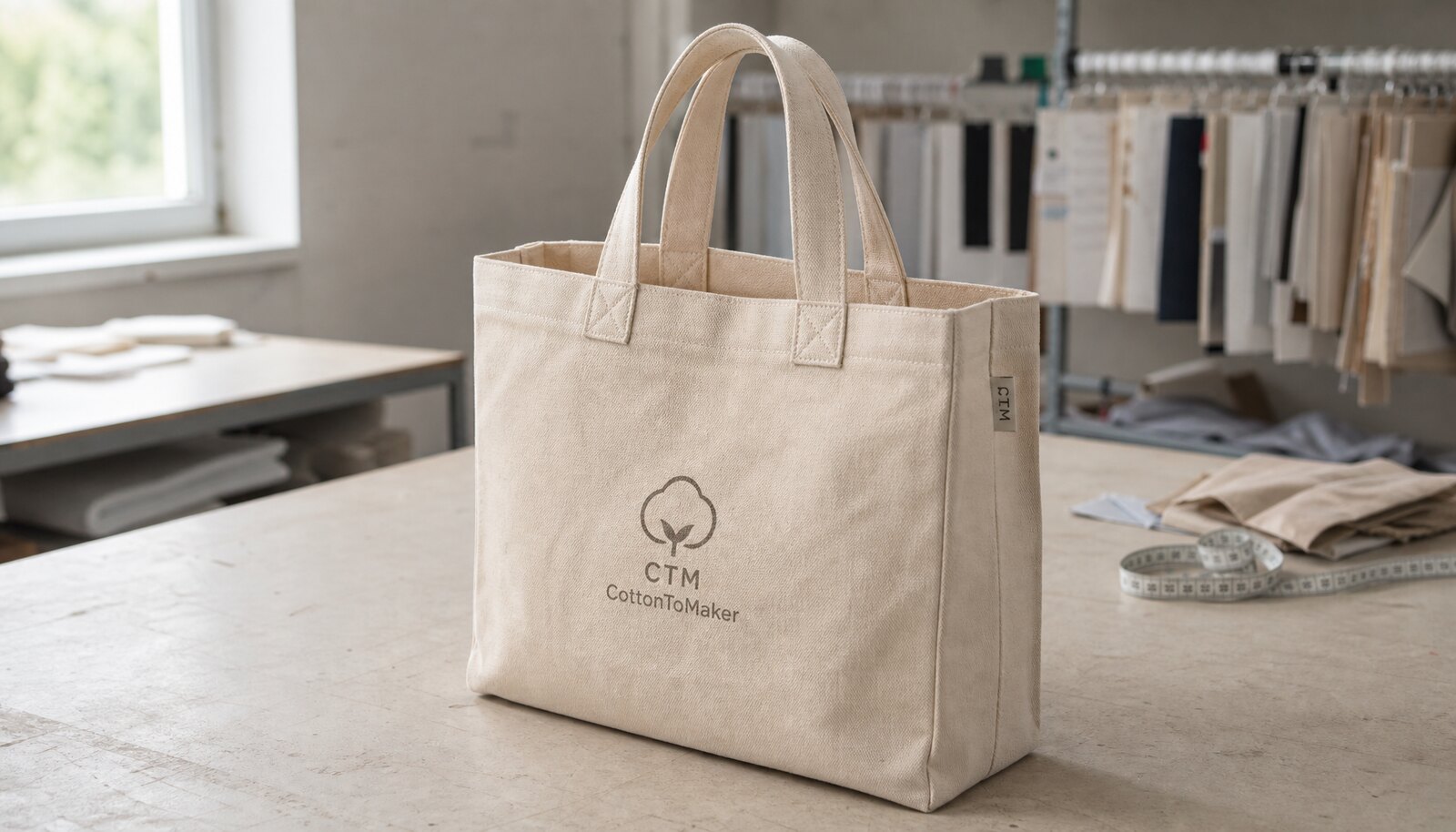
Why gusseted canvas totes work differently for ecommerce
A gusseted canvas tote bag is not just a flat tote with extra room. For ecommerce, that extra room changes how the bag folds, prints, packs, and carries weight. Buyers usually feel the pain only after the first shipment: a nice-looking bag that arrives crushed in cartons, prints too close to the seam, or loses shape once a parcel is packed inside it.
For procurement teams, the real buying problem is matching bag structure to fulfillment reality. If the product will ship flat in a mailer, you need a different gusset depth and fabric weight than a tote intended for retail shelves. The bag also has to survive the route from factory to warehouse to end customer without looking wrinkled, skewed, or underbuilt.
- Ecommerce bags need practical packability, not just shelf appeal.
- The gusset affects carton efficiency, print placement, and consumer load behavior.
- The cheapest quote often misses one of these three items.
Start with the use case, not the bag size
The right specification starts with what the buyer expects the tote to carry. A lightweight merch bag for apparel differs from a subscription box carrier or a book tote. For most ecommerce programs, 10 oz to 12 oz canvas is a workable starting point because it balances cost, print quality, and body. If the bag will carry heavier merchandise or needs a more premium hand feel, 16 oz canvas is a better fit, but only if the freight and sewing cost still work.
Gusset depth should follow product volume, not a design preference. A 3 in to 4 in gusset usually covers common ecommerce packing such as folded apparel, small boxed goods, journals, or mixed promo kits. A 5 in gusset can be useful, but it often adds fabric cost and makes bulk cartons bulkier. In RFQs, buyers should define the internal load target, such as “fits one standard apparel box plus accessories,” rather than only listing a flat dimension.
- 10 oz to 12 oz: common for general ecommerce and retail resale bags.
- 16 oz: better for structure, premium positioning, or heavier contents.
- 3 in to 4 in gusset: usually the most efficient for most ecommerce use.
Fabric weight, weave, and finish: where quote gaps begin
A factory quote for canvas should state the fabric weight clearly in oz or GSM and whether that figure refers to finished fabric or raw cloth. If one supplier quotes 10 oz finished canvas and another quotes 10 oz greige cloth, the bags will not behave the same way after washing, cutting, and sewing loss. For imported programs, I prefer buyers to specify finished fabric weight and ask for a physical swatch or pre-production sample before approving the bulk order.
Canvas weave also changes print result and edge behavior. A tighter weave generally gives a cleaner screen print and less fraying, while a looser weave can look more rustic but may show thread slubs and uneven ink laydown. If the design has fine type or small icons, the buyer should not approve a rough weave without first checking the print at actual scale. For ecommerce, the item is often photographed on a white background, so surface consistency matters more than many first-time buyers expect.
- Specify weight in ounces or GSM and define whether it is finished fabric.
- Ask for a hand-feel and weave-density sample when print detail is important.
- Do not compare supplier quotes unless fabric basis and finish are aligned.
Print method should follow art complexity and order volume
For gusseted canvas tote bags for ecommerce, screen printing remains the most economical choice for simple logos and repeat programs. It performs well on canvas, keeps unit price controlled, and usually gives better cost stability at higher volume. If the artwork has multiple colors, gradients, or short-run seasonal graphics, heat transfer or DTF may be more practical for launch orders because it avoids multiple screens and large setup cost. Embroidery can work, but it is usually a branding decision, not a cost-saving one.
The key mistake is choosing print method by price alone. A low-cost process can look acceptable on a flat front panel and fail on the gusset fold or near seams. Buyers should require artwork placement dimensions measured from the top edge and side seam, because the usable print area shrinks once handles, folds, and gussets are introduced. If a logo must be centered on the front panel, the factory should confirm the measurement against a sewn sample rather than a cut panel.
- Screen print: best for simple logos, stable repeat orders, and lower unit cost.
- DTF or heat transfer: better for short runs or complex graphics.
- Embroidery: premium feel, but slower and usually more expensive.
Compare supplier routes before you compare unit price
A direct factory, trading company, and domestic converter can all sell you a gusseted canvas tote, but they do not solve the same sourcing problem. Direct factories usually give better control over fabric, stitching, and packing once volume is stable. Trading companies are useful when a buyer needs a mixed-source program or does not have time to coordinate every production detail. Domestic converters can help with speed, urgent revisions, or lower communication risk, but the unit price is often higher.
Procurement teams should compare routes by landed logic, not by headline price. A direct factory may quote lower FOB but charge separately for sampling, extra colors, or retail packing. A converter may quote higher per piece but save time and reduce approval loops. The best choice depends on order size, how often the bag repeats, and whether the team can absorb a longer sample-and-approval cycle.
- Direct factory: best for repeat volume and tighter spec control.
- Trading company: helpful for mixed product sourcing and smaller programs.
- Domestic converter: useful when speed and communication outweigh unit cost.
How MOQ logic changes the real cost
MOQ is not only a production minimum; it is a cost structure. A 500-piece order can be possible on a standard tote, but the quote may carry higher setup fees, fewer decoration options, and stricter color limitations. At 1,000 pieces and above, factories usually have more room to optimize cutting, printing, and packing, which is why the unit price often drops in visible steps instead of gradually. Buyers should ask the supplier to show the MOQ by color, by print design, and by carton configuration, because those are not always the same number.
The buying mistake to avoid is using one MOQ number for every version of the bag. A natural canvas bag with one-color print may be available at a lower threshold than a dyed body with multiple print locations and branded polybags. If the project is a test launch, it may be cheaper overall to simplify the spec and move some branding from the bag to a hangtag or insert. That can lower risk while keeping the consumer-facing look acceptable.
- MOQ should be broken out by color, design, and packing version.
- Lower MOQ often raises setup cost or limits options.
- Simplifying decoration can reduce launch risk and improve quote flexibility.
What a usable quote should include
A useful factory quote should make it possible to compare landed cost without extra back-and-forth. At minimum, it should show bag size, canvas weight, gusset depth, handle type, print method, packing format, carton spec, sample fee, unit price breakpoints, and lead time. If a quote only says “canvas tote bag” with one price, it is not enough for purchasing. The buyer needs to know what was assumed so that hidden differences do not appear later as a change order.
For ecommerce, the quote should also show whether the bag is flat-packed or folded into a retail insert, because packing affects carton count and freight. I also recommend asking for FOB, CIF, and DDP options when possible. Even if the buyer eventually purchases on one basis, the comparison helps the team see how much of the total cost is freight-driven versus factory-driven.
- Require same-spec quotes to avoid false price comparisons.
- Ask for separate sample charge and production unit price.
- Request carton dimensions and pack count for freight planning.
Sample approval: the stage where most problems are caught
The pre-production sample should prove that the bag size, gusset build, print position, and handle reinforcement all work together. A flat artwork proof is not enough. The sample should be measured after sewing and packing, because a gusset can pull the front panel off-center or reduce visible print area more than expected. If the buyer has any concern about color, the sample should be checked under normal warehouse lighting and daylight, not only under a bright inspection lamp.
A practical sample check should include actual load use. Put a representative ecommerce fill into the tote, close the top if applicable, and observe whether the bag stands as expected, droops, twists, or strains at the handle attachment. A good sample approval note should record final approved dimensions, print location, fabric weight, and any acceptable variation. That note protects both the buyer and the factory when bulk production starts.
- Inspect the sewn sample, not just the artwork mockup.
- Test with real product weight before approving bulk.
- Lock approved dimensions and print placement in writing.
QC thresholds that matter in bulk production
For canvas tote QC, the highest-value checks are the ones tied to customer complaints. Measure finished dimensions within an agreed tolerance range, confirm stitch quality at handles and seams, and inspect print alignment near the gusset fold. Loose thread trimming matters less than a crooked handle or a seam that opens under load. Buyers should also state whether minor natural canvas slubs are acceptable, because canvas is not a uniform synthetic fabric and some surface variation is normal.
Packing QC is equally important. If the bag is to be sold through ecommerce fulfillment, folded dimensions need to be consistent so warehouse teams can pack efficiently. Cartons should not be overfilled, because compressed bags look tired when opened by customers. If the product is retail-ready, label placement and barcode readability must be checked before shipment. A factory that packs well usually reduces downstream rework more than a cheaper quote with sloppy folding.
- Check measurement tolerance on width, height, and gusset depth.
- Inspect seam reinforcement, handle symmetry, and print alignment.
- Verify folding consistency and carton fill level before shipment.
Packing, lead time, and landed-cost comparison
Packing choice changes both cost and warehouse efficiency. Bulk polybags are the simplest and usually the most economical for ecommerce. Retail inserts, hanging cards, or barcode stickers can be added, but each one changes labor and carton density. If the bag is shipped internationally, carton size and gross weight must be controlled because a poorly packed tote can create freight waste even when the fabric cost is reasonable. For larger programs, the buyer should ask the factory for a carton loading plan rather than accepting a standard carton count.
Lead time is another place where quotes are often optimistic. A realistic schedule includes sample preparation, sample approval, fabric booking, printing, sewing, packing, and final inspection. If the bag requires custom dyed fabric, special hardware, or a complex print layout, the timeline will stretch. For procurement, the safest comparison is not just production lead time but the full order cycle from artwork confirmation to export-ready cartons. That makes the schedule risk visible before the order is placed.
- Bulk polybag packing usually gives the best cost-to-speed balance.
- Custom retail packing adds labor and can lower carton efficiency.
- Compare full cycle time, not just sewing time.
Specification comparison for buyers
| Spec decision | Recommended option | When it fits | Buyer risk to check |
|---|---|---|---|
| Fabric weight | 10 oz to 12 oz canvas for most ecommerce programs; 16 oz if the bag must hold heavy products or keep a structured shape | General retail orders, subscription kits, gifting, and everyday carry bags | Very light canvas can look limp and show print strike-through; very heavy canvas raises cost, sewing difficulty, and shipping weight |
| Gusset depth | 3 in to 4 in side/bottom gusset for typical ecommerce packaging; 5 in+ only when product volume really needs it | Orders that ship boxed products, apparel bundles, books, or mixed-size kits | Over-gusseting increases fabric use and can make the bag bulky in cartons and on shelf |
| Print method | Screen print for simple logos and repeat orders; heat transfer or DTF for short runs with more colors; embroidery only for premium positioning | Simple branding, limited-color art, seasonal tests, or premium retail programs | Matching print method to art complexity matters; a cheap method can fail wash/rub expectations or distort on seams and gussets |
| Handle construction | Self-fabric handles with reinforced cross-stitch or box-X stitching for value programs; cotton webbing handles for better comfort and load distribution | Ecommerce shipments with moderate weight and frequent consumer use | Thin handles can cut into hands and fail at the attachment point under real load |
| Closure choice | Open top for low-cost packing and easy fulfillment; snap or zipper only when product security or resell value requires it | Insert-friendly ecommerce packaging, promotional programs, or retail resale bags | Adding closure hardware changes cost, lead time, and QC risk; hardware placement must be aligned or it looks off-center |
| Supplier route | Direct factory for repeat volume and controlled specs; trading company for small or mixed programs; domestic converter for urgent short runs | Stable annual programs, complex sourcing needs, or rush replenishment | Different routes quote different inclusions; compare the same carton count, print setup, and sample charges before judging price |
| MOQ structure | 500 to 1,000 pcs per color/style for standard factory production; lower MOQ only if buyers accept higher unit cost or simplified decoration | Launches, pilot SKUs, and seasonal ecommerce tests | Low MOQ can hide high setup fees, limited color options, or weaker fabric choices |
| Packing format | Flat-packed in bulk polybags with carton dividers if needed; retail hanging pack only when shelf presentation requires it | Ecommerce fulfillment and warehouse efficiency programs | Retail-ready packaging can add labor and volume; overpacking wastes freight and handling time |
| Carton spec | Export carton sized to protect shape without excessive void space; target practical carton weights for one-person handling | International shipments and warehouse receiving | Bad carton sizing increases freight, deformation, and damage claims even when the bag itself is well made |
Buyer checklist before sampling
- Confirm the final bag size with usable internal volume, not just flat width by height.
- Lock the gusset depth and state whether it applies to the side panel, bottom panel, or both.
- Specify canvas weight in oz or GSM, plus whether the fabric is bleached, natural, or dyed.
- Define print method, print location, one-color or multi-color art, and acceptable registration tolerance.
- State handle length, handle width, attachment stitch style, and target load expectation.
- Set packing requirements: bulk polybag, retail insert, barcode label, or hangtag if needed.
- Ask for pre-production sample, size tolerance, stitch allowance, and carton dimensions in the quote.
- Request lead time by stage: sample approval, material booking, production, and export packing.
- Compare supplier quotes on the same incoterm, carton count, and included testing or inspection scope.
Factory quote questions to send
- What exact canvas weight do you recommend for this bag size and intended ecommerce load, and is that weight finished fabric or greige fabric?
- How is the gusset built: side only, bottom only, or combined, and what are the finished gusset tolerances?
- What is your MOQ per color, per print design, and per order if we use one color versus multiple colors?
- Which print method is included in the quote, how many setup charges apply, and what is the price difference for extra colors?
- What handle reinforcement do you standardize, and can you share stitch detail photos or a tech pack sketch before sampling?
- What is included in the quoted packing: individual polybag, bulk pack, carton count, inner packing, and master carton mark?
- How long is sample lead time, and what sample fees are refundable after order confirmation?
- What production lead time do you commit after PP sample approval, and what could extend it?
- Can you quote the same bag on FOB, CIF, and DDP basis so we can compare landed cost properly?
- What inspection standard do you use for measurement, stitching, print alignment, and carton drop protection?
Quality-control points to confirm
- Measure finished width, height, and gusset depth on the production sample and set tolerance ranges before bulk approval.
- Check seam straightness, stitch density consistency, and corner reinforcement at handle stress points.
- Inspect print opacity, edge sharpness, color match to approved artwork, and any crack or rub risk on gusset folds.
- Verify handle symmetry, handle length consistency, and attachment position from top edge to left/right sides.
- Test load with a practical ecommerce fill weight, not just a light hand-lift, and inspect for seam pop or handle stretch.
- Review polybag ventilation or suffocation warnings if required by destination market rules.
- Confirm carton drop resistance, carton count accuracy, and barcode readability after packing.
- Check for odor, staining, lint, loose threads, needle damage, and panel distortion after folding.