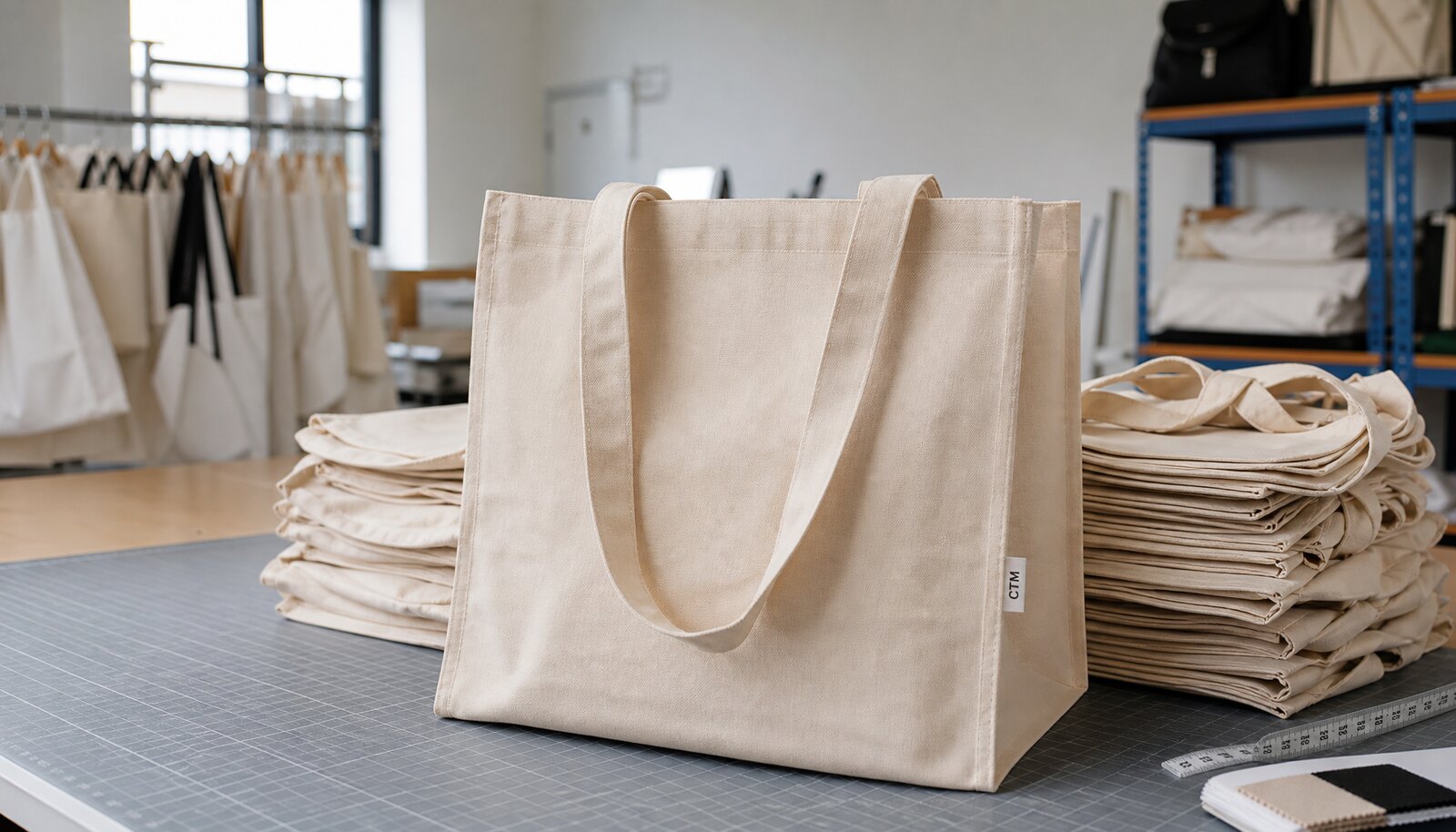
Why event grocery bags need a different buying spec
Grocery shopping bags for events are not the same as standard retail totes, and buyers who treat them as a generic reusable bag usually run into avoidable problems. At an event, the bag is handed out quickly, then loaded with brochures, snacks, bottles, sample jars, or other promotional items. That means the bag has to behave like a functional carrier on day one, not just look good in a product photo. If it fails in the first hour of use, the brand impression drops immediately.
The procurement brief should therefore focus on use case, not only appearance. You need a bag that is easy to hand out, easy to store, and sturdy enough for real carrying. Finished size matters because it controls what can fit inside. Handle drop matters because it affects comfort when attendees carry the bag over a shoulder or in hand. Fabric weight matters because it determines body feel, print behavior, and how the bag folds in cartons or event kits.
The common sourcing mistake is to approve a nice-looking sample and leave the rest vague. If the buyer does not lock down size, gusset, handle style, stitch reinforcement, print method, and packing format, the final production can arrive too flimsy, too expensive, or packed in a way that creates extra work for the event team. A good quote for grocery shopping bags for events should read like a production instruction sheet, not a marketing description.
For procurement teams, this product also sits in a sensitive cost zone. The bag needs to be useful enough to justify reuse, but not so expensive that it consumes the event budget. That balance is why you should compare options by landed cost, not headline unit price alone. Freight weight, setup fees, packing labor, carton count, and inspection cost can move the final total more than a small fabric upgrade.
If the order is connected to a fixed campaign date, the bag spec should also be built around schedule risk. Simple artwork, stable material, and predictable sewing lines reduce surprises. Complex logos, custom colors, or highly compressed packing can add weeks if the first sample misses. For that reason, grocery bags for events should be quoted with a visible path from sample approval to bulk shipment, including checkpoints the supplier will own.
- Treat the bag as a carrier first, a souvenir second.
- Write the spec around actual use, not a generic tote description.
- Build the quote so fabric, print, packing, and lead time are visible line by line.
Start with the right fabric weight, structure, and hand feel
For cotton event grocery bags, a practical starting point is usually 8 oz to 10 oz canvas when the buyer wants a balanced mix of appearance, strength, and cost. This range tends to feel substantial enough for supermarket-style use without becoming too heavy for bulk event distribution. If the client wants a more premium look or expects repeated reuse, 10 oz to 12 oz canvas can improve body and structure, but the tradeoff is higher fabric cost, higher sewing effort, and heavier freight. In other words, the bag gets better, but the cost curve rises quickly.
Lower-weight cotton sheeting can save money, yet it often looks too soft for grocery use and may not hold shape well when filled with bottles or boxed food. If the event is only handing out lightweight literature, that may be acceptable. If the bag is expected to function like a reusable shopping tote, buyers should be cautious. The hand feel of the sample may still look fine on a table, but the real test is whether the bag stands up when loaded and whether the handles remain comfortable after use.
For price-sensitive programs, nonwoven polypropylene in the 80 gsm to 100 gsm range remains a common sourcing choice. It is light, easy to pack, and usually more cost-efficient for large distributions. It can also support simple branding well. The downside is that nonwoven bags often need more careful seam and handle reinforcement, because the material can deform under load and the perceived quality drops fast if the stitching is weak or uneven. If the bag will be used only a few times, that may be acceptable; if the buyer wants repeat use, the reinforcement spec matters.
Recycled cotton is another option when the buyer wants a more natural or sustainability-forward look. The sourcing point to watch is not the marketing language but the material variability. Recycled fibers can introduce color variation, slub texture, or minor yarn inconsistency. Buyers should ask for tolerance guidance on shade, weave appearance, and any pre-shrinking process. If the color needs to stay clean and consistent across a campaign, natural or recycled fiber choices should be approved with that in mind.
The right fabric decision is not just about grams or ounces. It also affects print behavior, carton density, and defect risk. Heavier canvas may print more sharply but cost more to move. Lighter nonwoven may save freight but require stricter seam control. Buyers should therefore compare fabric options using the same finished size, same load expectation, and same artwork so the choice reflects actual use, not just material preference.
- 8 oz to 10 oz cotton canvas: balanced for brand events and reusable shopping use.
- 10 oz to 12 oz cotton canvas: better structure, but higher material and freight cost.
- 80 gsm to 100 gsm nonwoven: economical for volume programs, but reinforcement must be specified.
- Recycled cotton: useful for a natural look, but approve color variation and texture before bulk.
Compare supplier routes before you price the bag
The lowest quote is not always the lowest landed cost, especially for grocery shopping bags for events. A direct factory can offer stronger control over sewing, print placement, packing, and carton labeling because the buyer is closer to the actual production line. That route is usually better when the order is repeatable, the artwork is stable, and the event team needs a predictable result. A factory quote also makes it easier to understand where the cost is coming from: fabric, labor, print setup, packing, or shipping preparation.
A trading company or sourcing agent can be useful when the buyer needs several products for one event kit, different artwork versions, or a faster comparison across factories. The tradeoff is that the real production site can be less transparent. In that case, procurement should ask who actually owns quality control, whether the sample came from the same factory that will make the bulk order, and how any claim about compliance or test results will be documented. If those questions are hard to answer, the low quote may carry more risk than it first appears.
When comparing supplier routes, use the same specification sheet and insist on the same assumptions. One supplier may quote a plain bag with loose packing and no reinforcement, while another includes stronger stitching, strike-off approval, carton labels, and a more realistic lead time. Those offers cannot be compared directly unless the scope is normalized. For event buyers, hidden steps often matter more than a few cents on the unit price.
A useful sourcing discipline is to ask each supplier to identify the production site, key process steps, and QC owner before you discuss price. If the bag is printed by one workshop, sewn by another, and packed by a third, the chance of sample-to-bulk drift rises. That is not always a deal-breaker, but it should be visible to the buyer before the PO is placed. The procurement question is not only who is cheapest; it is who can prove control over the finished product.
If the event timeline is fixed, the more reliable supplier route is often the one that can explain the work sequence clearly. You want to know when material is booked, when the sample is approved, when production starts, when inspection happens, and who signs off on final packing. A transparent production path is worth real value when delivery dates are tied to a launch, store opening, or conference handout schedule.
- Direct factory: strongest for repeat orders and stable specs.
- Trading company: useful for multi-item kits and fast sourcing comparison.
- Always identify the real production site and the QC owner before approval.
- Normalize the spec before comparing quotes, or the price spread will be misleading.
How print method changes cost, look, and approval risk
For simple event branding, one- or two-color screen print is usually the most reliable and procurement-friendly option. It tends to work well on cotton canvas, gives solid opacity, and is predictable in bulk when the artwork is not too detailed. The quote should show whether the print is one side or two sides, how many colors are included, whether each color needs a separate screen, and whether the supplier charges a setup fee per screen. For larger runs, screen print often gives the best mix of durability and unit economics.
If the artwork includes gradients, small QR codes, fine text, or several brand marks, heat transfer or digital print may be the better option for a smaller run. These methods can capture detail that screen print may lose, especially on a textured surface. But they also create different risks, including edge sharpness, rub resistance, and how the print behaves when the bag is folded tightly in a carton. The fact that a print looks clean on a flat sample does not mean it will survive handling, compression, or event kit packing in the same way.
The material and print method must be approved together. A design that looks clean on one fabric can blur, crack, or sit too heavily on another. This is particularly important for grocery shopping bags for events because the bag may be handled repeatedly before it even reaches the attendee. If the event team opens cartons and sees transfer marks or print cracking at the fold line, the buyer has already lost value even if the bag technically meets the artwork proof.
Color control should also be part of the print decision. Ask whether the supplier can match a Pantone target within a practical production tolerance, and request a strike-off or sample print on the same fabric color that will be used in bulk. Buyers often focus on logo shape and ignore fabric color interaction, but background color can change how the printed logo reads. Dark fabric may require extra ink opacity; natural cotton may show more fiber variation. Those details affect both look and cost.
Finally, think about artwork maintenance. If the event bag needs to carry a QR code or short campaign URL, it is worth checking readability at the actual printed size, not only in the design file. A small code that scans well on a monitor can fail when printed on textured fabric and folded repeatedly. For procurement teams, print approval is not just an art review; it is a function test.
- Screen print: best for bold logos, simple messaging, and higher volume.
- Digital or transfer print: better for detailed artwork and shorter runs.
- Approve the exact print on the exact fabric and color combination.
- Check QR codes, fine text, and fold-line behavior before releasing bulk.
MOQ logic: set the order size to match event usage
Event grocery bags are often bought in patterns that differ from normal retail programs. One campaign may need 800 pieces for a roadshow, another 3,000 pieces for a store-opening week, and another 10,000 pieces for a regional promotion. The minimum order quantity should therefore be linked to the production method, not treated as an arbitrary sales number. For printed event bags, 500 to 1,000 pieces per style and color is often a workable starting point, but the real MOQ depends on the number of print colors, whether the fabric is standard or special order, and whether the handles or webbing need to be sourced separately.
The hidden cost of a low MOQ is that setup fees do not disappear. Screen preparation, artwork alignment, sewing line changeover, and packing labor still need to be paid. Smaller runs often have a higher unit price because those fixed costs are spread across fewer bags. If the buyer wants several colors with the same design, it is usually more efficient to keep the artwork constant and vary only the bag body color when possible. That can reduce setup waste and make approval simpler.
Procurement teams should also think beyond the first event. If the bags may be reused at future roadshows or store activities, ordering too few can be more expensive than buying a slightly larger quantity upfront. The goal is not to overbuy inventory blindly, but to understand the cost curve. Ask the supplier for price tiers at several quantities so you can see where the step-down in unit cost actually happens. That gives the buyer a better basis for deciding whether to increase the order, split the order, or simplify the art.
Another practical point is version control. If the same event bag will be used with different city names, sponsor names, or campaign dates, every version can trigger a new setup or screen fee. Buyers should ask whether the supplier can consolidate production by bag style and only change the printed insert, tag, or one print element rather than creating entirely separate bag constructions. That kind of packaging decision can reduce both MOQ pressure and scheduling risk.
In short, MOQ should be treated as a production design choice. The best quantity is the one that matches the event demand, minimizes setup waste, and still leaves enough room for sample approval, QC, and freight planning without overcommitting budget or storage space.
- Higher MOQ usually lowers unit cost because setup is spread over more bags.
- Multiple artwork versions can multiply screen, setup, and packing costs.
- Ask for quantity tiers so you can see the real cost curve before placing the PO.
- Simplify artwork or construction before forcing a very low MOQ.
Build the quote so you can compare apples to apples
A useful quote for grocery shopping bags for events should separate fabric cost, print setup, sewing, packing, and carton details. If those items are bundled into one number, procurement cannot tell whether a supplier is truly cheaper or simply quoting a thinner scope. One factory may include reinforced handles, better folding, and carton labels, while another leaves them out. The buyer sees a lower unit price but may end up paying later in rework, repacking, or missing event deadlines. The right comparison is landed cost with scope clarity.
The quote should show unit price at several quantity tiers, not only a single number. That helps procurement see whether the factory is giving a real scale benefit or padding the smaller run. It also makes it easier to decide whether increasing the order by a few hundred pieces would actually lower the average cost enough to justify the extra inventory. Ask for the price difference by quantity, because the break point often reveals more than the headline rate.
Freight and packing need to be visible too. A bag can be inexpensive at factory gate but expensive to move if the carton is oversized, the bag is packed too loosely, or the gross weight climbs from a heavier fabric choice. Ask for carton dimensions, estimated CBM, and gross weight so freight can be estimated accurately. If the shipment is going by sea or through a distribution center, carton efficiency may matter almost as much as the unit price itself.
The quote should also identify what happens if the order changes after approval. Event work often changes late: artwork edits, count adjustments, or pack format changes happen after the client signs off. Ask the supplier which line items will change if the print color count changes, if the bag size changes, or if the packing requirement changes from bulk cartons to individual polybags. That prevents friction later and helps the buyer understand where the supplier’s real cost sensitivity is.
For procurement documentation, it helps to request the quote in a table format that mirrors the spec sheet. That allows internal reviewers to compare supplier A and supplier B line by line. The most useful quote is not the cheapest-looking one; it is the one the buyer can audit quickly and approve with confidence.
- Separate fabric, print, sewing, packing, and carton terms.
- Ask for price tiers across quantities instead of one flat number.
- Use carton size and gross weight to estimate freight accurately.
- Clarify what changes trigger extra cost before production begins.
Sample approval: what the pre-production sample must prove
A sample is only valuable if it reflects the final production method. For cotton canvas or nonwoven event bags, the pre-production sample should use the same fabric weight, same handle construction, same reinforcement, and same print process that will be used in bulk. A hand-made mock-up or paper approval will not catch problems such as ink spread, seam tension, or handle length error. The purpose of the sample is not simply to look right; it is to prove that the production line can reproduce the approved result.
Sample review should be measurable. Check finished width, height, gusset if any, and handle drop against the spec sheet. Verify that the handle length is comfortable for the intended use case, especially if the bag will be carried with groceries or bulky event materials. If the bag is meant to fold flat into a pack, test the folded state as well. Some bags look excellent open but become awkward once folded, stored, and re-opened repeatedly. That matters when the bag is part of an event kit or distribution bundle.
Print approval should include more than the logo outline. Buyers should inspect whether the print sits where it was requested, whether color is stable against the target, and whether small text remains readable at the approved size. If the artwork includes a QR code or URL, test it directly from the printed sample. That is a low-cost check that can prevent an expensive reprint. If there are multiple bag colors, review the print on each background color that will be produced, not only on the lightest or easiest version.
Buyers should also look for seam and edge quality. Loose thread tails, skipped stitches, crooked seams, and uneven edge binding all point to production inconsistency. If the bag uses webbing handles, check how the webbing is locked into the seam and whether the reinforcement appears symmetrical. If the bag is all fabric, check whether the top edge has enough structure to resist distortion. A sample that passes visual review but fails physical handling is not ready for bulk release.
Finally, make the sample approval process visible in writing. Record what was approved, what photos were shared, which small deviations are acceptable, and whether the supplier may proceed only after written sign-off. That keeps the event schedule and the quality standard aligned. If the bag is tied to a fixed campaign, the approval note should be clear enough that the production team can follow it without guessing.
- Match fabric, print, and stitching to bulk production.
- Measure dimensions and handle drop rather than approving by eye only.
- Test the folded state if the bags will be packed into event kits.
- Approve print on each planned fabric color, not just one sample.
QC thresholds that prevent the usual event-bag failures
The most common failures in grocery shopping bags for events are weak handles, print misalignment, and poor packing. Buyers can reduce those issues by writing a practical acceptance standard before the order starts. For dimensions, keep the tolerance realistic and tied to the bag size. A small tote can usually tolerate about +/- 1 cm, while larger shopping totes may need a wider tolerance of around +/- 2 cm. The point is to define what is acceptable before the factory starts cutting fabric, not after cartons are already on the truck.
Handle quality deserves special attention. The handle base should have reinforcement that is visible and consistent, whether the bag uses bar-tacks, dense backstitching, or another approved reinforcement method. The stitches should be even, with no skipped rows, loose ends, or obvious seam pull. For event bags that may carry bottles or dense promotional items, a weak handle turns into a complaint very quickly. If the supplier cannot explain how the handle will be tested, that is a warning sign.
A practical QC process should include sampling for handle strength and print adhesion. The exact test method can be buyer-specific, but it should be documented. For handle checks, pull a representative sample under a defined load or use the buyer’s internal load standard and record whether the seam opens, the stitch breaks, or the reinforcement tears. For print checks, fold the bag, rub the print with white cloth or another agreed medium, and inspect for transfer, flaking, or cracking. These are simple checks, but they are far more useful than a visual review alone.
Inspection should follow a documented sampling plan, ideally based on AQL or the buyer’s own equivalent acceptance rule. Major, minor, and critical defects should be defined in writing. A critical defect might include torn handles, holes that affect use, severe contamination, or mis-sewn bags that cannot be used. A minor defect might include a small thread tail or slight print offset within the accepted range. Without that distinction, suppliers and buyers tend to debate every issue after inspection, which wastes time and delays shipment.
Packing QC matters as much as product QC. Carton count should match the packing list exactly, with no mixed artwork unless the buyer approved mixed packing in writing. Cartons should be sturdy enough for the transit route, and if the bags are premium cotton canvas, the packing compression should not leave permanent marks on the print or body. If the shipment is going to sit in a warehouse before event kitting, ask whether moisture protection or pallet wrap is needed. That is a small cost compared with a damaged campaign delivery.
The best QC programs are operational, not theoretical. They identify the defect, the test method, the sampling rule, and the rejection threshold before mass production begins. For event bags, that level of detail pays off because the product is simple enough to inspect well and common enough for defects to repeat if the line is not controlled.
- Define AQL or an equivalent acceptance rule before production starts.
- Inspect handle reinforcement, print adhesion, dimensions, and carton count.
- Reject critical defects such as torn handles, nonfunctional sewing, and contamination.
- Use simple load and rub checks on sample units to validate real-world use.
Packing, carton marks, and event handling rules
Event buyers often underestimate packing because grocery shopping bags for events look simple in photos but become logistics-sensitive in real life. The bags are usually moved from factory to warehouse to event site, then unpacked and repacked by staff or distributors. If the factory folds them inconsistently, the team spends time sorting the shipment. If the carton marks are vague, SKU separation becomes harder. The quote should therefore show how many bags go in each carton, how they are folded, and whether each carton carries an event name, style code, color reference, or regional destination.
A simple packing rule usually works best: standard fold, fixed count per carton, clear outer label, and a carton size that fits warehouse shelving and transport limits. If the buyer wants the bags inserted into event kits, the fold method should be tested during sample approval so the staff can confirm it is easy to unpack. A bag that is difficult to remove from its carton, or one that wrinkles badly when folded, can slow the event team even if the bag itself is well made.
Some buyers choose inner polybags or small bundles to protect print quality, especially for premium cotton canvas or light-colored bags. That can be justified if the print is delicate or if the cartons will move through dusty conditions. But it adds labor and material cost, so the benefit should be visible. For large promotional runs, many buyers prefer simple bulk folding inside cartons, provided the print is durable enough for contact and the carton closure protects the bag surface from abrasion.
Carton marks should be legible and consistent. At minimum, the label should allow the receiving team to identify the style, artwork version, and quantity quickly. If the order includes multiple colors or campaign variants, the carton label format should prevent confusion at the distribution center. If palletization is required, ask the supplier to confirm stack height, carton orientation, and whether the cartons can survive the route without corner crush. These are basic details, but they affect whether the bags arrive ready for use or require sorting and rework.
For procurement, packing is part of the product. A cheap bag that arrives in an unusable carton format is not actually cheap. The packing spec should protect the print, reduce receiving labor, and support the event team’s workflow. That is what makes the order operationally successful.
- Standardize fold size so staff can count and distribute quickly.
- Label cartons by style, color, artwork version, and quantity.
- Use inner protection only where print abrasion or dust risk justifies it.
- Test the folded pack format during sample approval if the bags will be kitted.
Lead time risks that can blow up an event schedule
A realistic lead time for printed event grocery bags depends on fabric sourcing, sample approval, print complexity, and packing volume. A simple run may move quickly once the sample is approved, but buyers should still allow time for screen setup, fabric booking, stitching, and inspection. Peak season, holiday shutdowns, and fabric color shortages can extend the schedule more than many procurement teams expect. The event date may be fixed, but production rarely is unless the buyer manages the milestones carefully.
The best way to protect the event schedule is to separate the timeline into milestones rather than relying on one total lead-time number. Ask for dates for sample approval, material booking, production start, inspection, and shipping. If the supplier only gives a single estimate, the buyer cannot tell where the schedule is vulnerable. Milestone dates make it easier to spot risk early, especially if the artwork is still changing or the final bag size has not been approved.
Artwork edits are a common cause of delay. Even a small change can require a new screen, a revised digital file, or a new sample. Buyers should lock the artwork early and define who is allowed to approve changes. If the event team expects last-minute sponsor additions or city-name changes, the supplier should know that before quoting. Otherwise the schedule can be delayed by a revision that seems minor to marketing but is material to production.
Inspection and freight timing should also be planned into the lead time. An order that finishes production on paper is not finished for procurement until it passes inspection, is packed correctly, and is ready to ship. If the bags need repacking at the buyer side, extra time is needed after arrival for counting, kitting, and distribution. That post-arrival time is part of the real schedule, even if suppliers do not include it in their lead-time quote.
For high-stakes events, it is wise to keep a buffer. Bags are a simple item, but the coordination around them is not simple when a launch date is fixed. A short delay on a bag order can still become a missed event if there is no time for receiving and kitting. The safest buying approach is to treat timeline management as part of the spec, not as an afterthought.
- Lock artwork early and define who can approve changes.
- Ask for milestone dates, not only a single lead-time number.
- Include inspection, shipping, receiving, and kitting time in the schedule.
- Build a buffer if the event date cannot move.
Specification comparison for buyers
| Spec decision | Recommended option | When it fits | Buyer risk to check |
|---|---|---|---|
| Supplier route | Direct factory with printing, sewing, and packing in-house | Best when you need stable repeatability, tighter control of sample-to-bulk match, and fewer handoffs on a fixed event schedule | Verify the factory’s own process flow. Ask which steps are truly in-house and which are outsourced, then confirm the same site will make the approved sample and bulk order |
| Supplier route | Trading company or sourcing agent | Useful when you need multi-item event kits, faster factory comparison, or one contact for mixed SKUs | Ask who owns final QC, whether the factory identity is disclosed, and whether inspection reports are based on the real production line or a sample workshop |
| Fabric choice | Cotton canvas 8 oz to 10 oz, or recycled cotton canvas for a more premium retail look | Brand launches, supermarket activations, loyalty programs, and event giveaways that should feel reusable rather than disposable | Heavier fabric improves hand feel but raises unit cost, sewing time, and carton weight; ask for fabric weight by approved tolerance, not just a nominal label |
| Fabric choice | Nonwoven polypropylene 80 gsm to 100 gsm | High-volume events where budget, lightweight freight, and color variety matter more than premium feel | Check seam strength and handle reinforcement carefully; thin nonwoven can look acceptable in sample form but deform under filled-bag load |
| Print method | 1 to 2 color screen print | Best for large runs with bold logos, event names, campaign copy, or simple supermarket branding | Confirm screen count, setup fee by color, print position tolerance, and whether the supplier will do a strike-off on the actual fabric color |
| Print method | Heat transfer or digital print | Short runs, multi-color artwork, QR codes, names, or artwork with fine detail | Ask for rub resistance, fold crack testing, and whether the print sits on the fabric surface or bonds in a way that survives carton compression |
| Handle style | Self-fabric long handles or reinforced webbing handles | Suitable for grocery loads such as bottles, boxed food, flyers, and sample packs | Measure handle drop, stitch density, and bar-tack count; handles are the most common failure point in event bags |
| Packaging route | Bulk packed in cartons with carton label and inner protection only if needed | Works for distributors, retailers, and event teams that will unpack or re-kit the bags downstream | Loose packing saves money but can create print rub marks, dust, and uneven folded presentation; agree the folding method before production |
| MOQ logic | 500 to 1,000 pcs per color/style for printed event bags | Balanced approach for test campaigns, one-time events, and buyers who need reasonable pricing without overcommitting inventory | Low MOQ often means higher setup fees, more hand labor, narrower fabric choices, or extra screen charges for each color/version |
Buyer checklist before sampling
- Confirm final bag size, gusset, handle drop, and target loading weight in the PO or spec sheet.
- Specify fabric type, fabric weight, color standard, shrinkage expectation, and whether the material must be pre-shrunk or recycled content is required.
- Send vector artwork, define logo size and placement, and include Pantone references or approved color chips for both print and fabric.
- Ask for sample photos plus one physical pre-production sample made from the same fabric, same print method, and same sewing line as bulk production.
- Agree carton packing, fold method, barcode or SKU label needs, palletization if required, and shipment marks before production starts.
- Record inspection checkpoints for stitching, handle reinforcement, print adhesion, stain control, quantity count, and carton condition.
- Request supplier documents that show factory identity, business license, product photos from the actual line, and any test report or compliance file that applies to the material.
- Set a date for sample approval, material booking, production, inspection, and ship-out so the event schedule has a buffer for rework or freight delays.
Factory quote questions to send
- Is the quoted price based on finished size after sewing, and does it include reinforcement at the handle points and side seams?
- Which exact fabric spec is being used, including GSM or oz weight, yarn type, and whether the material is pre-shrunk, recycled, or coated?
- What is the print method, how many colors are included, and what is the setup or screen fee by color?
- What is the MOQ per color and per artwork version, and how does price change if we reduce quantity or split the order across colors?
- What sample will you provide before bulk production, and will it be made from the same fabric, print, and stitching line as mass production?
- How are the bags packed per carton, what is the carton size and gross weight, and can cartons be labeled by SKU, region, or event name?
- What is the normal production lead time after sample approval, and what factors would extend it during peak season or fabric shortages?
- What inspection standard do you use for sewing, print alignment, and carton count, and can you share a pre-shipment QC report with photos?
- Do you have documentation for factory ownership, audit records, material origin, or test results if our compliance team requests them?
- If the artwork changes after sample approval, what parts of the quote, lead time, and print setup cost will change as well?
Quality-control points to confirm
- Finished dimensions should stay within a practical tolerance of about +/- 1 cm for small bags and +/- 2 cm for larger shopping totes, unless the buyer has a tighter published standard.
- Handle stitching should include reinforcement at stress points; bar-tacks or dense backstitching should be even, fully secured, and free of skipped stitches, loose ends, or thread breaks.
- Print placement should stay centered within the agreed artwork tolerance and should not show major color shift, pinholes, smearing, edge blur, or cracking after folding.
- Fabric weight should match the approved GSM or oz range; random inspection should catch underweight lots that feel thin, limp, or unusually translucent for the approved spec.
- Carton count should match the packing list exactly, with clear SKU labeling and no mixed artwork unless the buyer approved mixed packing in writing.
- Fold lines and packing compression should not damage print areas, distort gussets, or create permanent creases on premium cotton canvas beyond the agreed acceptance limit.
- For handle performance, pull-test a sample quantity to a defined practical threshold or to the buyer’s own load standard, and reject lots where the seam opens, stitch breaks, or reinforcement tears.
- For print adhesion, use a rub test on a sample basis and inspect for transfer onto white cloth, flaking, or peeling after repeated folding.
- For incoming inspection, use a documented AQL plan for major, minor, and critical defects; reject on any critical defect such as torn handles, mis-sewn bags that cannot function, or contamination that cannot be cleaned.
- Check carton integrity, moisture condition, and pallet stability if shipping by sea or if the bags are likely to sit in warehouse storage before event kitting.