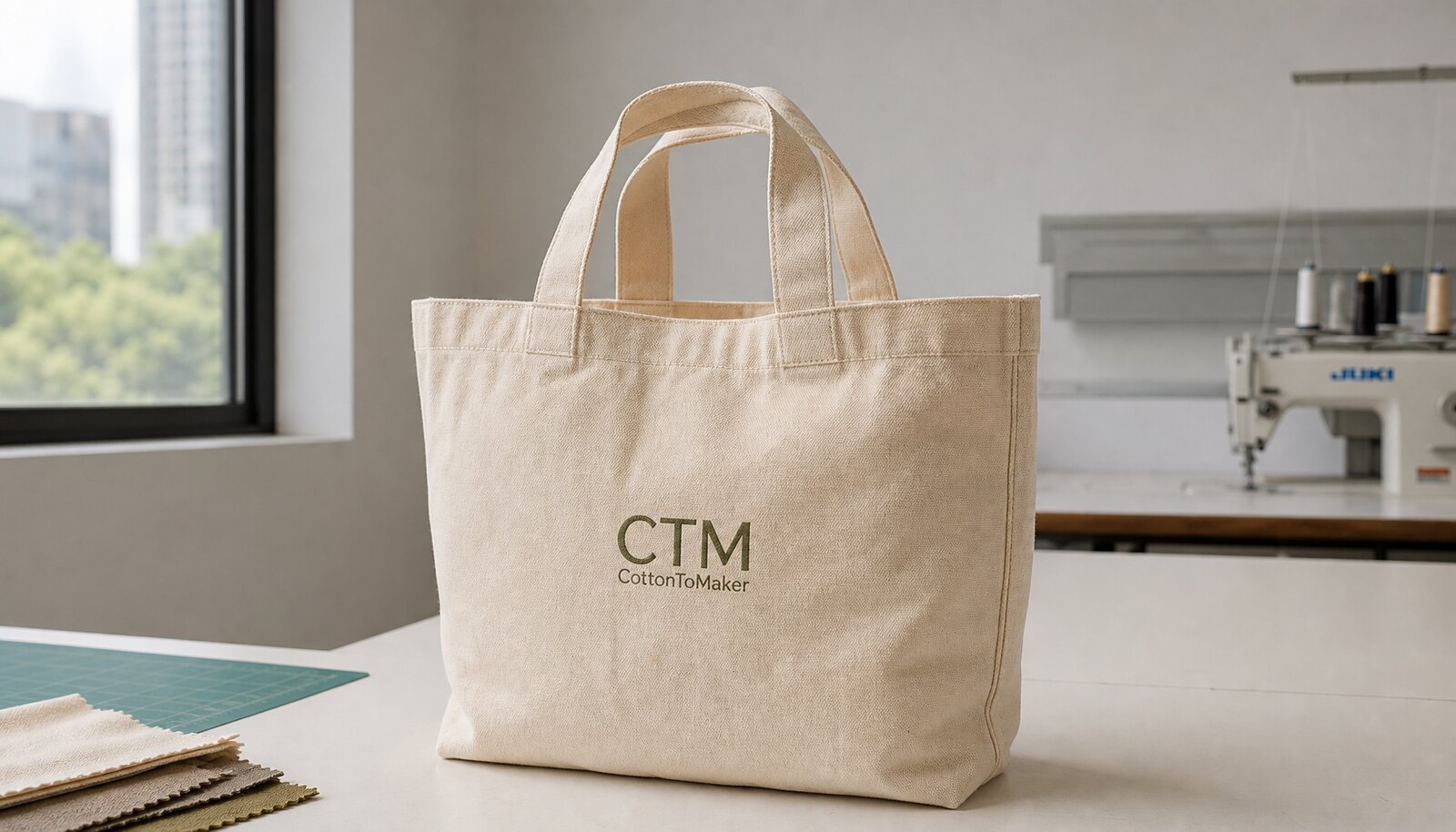
What Ecommerce Buyers Need From This Bag
Grocery shopping bags for ecommerce are not the same as a giveaway tote. They have to survive parcel handling, hold mixed grocery weight, and still look branded when the customer opens the box. That means the brief needs to cover use case, working load, fold size, and the way the bag will be sold or inserted into an order. If those details are missing, suppliers will fill the gap with their own assumptions, and those assumptions usually show up later as a price dispute or a quality miss.
The first decision is whether the bag is a retail item, a subscription insert, a marketplace add-on, or a packing accessory for a broader grocery program. Each one changes the spec. A bag that only needs to hold a few light items can use a lighter body and simpler stitching, while a bag that replaces plastic grocery carriers needs stronger fabric, better handle reinforcement, and a cleaner finish. Define the actual shopping behavior first, then build the bag around it.
- State the expected load in kilos or pounds, not in vague terms like heavy duty.
- Decide whether the bag must stand upright, fold flat, or both.
- Specify whether the bag is meant for repeat consumer use or one-time promotional distribution.
- Treat presentation and logistics as part of the product, not as an afterthought.
Choose Fabric And Construction That Match The Load
For most ecommerce grocery programs, cotton canvas in the 160-180 GSM range is a practical starting point. It is light enough to ship efficiently, but substantial enough to feel like a real reusable bag. If the bag needs to carry heavier grocery baskets, move up to 200-220 GSM or a heavier canvas equivalent. Lighter fabric can reduce unit cost, but if the bag stretches, wrinkles badly, or collapses under load, you lose the savings in returns, complaints, and weak brand perception.
Construction matters as much as fabric. A gusset helps the bag open to a usable shape, while reinforced bottom seams and bar-tacked handle joins carry the real stress. Handle width should be wide enough to spread the load across the hand, and the handle drop should fit the way the bag will be used in a cart or carried on the shoulder. If the bag is meant to hold bottles or dense groceries, do not let the quote optimize only for fabric weight; make the supplier price the stitching and reinforcement properly.
- Use 160-180 GSM for a standard reusable ecommerce grocery bag unless the load requirement is higher.
- Move to 200-220 GSM if the bag is expected to replace a heavier shopping tote.
- Ask for bar tacks or another visible handle reinforcement method.
- Keep the dimensions practical; oversized bags raise fabric use and freight with little customer benefit.
Print Method And Branding Should Be Chosen For Reuse
For simple grocery bag branding, screen print is still the most reliable option. It handles one to three spot colors well, gives good opacity on natural fabric, and is easy to compare from one production lot to the next. If the artwork is complex, gradients are required, or the quantity is too low to justify screens, a transfer method can work, but only if the buyer accepts the look and wear profile. For an ecommerce grocery bag, the finish should still read as durable, not decorative.
Keep the artwork away from high-stress seams and from fold lines that will crack the ink. Large prints can look good in a mockup and still fail in use if they sit across a gusset or a handle join. Ask the supplier to confirm print area, ink type, cure method, and color match reference before production starts. If brand consistency matters, approve the print against a physical swatch or a sample on the actual fabric, not against a screen rendering alone.
- Screen print is the default for repeatable brand work and clearer cost control.
- Transfer print is a fallback for short runs or complex graphics, not the first choice for every order.
- Limit color count if you want cleaner registration and lower setup cost.
- Use one approved artwork file and one approved color reference for the entire order.
Supplier Route And MOQ Logic Change The Quote
A direct factory or integrated converter is usually the right route when the bag has to be built, printed, and packed to one consistent standard. That matters for grocery bags because fabric, sewing, and print all affect the final user experience. Trading companies can help if the order spans multiple product categories, but they often add an extra margin layer and can blur responsibility when something goes wrong. For a branded ecommerce bag, responsibility should be easy to trace.
MOQ is rarely just a number. It is usually driven by fabric roll utilization, print setup, color separations, and packing labor. A low MOQ quote may be using stock fabric, a smaller print area, or a simplified packing method. That is not automatically bad, but it must be visible in the quote. Ask whether MOQ applies per size, per color, or per artwork. If the supplier quotes one blended MOQ without explaining the cost driver, you do not yet have a usable offer.
- Use direct factory sourcing when repeat orders and process control matter more than one-off convenience.
- Use a trading layer only when the buying team needs category consolidation and can accept less process visibility.
- Treat low MOQ quotes with caution until the material source and packing method are clear.
- Ask the supplier to state where MOQ is created: fabric, print, sewing, or packing.
Read Quotes As Landed Cost, Not Just Unit Price
The cheapest unit price is rarely the cheapest bag. A useful quote should separate the bag cost, setup cost, inner packing, cartonization, and freight assumptions. For ecommerce grocery bags, carton size can matter almost as much as the sewing cost because the bag is often bulky relative to its price. If the quote ignores carton dimensions or packs too many bags per carton, the freight bill can erase any savings on the factory side.
Compare suppliers on the same basis: same fabric GSM, same print method, same size, same packing format, and same incoterm. A lower quote that uses a lighter fabric, a smaller print area, or no inner protection is not an apples-to-apples comparison. Ask for a line-by-line breakdown so you can see whether the supplier is discounting the bag, the setup, or the packing. Once that is visible, you can decide where to pay more and where to cut cost without weakening the product.
- Compare ex-works price and freight together, not in isolation.
- Separate one-time setup from recurring piece price.
- Record carton count and carton dimensions in the quote sheet.
- Make the supplier state whether the price includes labels, polybags, and barcode stickers.
Sample Approval Needs Physical Evidence
A pre-production sample should be made from the actual fabric and the actual print process planned for bulk production. That is the only way to judge handfeel, print opacity, seam behavior, and how the bag folds for shipment. Photo approval is too weak for a product like this because fabric texture, color shade, and stitch quality can all look different on a screen. If the bag is going into ecommerce, the sample also needs to show how it presents after folding and unpacking.
Set acceptance criteria before the sample arrives. Check dimensions, handle alignment, seam finish, print placement, and the way the bag sits when loaded. If the bag is intended to carry heavier groceries, run a basic load test on the sample and watch the handle joins, side seams, and bottom seam under stress. When a sample fails, the fix is usually clearer than the original quote. That is why it is better to discover the problem at sample stage than in a finished container.
- Approve the sample only after it is made from the same fabric and print method as bulk.
- Check symmetry, handle drop, and bag opening shape, not only the logo placement.
- Use the sample to confirm fold size and retail presentation.
- Reject samples that hide defects with photography or good lighting.
Set QC Thresholds Before Bulk Production Starts
A practical QC plan for grocery shopping bags should cover the usual textile risks and the use-case risks. Size tolerance, stitch integrity, print registration, stain control, and carton count all need written acceptance criteria. For most import programs, a standard AQL structure such as 2.5 major and 4.0 minor is a reasonable starting point, but the bag still needs its own product-specific checks. If the bag is going to customers, a small cosmetic defect may still be acceptable; if it is going into retail, the visual bar is tighter.
The most common misses on this product are weak handle joins, print inconsistency across lots, and width or gusset drift that changes the bag shape. These are not abstract defects. They affect whether the customer can use the bag comfortably and whether the brand looks consistent from one reorder to the next. Make the factory prove that the bag survives the expected load and that the finished dimensions stay inside a narrow tolerance band. The earlier those rules are written down, the less room there is for argument later.
- Set a dimension tolerance before sampling, especially on width, height, gusset, and handle length.
- Require a load test that reflects real use, not only a visual inspection.
- Inspect print registration and ink cure on folded and unfolded areas.
- Check for loose threads, seam puckering, and fabric stains at random from each carton.
Packing And Fulfillment Change The Real Cost
For ecommerce, the bag is not finished when sewing ends. It still has to survive packing, storage, and outbound fulfillment without picking up dirt, creases, or moisture. Flat-folded bulk packing is usually the most efficient for wholesale replenishment, while direct-to-consumer programs often need individual polybags and a barcode or sticker. Those choices change labor time, carton size, and freight. If the buyer ignores packing during RFQ, the supplier will usually default to the easiest option for the factory, not the best option for the channel.
Packing should support the actual distribution path. If the bag ships with groceries or with another product in a subscription box, make sure the fold does not trap dust or expose the print to abrasion. In humid lanes, a moisture control step may be worth the small added cost. Cartons should be strong enough to stack, and the pack count should match warehouse handling. A quote that looks efficient on paper but creates extra repacking in the warehouse is not a good quote.
- Specify whether the bag is bulk packed or individually packed.
- Align carton size with the warehouse and freight model, not with factory convenience.
- Use barcode placement and label format that match the receiving system.
- Protect printed surfaces from rubbing during transport and storage.
Build The RFQ So Suppliers Quote The Same Bag
The best RFQ for grocery shopping bags for ecommerce is short, specific, and hard to misread. It should state the final dimensions, fabric GSM, color, print method, artwork size, handle construction, load target, packing format, quantity, destination, and incoterm. If the buyer leaves any of those open, suppliers will fill them in with different assumptions, and the quotes will be impossible to compare. The goal is not to ask for more pages. The goal is to remove ambiguity.
Once the RFQ is fixed, make every supplier quote against the same assumptions and send the same sample request. Then compare on unit price, lead time, packing quality, and how clearly the supplier answered the technical questions. A good factory quote usually reads like a production plan. A weak one reads like a sales estimate. If you can see the material, process, and packing logic in the quote, the order is much easier to control.
- Lock the artwork and dimensions before requesting bulk pricing.
- State whether the bag is for resale, subscription insertion, or fulfillment support.
- Ask suppliers to quote the same packing count and the same incoterm.
- Treat unclear answers as a warning sign, not as a normal variation.
First Order Versus Reorder
For a first order, the main objective is to prove the spec, not to squeeze every cent out of the unit price. A smaller pilot order can tell you whether the bag folds well, the print wears properly, and the carton format works in your warehouse. Once the design is stable and returns are under control, the reorder becomes a cost exercise. That is when you can negotiate fabric efficiency, packaging simplification, and better freight utilization without changing the core product.
On reorders, compare actual results, not just the original quote. Look at defect rate, freight per sellable unit, carton damage, and customer feedback on carry comfort and durability. If the main complaint is handle fatigue or seam failure, the next order should change construction before it changes artwork. If the complaint is excess shipping volume, reduce the bag's pack size or revise the fold method. The right optimization depends on what the market actually did with the first batch.
- Use the first order to validate product behavior, packing, and warehouse handling.
- Use reorders to improve cost only after the spec is proven.
- Track actual defect and return reasons so the next RFQ is more accurate.
- Do not change fabric, print method, and packing all at once unless you want a new trial run.
Specification comparison for buyers
| Spec decision | Recommended option | When it fits | Buyer risk to check |
|---|---|---|---|
| Fabric weight | 160-180 GSM cotton canvas for standard ecommerce grocery use; move to 200-220 GSM when the bag must handle heavier cartons or repeat daily use | Most first orders and branded grocery programs that need a balance of handfeel, print quality, and cost | Thin fabric can feel cheap and stretch under load; too heavy raises freight and slows folding |
| Bag construction | Gusseted tote with reinforced bottom and bar-tacked handles | Orders where customers carry mixed groceries, bottles, or heavier subscription boxes | Weak handle attachment fails first; specify stitch pattern and seam reinforcement before quoting |
| Print method | Screen print for 1-3 spot colors; transfer print only for complex artwork or short runs | Brand-led ecommerce launches with repeatable artwork and stable color targets | Cheap transfer work can crack, gloss, or sit on top of the fabric after folding and washing |
| Supplier route | Direct factory or integrated converter for repeat custom runs | Private label grocery bags where the buyer needs control over fabric, sewing, and print from one source | Trading layers can hide the actual factory and weaken control on lot matching, inspection, and lead time |
| MOQ logic | Accept MOQ by color and artwork only if forecast supports it; keep sizes and print locations limited | Launches with a clear sell-through plan and one hero SKU | Small MOQ at a high price can be a trap if it uses stock fabric or a weaker print process |
| Sample path | Pre-production sample from the actual fabric, color, and print line | Any order where the bag must match a retail brand standard or DTC unboxing expectation | Photo approval alone misses texture, print opacity, fold behavior, and seam quality |
| Packing format | Flat-folded bulk pack for wholesale; individual polybag plus barcode for DTC fulfillment | Bags sold through retail, marketplace, or subscription insert programs | Inner packing can change carton size, labor cost, and moisture risk during ocean freight |
| QC standard | Define AQL 2.5 major and 4.0 minor, plus size and load-test rules tied to use case | Repeat orders where defects must stay low and incoming inspection is standardized | Visual-only inspection misses stitching failures, shade drift, and carton count errors |
Buyer checklist before sampling
- Final bag size, gusset depth, and handle drop are fixed before RFQ
- Target fabric and GSM are written into the quote request
- Artwork file, print colors, and print placement are approved in one version only
- Working load target is stated in kilograms or pounds
- Packing method is defined for wholesale or direct-to-consumer fulfillment
- Sample stage required is specified: reference sample, pre-production sample, or top sample
- MOQ is understood by size, color, and artwork, not as one blended number
- Incoterm, destination, and required cartons per pallet are listed in the RFQ
Factory quote questions to send
- What fabric, weave, and GSM will you use, and can you send a physical swatch or fabric reference?
- Is the price based on one fabric lot and one print method, or are you switching materials to meet the target price?
- What is the MOQ by size, color, and artwork, and which part of the order creates the real minimum?
- What exactly is included in the unit price: sewing, print setup, inner packing, labels, and cartons?
- Can you quote both ex-works and FOB so we can compare factory price against freight impact?
- What size tolerance, stitch standard, and load-test method do you use for this bag?
- Will production be in-house from cutting to packing, or will printing or sewing be subcontracted?
- What is the timeline from artwork approval to pre-production sample and then to bulk completion?
- How do you pack the bags for export, and what carton dimensions and gross weight should we expect?
- Can you share photos of a recent similar production run so we can see stitching, print, and packing quality?
Quality-control points to confirm
- Fabric GSM matches the approved sample within the agreed tolerance band
- Finished dimensions stay within the agreed tolerance, typically tighter on width and handle length than on folded bulk pack size
- Handle attachment is bar-tacked or otherwise reinforced and shows no thread break after load testing
- Print color, placement, and opacity match the approved reference under daylight
- No open seams, skipped stitches, holes, oil stains, or visible fabric damage on the face of the bag
- Load test is written into the spec and passed before shipment, not only checked by eye
- Top edge, gusset, and bottom seam lie flat without twisting or puckering
- Loose threads are trimmed to an agreed standard so the bag can go straight to retail or fulfillment
- Carton count, inner pack count, and outer carton labels match the packing list exactly
- Cartons remain dry, intact, and properly taped through export handling