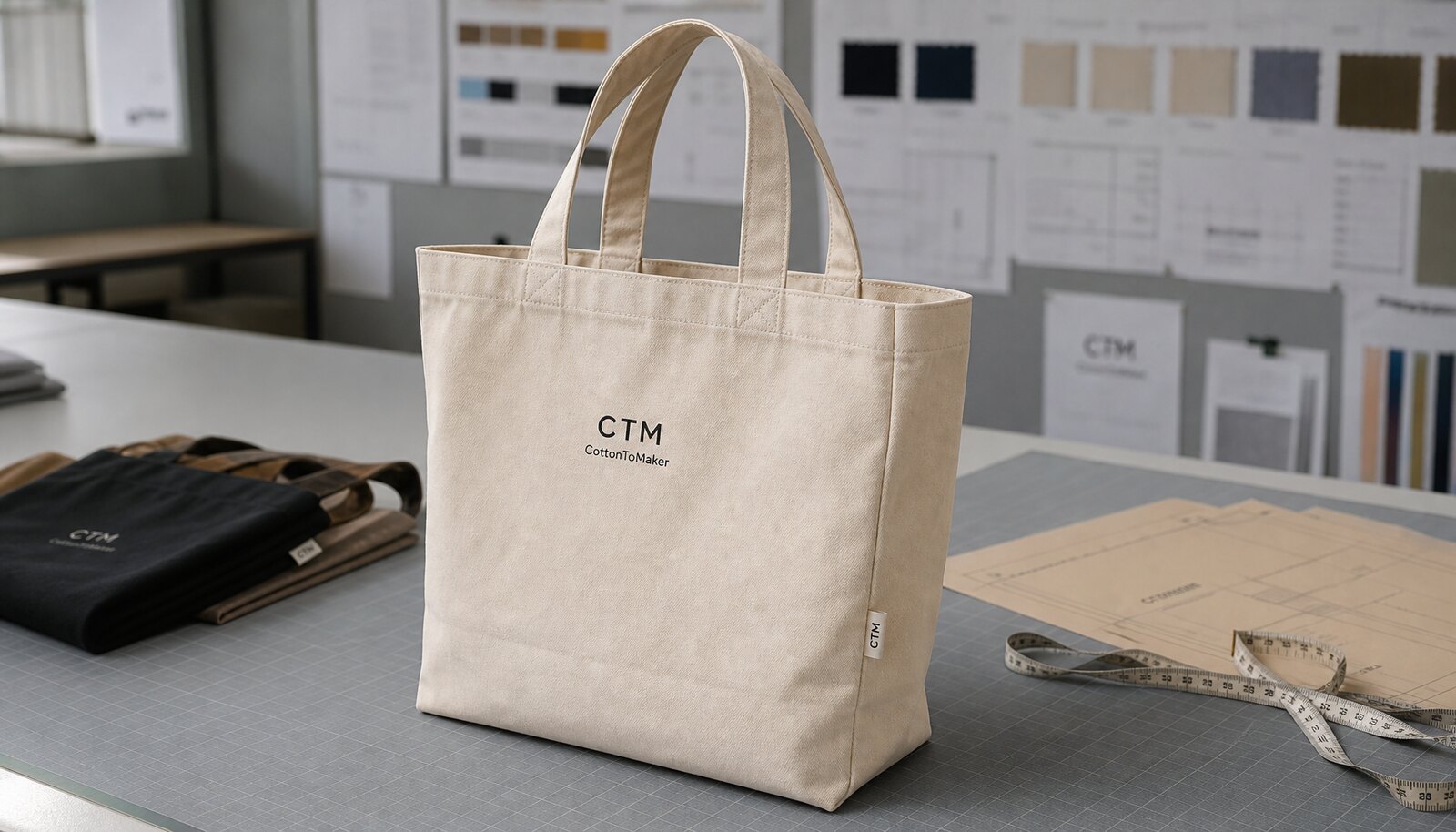
Define the Launch Use Case Before You Choose a Bag
A grocery shopping bag for a brand launch is not just a reusable tote with a logo on it. It has to do one of four jobs: move product at checkout, act as a gift-with-purchase, support an event activation, or sell as a retail item. Each job changes the build. A checkout bag needs quick packing and reliable handles. A gift bag needs branding area and a clean hand feel. A retail bag needs enough structure that the buyer sees value before they ever load it with groceries.
The biggest mistake is asking suppliers to quote a generic reusable bag without defining the actual use. If the bag will carry canned goods, the handle width, reinforcement, and base structure matter more than decorative finishing. If it will be folded into a launch kit, pack size and fold memory matter more than maximum load. Set the load, the shelf position, and the way the customer will first receive the bag before you start comparing price.
- State the use case: checkout, gift, event, or retail sell-through.
- Define the expected load in real terms, not just 'heavy duty'.
- Say where the bag will live in the launch: shelf, counter, mailer, or carton.
- Decide whether the bag must fold flat or hold shape at first display.
Match Material and Build to the Retail Channel
For grocery shopping bags, the material choice usually comes down to cotton canvas, recycled cotton, non-woven PP, or rPET woven fabric. Cotton and canvas are the safest choice when the brand wants a premium, natural look and a better hand feel. Non-woven PP is cheaper and lighter, which works for short launch windows or checkout giveaways. rPET can support a sustainability story, but the buyer still has to check the actual yarn or weave quality instead of relying on the material claim alone.
Use the channel to narrow the spec. If the bag will be sold at retail, 8 oz to 10 oz canvas or a dense cotton twill gives a better shelf impression and better seam stability. If the bag is a launch insert or event handout, 90 to 120 gsm non-woven PP may be enough if the branding is simple. If the bag must be wiped clean after produce or cold items, a coated or laminated construction is more practical than raw cotton, but it changes the print method and the price structure.
- 8 oz to 10 oz canvas works for premium retail launch bags.
- 90 to 120 gsm non-woven PP fits short-run promotional use.
- rPET is useful when the launch needs a recycled-content story.
- A coated or laminated surface helps with wipe-clean use but changes the quote.
Set Fabric Weight, Stitching, and Load Targets
Fabric weight is the easiest spec to misread. Two bags can both be called cotton, but a 140 gsm tote and a 220 gsm canvas behave very differently in the hand, in print, and under load. For a grocery launch bag, the practical range is usually light promotion at 120 to 140 gsm, standard reusable at 150 to 180 gsm, and premium retail at 8 oz to 10 oz canvas or stronger. If the bag needs to carry heavier grocery items, pay attention to the combination of fabric, gusset, and reinforcement, not the fabric number alone.
Stitching matters just as much as fabric. Ask for reinforcement at the handle base and top edge, then set a visible acceptance standard for stitch density, alignment, and loose thread trimming. A launch bag that looks good in a sample room can still fail if the handle bar tack is weak or the seam allowance is inconsistent. Keep the spec practical: size tolerance, handle drop, seam allowance, and the load target should all be written into the RFQ so you can compare factories on the same basis.
- Use finished GSM or oz weight, not just the words cotton or canvas.
- Specify reinforcement at the handle base and top hem.
- Set a real load target that matches grocery use, then test to it.
- Write size tolerance and handle drop into the RFQ before pricing.
Pick the Print Method That Fits the Artwork
Print method drives both cost and risk. Screen print is usually the best choice for a launch bag with one to three solid colors and a clean logo. It gives stable placement, good opacity, and predictable pricing. Heat transfer is useful when the artwork has more detail or a small run needs flexibility, but it can feel less integrated on textured fabric. Woven labels or side labels work well when the launch needs a premium look without covering the whole bag in ink.
Do not let the factory quote a vague decoration line. State the exact print area, the number of colors, the Pantone references, and whether the artwork will hit the front only or both sides. If the bag has a dark base color, the ink type and underbase matter. If the bag is recycled or heavily textured, print coverage can vary, so ask for a strike-off or photo sample before approving bulk production. For multi-SKU launch programs, split the artwork into base logo, seasonal copy, and optional retail label so the supplier can price each part clearly.
- Screen print is the baseline for solid logos and stable unit cost.
- Heat transfer suits small runs or detailed artwork, but inspect durability.
- A woven side label can support premium branding without covering the whole bag.
- Always quote by print area, color count, and fabric color, not just by bag type.
Compare Supplier Routes and MOQ Logic
The cheapest supplier route is not always the lowest-risk route. A direct factory with in-house sewing and printing usually gives the cleanest control over materials, artwork, and final packing. A trading company can be useful if you need several bag categories or you want one buyer-facing contact, but the underlying factory details matter more than the sales pitch. Stock-program distributors can move fastest, yet they often limit size, fabric, and finish options. For a brand launch, the right route depends on how fixed the timeline is and how strict the visual spec must be.
MOQ is usually driven by fabric minimums, print setup, and packing efficiency. One-color screen print on standard stock material may start at a lower quantity, while custom dye, custom label, or multiple print positions can push the minimum up quickly. A supplier that offers a very low MOQ may be amortizing setup costs into the unit price, so compare the total launch spend rather than celebrating the smallest starting quantity. If the bag will be reordered, ask for a tiered quote so you can see how the unit cost moves at the second and third order break.
- Direct factory: best for control and repeatability.
- Trading company: useful for mixed programs, but verify the real plant.
- Stock distributor: best for speed, not for exact specification control.
- Low MOQ often means higher unit cost or fewer customization options.
Approve Samples Against Real-World Use
A sample is not just a visual approval. It is the chance to catch the problems that hurt a launch: handle length that feels wrong on shoulder carry, print placement that sits too high or too low, or fabric that looks heavier in photos than in hand. Ask for the right sample stage. A pre-production sample should reflect the final construction. A strike-off should reflect the final print method. A golden sample should become the reference point for bulk inspection and should be signed off by the person who will actually approve the order.
Do not approve based on a single clean bag pulled from a sample room. Measure it, fold it, load it, and look at the stitching after the bag is stressed. Check whether the logo is centered, whether the handles match in length, whether the bottom gusset sits flat, and whether the fabric shade shifts between panels. If your launch has a tight date, lock the sample in writing and prevent late artwork changes unless you are willing to absorb schedule and cost impact.
- Approve the final construction, not just the printed face.
- Treat the strike-off and the pre-production sample as different checkpoints.
- Use one signed golden sample as the inspection reference.
- Test carry feel, fold behavior, and logo placement before bulk release.
Specify Packing for Retail and Distribution
Packing is easy to overlook and expensive to fix later. A grocery shopping bag for a brand launch may need to look clean on shelf, survive a distribution center, or drop straight into an ecommerce kit. If it is a retail item, individual polybagging, barcode labels, and a hangtag may be necessary. If it is a launch insert, overpacking adds labor and waste. Write the packing format into the quote request so the supplier does not assume a default that works for their factory but not for your channel.
Carton count, carton size, and palletization matter because reusable bags are often bulky and low in value density. A bag that ships neatly in a master carton can become a damage problem if the carton is too large or the folds shift in transit. For launch programs, ask for a packing sample or at least carton photos. Make sure the outer marks, SKU labels, and barcode placement match the warehouse receiving process. A clean bag with the wrong pack code still creates manual work on arrival.
- State whether each bag needs a polybag, hangtag, or retail sticker.
- Confirm carton count and carton dimensions before freight is booked.
- Match barcode placement to the receiving process in your warehouse.
- If the bag is a gift insert, avoid packaging that adds unnecessary labor.
Plan Lead Time Around Material and Artwork Risk
Lead time is usually lost before production starts. Standard materials and a simple print can often move from sample approval to bulk completion in roughly 20 to 35 days, but custom dye, custom trim, or a more complex print setup can push the schedule to 35 to 50 days or more. The real variable is not the sewing line alone. It is fabric availability, print setup, and whether the artwork is frozen early enough for the factory to prepare screens or transfer files without rework.
For a brand launch, the cleanest schedule is to lock the bag size and construction first, then freeze artwork, then approve the sample, then release bulk. If the launch date is fixed, build a buffer for factory holidays, port congestion, and a possible second sample round. A lot of delays start with small changes after approval. One more logo revision or a new barcode format can force the supplier to reset print prep and packing, which pushes the whole order back even if the sewing plan is still on track.
- Standard builds can be faster, but custom dye and complex print add weeks.
- Freeze artwork before the factory cuts screens or starts print prep.
- Build time buffers for holidays, shipping congestion, and sample revisions.
- Do not change labels or barcodes after approval unless the schedule can absorb it.
Compare Quotes by Landed Cost, Not Unit Price
A low unit price can hide a higher launch cost. When comparing grocery shopping bags for brand launches, line up the same Incoterm, the same packing format, and the same artwork scope. One factory may quote the bag only, another may include cartons, another may exclude print screens, and another may price freight as a separate line. If you compare the number at the bottom of the page without normalizing those details, the cheapest quote is often the most expensive order after corrections, delays, or surprise add-ons.
Landed cost should include the bag, the print, the packing, freight, duty, and the cost of any rework you expect from an unclear spec. If one supplier offers a slightly higher unit price but includes carton specs, faster sample approval, and cleaner QC, it can win the launch. This is especially true when the bag is tied to a retail opening or a seasonal campaign. The goal is not to buy the lowest-cost tote. The goal is to buy the bag that arrives on time, looks consistent, and avoids a second round of procurement work.
- Compare the same Incoterm across all quotes.
- Separate bag price, print cost, packing cost, and freight.
- Watch for hidden exclusions such as screens, labels, cartons, or testing.
- Use landed cost and launch risk together, not unit price alone.
Specification comparison for buyers
| Spec decision | Recommended option | When it fits | Buyer risk to check |
|---|---|---|---|
| Supplier route: direct factory with in-house sewing and print | Best for launch programs that need one owner for fabric, decoration, and final packing | 500 to 10,000 pcs with stable artwork and repeatable specs | Confirm that printing is not being subcontracted, or your quote and QC points can drift |
| Supplier route: trading company or sourcing office | Useful when you need multiple bag styles or need one point of contact across several plants | Mixed SKUs, difficult color requests, or a launch that needs flexibility | Check whether the markup hides actual factory details, MOQs, and testing responsibility |
| Supplier route: stock-program distributor with logo add-on | Good for very short timelines and low customization | Fast retail openings, pop-up launches, or test markets | Inventory can limit size, fabric, and handle options, so the bag may not match brand standards |
| Supplier route: recycled-material specialist | Best when the launch story depends on recycled content or an eco claim | Brands that need traceable rPET, recycled cotton, or lower-impact positioning | Ask what proof they can provide for the input stream, because 'recycled' can mean very different things |
| Supplier route: low-MOQ digital printer | Useful for artwork-heavy launches or smaller pilot runs | 100 to 500 pcs with many colors or custom names | Unit price can jump quickly, and wash or rub performance may be weaker than screen print |
| Supplier route: port-based exporter with bundled freight | Helpful when the buyer needs one landed quote and simple logistics | Importers comparing DDP or delivered pricing across regions | Check whether freight, duty, and local delivery are included, not only the bag price |
| Supplier route: private-label bag mill | Best for custom fabric, custom color, and repeat programs | Brands building a core reusable bag line for stores or ecommerce | Higher MOQs and longer lead times are common, especially if the mill must spin or dye to order |
| Supplier route: regional converter near the destination market | Good for urgent replenishment and lower transport risk | Programs that need fast reorders or shorter domestic supply chains | The fabric choice may be narrower, and per-unit cost is often higher than offshore production |
Buyer checklist before sampling
- Define the launch use case: checkout bag, gift-with-purchase, event handout, or sellable retail bag.
- Lock target load and bag size before asking for pricing, including gusset depth and handle drop.
- Specify fabric type and finished weight or GSM, not just 'cotton' or 'reusable'.
- State the print method, number of colors, print area, and approved Pantone references.
- Ask for MOQ by color, by artwork version, and by carton pack if the order has multiple SKUs.
- Request sample type, sample cost, and whether the sample reflects final fabric and final print method.
- Confirm packing format, barcode placement, carton count, and whether retail polybags are required.
- Compare quotes on the same Incoterm and the same scope, including cartons, labels, and inland charges.
Factory quote questions to send
- What exact fabric, finished GSM, and coating or lamination are included in the quote?
- What is the MOQ per design, per color, and per print method?
- Is the price based on EXW, FOB, or DDP, and what freight or duty is excluded?
- How many print colors are included, and what is the cost for extra colors or larger print areas?
- What size tolerance, stitching standard, and seam reinforcement are you pricing against?
- Are inner packing, barcode labels, inserts, and master cartons included or extra?
- What sample will you send for approval, and does it reflect final material and construction?
- What is the lead time after sample approval, and what starts the clock: artwork sign-off, deposit, or PO?
- How do you handle off-spec bags, shortages, or rework after final inspection?
- Can you quote at least three quantity breaks so I can compare launch, base, and reorder pricing?
Quality-control points to confirm
- Measure finished size at multiple points and hold the bag to a tight tolerance, usually within 1 cm for flat dimensions unless the construction is intentionally relaxed.
- Check handle attachment and reinforcement with a real load test that matches the launch use case, not a light hand pull.
- Verify print placement, color density, and edge sharpness against the approved sample or strike-off.
- Inspect stitch quality at stress points, especially the handle base, top hem, side seam, and gusset corners.
- Reject loose threads, skipped stitches, exposed raw edges, or uneven topstitching that will show in retail packing.
- Confirm odor, hand feel, and fabric finish on the first bulk lot, especially for coated or recycled materials.
- Count inner packs and cartons against the packing list and make sure barcode labels scan correctly.
- Record carton strength, carton marking, and pallet stacking limits so the bags survive the inbound route and warehouse handling.