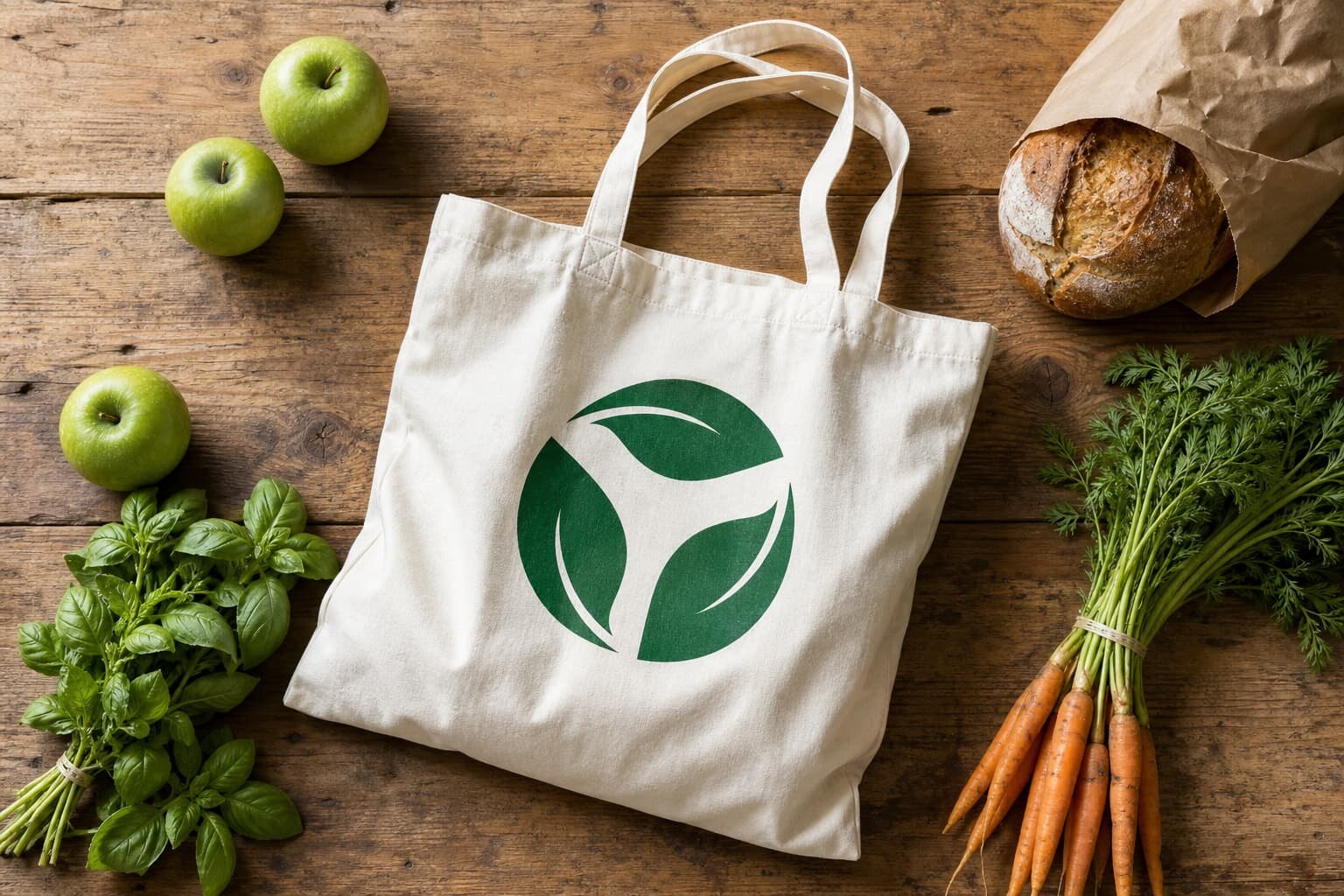
Why MOQ Planning Matters More for GOTS Cotton Totes
For a normal cotton tote bag, MOQ is often treated as a simple sewing-line number. For a GOTS cotton tote bag, that is too narrow. The real MOQ can come from certified fabric availability, dye lot minimums, approved printing chemistry, label control, inspection time, and the factory's need to keep certified and non-certified production separated. If your RFQ only asks, "What is your MOQ?", you may receive a number that is technically possible but not commercially safe.
A better RFQ separates the bag into cost and production drivers. Fabric weight, natural versus dyed color, print method, handle construction, inner packing, and carton plan all affect the quantity where a factory can make the order without excessive waste or setup cost. Buyers who plan MOQ by SKU and by production process usually get clearer quotes, fewer revisions, and fewer last-minute changes after sampling.
- Use MOQ planning to avoid approving a sample that cannot be produced at your target quantity.
- Treat GOTS as a controlled production route, not just a material claim.
- Ask the supplier to explain which part of the order creates the minimum quantity.
- Do not compare supplier quotes unless the MOQ basis is the same.
Define the SKU Before You Ask for a Minimum
Many MOQ problems start because the buyer has not fixed the SKU. A tote bag with one body fabric, one handle length, one front print, and bulk carton packing is a different production job from the same bag in three dyed colors, two artwork positions, and individual retail packing. The factory may quote one MOQ for the simple version, then revise the number when the final specification becomes more complex.
For procurement planning, define one commercial SKU as one bag size, one fabric GSM, one color, one print design, one handle style, and one packing method. If you need multiple artworks for different stores, campaigns, or distributors, ask whether the MOQ applies per artwork or across the whole order. This one question prevents many quote misunderstandings.
- Size: width, height, gusset depth, and handle drop in centimeters or inches.
- Fabric: organic cotton sheeting, canvas, or twill with target GSM.
- Color: natural, bleached, or custom dyed Pantone reference.
- Branding: print method, number of colors, print size, and print position.
- Packing: bulk pack, individual polybag, paper belly band, hangtag, barcode, or carton label.
Fabric GSM Is Often the First MOQ Driver
Fabric weight affects both function and minimum quantity. A 140 GSM organic cotton tote may be practical for event giveaways or light retail packaging, but it will not behave like a structured shopper. A 280 GSM canvas tote gives better body and durability, but the fabric may not be available in small certified lots, especially if you need custom dyeing. A heavy 360 GSM canvas can look premium but increases cutting effort, needle wear, carton weight, freight cost, and sometimes sewing-line minimums.
When you request a quote, ask whether the factory is quoting from existing certified fabric stock or from new fabric production. Stock-supported natural organic cotton may allow lower MOQ, while custom woven or dyed fabric may require a larger commitment. If your buyer team is testing a new product line, it is usually safer to start with a standard construction and upgrade later after sell-through data is available.
- 120-140 GSM: low-cost promotional use, light load, possible print show-through.
- 160-180 GSM: common lightweight tote range for events and retail inserts.
- 220-280 GSM: stronger shopper range with better structure and repeat use.
- 300-380 GSM: premium canvas range, higher cost, higher freight weight, and stricter sewing control.
- Above 380 GSM: possible, but should be justified by retail positioning and load requirement.
Natural, Bleached, or Dyed Color Changes the MOQ
Natural organic cotton usually offers the most flexible MOQ because it avoids dyeing setup and reduces shade approval time. It also fits many brand sustainability programs. The buyer risk is shade variation. Natural cotton is not a controlled white; it can shift from creamy to greyish depending on yarn lot, fabric finishing, and storage. If your brand requires a consistent shelf look across reorders, request an approved shade card and define acceptable shade variation.
Custom dyed GOTS cotton tote bags need more planning. The minimum may be driven by dye house batch size rather than bag sewing quantity. A supplier may accept 500 pieces for natural fabric but require a much higher amount for a custom color because the dyeing process, lab dip approval, colorfastness testing, and wastewater control all have setup costs. Do not approve custom colors only from a digital Pantone reference; ask for a physical lab dip on the actual organic cotton fabric.
- Natural color: usually lower MOQ and faster sample route.
- Bleached fabric: check whether the bleaching process is allowed under the certification and chemical requirements.
- Custom dyed fabric: ask for dye lot MOQ, lab dip timing, and shade tolerance.
- Multiple colors: calculate MOQ per color, not just total order quantity.
- Reorders: keep swatches from approved bulk for comparison.
Print Method Can Raise or Split the MOQ
Most GOTS cotton tote bag buyers use screen printing because it is reliable for logos, text, and flat artwork. Water-based screen print is common for organic cotton positioning, but the exact ink system must fit the buyer's compliance claim. The MOQ impact comes from screen setup, color count, artwork position, curing control, and wastage during print alignment. A one-color front print is much easier to quote than a four-color front-and-back design with tight registration.
Digital print and heat transfer may help for complex artwork or smaller trial runs, but they are not automatically the best choice. The hand feel, wash behavior, cracking risk, edge finish, and certification route must be checked. If the tote bag will be sold as an organic or certified product, the print and label claims must be reviewed with more care than a basic promotional bag.
- One-color screen print: best for practical MOQ and stable bulk quality.
- Multi-color screen print: confirm registration tolerance and setup charges.
- Large solid print area: check opacity, hand feel, drying, and cracking risk.
- Heat transfer: useful for detail, but test adhesion and compliance fit.
- Embroidery or woven label: can raise MOQ due to separate accessory production.
Build a MOQ Ladder Instead of Asking for One Price
A single MOQ quote does not show where the price becomes efficient. Ask for a MOQ ladder, for example 500, 1,000, 2,500, 5,000, and 10,000 pieces, using the same specification. The factory can then show where fabric buying, printing setup, cutting efficiency, and packing labor become more economical. This is especially useful for distributors and brand owners who need to balance launch risk against unit cost.
The ladder should not be used only to push for a lower price. Use it to identify the practical order point. If the price drops sharply at 2,500 pieces because the factory can cut full fabric rolls with less waste, that may be a better buying quantity than forcing 800 pieces with high setup cost. If your forecast is uncertain, request a first order and reorder plan, but confirm whether the same fabric and shade can be maintained later.
- Ask for unit price at several quantities using identical specs.
- Request setup charges separately from the unit price.
- Ask whether lower quantities use stock fabric and higher quantities use made-to-order fabric.
- Check whether print screens, labels, or packing materials can be reused for reorder.
- Confirm overrun and underrun tolerance at each quantity level.
Sample Checks That Protect the Bulk Order
A sample is not only for appearance. For MOQ planning, the sample should prove that the chosen construction can be made with the same process intended for bulk production. If the factory sends a sample made from substitute fabric, non-production print ink, or approximate handles, your buyer team may approve a bag that changes later. Always ask what is exactly the same as bulk and what is only for reference.
For GOTS cotton tote bags, pre-production samples are especially important when custom dyeing, print coverage, fabric GSM, and label claims are involved. Check the bag weight, fabric hand feel, finished dimensions, print position, stitching, handle attachment, and packing. If possible, test the bag with the expected load, not a random office item. A tote intended for books or groceries needs different strength expectations from a lightweight conference bag.
- Measure width, height, gusset, and handle drop after the sample is pressed and packed.
- Weigh the sample and compare against expected fabric GSM and size.
- Check print opacity on natural or darker dyed fabric.
- Pull the handles by hand and inspect stress points for seam distortion.
- Review care label, side label, hangtag, and carton mark wording before bulk.
Packing Choices Affect MOQ, Cost, and Freight
Packing is often added late, but it can change both MOQ and landed cost. Bulk packing in export cartons is usually the most efficient for distributors, kitting centers, and buyers who will repack locally. Individual packing adds material, labor, barcode control, and extra inspection time. A paper belly band may look more retail-ready than a polybag, but it also needs printing, folding, and consistent placement.
For import buyers, carton data should be requested before order confirmation. Carton quantity, carton dimensions, gross weight, net weight, and estimated CBM affect freight and warehouse handling. Heavy canvas totes can make cartons too heavy if the piece count is too high. Light totes can be compressed too tightly and arrive wrinkled if carton packing is not controlled. The best packing plan protects the bag, supports receiving accuracy, and avoids unnecessary material.
- Bulk pack: lowest packing complexity, good for wholesale and repacking.
- Individual polybag: better dust protection, higher labor and material impact.
- Paper belly band: retail presentation, needs separate print and sizing control.
- Hangtag or barcode: confirm data file, placement, and scan readability.
- Export carton: specify carton strength, carton marks, and moisture protection.
Lead Time Should Be Linked to Approval Milestones
A factory lead time is meaningful only when the start point is defined. Some buyers count from purchase order issue, while the factory counts from deposit, approved artwork, approved lab dip, approved sample, and confirmed packing instruction. This mismatch creates schedule pressure and rushed approvals. For GOTS cotton tote bags, lead time may also include certified fabric sourcing, dyeing, print testing, and certificate document preparation.
Build the schedule backwards from your required warehouse arrival date. Include sample production, courier transit, buyer review time, lab dip approval if needed, bulk material preparation, cutting, printing, sewing, packing, final inspection, export booking, and destination clearance. If the order is for a fixed event or retail launch, communicate the real deadline at RFQ stage. A supplier can only advise realistic MOQ and production route when the time limit is known.
- RFQ stage: supplier confirms practical MOQ, fabric route, and print method.
- Sampling stage: buyer approves construction, artwork, and packing direction.
- Pre-production stage: final sample, lab dip, label, and carton mark approval.
- Bulk stage: fabric inspection, cutting, printing, sewing, trimming, and packing.
- Shipment stage: final inspection, documents, booking, loading, and tracking.
Quote Data Buyers Should Compare Line by Line
The lowest unit price is not always the best GOTS cotton tote bag quote. A useful quote shows what is included and what is excluded. If one supplier includes certified fabric, water-based screen print, individual packing, carton marks, and pre-shipment inspection support, while another only quotes a plain natural tote in bulk pack, the prices are not comparable. Ask for a structured quote table so your team can compare real cost drivers.
At minimum, the quote should state fabric type and GSM, bag dimensions, handle specification, print method, print size, print colors, packing method, MOQ basis, sample charge, tooling or screen charge, production lead time, payment terms, Incoterms, carton details, and validity period. If certification is important for your selling channel, request document scope before order approval, not after shipment.
- Material: organic cotton fabric type, GSM, color, and certification route.
- Construction: size, gusset, handle length, seam type, and reinforcement.
- Decoration: print method, color count, print area, and setup charges.
- Packing: unit packing, carton quantity, carton size, weight, and CBM.
- Commercial terms: MOQ, price ladder, lead time, payment, Incoterms, and quote validity.
Specification comparison for buyers
| Spec decision | Recommended option | When it fits | Buyer risk to check |
|---|---|---|---|
| Base fabric weight | 140-180 GSM organic cotton canvas or sheeting | Light retail giveaways, event totes, subscription inserts, and low-load promotional bags | Too light for sharp structure; confirm shrinkage, handle reinforcement, and print show-through before approving |
| Durable shopper fabric | 220-280 GSM organic cotton canvas | Retail merchandise, grocery use, bookstores, gift-with-purchase, and repeat-use brand programs | Higher fabric MOQ and carton weight; confirm quote separates fabric cost from sewing and packing |
| Premium heavy tote fabric | 320-380 GSM organic cotton canvas | Structured premium bags, corporate merchandise, and long-life retail products | MOQ may rise because dyeing, cutting loss, needle setup, and freight weight all increase |
| Bag color | Natural or ecru organic cotton for lowest MOQ | Buyers needing practical launch quantities and faster sampling | Natural shade can vary by yarn lot; request shade tolerance and keep approved lab dip or fabric card |
| Custom dyed color | Reactive dyed organic cotton with approved lab dip | Brand color programs, seasonal retail lines, and private-label collections | Dye lot MOQ may be much higher than sewing MOQ; confirm whether dyeing is GOTS-approved |
| Print method | Water-based screen print for solid logos and medium coverage | Most brand logos, event graphics, and retail designs with 1-4 colors | MOQ increases by color count and artwork position; ask for setup charges and print tolerance |
| Small detailed artwork | Heat transfer only if compliance and hand-feel are acceptable | Fine lines, gradients, photographic designs, and short trial orders | Transfer film may not match organic positioning; confirm wash test, cracking test, and certification limitations |
| Packing style | Bulk pack in export carton with inner polybag only if required | Distributor stock, kitting centers, and buyers repacking locally | Individual packing raises labor and material MOQ; clarify recycled or biodegradable packaging requirements |
Buyer checklist before sampling
- Define the commercial MOQ you can actually absorb by SKU, not only the lowest factory MOQ offered.
- Separate fabric MOQ, dyeing MOQ, printing MOQ, sewing MOQ, and packing MOQ in the RFQ.
- Confirm whether the quoted organic cotton and processing route are covered by valid GOTS scope, not only organic yarn purchase records.
- Choose fabric GSM according to expected load, retail price point, and print coverage before negotiating price.
- Limit early-stage SKU variation: keep one fabric, one bag size, one handle type, and natural color if launch demand is uncertain.
- Request a pre-production sample made with production fabric, production print method, and final packing materials.
- Ask for carton dimensions, gross weight, net weight, pieces per carton, and pallet loading estimate before confirming MOQ.
- Set acceptance criteria for fabric shade, finished size tolerance, print position, seam strength, and handle attachment.
- Check whether overrun and underrun tolerance applies per color, per artwork, or per full purchase order.
- Confirm lead time from deposit and final artwork approval, not from RFQ date.
Factory quote questions to send
- What is your MOQ for this GOTS cotton tote bag by fabric type, bag size, color, print artwork, and packing method?
- Is the MOQ driven by greige fabric, organic cotton fabric stock, dyeing, printing setup, sewing line efficiency, or export carton packing?
- Can you quote natural organic cotton and custom dyed organic cotton separately, with different MOQ assumptions?
- What fabric GSM options are currently practical for GOTS cotton tote bags, and which are stock-supported versus made to order?
- Does your quoted certification route cover fabric weaving, dyeing, printing, sewing, and labeling under GOTS, or only the cotton material?
- What print methods are available under the required compliance route, and what is the minimum print run per color or artwork?
- How many sample rounds are included, what sample type will be made, and what parts of the sample may differ from bulk production?
- What is the expected production lead time after approved sample, approved artwork, and confirmed packing instruction?
- What overrun or underrun percentage should we allow, and how will you invoice shortages or extra pieces?
- Please provide carton quantity, carton size, gross weight, estimated CBM, and any packing MOQ for our landed cost calculation.
Quality-control points to confirm
- Verify fabric GSM with a cut sample or agreed testing method, because finished bag weight alone can hide fabric substitution.
- Check finished bag dimensions after pressing and packing, using agreed tolerance for width, height, gusset, and handle drop.
- Inspect handle attachment with pull test or load test based on intended use, especially on light GSM promotional totes.
- Compare bulk fabric shade against approved swatch under consistent lighting; natural organic cotton can vary between lots.
- Check print color, opacity, registration, position, curing, rub resistance, and wash behavior if care instructions mention washing.
- Review seam allowance, skipped stitches, broken threads, loose thread trimming, and reinforcement stitching at stress points.
- Confirm GOTS labeling and claims match the certificate scope and buyer artwork approval; avoid unsupported wording on hangtags or labels.
- Inspect individual packing, carton marks, barcode labels, carton strength, moisture protection, and carton weight before shipment release.