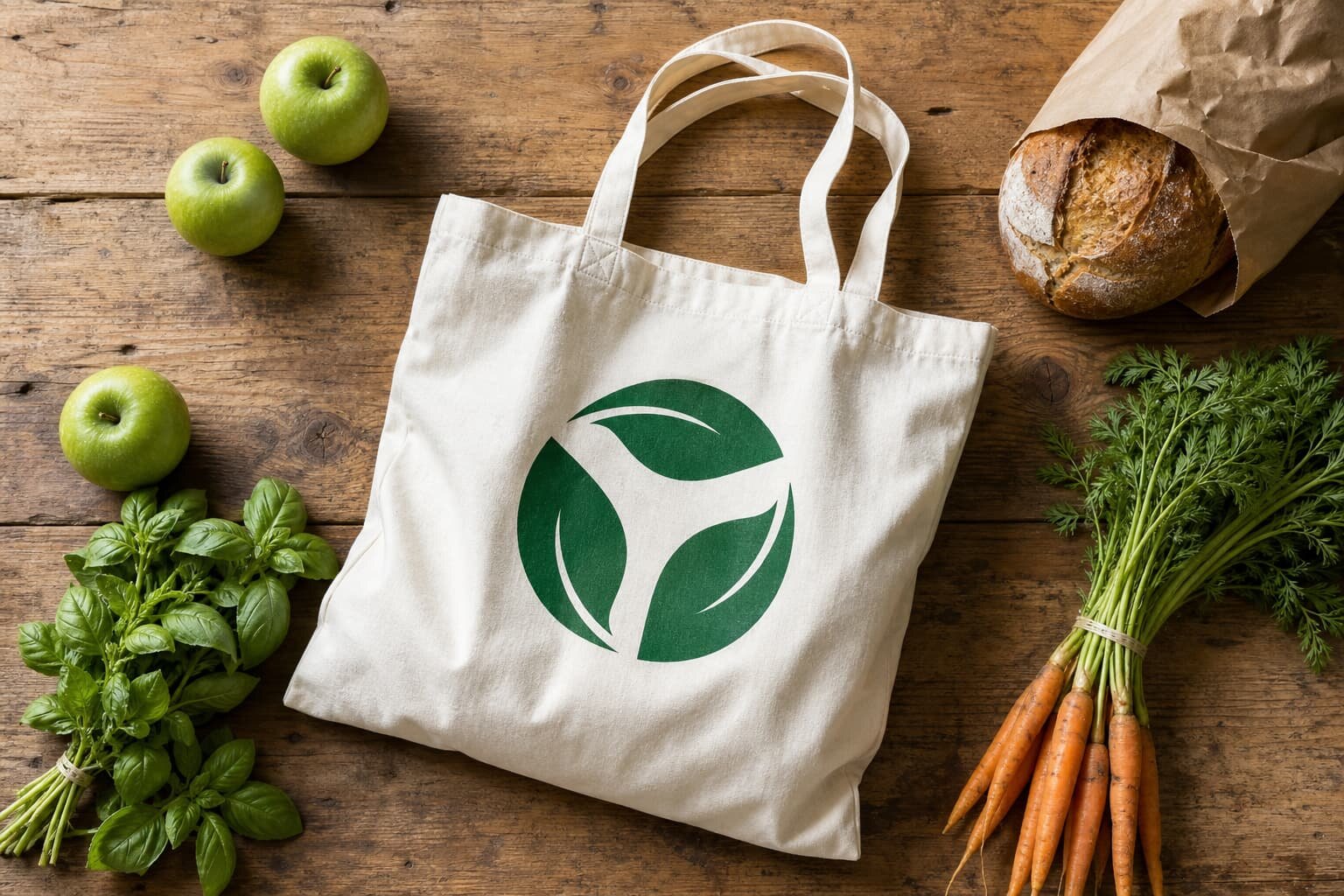
Why Logo Placement Becomes a Procurement Issue
A GOTS cotton tote bag logo placement guide is useful because most RFQs describe the artwork but not the production limits around it. Buyers often write, "print our logo on the front," then compare quotes from several factories that assumed different print sizes, different measuring points, and different sewing sequences. One supplier may price a small one-color center print on a flat panel. Another may include a wide logo close to the side seams, requiring extra handling and higher rejection risk. The unit price difference can look like a supplier issue when the real problem is an incomplete placement specification.
Logo placement affects more than appearance. It influences screen size, ink consumption, panel handling, sewing tolerance, folding method, carton presentation, and sometimes the certification scope of the order. For GOTS cotton tote bags, the buyer also needs to control what is added to the organic cotton product. The bag fabric may be organic, but the print ink, label, sewing thread, and trims still need to be clarified if the buyer expects a GOTS-labeled or GOTS-compliant production route.
- Use finished bag dimensions, not only cutting panel dimensions, when defining the logo position.
- State the exact reference point: top opening, side seam, bottom seam, handle stitch box, or visual center.
- Separate artwork approval from placement approval; both need sample confirmation.
- Ask the factory to confirm whether the chosen placement is suitable for bulk production, not just for one sample.
- Treat logo placement as a purchase-order specification, not as a casual note in an email thread.
Start With Finished Bag Construction
Logo placement should begin with the finished tote structure. A flat tote with no gusset gives the printer a simple rectangular area. A grocery tote with side and bottom gussets changes the usable front panel because the folds pull part of the fabric away from the visible front face. A zipper tote, pocket tote, or reinforced-handle tote has more seam bulk and stitch lines that can interfere with print pressure or embroidery hooping. If the logo is positioned before these construction details are fixed, the approved artwork may not land where the buyer expects after sewing.
For RFQs, procurement teams should ask the factory to mark the printable face on a technical drawing. A common mistake is to center the artwork on the cut panel, then discover that the gusset fold or bottom seam changes the visual center after assembly. The correct approach is to define the visible front panel after sewing and pressing. If the buyer wants the logo to sit visually centered when the bag is filled, that should be stated because a bag hanging empty and a bag standing with contents can present the logo differently.
- Flat tote: easiest for centered logo placement and lower print handling cost.
- Bottom-gusset tote: check logo distance from bottom fold so the design does not curve under the bag.
- Side-gusset tote: keep artwork away from side fold lines unless wraparound artwork is intentionally specified.
- Zipper tote: allow clearance from zipper tape, top seam, and any reinforced opening structure.
- Pocket tote: confirm whether logo sits on the main body, on the pocket, or across pocket stitching.
Fabric GSM Changes the Safe Logo Area
Fabric weight is not just a durability specification. It changes how the logo prints, how the fabric stays flat during printing, and how visible the seams are after packing. Lightweight organic cotton around 120-150 GSM is common for economical promotional totes, but it can be more transparent and less stable under heavy ink coverage. A large dark logo may show slight strike-through or fabric distortion if the ink load is high. Midweight 160-200 GSM cotton is usually easier to balance for cost, print coverage, and daily use. Heavy cotton canvas around 220-340 GSM gives a stronger retail feel but may increase sewing bulk and freight weight.
The buyer should not approve logo size without matching it to fabric weight. A 280 mm wide solid block logo may be acceptable on 10 oz cotton canvas but too heavy for a thin 140 GSM tote. Fine lines and small lettering also behave differently depending on weave density. Natural undyed cotton can have cotton seed specks, slubs, and shade variation. These are normal for many organic cotton bags, but they can affect how crisp a small logo appears, especially in light ink colors.
- 120-150 GSM: keep artwork simple, moderate in size, and avoid heavy solid ink blocks.
- 160-200 GSM: suitable for most one-color or two-color front logo prints on reusable tote bags.
- 220-280 GSM: better for premium merchandise, larger artwork, embroidery, and sewn labels.
- 300 GSM and above: check folding bulk, carton quantity, needle marks, and freight impact.
- Natural cotton shade: approve the logo on actual bulk fabric color, not only on a white digital proof.
Choose Placement by Branding Use, Not Only Symmetry
The best logo position depends on how the tote will be used. A retail buyer may want the logo visible while the bag hangs on a display hook. A distributor may want the logo visible when the bag is carried at a trade show. A grocery retailer may care more about visibility when the bag is filled and sitting upright. These are different viewing conditions. A logo centered on an empty flat bag can look too low when the bag is filled, while a logo placed high for carry visibility may look crowded if the handle stitch box is large.
A practical RFQ should describe the intended use and the preferred visual result. For many standard totes, front center placement with the logo top edge 45-60 mm below the bag opening is workable. The side clearance should normally stay at least 35-50 mm from the side seam on a finished flat tote. For small bags, the clearance may be reduced, but the buyer should ask the factory to confirm. For large grocery totes, a low placement may be hidden when the bag rests on a counter because the lower panel bends toward the base.
- For trade shows, place the logo slightly higher so it remains visible when carried.
- For retail shelf display, confirm how the bag is folded or hung before setting the logo height.
- For grocery use, avoid placing key text near the bottom fold where contents may distort the panel.
- For premium brand merchandise, consider a smaller front logo plus a woven side label.
- For multilingual artwork, allow more width and confirm minimum letter height for print clarity.
Print Method and Placement Must Be Quoted Together
Screen printing, digital printing, heat transfer, embroidery, woven patches, and sewn labels each have different placement limits. Screen printing is the most common method for cotton tote bags because it is economical at volume and works well for bold one-color or two-color logos. Water-based pigment printing can give a softer hand feel, but the buyer should check color strength on natural cotton. Digital printing can support gradients or detailed artwork, but MOQ, fabric pretreatment, color consistency, and wash behavior need confirmation. Embroidery works better on heavier cotton canvas because thin fabric can pucker around dense stitches.
A quote that gives one unit price without stating the print method is not enough for a professional buyer. The same logo size can have different setup costs, defect rates, and lead times depending on method. If the logo is close to seams, screen printing after sewing may be difficult because the print table needs a flat surface. Printing before sewing can improve print flatness, but it requires tight alignment during sewing. The buyer should ask the factory which sequence they recommend and whether the placement tolerance changes.
- Screen print: efficient for bulk orders, simple colors, and stable front-center placement.
- Water-based print: softer hand feel, but check coverage on natural or dyed organic cotton.
- Digital print: useful for complex artwork, but confirm pretreatment and color repeatability.
- Embroidery: premium look, better on heavier GSM, but dense logos may pucker lighter cotton.
- Woven or printed label: good for minimal branding, but material and ink must match order requirements.
GOTS Order Scope and Logo Materials
For organic cotton tote bags, buyers must be careful with how they describe GOTS requirements. There is a difference between a bag made from organic cotton fabric and a finished product supplied with GOTS labeling or handled under a certified processing chain. If the logo uses ink, embroidery thread, adhesive backing, woven labels, zipper tape, or other trims, these materials may need to be reviewed for the intended compliance route. The factory should not be expected to guess whether the buyer only needs organic cotton content or full GOTS-related documentation for the finished product.
Logo placement connects to this issue because branding often introduces the non-fabric materials. A side label may look simple, but it still has yarn, ink, folding, and sewing thread. A heat transfer may involve adhesive chemistry. A printed logo may require approved pigments and proper wastewater control at the print facility. Procurement teams should define the claim they intend to make in the destination market, then ask the factory to confirm what documents can be supplied. Avoid wording such as "GOTS bag with logo" without saying whether the logo process is included in the certified production scope.
- State whether the order requires organic cotton fabric only or a GOTS-certified finished product route.
- Ask if printing is done in-house or by an approved subcontracted print workshop.
- Confirm whether ink, label, thread, and accessory information can be listed in the production file.
- Do not approve substitute labels, inks, or trims without checking the compliance impact.
- Keep the approved artwork, material list, and transaction-related documents together for audit traceability.
MOQ Logic for Logo Placement Decisions
MOQ for a GOTS cotton tote bag with logo is often driven by more than sewing capacity. Organic cotton fabric may have a fabric MOQ, especially if the buyer wants a custom dyed shade or specific GSM. Printing has setup logic based on screen making, ink mixing, machine setup, and drying time. Woven labels may have their own MOQ. Cartons, barcode stickers, and retail packaging can also add minimum quantities. If the buyer changes logo placement after sampling, the factory may need to remake screens, adjust templates, or redo the pre-production sample.
A smart buyer compares supplier quotes by asking what each MOQ is based on. For example, a factory might accept 500 pieces using stock natural cotton fabric and one-color screen print, but require 1,000 or 2,000 pieces for custom dyed organic fabric or a special woven side label. A large logo can also change the economics because a bigger screen and higher ink use may apply. For repeat orders, buyers should ask whether screens or templates can be retained, how long they are stored, and whether repeat placement will match the first order.
- Low MOQ is easier with stock natural or bleached organic cotton fabric.
- Custom dyed fabric usually increases MOQ and lead time because fabric preparation is separate from sewing.
- Large screen print areas may increase setup cost even if unit sewing cost stays the same.
- Private woven labels can create a separate accessory MOQ outside the bag quantity.
- Repeat orders need retained placement records, not just the original artwork file.
Sample Approval: What Buyers Should Measure
A sample should prove construction, fabric, print method, and placement at the same time. Many disputes happen because a buyer approves a blank tote for size and later approves a print strike-off on loose fabric, but never approves the final logo on the finished bag. That leaves too much room for interpretation. For logo placement, the pre-production sample should use final fabric GSM, final fabric color, final handle length, final seam construction, and the actual print or label method intended for bulk.
When checking the sample, measure from fixed points. Do not rely only on whether the logo looks centered in a photo. Photos can distort proportions, and bags may not be laid flat the same way. Ask the factory to send a front photo with a ruler showing distance from the top opening to logo top edge, from side seam to logo edge, and from bottom seam or fold to logo bottom edge. If the bag has a gusset, request photos both empty and lightly filled so the buyer can see how the logo sits in real use.
- Check logo width and height against the artwork approval sheet.
- Measure top clearance, side clearance, and bottom clearance on the finished bag.
- Look for print skew by comparing logo baseline against the top opening or seam line.
- Check if handle stitching or reinforcement visually competes with the logo.
- Fold the bag as it will be packed and check whether the logo lands on a hard crease.
- Keep one approved sample sealed or clearly labeled for bulk inspection reference.
Packing and Lead Time Effects
Packing is often ignored in logo placement decisions, but it can affect the product the buyer receives. If the tote is folded directly through the printed logo, a heavy ink area may show a fold line after long transit. Natural cotton fabric can also pick up pressure marks from tight packing. For retail or brand merchandise orders, ask the factory to propose a folding method that keeps the main logo visible or avoids a sharp crease through key artwork. If individual polybags are restricted by the buyer's market policy, paper bands, bulk inner packs, or carton dividers may need to be discussed early.
Lead time should be counted from final approvals, not from the first RFQ date. A typical workflow includes artwork confirmation, material confirmation, sample making, sample shipping or photo approval, bulk fabric preparation, printing, curing or drying, sewing if panels were printed first, final QC, packing, and export carton preparation. GOTS-related document handling or subcontracted printing can add coordination time. The buyer should ask the factory to separate sample lead time from bulk lead time and identify which approval delays will move the shipment date.
- Ask whether bags are folded once, twice, rolled, flat-packed, or packed by inner bundle.
- Avoid placing a dense printed logo exactly on the planned fold line when possible.
- Confirm carton quantity because heavy GSM cotton changes carton weight quickly.
- Request carton dimensions and gross weight for freight planning before final PO if shipment cost matters.
- Approve all artwork, label, packing, and document requirements before the factory books production capacity.
Quote Data That Makes Supplier Comparison Fair
To compare supplier quotes properly, the RFQ should remove assumptions. A useful quote for a GOTS cotton tote bag logo placement project should state bag size, fabric GSM, organic cotton fabric type, construction details, handle size, print method, logo size, logo position, number of colors, MOQ, sample cost, sample lead time, bulk lead time, packing method, carton data, and document scope. Without these details, the lowest price may simply reflect a smaller print, lighter fabric, weaker packing, or incomplete compliance work.
Ask suppliers to list optional costs separately. For example, a buyer may want to compare front screen print versus woven side label, or 180 GSM versus 260 GSM cotton canvas. If all options are mixed into one price, the buyer cannot see which decision changes cost. Placement-related costs should also be visible when relevant, such as oversized screen setup, embroidery digitizing, label tooling, print screen remake after artwork changes, or extra sample rounds.
- Request a quote line for each fabric GSM option instead of a vague cotton tote price.
- State the exact print size and placement so all factories price the same job.
- Ask whether setup charges are included, waived at MOQ, or billed separately.
- Separate unit price, sample charge, packing upgrade, document handling, and freight-ready carton data.
- Require the supplier to confirm quote validity because cotton fabric and currency changes can affect repeat pricing.
Specification comparison for buyers
| Spec decision | Recommended option | When it fits | Buyer risk to check |
|---|---|---|---|
| Front center logo on flat tote body | Keep logo 45-60 mm below bag opening and 35-50 mm away from side seams | Best for retail, corporate giveaway, grocery, and brand merchandise totes | If the factory prints after sewing, seam bulk can reduce flatness near the edges |
| Large artwork on 140-170 GSM cotton | Use simple screen print or water-based pigment with moderate ink coverage | Good for cost-sensitive organic cotton campaigns and lightweight shopper bags | Thin fabric may show ink strike-through, puckering, or transparency under dark ink |
| Premium logo on 220-280 GSM cotton canvas | Use screen print, embroidery, woven patch, or sewn label depending on brand position | Fits retail merchandise, bookstore totes, conference bags, and reusable gift bags | Heavier fabric raises freight weight and may need stronger needle and seam settings |
| Logo near pocket, gusset, or zipper | Request a placement template based on finished bag dimensions, not cutting panel only | Useful for zipper tote bags, pocket totes, and structured canvas promotional bags | Artwork can shift after sewing if placement is marked before shrinkage and assembly |
| Side seam brand label | Use GOTS-compliant woven cotton label or printed cotton label with approved ink | Works when the main front artwork must stay clean or minimal | Buyer must confirm label material, ink, and sewing thread are included in certification scope |
| Handle print or handle label | Limit to short logo, one-color print, or folded woven label on reinforced handle area | Suitable for boutique packaging, wine retail, and brand recognition during carry | Handle curve and stitching can distort long artwork or reduce wash durability |
Buyer checklist before sampling
- Confirm finished bag size, gusset size, handle length, and fabric GSM before approving logo position.
- Specify whether logo placement is measured from the top opening, side seam, bottom seam, or visual center of the finished bag.
- Define logo width, height, color references, print method, and tolerance for placement shift.
- Ask whether the tote is printed before sewing or after sewing, because this changes achievable edge clearance.
- Check that inks, labels, threads, and any accessory used near the logo are compatible with the GOTS order scope.
- Request one pre-production sample using final fabric, final print method, final handle construction, and final packing method.
- Approve a printed placement template or photo with ruler before bulk production starts.
- Set carton packing instructions so the logo is not creased sharply, rubbed, or hidden by folding.
- Require QC photos showing front logo position, side label position, seam clearance, and carton packing.
- Include logo placement and print appearance as acceptance points in the purchase order or approved spec sheet.
Factory quote questions to send
- Will the logo be printed on cut panels before sewing or on finished bags after sewing?
- What is your recommended maximum print size for this tote size, fabric GSM, and seam construction?
- What placement tolerance can you control in bulk production, measured in millimeters on finished bags?
- Can you provide a paper placement template or digital dieline showing seams, gusset folds, handles, and safe print area?
- Which print methods are available under the GOTS order scope for this fabric color and artwork design?
- Is the quoted MOQ based on bag sewing quantity, print setup quantity, fabric dye lot, label MOQ, or packing material MOQ?
- How many sample rounds are included, and are sample print screens, digital print setup, or embroidery setup charged separately?
- What bulk lead time applies after approval of printed pre-production sample and receipt of final GOTS-related order documents?
- How will the bags be folded or packed so the logo does not sit directly on a hard crease or abrasive carton surface?
- What quote data will you list separately for fabric, printing, label, packing, testing, certification document handling, and freight-ready carton details?
Quality-control points to confirm
- Measure logo placement from the same reference points used in the approved artwork sheet, not by visual judgment only.
- Check at least top, middle, and bottom layers from packed cartons because folding pressure can affect logo appearance.
- Compare print color and coverage against the approved sample under neutral light before accepting bulk.
- Inspect seam distortion around printed areas, especially when artwork is close to side seams, gusset folds, or handle reinforcement.
- Rub test printed logo surface after normal handling to check for weak curing or excess pigment residue.
- Verify side label direction, label position, and stitch density if the brand mark is sewn rather than printed.
- Confirm carton marks, polybag use, folding method, and inner packing align with buyer requirements and market restrictions.
- Keep retained samples from pre-production and bulk shipment for claim handling and repeat-order consistency.