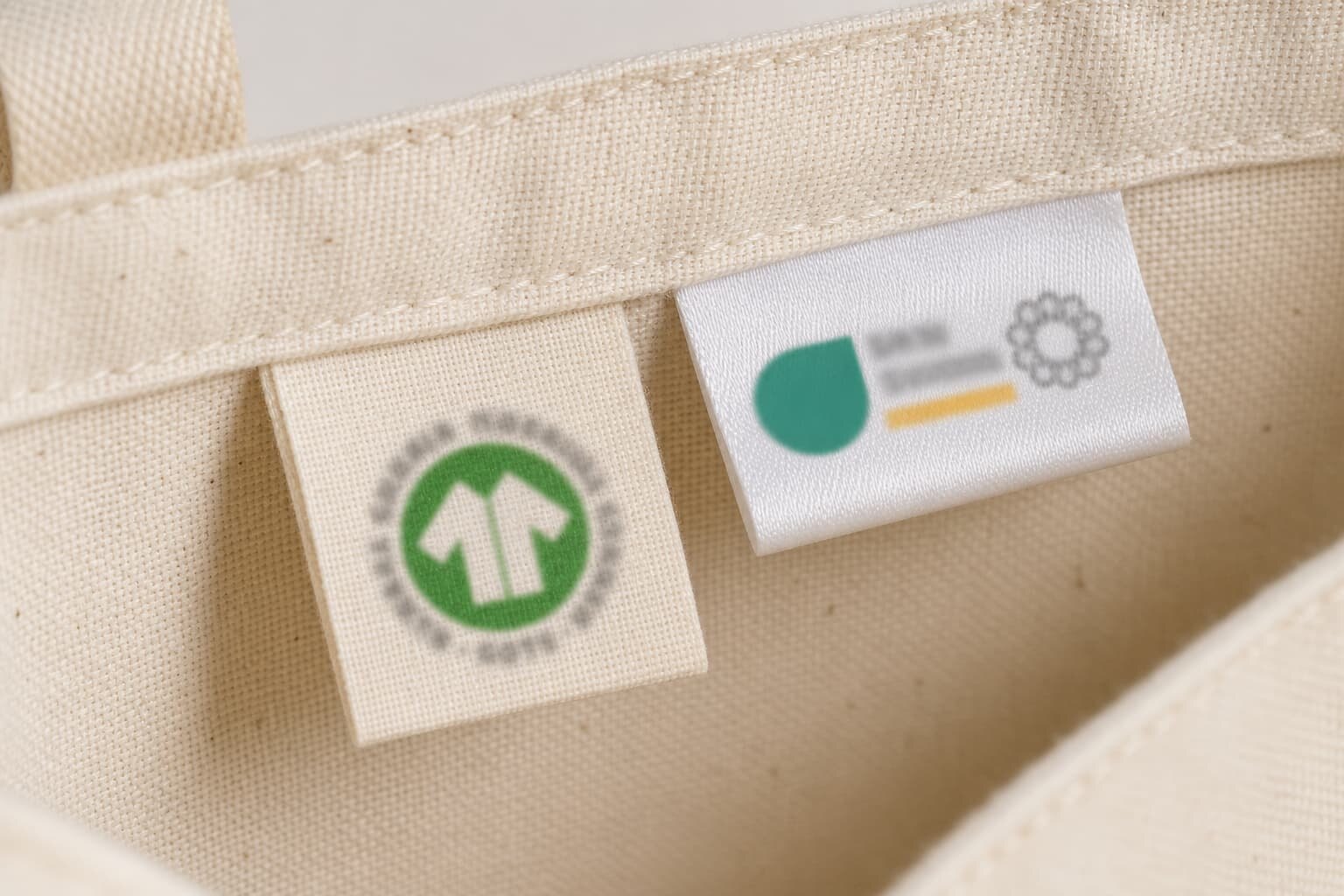
What a GOTS tote quote must prove
A good factory quote for a GOTS cotton tote bag should do more than give a unit price. It should prove what material is certified, what construction is included, what decoration method is priced, what packing is assumed, and which documents can be supplied. Without these details, procurement teams often compare a full compliance quote against a basic cotton bag quote and think one supplier is expensive.
The buying problem is usually not that factories refuse to quote. The problem is that different factories quote different assumptions. One may price 10 oz organic cotton canvas with water-based screen print, reinforced handles, carton packing, and document support. Another may quote lighter cotton, non-certified material, no transaction certificate, and a smaller print area. The unit price difference looks attractive until sample approval or retailer compliance review exposes the gap.
- Ask the factory to separate certified material cost from sewing, printing, packing, and documentation.
- Require finished size and construction details in the quote sheet, not only a product photo.
- Check whether the GOTS claim applies to fabric sourcing only or to the finished product supply chain.
- Do not compare suppliers until fabric weight, print method, packing, and document scope are aligned.
Define the bag before asking for price
The fastest way to receive unusable quotes is to send only a reference image and ask for the best price. A tote bag looks simple, but small specification changes affect cotton consumption, cutting loss, sewing time, print setup, carton volume, and MOQ. For a buyer, the RFQ should describe the bag as a manufacturing item, not as a lifestyle product.
Use finished dimensions, not approximate retail wording. A flat 38 x 42 cm tote and a 38 x 42 x 10 cm gusseted tote are different products. A 2.5 cm wide handle with 65 cm total length costs and performs differently from a 3.8 cm handle with 70 cm total length. If the bag will carry bottles, books, groceries, or boxed goods, tell the factory because seam type and handle reinforcement may need adjustment.
- State width, height, bottom gusset, side gusset if any, handle width, and handle drop.
- Confirm whether dimensions are measured flat, including gusset fold, or as usable internal space.
- Specify open top, snap button, zipper, inside pocket, or no closure before comparing quotes.
- Mention expected use weight, such as light event giveaway, retail packaging, or repeated grocery use.
Fabric weight and GSM change both cost and performance
For organic cotton totes, fabric weight is one of the largest cost drivers. Many import buyers use ounces because tote canvas is often traded that way, while mills and factories may also reference GSM. A rough conversion is useful, but it is not enough for purchasing control because finishing, shrinkage, and weave density affect the final hand feel. A 10 oz canvas from one mill may not feel identical to another 10 oz canvas.
For most branded retail tote bags, 8 oz can work for light duty, 10 oz is a practical middle range, and 12 oz gives a stronger premium feel. Heavier options may improve perceived value, but they also increase cotton cost, sewing resistance, carton weight, and freight cost. If the program is price sensitive, do not simply lower GSM without checking print coverage, opacity, and seam strength.
- 6 oz to 7 oz: lightweight event bags, lower cost, less structure, weaker premium feel.
- 8 oz: common promotional tote range, suitable for simple prints and lighter contents.
- 10 oz: balanced retail choice for reusable brand totes and packaging programs.
- 12 oz: stronger hand feel for merchandise, bookstores, grocery, and higher-value campaigns.
- 14 oz and above: premium use, but higher sewing, freight, and needle-breakage risk.
GOTS scope affects the real quote
The word organic in an RFQ is not the same as a controlled GOTS quotation. Buyers should ask where the certification responsibility sits. Some factories can process certified material under their own scope. Some buy certified fabric from a certified mill but do not have finished product scope. Some can support a transaction certificate through the supply chain only when the order follows strict document and labeling rules.
This matters because document handling is not just paperwork after production. It can affect fabric sourcing, label wording, order registration, production segregation, and shipment timing. If your retailer or distributor requires a transaction certificate, say that at RFQ stage. If you only need certified organic cotton fabric but not a finished product claim, say that too. Ambiguity creates delays and quote disputes.
- Ask for the supplier's scope certificate or the relevant certified supply chain document.
- Clarify whether transaction certificate cost and timing are included in the quote.
- Confirm approved claim wording before printing labels, hangtags, or packaging.
- Avoid mixing certified and non-certified fabric in the same order without clear segregation rules.
- Keep purchase order, invoice, packing list, and product description consistent with certification wording.
Print method should be quoted with artwork facts
Printing is often where the cheapest tote quote becomes unreliable. A factory cannot price accurately if it does not know artwork size, number of colors, print position, ink type, and whether artwork crosses seams. For GOTS cotton tote programs, buyers also need to confirm whether the ink system is acceptable for the claim, retailer standard, and destination market requirements.
Water-based screen printing is a common choice for one to three color logos on cotton canvas. It has a softer hand feel than heavy plastisol-style prints and works well on natural fabric. Digital pigment print can be useful for low MOQ or detailed artwork, but color matching and cost per piece may differ. Heat transfer can produce sharp artwork, but buyers should check hand feel, wash behavior, and whether it fits the brand's sustainability position.
- Provide vector artwork and exact print size, such as 220 mm wide front center.
- State Pantone or approved color reference, but allow realistic tolerance on natural cotton.
- Ask whether screen setup charges are included or listed separately.
- Request a print strike-off on actual fabric before bulk printing.
- Check curing, rub resistance, cracking, and print edge sharpness on the approved sample.
MOQ logic is not one number
Many buyers ask for the MOQ and receive a single figure, but tote bag MOQ is built from several smaller constraints. Fabric booking MOQ may differ from sewing line MOQ. Dyed fabric MOQ may be higher than natural unbleached fabric. Screen printing MOQ depends on setup efficiency and color count. Custom woven labels or hangtags may have their own supplier minimums.
A useful quote explains MOQ by decision point. For example, natural organic cotton canvas may be available at a lower MOQ if the factory stocks certified greige or finished fabric. Custom dyed certified fabric usually needs mill planning and color approval, so the MOQ and lead time rise. If you are testing a new retail program, ask the factory to quote the minimum practical production quantity and the better price break quantity separately.
- Ask MOQ for natural fabric, dyed fabric, each print design, each bag size, and each packing method.
- Request price breaks at realistic levels, such as 500, 1000, 3000, and 5000 pieces if suitable.
- Check whether mixed artwork can share the same fabric lot to reduce material waste.
- Confirm whether sample quantity uses leftover fabric or booked production fabric.
- Treat very low MOQ with caution if certification documents are required.
Lead time depends on approvals, not only sewing days
A factory lead time is only meaningful when the start point is defined. Some suppliers count from deposit receipt. Others count from artwork approval, fabric arrival, pre-production sample approval, or confirmation of certification documents. Procurement teams should ask for a timeline with decision gates, because most delays happen before sewing starts.
For a controlled GOTS cotton tote order, build the schedule around fabric confirmation, sample approval, print strike-off, bulk cutting, sewing, inspection, packing, and document preparation. If the buyer needs retailer approval, do not let bulk fabric cutting start before the approved sample is signed off. If shipment is seasonal, add buffer for lab testing, carton changes, and booking.
- Separate sample lead time from bulk production lead time.
- Confirm whether fabric is in stock, booked from mill, or custom dyed.
- Ask when the factory needs final artwork to keep the planned ship date.
- Include time for print strike-off approval and pre-production sample courier transit.
- Do not approve mass printing until print color, position, and curing are checked.
Packing assumptions can change landed cost
Packing is often treated as a small detail, but it affects unit cost, carton volume, warehouse handling, and damage risk. A bulk-packed tote in export cartons is usually cheaper and lower volume than individually packed units. However, retail distribution, gift kits, e-commerce, and store delivery may require individual folding, labels, barcodes, or recycled polybags.
Ask the factory to quote the packing method that matches your downstream process. If your warehouse requires cartons under a certain gross weight, state it. Heavy canvas totes can make cartons too heavy if the count per carton is copied from a lighter bag. If the bags are natural cotton, moisture protection and carton quality matter because stains and odor are difficult to repair after shipment.
- Define bulk pack, folded pack, individual paper band, individual polybag, or retail-ready pack.
- Set carton gross weight limit, often around 12 kg to 18 kg depending on handling rules.
- Ask for estimated carton size and pieces per carton in the quotation.
- Confirm shipping marks, barcode labels, carton ply, and inner liner if required.
- Request a packed sample when carton cube or presentation matters.
How to compare factory quote data
A clean comparison sheet should not rank factories by unit price alone. Put every quote into the same structure: fabric, certification scope, cutting and sewing, print, labels, packing, testing, documents, lead time, payment terms, and exclusions. This exposes whether a lower price is a real efficiency advantage or simply a missing requirement.
Look especially for vague lines such as cotton canvas bag with logo. That does not tell you fabric weight, organic status, print method, handle reinforcement, or packing. Also check whether the quote is valid long enough for your internal approval process. Organic cotton and currency conditions can move, so a quote with a short validity period may need reconfirmation before purchase order release.
- Compare fabric weight and finished dimensions first, before price.
- Check whether printing includes setup, screen charges, ink type, and number of colors.
- Separate unit cost from sample cost, courier cost, testing cost, and document cost.
- Review payment terms, quote validity, port terms, and incoterms.
- Ask suppliers to list exclusions instead of discovering them after order placement.
Sample approval criteria before purchase order
A sample should not be approved only because it looks close to the photo. For a GOTS cotton tote bag program, the buyer should check measurable and repeatable criteria. Measure the bag flat, check handle drop, confirm fabric weight, inspect seam reinforcement, test print adhesion, and review labels. If the sample uses substitute fabric, mark it clearly and do not approve it as final bulk standard.
Keep one signed sample with the factory and one with the buyer or inspection company. For printed bags, approve both the physical bag and the print strike-off. Natural cotton can have small shade and slub variation, so define what is acceptable before production. If the brand requires a clean premium look, set stricter limits for stains, dark specks, oil marks, and weaving defects.
- Measure width, height, gusset, handle width, and handle drop against the RFQ.
- Weigh a cut fabric piece or request lab confirmation if GSM is critical.
- Check stitching for skipped stitches, loose threads, seam allowance, and reinforcement strength.
- Bend and rub the print area to check curing and cracking risk.
- Confirm labels, logo placement, care instructions, and country-of-origin marking.
Specification comparison for buyers
| Spec decision | Recommended option | When it fits | Buyer risk to check |
|---|---|---|---|
| Fabric weight | 10 oz or 12 oz certified organic cotton canvas | Retail tote, event merchandise, grocery reuse, brand gift programs | Confirm whether quote uses finished fabric weight or greige fabric weight before washing and finishing |
| Bag structure | Flat tote for lowest sewing cost; bottom gusset for better shelf and carrying volume | Flat style fits documents and light retail; gusset fits grocery, packaging sets, and heavier merchandise | A cheaper quote may remove gusset width, reduce seam allowance, or use single stitching |
| Handle construction | Self-fabric handles with reinforced cross stitch | Most brand and retail tote programs where strength and natural appearance matter | Check handle width, finished length, folded edge, and reinforcement size |
| Print method | Water-based screen print for simple logos; digital pigment print for short-run multi-color artwork | Screen print fits stable repeat orders; digital fits sampling and detailed artwork | Confirm ink approval, curing, hand feel, and whether print area crosses seams or gussets |
| Certification scope | GOTS certified material with transaction certificate availability when required | Importers selling as organic textile goods or supplying retailers with document control | Do not accept vague organic cotton wording without chain-of-custody scope and document timing |
| Packing method | Bulk pack in export carton with moisture protection; individual recycled polybag only when retail or distribution needs it | Bulk pack fits warehouse distribution; individual bagging fits e-commerce, kits, or shop floor handling | Individual packing adds labor, material, carton volume, and possible plastic policy concerns |
Buyer checklist before sampling
- Define bag size as finished dimensions: width, height, gusset, handle width, and handle drop.
- State fabric type and weight clearly, such as certified organic cotton canvas, 10 oz, natural color, unbleached.
- Ask whether GSM or ounce weight is measured before or after dyeing, washing, or finishing.
- Specify certification expectation: GOTS certified fabric only, finished product scope, or transaction certificate required.
- Attach vector artwork and define print size, position, Pantone references, and allowed print tolerance.
- Confirm stitching standard: seam type, stitches per inch, reinforcement, thread color, and edge finishing.
- Request sample stages: material swatch, pre-production sample, print strike-off, and packed sample if carton volume matters.
- Ask for MOQ by fabric color, print color count, style, and certification document requirement, not only one total MOQ.
- Require quote split for bag cost, printing, labeling, packing, testing, documentation, and inland freight if applicable.
- Confirm lead time basis: after deposit, artwork approval, fabric booking, or pre-production sample approval.
Factory quote questions to send
- Is the quoted cotton fabric GOTS certified under your own scope, your fabric mill's scope, or another supply chain partner's scope?
- Can you provide the certification number, scope certificate copy, and expected timing for any transaction certificate before shipment?
- What is the exact fabric construction and weight: plain weave or canvas, yarn count if available, GSM or oz, and natural or dyed finish?
- Is the quoted weight based on greige fabric, finished fabric, or an internal factory standard conversion?
- What MOQ applies separately to fabric booking, dyeing if any, printing, label production, and final bag production?
- Which print method is quoted, how many colors are included, and what is the maximum print area before price changes?
- What sample cost and sample lead time apply for blank sample, print strike-off, and full pre-production sample?
- What seam construction, handle reinforcement, stitch density, and thread type are included in the base price?
- How many pieces are packed per carton, what are the estimated carton dimensions and gross weight, and is individual packing included?
- What are the quote validity period, payment terms, production lead time, document list, and exclusions such as testing or courier cost?
Quality-control points to confirm
- Verify finished bag dimensions against the approved sample and allow only agreed tolerance, commonly plus or minus 0.5 cm to 1 cm depending on size.
- Check fabric hand feel, weight, shade, slubs, stains, weaving defects, and odor before cutting bulk fabric.
- Confirm handle drop and handle length are consistent across samples and bulk production.
- Inspect handle reinforcement for skipped stitches, loose thread, off-center cross stitch, and weak backtacking.
- Check side seams, bottom seams, gusset corners, and mouth hem for seam allowance and puckering.
- Test print adhesion, curing, color matching, registration, cracking after bending, and print placement tolerance.
- Confirm labels, care instructions, country of origin marking, and organic claim wording match buyer approval.
- Review carton packing count, moisture protection, carton strength, shipping marks, and pallet requirements if used.
- Request inline inspection when fabric cutting starts and final random inspection after at least 80 percent packing is complete.
- Keep approved sample, print strike-off, and packed sample as reference during final inspection.