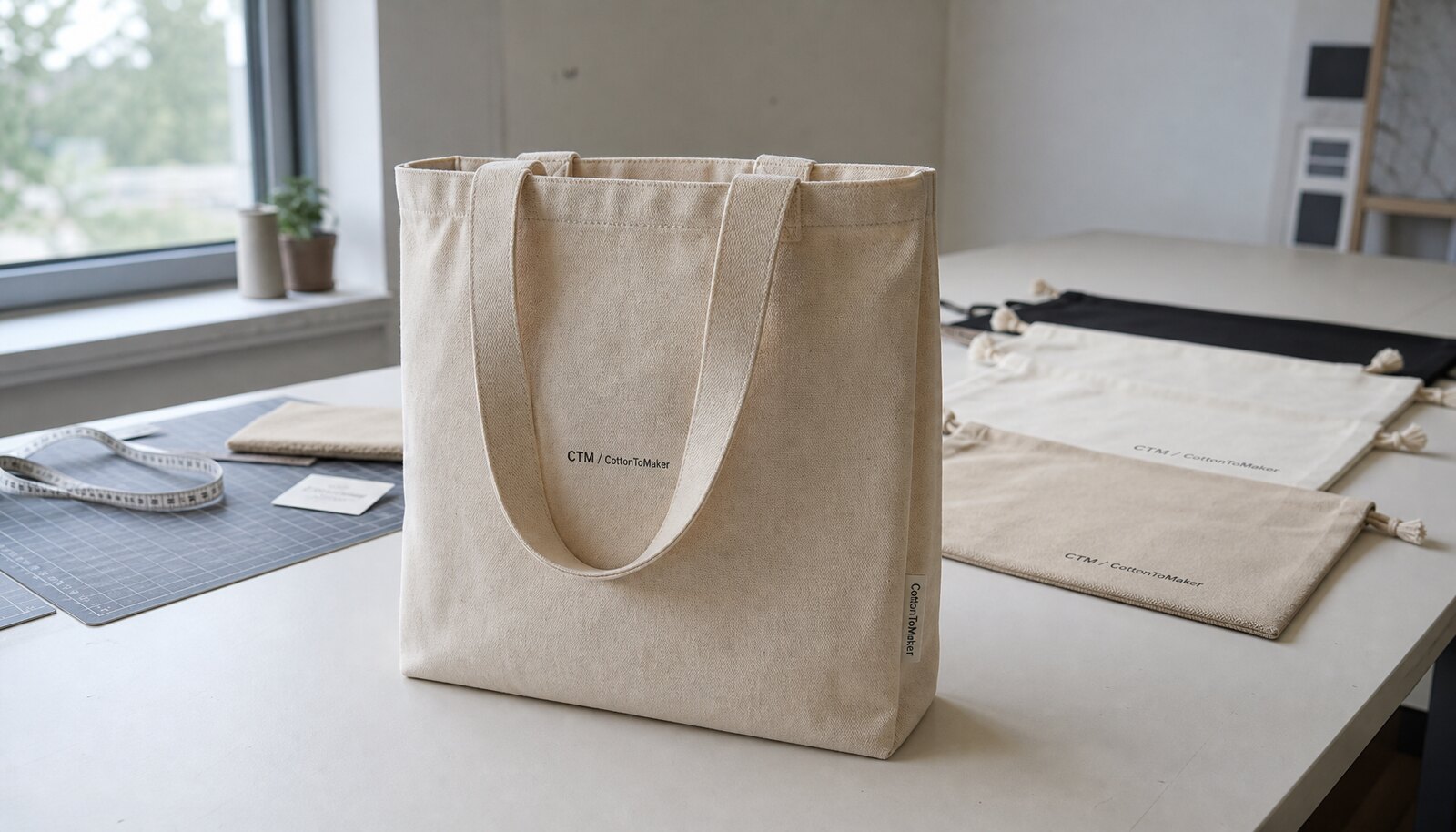
What GOTS Means for Event Bags
For event sourcing, GOTS is not only a fabric label. It is a control system that lets procurement prove where the bag came from, which steps were certified, and what claim language the finished product can support. That matters because event bags sit close to brand messaging. A conference tote printed with a sustainability message can trigger review from marketing, ESG, legal, and sometimes the client. If the product route is not clean, the bag can become a paperwork problem even when the samples look fine.
The practical question is simple: are you buying a bag made from certified organic cotton, or are you buying a finished bag that can be sold and described as a GOTS-certified product? Those are not the same. The answer changes the supplier route, the document trail, and the wording you can place on the bag, hangtag, carton, and invoice. For procurement, the safest process is to define the claim first, then source the bag around that claim. That keeps the commercial and compliance decisions aligned instead of forcing the factory to reverse-engineer the paperwork after artwork is approved.
- Treat GOTS as a chain-of-custody issue, not just a material label.
- Separate the product claim from the marketing story before you ask for quotes.
- Assume every handoff outside the certified route needs documentation, not a verbal assurance.
Start With the Claim, Not the Logo
Many sourcing problems begin with unclear wording. Buyers often ask for "GOTS cotton bags" when the actual need is either a fully certified product or a bag made with certified organic cotton fabric. That distinction matters because approved claim language changes with the scope of the route. If the printing or finishing step is outside the certified scope, you may still be able to use the fabric in a compliant program, but you cannot casually describe the finished tote as fully GOTS-certified. The copy has to match the certificate.
The cleanest way to manage this is to lock the exact claim before artwork and packaging are finalized. If the order is fully covered, the claim can usually stay simple and direct. If not, reduce the statement rather than overreaching. Examples that may be appropriate depending on the route are "made with GOTS-certified organic cotton" or "organic cotton bag, decoration applied separately." Do not use those phrases by default; use them only if the certificate path supports them. Also verify whether the GOTS logo or wordmark requires prior approval from the certifier or trademark owner. That is a common miss in event programs because the bag is treated like a promo item instead of a controlled claim-bearing product.
- Write the approved claim in the brief before any artwork is sent to print.
- Check whether the logo or wordmark can be used on the bag, carton, or hangtag at all.
- If the decoration step is outside scope, tighten the wording instead of stretching the claim.
Build a Quoteable Spec Before You Compare Suppliers
Quotes are only useful when every supplier is pricing the same thing. For GOTS cotton bags for events, the minimum usable spec should include bag dimensions, gusset depth, handle length, fabric GSM, fabric color, print method, print area, number of colors, folding method, and packing format. If any of those items are missing, each factory will fill the gap differently and the unit price becomes difficult to compare. One supplier may assume a lightweight flat tote; another may price a gusseted bag with reinforced handles, individual folding, and cartons sized for retail presentation.
The spec should also describe the event use case. A bag carrying brochures only is a different product from a tote that needs to hold a sample kit, a bottle, or a laptop sleeve. That use case drives the fabric weight, the seam construction, and the handle attachment. A good RFQ is not long for the sake of being long. It is precise enough that the factory can quote without guessing and the buyer can compare the bids without reading between the lines. If the brand wants a particular feel, include a reference sample or a written handfeel target. If the bag must fit inside a mailer, note the folded dimensions too. Those small details can change both the quote and the actual utility of the bag.
- State what the bag has to carry, not only where it will be handed out.
- Use one spec sheet for procurement, brand, and supplier review.
- Include folded dimensions if the bag needs to fit into kits or mailers.
Choose the Construction That Matches the Event
Fabric weight is the first commercial lever. In this category, 140 to 160 GSM is generally the light event range: fine for leaflets, brochures, and short-term giveaways where low freight and low unit cost matter most. Once the bag needs to feel substantial or carry more weight, 180 GSM and above becomes the safer choice. That heavier cloth costs more, but it also helps the bag keep its shape and reduces the chance that the giveaway feels disposable. For premium conferences, retail activations, and VIP kits, the heavier option usually makes more sense than trying to save a small amount per unit on thin cloth.
Construction details matter just as much as GSM. A flat tote is efficient and easy to pack, but a gusset gives you more usable volume and a better box-like shape. Wider handles improve comfort and reduce the chance of cutting into the hand when the bag is full. Reinforced handle stitching, a stronger top hem, and a clean bottom seam add labor cost, but they are worth it when the contents are heavy or when the bag is expected to be reused after the event. Buyers should also watch for finishing details such as washed fabric, enzyme treatment, or special dyeing. Those options can improve the look, but they also affect lead time, certification checks, and cost.
A practical procurement rule is to design the bag for the second use, not only the booth handout. If the bag is likely to leave the event with bottles, literature, or boxed samples inside, it needs to survive that load comfortably. If it is only meant to hold brochures for a 30-minute walk through the venue, the spec can stay lighter and simpler.
- 140 to 160 GSM suits brochures and short-use event handouts.
- 180 GSM and above is safer for premium kits and repeated reuse.
- Use a gusset when the bag needs real volume or better shape retention.
- Specify reinforced handle stitching when the tote will carry heavier contents.
Decoration, Labels, and Claim Control
Decoration is where pricing, timeline, and compliance often diverge. Screen printing remains the most practical choice for many event totes because it is repeatable, easy to price, and suitable for simple logos. It is especially efficient when the artwork uses one or two spot colors and the run size is large enough to absorb setup cost. Water-based inks are often preferred on cotton because they usually preserve a softer handfeel and fit a natural-fiber presentation. But the print method must be matched to the artwork. Tiny text, fine lines, and seam-adjacent logos create avoidable risk on textured cloth.
Transfer decoration, digital transfer, and embroidery can all be useful, but they have different tradeoffs. Transfer methods are helpful for short runs or more complex artwork, but they can change the surface feel and need a stricter cure or adhesion check. Embroidery gives a premium look, yet it adds setup time, can distort small details, and may not be the right fit for a bag with a soft, understated organic look. Labels and hangtags deserve the same discipline. A woven label or hangtag can strengthen the brand presentation, but it can also change the claim pathway. If a claim is going on the tag, the wording needs to be reviewed with the certificate route, not chosen casually by the brand team after the order is placed.
The safe approach is to define the approved artwork and the approved claim language together. That includes the logo size, placement, color count, minimum line thickness, and any restricted wording on packaging. A buyer who gets this right early avoids late-stage changes, reprint risk, and certificate confusion.
- Use screen print for simple logos, stable volumes, and clearer cost control.
- Use transfer or embroidery only when the artwork or event brief justifies the added complexity.
- Approve artwork, label copy, and claim language as one package.
- Keep fine detail away from seams, folds, and high-stretch areas.
Supplier Routes and the Document Trail
The supplier model matters because it determines how many people touch the order and how many certificates have to align. A fully integrated certified factory is usually the simplest route. Cutting, sewing, printing, and packing happen inside one audited site, so the document trail is cleaner and sample matching is easier. That does not always mean the lowest ex-works price, but it usually means fewer surprises at the end. For event bags, fewer handoffs often beats chasing the absolute lowest line item because the real cost of a late correction is much higher than the small savings on paper.
A route with separate certified partners can work well, but only if procurement manages the traceability deliberately. The buyer should confirm the scope certificate for each site, check the certificate validity dates, and make sure the production steps match the actual route: fabric source, cutting site, sewing site, printing site, and final packing site. If the supplier is a trading company, ask for the real factory name, not just the trading company name. If the program uses a stock bag with local decoration, be careful with the final description. The decoration step can change the claim language and may mean the finished product cannot be represented the same way as an all-certified route.
The paper trail should be reviewed before bulk release, not after shipment. Ask who will issue the transaction certificate, who keeps the controlled copy, and how the invoice description will match the agreed claim wording. That level of detail sounds administrative, but it is the difference between a clean audit trail and an explanation session after the goods arrive.
- Verify the actual production route, not only the supplier brand name.
- Match every site on the route to a current scope certificate and validity date.
- Confirm who issues and who receives the transaction certificate before production starts.
MOQ, Lead Time, and Landed Cost
MOQ is driven by setup efficiency, not by an arbitrary number pulled from a price sheet. A single size, one print version, one packing method, and one handle spec are easy to run and usually keep MOQ lower. Add a second size, a second artwork version, a different label, or a custom folding requirement and the factory may need to split labor, screens, cartons, or inventory. That raises the effective MOQ and can also make the supplier less willing to hold pricing. Procurement should treat each variation as a cost driver, not a cosmetic detail.
Lead time follows the same pattern. If the artwork is final, the sample is approved, and the certified documents are ready, a simple event tote can move quickly. Delays usually come from late artwork revisions, missing certificate checks, sample changes, or packing instructions that were never written down. For a fixed event date, work backward from the distribution deadline and leave enough room for sampling, bulk production, quality checks, transit, customs, and warehouse receiving. Freight also changes the total cost picture. A cheaper ex-works quote can become a worse landed-cost option if the carton count is high, the packing is bulky, or the bag ships by air because the timeline slipped.
When comparing bids, ask suppliers to quote the same spec at multiple volumes, such as 1,000, 3,000, 5,000, and 10,000 pieces. That shows where the price curve starts to flatten and helps procurement decide whether to simplify the spec or pay for a more custom build. The useful number is not just the unit price. It is the delivered cost per usable bag at the deadline you actually have.
- Every extra version can push MOQ higher.
- Lead time is usually lost in approvals, not in sewing.
- Compare landed cost, not just ex-works price.
- Ask for multiple volume breaks so the pricing curve is visible.
The Quote Questions That Reveal Hidden Cost
A quote should show the assumptions behind the number. If it does not, procurement should treat it as incomplete. The essential questions are straightforward: what fabric GSM is being priced, what decoration method is included, what packing is assumed, and what documents are included in the unit rate. If the supplier only returns a single line item with no detail, it is impossible to know whether screens, labels, folding, cartons, or export paperwork are already included. Those omissions often reappear later as add-on charges.
It also helps to ask about the shape of the quote, not just the final total. A supplier that can explain the cost split between fabric, sewing, decoration, packing, and certification administration is easier to work with because the buyer can negotiate on the right lever. For example, if the event does not need individual polybags, dropping them may reduce cost and freight volume at the same time. If the artwork uses too many colors, reducing the design can cut setup cost without changing the bag itself. If the handle length is longer than necessary, shortening it may improve cutting efficiency. Good sourcing work is often about removing avoidable complexity rather than squeezing the supplier on margin.
If the buyer wants a credible comparison, every quote must use the same Incoterms, the same sample assumptions, and the same packaging definition. Otherwise the final spreadsheet is not a comparison. It is a list of different products disguised as the same one.
- Ask for a cost split if the order is large enough to justify it.
- Confirm whether labels, folding, cartons, and export paperwork are included.
- Keep Incoterms, packing, and sample assumptions identical across suppliers.
- Push back on vague language like "standard packing" or "normal print" until it is defined.
Samples and Approval Gates That Prevent Rework
Do not approve a cotton event bag from a rendering alone. The right sample sequence is fabric swatch, blank bag, printed strike-off, and then pre-production sample. Each step exposes a different kind of issue. The swatch confirms weave, handfeel, and color direction. The blank bag confirms size, seam quality, and handle placement. The strike-off shows whether the artwork works on the actual textile. The pre-production sample matters most because it should reflect the real bulk route, not an idealized version of the product. If the sample came from a different line or a different printer, it is a weak approval tool.
The approval itself should be written and technical. Measure the dimensions, check the handle length, confirm the print placement, and record what tolerance is acceptable for the bulk run. A common working tolerance for sewn totes is around plus or minus 1 cm on finished size, but the buyer should set the actual acceptance limit in the spec. For print registration and placement, the test is both measured and visual. A centered logo that is technically within tolerance can still look wrong if it sits too close to the seam or fold line. If the bag is intended to carry weight, include a load or pull test that reflects the event use case. That avoids the classic mistake where a brochure bag is approved for a bottle kit without changing the seam spec.
Keep one signed control sample on the procurement side and one at the factory. If there is any dispute on bulk, those two samples are what both parties will point to.
- Use a four-step sample flow: swatch, blank bag, strike-off, pre-production sample.
- Approve on the same production route that will be used for bulk.
- Write tolerances into the approval record, not just into email notes.
- Keep a retained control sample on both sides.
QC on Production and Receipt
Production QC for event bags should be visible enough to stop a problem before it becomes a warehouse issue. Start with document checks: scope certificates, transaction certificate, PO description, invoice wording, and packing list should all match the agreed product route. Then move to physical checks. Measure finished size, gusset depth, handle length, and print location on a statistically useful sample from the lot. Inspect seam quality at the side seams, bottom seam, top hem, and handle attachment points. Look for skipped stitches, loose ends, puckering, or weak reinforcement at stress points.
Fabric quality deserves the same attention. Cotton can vary in weave consistency, shade, and surface cleanliness, especially in lighter GSM products. Check for slubs, holes, stains, oil marks, and shade variation before goods are packed. On the print side, verify opacity, alignment, and cure. If the logo is too close to a fold, it may crack or distort during distribution. On the packing side, confirm carton count, inner packing, variant count, and shipping marks. Warehouse receiving teams do not want to discover mixed variants or missing labels after a truck has already been unloaded. Those errors create avoidable labor costs and delays.
For receipt, the buyer should have a short inspection plan ready: count cartons, open a defined sample, check dimensions, confirm print and label copy, and compare the goods against the retained sample. A small amount of discipline at receiving prevents bigger problems in the event chain, where there is usually no time to rework a shipment.
- Match invoices, packing lists, and certification documents before release.
- Inspect seams, handles, print cure, and fabric defects on a real lot sample.
- Check carton labels and variant counts on arrival, not after the boxes go to storage.
- Treat wrong claim wording as a nonconformance, not a cosmetic issue.
Specification comparison for buyers
| Buying option | Landed cost profile | MOQ / lead time | Compliance and claim tradeoff | Best use case |
|---|---|---|---|---|
| Fully integrated GOTS bag factory | Usually the cleanest landed cost because cutting, sewing, printing, and packing stay in one place; fewer handoffs also reduce rework and freight surprises. | MOQ is often moderate and lead time is usually the most predictable because the production route is simple. | Lowest claim risk if the scope certificate covers the exact site and production steps; easier to support a product-level GOTS statement. | Best for branded events where the bag, the artwork, and the paperwork all need to match on the first pass. |
| Certified cut-and-sew factory with in-house print | Often slightly higher unit price than a fully integrated line if print setup is separate, but still efficient for simple branded totes. | MOQ is usually workable for mid-size campaigns; lead time can stay tight if artwork is final early. | Good option if the print department is inside the certified scope and the approved claim language is limited to what the certificate supports. | Best for one- or two-color event totes with repeatable quality and controlled artwork. |
| Certified fabric source plus separate certified sewing and print partners | Can be competitive on fabric cost, but landed cost can rise once transfer freight, handling, and document administration are added. | MOQ and lead time are more variable because every transfer point adds scheduling friction. | Higher paperwork burden: scope certificates and transaction certificates must line up by step, or the GOTS claim can break at chain of custody. | Best for larger programs with a procurement team that can manage the document trail closely. |
| Trading company coordinating named factories | The headline unit price may look strong, but landed cost can move after commissions, sample handling, and admin fees are added. | MOQ and lead time depend on the real factory, not the trading company; capacity claims need verification. | Compliance risk is entirely in the traceability package. You need the actual manufacturer name, current scope certificate, and route-specific paperwork. | Best when you need sourcing reach across multiple plants or multiple ship-to locations. |
| Blank stock organic tote plus local decoration | Usually the fastest and sometimes cheapest on paper, but shipping plus local print can erode the savings quickly. | Lowest lead time if stock exists; MOQ is often low because the bag is already made. | Only safe if the final claim language is reduced. Local decoration can prevent a full product-level GOTS statement. | Best for urgent events with simple artwork and no need to claim the finished bag as GOTS-certified. |
| Custom size or custom handle spec | Usually the highest landed cost because cutting efficiency drops, sampling increases, and setup is not reusable across other orders. | MOQ is typically higher and lead time expands because new patterns and approvals are needed. | Compliance is manageable if the route is certified, but the custom spec can slow document checks and delay bulk release. | Best when the bag must fit a kit, bottle, catalog set, or premium event pack exactly. |
Buyer checklist before sampling
- Decide the claim before you request pricing: no claim, organic cotton claim, or product-level GOTS claim.
- State bag dimensions, gusset depth, handle length, fabric GSM, print area, and intended load in one spec sheet.
- Ask suppliers to name every production step covered by the certificate: fabric, cutting, sewing, printing, finishing, and packing.
- Request the scope certificate number, validity dates, certified entity name, and site address for each step that touches the order.
- Ask whether a transaction certificate will be issued for the shipment and who is responsible for collecting it.
- Approve the print on actual fabric, not on a PDF mockup.
- Compare all bids on the same Incoterms, packing format, sample assumptions, and artwork version.
- Write acceptable tolerances for finished size, handle length, print placement, and carton count into the PO or spec sheet.
Factory quote questions to send
- Which exact production steps are inside GOTS scope for this order, and can you share the current scope certificate for each named site?
- Will you issue a transaction certificate for the shipment, and what details need to appear on the invoice, packing list, and shipping marks?
- What claim language can we legally use on the bag, hangtag, carton, and commercial invoice for this route?
- What is the fabric GSM, weave, finish, and tolerance you are quoting, and does the quoted price change if I adjust GSM by 10 to 20?
- What is the MOQ per size, color, and print version, and how does MOQ change if I add a woven label, hangtag, or individual polybag?
- Which decoration method is included, what is the maximum print area, and how many colors are included before setup charges increase?
- What is included in the unit price: fabric, cutting, sewing, print screens or plates, labels, folding, inner packing, cartons, and export paperwork?
- Can you quote at 1,000, 3,000, 5,000, and 10,000 pieces using the same spec so I can see the actual cost curve?
- What sample stages do you offer before bulk, what are the sample charges, and how long does each approval step take?
- What are the carton dimensions, pieces per carton, gross weight, and estimated production lead time after sample approval?
Quality-control points to confirm
- Verify the scope certificates for every production step before bulk release and make sure the site names match the real route, not just the brand name on the brochure.
- Confirm that the transaction certificate or equivalent certification document matches the PO quantity, product description, and shipment lot.
- Measure finished size, gusset depth, handle length, and print placement against the approved spec and reject out-of-tolerance lots.
- Inspect fabric for slubs, holes, stains, shade variation, weak weave, and oil marks before cutting continues.
- Check seam quality at the side seams, bottom seam, top hem, and handle attachment points for skipped stitches, loose threads, or puckering.
- Review the print on the actual production fabric for opacity, registration, cure quality, and alignment relative to seams and folds.
- Run a load or pull test that reflects the event use case, especially if the bag will carry bottles, boxed kits, or heavier literature.
- Inspect carton marks, inner packing, variant count, and labeling so the receiving team can reconcile quantities quickly on arrival.