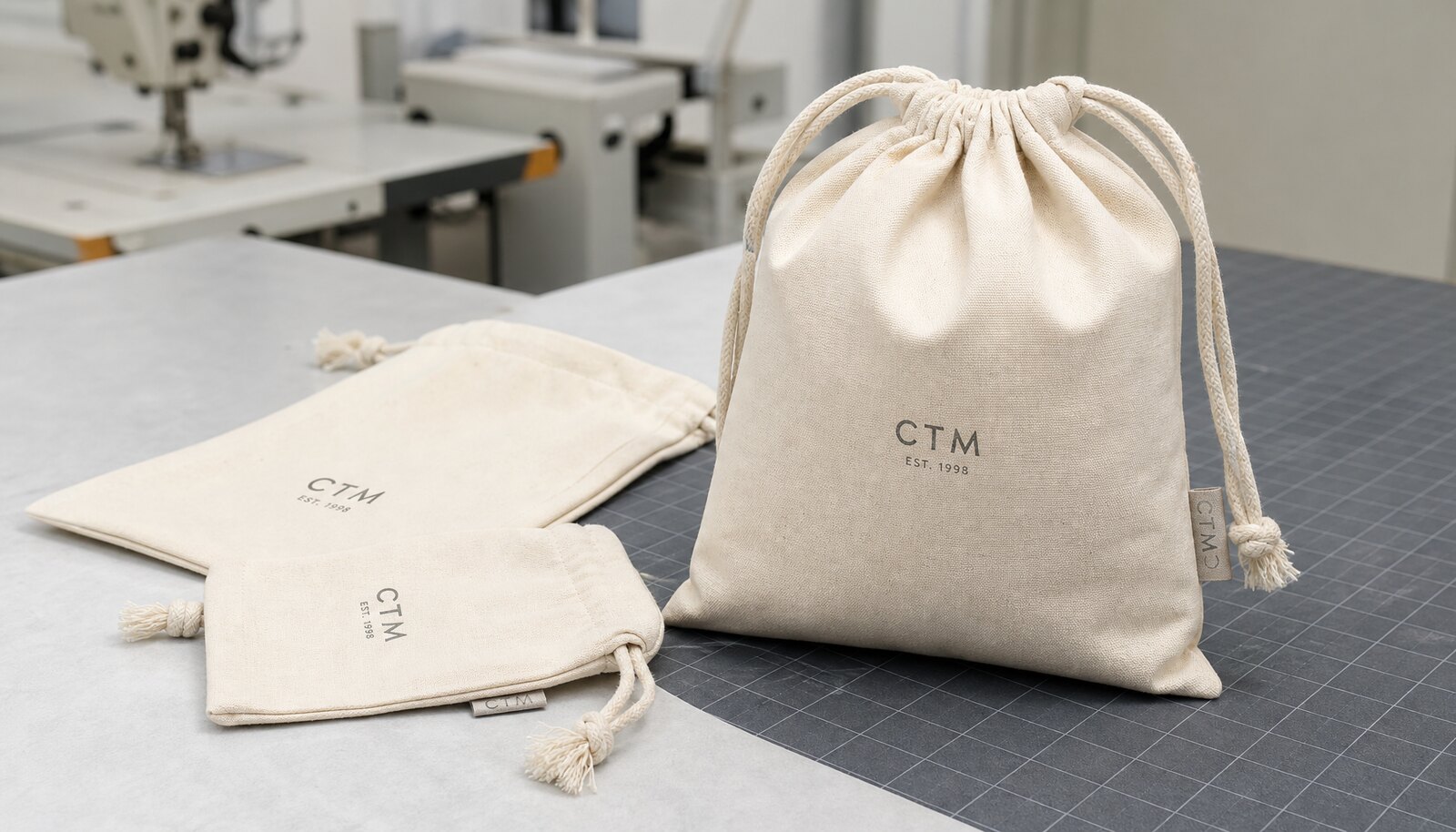
What This Pouch Has to Do in Ecommerce
Gift drawstring pouches for ecommerce are doing more than carrying a small item. They are part of the customer experience, part of the warehouse workflow, and sometimes the only branded surface in the whole order. That means the pouch has to look clean, close quickly, survive picking and packing, and still feel worth keeping after the gift is opened.
For procurement teams, the right brief starts with use case, not decoration. A pouch for jewelry in a gift box has different needs than a pouch for a candle, a holiday bundle, or a subscription insert. If the pouch is too flimsy, it tears or looks cheap. If it is too heavy or overbuilt, the unit cost rises and the pack-out gets slower without adding much value.
- Treat the pouch as packaging plus reusable product, not just a bag-in-bag insert.
- Define whether the customer will see it before shipment, during unboxing, or only as internal protection.
- Tie the spec to one primary product family first, then expand after the first reorder.
Choose Fabric and GSM by Gift Weight
The most common sourcing mistake is choosing fabric by appearance alone. For ecommerce gift pouches, cotton and muslin are the usual starting points because they photograph well, feel natural, and accept simple branding cleanly. Canvas gives a sturdier premium hand feel, but it can be overkill for small items and can push sewing cost up quickly. A soft woven fabric around 80 to 120 GSM usually covers lighter gift use, while 140 to 180 GSM is better when the pouch needs to look more substantial or hold a heavier item without collapsing.
The real decision is how much body the pouch needs after packing. A 100 GSM pouch can be ideal for cosmetics or accessories if the item is light and the pouch is only for presentation. Once the product gets heavier, a better route is a denser fabric, stronger side seams, and a wider drawcord channel so the opening does not distort under load. If the fabric is dyed, get the factory to confirm shade consistency across the batch, because slight variation becomes obvious when a store ships mixed lots together.
- For very light gifts, a soft cotton or muslin pouch is usually enough and keeps cost under control.
- For candles, small jars, or thicker accessories, move up in GSM before you add extra structure.
- If shrinkage matters, ask for the post-wash change or the factory's working tolerance before approval.
Print and Branding That Survive Packing and Transit
A gift pouch for ecommerce is rarely about complex artwork. Simple logos, a single brand line, or a seasonal icon usually perform better than detailed graphics because the fabric surface moves and the stitching can distort fine detail. Screen print is still the most practical option for many runs because it gives clean color blocks and reasonable unit economics at volume. If the brand needs a more permanent premium cue, a woven label or sewn side label can be more durable than a large print area.
The approval question is not only whether the logo looks right on a flat sample. It is whether the decoration still looks clean after folding, packing, and light abrasion in transit. Ask for the exact print area, color standard, and placement from the seam or drawcord edge. If the design uses fine lines or small type, build a sample review step around legibility at arm's length, not only close inspection. For reusable pouches, the print has to hold up beyond the first unboxing moment.
- Use screen print for simple logos and repeat volume.
- Use woven label or side label when the brand wants durability without a large print block.
- Avoid artwork that depends on tiny text, tight registration, or gradients unless the factory has already proven the process.
How MOQ and Unit Cost Actually Move
MOQ is rarely one number. It changes with fabric stock, color, print complexity, and packing style. A buyer who asks for a new size, a custom dyed fabric, a multi-color print, and special retail packing at the same time is usually buying four cost drivers at once. The best way to control MOQ is to standardize as much as possible in the first order: one fabric, one size, one logo placement, one closure style, and one carton plan.
A useful quote should show where cost is coming from. Ask for separate line items for fabric, sewing, print, label, packing, sample charge, screen or plate charge, and carton spec. That lets you compare factories more honestly. A lower unit price can disappear once the supplier adds fees for artwork setup, extra packing, or a minimum color run. If the factory will only quote a unit rate, you do not yet have a quote that can be compared properly.
- Standardize the first run so the factory can spread setup cost across the batch.
- Separate decoration charges from sewing charges so you can see the real price driver.
- Compare quotes on the same incoterm, pack count, and carton basis or the numbers are not meaningful.
Compare Supplier Routes Before You Compare Prices
For this category, the cheapest route is not always the best route. A direct factory is usually the cleanest choice when you need control over fabric, sewing, and decoration in one line of responsibility. That is important for ecommerce because carton accuracy, logo placement, and repeatability matter as much as the bag itself. A trading company can be useful when you need a broader product bundle, but it often adds another layer between the buyer and the actual source of defects.
The right comparison is capability, not just price. Does the supplier control sewing in-house? Can they show a real pre-production sample with the final fabric and print? Do they understand carton marks, barcode placement, and pack counts for a fulfillment center? If the answer to those questions is vague, the buyer will spend the savings later in rework, delayed approvals, or warehouse exceptions. The table above is meant to separate those choices before you send the RFQ.
- Prefer one accountable source for sewing, branding, and packing when the launch date is fixed.
- Use a trading route only if it genuinely improves access to stock fabric, speed, or bundled sourcing.
- Ask for evidence of similar packaging work, not just a general factory brochure.
Sample Approval and QC Thresholds
A sample should prove more than visual appearance. It should confirm fabric handle, opening size, cord action, print placement, and how the pouch behaves when filled with the intended product. The most useful sample sequence is simple: first a reference sample for structure, then a pre-production sample using the final fabric and decoration, then a retained golden sample that the line can use during bulk production. If the production lot does not match the approved sample, the buyer needs a clear reference for rejection or rework.
QC thresholds should be written in measurable language. Finished size tolerance, stitch quality, print alignment, and acceptable shade variation all need to be set before the order starts. For ecommerce, the non-obvious defects are often the most expensive: a pouch that opens unevenly, a cord that slips, a print that cracks under light rubbing, or a carton that arrives crushed because the packing density was too low. Define the defect picture early so inspection is not dependent on personal judgment.
- Keep one sealed golden sample with the production reference and date marked on it.
- Use measurable tolerances for size, print placement, and seam appearance.
- Test the pouch with the real gift item, not a dummy of a different shape or weight.
Packing for Warehouse Handling and Retail Presentation
Packing needs to suit the next touchpoint, which is usually a fulfillment center rather than a storefront. If the pouches are shipped flat in bulk, the factory should separate them by SKU and color, then use inner packs that are easy to count and scan. If the product is going into gift sets, the buyer should confirm whether the pouch is packed loose, pre-folded, or inserted into another box so the warehouse team does not have to repack or refold it. The more ambiguous the packing spec, the more likely the receiving team will slow down.
Retail presentation still matters, but it has to be practical. A simple belly band, barcode sticker, or polybag can be fine if it keeps the units clean and traceable. What matters most is that the pack format matches the channel. Subscription boxes need consistent count and low dimensional weight. Marketplace FBA-style flows need barcode clarity and carton marks that survive transit. If the pouch is slightly compressed in transit, that is usually acceptable; if the print transfers or the cord tangles, the pack spec is not ready.
- Specify inner pack count, outer carton count, and barcode placement before bulk starts.
- Keep carton labels readable and consistent across every side that the warehouse may scan.
- Avoid mixed packing configurations unless the fulfillment team has explicitly approved them.
Lead Time Risk Starts Before Sewing Begins
Production lead time for gift drawstring pouches is often misread as sewing time. In reality, the schedule starts with fabric confirmation, then artwork approval, then sample approval, then bulk booking, then carton production, and only then sewing and packing. A buyer who waits too long to finalize the print or the carton spec can lose more time than the sewing line itself would have taken. For seasonal ecommerce launches, that is usually where the miss happens.
A sensible schedule leaves room for approval cycles. If the product is tied to a holiday or campaign, work backward from the ship date and build in one full round of sample correction. If the supplier is promising a short lead time but still needs to source fabric, make sure the risk is visible in writing. Short lead times are only credible when the materials are in stock, the print is straightforward, and the pack plan is already approved.
- Build the timeline around sample approval, not around the date the PO is issued.
- Treat fabric availability and carton production as separate schedule risks.
- Reserve buffer time for artwork fixes, because logo changes often delay the whole order.
Landed Cost Is More Than the Factory Unit Price
A low ex-factory price can still become an expensive order if the carton size is inefficient, the bags are overpacked, or the fabric choice drives higher freight by volume. For ecommerce buyers, the real cost includes carton density, shipping method, customs handling, inspection time, and the labor needed at the warehouse to receive and sort the goods. A pouch that saves one cent in sewing but adds thirty seconds of handling per carton is not a savings.
When comparing sourcing routes, use the same cost base. Ask the supplier for the factory price, sample fees, print setup charges, packing basis, carton dimensions, and the shipping term they used to quote. Then estimate freight on the actual packed volume, not on the unit price alone. If two quotes are close on product cost but one is far better on carton efficiency, the landed result can change materially. That is the number procurement should be defending, not the line item that looks lowest on the page.
- Compare quotes on the same incoterm and packing basis.
- Optimize carton count and volume before you decide on a fabric upgrade.
- Watch for hidden cost in special packing, split shipments, and late artwork changes.
Build the RFQ So Quotes Can Be Compared
A clean RFQ makes the supplier do the technical work upfront instead of leaving the buyer to decode vague offers later. For gift drawstring pouches for ecommerce, the RFQ should include finished size, fabric, GSM, color, print method, print area, label type, packing method, carton target, and destination market. It should also state whether the pouch is a primary product, an insert, or part of a gift set, because that changes how the factory thinks about finish and packing. Without those details, you will get quotes that are technically impossible to compare.
The strongest RFQs also force the factory to show its assumptions. If one supplier builds in a screen charge, another adds a setup fee, and a third quietly excludes inner packing, the unit prices are not comparable. Put the questions into the order of production reality: material, dimensions, decoration, sample, packing, lead time, then QC. That sequence reduces back-and-forth and gives procurement a cleaner basis for award. It also helps the warehouse and the brand team stay aligned before the first carton ships.
- State the destination, channel, and use case in the opening line of the RFQ.
- Require the quote to separate product cost, print setup, packing, and sample charges.
- Keep the approved artwork, size sheet, and pack spec in the same RFQ packet.
Specification comparison for buyers
| Spec decision | Recommended option | When it fits | Buyer risk to check |
|---|---|---|---|
| Fabric base | Natural cotton or cotton-muslin with a clean weave and stable shrinkage behavior | Gift sets, eco-positioned ecommerce orders, and products that need a soft premium look | Thin fabric can become semi-transparent after packing; require a prewash or shrinkage tolerance note |
| Fabric weight | 80 to 120 GSM for light gifts, 140 to 180 GSM for a more substantial retail feel | Jewelry, cosmetics, small candles, accessories, and repeated reuse by the end customer | Too light feels cheap and wrinkles easily; too heavy increases cost and slows sewing |
| Pouch construction | Flat or slightly boxed pouch with reinforced side seams and a clean drawcord channel | Most ecommerce gift packs where the pouch is part of the presentation, not a rigid container | Tight sizing can make packing difficult and cause seam strain at the opening |
| Branding method | 1 to 2 color screen print for volume, woven label for a more durable premium finish | When logo clarity matters and the artwork is simple enough for repeat production | Fine text and gradients lose detail; print rub resistance should be part of approval |
| Supplier route | Direct factory with sewing and decoration in one flow | When you want tighter control over size, print placement, and carton packing | A trading layer can hide the real source of variation and slow corrective action |
| MOQ strategy | One base fabric, one size, one logo placement, one packing plan for the first run | Launches, seasonal drops, and catalog tests where demand is still uncertain | Over-customization raises MOQ fast and creates leftover stock if the item does not convert |
| Packing format | Bulk packed by size and color in inner polybags, then master cartons with clear marks | Warehouse-led ecommerce fulfillment and subscription kits that need predictable pick rates | Mixed carton packing creates receiving errors and slows kitting at the DC |
| Lead time plan | Pre-production sample first, then bulk after artwork and carton approval | Seasonal campaigns and launch windows with a fixed ship date | If fabric, print, and carton approval happen too late, the schedule slips even when sewing is fast |
Buyer checklist before sampling
- Confirm the final pouch use case, such as gift set, subscription kit, accessory pack, or retail add-on.
- Lock the finished size, not only the cut size, and leave enough room for the actual gift plus closing slack.
- Specify fabric type and GSM, including whether the buyer wants a washed look, crisp finish, or heavier premium hand feel.
- Define the decoration method, logo size, number of colors, and whether artwork must survive abrasion in transit.
- Request carton pack counts, inner pack count, outer carton dimensions, and gross weight before comparing freight.
- Approve one pre-production sample and keep a sealed golden sample for line reference.
- State the acceptable tolerance for size, color shade, print placement, and stitch appearance.
- Plan barcode, SKU, and carton mark requirements before the factory starts packing.
Factory quote questions to send
- What fabric, GSM, and width are you quoting, and is the fabric dyed or natural in stock or made to order?
- What are the finished dimensions, seam allowance, cord length, and drawcord material included in the quote?
- What print method, print size, and number of colors are included, and what is the charge for plates or screens?
- What is the MOQ by size and color, and does the MOQ change if we switch to woven label or embroidery?
- What sample stages do you provide, and what is the fee for a pre-production sample and shipping?
- What are the packed units per inner bag and master carton, and what carton dimensions and gross weight should we use for freight quotes?
- What is the production lead time after sample approval, and what are the critical materials that can extend it?
- What defect standards do you use for stitching, print placement, odor, color variation, and carton damage?
Quality-control points to confirm
- Finished size must match the agreed tolerance, especially opening width and pouch depth.
- Seam stitching should be even, with no skipped stitches, loose threads, or seam opening under normal pull.
- Drawcord should move smoothly, lock the opening cleanly, and not fray during repeated use.
- Print or label placement must match the approved artwork position and stay legible after basic rub testing.
- Fabric should be free from strong odor, oil stains, broken yarns, and obvious shade variation within the same lot.
- Carton count must match the packing list, with SKU, size, and color labels readable on outer cartons.
- Polybag or inner pack rules must fit the destination market and warehouse safety requirements.
- Keep one retained sample from the approved production lot for future reorders and dispute resolution.