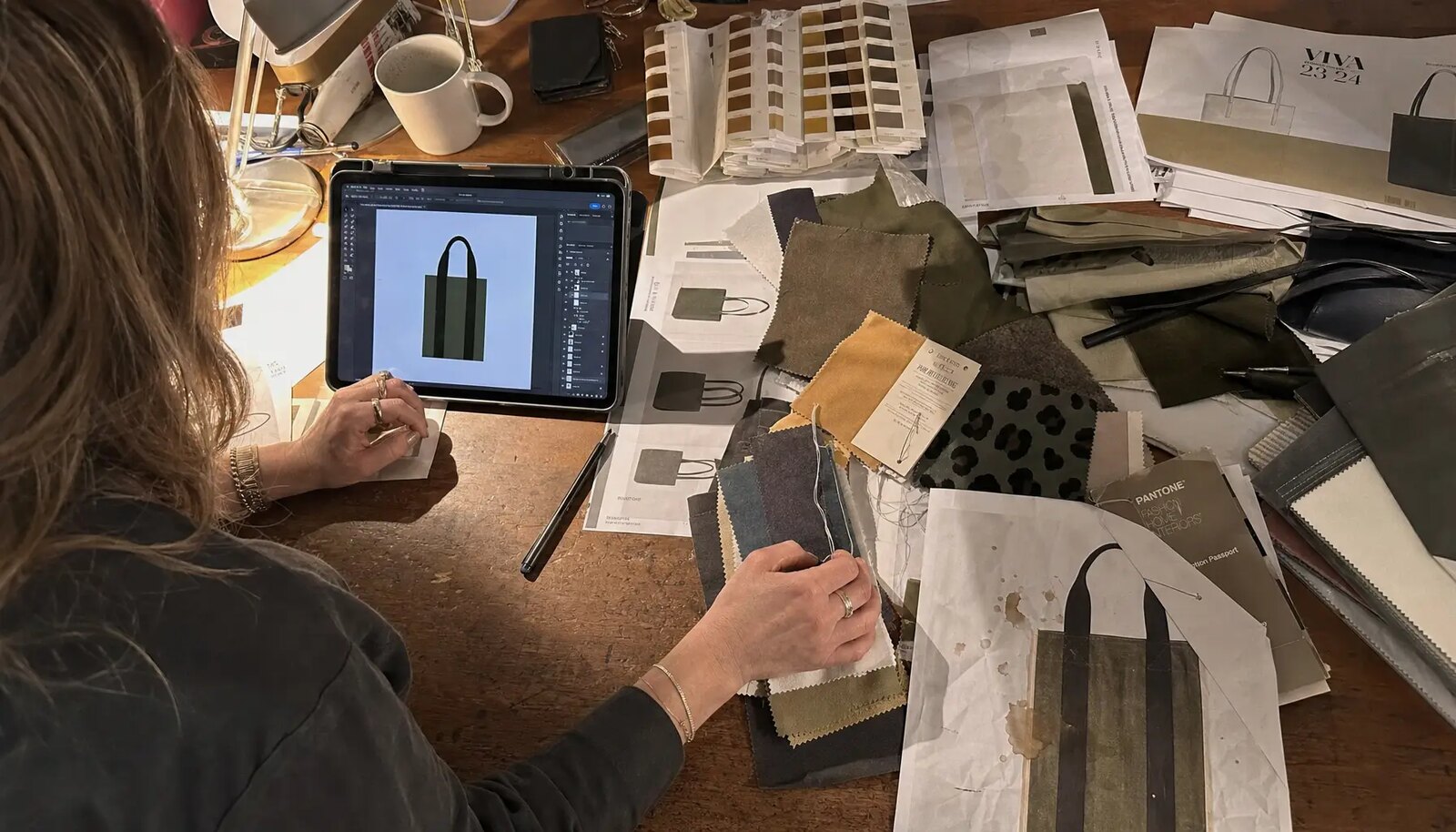
Start With The Job, Not The Tote
Wholesale canvas grocery totes for farmers market vendors should be sourced from the use case backward. A tote that functions as a weekly carry bag for produce, jars, and bread is not the same product as a low-cost giveaway or a premium resale item. The buyer needs to define where the bag will live, how often it will be reused, and what kind of load it has to survive. Once that is clear, every other procurement decision gets easier: the fabric weight, the handle build, the print method, the packing method, and the acceptable price band.
This is where many RFQs go wrong. They ask for a generic canvas grocery tote and assume suppliers will infer the rest. Suppliers will infer differently, which is why quotes drift apart even when the artwork looks identical. If the bag is for vendors who hand out or resell it at a market stand, the brief should say so directly. A retail-facing tote needs a cleaner fold, more predictable color, and a more stable print surface. An operational bag can trade some finish quality for a better landed cost.
- State the commercial role of the tote: giveaway, resale, or working bag.
- Define the expected contents: produce, baked goods, jars, flowers, or mixed grocery items.
- Note whether the tote must stand upright, fold flat, hang on a display hook, or pack tightly for distribution.
Write A Spec Sheet The Factory Can Quote Against
A usable spec sheet is more important than a polished RFQ email. The supplier should be able to read one page and see the finished size, fabric target, decoration area, reinforcement points, and packing rules. For tote bags, the details that matter most are often the ones buyers leave out: seam allowance, handle drop, gusset depth, top hem, and whether the bag must keep its shape on a retail table. When those fields are missing, the factory will fill them in with its own default build, and that is where rework starts.
A better spec sheet is specific enough to compare offers and specific enough to repeat later. Include a version number, an approved artwork file name, and a clear approval status for every element. If you expect repeat orders, treat the first approved sample as a control document. That makes it much easier to compare the next quote line against the same bag, rather than against a memory of what the buyer thought was ordered the first time.
- Specify finished size, gusset depth, handle length, handle drop, and top hem style.
- Identify the artwork version, print placement, and the number of print colors or decoration operations.
- Add version control so the factory knows which tech pack, artwork file, and sample are current.
Set Materials And Construction Targets Buyers Can Defend
Fabric weight is only one part of the build. For farmers market use, buyers usually start around 10 oz to 12 oz canvas, or roughly 340 to 410 gsm, because that range balances cost, structure, and durability without turning the tote into a hard-sided bag. Lighter canvas can still work for promotional use, but it tends to sag sooner and looks less substantial on shelf. If the bag is meant to be reused frequently and judged at close range, the buyer should also ask for pre-shrunk or controlled-shrink fabric, especially if the bag will be printed or dyed.
The construction target should be written as a manufacturing spec, not a vague quality request. A practical starting point is a minimum seam allowance of 3/8 in, double-needle or equivalent reinforced stitching on stress seams, and bar tacks or equivalent reinforcement at handle attachment points. Handle pull strength should be set by the buyer, not guessed by the factory. If the bag is for regular grocery carry, ask the supplier to certify to a target such as 25-35 lbf for lighter programs or 40 lbf+ for heavier use. For dyed or printed canvas, set a colorfastness and crocking target before production starts so the result can be inspected objectively.
- Use the finished fabric weight, not just the mill spec, and ask for the basis weight tolerance the factory will accept.
- Set a seam allowance target and require reinforcement at the load-bearing points.
- For reusable or retail-facing bags, define shrinkage limits and color transfer limits before bulk approval.
Compare Supplier Routes Before You Compare Price
The right supplier route depends on control, speed, and how much quote visibility you need. Direct cut-and-sew factories usually give the best control over fabric, stitch quality, and repeatability, especially when the same tote will be reordered seasonally. Trading companies and sourcing agents can simplify communication across multiple SKUs, but buyers need to confirm who actually owns the sewing line and the QC process. Decorators can be efficient when the decoration is the main value, but they may not control the tote build itself, which means the base bag can drift from quote to quote.
The comparison should not be based on unit price alone. A supplier that gives a low first-run number but refuses to break out setup, packing, or freight assumptions is not giving a comparable quote. The buyer should compare routes on quote transparency, MOQ flexibility, inspection visibility, and how much the supplier can document the build. For a farmers market tote that will be reordered and judged by customers in person, repeatability usually matters more than a small one-time discount.
- Compare routes on the same spec sheet, artwork, packing method, and Incoterm.
- Ask who sources the fabric, who prints or embroiders, who sews, and who signs off on final packing.
- Treat vague claims like premium, durable, or high quality as non-data until the supplier shows sample evidence.
Use A Quote Format That Exposes Hidden Cost Drivers
A good RFQ for canvas grocery totes should make the factory show its math. Ask for unit pricing at at least three volume levels, and require separate lines for sample fee, setup cost, decoration cost, packing cost, and the shipping term. This prevents the common problem where one supplier looks cheaper because it folded setup or carton cost into the piece price while another left those costs visible. The goal is apples-to-apples comparison, not a race to the lowest-looking number.
Buyers should also make quantity breaks meaningful. If the first order is a test run but the product will likely reorder, ask for a pilot quantity and a replenishment quantity that reflects real buying behavior. That tells procurement how much of the quoted price is labor efficiency versus startup cost. It also helps the factory decide whether it can reserve fabric, batch print, or hold a color standard for the next run. When the calendar is seasonal, those quote lines matter as much as the artwork itself.
- Ask for pricing at pilot, launch, and replenishment quantities so you can see the scale effect.
- Separate blank bag cost from decoration cost so the print or embroidery method can be evaluated fairly.
- Require carton data, gross weight, and packing count in the quote, not after award.
Treat Sampling As A Gate, Not A Checkbox
A sample is only useful if it proves the production intent. The first physical sample should confirm not just the logo, but the actual bag build: fabric handfeel, seam finish, handle attachment, print placement, and packing method. A flat mockup or a digital proof can help with artwork approval, but it cannot replace a physical pre-production sample. Before the sample arrives, write down the pass/fail rules you will use. If the buyer has not defined tolerance, the sample stage becomes a subjective discussion instead of a production gate.
For reusable canvas bags, the sample should be handled like a pilot unit. Measure it, fold it, load it, and inspect the stress points. Check whether it stands up the way the buyer expects, whether the handles sit evenly, and whether the print stays away from seams that distort the graphic. If the supplier offers changes after sample approval, require the changes to be reflected in a new sample or a signed deviation note. That protects the award decision and keeps later production disputes from becoming arguments about what was promised.
- Approve a physical pre-production sample with signed notes, not just a digital mockup.
- Record size, stitch, print, and packing observations on the same approval sheet.
- If the bag will be sold retail, test the fold, display shape, and hang behavior before sign-off.
Build A QC Plan With Test Methods And Pass-Fail Rules
Quality control should be written as a sequence of checks, not as a general instruction to inspect carefully. Start with incoming fabric verification: confirm weight, weave, shade band, and roll width against the approved standard. Then inspect the first-off sample for dimensions, print position, stitching, and handle alignment before the line runs in volume. In-process checks matter because a tote can drift on symmetry or top hem folding long before the final carton inspection catches it. If the process is not monitored, the defect becomes a lot-wide problem.
Final inspection should use a defined lot standard, such as AQL 2.5 for major defects and AQL 4.0 for minor defects, unless your house standard is stricter. Define major defects in advance: broken stitches, open seams, wrong artwork, missing reinforcement, or a size miss beyond tolerance. Define minor defects too, such as loose threads or slight shade drift that stays within the approved band. For dyed or printed canvas, require a colorfastness and crocking test and state the acceptance rule in advance. For reusable bags, a shrinkage target is also worth writing down so the product does not come back too small after handling or cleaning.
- Use an inspection ladder: incoming fabric, first-off approval, in-process checks, and final lot inspection.
- Set AQL language before the order starts so major and minor defects are not debated after shipment.
- Require documented test results for handle pull, shrinkage, print adhesion, and color transfer if the bag is reusable.
Lock Packing, Cartons, And Warehouse Rules Early
Packing can make or break a clean tote program. Buyers should specify how the bag is folded, whether the handles are tucked or exposed, and how many units go into each inner pack and master carton. A bag that is sold folded flat needs a different pack method than a bag that is displayed upright or hung from a hook. If the tote is going into retail channels, barcode placement, hangtag position, and insert card size should be written into the packing spec. If the tote is being distributed to vendors or resellers, carton count accuracy and easy warehouse handling matter more than display polish.
Carton data belongs in the quote, not just in the shipping booking. Ask for carton dimensions, gross weight, units per carton, and whether the supplier uses moisture protection. This matters because canvas is heavy enough to shift freight cost and carton handling, especially on repeat orders. Buyers should also verify that the first packed carton matches the PO, artwork code, and label format. A clean tote with the wrong carton mark can still create warehouse delays, miscounts, and chargebacks.
- Define fold direction, inner pack count, master carton count, and carton label format.
- Ask for a moisture-control plan if the shipment will travel through humid lanes or sit in storage.
- Verify that barcode, item code, artwork code, and PO number all match the shipping paperwork.
Award On Landed Cost And Repeatability, Not Unit Price Alone
The best procurement decision is the one that survives the next reorder. Two quotes can look close on a unit-price basis but diverge once the buyer adds setup fees, packing complexity, gross weight, and freight term. That is why landed cost should be the award metric. A supplier that costs slightly more but gives tighter tolerances, cleaner packing, and a documented QC process can be the lower-risk choice for a tote that will be handled often and judged closely by end users.
Commercial terms matter as much as the sewing spec. Buyers should capture who owns sample fees, who pays for artwork changes, what happens if the pre-production sample differs from bulk, and whether the supplier will hold a spec version for reorders. If the order is seasonal, ask for the quote validity period and any raw material reservation window. This reduces the risk that the factory re-prices the same tote after the first run because fabric, print setup, or labor planning changed in the meantime.
- Normalize every quote to the same fabric, print, packing, and freight term before comparing.
- Capture setup, sample, and artwork revision costs in the award sheet so they do not disappear into later invoices.
- Keep one approved spec sheet and one approved sample record so the next purchase does not restart from zero.
Use A Buyer Checklist That Prevents Rework
The fastest way to remove RFQ confusion is to turn the sourcing brief into a controlled checklist. The checklist should cover the product brief, performance targets, artwork, packaging, QC, and commercial terms in one place. That lets procurement send one complete request instead of several partial emails that each trigger a different assumption at the factory. It also gives internal stakeholders a document they can approve before quotes come back, which is important when marketing, operations, and procurement all have a say in the tote build.
For a farmers market vendor program, the checklist should include the details that most often cause disputes: seam allowance, handle pull target, shrinkage limit, colorfastness target, and carton count accuracy. If those are defined early, the supplier can quote on the right build instead of quoting on its own default tote. That is the difference between a quote that is merely responsive and a quote that is actually usable for procurement.
- Attach one controlled spec sheet rather than a loose email chain.
- Include the pass/fail limits for size, print, stitch quality, shrinkage, and packaging.
- Require the supplier to confirm any deviation from the spec in writing before production starts.
Specification comparison for buyers
| Supplier route | Best fit | Quote transparency | MOQ and flexibility | QC visibility |
|---|---|---|---|---|
| Direct cut-and-sew factory | Stable repeat orders, controlled specs, and line-by-line RFQs | High if the factory owns fabric, sewing, and packing | Usually medium to high, but easier to negotiate on reorders | High when the factory shares sample, inspection, and carton data |
| Trading company or sourcing agent | Multi-SKU programs and simplified communication | Medium; can be clean, but margins may be layered in | Often more flexible on mixed programs and smaller initial orders | Variable; depends on the factory behind the quote |
| Domestic cut-and-sew partner | Shorter lead times, tighter sample loops, smaller runs | High, especially on labor and decoration items | Lower MOQ, but less price leverage at scale | High if the partner controls the full build |
| Decorator with outsourced sewing | Simple branded programs where print or embroidery is the main value | Medium; base bag cost and decoration cost may be split unevenly | Flexible for smaller branded drops | Variable; base bag quality may sit outside the decorator's core process |
| Overseas factory with local warehouse | Retail-ready replenishment and repeat programs | High if warehouse fees and storage terms are itemized | Medium; useful for planned restocks, not true one-offs | High if inventory, packing, and inspection are documented |
| Sourcing agent only | Projects where you need category coverage or supplier search support | Medium; quote can be useful, but the factory data may be partial | Flexible on supplier discovery, less useful on execution control | Low to medium unless the agent runs a strict QC program |
Buyer checklist before sampling
- Define the end use first: giveaway, resale, or in-market working bag, because the spec and acceptable price point are different.
- Write the finished size, gusset depth, handle length, and handle drop before you ask for pricing.
- Set the fabric target in gsm or oz and note whether you want natural, bleached, or dyed canvas.
- Specify the seam build, including minimum seam allowance, top hem style, and reinforcement at load points.
- Choose the decoration method early: screen print, embroidery, woven label, or a mixed build.
- State the performance targets you want the factory to commit to, including shrinkage, colorfastness, and handle load.
- Attach final vector artwork, Pantone references, print placement, and the number of colors per version.
- Ask for a physical pre-production sample plus a signed measurement sheet before bulk approval.
- Request a full quote breakdown for unit price, setup, sample fee, packing, and freight term separately.
- Lock the carton count, inner pack count, barcode or label rules, and carton mark format before PO release.
Factory quote questions to send
- What exact fabric weight, weave, and finished bag dimensions are you quoting, and is the weight based on raw cloth or finished bag?
- What is the seam allowance, stitch type, and stitches-per-inch count on the load-bearing seams?
- What handle material, width, and attachment method are you quoting, and what pull strength can you certify to our target?
- Is the unit price for blank bags or decorated bags, and how many print colors or embroidery placements are included?
- What are the MOQ by size, by artwork, and by color, and does mixed-size ordering change the price?
- Can you separate sample fee, setup fee, print screen or plate cost, packing cost, and any artwork change charge?
- What shrinkage target do you build to, and can you share test results or a lab report for the same build?
- What colorfastness or crocking standard do you use for dyed or printed canvas, and how do you treat failure?
- What inspection standard do you use for dimensions, stitching, print registration, shade, and packing accuracy?
- How are the bags packed, how many per inner pack and carton, what is the gross weight, and what are the carton dimensions?
Quality-control points to confirm
- Measure finished length, width, gusset, and handle drop against the approved tech pack, not against a loose visual sample.
- Verify fabric weight against the approved swatch or mill certificate and reject rolls that miss the agreed range.
- Check seam allowance, stitch consistency, and reinforcement at handle joins, side seams, and bottom corners.
- Run a handle pull test to the agreed target; for example, set a buyer target of 25-35 lbf for light-use promotional bags or 40 lbf+ for heavier grocery use, with no seam failure or fabric tear.
- Check shrinkage after the agreed wash or steam procedure; set a limit such as 3% or less in length and width if the tote is meant for repeat consumer use.
- Verify dry and wet crocking or color transfer for dyed or printed canvas using your chosen test method; require no visible bleeding beyond the agreed grade.
- Inspect print position, registration, opacity, and cure quality on first-off samples and on a random carton pull from bulk.
- Reject loose threads, oil marks, needle damage, skipped stitches, open seams, and visible fabric holes as major defects.
- Classify defects under AQL language before inspection, such as AQL 2.5 for major defects and AQL 4.0 for minor defects, or your house standard if stricter.
- Count inner packs and cartons, verify carton labels against the PO and artwork code, and confirm gross weight and dimensions match the shipping booking.