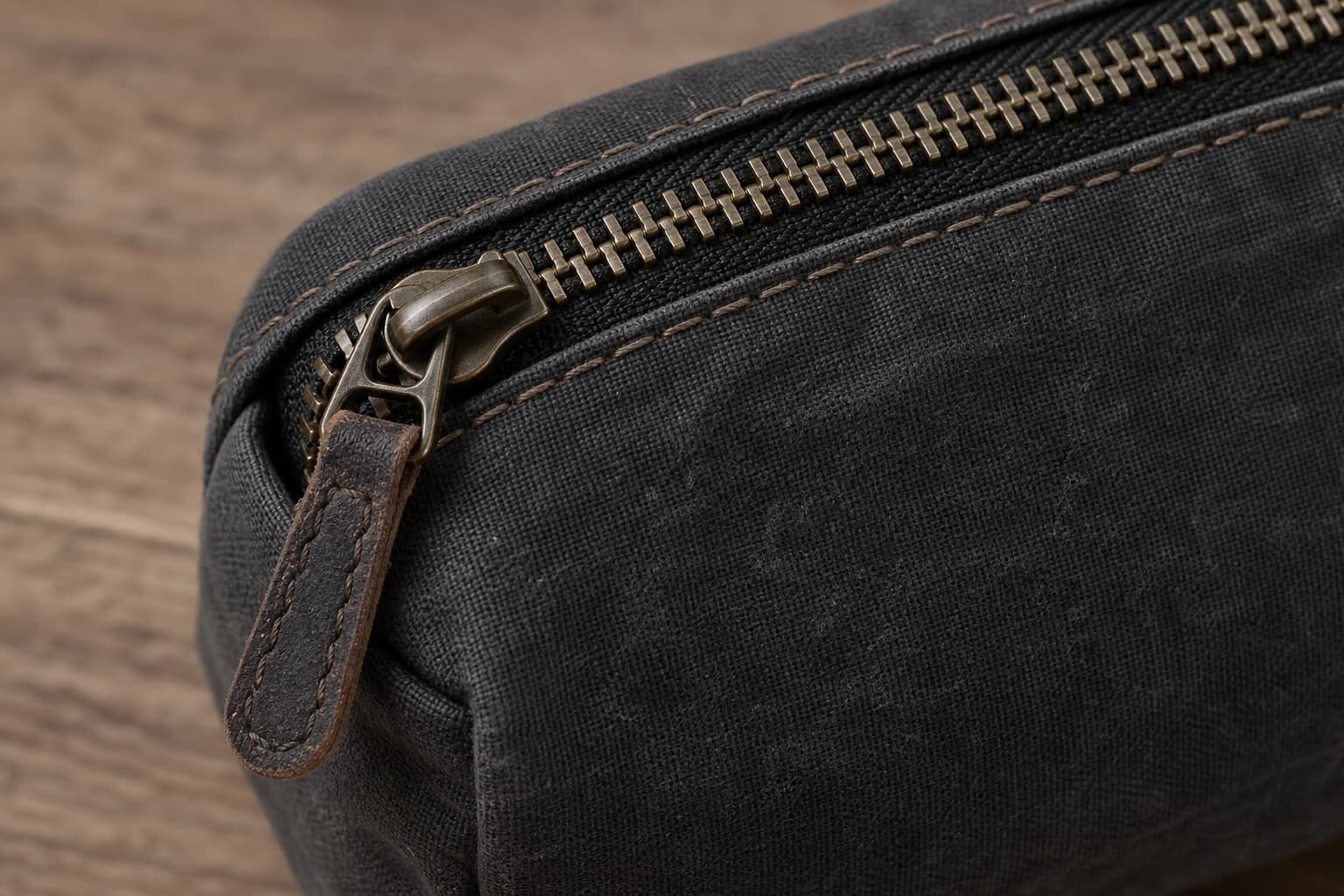
Why MOQ Matters More on Executive Business Bags
For executive business bags, MOQ is not just a factory gate number. It is the point where fabric sourcing, trim purchase, logo setup, and packing labor become efficient enough for the supplier to make the program work. If you only ask, "What is your MOQ?", you usually get a number that is too vague to compare across suppliers and too easy to misread. A bag that looks simple on the shelf can still involve multiple materials, padded structure, lining, zipper components, and finishing steps that all affect minimum run size.
Procurement teams get better results when they treat MOQ as a package of decisions. The shell fabric, logo method, color count, and packing spec can all change the minimum. A supplier may accept a low MOQ on a stock polyester body, but the same factory may require a much higher quantity if you want a custom-dyed canvas, metal logo plate, or special retail insert. The real job is not to find the lowest number; it is to define the lowest stable order that still gives you consistent quality and a quote you can defend internally.
- Ask for MOQ by color, logo version, and packing format.
- Separate stock-material MOQ from custom-material MOQ.
- Treat trims, zippers, and labels as part of MOQ, not an afterthought.
- Use the first quote round to expose hidden setup costs.
Lock the Bag Spec Before You Ask for Price
A clean RFQ starts with the bag definition. Executive business bags can mean a slim document case, a padded laptop brief, or a structured office tote with a zipper top. Those three styles may look close in photos, but they trigger different material use, sewing time, and carton dimensions. Before you ask for MOQ, lock the size, closure type, pocket count, handle length, and whether the bag needs shoulder strap hardware. If the spec is still open, every supplier will quote a different assumption and your comparison will be weak.
You also need to define the shell fabric in usable terms. Do not write "good canvas" or "durable polyester". Ask for the denier or GSM, the coating, and whether the fabric is stock or custom dyed. Common executive bag builds use 300D to 600D polyester for price control, or 12oz to 16oz canvas if the brand wants a heavier feel. If the bag needs more structure, ask whether the factory uses foam, PE board, or stitched reinforcement. Structure drives both MOQ and price because it affects material waste and sewing time.
- State the finished size in millimeters, not just "fits laptop."
- List pocket count, zipper layout, and handle/strap requirements.
- Specify shell fabric weight or denier and lining material.
- Confirm whether the bag must stand upright or stay slim in transit.
How Materials and Logo Methods Move the Minimum
Material choice is usually the biggest MOQ driver after size. A stock black polyester can often support a lower minimum because the factory can cut from available rolls. Once you move to custom colors, heavy canvas, or coated PU, the supplier may need to order fabric by mill minimum or wait for the next production batch. That affects cash flow, not just the unit price. If you are testing a new design, start by asking which components are stock, which are made to order, and which items carry a supplier minimum on their own.
Logo method matters just as much. Screen print works well for simple one- or two-color branding and usually supports easier repeat production. Woven labels are useful when you want a clean, lower-cost brand mark with less setup risk. Embroidery gives a more premium finish but can raise MOQ if the design is dense or uses many thread colors. Embossing or metal plates may look sharp on PU or structured panels, but tooling and setup can push the minimum higher. A good factory will tell you whether the logo method changes with order size, because the cheapest print method is not always the lowest-risk method.
- Stock fabric usually lowers MOQ more than stock trims alone.
- Custom-dyed fabric can raise MOQ even when the bag shape stays the same.
- Simple logo methods usually help first orders move faster.
- Complex decoration can be the hidden reason a quote looks cheap but lands high later.
Use a Quote Table That Exposes Real Differences
When you compare supplier quotes, do not compare only the unit price. For executive business bags, the real difference is often in the assumptions behind the price. One factory may quote a low number because it uses lighter fabric, thinner foam, and a simpler logo method. Another may include better zipper hardware, stronger bartacks, and cleaner packing. If you do not normalize the data, you may award the order to the cheapest quote and discover the unit cost changes after sample approval.
The best way to compare offers is to force quote transparency. Ask each supplier to fill in the fabric weight, lining, zipper size, logo method, sample cost, tooling cost, packing method, and lead time. If a supplier cannot break down the quote, that is a signal that the order is still too ambiguous. You do not need a finance model for every bag, but you do need enough data to compare apples to apples. For buyer teams, the most useful quote is not the lowest one; it is the one that shows where every cost came from and what will change if you move the MOQ up or down.
- Compare price tiers at the same logo method and same packing spec.
- Check whether sample charges are refundable or deductible from the order.
- Ask if setup charges are one-time or repeated for every colorway.
- Confirm if carton packing, barcode labels, and inserts are included.
What a Sample Should Prove Before You Approve MOQ
For executive business bags, a sample is not just for appearance. It should prove that the bag closes properly, carries weight without distortion, and holds its shape after packing. Check the zipper travel, handle reinforcement, seam alignment, pocket placement, and logo position on the actual sample, not only on a photo. If the bag includes a padded laptop compartment, insert a real device or a dummy load and see whether the compartment compresses the shell or pulls the seams off line.
Good sample checks should be specific enough that the factory can reproduce them in bulk. Measure the body dimensions, compare fabric handfeel, and test the pull strength of handles and straps. For sewing quality, look at bartacks, edge binding, and whether stitch density is consistent at stress points. For logos, verify line sharpness, thread tension, or print opacity in daylight. If you only approve a sample by general impression, you will lose control over tolerance once production starts. The sample should become your acceptance baseline, not a loose reference.
- Open and close the zipper repeatedly to check smoothness and puller strength.
- Load the bag with weight and inspect shape retention and handle stress.
- Check logo placement against a measured template, not by eye alone.
- Approve the sample only after confirming material, trim, and packing details.
Packing and Carton Specs Can Change the Real MOQ
Packing is often ignored until the final quote review, but it can change both MOQ and landed cost. A simple bulk polybag may be easy for the factory, while retail-ready packing with barcode labels, inserts, desiccant, and individual hang tags adds labor and can slow the line. For executive business bags, packing also affects appearance because the product often needs to arrive with a crisp shape and no crushed corners. If the bag uses board inserts or padded panels, the carton spec must support that structure during transit.
Ask the factory to quote packing in detail: individual polybag thickness, whether cartons are export-grade, how many pieces per carton, and whether the bag is folded or stuffed. If you sell through distributors or retail channels, barcode placement and master carton marks matter as much as logo quality. A poor packing spec can create returns even when the bag itself is fine. The buyer should decide early whether the order is factory bulk, warehouse bulk, or shelf-ready retail packaging, because each version has a different labor load and different minimum.
- Specify whether the bag ships flat, stuffed, or with inserts.
- Confirm the number of pieces per carton based on bag volume, not guesswork.
- Ask for outer carton dimensions and gross weight before booking freight.
- Make barcode and carton mark requirements part of the PO, not a later email.
Lead Time Planning for Low and Mid-Range MOQ Orders
Lead time for executive business bags is usually shaped by three steps: sample approval, material readiness, and sewing capacity. A low MOQ order can still take time if the factory must source a custom fabric, wait for logo tooling, or schedule a small production slot between larger programs. In practice, the sample stage is where many buyers lose time because they ask for several design revisions after the first sample arrives. The better your RFQ, the fewer sample loops you need.
For planning purposes, ask the factory to separate sample lead time from production lead time and to state which activities happen in parallel. Do they source fabric before sample approval, or only after? Do they start label production while the sample is being reviewed? Does carton printing happen after artwork confirmation or after final order? These details matter more than a simple "days after order" promise. If you are managing a seasonal launch, build buffer time for artwork changes, color approval, and packing revisions, because small bag programs often slip for reasons that have nothing to do with sewing speed.
- Request separate timelines for sample, material booking, and bulk sewing.
- Ask what parts of the lead time are fixed and what parts depend on approval.
- Plan extra time for first orders with custom logo methods or new fabrics.
- Do not approve a rushed schedule without confirming material availability.
Cost Levers That Lower Risk Without Cutting Quality
If your target MOQ feels too high, there are safer ways to reduce risk than simply asking for a cheaper bag. The first lever is to simplify the component list. A single logo placement, stock zipper color, stock lining, and standard handle webbing can lower the minimum without weakening the product. The second lever is to keep the bag shape stable across colors. When the body pattern stays the same, a supplier can cut more efficiently and reuse setup logic across the order.
A third lever is to separate testing from scale-up. You do not need to launch every color and every decoration style at the same time. Many buyers start with one core color, one logo method, and one packing method, then expand after the first repeat order. That approach reduces waste and gives you cleaner feedback on fit, stitching, and sell-through. It also helps you compare factory performance on a stable baseline. The key is to remove optional features that do not improve the buying decision, not the features that protect quality or shelf appeal.
- Keep one shell fabric and one logo method for the first order.
- Use stock trims where possible before moving to custom hardware.
- Delay nonessential packaging upgrades until the base product is validated.
- Scale colorways after the first production run proves the spec.
Buyer Checklist Before You Release the PO
Before you place the order, make sure the quote and the sample match the same spec. This sounds basic, but many MOQ disputes come from a PO written off the first email instead of the approved sample. If the sample uses 14oz canvas and the quote assumed 12oz, the factory will either request a change order or quietly alter the build. The buyer needs one clean reference point that covers materials, decoration, dimensions, and packing.
A strong PO for executive business bags should also show acceptance rules. State the tolerance for size variance, the acceptable location of the logo, the expected seam finish, and what happens if packing deviates from the sample. If your team buys through multiple channels, this is where you protect consistency across retail, wholesale, and promotional orders. The order should be executable without interpretation.
- Approved sample attached to the PO.
- Fabric weight, color code, and lining spec confirmed in writing.
- Logo method, artwork file, and placement diagram approved.
- Packing, carton count, and barcode instructions finalized.
- Lead time and shipment term confirmed by the supplier.
- Change-control rule documented for any material or artwork substitution.
What to Put in the RFQ So Suppliers Give Usable Quotes
A good RFQ saves time for both sides because it removes guesswork. For executive business bags, the RFQ should include product purpose, target user, finished size, fit requirement, preferred fabric range, logo method, quantity by color, and packaging expectation. If you want an honest MOQ, add the sample target and whether the supplier is allowed to suggest stock alternatives. Without this data, the factory will quote the easiest interpretation of your request, not the product you actually want to buy.
You should also ask the supplier to quote the same structure for every offer. That means unit price by quantity tier, sample charge, setup charge, tooling charge, and estimated lead time. If the supplier can note assumptions, even better. For example, they can state whether the quote assumes stock black fabric, one-color screen print, and standard polybag packing. That makes the comparison useful for procurement review and gives your internal stakeholders a defensible basis for shortlisting suppliers.
- Include product use case, dimensions, and laptop or document fit.
- Request quote tiers at the same decoration and packing spec.
- Ask suppliers to state assumptions and exclusions clearly.
- Require separate lines for sample, setup, tooling, and packing.
Specification comparison for buyers
| Spec decision | Recommended option | When it fits | Buyer risk to check |
|---|---|---|---|
| Shell fabric | 300D-600D polyester or 12oz canvas | Mid-range business bags where you need decent structure and controllable MOQ | Check actual GSM, coating, and whether the mill stock matches the quoted color |
| Premium shell fabric | 14oz-16oz canvas or PU-face construction | Brand-led programs that need a heavier handfeel and stronger shelf appeal | Watch for higher MOQ, dye variation, and longer lead time on custom colors |
| Logo method | Woven label, screen print, or simple embroidery | Best for controlled MOQ and repeatable production | Check color count, stitch density, and whether a logo plate or screen setup is charged separately |
| Internal structure | Foam padding with light board insert | Executive bags that need laptop protection and a more formal silhouette | Verify board thickness, corner reinforcement, and whether the bag still closes cleanly when full |
| Packing level | Individual polybag plus master carton marks | Wholesale and distributor orders where transit protection matters | Confirm bag count per carton, moisture protection, and whether retail barcode labeling is included |
Buyer checklist before sampling
- Confirm target size, laptop fit, and whether the bag is meant for documents, tech, or light travel.
- Specify shell fabric, lining, padding, and any preferred GSM or denier range.
- State logo method, artwork colors, placement, and whether you need one or multiple SKUs.
- Ask for MOQ by color, by logo version, and by material combination, not just one headline number.
- Request full quote data: unit price tiers, sample cost, tooling, packing, carton spec, and lead time.
- Approve a pre-production sample for size, zipper action, stitching, logo position, and handle strength.
- Check packing format, barcode needs, master carton marks, and whether compression changes bag shape.
- Confirm shipping term, payment terms, and any change-control rules before PO release.
Factory quote questions to send
- What is the MOQ by fabric color, logo method, and carton pack size?
- Please list the exact fabric weight or denier, lining spec, zipper size, and hardware material.
- Does the quote include screen setup, embroidery file charge, mold charge, or woven label setup?
- How many sample rounds are included, and what is the sample lead time and cost?
- What are the unit prices at different quantity tiers, and what changes the price at each tier?
- What is the production lead time after sample approval, and what can delay it?
- What packing method is included by default, and what is the charge for custom inserts or barcodes?
- Please confirm the accepted artwork file type, logo placement tolerance, and color match method.
Quality-control points to confirm
- Measure bag body size, gusset depth, and handle drop against the approved sample.
- Check zipper smoothness, zipper tape alignment, and puller attachment strength.
- Inspect stitch density, bartack reinforcement, seam allowance, and loose thread control.
- Verify logo placement, print clarity, embroidery tension, or label alignment under normal viewing distance.
- Test padding, board support, and internal pocket stitching for laptop and document use.
- Review packing count, polybag thickness, carton marks, and carton compression after packing.