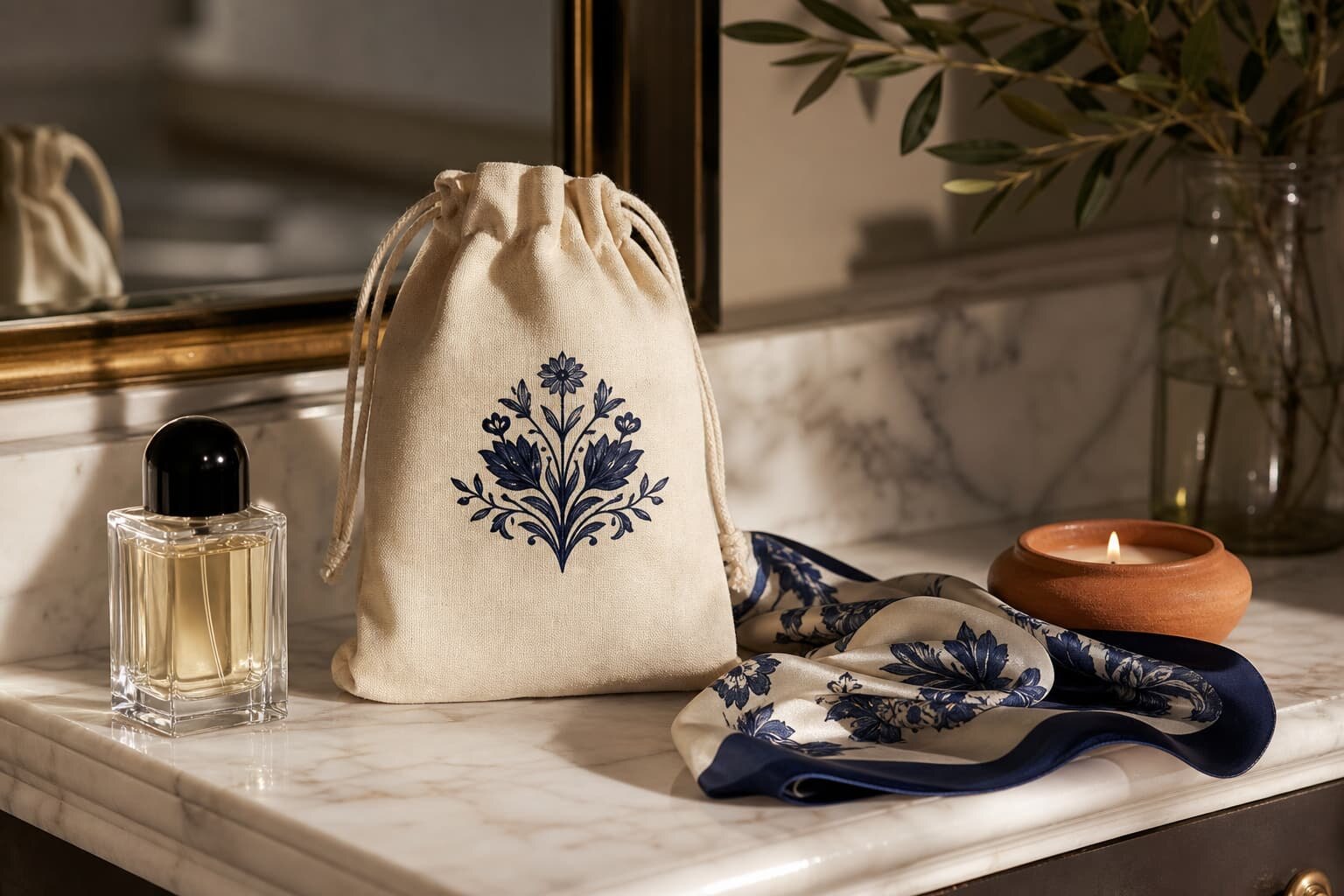
Why Vendor QA Matters Before You Place the Pouch Order
A drawstring pouch looks simple on a quote sheet, but it has many small production choices that affect cost, appearance, and rejection risk. Fabric weight, drawcord material, seam finish, logo method, packing count, and carton mix all need to match the real use of the pouch. If these points are left open, different vendors will quote different constructions while using the same product name.
A good drawstring pouch vendor QA checklist helps procurement teams compare quotations on equal terms. It also helps the factory understand what must be controlled before cutting fabric and printing panels. The goal is not to make the RFQ longer for the sake of paperwork. The goal is to remove assumptions before they become bulk production defects.
- Use the checklist before supplier selection, not only during final inspection.
- Separate product specification from commercial terms so the vendor cannot hide construction changes inside a lower unit price.
- Ask for written tolerances and photos of the factory's normal finishing standard.
- Treat sampling as a production rehearsal, not a design exercise only.
Start With the Actual Use Case, Not Just the Pouch Size
The first QA question is what the pouch must hold and how the end user will handle it. A cotton pouch for jewelry packaging does not need the same fabric weight as a pouch for candles, bottles, electronic accessories, hotel amenities, or hardware components. If the product inside is dense, sharp-edged, oily, fragrant, or fragile, the pouch specification should change.
Buyers often send a size and logo file, then ask several factories for the best price. That creates misleading comparisons. One vendor may quote 120 GSM cotton with a single cord and basic overlock seam, while another quotes 180 GSM cotton with double drawstring and stronger stitching. Both may call the item a cotton drawstring pouch, but they are not the same product.
- For jewelry, cosmetics, and small gift packaging, check fabric opacity and print neatness more than load strength.
- For candles, bottles, chargers, tools, or dense accessories, test bottom seam strength with the real packed product.
- For retail shelf display, check color consistency, wrinkle level, cord symmetry, and carton presentation.
- For promotional giveaways, control basic size, print clarity, and packing count so distribution is not disrupted.
Fabric GSM and Construction Decisions That Change the Quote
Fabric weight is one of the biggest drivers of pouch cost and perceived quality. For lightweight packaging, 120-160 GSM cotton is common, but it may show the product outline and may not feel premium. For reusable or giftable pouches, many buyers move toward 180-220 GSM cotton or canvas, especially when the pouch is sold with a higher-value product.
The buyer should ask whether the fabric is bleached, natural, dyed, washed, or unwashed. Natural cotton can contain seed flecks and shade variation. Dyed fabric adds color control work and may require lab dips. Washed fabric can shrink, soften, and change finished size. These details affect sample approval and bulk tolerance, so they belong in the RFQ.
- State the target GSM and acceptable range, such as 160 GSM plus or minus 5 percent, instead of writing only cotton fabric.
- Ask if the GSM is measured before dyeing, after dyeing, or after finishing.
- Confirm whether natural cotton seed flecks are acceptable for your brand presentation.
- Request fabric swatches for every color before approving bulk production.
- If the pouch is white or light-colored, check whether the contents show through.
Drawcord, Channel, and Opening Function Checks
The drawstring system is where many low-cost pouches fail in daily use. The cord must slide smoothly, close evenly, and stay secure without pulling out during normal handling. A cord that is too thick can jam in the channel. A cord that is too thin can look weak, cut into the fabric, or loosen after packing.
Single drawstring construction is cheaper and can be acceptable for giveaways or simple dust bags. Double drawstring construction usually gives better balance and a cleaner closing action. If the pouch will be opened repeatedly by consumers, the extra cost of double drawstring is often easier to justify than dealing with poor user experience or return complaints.
- Specify cord material: cotton, polyester, recycled polyester, jute-style cord, ribbon, or flat tape.
- Specify cord diameter or width and whether the cord tip is knotted, heat sealed, taped, or left raw.
- Check that the channel height gives enough room for the cord to move without twisting.
- Test the pouch with the real product inside and close it ten times to check friction and distortion.
- Ask whether the cord color is stock dyed, piece dyed, or custom dyed.
Logo Method: Print Approval Is More Than Artwork Placement
Most drawstring pouches use screen printing because it is stable, economical, and suitable for solid brand marks. Heat transfer can work for fine detail, gradients, or multicolor artwork, but it may add a different hand feel and needs testing on textured cotton. Embroidery can look premium, but it is usually better on heavier fabric because thin fabric may pucker.
A buyer should not approve a logo only from a digital proof. The physical sample must show print size, placement, ink coverage, edge sharpness, and how the print behaves when the pouch is gathered. Logos placed too high may disappear into the folds near the drawcord channel. Logos placed too low may bend around the bottom seam when the pouch is filled.
- Provide artwork in vector format where possible, with Pantone references for spot colors.
- Define logo placement from the finished pouch edge, not from the fabric cut edge.
- Ask for the print method, number of colors, setup cost, and expected hand feel.
- Check rub resistance after the print is fully cured, not immediately after printing.
- For dark fabric, confirm whether an underbase print is required for logo brightness.
Sample Approval Rules That Prevent Bulk Rework
The approved sample should represent bulk production as closely as possible. A hand-made sample using substitute fabric or a temporary cord is useful for confirming size, but it is not enough for final production approval. Before mass cutting, the buyer should approve a pre-production sample using the final fabric, final cord, final logo method, and final packing direction.
Procurement teams should keep a signed or photographed approval record. The record should include finished dimensions, fabric GSM, logo size, cord type, seam finish, packing count, and any accepted deviations. If the factory later changes fabric lot, cord supplier, or print process, the buyer should be informed before bulk production continues.
- Measure sample width and height after sewing and after any washing or pressing process.
- Photograph the logo with a ruler beside it so placement can be checked in bulk.
- Pull the cord firmly several times to check channel stitching and knot security.
- Place the real product inside to check fit, closure, fabric transparency, and bottom seam stress.
- Confirm inner bag and carton packing during sample approval if warehouse receiving matters.
MOQ Logic: Why Low Minimums Can Still Cost More
MOQ for drawstring pouches is not only about sewing capacity. It is affected by fabric roll quantity, dye lot minimums, print setup, cord color availability, cutting efficiency, and packing labor. A vendor may accept a low MOQ for natural cotton in a stock GSM, but require a higher MOQ for custom dyed fabric, custom cord, or multiple artwork versions.
When comparing suppliers, ask where the cost breaks happen. A quote for 1,000 pieces may be high because screen setup, fabric loss, and packing setup are spread over fewer units. At 3,000 or 5,000 pieces, the same construction may become more efficient. However, splitting one order into many colors or logo versions can push the real production complexity back up.
- Ask for price breaks by quantity, such as 1,000, 3,000, 5,000, and 10,000 pieces.
- Separate MOQ by pouch size, fabric color, cord color, and artwork version.
- Check whether mixed colors can share one fabric purchase or require separate dye lots.
- Ask if screen setup is charged once per logo, per size, or per color.
- Avoid approving a low-MOQ quote unless the vendor confirms the exact production construction.
Packing and Carton QA for Import and Distribution
Packing is often treated as an afterthought, but it can create real cost at the destination warehouse. If colors, sizes, or logo versions are mixed incorrectly, the importer may need manual sorting. If cartons are too heavy or poorly marked, receiving teams lose time. If the pouches are packed while damp or dusty, the issue may not be discovered until the shipment is opened.
The packing instruction should define pieces per inner bag, inner bag label, master carton quantity, carton dimensions, carton weight limits, and carton marks. For retail buyers, pouch folding direction, barcode placement, and individual polybag requirements should be agreed before production. For sustainability-driven brands, ask about reduced plastic packing options, but still protect the goods from moisture and contamination during export.
- Confirm whether pouches are bulk packed, folded, individually bagged, or packed as retail sets.
- State if cords must be tucked inside, tied, loose, or presented in a specific way.
- Require carton marks to show PO number, SKU, color, size, quantity, gross weight, and carton number.
- Check that carton weight matches your warehouse handling rules.
- Ask for pre-shipment packing photos before balance payment or cargo release.
Lead Time Control: What the Calendar Should Really Include
A quoted lead time is only useful if everyone agrees when the clock starts. Some vendors count from deposit receipt. Others count from artwork approval, lab dip approval, material arrival, or pre-production sample approval. For custom fabric color, custom cord, or special printing, the early approval steps can add more time than sewing itself.
The buyer should break the schedule into practical stages: artwork review, fabric sourcing or dyeing, sample making, sample approval, bulk cutting, printing, sewing, trimming, inspection, packing, and booking handover. This does not require a complicated project plan, but it does prevent arguments when the order is already late.
- Ask the vendor to state the lead time trigger in writing.
- Separate sampling time from bulk production time.
- Add time for lab dip or strike-off approval when fabric color or logo color is critical.
- Confirm whether national holidays, peak season, or fabric mill schedules affect the order.
- Request early warning if material arrival or print approval will delay sewing.
Quote Data You Need Before Comparing Vendors
A useful vendor quote should give more than a unit price. It should identify the construction being priced, the commercial assumptions, and the exclusions. If one supplier includes screen setup, inner bags, export cartons, and inland freight while another excludes them, the lowest price may not be the lowest landed cost.
Ask vendors to quote in a structured way, but do not make the form so rigid that they cannot explain better alternatives. A good factory sales engineer may suggest changing GSM, cord type, print size, or packing count to reduce waste and stabilize quality. The buyer should capture those recommendations and compare them against the original brief.
- Request unit price by quantity, with currency, trade term, and quote validity date.
- List included costs: fabric, sewing, cord, print, setup, packing, export carton, and local handling.
- Ask for sample cost, sample lead time, and whether sample cost is refundable after bulk order.
- Confirm payment terms, production lead time, and shipping handover point.
- Require product photos or reference samples if the vendor is quoting an existing construction.
Specification comparison for buyers
| Spec decision | Recommended option | When it fits | Buyer risk to check |
|---|---|---|---|
| Fabric weight | 120-160 GSM cotton for light retail packaging; 180-220 GSM for reusable gift or accessory pouches | Cosmetics, jewelry, apparel trims, small gifts, hotel amenities, and promotional kits | Thin fabric can show contents, distort after print curing, or tear at the drawcord channel if the product is heavy |
| Drawcord material | Matching cotton cord for natural look; polyester cord for higher color consistency and lower lint | Cotton cord suits eco-positioned packaging; polyester cord suits bright brand colors and repeated opening | Cord diameter must pass smoothly through the channel without twisting or fraying at cut ends |
| Closure construction | Double drawstring for better opening balance; single drawstring for lower-cost giveaway packs | Double drawstring is better for retail unboxing and premium small goods | Single drawstring may pull unevenly and can make the pouch look cheap if the channel is too narrow |
| Print method | Screen print for solid logos; heat transfer for complex small graphics; embroidery only for heavier fabric | Screen print fits most bulk orders with one to three spot colors | Ink migration, poor registration, stiff hand feel, and cracking after rub testing |
| Seam method | Plain seam with overlock for standard use; French seam or enclosed seam for premium interior finish | Premium packaging, jewelry pouches, and export retail sets where inside finish is visible | Loose threads, skipped stitches, uneven seam allowance, and weak bottom corners |
| Packing format | Bulk pack by size and color with inner polybag; retail pack only if required by channel | Importer warehouse receiving, kitting, or distributor repack operations | Wrong carton mix, crushed cord knots, moisture in cartons, and barcodes placed on the wrong colorway |
Buyer checklist before sampling
- Confirm pouch dimensions as finished size, not fabric cut size, and define tolerance by width, height, and drawcord channel position.
- State fabric composition, weave, color, and target GSM; ask whether GSM is greige fabric, dyed fabric, or finished washed fabric.
- Specify drawcord material, diameter, color, knot style, and whether single or double drawstring is required.
- Approve one physical pre-production sample with final fabric, final cord, final logo size, and final packing method before bulk cutting.
- Request print test results for rub resistance, color matching, placement tolerance, and curing or heat-press conditions.
- Define seam and stitch requirements, including bottom corner reinforcement, thread color, stitches per inch, and loose thread trimming.
- Set inspection AQL or clear acceptance criteria for size, stains, print defects, cord function, seam strength, and packing accuracy.
- Require carton marks, carton size, gross weight, net weight, pieces per inner bag, and pieces per master carton in the quotation.
- Ask the vendor to separate quote lines for fabric, printing, accessories, packing, sampling, tooling or screen setup, and inland freight if applicable.
- Check whether the quoted lead time starts after deposit, artwork approval, lab dip approval, or pre-production sample approval.
Factory quote questions to send
- What fabric GSM range do you keep in regular stock for this pouch size, and what GSM requires weaving, dyeing, or special procurement?
- Is your quoted size the finished pouch size after sewing, and what tolerance do you apply for small, medium, and large pouch formats?
- Can you quote both single drawstring and double drawstring versions with the same fabric and print so we can compare cost and function?
- Which print method do you recommend for our artwork, and what are the setup charges, minimum print area, color limits, and curing requirements?
- Will the bulk order use the same fabric lot, cord lot, and ink color as the approved pre-production sample?
- What is your standard MOQ by fabric color, print color, and pouch size, and where do surcharges begin for split colors or split artwork?
- How many pieces per inner bag and master carton do you recommend for our size, and can cartons stay below our warehouse weight limit?
- What inspection steps do you run before packing, and can you share photos of size check, print check, cord pull check, and packed carton marks?
- What information do you need from us before the lead time starts, including artwork file format, Pantone references, barcode files, and packing instructions?
- If defects are found during final inspection, what rework options are practical for print defects, loose stitching, wrong cord color, or carton mix errors?
Quality-control points to confirm
- Finished size tolerance should be agreed before sampling; small pouches often need tighter control because a 5 mm variation is visually obvious.
- GSM should be checked by fabric lot, not only by supplier declaration, because dyed and washed cotton can vary from the nominated weight.
- Drawcord pull function should be tested on packed pouches, not empty pouches only, because thick contents change how the channel closes.
- Print adhesion should be checked after rubbing, folding, and light scratching, especially near the gathered mouth of the pouch.
- Seam strength and bottom corner reinforcement matter more when the pouch holds bottles, hardware, chargers, candles, or dense accessories.
- Packing accuracy should be inspected by SKU, color, logo version, and carton mark because mixed artwork is one of the hardest errors to fix after export.
- Moisture, odor, and dust control should be checked before carton sealing, particularly for natural cotton, jute blend, or undyed fabric pouches.
- A final photo record should include measurement, logo placement, drawcord detail, inside seam, inner bag, carton mark, and loaded carton condition.