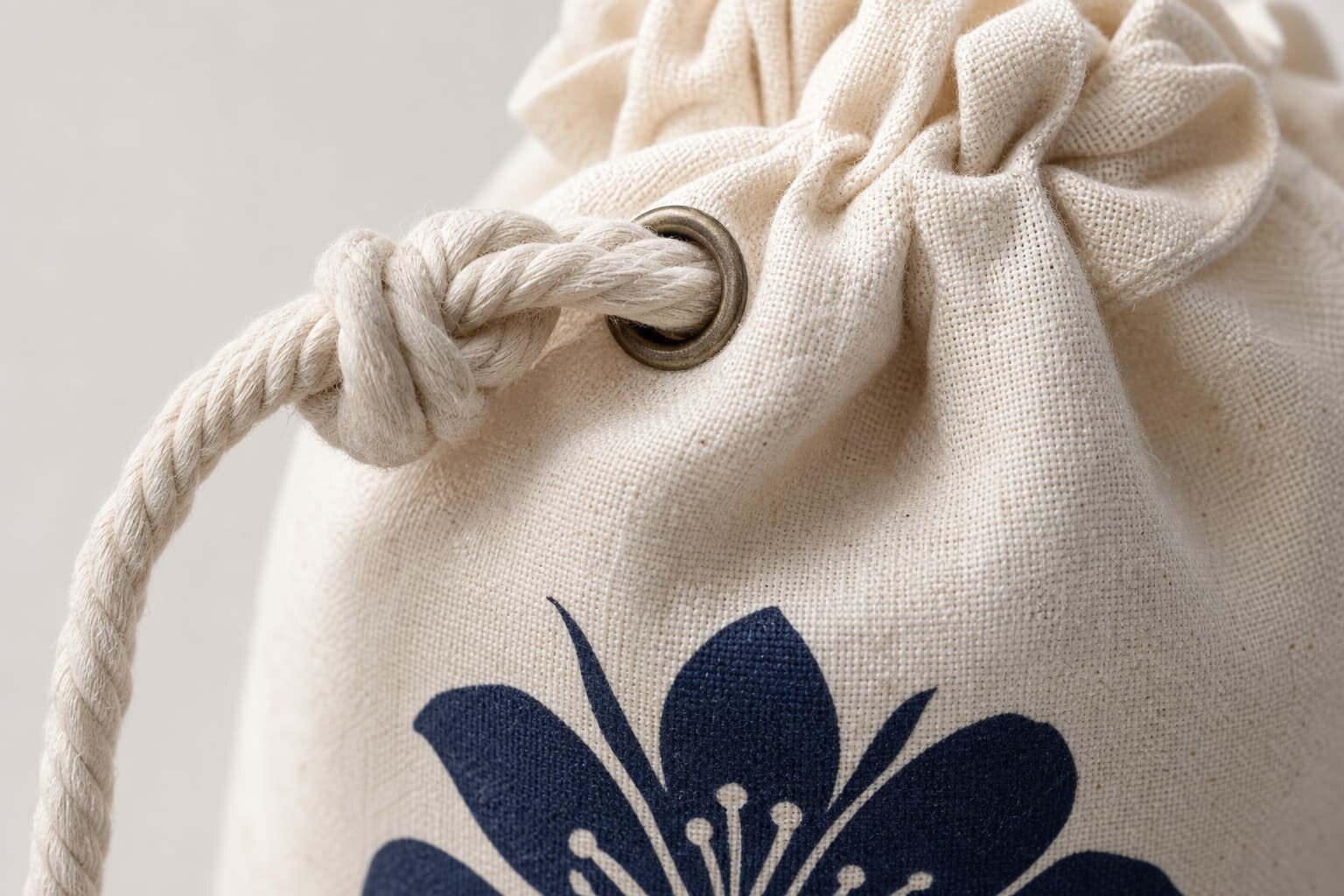
Why the top hem signoff file matters before you quote
A drawstring pouch top hem fold signoff file is not just a folder of photos. It is the control document that tells the factory how the opening should be finished, how much fabric gets turned in, where the stitch should land, and what the approved sample looked like when the buyer said yes. Without that file, a supplier may quote one fold depth, sample another, and run bulk with a third version. That is how small opening changes turn into pack-out complaints, logo placement problems, and rework at the sewing line.
For procurement teams, the signoff file is the fastest way to make suppliers quote the same product. It reduces the usual argument over whether the hem is single fold or double fold, whether the cord channel is part of the hem or separate, and whether the sample used a lighter fabric just to get approval faster. If the file is clear, price comparison gets cleaner because you are comparing the same construction, not three different interpretations of a pouch.
- Use the file to freeze the approved hem, opening size, and stitch path.
- Attach sample photos and measurement marks so the factory cannot guess.
- Version-control the document before any bulk PO is released.
Lock the hem construction first, not after the artwork
The hem construction drives everything else. A single fold hem is cheaper and usually faster, but it leaves less room for error if the fabric frays or if the opening needs to feel firm. A double fold hem hides the edge better and often looks cleaner on retail or gift programs, but it can narrow the usable mouth of the pouch and push the cord channel higher than the buyer expected. If the hem is not fixed first, the approved artwork may end up too close to the fold or the logo may land in an area that puckers during sewing.
The right fold depth depends on fabric weight, pouch size, and filling use. For light cotton pouches around 90-120 GSM, a clean single fold can work if the edge is controlled and the stitch density is stable. For 140-200 GSM cotton canvas, a double fold or a reinforced single fold often gives a better finish. As a buyer, ask the supplier to show the fold measured in millimeters on the sample, not just in words like neat or standard.
- Single fold 10-12 mm: lower cost, faster sewing, more risk on loose weave fabric.
- Double fold 18-22 mm: cleaner edge, stronger mouth, but higher labor and tighter size control.
- Do not approve artwork until the hem depth is fixed on the sample.
Choose fabric GSM and body build around the hem
The hem does not behave the same way on every fabric. A 100 GSM cotton muslin pouch folds easily, but the edge can distort if the stitch tension is high. A 140 GSM cotton drill or canvas pouch holds the opening better, yet the fold becomes thicker and may need a wider turn-in to avoid bulk. If the pouch has a lining, the hem becomes even more important because the outer layer and lining must sit flat together. Buyers who only compare body dimensions often miss this, then discover that the finished opening is tighter than the sample they approved.
For quote work, ask for exact fabric data: fiber content, weave, and GSM. A factory may offer a low quote using a lighter body cloth than the sample, or it may add hidden reinforcement to make the hem sit better. Both scenarios change cost and performance. The most useful approach is to compare hem performance against the fabric, not as a separate item. If the pouch will hold jewelry, cosmetics, or promotional sets, the opening should stay clean after repeated handling, so the GSM and fold spec should be locked together.
- 90-120 GSM: light promotional pouches, soft drape, more edge sensitivity.
- 120-160 GSM: balanced choice for retail and branded giveaways.
- 160-200 GSM: better structure, but check bulk at the fold and stitch line.
Put print and branding where the fold will not fight it
The most common mistake on drawstring pouches is treating the print area like a flat canvas and the hem as an afterthought. If the logo sits too close to the top edge, the fold can compress the print, distort fine text, or push ink into the seam line. Screen print works well for simple logos and flat graphics, but it needs a safe distance from the fold. Heat transfer and digital methods can handle more detail, yet they are more sensitive to wrinkling if the fabric is soft or the opening is narrow. A woven side label sewn into the seam is often the cleanest answer when the buyer wants the hem to stay untouched.
When you request a quote, make the factory confirm the exact print method, print size, and placement reference from the finished top edge. Ask them to mark that distance on the pre-production sample and in the signoff file. If the pouch will be used for premium gifts, a woven label or sewn brand tab near the side seam may protect the hem from print distortion and keep the opening visually cleaner. That is especially useful when the pouch is small and every millimeter near the mouth matters.
- Screen print: best for simple logos and strong color, but keep distance from the fold.
- Heat transfer or digital print: useful for detail, but watch for wrinkle sensitivity.
- Woven label: stable branding when the hem area must remain clean and functional.
What the signoff file must contain to stop version drift
A useful signoff file is not a pile of random photos. It should show the approved pouch from front, back, side, inside the opening, and a close-up of the hem stitch. Every image should have a measurement reference, a revision date, and the sample stage identified. If the sample changed from first round to final approval, the file must say so. The best files also include the measured body size, hem width, print position, cord length, and packing method. That way the factory can confirm whether the bulk line is following the same instructions or quietly switching to its own habit.
Procurement teams should treat the file like an approval record, not a marketing asset. One version only. One owner only. If sourcing, QA, and the supplier each keep different copies, a small change in hem fold can become a major rejection later. The file should also note the inspection standard: what counts as acceptable stitch waviness, how much raw edge can show, whether small print shifts are allowed, and whether the pouch opening must remain fully usable after packing and re-opening.
- Include dated photos with close-ups of the hem and cord exit points.
- Show measured dimensions for body size, hem width, and print distance.
- Record the exact revision number that was approved for bulk production.
How to compare supplier quotes without mixing different hem specs
Two quotes can look close on paper and still describe different products. One factory may price a single fold hem on 110 GSM fabric with a one-color screen print. Another may be quoting a double fold hem on 140 GSM fabric with woven side labeling and extra stitch reinforcement. Those are not like-for-like numbers. If you compare them only by unit price, you will miss where the cost moved. A better approach is to break the quote into fabric, cutting, sewing, hem finish, print, packing, and any sample charge or mold-like setup cost if labels or special tags are involved.
A realistic cost breakdown for a custom drawstring pouch often starts with fabric as the largest share, then sewing labor, then print or label application, then packing. When the hem gets wider or double folded, sewing time goes up and the pouch may need a larger body blank to maintain the same finished opening. That is why a buyer should ask every supplier to quote against the same measured sample and the same signoff file. If they cannot explain how the fold was built, the quote is not yet usable for sourcing.
- Ask for a line-by-line quote breakdown, not just one FOB number.
- Check whether fabric GSM, fold depth, and print method match the approved sample.
- Compare sample charges, setup charges, and packing charges separately.
MOQ and lead time change when the hem gets more complex
MOQ logic usually follows setup complexity, not only fabric cost. A plain single fold pouch on stock fabric can sometimes be run in relatively small quantities, especially if the print is simple and the pack-out is standard. Once the hem becomes a double fold, the print moves close to the seam, or a woven label is added, the factory often wants more volume to justify setup time and to reduce sewing variation across the run. If the order has multiple sizes or colors, each version may need its own minimum. Buyers should ask for MOQ by size, by color, and by print version, not only by total order quantity.
Lead time also expands when the signoff file is weak. If the sample is clear, the factory can move from sample approval to bulk cutting, sewing, and packing more efficiently. If the hem spec is unclear, the first bulk cartons may trigger rework or extra photo checks. In many real programs, a sample stage can take about 5-10 days depending on materials, and bulk lead time can run around 20-45 days depending on order size, fabric booking, and print complexity. Use these as planning examples, not promises, because local capacity and material availability can change the schedule fast.
- More hem complexity usually means higher MOQ or a larger setup allowance.
- Multiple colors or sizes can create separate minimums per variant.
- Clear signoff files shorten the gap between sample approval and bulk start.
Packing details can undo a good hem if they are not approved
Packing is where good pouch construction can still get damaged in the eyes of the buyer. If the pouches are packed too tightly, the hem gets compressed and the opening may crease. If the inner bag count is too high, the top fold can look crushed on arrival even though the sewing was correct. That is why the signoff file should not stop at sewing. It should also state the approved packing style, carton count, and whether the product ships flat, folded, banded, or loose in polybags. For drawstring pouches, the drawcord should sit in a way that does not deform the opening during carton compression.
Ask for a packing sample before bulk if the order is for retail or branded distribution. The goal is to confirm that the approved hem still looks clean after packing, stacking, and opening at destination. Carton marks, item labels, and inner pack counts should be fixed in the same file as the pouch construction. If the supplier changes the pack method to save labor, the pouch may arrive with a bent top edge, a twisted cord, or a label pressed into the fold. Those are small failures that often create big receiving disputes.
- Approve how many pieces go into each polybag and carton.
- Check that the hem does not crush after the chosen pack method.
- Keep carton marks and pack-out details inside the same signoff file.
Common mistakes buyers should reject before bulk starts
The first mistake is approving a pouch only by overall size and ignoring the hem. If the opening is wrong, the whole pouch feels wrong in use. The second mistake is allowing the factory to use a cleaner sample fabric than the actual bulk fabric. That can hide fraying, stitch pull, or fold thickness problems until production starts. Another common error is approving print before hem layout. The print may look fine on a flat panel but fail once the top edge is turned and stitched. Buyers should also watch for unrecorded changes to cord thickness, cord end finishing, or label position, because those changes can alter how the pouch sits in hand and in carton.
Reject any sample set that does not show the inside of the hem, the stitch line, and the measured distance from the top edge. A supplier should not be able to hide a weak finish behind one front photo. If the pouches are used for cosmetics, gifts, or retail packaging, the opening must stay consistent across the order. That means the buyer should inspect a full pre-production sample pack, not just a loose sample piece, so the signoff file reflects both construction and packing reality.
- Do not approve size without inspecting hem width and stitch close-up.
- Do not accept a sample made from a much better fabric than bulk.
- Do not freeze artwork before the fold and cord path are confirmed.
Build the RFQ so the factory quotes the same pouch every time
A strong RFQ for a drawstring pouch should read like a production instruction, not a marketing brief. State the fabric type and GSM, the finished size, the hem fold depth, the stitch style, the drawcord material, the print method, the logo placement, and the packing method. Attach the approved signoff file and call out the revision date. If you want two quote options, say so clearly: for example, one single fold option and one double fold option, both quoted against the same body size and same print area. That gives procurement a real choice instead of a set of unrelated numbers.
The best RFQs also tell the factory what not to change. If the hem must remain 18 mm, say it. If the logo must sit at least a certain distance from the fold, state it. If you want the quote to include pre-production samples, carton marks, or spare-piece allowance, list those items explicitly. This reduces back-and-forth, speeds up sourcing, and gives buyers a cleaner basis to negotiate. The signoff file is most valuable when the RFQ and the sample tell the same story, because then any later deviation is easy to catch and easy to prove.
- Attach one approved reference sample set to the RFQ.
- Specify what the supplier must not alter without written approval.
- Ask for a quote that separates setup, production, print, and packing.
Specification comparison for buyers
| Spec decision | Recommended option | When it fits | Buyer risk to check |
|---|---|---|---|
| Hem fold construction | Single fold 10-12 mm with one topstitch | Low-cost promotional pouches and lighter fabrics around 90-140 GSM | Raw edge can fray if fabric is loose weave or the stitch line sits too far from the edge |
| Hem fold construction | Double fold 18-22 mm with clean edge turn-in | Retail or gift programs where the mouth needs a cleaner interior finish | Mouth opening can shrink if body dimensions are not adjusted before sample approval |
| Stitch style | Single topstitch at 2.5-3.5 mm from the folded edge | Stable, standard production where cost control matters | Skipped stitches or waviness can appear near cord openings if machine tension is not set well |
| Stitch style | Double topstitch or reinforced edge stitching | Heavier pouches, premium packs, or repeat-fill use | Higher labor cost and tighter machine control are needed to avoid puckering |
| Branding method near hem | Woven side label sewn into seam | When print distortion near the fold is a concern | Label thickness can disturb the fold if placed too close to the opening |
| Signoff file format | Annotated photos plus measured sample sheet | Multi-supplier sourcing and repeat orders | Version drift happens fast if file names, dates, and revisions are not locked |
Buyer checklist before sampling
- Confirm pouch body size, finished opening width, and hem fold depth on the approved sample, not just in the tech pack.
- Record fabric type and GSM, including whether the sample uses bleached cotton, natural cotton, canvas, or a blended cloth.
- Mark the exact logo position, print size, and minimum distance from the top fold so the design does not creep during sewing.
- Check cord thickness, eyelet or stitched channel method, and whether the drawcord pulls smoothly after the hem is turned.
- Approve a dated photo set showing front, back, inside top hem, stitch close-up, and one measured pouch laid flat.
- Lock packing method, inner polybag count, carton pack ratio, and whether the approved sample includes hangtag or barcode label placement.
- Ask the factory to confirm bulk machine settings, stitch density, and any interlining or reinforcement added only for production.
- Keep one master signoff file with revision history so procurement, QA, and the supplier all work from the same version.
Factory quote questions to send
- What is the exact fabric composition and GSM you are quoting for the pouch body and for any hem reinforcement?
- Is the hem a single fold or double fold, and what finished hem width will you hold in bulk production?
- Where will the print sit relative to the top edge, and what print method are you pricing for that placement?
- What is the MOQ per size, per color, and per print version, and what changes if the fold spec is revised after sample approval?
- What sample stages are included before bulk, and which stage will you use for the final signoff file photos?
- How are cord ends finished, and does the hem design require eyelets, stitched channels, or simple turn-in openings?
- What is the quoted lead time for fabric booking, pre-production sample, bulk sewing, packing, and carton loading?
- Which pack-out details are included in the quote, such as inner pack count, carton marks, and spare-piece allowance?
Quality-control points to confirm
- Finished hem depth matches the approved sample within the agreed tolerance across front and back panels.
- Stitch line is straight, secure, and consistent at the fold, with no skipped stitches, loose threads, or seam tunneling.
- Fabric edge is fully enclosed and no raw edge shows at the opening, even after the pouch is pulled open and closed several times.
- Logo placement stays clear of the fold and cord channel, with no distortion, cracking, or print squeeze after stitching.
- Pouch opening remains usable after hemming and does not narrow more than the approved sample allows.
- Cord length, knot position, and both ends are consistent and do not snag on the hem or side seam.
- Pack-out quantity matches the packing list, and the approved sample pack method is used in bulk cartons.
- Sample photos, measurements, and revision code in the signoff file all match the goods being inspected.