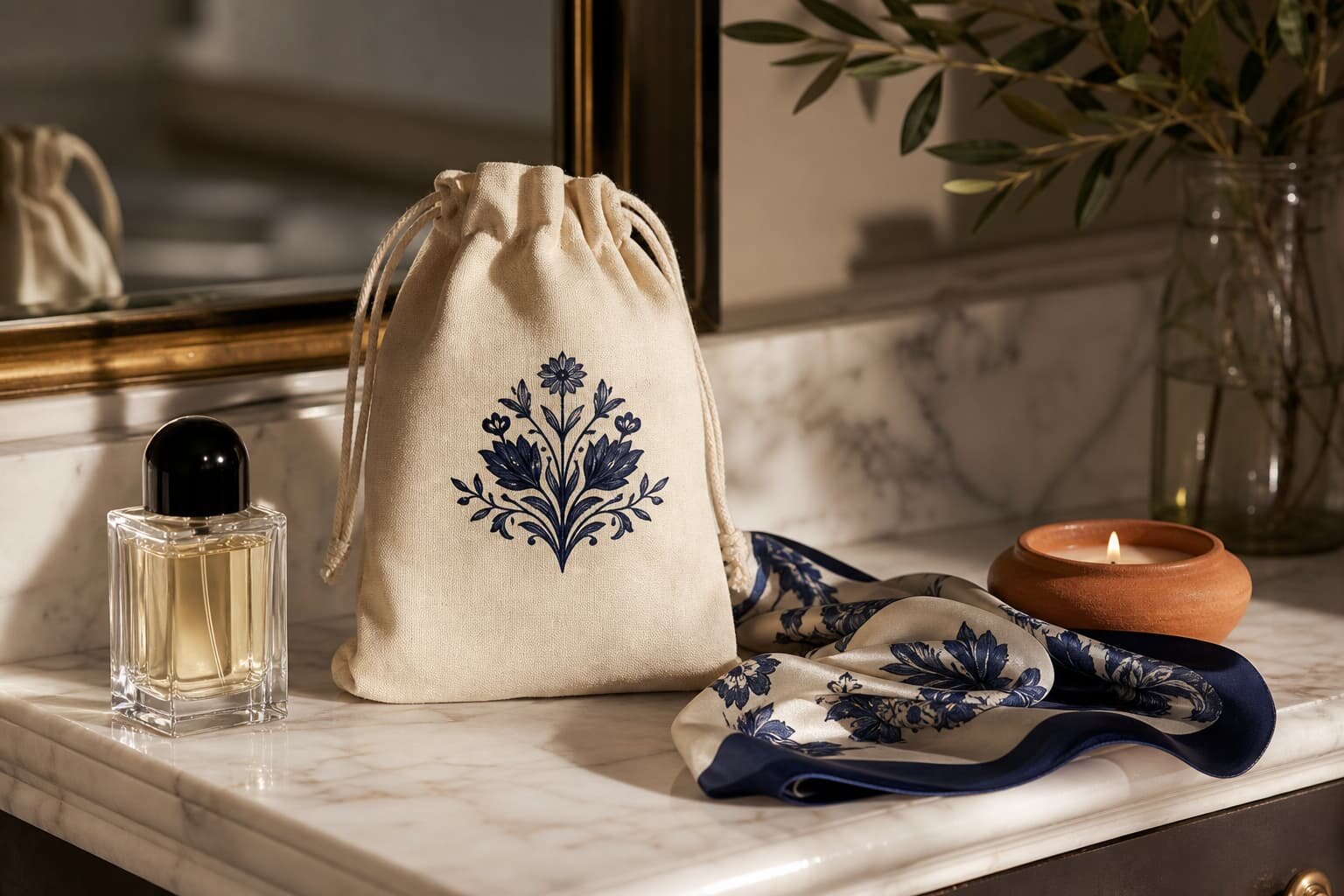
Why Sample Approval Decides the Bulk Order
A drawstring pouch looks simple on a quotation sheet, but most production disputes start with details that were not approved clearly at sample stage. The buyer approves a nice-looking pouch, then bulk arrives with a lighter fabric, tight drawcord channel, shifted logo, different cord shade, or packing that crushes the presentation. The factory may say the goods are within normal production variation. The buyer may say the sample was different. Both sides lose time because the approval record was not specific enough.
For procurement teams, sample approval is not only a visual check. It is the point where your RFQ becomes a production control document. The approved sample should lock the finished size, usable volume, GSM, fabric color, cord construction, print method, print position, stitching quality, packing method, and inspection standard. If any of these are still open when bulk fabric is ordered, the factory will make practical decisions on your behalf, usually based on cost, available material, and speed.
- Approve the sample only after checking the pouch with the actual product or insert it must hold.
- Keep one sealed reference sample with the buyer and one with the factory before bulk starts.
- Mark every approved change in writing, including fabric, print, cord, label, and packing revisions.
- Do not approve a sample made from substitute fabric unless it is only for size or construction review.
Define the Sample Type Before You Judge It
Not every sample has the same purpose. A sales sample may show workmanship, but it may use stock fabric and a sample logo. A fit sample checks whether the pouch size works for your product but may not represent final color or print. A print strike-off checks logo color and ink behavior on fabric. A pre-production sample should combine final fabric, final size, final drawcord, final artwork, final labels, and final packing as closely as possible.
The mistake is approving the wrong sample for the wrong decision. If your team approves a fit sample as if it were the final production reference, the factory may proceed without confirming bulk fabric shade or print curing. If you approve a print strike-off without checking finished pouch dimensions, you still do not know whether the product fits. Your RFQ should state which sample you need and what decision the sample is expected to support.
- Sales sample: useful for initial supplier screening and workmanship comparison.
- Fit sample: useful for checking product capacity, opening width, and internal usable height.
- Print strike-off: useful for checking logo color, opacity, ink hand feel, and artwork size.
- Pre-production sample: required before bulk production for branded export orders.
- Sealed approval sample: final signed reference used by factory QC and buyer inspection.
Measure Size by Usable Space, Not Only Flat Dimensions
A pouch quoted as 10 x 15 cm does not always hold a 10 x 15 cm item. Seam allowance, bottom fold, top drawstring channel, fabric thickness, and drawstring gathering all reduce usable space. For buyers packing jewelry boxes, cosmetic bottles, hotel amenities, charger cables, candles, or small apparel accessories, the difference between flat size and usable internal size can create a packing failure even when the pouch technically matches the purchase order.
Ask the factory to state finished flat width and height, plus usable internal height below the drawstring channel. If the pouch has a bottom gusset, confirm whether the quoted size is measured flat, after forming the base, or by internal volume. During sample approval, place the real product inside the pouch, close the drawstring, and check whether the top gathers cleanly without forcing the product against the channel seam.
- Measure width edge to edge across the finished pouch body, not including side seam bulge.
- Measure height from bottom fold or bottom seam to top edge, then separately measure usable height below the cord channel.
- Check opening width after stitching because thick side seams can reduce the mouth opening.
- For gusseted pouches, confirm gusset depth and whether the base stands or only expands slightly.
- Set a tolerance such as plus or minus 3-5 mm for small pouches, depending on fabric and construction.
Choose Fabric GSM According to Function
Fabric weight affects cost, appearance, print quality, packing volume, and user experience. A 120 GSM cotton pouch may be acceptable for a lightweight promotional insert, but it can look transparent and weak for retail accessories. A 200 GSM cotton or canvas pouch feels more substantial, yet it may gather less smoothly at the drawstring mouth. For very small pouches, heavy canvas can make the opening bulky and reduce usable capacity.
In RFQs, avoid asking only for a cotton drawstring pouch without GSM. Factories may quote different fabric weights and still appear competitive on paper. To compare quotes properly, ask each supplier to quote the same GSM range, fabric composition, finishing, and color process. If your brand requires organic cotton, recycled cotton, dyed canvas, or natural unbleached cotton, state this separately and ask what documentation can be provided rather than assuming it is included.
- 100-120 GSM: light packaging, low-cost giveaways, low load-bearing use.
- 140-180 GSM: common choice for gift pouches, cosmetics, jewelry, and small retail packaging.
- 200-280 GSM: heavier canvas feel, better durability, more premium presentation.
- Natural cotton: may show seed flecks and shade variation; this should be accepted or rejected at sample stage.
- Dyed fabric: check colorfastness, shrinkage, and whether cord and fabric shades are intended to match.
Confirm Drawcord Construction and Daily Use
The drawcord is a small cost item that strongly affects the customer experience. A cord that is too thin can look cheap and cut into the fabric channel. A cord that is too thick may not pull smoothly, especially on small pouches. Cotton cord gives a natural appearance and matches cotton fabrics well, while polyester cord can offer cleaner colors and smoother pulling. Jute cord gives a rustic look but can feel rough and shed fibers.
For sample approval, do not only look at the cord color. Open and close the pouch repeatedly. Check whether the cord moves freely through the channel, whether the top corners block the cord, and whether the knots or tips are secure. If the pouch will be handled in retail or reused by consumers, a double drawstring construction normally gives better closure and presentation than a single side pull, but it adds material and labor.
- Single drawstring: lower cost, simple function, suitable for internal packaging or budget gift use.
- Double drawstring: better closure balance, better hand feel, stronger retail presentation.
- Cotton cord: natural look, may have shade variation and softer structure.
- Polyester cord: smoother pull, strong color options, less natural appearance.
- Cord end finish: knot, heat seal, aglet, metal tip, or stitched end should be agreed before quote finalization.
Approve Print Method With Real Fabric and Final Artwork
Print approval should happen on the same fabric type and color planned for bulk production. Ink opacity, edge sharpness, and curing behavior change between natural cotton, dyed cotton, heavy canvas, and washed fabric. A logo that looks sharp on a flat strike-off may distort when printed too close to the pouch seam or drawstring channel. Small text may fill in on coarse fabric, and thin lines may break if the artwork is not adjusted for textile printing.
Screen printing is usually the practical option for solid brand logos and one to three spot colors. Heat transfer can handle detailed or multi-color artwork but may change the hand feel and can look less integrated on natural fabrics. Embroidery adds texture but can pucker small pouches or distort lightweight fabric. Woven labels reduce direct print risk and can look premium, but label position, fold type, and seam insertion must be confirmed in the sample.
- Confirm Pantone or approved color standard, but allow realistic textile tolerance.
- State print size in millimeters, not only as a percentage of the pouch front.
- Keep artwork away from side seams, bottom fold, and top channel unless distortion is accepted.
- Check rub resistance after curing, especially for dark ink on light cotton or white ink on dark fabric.
- Ask whether setup charges are included for screens, transfers, embroidery digitizing, or woven label tooling.
Review Stitching, Channel, and Workmanship Like an Inspector
Drawstring pouch workmanship problems are usually visible before shipment if the approval sample is checked carefully. Look at side seam straightness, top channel width, stitch density, back tack security, loose threads, seam puckering, and whether both top corners are cleanly finished. A pouch can look acceptable in a single front photo while hiding a blocked drawcord channel, uneven mouth height, or raw seam edge inside.
The top channel is especially important because it controls how the pouch closes. If the channel is too narrow for the cord, workers may force the cord through and create tight corners. If the channel is too wide or uneven, the top can look loose and untidy. For lightweight fabric, excessive thread tension can cause puckering. For heavy canvas, too few stitches or weak back tacks can reduce durability.
- Check stitch density against the approved sample, not only whether the seam is closed.
- Inspect inside seam finishing if the pouch will be used for premium retail presentation.
- Pull side seams gently to identify skipped stitches or weak back tacks.
- Confirm whether loose thread trimming is included as a normal final QC requirement.
- Reject blocked channels because they usually become worse after bulk packing pressure.
Connect MOQ and Cost to the Specifications You Approve
MOQ for drawstring pouches is not only one total number. It can depend on fabric procurement, dyeing lot, pouch size, print artwork, cord color, label type, and packing style. A supplier may quote an attractive MOQ for natural cotton with standard cord, then revise the order when the buyer requests dyed fabric, multiple SKU colors, special labels, or separate retail packing. This is why sample approval and quote confirmation should be linked.
After sample revisions, ask for an updated quote sheet before issuing the final purchase order. If the sample changed from 140 GSM to 180 GSM, from single drawstring to double drawstring, or from bulk packing to individual polybag, the unit cost and lead time may change. Procurement teams should make suppliers quote line by line so that different factories can be compared on the same technical basis.
- Ask MOQ per fabric color if your order uses multiple pouch colors.
- Ask MOQ per print artwork if each distributor or retail SKU has a different logo.
- Ask whether cord color matching has its own MOQ or surcharge.
- Separate tooling or setup charges from unit price so repeat order cost is clear.
- Request carton quantity, carton dimensions, and estimated gross weight for landed cost calculation.
Lock Packing and Lead Time Before Bulk Starts
Packing is part of the product specification, not a shipping afterthought. Natural cotton and light-color pouches can pick up dust, moisture, and carton abrasion. Printed pouches can transfer ink or show pressure marks if packed too tightly before curing is stable. If the pouch is going directly into a retail kit, individual packing, label placement, barcode position, and carton sequence need to be approved before production packing begins.
Lead time should be broken into steps: artwork confirmation, material preparation, sample making, buyer review, bulk cutting, printing, sewing, trimming, packing, internal QC, inspection, and export handling. A factory may quote a short production lead time but exclude sample approval delay or material dyeing time. For urgent orders, the safest question is not only how fast can you ship, but which steps are on the critical path and what cannot be compressed without risk.
- Confirm whether pouches are packed flat, folded, bundled, or individually bagged.
- Ask how many pieces per inner bag and per export carton.
- Specify carton marks, SKU separation, and mixed-carton rules if applicable.
- Use moisture protection for sea shipments, humid seasons, or long warehouse storage.
- Do not start bulk production until artwork, material, and packing approvals are all closed.
Write Approval Notes That Prevent Disputes
A good sample approval note is short but exact. It should identify the sample version, date, fabric, GSM, finished size, cord, print method, artwork file, label, packing, and any approved deviations. If the buyer accepts natural cotton seed flecks, minor shade variation, or a specific print hand feel, write it down. If the buyer does not accept crooked labels, blocked channels, visible stains, or print cracking, write that down too.
The final approval should also state what will be checked during inspection. This helps the factory prepare production QC and helps the buyer avoid subjective arguments later. For example, instead of saying logo must be good, state print position tolerance, color reference, minimum edge clarity expectation, and whether minor fabric slubs are acceptable. Clear approval notes make the supplier's job easier and protect the buyer's delivery schedule.
- Reference the exact approved artwork file name and revision number.
- Attach photos showing print placement measurements from top edge and side edge.
- Record the accepted fabric swatch or bulk fabric lot if available.
- State whether the approved sample is a production standard or only a construction reference.
- Require supplier confirmation before substituting fabric, cord, label, packing, or print process.
Specification comparison for buyers
| Spec decision | Recommended option | When it fits | Buyer risk to check |
|---|---|---|---|
| Fabric weight | 140-180 GSM cotton for light retail or gift pouches; 200-280 GSM canvas for premium reusable pouches | Jewelry, cosmetics, gifts, accessories, hotel amenities, small apparel items | Too light may show contents and wrinkle badly; too heavy may not gather smoothly at the drawstring mouth |
| Drawcord material | Cotton cord for natural look; polyester cord for stronger color matching and smoother pulling | Cotton cord suits eco-positioned brands; polyester cord suits vivid branded colors or repeated use | Cord diameter must pass through channel without jamming; color bleeding and loose cord ends should be tested |
| Print method | Screen print for solid logos; heat transfer for multi-color small artwork; woven label for premium low-risk branding | Screen print works well above MOQ with 1-3 spot colors; transfer works for detailed logos | Ink cracking, poor registration, and print distortion near seams are common if artwork is not positioned correctly |
| Closure construction | Single drawstring for budget orders; double drawstring for better user experience and retail presentation | Single side pull for simple packaging; double pull for gift, retail, and reusable programs | Double cord increases labor and material cost; sample must confirm both sides gather evenly |
| Sample approval type | Pre-production sample using bulk fabric, bulk cord, approved artwork, and final packing method | Required before branded export orders or repeat programs with strict retail presentation | A sales sample made from available fabric is not enough for approval if color, GSM, or print method differs from bulk |
| Packing | Individual polybag, paper band, or bulk carton packing based on retail channel and handling risk | Polybag for clean retail handling; bulk packing for internal packaging or giveaway use | Loose packing can crease print areas; tight bundle packing can deform thick canvas pouches |
| MOQ logic | Confirm MOQ by fabric color, pouch size, print color count, and cord color, not only total quantity | Mixed-color programs, multi-SKU gift sets, distributor stock orders | A quoted MOQ may apply per color or per artwork, causing unexpected surcharges after sampling |
| Tolerance | State size tolerance, GSM tolerance, print position tolerance, and color tolerance before sample approval | Any order where pouch must fit a product box, bottle, jewelry card, or retail insert | Approving a sample without tolerances leaves no clear basis for dispute during inspection |
Buyer checklist before sampling
- Confirm sample type: sales sample, fit sample, print strike-off, or pre-production sample, and do not treat them as equal.
- Measure finished pouch width, height, bottom gusset if any, top channel height, and usable internal size after the drawstring is tightened.
- Check fabric composition, GSM, weave density, hand feel, shrinkage risk, and whether the fabric is greige, bleached, dyed, or washed.
- Pull the drawcord several times and check cord diameter, cord end finishing, knot security, channel smoothness, and left-right gathering balance.
- Inspect print color, opacity, edge sharpness, registration, curing, rub resistance, and distance from seams, bottom fold, and drawstring channel.
- Check stitching density, seam allowance, back tack position, top channel alignment, loose threads, seam puckering, and whether the pouch sits flat.
- Confirm care label, woven side label, barcode sticker, hangtag, insert card, and any required compliance wording before bulk material purchasing.
- Review packing method, carton quantity, carton marks, moisture protection, and whether the approved sample will be used as the sealed production reference.
- Record approval conditions in writing, including accepted deviations, revised artwork files, fabric lot notes, and who has authority to sign bulk approval.
- Ask the factory to update the final quote after sample approval if GSM, cord, print method, packing, or SKU breakdown changed during sampling.
Factory quote questions to send
- Is your quoted MOQ per total order, per pouch size, per fabric color, per print artwork, or per cord color?
- Which fabric GSM and composition are included in the quote, and what GSM tolerance should we expect in bulk production?
- Will the pre-production sample use actual bulk fabric, bulk cord, bulk print inks, and final packing materials?
- What print method is included in the unit price, and are screen charges, plate charges, transfer setup, or label tooling charged separately?
- What finished size tolerance, print placement tolerance, and color tolerance can you commit to in the production order?
- How many days are required for artwork confirmation, material preparation, sample making, buyer approval, bulk production, packing, and inspection booking?
- Can you quote separately for single drawstring and double drawstring construction so we can compare cost and usability?
- How will you pack the pouches: pieces per inner bag, pieces per carton, carton size, gross weight, and moisture protection method?
- If our order has mixed SKUs, can you provide a line-by-line quote showing quantity, fabric color, print colors, cord color, packing, and unit cost?
- What production risks do you see in our artwork, pouch size, fabric choice, or delivery schedule before we approve the sample?
Quality-control points to confirm
- Finished size must match the approved sample and purchase order tolerance, especially if the pouch is designed to hold a specific product.
- Fabric weight and color should be checked against the approved swatch or sealed sample, not only against a written GSM number.
- Drawstring function should be tested by opening and closing samples repeatedly from different cartons during inspection.
- Print adhesion, rub resistance, curing, and placement should be checked before packing because rework is difficult after sewing and bundling.
- Top channel stitching must be straight and wide enough for the cord to move freely without skipped stitches or blocked corners.
- Side seams and bottom seams must not show broken stitches, raw edges, holes, heavy puckering, or exposed overlock threads unless approved.
- Cord ends should be knotted, tipped, heat sealed, or stitched according to the approved sample and should not fray during handling.
- Packing should protect light-color fabric from dust, moisture, carton abrasion, and ink transfer between printed pouches.