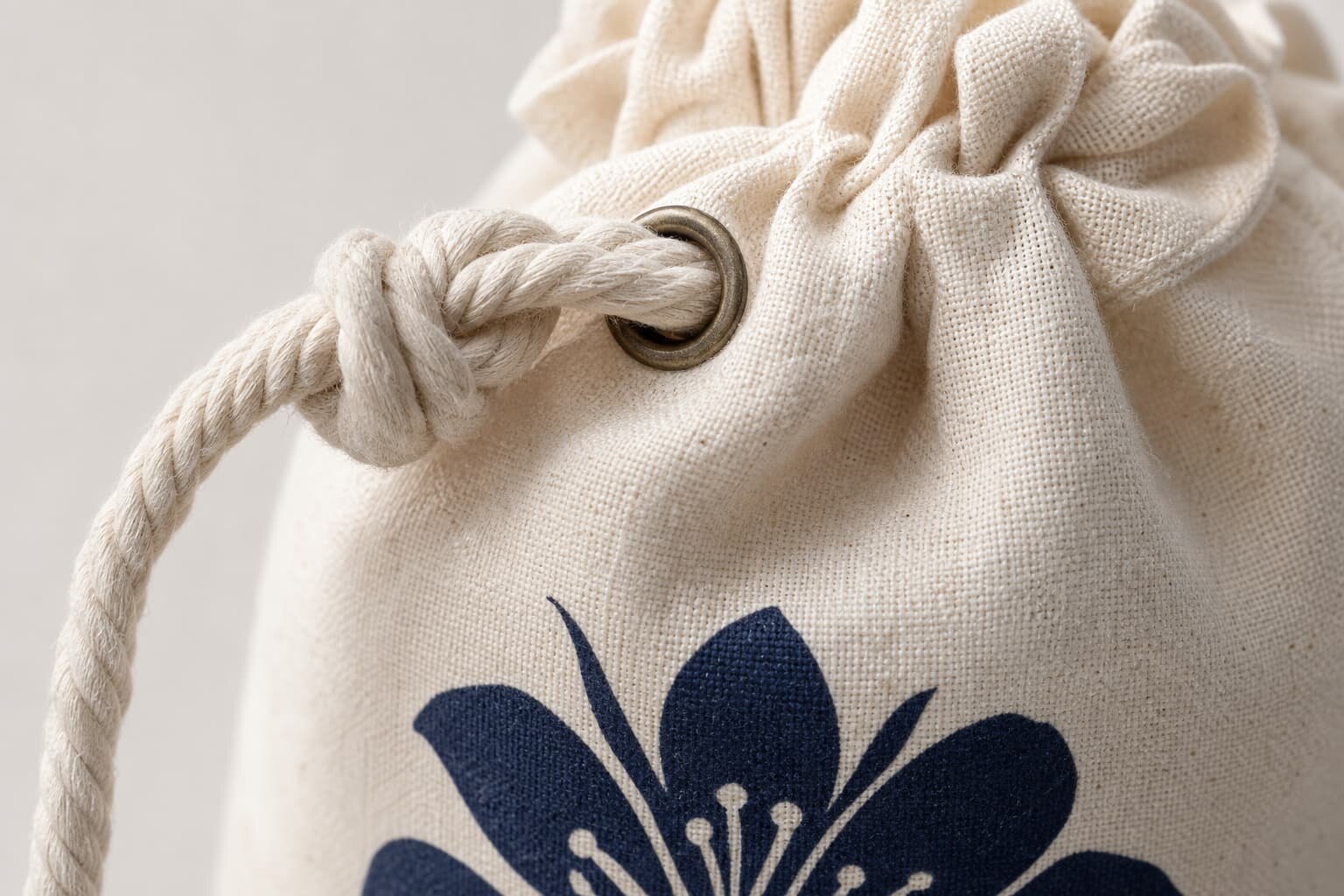
Why the Release Record Matters for Retail Bundle Packs
A drawstring pouch retail bundle pack release record is the document that connects the approved pouch, the approved packing format, and the final carton build. It is not just a quality file. For procurement teams, it is a commercial control tool. It prevents a supplier from producing acceptable loose pouches but packing them into the wrong retail set, with the wrong barcode, wrong color mix, or wrong count per bundle.
This is especially important when drawstring pouches are sold as multipacks, refill packs, gift sets, or component packaging for a larger product. The pouch itself may be simple, but retail bundle packing adds many failure points. A 5-pack of cotton pouches can fail inspection even if every pouch is sewn correctly, because one color is missing, the paper band covers the logo, or the barcode belongs to last season's SKU.
- Use the release record when one order has several pouch sizes, colors, or print versions.
- Treat bundle packing as a separate approved item, not a warehouse afterthought.
- Link every release record to the supplier quote, artwork version, sample approval date, and purchase order.
- Ask for first-bundle photos before mass packing, not after all cartons are sealed.
Define the Retail Bundle Before Quoting the Pouch
Many quote problems start because the buyer requests a drawstring pouch price before defining the retail bundle. A loose 15 x 20 cm cotton pouch and a 3-pack of 15 x 20 cm pouches with a kraft belly band, barcode sticker, and inner carton are not the same cost structure. The factory needs to quote sewing, printing, packing labor, packing materials, carton cube, and inspection time.
Before sending an RFQ, describe how the retail buyer will receive the product. Is it a bundle for shelf display, a compact ecommerce multipack, a distributor-ready carton, or an insert inside a larger product kit? The answer affects fold method, logo visibility, barcode placement, carton quantity, and even fabric GSM. A pouch that looks good loose may become bulky or wrinkled when five pieces are folded under a tight paper band.
- State the bundle type: 2-pack, 3-pack, 5-pack, assorted size set, assorted color set, or custom kit.
- Confirm whether every pouch in the bundle has the same print or mixed artwork.
- Tell the factory if the bundle must stand, hang, lie flat, fit a shelf tray, or fit an ecommerce mailer.
- Request separate cost lines for pouch production, print setup, bundle packing, labels, and export cartons.
Fabric GSM and Construction Choices That Affect Bundle Quality
For retail bundle drawstring pouches, fabric weight is a practical decision, not only a sustainability or handfeel choice. A 100-120 GSM cotton pouch is light and freight-efficient, but it can look thin when folded as a retail pack and may show darker contents. A 140-180 GSM cotton pouch usually gives a better balance for cosmetics, candles, stationery, small apparel accessories, or branded reusable packaging. Heavier canvas above 220 GSM may feel premium, but a 5-pack becomes thick quickly and may require a larger carton.
Construction also matters. A single cotton cord through a simple channel is economical, but a double drawstring closure improves user experience and closing symmetry. Channel height should be matched to cord diameter. If the channel is narrow, the cord drags and the retail buyer may complain that the pouch feels cheap. If the channel is too tall, the top edge can collapse or look oversized on small pouches.
- Common light retail pouch: 120 GSM cotton, suitable for low-weight promotional or refill packs.
- Common balanced retail pouch: 140-180 GSM cotton or recycled cotton, suitable for most branded multipacks.
- Premium pouch option: 200-280 GSM canvas, better for durable gift sets but higher carton volume.
- Cord channel allowance should be checked after sewing and after drawstring pull testing.
- Ask whether the quoted fabric is greige, bleached, dyed, washed, or pre-shrunk.
Print Method Decisions for Bundle Pack Approval
Print method should be chosen according to artwork, quantity, fabric surface, and retail handling. Screen print is usually the most stable option for solid logos and one to three colors. It works well on cotton drawstring pouches when the artwork is not too close to seams or the channel. Heat transfer can help for detailed artwork, gradients, or smaller trial quantities, but the buyer should check handfeel, edge lifting, and performance after folding under a band or sleeve.
A woven label or side label is often better when the pouch must look reusable and premium without a large front print. For bundle packs, labels also help identify brand ownership when pouches are stacked or folded. However, label direction and seam position must be approved. A label sewn into the wrong side seam may disappear inside the retail fold, making the pack look unbranded on shelf.
- Approve artwork placement on the finished pouch, not on a flat digital layout only.
- Set print placement tolerance, such as plus or minus 3 mm for small pouches or plus or minus 5 mm for larger pouches.
- Check whether the logo remains visible after the pouch is folded into the retail bundle.
- For dyed fabric, test print opacity because light ink can become dull on dark cotton.
- For heat transfer, test folding marks and edge lifting after bundle compression.
MOQ Logic: Why Bundle SKUs Change the Real Minimum
The MOQ for drawstring pouches is not always the same as the MOQ for a retail bundle pack. A factory may accept 1,000 loose pouches, but if your retail pack has five colors, three artwork versions, and barcode labels for different markets, the practical MOQ per SKU becomes more complicated. Fabric dye lots, print setup, packing line changeover, and barcode control all create minimums.
Procurement teams should ask for MOQ by decision point. Minimum per fabric color, per pouch size, per print design, per label, and per retail bundle SKU may all be different. This helps buyers compare supplier quotes honestly. One supplier may offer a low unit price but require larger color minimums. Another may support smaller assortment runs but charge more packing labor or print setup.
- Separate MOQ for fabric color from MOQ for printing artwork.
- Ask if assorted colors can share one MOQ when fabric is available from stock.
- Confirm whether the supplier can pack mixed SKUs in one master carton without scan errors.
- For launch orders, consider fewer bundle variations to reduce release record risk.
- For reorders, keep the same bundle structure unless retail sales data proves a change is needed.
What to Put in the Release Record
A good release record is short enough for the factory to use on the floor but detailed enough to prevent arguments later. It should show the approved pouch specification, print specification, packing specification, and acceptance criteria. It should also include clear photos of the approved sample and first finished retail bundle. If a buyer only signs a sample pouch and not the bundle, the supplier may treat packing as flexible.
The release record should include revision control. This is critical for importers and distributors who reorder seasonal or private label pouch packs. If the buyer changes the barcode label, color assortment, or fabric GSM, the old release file must not remain active. A simple version number, date, and approver name can prevent the factory from using the wrong artwork or packing instruction.
- Product data: size, fabric, GSM, color, cord type, seam type, and drawstring style.
- Branding data: artwork file name, print method, ink color, logo size, placement, and label position.
- Bundle data: pouch count, fold method, color order, paper band or bag size, barcode, and retail label.
- Carton data: bundles per inner carton, bundles per master carton, carton size, gross weight, and shipping mark.
- Approval data: sample date, release date, approver, supplier contact, and PO or quote reference.
Sample Checks Before Bulk Production Starts
For a retail bundle pack, one sample is not enough. The buyer should request a material swatch or fabric card first, then a print strike-off if the artwork is important, then a pre-production pouch, and finally a finished retail bundle sample. The final bundle sample should be made using the intended folding method and packing material, not only assembled for a photograph.
Sample checking should include both appearance and handling. Pull the cord several times. Open and close the pouch after it has been folded. Check whether the print cracks, the label twists, the paper band slides, or the barcode label wrinkles. If the pouch is for cosmetics, jewelry, food-adjacent packaging, or gifting, look at lint, loose threads, odor, and whether the fabric surface feels appropriate for the price point.
- Measure finished width and height flat, then check usable space after closing.
- Compare GSM and handfeel against the approved swatch.
- Check seam allowance and whether loose threads appear near the drawstring channel.
- Scan barcode labels on the retail bundle and export carton.
- Photograph approved sample from front, back, inside, closure, label, bundle front, and carton mark.
Packing Details That Often Cause Claims
Most drawstring pouch bundle claims are not dramatic production failures. They are small packing mistakes repeated across thousands of units. A 3-pack becomes a 2-pack in some cartons. Natural and white pouches are mixed. A barcode is applied to the back instead of the front. The paper band is too tight and creases the print. These issues are preventable if packing is treated as part of the product specification.
Packing method should be tested during the sample stage. If the pouches are folded, specify fold direction and final bundle dimensions. If a polybag is used, specify bag thickness, vent holes if needed, suffocation warning where required, and whether recycled or recyclable material is preferred. If a paper sleeve or belly band is used, test whether it slips during carton vibration. Retail buyers care about shelf condition, not just factory condition.
- Show the exact pouch sequence in assorted packs, especially if colors are visible through packaging.
- Define whether cords are tucked inside, tied, aligned at top, or left loose.
- Confirm if the logo must face outward after folding.
- Avoid tight bands on fresh prints unless curing and rub resistance are confirmed.
- Use inner cartons when retail bundles need better shape control during ocean shipment.
Lead Time and Quote Data Buyers Should Compare
Lead time for drawstring pouch retail bundle packs has more stages than a loose pouch order. Fabric sourcing, dyeing or washing, print screens, strike-off approval, cutting, sewing, printing, curing, trimming, bundle packing, carton marking, and inspection all add time. If the buyer approves only the loose pouch and delays barcode or packing artwork, the factory may finish sewing but cannot complete retail packing.
When comparing quotes, do not look only at the pouch unit price. Ask for setup costs, sampling cost, print cost, label cost, packing material cost, packing labor, carton cube, and estimated gross weight. A cheaper pouch can become more expensive after retail packing and freight. The release record should match the final quote version so that finance, logistics, and quality teams are all using the same assumptions.
- Request lead time split by sample development, material preparation, bulk production, packing, and inspection.
- Ask if lead time starts after deposit, artwork approval, sample approval, or final packaging file approval.
- Compare carton cube per 1,000 retail bundles, not only pouch cost per piece.
- Check if the quote includes wastage for print defects and packing rejects.
- Confirm whether the supplier provides production photos and first-bundle release photos without extra charge.
Acceptance Criteria for Shipment Release
The shipment release decision should be based on the approved release record, not on a general impression that the goods look acceptable. Procurement teams should define measurable acceptance criteria before production. This can include fabric GSM tolerance, size tolerance, print placement tolerance, stitch defects, cord function, bundle count, barcode scan rate, and carton assortment accuracy.
For final inspection, sample both loose pouch quality and finished bundle quality. Open cartons from different pallet positions. Count retail bundles. Open selected bundles and verify pouch count, color mix, logo direction, and cord function. If the order has several bundle SKUs, inspection must cover each SKU separately. Do not allow one correct SKU to represent all versions.
- Set size tolerance before production, for example plus or minus 5 mm depending on pouch size and fabric behavior.
- Reject major print defects such as missing ink, severe smearing, wrong color, or logo rotated from approved direction.
- Check drawstring operation after the pouch has been folded and unpacked.
- Verify every barcode version against the purchase order and packing list.
- Hold shipment if first finished retail bundle approval was skipped or cannot be traced.
Specification comparison for buyers
| Spec decision | Recommended option | When it fits | Buyer risk to check |
|---|---|---|---|
| Fabric weight for retail bundle pouches | 120-180 GSM cotton or 140-200 GSM recycled cotton | Small gift, cosmetics, jewelry, stationery, or promotional retail sets where handfeel matters but freight must stay controlled | Very light fabric may show contents or distort after print curing; heavier fabric may increase bundle thickness and carton cube |
| Cord choice | Cotton cord 3-5 mm, polyester cord only when colorfastness or lower cost is the priority | Retail pouches that need a soft natural look and easy hand closing | Cord diameter must fit channel height; dyed cord needs rub and bleeding checks against light fabric |
| Print method | Screen print for solid logos, heat transfer for multi-color small runs, woven label for premium reusable packs | Brand logo, SKU mark, or simple retail graphic on one or both pouch faces | Print placement can shift after sewing; approve tolerance and test drawstring channel creasing near artwork |
| Bundle packing format | 2-pack, 3-pack, 5-pack, or SKU-specific assorted set with paper band or recyclable polybag | Retail shelf, ecommerce kit, subscription box, or gift set replenishment | Wrong assortment is the main risk; release record must show exact pouch count, size mix, color mix, and barcode position |
| Release record timing | Approve after pre-production sample and again at first finished retail bundle | Orders with multiple sizes, colors, print versions, or store-ready packaging | If approval happens only at loose pouch stage, retail packing defects can pass unnoticed until final inspection |
Buyer checklist before sampling
- Confirm the retail bundle purpose: shelf pack, ecommerce kit, gift-with-purchase, refill set, or distributor resale pack.
- Lock the pouch size after drawstring closure, not only the flat cut panel size.
- State fabric composition, GSM, weave, shrinkage expectation, and whether fabric must be washed or unwashed before cutting.
- Define print method, logo size, color reference, placement tolerance, and whether the artwork crosses seams or drawstring channels.
- List the exact bundle count, size mix, color mix, sequence, folding method, and outer packaging material.
- Require one approved loose pouch sample and one approved finished retail bundle sample before bulk packing starts.
- Ask the supplier to show carton packing quantity, carton size, gross weight, net weight, and cube per retail bundle configuration.
- Add barcode, hangtag, warning label, country-of-origin mark, and recycling mark requirements before quote comparison.
- Set acceptance criteria for stitching, cord pull force, print rubbing, bundle count, label scan, and carton assortment.
- Keep the signed release record with photos, sample comments, and quote version number for reorder control.
Factory quote questions to send
- What fabric GSM, composition, and available stock colors are included in this quote, and what changes if we request custom dyeing?
- Is the quoted size the finished flat pouch size, the cut panel size, or the usable inside size after drawstring closure?
- Which print method is quoted, how many colors are included, and what setup or screen charges apply by artwork version?
- What is your MOQ per size, per fabric color, per print design, and per retail bundle SKU?
- Can you quote loose pouch cost and retail bundle packing cost separately so we can compare fulfillment options?
- What sample types will you provide before production: material swatch, print strike-off, pre-production pouch, and finished retail bundle?
- What packing materials are included: paper band, header card, OPP bag, kraft sleeve, barcode label, master carton, or inner carton?
- How many retail bundles fit per export carton, and what are the estimated carton dimensions and gross weight?
- What is the normal lead time for fabric sourcing, sample approval, bulk sewing, printing, packing, and final inspection?
- What release record documents and photos can you provide at first production and before shipment?
Quality-control points to confirm
- Fabric GSM and handfeel match the approved swatch within agreed tolerance.
- Finished pouch dimensions are measured flat and after cord closure where relevant.
- Drawstring channel height allows smooth pulling without cord jamming.
- Cord length, cord diameter, knot finish, and color match the approved sample.
- Print is positioned within tolerance and passes dry rub, light wet rub, and tape pull checks when applicable.
- Side label, woven label, barcode label, and country-of-origin mark are present and facing the approved direction.
- Retail bundle contains the correct quantity, colors, sizes, and sequence.
- Paper band, polybag, header card, or sleeve does not crush the pouch or cover required branding.
- Carton assortment matches the packing list and scan labels before sealing.
- First finished retail bundle is photographed and signed against the release record before mass packing continues.