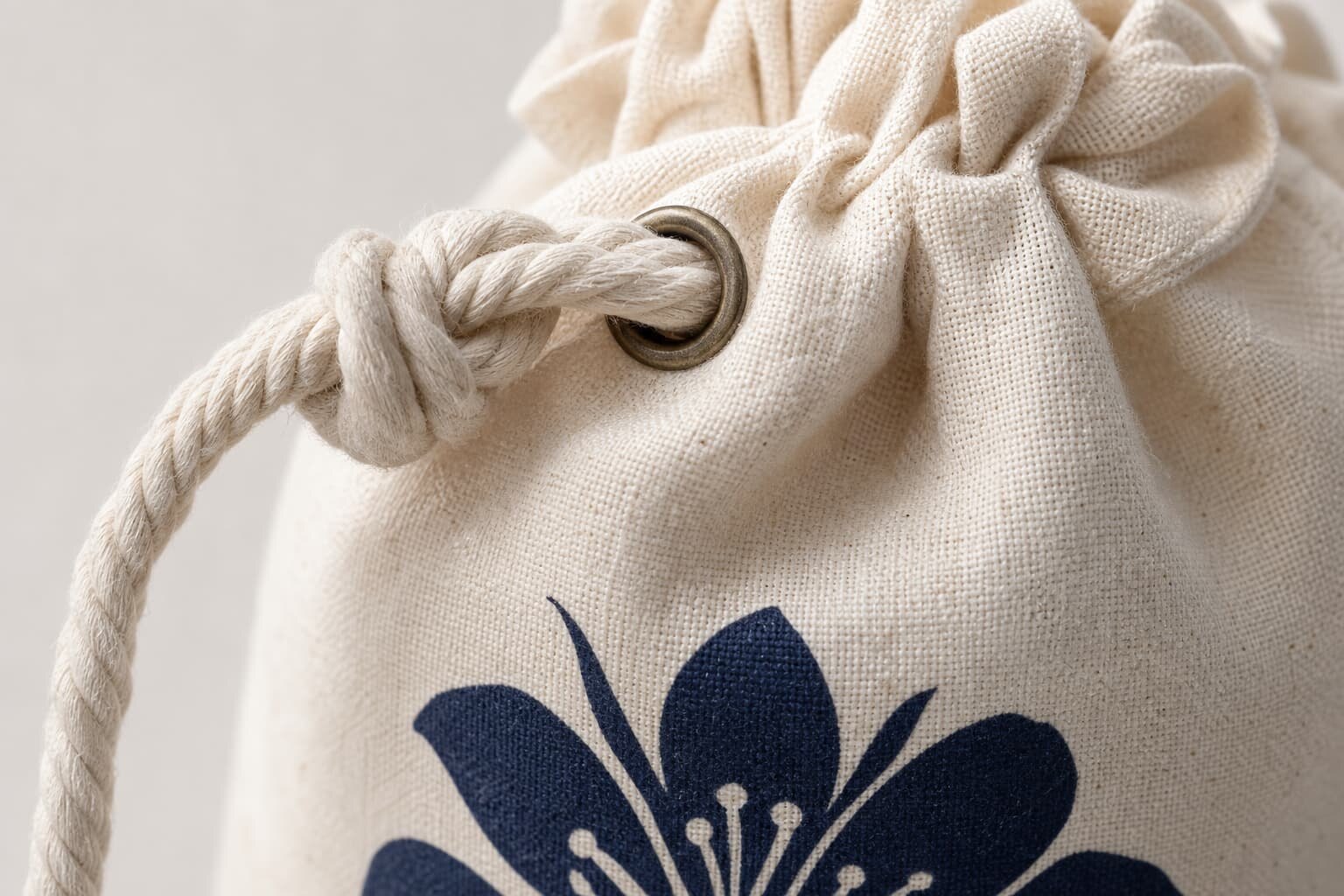
Why a reorder approval note matters on repeat pouch orders
A drawstring pouch reorder approval note is not a formality. It is the document that tells the factory what must stay fixed from the last approved order and what is allowed to change. On repeat work, the biggest risk is not a dramatic mistake; it is a quiet drift in fabric weight, cord length, print size, or carton count. Those small changes are easy to miss in an email thread, but they can change handfeel, retail presentation, and landed cost.
Procurement teams often assume a repeat order can move straight from old PO to new PO. That only works if the previous order was fully controlled and the factory still has the same materials, same print setup, and same packing method. A good approval note creates one clear reference point for sales, sampling, production, and QA. It also gives the buyer a clean record when a supplier quote changes or when the factory tries to substitute a lower-cost material.
- Treat the note as the control document for the reorder, not as a cover email.
- Use the last approved sample as the reference, but write the critical specs in the note.
- Flag any item that affects fit, appearance, pack-out, or shipping efficiency.
Decide whether the reorder needs fresh approval or a simple release
Not every reorder needs a full re-sample, but every reorder needs a decision. If the pouch is identical in fabric, size, print, cord, label, and packing, a release note may be enough. If the supplier has changed dye lots, replaced a cord, shifted to a new print method, or adjusted carton count, the note should require a new approval step before mass production. This is where buyers save time by being strict up front instead of fixing surprises later.
A practical rule is simple: if the change can be seen, touched, measured, or counted, it belongs in the note. That includes GSM, weave density, shrinkage, print area, color reference, and even the orientation of a side label. For pouches sold into retail or promotional channels, even a small visual shift can trigger customer complaints or warehouse rework. The approval note should state whether the order is a direct repeat, a repeat with deltas, or a reapproval after substitution.
- Direct repeat: same approved spec, same material source, same packing, same artwork.
- Repeat with deltas: same style name, but one or more elements changed and separately approved.
- Reapproval: material or construction changed enough that a new sample must be signed off.
Lock the product spec, not just the style name
Style names are useful inside a catalog, but they are too vague for a reorder approval note. A buyer needs a spec that names the fabric, GSM, size, cord construction, print method, and finishing detail. For a cotton drawstring pouch, that might mean plain weave cotton at a defined GSM, a specific cut size, a natural or dyed cord, a one-color screen print, and a woven side label. If the factory only sees the style name, it may assume it can make a close equivalent instead of the exact repeat.
The note should also record what was approved in the last order versus what is now being ordered. If the last run used 90 gsm cotton and the new quote shows 110 gsm, write that difference clearly and state whether the buyer accepts the new handfeel and cost. If the pouch size stayed the same but the seam allowance changed, note that as well. The goal is to make the spec readable by both the merchandiser and the production planner without digging through old emails.
- Record fabric type, GSM, color, and finishing in plain language.
- Record finished size, seam allowance, cord length, and closure method.
- Record any label, hangtag, or side mark placement as a separate control item.
Compare quote data line by line before you release the PO
A reorder approval note should not only say what to make; it should also frame how the quote is being judged. Buyers need line-by-line quote data so they can compare factories on the same basis. Ask for the unit price, setup cost, artwork charge, sample charge, packing cost, carton cost, and any surcharge linked to color, size, or rush lead time. If one factory appears cheaper, it may simply be hiding a setup fee that another supplier already included.
Quote data is also where MOQ logic becomes visible. Some factories price by fabric consumption, others by print screen count, and others by carton pack efficiency. For example, a pouch with a simple one-color print may have a lower MOQ than one with multi-color coverage or a woven label that requires separate sewing time. The approval note should say which quote version was reviewed, who approved it, and whether the price assumes the same material as the last order or a substitute approved by the buyer.
- Ask for separate lines for fabric, print, label, packing, and freight-ready carton work.
- Confirm whether the quote assumes one size, one color, or mixed-color production.
- Check whether repeat pricing changes at a different order quantity or packing ratio.
Use fabric, GSM, and print choices to control repeat-order risk
For drawstring pouches, fabric choice drives most of the repeat-order risk. Cotton, canvas, organic cotton, and blended fabrics all behave differently in cutting, sewing, print appearance, and packing. A lower GSM can reduce cost, but it may also make the pouch more transparent or less structured. A higher GSM can improve handfeel, but it may change cord tension and increase fabric consumption. The approval note should lock the approved GSM and allow only a documented tolerance.
Print method matters just as much. Screen print is often stable for simple logos and larger runs, while heat transfer may be faster for short runs or multicolor art, but can feel different on fabric. Embroidery, woven patches, or sewn labels add their own control points. The buyer should state the approved print method, ink type, number of colors, print placement, and maximum print area. If the previous order used a natural cotton pouch with a one-color screen print, do not let the reorder drift into a smaller print or a different finish without written approval.
- Common repeat-order control points: fabric GSM, shrinkage, print method, and print size.
- Ask the supplier to send the same fabric swatch or a clearly labeled substitute swatch if the original is unavailable.
- If the pouch is meant for retail display, compare the printed face against the last approved sample under the same light.
Sample checks that catch small changes before mass production
The approval note should define exactly what sample check is needed before the factory starts bulk production. If the order is truly unchanged, a sealed reference sample may be enough. If there is any doubt about fabric source, print alignment, cord finishing, or label placement, request a pre-production sample or at least a photo approval with measured references. Buyers should not approve on a casual beauty shot alone, because pouch size and color can look correct in a photo while the actual piece differs by several millimeters or a visible shade.
A useful sample check list is practical rather than artistic. Measure the finished pouch size, weigh the fabric if you have the reference, compare cord length, check the print coverage, and verify the stitching around the top opening. Look at the pouch from the retailer's point of view as well: does it hang properly, close evenly, and stack neatly in the master carton? If the sample fails any one of those items, the approval note should hold the PO until the supplier corrects it.
- Compare the new sample to the last approved sample under the same lighting.
- Check dimensions, cord length, print placement, and packing count before sign-off.
- Keep one signed reference sample with the reorder file and label the revision clearly.
Packing and carton instructions protect your margin on repeat orders
Packing mistakes are one of the easiest ways to lose money on a simple drawstring pouch reorder. A change from 100 pieces per carton to 80 pieces per carton, or from flat-packed to folded-with-insert packing, can increase carton count, labor cost, and warehouse handling time. The approval note should state inner pack count, whether each pouch is polybagged, whether a silica gel packet is included, carton dimensions, gross weight target, and the exact shipping marks. These details matter because the packing method affects both freight cost and receiving speed.
If the pouch is sold through retail or e-commerce channels, packing consistency is part of the product. Buyers should define whether the carton must hold a specific count by color or by SKU, whether barcodes go on each inner pack or only on the master carton, and whether cartons need corner protection or a stronger board grade. A good note also records any overage or shortage tolerance. If the factory expects to ship 2 percent extra or short, the buyer should know that before the order is released, not after the warehouse count comes in.
- Specify inner pack style, polybag thickness if used, and master carton count.
- State whether the pouch should be folded, flat, or tied before packing.
- Confirm carton marks, barcode placement, and any retailer routing label requirements.
Lead time and MOQ logic should be written into the approval note
Repeat orders often fail because the buyer assumed the same lead time and the factory assumed a fresh booking window. The note should state the approved release date, the required ex-factory date, and any shipment milestone tied to retail launch or warehouse intake. If the order needs a new screen, a new dye lot, or new labels, the lead time should be reset in the note so there is no confusion about when production can start. The supplier should also confirm whether the material is in stock or whether procurement must wait for fabric to be woven, dyed, or finished.
MOQ logic is just as important. A supplier may accept a smaller reorder quantity if the same fabric is still available, but increase the MOQ if the print version changed or the factory has to restart cutting from a new roll width. Buyers should ask whether the MOQ applies by color, by print version, or by carton configuration. If the factory gives a price break at a higher quantity, record the threshold in the approval note so sourcing can use it in the next forecast cycle. That keeps the team from over-ordering just to chase a lower unit price.
- Record the required ship date separately from the factory's normal lead time.
- Clarify whether MOQ is driven by fabric roll usage, print setup, or labor efficiency.
- If the order is urgent, write the rush condition into the note and the quote.
Quality control points to close before the factory starts bulk work
Before release, the approval note should name the quality control points that matter for the pouch. That means the buyer is not only approving a visual sample, but also the measurable production criteria. For a drawstring pouch, the key items are fabric weight, seam strength, opening width, cord function, print durability, and pack accuracy. If any one of those points is not clear, the factory may pass a sample that looks fine but still produces a weak or inconsistent bulk run.
The best approval notes create a simple pass-fail standard. For example, fabric must match the agreed GSM range, print must align to the approved artwork, cords must draw evenly without twisting, and labels must be centered and correctly spelled. If the pouch includes a woven side label or embossed brand mark, the note should specify acceptable placement tolerance. Put these points in writing because the QC team and the production team often look at the same order through different lenses.
- Set measurable tolerances for size, weight, and print placement.
- Define what counts as a visual defect versus a critical defect.
- Require a pre-bulk cross-check against the sealed sample or approved reference photo.
A practical workflow for turning the note into a clean release
A useful reorder approval workflow is short, repeatable, and visible to everyone on the file. Start with the last approved sample and PO, compare the supplier quote to the original spec, mark every difference, and decide whether each difference is accepted, needs a new sample, or is rejected. Then attach the approval note to the PO, the artwork file, the carton instruction, and the supplier quote. If the factory uses a different internal code, include that code in the same packet so no one has to guess which version is current.
This workflow also helps when the buyer changes suppliers. A clear approval note becomes the bridge between the old factory and the new one. It shows the next supplier exactly what the product should look like and what must remain stable. For procurement teams, that means fewer arguments over whether a change was approved, fewer delays while people search old emails, and fewer production surprises after the order is already on the line. If the reorder file is clean, the next buyer can take over without rebuilding the history from scratch.
- Attach the approval note to the PO, quote, artwork, and reference sample record.
- Use one revision number so sales, QA, and production all read the same file.
- Archive the note with the shipped order so the next reorder starts from a clean baseline.
Specification comparison for buyers
| Spec decision | Recommended option | When it fits | Buyer risk to check |
|---|---|---|---|
| Fabric weight | Match the last approved GSM and allow a small tolerance only | Best for repeat orders where handfeel, opacity, and cost must stay consistent | Factories may quote the same fabric name but switch yarn count, weave density, or finishing |
| Print method | Keep the same method, ink type, color count, and print area | Best when the artwork is already approved and the brand wants the same visual result | A supplier may replace screen print with heat transfer or reduce the print size to save time |
| Cord and closure | Keep cord material, diameter, tip finish, and knot style unchanged | Best for pouches that must open and close the same way in retail use | Cord length drift is common and can change the bag look, function, and packing efficiency |
| Packing format | Lock inner pack count, polybag spec, carton count, and carton mark layout | Best for import programs where warehouse receiving and barcode scanning matter | A small carton change can break case pack planning and raise handling cost |
| Approval sample | Reference the last sealed sample and ask for a fresh pre-production check if anything changed | Best when repeat orders have any risk of material substitution, print shift, or size drift | Skipping a new check can hide small changes that only show up after mass production starts |
Buyer checklist before sampling
- Pull the last approved sample, tech pack, artwork file, carton spec, and prior PO before writing the reorder note.
- Confirm whether the reorder is truly identical or whether fabric, print, cord, label, or packing needs a revision.
- Record fabric type, GSM, color standard, shrinkage expectation, and any surface finish or wash effect.
- Confirm pouch dimensions, seam allowance, cord length, and top opening tolerance against the approved sample.
- List the print method, artwork version, ink color, placement, coverage size, and any label artwork separately.
- Check MOQ by color and by print version, plus the price break at each reorder quantity.
- Confirm packing count, inner polybag spec, carton size, carton mark, and over/under shipment tolerance.
- State the approval owner, required attachments, and the exact release date for production and booking.
Factory quote questions to send
- Is this quote based on the exact last approved sample, and if not, what is different by material, print, cord, or packing?
- What GSM, weave, and finishing are included in the quoted fabric, and how are they measured?
- Does the price include printing setup, plate or screen charges, label application, and any artwork revision fee?
- What is the MOQ for this pouch by color, by print version, and by carton pack configuration?
- What packing standard is included in the quote, including inner pack count, master carton count, and carton mark details?
- What sample can you provide before mass production, and what exactly will it confirm?
- What production lead time applies after approval, and what changes the schedule if we release the PO late?
- What overage or shortage tolerance do you apply, and how will you communicate any variance before shipment?
Quality-control points to confirm
- Fabric weight matches the agreed GSM tolerance and the handfeel matches the last approved sample.
- Pouch dimensions, seam allowance, and opening width stay within the accepted size range.
- Cord material, diameter, length, tip finish, and draw function match the approved standard.
- Print placement, registration, color density, and edge sharpness match the approved artwork sample.
- Stitching is even, no loose threads remain, and stress points are reinforced where the cord passes through.
- Labels, woven tags, or side marks are placed in the correct position and carry the correct spelling.
- Pack count, carton count, barcode, and shipping marks match the quote and the packing instruction.
- Random cartons are checked against the last approved sample before goods are cleared for shipment.