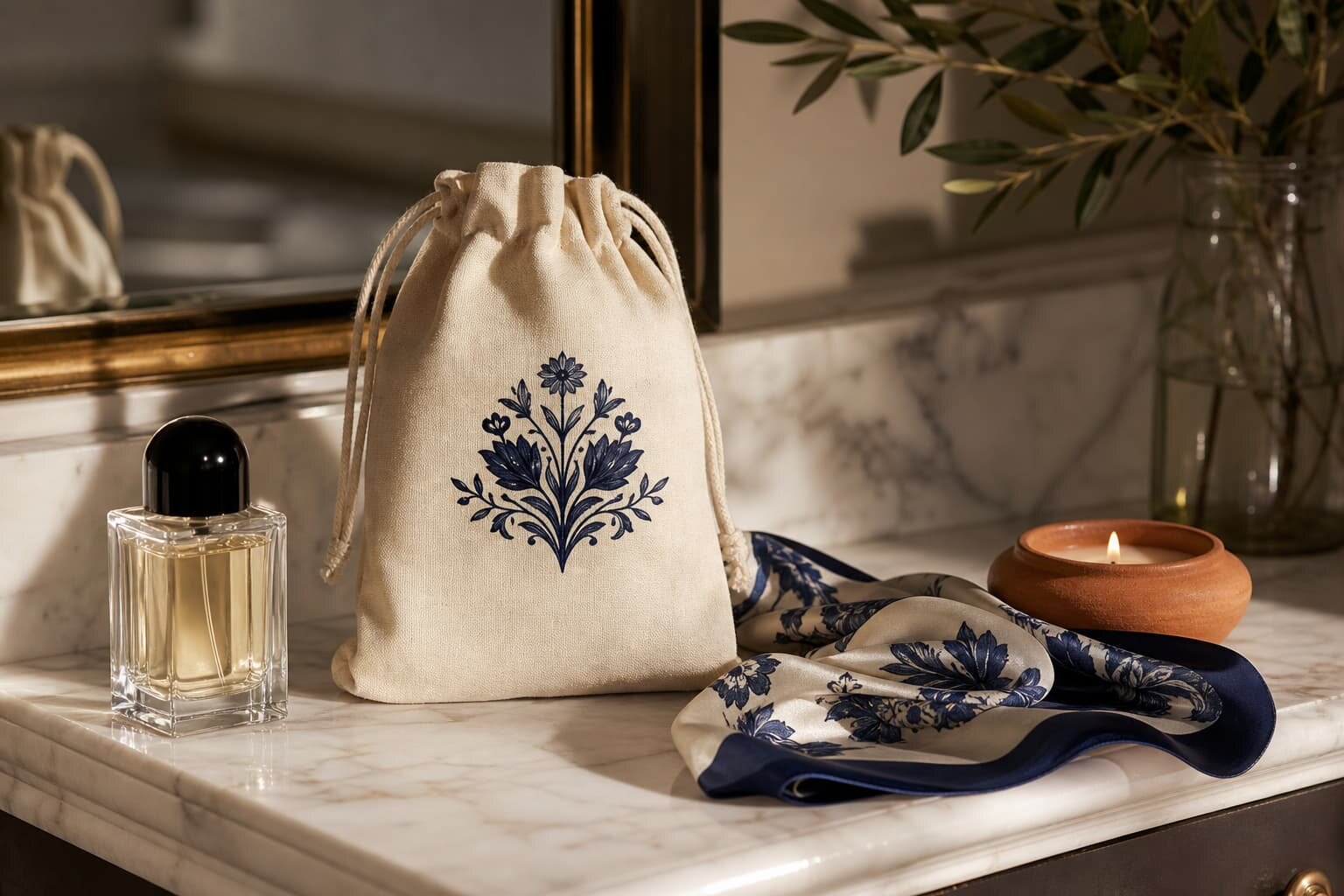
Why Handle Knot Inspection Matters in Bulk Pouch Orders
A drawstring pouch can look correct in a quotation photo and still fail at the handle knot. For procurement teams, the knot is not a decorative detail. It affects opening force, consumer feel, packing speed, complaint rate, and whether the pouch can be reused. If a knot slips after the first pull, the buyer usually receives the complaint, not the sewing line.
Many RFQs describe pouch size, fabric, and logo but leave the knot as an assumption. That creates quote differences. One factory may cost the order with a thin cord and single knot. Another may include a thicker cotton cord, double knot, and hand trimming. The pouch may look similar on a spreadsheet, but the labor time, material cost, and defect risk are different.
- Use knot inspection when the pouch will be opened and closed repeatedly.
- Use it when the pouch is sold or gifted as part of a brand experience.
- Use it when cord appearance is visible in retail display or e-commerce photos.
- Use it when a distributor will repack, relabel, or handle the pouch many times before sale.
Define the Pouch Construction Before You Inspect the Knot
Handle knot inspection starts before production. The factory needs to know whether the pouch is a simple single-drawstring bag, double-drawstring pouch, side-pull style, shoulder-style mini bag, or pouch with a separate handle loop. The same word, drawstring pouch, can describe several constructions. If the structure is not fixed, the knot standard will keep moving.
For most cotton drawstring pouches, the cord runs through a folded top channel and exits at one or both side seams. Small jewelry pouches may use thinner cord and lighter fabric. Larger canvas merchandise pouches need wider channels and stronger seams because the cord is pulled harder. A good RFQ should connect the knot requirement to pouch size and intended load.
- State finished size as width x height, for example 15 x 20 cm after sewing.
- Confirm whether the pouch has one cord or two cords.
- Confirm cord exit position: one side, two sides, or front opening.
- Specify whether the knot is hidden inside the channel or visible outside.
- Mention expected contents, such as cosmetics, jewelry, apparel, gifts, cables, or wine accessories.
Fabric GSM, Cord Diameter, and Knot Strength Must Match
A common production mistake is pairing heavy cord with weak fabric or light cord with a large pouch. Fabric weight and cord diameter must work together. For small cotton gift pouches, 4 oz to 6 oz cotton, roughly 140 to 200 GSM, can be acceptable if the contents are light. For reusable retail pouches, 8 oz to 10 oz cotton canvas, roughly 270 to 340 GSM, gives better structure and supports a stronger cord.
Cord diameter also changes the channel requirement. A 3 mm polyester cord can slide through a narrow channel, but a 6 mm cotton cord needs more room and cleaner stitching at the side opening. If the channel is too tight, workers may force the cord during assembly, leaving twisted cords and stressed knots. If the channel is too loose, the pouch may close unevenly and the mouth may look bulky.
- Small jewelry or accessory pouch: 140-200 GSM fabric with 2-4 mm cord.
- Cosmetic or retail gift pouch: 200-270 GSM fabric with 3-5 mm cord.
- Reusable canvas pouch: 270-340 GSM fabric with 4-6 mm cord.
- Heavy contents require reinforced side seams, not only a thicker cord.
- Dyed fabric and washed fabric may shrink, so confirm finished size tolerance.
Choose the Knot Standard, Not Just the Cord Color
Buyers often approve the cord color and ignore the knot type. That is risky. A single overhand knot is fast and cheap, but it may loosen on smooth polyester cord or when tails are trimmed too short. A double overhand knot gives better holding power and is usually suitable for promotional and retail drawstring pouches. A figure-eight knot can look cleaner on thicker cord, but workers need clear training to keep it consistent.
The knot tail is part of the standard. If the tail is too long, the pouch looks unfinished and can tangle during packing. If it is too short, the knot can slip open after repeated pulling. A practical buyer tolerance is often 8 to 15 mm after tightening, adjusted by cord type. Thicker cotton cord usually needs a slightly longer tail because it compresses during handling.
- Specify knot type in the purchase order or approved sample record.
- Set knot tail length range instead of saying neat finish.
- Ask whether polyester cord ends are heat sealed to reduce fraying.
- Ask whether cotton cord ends are trimmed cleanly after knot tightening.
- Avoid approving a showroom sample if the bulk line will use different cord stock.
Print Placement Can Create Knot and Closing Problems
Print method affects the drawstring area more than many buyers expect. Screen printing is usually efficient for solid one-color or two-color logos on cotton pouches. Heat transfer can handle detailed artwork but may feel less natural on coarse canvas. Embroidery adds texture but can stiffen a small pouch. Woven labels are a good option when the pouch is reused and the buyer wants consistent branding without printing over textured fabric.
For knot inspection, the main issue is logo position. If the artwork sits too close to the channel, the fabric will wrinkle every time the pouch is closed. That can crack a heavy ink layer, distort small text, or make the logo look uneven in photos. Leave enough distance between the top channel and the print area, especially on short pouches where the closing zone consumes a large part of the front panel.
- Screen print works well for solid CTM-style sample logos and simple brand marks.
- Heat transfer is useful for gradients or fine detail but needs wash and rub testing.
- Embroidery should be tested on small pouches because it may reduce flexibility.
- Woven side labels avoid print cracking near the closing area.
- Keep artwork away from the drawstring wrinkle zone unless the effect is intentional.
Sample Checks Buyers Should Do Before Bulk Approval
A pre-production sample should not be judged only by appearance. Open and close the pouch at least 20 times, then inspect the cord exits, knot tightness, channel stitching, and logo position. If the knot loosens on the sample, it will not improve in bulk production unless the factory changes the process. Sampling is where buyers should catch construction issues, not only color differences.
Ask the supplier to make the sample with final fabric, final cord, and final print method. A substitute sample is useful for shape review, but it cannot approve knot strength. For example, a natural cotton cord behaves differently from a shiny polyester cord. A 200 GSM pouch closes differently from a 340 GSM canvas pouch. Put the approved sample in a sealed record and reference it in the purchase order.
- Measure finished width and height after the pouch is sewn and pressed.
- Pull both cords evenly and then separately to test knot security.
- Check whether the cord slides smoothly without catching inside the channel.
- Compare left and right cord length after closing the pouch.
- Rub the knot area to see whether loose fibers appear quickly.
- Take approval photos of the knot, channel opening, print, and packed sample.
MOQ and Cost Logic Behind Better Knot Work
Knot quality has labor cost. A factory can tie a basic knot quickly, but a consistent double knot with tail trimming, cord alignment, and final inspection takes more handling time. The difference may be small per piece, but on a large order it affects production planning. Procurement teams should expect suppliers to ask for higher MOQ when the order needs custom dyed cord, special cord diameter, or premium hand finishing.
MOQ is not only about sewing. It can be driven by fabric dyeing, cord dye lots, label weaving, screen setup, heat transfer setup, and packing materials. If a buyer wants a low MOQ with custom fabric color, custom cord color, and strict knot finish, the quote may include extra setup charges or a higher unit cost. A clearer specification helps the factory quote honestly instead of hiding shortcuts in the cord and knot.
- Natural cotton fabric with stock cord usually supports lower MOQ.
- Custom dyed fabric and custom dyed cord usually raise MOQ or setup cost.
- Multi-color printing adds setup cost even if the pouch is small.
- Woven labels may have their own minimum order independent of pouch MOQ.
- Extra knot inspection may affect labor cost but reduces receiving complaints.
Packing Controls That Protect Knots During Shipment
Even a well-tied knot can look poor after bad packing. If pouches are thrown randomly into cartons, cords tangle, knot tails bend, and printed panels may rub against cord ends. For retail and distributor orders, packing should support fast receiving and repacking. Flat packing with cord tails aligned is usually better than loose bulk packing when appearance matters.
The buyer should specify pieces per inner bag, inner bag material if required, carton quantity, carton dimensions, and carton markings. If the pouch has a light-colored fabric, the factory should avoid dirty worktables and dusty cartons. For printed pouches, confirm whether ink is fully cured before packing. Poor curing can cause print transfer, especially when cords and knots press against the logo surface.
- Use inner bags to control quantity and reduce cord tangling.
- Align cord knots in one direction when the pouch is packed flat.
- Avoid over-compressing cartons because knots can leave pressure marks.
- Confirm carton gross weight so warehouse teams can handle cartons safely.
- Request packing photos before shipment if no third-party inspection is arranged.
Incoming Inspection Criteria for Procurement and QC Teams
When goods arrive, receiving teams need more than a visual count. Pull samples from different cartons, not only the top carton. Check whether the knot type matches the approved sample, whether tails are consistent, and whether cord exits are reinforced. Loose knots often appear in the middle of production runs when operators change or when the factory speeds up packing.
A practical inspection plan can use AQL sampling, but the defect descriptions must be specific. Mark missing knot, loose knot, frayed cord end, unbalanced cord length, torn channel seam, blocked channel, wrong cord color, and print damage as separate defects. This helps the supplier understand the failure and prevents arguments about whether the pouch is usable.
- Critical concern: missing cord, missing knot, or cord pulled out of the channel.
- Major concern: loose knot, wrong cord type, torn channel seam, or unusable closing function.
- Minor concern: slightly uneven tail length within agreed tolerance if function is not affected.
- Record defects by carton number so the factory can trace packing or line issues.
- Keep photos with a ruler beside the knot tail when reporting defects.
How to Compare Supplier Quotes Without Missing Knot Risk
A low quote is not useful if it removes the knot standard. When comparing suppliers, put the same construction details into one quote sheet: fabric GSM, finished size, cord type, cord diameter, knot type, print method, packing method, sample fee, mold or screen charge if any, MOQ, lead time, and inspection standard. If one quote is much cheaper, check whether it uses thinner fabric, smaller cord, single knot, lower print quality, or loose bulk packing.
Lead time should also be tied to the final specification. A stock natural cotton pouch with one-color screen print can move faster than a custom dyed canvas pouch with custom cord and woven labels. Do not approve a lead time before confirming sample approval dates, material booking, print curing time, final inspection, carton packing, and export handover. The knot may be a small detail, but it sits inside the whole production schedule.
- Ask each supplier to quote the same finished size and same GSM.
- Separate pouch unit cost from print setup, sample cost, and packing upgrades.
- Request photos or video of the knot process if the order is high volume.
- Confirm whether lead time starts after deposit, artwork approval, or sample approval.
- Include the approved knot standard in the purchase order, not only in email discussion.
Specification comparison for buyers
| Spec decision | Recommended option | When it fits | Buyer risk to check |
|---|---|---|---|
| Cord material | Cotton cord 4-6 mm or polyester cord 3-5 mm | Cotton supports natural branding; polyester gives smoother pulling and better abrasion resistance | Cotton cord can fray if the knot is not tightened and trimmed; polyester can slip if the knot type is wrong |
| Knot type | Double overhand knot or tightened figure-eight knot | Bulk promotional pouches, retail gift bags, cosmetics pouches, jewelry pouches | Single knots may pass sample review but loosen after packing, transit, or repeated opening |
| Fabric weight | 6 oz/200 GSM to 10 oz/340 GSM cotton canvas depending on pouch size | Lightweight for small gift pouches; heavier canvas for reusable retail packaging | Thin fabric can tear at the channel seam if buyers request thick cord without reinforcing stitch density |
| Drawstring channel | Folded top channel with clean lockstitch and back-tacking at side openings | Most cotton, canvas, and linen-style drawstring pouch orders | Channel too narrow causes poor sliding, knot stress, and uneven closing |
| Print method | Screen print for solid logos; heat transfer for fine color graphics; woven label for premium repeat use | Brand logos, retail packaging, event merchandise, gifting programs | Print placement too close to channel may distort when the pouch is tightened |
| Knot trim length | 8-15 mm tail after tightening, adjusted to cord thickness | Orders where knot appearance is visible to the consumer | Over-trimmed tails can pull through; long tails look unfinished and may catch in packing |
| Packing method | Flat packed with cord tails aligned or lightly bundled by inner polybag | Export cartons, distributor inventory, retail repacking | Randomly tangled cords increase receiving labor and can hide loose knots during final inspection |
Buyer checklist before sampling
- Confirm pouch size after sewing, not just cutting size, because channel folding reduces usable height.
- Specify fabric composition, GSM, weave, color, and shrinkage tolerance before asking for a final quote.
- Define cord material, diameter, color, knot type, knot tail length, and pull strength acceptance.
- Request pre-production samples using the final fabric, final cord, final print method, and final packing method.
- Check whether the knot is hand-tied, machine-assisted, heat sealed, or additionally stitched for the order size.
- Inspect both left and right cord exits; poor factories often keep one side neat and leave the opposite side inconsistent.
- Ask for AQL inspection criteria that include loose knots, frayed cord ends, missing back-tacks, and uneven channel width.
- Require carton packing photos showing pouch orientation, cord position, inner bag quantity, carton mark, and gross weight.
- Compare quotes using the same knot and cord specification, not just pouch size and fabric GSM.
- Keep one approved sealed sample for color, print, cord, knot, stitch density, and packing reference.
Factory quote questions to send
- What fabric GSM and composition are included in your quote, and is the GSM measured before or after washing or finishing?
- What cord material, diameter, color matching method, and end treatment are included?
- Which knot type will you use for bulk production, and can you provide a pull test result or internal standard?
- What is the finished pouch size tolerance after sewing and pressing?
- What is the MOQ for this pouch size, fabric color, cord color, and print method combination?
- Is the logo quoted as screen print, heat transfer, embroidery, woven label, or another process?
- How many sample rounds are included, and will the sample use production fabric and production cord?
- What production lead time applies after sample approval and deposit, and what may extend that timeline?
- How will the pouches be packed: pieces per inner bag, pieces per carton, carton size, and estimated gross weight?
- Can your final inspection report include photos of knot tails, cord exits, channel stitching, print position, and carton packing?
Quality-control points to confirm
- Cord knots must stay tight after repeated opening and closing tests and a basic pull test appropriate to pouch size.
- Knot tail length should be consistent across the order and long enough to prevent slipping through the knot.
- Cord ends should not fray excessively; cotton cord may need clean trimming, while polyester cord may need heat sealing.
- Drawstring channel width must allow smooth pulling without forcing or twisting the pouch mouth.
- Side seam and channel opening should be back-tacked so the cord does not tear the seam during use.
- Printed logos should remain outside the high-wrinkle closing zone unless the buyer intentionally approves that position.
- Left and right cord lengths should be balanced when the pouch is closed and when it is fully open.
- Bulk packing should prevent cord tangling, knot compression marks, and print transfer between pouches.