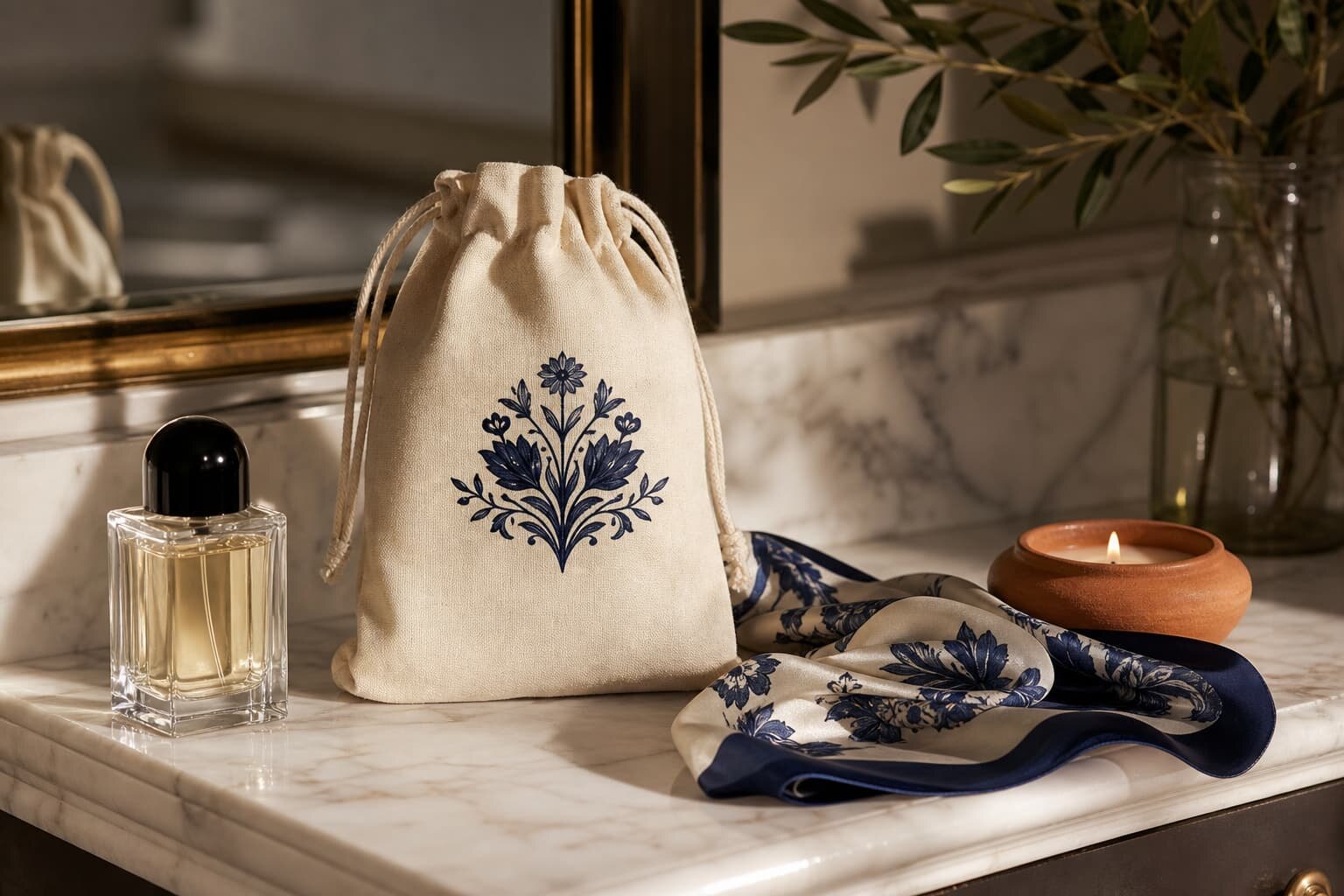
Why Fabric Shade Signoff Matters for Drawstring Pouches
Drawstring pouches are often treated as simple packaging, but fabric shade is one of the most common causes of buyer disappointment. A cream pouch that looked warm and natural in the sample can arrive as grey, yellow, pink, or uneven in bulk. For retail packaging, gift sets, cosmetics, jewelry, hotel amenities, and promotional kits, that small shade difference can make the whole product presentation look off-brand.
The problem usually starts before production, not during final inspection. Buyers approve a photo, suppliers quote a general color name, and nobody confirms whether the sample came from stock fabric, lab dyeing, or an old cutting from a previous order. A proper drawstring pouch fabric shade signoff file gives both sides one physical standard, one tolerance rule, and one inspection method before money is spent on cutting, sewing, printing, and packing.
- Use physical fabric cuttings for approval when shade is commercially important.
- Separate fabric shade approval from logo artwork approval; they are related but not the same decision.
- Treat natural cotton, dyed cotton, canvas, jute, and blended fabrics as different shade-control projects.
- Put the shade standard in the PO or sample approval record, not only in chat messages.
Define the Fabric Before You Approve the Color
A color approval without fabric construction is incomplete. The same beige, black, navy, or natural tone will look different on 120 GSM plain cotton, 200 GSM canvas, brushed cotton, recycled cotton, jute blend, or polyester-cotton fabric. Weave, yarn thickness, surface hairiness, and finishing all change how light reflects from the pouch. If the RFQ only says cotton drawstring pouch in natural color, suppliers may quote different materials and still believe they have followed the request.
Before asking for shade samples, define composition, weave, GSM, and finish. For small jewelry or cosmetic pouches, 120-160 GSM cotton is common because it folds neatly and keeps freight volume lower. For premium reusable pouches, 200-280 GSM canvas gives more structure but can make the same color look deeper and more textured. If the pouch needs to hold shoes, wine accessories, candles, or heavier gifts, the buyer should check both fabric strength and shade appearance after sewing.
- Specify fabric composition, such as 100% cotton, recycled cotton blend, polyester-cotton, canvas, or jute blend.
- State target GSM and tolerance, for example 160 GSM +/- 5% or 220 GSM +/- 8%.
- Confirm weave type if appearance matters: plain weave, canvas, twill, or muslin-style cotton.
- Ask whether fabric is bleached, unbleached, dyed, washed, brushed, or calendared.
- Require the same fabric construction for lab dip, pre-production sample, and bulk production.
Natural Cotton Is Not One Fixed Color
Many buyers choose natural cotton drawstring pouches because they want an eco-looking, soft, unbleached packaging style. The risk is assuming natural cotton has a fixed shade. In reality, natural cotton varies by cotton source, yarn lot, weaving mill, storage age, and finishing. One batch may be creamy; another may be greyish or have darker cotton seed specks. This is normal, but it still needs a signoff rule.
If your brand requires a very clean natural shade, say so early. A low-cost natural cotton pouch may include visible seed flecks and shade variation. A cleaner, more even natural shade may require better yarn selection, bleaching, or tighter fabric sourcing, which can change cost and MOQ. Importers should not ask the factory to match an old natural cotton pouch unless they also send a physical reference and accept a realistic tolerance.
- For natural cotton, approve a shade range if small variation is acceptable.
- If seed flecks are not acceptable, state this in the RFQ and sample comments.
- For repeat orders, send a retained reference sample from the previous approved lot.
- Do not compare natural cotton shade only against a Pantone book; Pantone is printed ink, not woven fabric.
- Check whether the supplier can reserve enough fabric from one lot for the full order quantity.
Custom Dyed Pouches Need Lab Dips and Bulk Lot Control
Custom dyed drawstring pouches are used when the pouch itself must match a brand palette, seasonal campaign, private label range, or retail display. This requires more control than natural cotton or stock color fabric. A lab dip is the first step, but it is not the final guarantee. Lab dyeing is done in small quantity, while bulk dyeing uses larger machines, different liquor ratios, and different drying conditions. A small shade drift can happen unless it is checked before cutting.
For procurement teams, the key is to build approval stages into the timeline. First approve lab dip. Then approve a pre-production sample made from the selected shade. Then, for important orders, approve a bulk fabric head-end cutting before full cutting starts. If the supplier says custom dyed fabric is included but cannot explain dye MOQ, lab dip timing, or bulk shade control, the quote may be incomplete.
- Ask how many lab dip options are included, such as A, B, and C shade variations.
- Define the light source for review, usually daylight D65 or a buyer-specified light box condition.
- Confirm whether shade approval is visual only or supported by grey scale or color measurement.
- Request a head-end cutting after bulk dyeing and before mass cutting.
- Keep all rejected dips marked clearly so they do not re-enter the approval process.
Print Color Can Change the Fabric Shade Decision
A pouch fabric shade cannot be approved in isolation if the logo is printed directly on the bag. Screen print, heat transfer, digital print, foil, embroidery, woven label, and rubber patch each react differently with fabric color and texture. White ink on natural cotton may look warm and slightly muted. Black ink on rough canvas may lose edge sharpness. Metallic print on dyed fabric may need extra testing for curing and rub resistance.
Buyers should sign off the fabric shade and logo application together on a strike-off or pre-production sample. A fabric that looks perfect alone may make the logo too low-contrast. A darker dyed pouch may require an underbase for light ink, increasing cost and production time. For retail and beauty packaging, this is often where the final visual quality is won or lost.
- For screen print, check ink opacity, registration, edge sharpness, and curing on the actual fabric.
- For heat transfer, check film hand-feel, bonding, cracking, and color shift after pressing.
- For embroidery, check thread color against the pouch body and fabric puckering around stitches.
- For woven labels, approve label ground color and stitching position on the pouch side seam.
- For dark dyed fabric, ask whether a white underbase is needed for accurate logo color.
MOQ Logic: Why Shade Control Changes the Quote
MOQ is not only a sales rule. It is connected to fabric sourcing, dyeing, cutting efficiency, printing setup, and packing. A supplier may offer a lower MOQ for natural or stock color drawstring pouches because fabric is already available. Custom dyed fabric often needs a higher MOQ because the mill must dye a minimum fabric length or weight. If a buyer asks for 800 custom dyed pouches in a special shade, the unit price may look high because the dyeing and setup cost is spread over a small quantity.
When comparing quotes, check whether each factory is quoting the same shade method. One supplier may quote stock beige cotton. Another may quote custom dyed cotton matched to your reference. Another may quote a cheaper lower-GSM fabric that appears lighter because it is thinner. The lowest price may not be the same product. Ask suppliers to break out the assumptions instead of only giving a final unit price.
- Stock fabric MOQ is usually more flexible because material is already available.
- Custom dyed fabric MOQ depends on mill minimums, fabric width, GSM, and color complexity.
- Small orders with strict shade matching may carry lab dip, dyeing, or fabric surcharge.
- Multiple pouch sizes in one color may help reach fabric MOQ if the same material is used.
- Reorder programs should discuss fabric reservation or shade continuity before the first PO.
Sample Approval Workflow That Prevents Bulk Disputes
A useful sample process does not need to be complicated, but it must be staged. Start with fabric options or lab dips. Then approve the pouch construction sample. Then approve the decoration on the selected fabric. Finally, approve a pre-production sample that reflects actual bulk materials, dimensions, drawcord, print, label, stitching, and packing. Skipping steps saves a few days at the beginning and often creates weeks of argument at the end.
The signed approval sample should travel with the order record. The factory should keep one sealed sample, the buyer should keep one sample, and the inspection company should know which standard to use. If approval happens by email photo, request that the physical sample still be marked approved after arrival. Photos are useful for communication but poor for judging cream, beige, grey, navy, and black fabric shade.
- Round 1: fabric shade cutting or lab dip approval.
- Round 2: pouch size and construction sample with correct GSM.
- Round 3: logo print, label, or decoration strike-off on approved fabric.
- Round 4: full pre-production sample with final trim, cord, stitching, and packing.
- Bulk checkpoint: head-end fabric cutting and first finished pieces before full production.
Acceptance Criteria for Shade Signoff
The approval record should say what is acceptable, not just approved. For natural cotton, the buyer may accept minor variation within the same visual family. For custom dyed fabric, the buyer may require closer matching to a physical standard. For distributor stock where the pouch is not part of a strict brand system, a wider tolerance may be acceptable. The important point is to decide before production, not after cartons are loaded.
A practical acceptance standard includes the signed sample, color name, fabric lot, GSM, print method, viewing condition, and tolerance note. If a buyer wants measurement-based control, ask the factory whether they can use a light box, grey scale, or color difference reading. Not every pouch factory has a full textile lab, so the RFQ should match the order value and risk level.
- Use signed physical sample as the primary shade standard.
- State whether variation between lots is acceptable if cartons are shipped together.
- Check under consistent light, not mixed warehouse, yellow office, and outdoor conditions.
- Inspect body panels, seams, drawcord channel, and bottom fold because shade may appear different under tension.
- Record whether ironing, pressing, washing, or heat transfer changes the final visible shade.
Packing and Carton Control for Multiple Shade Lots
Shade control can fail during packing even if the fabric was approved correctly. If cutting bundles from different fabric lots are mixed during sewing or trimming, pouches may look inconsistent within the same retail display. This is especially risky for large orders, rush replenishment, and programs with several sizes such as small, medium, and large drawstring pouches in the same color.
Ask the factory how shade lots will be separated and marked. Carton labels should identify PO number, SKU, pouch size, color, quantity, and lot if applicable. If goods ship to multiple warehouses, do not let one destination receive a mix of early and late shade lots unless the buyer has approved that plan. For retail buyers, consistency per store or per kit may matter more than consistency across the entire shipment.
- Pack one shade lot per carton when possible.
- Mark cartons with color name and lot reference for traceability.
- Avoid mixing multiple fabric lots in one polybag or retail set.
- For kits, confirm that all pouch sizes in the same kit are visually compatible.
- Keep retained samples from each shade lot until the buyer accepts the shipment.
Lead Time Planning for Shade Approval
Shade signoff affects lead time because it adds decision points before bulk sewing. A realistic schedule may include several days for fabric sourcing, several days for lab dips, courier time for physical approval, pre-production sample making, bulk fabric dyeing or reservation, printing, sewing, trimming, inspection, and packing. If the buyer delays shade approval but keeps the original ship date, the factory may have to compress production, which increases mistake risk.
When speed matters, use stock fabric colors and approve from actual available fabric. When exact brand shade matters, allow time for lab dip rounds and bulk fabric approval. Procurement teams should put sample approval deadlines in the launch calendar, especially for seasonal retail, promotional events, and product kits with fixed delivery dates.
- Stock fabric route: faster, lower shade precision, easier for smaller MOQ.
- Custom dye route: slower, better brand control, higher MOQ and more approval steps.
- Repeat order route: faster only if the previous fabric standard and supplier records are clear.
- Rush order route: acceptable only when buyer agrees to available shade options and limited correction time.
- Inspection route: include time for final inspection before shipment, not after goods are packed for export.
Specification comparison for buyers
| Spec decision | Recommended option | When it fits | Buyer risk to check |
|---|---|---|---|
| Natural cotton shade control | Approve a physical fabric cutting from the same greige or dyed lot | Unbleached cotton pouches, eco packaging, cosmetic or gift sets | Natural cotton varies by yarn batch; do not approve only from a screen photo |
| Dyed fabric approval | Lab dip plus bulk fabric head-end cutting before stitching | Brand color programs, seasonal retail launches, matched packaging lines | Dye shade may shift after washing, calendaring, or storage; define tolerance before PO |
| Fabric weight selection | 120-180 GSM cotton for small retail pouches; 200-280 GSM canvas for premium reusable pouches | Jewelry, skincare, apparel accessories, event merchandise | Heavier GSM can print darker and fold bulkier; quote packing volume separately |
| Print method on shaded fabric | Screen print for solid logos; heat transfer for fine gradients; woven label for shade-sensitive branding | One to three color logos, private label packaging, distributor stock | Ink color reads differently on cream, dyed, or jute-like base fabrics |
| Approval standard | Signed master sample with shade card, GSM record, and print approval kept by factory and buyer | Repeat orders, multi-SKU pouch programs, distributor replenishment | Verbal approval or email photo approval leaves no measurable standard for disputes |
| Packing after signoff | Pack by shade lot and mark cartons with lot number, color name, and PO line | Large orders shipped to multiple warehouses or retailers | Mixed shade lots inside one carton make retail shelf display look inconsistent |
Buyer checklist before sampling
- Confirm the pouch fabric type, composition, weave, GSM, and color name before requesting lab dips or strike-offs.
- Ask whether the shade sample is from available stock fabric, a lab-dyed cutting, or actual bulk fabric reserved for your order.
- Approve shade under a defined light source such as D65 daylight, not only under office lighting or phone photos.
- Check shade together with logo print, drawcord, lining if used, zipper if used, and side label because each material may change the final appearance.
- Record acceptable tolerance for natural cotton variation, dyed fabric lot variation, and print ink shift on the approved sample tag.
- Require a pre-production sample using actual fabric weight, actual drawcord, actual print method, and final pouch dimensions.
- Ask the factory to keep one signed approval sample and send one signed sample to the buyer or inspection team.
- Require carton marking by PO, SKU, color, size, fabric lot, and quantity when multiple shade lots or sizes are produced.
- Inspect bulk fabric head-end cuttings before sewing starts, especially for repeat orders and retail programs.
- Do not release balance payment or shipment approval until inline or final inspection confirms shade consistency across cartons.
Factory quote questions to send
- Is the quoted shade based on stock fabric, custom dyeing, or natural unbleached cotton from current inventory?
- What fabric weight in GSM is included in the quote, and what is the acceptable GSM tolerance?
- Can you provide lab dips or fabric cuttings before the pre-production sample, and how many rounds are included?
- Will the bulk pouches be cut from one fabric lot, or may multiple lots be mixed to meet the order quantity?
- Which print method is quoted, and have you tested ink coverage on this exact fabric shade and GSM?
- What MOQ applies if we require custom dyed fabric instead of stock color fabric?
- How will you mark cartons if there are several fabric shade lots, sizes, or print versions in one shipment?
- What is the lead time for lab dip, pre-production sample, bulk fabric preparation, sewing, printing, packing, and final inspection?
- Can you send a bulk fabric head-end cutting for approval before cutting the full order?
- What shade tolerance standard will you accept for claims: signed sample, Pantone reference, grey scale rating, or buyer-approved lot cutting?
Quality-control points to confirm
- Compare bulk fabric cuttings against the signed shade sample under consistent daylight before mass cutting.
- Measure fabric GSM from bulk fabric, not only from the original quotation sample.
- Check shade difference between pouch body, drawstring cord, side label, zipper tape if used, and printed logo background.
- Review print ink opacity, edge sharpness, curing, and rub resistance on the approved fabric shade.
- Inspect the first sewn pieces for shade change caused by ironing, pressing, washing, or heat transfer application.
- Separate and label shade lots during cutting, sewing, trimming, and packing to avoid mixed cartons.
- Check random cartons from the beginning, middle, and end of production for visible shade drift.
- Photograph shade inspection with the signed standard sample in frame, but do not use photos as the only approval evidence.