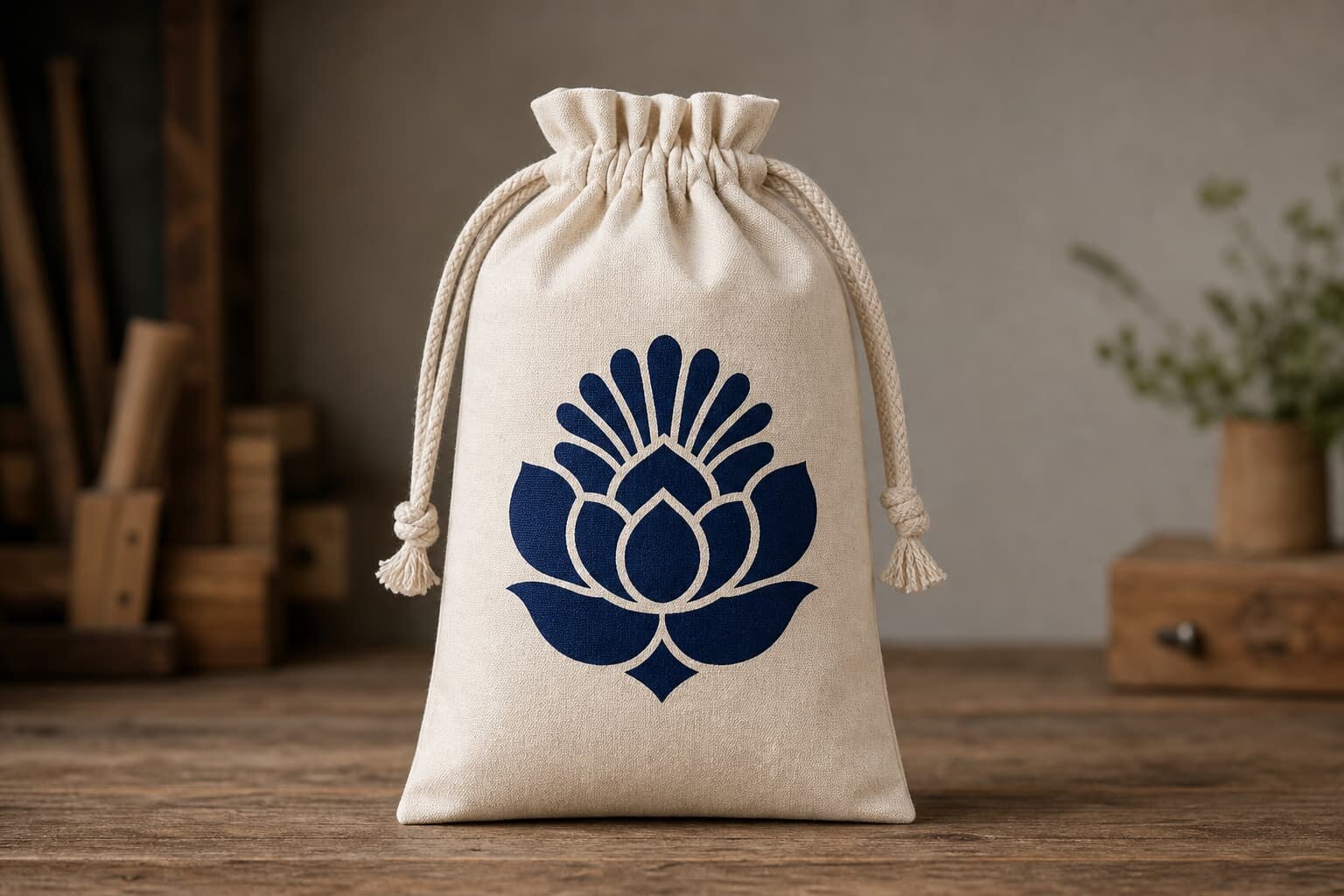
Why the Cord Pull Test Belongs in the RFQ
A drawstring pouch looks simple in a quote sheet, but the cord system carries most of the user stress. Buyers often specify fabric weight, logo size, and pouch dimensions, then leave the cord as a factory default. That is where failures start: cords slip into the channel, knots untie, side seams tear at the tunnel, or the pouch mouth stops closing smoothly after only a few uses.
A cord pull test memo gives the supplier a measurable requirement before pricing and sampling. It does not need to be complicated, but it must define how the cord is pulled, what load is expected, what counts as failure, and when the test is performed. Without this memo, two factories may quote the same pouch description while using different cord diameters, tunnel widths, stitch densities, and end finishes.
- Use the memo when the pouch will hold cosmetics, jewelry, electronics accessories, candles, toys, premium gifts, hotel amenities, or refill products.
- Treat the cord as a functional component, not a decorative trim.
- Ask the factory to quote based on the test requirement, because stronger cord, wider channel, or reinforcement can affect cost.
- Keep the test realistic; an extreme load may damage a light muslin pouch that is not designed for heavy contents.
Define the Real Use Load Before Choosing a Test Force
The correct pull test starts with the product packed inside the pouch. A 10 x 15 cm cotton jewelry pouch and a 30 x 40 cm canvas gift pouch should not share the same acceptance force. The buyer should tell the factory the approximate filled weight, whether the user will carry the pouch by the cord, and how often the pouch is expected to open and close.
For RFQ purposes, describe the use case in plain commercial terms. A pouch used only as dust packaging for a scarf needs a different cord specification from a pouch used as reusable packaging for a glass candle. If the consumer may lift the product by the drawstrings, the cord and channel must be treated closer to a handle system.
- Light use: jewelry, small accessories, tea sachets, stationery, or dust protection under 200 g.
- Medium use: cosmetics sets, travel items, small apparel, or gift products around 200-800 g.
- Heavy use: candles, glass jars, tech accessories, bottles, or multi-item kits above 800 g.
- Repeated use: retail pouches that customers will keep, wash, and reopen many times.
Set Fabric GSM and Channel Construction Together
Fabric GSM affects both the appearance and the strength of the draw channel. Common pouch fabrics include 100-140 GSM muslin for light promotional or jewelry pouches, 150-220 GSM cotton for retail gift and cosmetics packaging, and 240-340 GSM canvas for heavier reusable pouches. A higher GSM fabric does not automatically solve cord failure if the top hem is narrow or poorly stitched.
The channel should be wide enough for the chosen cord to move without heavy friction. As a practical rule, the finished tunnel should allow the cord to slide after sewing, pressing, and any washing or dyeing process. For a 3 mm cord, a very tight tunnel may pass on the first sample but fail during bulk production when seam allowance varies. Buyers should approve the finished channel width on the sample and request tolerance control during inline inspection.
- 100-140 GSM: suitable for light muslin pouches; avoid oversized cord and heavy pull requirements.
- 150-220 GSM: common balance for cotton retail pouches; 3-4 mm cotton cord usually works well.
- 240-340 GSM: better for heavier canvas pouches; consider 4-5 mm cord and reinforced tunnel stitching.
- Washed or dyed fabric: confirm shrinkage before final channel width approval.
Cord Material, Diameter, and End Finish Decisions
Cotton cord gives a natural look and matches organic cotton, muslin, and canvas pouches, but it can shrink, fuzz, or absorb dye differently from the body fabric. Polyester cord is stronger and more abrasion resistant, but it may look too shiny for a natural packaging brief. Jute cord can suit rustic packaging, though it may shed fibers and feel rough against delicate retail products.
Cord diameter should be selected by pouch size and channel construction. A 2 mm cord may look fine on a tiny jewelry pouch but can feel weak on a medium gift pouch. A 6 mm cord may look premium but can jam in a narrow channel and distort the top hem. Cord ends also matter. Simple knots are cost-effective, while metal aglets, plastic tips, or stitched tabs require added approval for safety, appearance, and packing.
- Specify cord material by name instead of writing only 'matching drawstring'.
- State cord diameter and acceptable tolerance, such as 4 mm +/- 0.3 mm when appropriate.
- Confirm whether cord color is stock, custom dyed, or matched to Pantone as an approximate textile shade.
- Ask if cord ends are knotted, heat sealed, sewn, tipped, or left raw; do not leave this open.
A Practical Cord Pull Test Method for Samples
The test method should be simple enough for the factory floor and clear enough for third-party inspection. For many pouch programs, the sample can be tested by closing the pouch, applying the agreed force to the cord in the direction a user would pull, holding for a defined time, and checking whether the cord slips, breaks, or damages the channel. If the pouch has two draw cords, both sides should be tested.
Do not only test one perfect showroom sample. Ask for testing on pre-production samples made with bulk fabric, bulk cord, final stitch settings, and final print method. If the pouch is washed, dyed, or enzyme treated, test after the finishing process. If the order includes several sizes, test each size because the cord angle and channel length change.
- Test direction: pull one cord end outward from the pouch mouth, then test both cords together if users may carry by them.
- Hold time: use a clear time such as 10 seconds or 30 seconds, depending on the program.
- Cycles: include repeated open-close checks, not only one static pull.
- Failure examples: cord pulls out, knot passes into channel, stitch breaks, fabric tears, eyelet loosens, or closure becomes uneven.
- Record keeping: request photos, short video, and written result with sample date and material batch.
Printing Choices That Affect Cord Performance
Logo placement can create hidden cord problems. If screen print, heat transfer, or digital print crosses the top fold, the ink film may crack when the pouch is cinched. A thick plastisol-style print near the channel can also reduce flexibility and make the mouth close unevenly. For cotton and canvas pouches, many buyers keep the logo at least a practical distance below the draw channel unless the design requires a full-height print.
Print method should match fabric GSM and surface texture. Screen printing is efficient for solid-color logos on cotton and canvas, especially at higher MOQ. Heat transfer can reproduce fine artwork but may feel less natural and should be tested for edge lifting near stress areas. Digital printing may work for multicolor graphics, but the buyer should approve color, hand feel, and rub resistance on the actual fabric.
- For 100-140 GSM muslin, avoid heavy ink coverage that stiffens the pouch body.
- For 150-220 GSM cotton, screen print is often the stable choice for simple brand marks.
- For 240-340 GSM canvas, check ink penetration and surface texture before approving fine lines.
- For dark fabric, ask whether underbase printing changes hand feel or flexibility.
MOQ Logic and Quote Data Buyers Should Request
MOQ for drawstring pouches is not only about sewing quantity. It can be driven by fabric roll minimums, custom dyed fabric, custom cord color, print setup, label production, and packing materials. A supplier may offer a low MOQ using stock fabric and stock cord, then require a higher MOQ when the buyer asks for custom Pantone cord or special woven labels.
A clean quote should separate the assumptions. If one supplier includes 200 GSM cotton with 4 mm cotton cord and another quotes 140 GSM muslin with 2.5 mm cord, the cheaper quote is not a real saving. Ask each factory to show the material specification, construction, print method, sample cost policy, packing method, carton quantity, lead time, and what changes the price.
- Fabric: fiber content, weave, GSM, color, shrinkage handling, and whether fabric is stock or custom dyed.
- Cord: material, diameter, color, braid type, end finish, and tolerance.
- Logo: print method, print size, number of colors, setup charge, and artwork format required.
- Labor: channel construction, extra reinforcement, label sewing, trimming, and inspection.
- Packing: individual bag, bundle count, carton size, carton weight, and cord presentation.
- Lead time: sample time, material purchase time, printing time, sewing time, inspection, and export packing.
Sample Approval Checks Before Bulk Cutting
Sample approval should not stop at color and logo position. Procurement teams should handle the pouch the way an end user will handle it: close it, open it, pull the cord, fill it with the actual product weight, shake it lightly, and check whether the mouth remains secure. If the pouch is part of a gift set, test it with the final internal items, not an empty sample.
Keep one approved sealed sample with the buyer and one with the factory. Mark the fabric GSM, cord diameter, channel width, cord length, logo size, and packing method. This avoids disputes when bulk goods arrive with a similar appearance but weaker cord or tighter tunnel. For repeat orders, compare the new pre-production sample against the retained sample before authorizing bulk production.
- Measure pouch outer size and usable internal space after sewing.
- Measure cord length on both sides and check whether the mouth closes evenly.
- Check stitch density, skipped stitches, loose thread, and seam allowance at the channel.
- Run the agreed cord pull test on the sample and record the result.
- Confirm logo placement does not interfere with folding, closing, or packing.
- Approve the final packing presentation, especially if pouches are sold at retail.
Packing and Lead Time Risks Linked to Cords
Packing can undo good production if cords are not controlled. Loose cords can tangle in bulk cartons, pull partly out of the channel, or make the retail pack look messy. For small pouches, bulk bundling may be acceptable if the distributor will repack later. For retail-ready goods, individual polybags, paper bands, or neatly tucked cords may be required.
Lead time should include cord sourcing and any custom finishing. Stock natural cotton cord is usually simpler than custom dyed cord, but color matching between cord and fabric still needs approval. If the order uses metal tips, special labels, eyelets, or custom packaging, those parts should be ordered early and checked before sewing starts. The RFQ should ask which component is on the critical path.
- Bulk packing: lower cost, but higher risk of cord tangling and uneven presentation.
- Individual packing: cleaner for retail or distributor handling, but adds labor and material cost.
- Paper banding: useful for plastic reduction, but test whether cords stay aligned during transit.
- Carton filling: avoid over-compression that creases fabric or forces cord knots into the pouch surface.
- Final inspection: check cord position before carton sealing, not only pouch count.
Acceptance Criteria That Prevent Disputes
Clear acceptance criteria help both sides. Instead of writing 'strong cord required', state the pass or fail points. For example, the cord should not detach, the knot should not enter the channel, the channel seam should not break, and the pouch should still close smoothly after the agreed test. This gives the factory a target and gives inspection teams a practical checklist.
Tolerances should be reasonable for textile production. Fabric and cord are flexible materials, so a small variation in cord length or tunnel width is normal. The buyer should define which variation affects function and presentation. If the pouch is used for premium retail packaging, visual consistency may need tighter control than a plain internal dust bag.
- Functional pass: cord remains secured and closure still works after the pull test.
- Visual pass: no obvious distortion, puckering, broken stitch, dirty cord, or uneven knot position.
- Dimensional pass: pouch size, cord length, and opening width remain within the approved tolerance.
- Print pass: logo is not cracked, rubbed, misaligned, or damaged by drawstring movement.
- Packing pass: cords are presented according to the approved packing sample.
Specification comparison for buyers
| Spec decision | Recommended option | When it fits | Buyer risk to check |
|---|---|---|---|
| Cord material | Cotton cord for natural cotton pouches; polyester cord for higher abrasion resistance | Cotton fits eco retail, cosmetics, gifts, and jewelry; polyester fits repeated opening or heavier contents | Cotton cord may shrink or fuzz after washing; polyester cord can look too shiny against natural fabric |
| Cord diameter | 3 mm to 5 mm for most small and medium pouches | 3 mm for jewelry and light gift bags; 5 mm for thicker canvas or drawstring backpack-style pouches | Thin cord can cut into the channel; oversized cord can jam and distort the mouth opening |
| Channel construction | Folded top hem with double stitch or reinforced tunnel | Best for 120-280 GSM cotton, canvas, muslin, and linen-blend drawstring pouches | Loose stitch density or narrow tunnel causes cord drag, seam tearing, and poor closing |
| Cord end finish | Knotted ends for simple pouches; metal or plastic tips only when approved by compliance team | Knots fit most promotional, retail, and reusable packaging orders | Tips add cost, lead time, and possible restricted substance or choking-part review |
| Pull test level | Define test force by pouch size and load expectation, not one number for all SKUs | Useful when comparing supplier quotes for cosmetics, electronics accessories, candles, toys, or gift sets | A heavy test force on very light muslin can damage fabric and create false rejection |
| Print method near channel | Keep screen print, heat transfer, or digital print away from the top tunnel stress area | Works for logo pouches where draw action is frequent | Ink film cracking or transfer lifting can appear if print crosses the fold line |
| Sampling stage | Run cord pull checks on pre-production samples and first inline pieces | Important before approving bulk cutting and before carton packing | Only checking final goods may find failures too late for low-cost correction |
Buyer checklist before sampling
- Confirm pouch size, usable opening width, fabric GSM, cord material, cord diameter, and whether one-side or two-side draw is required.
- State the expected product load, not only the pouch dimensions, because cord stress depends on what the pouch will carry.
- Define a practical cord pull test method: pull direction, force or weight, hold time, number of cycles, and pass or fail criteria.
- Ask for photos or video of pre-production cord pull testing, including the pull gauge or hanging weight used by the factory.
- Check that cord ends are knotted, tipped, heat sealed, or bar-tacked as specified and that no loose fibers contaminate the packed product.
- Keep print placement away from the draw channel unless the design has already passed flexing and rubbing checks.
- Approve the channel width on the sample, not only the logo color, because cord drag is usually caused by a tight or uneven tunnel.
- Specify inspection sampling for cord slippage, seam tearing, channel fraying, and cord length consistency before carton sealing.
- Make sure packing keeps cords inside or neatly folded so they do not tangle, pull out, or create an untidy retail presentation.
- Require quote data to separate fabric, cord, printing, accessories, packing, testing, sampling, and lead time assumptions.
Factory quote questions to send
- What fabric GSM, weave, and shrinkage allowance are included in your quote for this drawstring pouch?
- What cord material, diameter, braid type, color fastness level, and cord length tolerance are included?
- Can you confirm the channel width after sewing and whether it allows smooth closure after bulk washing or pressing?
- What cord pull test force, hold time, and sample quantity do you normally use for similar pouches?
- Where will you place the logo relative to the draw channel, and which print method is recommended for this fabric weight?
- What is the MOQ for this pouch size and cord color combination, and does MOQ change for custom dyed cord?
- How many pre-production samples are included, and will the sample use bulk fabric, bulk cord, and final print method?
- What packing method prevents cord tangling: individual polybag, paper band, carton divider, or bulk bundle?
- What is the production lead time after sample approval, and which materials could extend it?
- Can you show previous internal inspection records for cord slippage, seam strength, and final packed appearance without naming customers?
Quality-control points to confirm
- Cord does not pull out of the channel under the agreed test force and hold time.
- Cord ends remain secure, with no unapproved unraveling, sharp tips, or inconsistent knot size.
- Top channel seam does not crack, skip stitch, tear, or distort after repeated open-close cycles.
- Pouch mouth closes evenly without one side locking, twisting, or gathering more than the other.
- Cord length is consistent across the lot and matches the approved sealed sample tolerance.
- Print near the top hem does not crack, rub off, or transfer after cord movement and packing pressure.
- Fabric around grommets, eyelets, or reinforced exits does not fray or pull away from the stitch line.
- Packed pouches present cleanly, with cords tucked or aligned according to retail or distributor requirements.