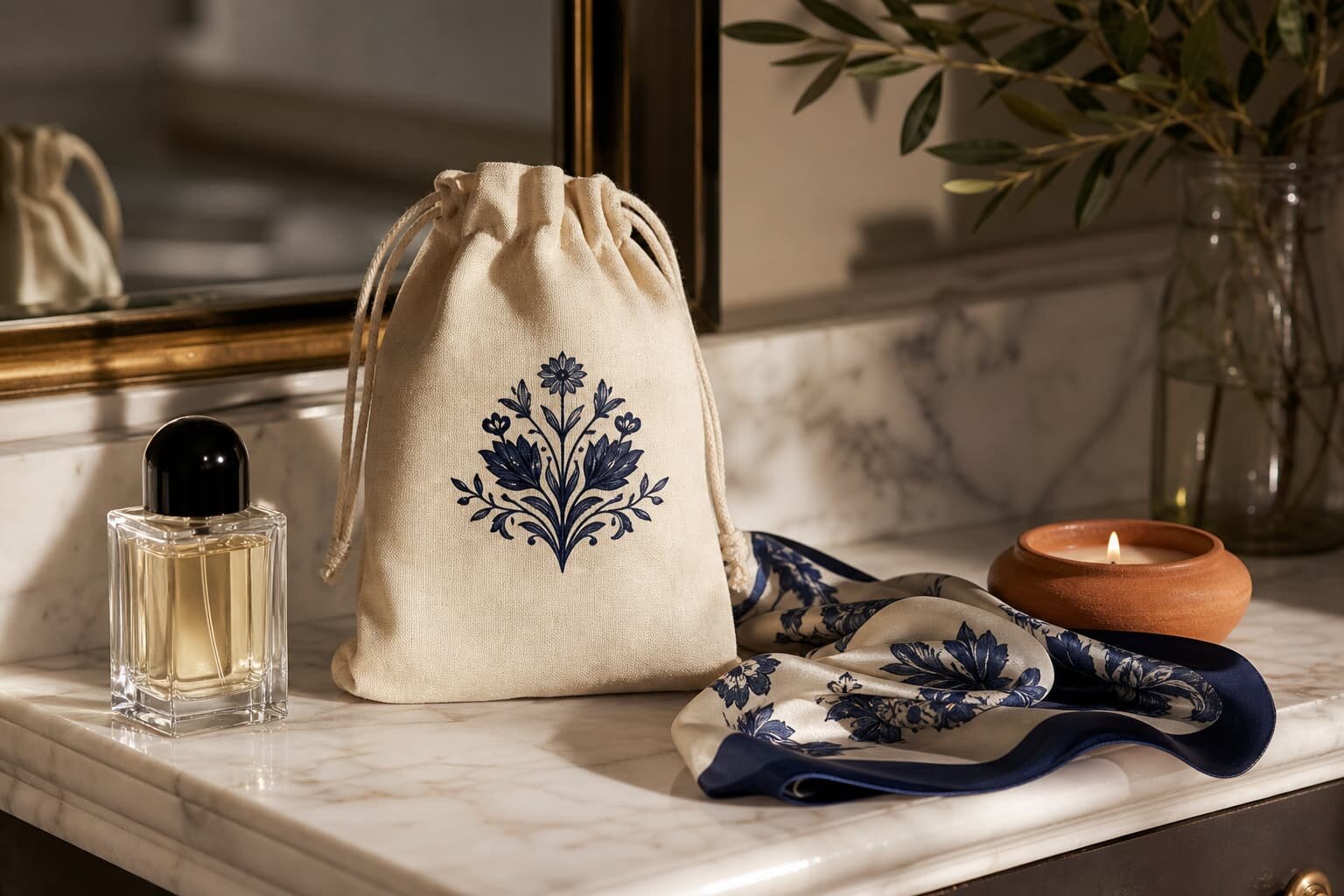
Why the cord channel fails first
A drawstring pouch cord channel pull test is not just a lab exercise. For a buyer, it is a fast way to see whether the pouch will survive real handling when the bag is filled, cinched, reopened, and shipped again. The top channel carries the load every time the user pulls the cord, so weak construction usually shows up there before the body fabric, print, or decoration fails. If you buy for cosmetics, jewelry, samples, gift sets, or retail accessories, this is the seam that decides whether the pouch feels premium or disposable.
Most failures are simple and expensive. The channel can split at the cord exit, the stitches can cut into the fold, the cord can fray where it rubs against a rough eyelet, or the top edge can twist so the pouch no longer closes evenly. None of that is obvious in a flat sample photo. You only see it when the pouch is filled and pulled the way a customer will actually use it. That is why the test should be part of the buying decision, not a late-stage complaint.
- Watch the cord exit first; that is where pressure concentrates.
- Inspect for seam grin, skipped stitches, and twisting at the top edge.
- Do not approve construction from an empty-bag pull alone.
Translate use case into a test target
The right pull target depends on what goes inside the pouch and how often the customer opens it. A pouch for a one-time gift set does not need the same channel strength as a reusable pouch for travel, promotional kits, or daily retail use. The cleanest way to brief the factory is to describe the product weight, the pouch dimensions, the closure style, and the stress you expect in use. A buyer-friendly rule is to test the pouch at two to three times the filled product weight, then repeat the opening and closing motion several times. That gives the factory a practical target without forcing you into a meaningless universal standard.
If you do not define the load, the factory will often test the empty pouch or a lightly filled sample, which hides the real weakness. For example, a 110 gsm muslin pouch can look fine empty but distort quickly once it holds a heavier accessory set. A 180 gsm canvas pouch may pass a static tug yet still fail after repeated open-close cycles because the top fold was not stabilized. The target should reflect the end use, not the easiest possible pass condition.
- Light gift pouch: test with a filled sample close to actual product weight plus a safety margin.
- Reusable retail pouch: require repeated open-close cycles after the static pull.
- Heavy sample kit: test with the exact insert, not a dummy filler of lower weight.
Choose the fabric and channel build together
The cord channel cannot be judged separately from the fabric GSM. On a lightweight pouch, 110-140 gsm cotton muslin can be enough if the goods are light and the channel is neatly folded. For standard branded pouches, 140-180 gsm cotton canvas is usually the safer range because it gives the top edge more body and helps the channel keep shape after repeated pulls. If the pouch must feel premium or hold a heavier set, 200-250 gsm gives more structure, but the extra stiffness can raise sewing difficulty and change how the pouch packs. A strong channel starts with choosing the right fabric thickness for the product, not just the best-looking cloth swatch.
Channel construction matters just as much. A narrow channel may save fabric but makes the cord bind and increases wear at the exit. A channel that is too wide can look sloppy and reduce top seam stability. Most buyers should ask for a clean folded top, a consistent seam allowance, and reinforcement at the cord exit, usually with a bartack or tight backtack. For print, simple screen print is still the most practical choice for cotton pouches with one or two colors. If the logo sits close to the channel, leave enough blank margin so the top fold does not crack the ink when the pouch is cinched.
- Use 110-140 gsm for light, low-load pouches.
- Use 140-180 gsm for standard branded retail pouches.
- Use 200-250 gsm when structure and durability matter more than soft foldability.
- Keep printed artwork away from the top fold unless the factory has already approved the layout.
Write the RFQ so the pull test is built in
If the RFQ does not mention the test, you are asking the supplier to guess your risk tolerance. The most useful RFQ includes size, fabric GSM, color, cord material, cord diameter, channel width, seam allowance, print method, label type, packing method, and the test target for the cord channel. That lets the factory quote the actual build, not a generic pouch that only looks similar. A good RFQ also tells the supplier whether the print is on the front panel, near the opening, or below the channel, because decoration placement changes the way the top edge behaves under stress.
Quote data should be itemized. Ask for body fabric, cord, sewing, print, labels, packing, sample fee, and any setup charges separately. That makes it easier to compare two suppliers that quote the same-looking pouch but build it very differently. Typical planning ranges are straightforward: sampling is often 5-10 days depending on print and trim complexity, while bulk production may sit in a 20-35 day window after approval if materials are standard and the artwork is settled. If a factory cannot break out the build, it is hard to know where the real cost and risk sit.
- State the exact pouch dimensions and finished tolerance.
- Define where the logo sits relative to the top fold and cord channel.
- Request separate line items for sample fee, tooling, print setup, and packing.
- Ask the factory to confirm the test method in writing before you approve the sample.
What to check in pre-production samples
A sample is only useful if it proves the same build you plan to buy in bulk. Ask for a pre-production sample made with the final fabric GSM, the final cord, the final print method, and the final label placement. If the pouch will be screen printed, do not accept a stitched or blank sample as a proxy. If the cord color, stopper, or side label is part of the buying decision, those details must be in the first approval round. The goal is to catch construction errors before the line starts sewing thousands of units.
Use the sample to test more than the look. Open and close the pouch several times, pull it when filled, rub the cord through the channel, and check whether the top fold keeps its shape. If the pouch will be sold as reusable, ask the factory to show you what happens after a steam press or light wash, because some cotton constructions shrink enough to tighten the channel or distort print near the opening. A good sample approval sheet should separate visual approval from performance approval so the factory knows whether the problem is aesthetic or structural.
- Check the exact print position against the top edge and side seam.
- Confirm the cord does not snag when the pouch is half-filled and overfilled.
- Verify both left and right cord exits are symmetrical.
- Keep one sealed reference sample and one pulled sample for comparison.
Compare quotes by structure, not just unit price
The lowest quote is often the one that removes the very reinforcement you need. When suppliers compete on price, they may quietly reduce GSM, simplify the channel, shorten the bartack, switch cord material, shrink the print area, or pack more units per carton than is comfortable for the product. A useful way to compare quotes is to treat the pouch as a bill of materials. Fabric often makes up the largest share, but sewing labor, cord, print, and packing can move the final price more than buyers expect. If a quote is materially lower, ask what changed in the structure before you chase the savings.
A practical sourcing workflow is to line up two or three quotes using the same spec sheet, then compare them on five points: fabric GSM, channel build, cord type, decoration method, and packing method. If one factory quotes a much lower price for the same look, it is often because one of those five points is softer than you think. This is also where MOQ logic matters. Plain dyed pouches may be feasible at a lower MOQ, while printed pouches, custom cord colors, woven labels, or special carton marking usually need more units to absorb setup costs. Make the factory explain which line item drives the MOQ instead of accepting a vague minimum.
- Check whether the quote assumes the same GSM, not just the same fabric name.
- Compare cord diameter and material, because that affects both feel and wear.
- Ask if the print setup is included or charged separately.
- Confirm whether the MOQ changes by color, size, or print version.
Use packing to protect the channel in transit
Packing can damage the very area you worked to strengthen. If a drawstring pouch is folded too tightly, stacked under heavy cartons, or packed with the cord pulled hard to one side, the channel can take a permanent crease before the customer ever sees it. For buyer QC, the right question is not only how many pieces fit in a carton, but how the pouch is folded, how the cords are secured, and whether the top edge is protected from compression. If the factory uses a very tight inner polybag or overfills the master carton, the pouch can arrive with distorted openings even if the sewing was correct.
The safer method is usually a flat fold with a controlled cord lay, inner packs by size or color, and a master carton count that does not force heavy compression. If the pouch is printed, ask whether the print faces inward or outward during packing, because a rough stack can scuff the ink near the channel. For export orders, carton marking should match the style code, size, color, and quantity so the warehouse can sample the right carton at receipt. Good packing is not glamorous, but it is part of the pull-test story because a damaged channel in transit behaves like a weak channel in production.
- Ask for a packing sketch or carton loading method before bulk approval.
- Keep the top channel flat, not twisted, inside the inner pack.
- Avoid overcompressed cartons that flatten the opening area.
- Match carton labels to size, color, and lot code for receiving control.
Set acceptance criteria before shipment
A clear pass/fail rule makes the pull test useful to procurement, quality, and the factory. At a minimum, the pouch should keep the channel intact, the cord should move smoothly, the stitches should not open, and the print should not crack in the fold area after the test. Buyers often benefit from writing a short acceptance note that names the defect classes they care about most: seam opening, cord cut-in, uneven channel width, skipped stitch, broken bartack, print cracking, and twisted closure. If a defect matters to your retail customer, it should be listed before production begins, not after the first shipment.
Do not forget inspection depth. Many buyers will use an AQL-based final inspection, but the pull test should sit on top of the visual check, not replace it. That means the factory should inspect sewing appearance, then apply the pull test to the sampled filled pouches, then document the result with photos or a short QC note. If a defect appears only after repeated cycling, ask the supplier to hold the same carton count and lot code so the issue can be traced back to the sewing line and shift. Clear acceptance criteria help both sides avoid a debate over what 'strong enough' means.
- Require no visible seam opening after the specified pull.
- Reject cords that snag, fray, or cut into the channel during test.
- Check that print remains intact at the fold and near the opening.
- Record lot code, carton number, and sample count for traceability.
A practical buyer workflow before you release the PO
The safest purchasing sequence is simple: define the end use, lock the fabric and channel spec, sample the exact build, compare at least two quotes, and approve only after the filled-sample pull test passes. This avoids the common trap where commercial teams approve a pretty sample, then operations discovers the channel was changed to save sewing time. It also gives you a better basis for reorders, because you can carry the same spec forward instead of rewriting the pouch every season. For distributors and retail buyers, that consistency matters almost as much as the unit price.
Once the PO is ready, keep the paperwork short but precise. The factory should receive the size chart, GSM target, print file, label placement, cord spec, test target, packing detail, and carton marking. If you expect repeat orders, add a note that changes to GSM, cord diameter, or channel width require written approval. That prevents quiet substitutions later. A good buying file is not long because it repeats itself; it is useful because every detail that can change the pull performance is already pinned down.
- Use the same spec sheet for sampling, quoting, and bulk approval.
- Freeze any change that affects the channel or cord performance.
- Save a sealed reference sample with the approved lot code.
- Carry the approved test note into your reorder file.
Specification comparison for buyers
| Spec decision | Recommended option | When it fits | Buyer risk to check |
|---|---|---|---|
| Channel width | 18-22 mm for small pouches, 25-30 mm for larger sizes | Keeps the cord moving without starving the opening | Too narrow jams the cord; too wide weakens the top seam |
| Top seam build | Double-needle top seam with bartack at each cord exit | Retail, cosmetics, gift, and repeat-open use | Weak backtack lets the channel split after repeated pulls |
| Cord material | Braided cotton for a soft look or braided polyester for better slip and abrasion resistance | Brand-led packaging or higher-use pouches | Soft cotton frays sooner; smooth polyester can slide if knotting is poor |
| Fabric weight | 110-140 gsm for light muslin, 140-180 gsm for standard cotton, 200-250 gsm for structured premium pouches | Match the pouch to the filled product weight | Too light shows stress marks; too heavy can raise cost and reduce flexibility |
| Decoration method | Screen print for simple logos, woven label or side label for higher durability | Most buyer programs with one to two colors | Print near the channel can crack if the top fold is too tight |
| Pull test format | Static pull plus repeated open-close cycles on a filled sample | Any pouch that will be used beyond one-time gifting | Testing empty bags hides the real stress point |
Buyer checklist before sampling
- Confirm the filled product weight, pouch size, and expected daily handling before you ask for a pull test target.
- State fabric GSM, cord diameter, channel width, seam allowance, and decoration method in the RFQ.
- Request a pre-production sample that uses the exact fabric, cord, print method, and label placement.
- Ask the factory to show the pull-test method on a filled sample, not an empty pouch.
- Specify whether you want static pull, repeated cycle testing, or both.
- Set acceptance limits for seam opening, cord cut-in, skipped stitches, and print cracking near the channel.
- Check packing method, carton count, and whether the pouches are folded in a way that bruises the channel.
- Separate sample fee, tooling fee, print setup, packing cost, and bulk unit price in the quote.
- Confirm bulk lead time after sample approval, not from PO date alone.
- Keep a comparison set from at least two suppliers so you can see where construction is being downgraded.
Factory quote questions to send
- What exact fabric GSM, weave, and shrinkage allowance are you quoting for the pouch body?
- What is the channel construction, seam allowance, and stitch density at the cord exit?
- Which pull test do you run in-house, on what sample size, and what is the pass/fail target?
- What cord material, diameter, and knot or stopper style is included in your quoted price?
- Is the decoration screen print, heat transfer, embroidery, woven label, or side label, and where is it placed relative to the channel?
- What is the MOQ per size, color, and print version, and what changes the MOQ?
- Which cost items are separate: sample fee, plate fee, label fee, carton fee, and carton marking fee?
- How many days for sample lead time, and what is the typical bulk lead time after approval?
- What inner pack and master carton configuration are you quoting, and how many pouches per carton?
- What defect level or AQL standard do you use for seam, print, cord, and packing inspection?
Quality-control points to confirm
- Measure the channel width at both ends and at the cord exit to confirm it matches the spec after sewing and pressing.
- Pull the filled pouch by the cords and watch for seam opening, stitch distortion, or cord cutting into the top fold.
- Check that the cord slides smoothly without snagging at the entrance, exit, or any bartack.
- Inspect both sides of the pouch for print cracking, especially near the top fold and the cord path.
- Verify that the knot, stopper, or end finish cannot pass through the channel or come loose under tension.
- Confirm stitch count, backtack length, and bartack placement are consistent across left and right sides.
- Check shrinkage or puckering after steam press or wash if the pouch will be sold as reusable or washable.
- Review folding and packing to make sure the channel is not crushed, creased, or permanently twisted in transit.