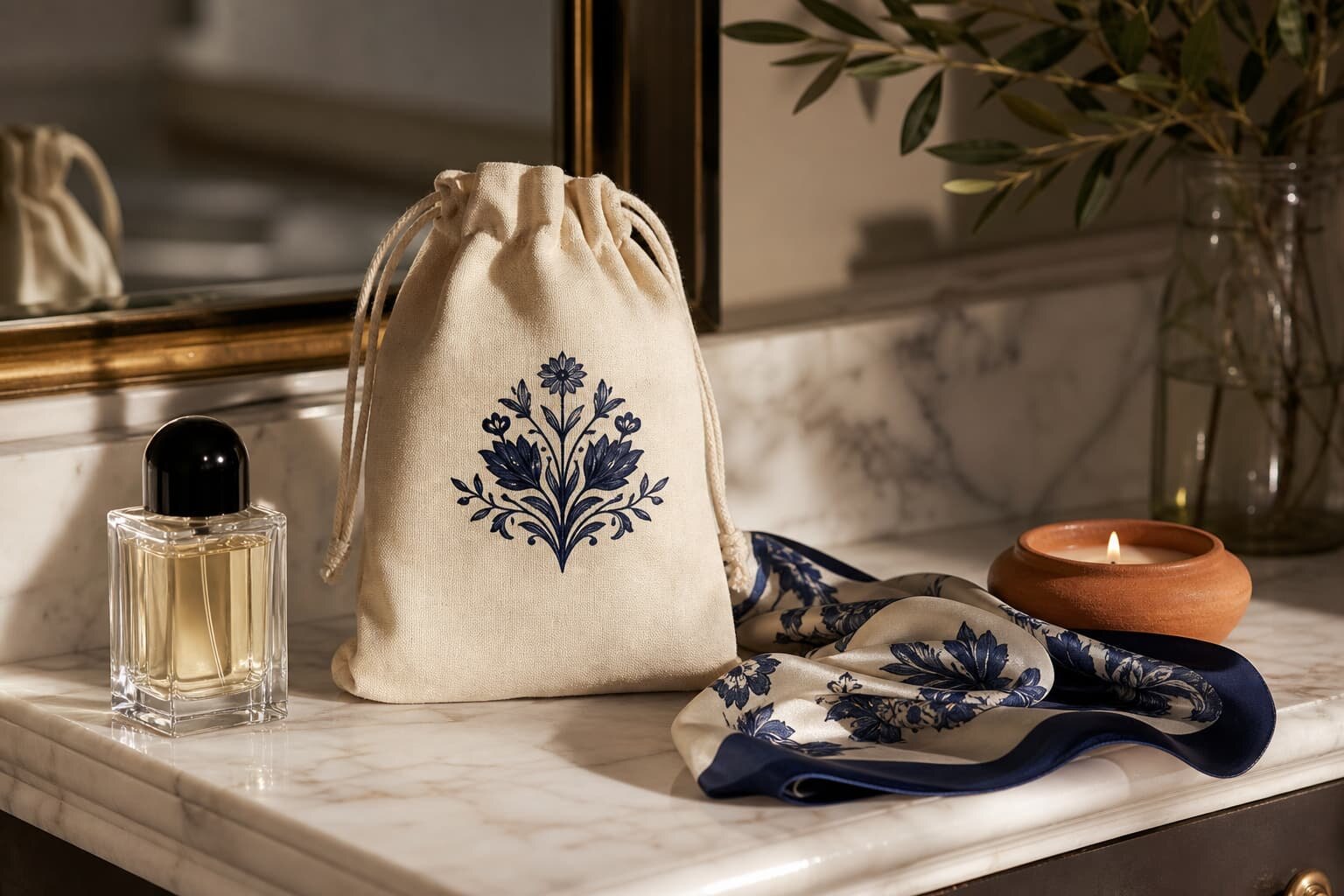
Why a Variance Risk Register Matters for Pouch Orders
A drawstring pouch bulk order usually fails through small differences, not one dramatic mistake. The pouch may be 6 mm shorter than expected, the cord may be slightly thin, the print may sit too close to the channel, or the carton may mix two similar sizes. Each issue looks minor at the factory, but it can create warehouse holds, retailer deductions, repacking cost, or brand complaints when thousands of pieces arrive.
A variance risk register is a working control sheet for those differences. It lists the specification area, expected tolerance, risk source, factory evidence required, inspection method, and decision owner. Procurement teams can use it before RFQ, during sample approval, and before shipment. The goal is not to make the pouch complicated; the goal is to stop an apparently simple textile item from being quoted, sampled, produced, and packed under four different assumptions.
- Use the register when several suppliers quote the same pouch but use different fabric GSM, cord, or packing assumptions.
- Use it when the pouch must fit a fixed item such as a bottle, jewelry box, candle, cosmetics tube, or electronics accessory.
- Use it when the order has multiple colors, retail bundle packs, barcodes, or distributor carton labels.
- Use it when repeat orders must match a previous shipment and the original supplier data is incomplete.
Start With the One Risk That Drives the Order
Before building the register, identify the main buying problem. For drawstring pouches, the biggest risk is usually fit, appearance, or packing accuracy. A pouch used for loose promotional items can tolerate more size variance than a pouch wrapping a rigid gift box. A natural cotton pouch for a trade show can allow more shade movement than a retail cosmetics pouch displayed beside printed cartons.
This main risk should decide how strict the rest of the RFQ becomes. If fit is critical, the register must define usable inside dimensions, not only flat outside dimensions. If appearance is critical, the register must control fabric shade, print color, print placement, seam straightness, and drawcord color. If packing accuracy is critical, the register must focus on SKU separation, carton marks, inner pack quantity, and barcode control.
- Fit-driven order: ask for the product or insert dimensions and test the filled pouch before bulk approval.
- Brand-driven order: approve a physical print strike-off and fabric shade standard, not only a digital artwork file.
- Warehouse-driven order: lock carton label fields, inner count, mixed-carton rules, and barcode placement before production.
- Reorder-driven order: compare the new quote against the old sample for fabric hand feel, cord thickness, and finished size.
Fabric GSM and Construction Variance
Fabric is the largest visible and tactile difference between competing pouch quotes. A supplier can quote cotton, canvas, muslin, jute, velvet, or polyester satin, but the buyer still needs the construction details. For cotton drawstring pouches, 120-140 GSM can work for light promotional packaging, 160-180 GSM is common for better retail presentation, and 200-280 GSM canvas is more suitable when the pouch should feel durable or hold heavier contents. The right option depends on the product weight, brand positioning, printing method, and target retail price.
The risk register should record fabric type, GSM range, weave feel, shrinkage expectation, color method, and whether the pouch is made from greige, bleached, dyed, washed, or pre-shrunk material. A low quote may come from lower GSM, a looser weave, or a substitute fabric that looks acceptable in a photo but collapses in hand. For importers and distributors, this is where quote comparison often goes wrong: the unit price is compared before the fabric basis is made equal.
- Quote line to request: fabric composition, GSM, weave or fabric name, color process, and allowed GSM variance.
- Sample check: weigh the pouch, measure fabric feel against the approved sample, and photograph fabric close-up with scale.
- Common mistake: approving a lab dip color but not confirming that the same dye lot will be used for all bulk panels.
- Acceptance note: for natural cotton, small shade flecks may be acceptable if stated; for dyed retail pouches, shade bands should be controlled by lot.
Finished Size, Usable Space, and Cutting Tolerance
A pouch size written as 10 x 15 cm is not enough for a serious RFQ. The factory may read it as cutting size, flat finished outside size, or approximate catalog size. The usable internal area can be smaller after side seams, bottom seam, drawcord channel, and fabric thickness. For small pouches, a few millimeters can decide whether a jewelry card, soap bar, small jar, or charging cable fits cleanly.
The register should separate outside width, outside height, usable inside width, usable inside height below the channel, channel depth, and tolerance. For very small pouches, +/-5 mm may already be a meaningful variance. For medium and larger pouches, +/-8 mm may be practical depending on fabric and sewing method. If the pouch must hold a fixed product, send the product dimensions or a dummy insert and require a fit photo or short video before bulk cutting.
- Define whether dimensions are measured flat, empty, unwashed, washed, pressed, or filled.
- Confirm if the height includes the drawcord channel or only the usable bag body.
- Ask the factory to measure at least 10 samples during production and show min, max, and average.
- For rigid inserts, test the pouch after the drawcord is pulled because the opening can become the tightest point.
Print Method and Logo Placement Risks
Most drawstring pouch bulk order disputes involve print expectations that were not written clearly. Screen printing is usually the practical choice for simple one-color or two-color logos on cotton and canvas. Heat transfer can handle gradients and fine details but may change hand feel and durability. Embroidery can look premium on heavier canvas but is usually poor value on thin cotton and may distort small pouches. Woven labels or side labels avoid print cracking but need placement and seam planning.
The risk register should record print method, artwork size, color standard, placement tolerance, print hand feel, curing requirement, and whether the logo is printed before or after sewing. Printing near the drawcord channel creates extra risk because fabric folds and tension can cause distortion. If the pouch is natural cotton, the base fabric color affects print appearance; a white ink on natural cotton is not the same as white ink on bleached cotton.
- Request a print strike-off on actual bulk fabric, not only on a similar stock cloth.
- Set placement tolerance from pouch edge and bottom, such as +/-3 mm for small pouches where practical.
- Check logo scale after the pouch is filled, because curved fabric can make a centered logo appear low or tilted.
- Ask whether print setup charges are per color, per design, per size, or per side.
Cord, Channel, and Closure Function
The drawstring is not just a trim. It controls user experience and can expose weak sewing. Cotton cord gives a natural look and works well with cotton and canvas pouches, but it can fray or vary in thickness. Polyester cord may slide more smoothly and resist moisture, but it changes the product feel. Waxed cord can look more premium for jewelry or cosmetics, but it may not fit every sustainability or texture requirement.
Your register should define cord material, diameter, color, length before knotting, finished length after knotting, knot style, and whether one-side or two-side draw closure is required. The channel opening should be reinforced enough to avoid tearing when the cord is pulled. Cord variance often appears late because factories may source cord separately after fabric approval. If the buyer does not lock it, the bulk cord can be thinner, shinier, shorter, or a slightly different shade from the sample.
- Check that the cord cannot disappear into the channel after repeated opening and closing.
- Test the pouch with the real product weight and pull the cord several times before approving bulk.
- Confirm whether cord ends are knotted, heat sealed, metal tipped, or left raw.
- Record if the cord color must match fabric, logo, label, or a separate Pantone reference.
MOQ Logic and Quote Comparison
MOQ for drawstring pouches is often misunderstood because it is not controlled by one factor. The real MOQ may depend on fabric color, fabric purchase roll size, dyeing minimum, print setup, label production, cord color, and packing style. A supplier may offer a low total MOQ for stock natural cotton but require higher quantities for custom dyed fabric or multiple logo versions. If you do not ask for MOQ by driver, you may receive quotes that cannot be compared fairly.
When building the variance risk register, include a quote data section. Ask each factory to show what is included in the unit price and what is charged separately. This does not mean every supplier must reveal their internal cost structure, but they should clarify whether the quote includes sample fee, print setup, custom label, individual polybag, barcode label, export carton, inland freight, and inspection support. Without this, the cheapest quote may become the most expensive after artwork, packing, and reorder corrections.
- Separate MOQ by pouch size, fabric color, print design, and packing format.
- Ask if overage or shortage tolerance applies, for example whether +/-3% quantity is expected or not allowed.
- Check if a lower MOQ uses stock fabric and whether stock fabric can be repeated in the next order.
- Compare quotes using the same GSM, cord, print area, packing count, and inspection requirement.
Sample Approval and Pre-Production Evidence
A nice sales sample is not enough for bulk approval. It may be made by a sample worker using available fabric, hand-cut panels, substitute cord, or a different print process. For a bulk order, the useful sample is the one that proves the production path. A pre-production sample should use actual fabric, actual cord, final logo method, final label, final sewing construction, and final packing style where possible.
The risk register should state what evidence is required before cutting bulk fabric. For a low-risk promotional order, photos with ruler and print close-up may be enough. For a retail order, you may need a physical pre-production sample, print strike-off, fabric shade approval, cord sample, packing sample, and carton mark approval. The buyer should also record who approved each item and whether approval applies only to the current PO.
- Require front, back, inside, seam, channel, cord, print, and packed unit photos.
- Ask for size measurement photos with a ruler placed flat along width and height.
- Keep one sealed approval sample at the factory and one with the buyer if timing allows.
- Do not approve bulk based only on a rendered mockup, catalog photo, or digital artwork proof.
Packing, Carton Marks, and Shipment Variance
Packing is where many pouch orders become operationally expensive. A pouch may be correct, but if inner quantities are wrong, carton labels are unclear, or colors are mixed without a map, the warehouse must sort cartons manually. Retail buyers may also need barcodes, hang tags, paper belly bands, FSC paper cards, or plastic-free packing. These requirements affect labor, material cost, lead time, and carton dimensions.
Put packing variance into the register early. Define folding method, unit packing, inner bag count, carton quantity, carton mark format, gross weight target, carton size, mixed-carton rules, and pallet or container loading needs. If pouches are packed too tightly, cords can crease and fabric can wrinkle. If cartons are too large, freight volume increases. If the carton mark does not match the PO, SKU, color, size, and destination, receiving teams may treat the shipment as non-compliant.
- Approve a packed sample photo before mass packing starts, not after cartons are sealed.
- Use unique SKU codes for similar colors such as natural, ivory, beige, and oatmeal.
- Confirm whether individual polybags are required, optional, restricted, or replaced by paper bands.
- Ask for carton label photos and carton count summary before final shipment booking.
Lead Time Risks Hidden Inside the Production Schedule
Lead time should not be written as a single vague number. For drawstring pouches, the schedule may include fabric sourcing, dyeing, fabric inspection, cutting, printing, curing, sewing, trimming, packing, inspection, and export booking. Custom dyed fabric, multiple print colors, small batch sorting, barcode application, or special packing can add days even when the sewing itself is simple.
The risk register should define what starts the production clock. Some factories count from deposit, some from artwork confirmation, and others from pre-production sample approval or material arrival. If your launch date is fixed, require a milestone schedule with decision dates. Late buyer approval of artwork, carton marks, or packing method can create the same delay as a factory production problem, so the register should show both factory and buyer responsibilities.
- Ask for separate timing for sampling, material preparation, bulk production, inspection, and packing.
- Confirm whether logo print curing time is included before packing to avoid sticking or odor issues.
- Check whether peak season, holidays, or fabric dyeing queue affects the quoted schedule.
- Set a cut-off date for artwork, barcode, label, and carton mark approval.
Specification comparison for buyers
| Spec decision | Recommended option | When it fits | Buyer risk to check |
|---|---|---|---|
| Fabric weight | 120-180 GSM cotton for light retail, 200-280 GSM canvas for premium or heavier contents | Jewelry, cosmetics, gift sets, accessories, subscription kits | Supplier may quote a lower GSM or looser weave that passes photos but feels weak in hand |
| Size tolerance | +/-5 mm for small pouches, +/-8 mm for medium, agreed after wash or pressing status | Orders where the pouch must hold a fixed box, bottle, or insert | Cutting shrinkage, seam allowance, and drawcord channel depth can reduce usable space |
| Print method | Screen print for solid logos, heat transfer for fine gradients, embroidery only on heavier fabric | Brand logos, event packs, gift packaging, retail bundles | Ink hand feel, cracking after drawstring tension, registration drift, and color mismatch |
| Cord and closure | Matching cotton cord with tested length and knot style; waxed or polyester cord only if specified | Reusable gift pouch, cosmetics pouch, or retail pouch with repeated opening | Cord may be too short after knotting, shed fiber, bleed color, or slip inside the channel |
| Packing format | Flat packed by inner polybag quantity, carton marked by SKU, color, size, and PO | Multi-SKU distributor or retail replenishment order | Mixed cartons, crushed drawcords, wrong bundle count, or carton marks not matching warehouse ASN |
| Sampling stage | Pre-production sample with actual fabric, actual cord, final print, and final packing method | Any order above trial quantity or with brand color control | Approval sample made with substitute fabric can hide bulk shrinkage, color, and print adhesion risks |
Buyer checklist before sampling
- Define the pouch application, contents weight, retail channel, and whether the pouch is decorative packaging or a reusable product.
- Lock finished size, usable inside size, drawcord channel depth, seam allowance, and tolerance in millimeters before asking for a bulk quote.
- State fabric type, GSM, color method, shrinkage expectation, and whether the fabric must be pre-shrunk, washed, or unwashed.
- Specify print method, logo size, Pantone or physical color standard, print placement tolerance, and whether both sides are printed.
- Confirm cord material, diameter, length after knotting, color fastness, knot style, and whether the cord must match fabric or logo color.
- Request MOQ logic by fabric color, print design, size, and packing method instead of accepting one combined MOQ number.
- Ask for sample photos with ruler, weight check, inside measurement, seam close-up, print close-up, and packed carton view.
- Include packing details: unit fold, inner quantity, polybag or paper band, carton quantity, carton mark, barcode, and pallet preference if needed.
- Set acceptance criteria for size, print position, fabric shade, sewing defects, stains, cord function, and carton count variance.
- Require quote data to separate fabric, print setup, cord, label, packing, testing, inland freight, export carton, and sample costs where possible.
Factory quote questions to send
- Which fabric construction and GSM are you quoting, and what is the acceptable GSM variance in bulk?
- Is the quoted size the finished outside size or the usable inside size after sewing and cord channel formation?
- What is the MOQ by fabric color, pouch size, print design, and packing style?
- Will the pre-production sample use the same bulk fabric roll, cord, ink, label, and packing method?
- What print method are you quoting, and what are the limits for fine lines, color matching, and placement tolerance?
- How long is the drawcord before and after knotting, and how will you prevent the cord from pulling back into the channel?
- What packing count per inner bag and export carton is included in the quote, and can carton marks follow our warehouse format?
- What lead time starts after deposit, artwork approval, sample approval, or material arrival?
- Which production variances are included in your normal tolerance, and which variances require written buyer approval before shipment?
- Can you provide an inspection report with size measurements, GSM check, print adhesion check, color comparison, carton count, and defect photos?
Quality-control points to confirm
- Measure finished width, height, channel depth, and usable inside space on pulled samples from the production line, not only from a retained approval sample.
- Weigh fabric or verify GSM from roll records, especially when comparing quotes that look unusually low.
- Check print adhesion by rub test, tape pull where suitable, and drawstring tension around the printed area if the logo sits near the channel.
- Inspect cord length, knot security, cord color transfer, and whether the cord slides smoothly without fraying the channel seam.
- Review seam strength at side seams, bottom corners, and channel openings because those points carry most stress during filling and closing.
- Compare dyed fabric and printed logo color under consistent light, using the approved standard rather than mobile phone photos.
- Confirm unit packing count, carton quantity, carton dimensions, gross weight, and carton mark content before final sealing.
- Record any accepted variance with date, approver, quantity affected, and whether it applies only to this PO or future reorders.