What Actually Builds the Unit Cost
A drawstring backpack unit cost is not a single factory number. It is the sum of fabric, cutting, sewing, decoration, accessories, packing, inspection, and factory overhead, plus the margin that covers waste and production risk. If two suppliers quote different numbers on the same bag, the gap usually comes from one of those items being excluded, downgraded, or assumed differently. That is why a good RFQ starts with a spec sheet, not a target price. The more exact the spec, the easier it is to compare offers on the same basis.
For this product, the biggest cost swings usually come from body fabric, print method, and packing format. A basic promotional bag can be built from lighter polyester and a simple one-color print, while a retail bag may need heavier fabric, better stitching, and more controlled packing. The buyer should ask the supplier to show the quote as a line breakdown, even if the final quotation is presented as one unit price. That gives you a way to see where the supplier is saving money and where a hidden downgrade might sit.
- Ask for a cost split across fabric, labor, print, accessories, packing, and overhead.
- Compare only quotes that use the same finished size, fabric spec, and decoration method.
- Treat any unusually low quote as a prompt to check what was left out, not as a win.
Fabric Choice Sets the Cost Floor
Fabric usually sets the lowest realistic price point for a drawstring backpack. For promotional programs, 210D polyester is common because it is light, stable, and easy to print. For stronger carry or a more substantial hand feel, 420D or 600D polyester usually raises both material and sewing cost. Cotton canvas is often described by ounces or GSM rather than denier, and 10 to 12 oz canvas can give a more premium look, but it also raises cutting, stitching, and shrinkage control requirements. If a supplier quotes 210D against 12 oz canvas as if they are equivalent, the comparison is not useful.
The buyer should also look at coating, finish, and color control. A coated polyester may hold shape better but can affect print absorption and the feel of the finished bag. A natural canvas or cotton fabric may need pre-shrink consideration, especially if the artwork must stay aligned after handling. Fabric width matters too, because narrow rolls create more waste in cutting. In practice, a slightly heavier fabric with a stable width can sometimes be the better commercial choice if it reduces spoilage and complaint risk downstream.
- Confirm whether the supplier is quoting denier, oz, or GSM and keep the units consistent.
- Ask if the fabric is stock dyed, custom dyed, coated, or washed, because each one changes cost and MOQ.
- Check shrinkage, colorfastness, and cutting waste before you approve the final fabric choice.
Construction Details That Move Labor Cost
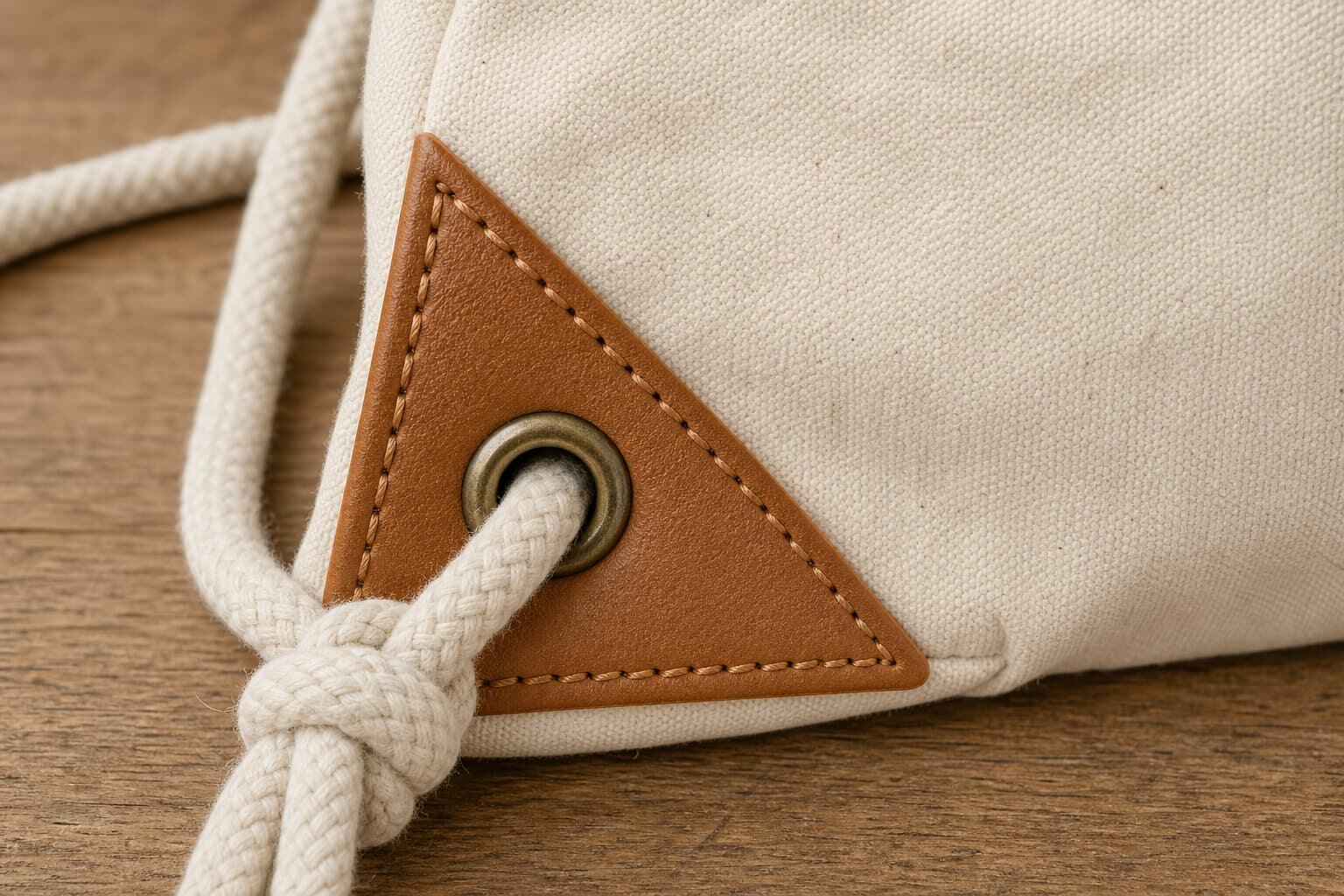
Drawstring backpacks look simple, but the sewing path changes quickly when you add reinforcement, extra panels, linings, pockets, or a better closure finish. A basic bag with a single body panel, simple top channel, and standard cord is much faster to make than a version with double-stitched corners, metal eyelets, heavier cord, or a front zip pocket. Even small construction choices matter because they change the number of seam operations and the chance of rework. A buyer who wants a tighter cost should review the bag panel layout before asking for price.
Stress points deserve special attention. The cord exit point, top channel, bottom corners, and any accessory attachment area are where bags usually fail in use. If the bag will carry sports kit, school items, or trade show swag, bar-tacks and reinforced seams are worth the extra labor. If the order is a low-cost promotion, you may decide to reduce reinforcement, but that should be a conscious tradeoff, not an accidental omission. Ask the factory to state which seams are reinforced, how many stitches are used, and whether both sides of the bag are built the same way.
- Keep the panel count low if you need a lower sewing cost and cleaner production flow.
- Specify reinforcement at the corners and cord exits when the bag will face repeated load cycles.
- Confirm cord material, stopper style, and end finishing so the quote covers the real build.
Print Method and Artwork Setup
Decoration is one of the easiest places for a quote to drift. Screen print is usually the most efficient option for a simple logo in one or two colors, especially on larger runs. Heat transfer can handle more complex artwork or smaller runs, but it often needs more setup control and may cost more per piece. Embroidery or a woven patch can raise the perceived value of the bag, yet they also add labor and may force a slower line speed. The right choice depends on the brand position, not just on the logo file. A buyer should decide early whether the print is meant to be durable, premium, or simply functional for promotion.
To keep quotes clean, provide the exact print area, number of colors, artwork format, and placement reference. A logo placed near a seam, cord channel, or curved panel can create extra registration risk and waste. If your design uses small text, gradients, or multiple colors, ask the supplier how they will separate colors and whether the result will still read clearly on the selected fabric. A cheap quote may exclude a second print position, extra screens, or a cleanup pass after curing. Those are small details on paper but expensive ones on the line.
- Provide vector artwork and call out Pantone references if color matching matters.
- State whether the logo must sit clear of seams, eyelets, or the cord channel.
- Ask whether setup fees, screen charges, or patch tooling are included in the quote.
MOQ Logic and Why Quotes Change Fast
MOQ for drawstring backpacks is rarely driven by the bag body alone. It is usually influenced by fabric color availability, print setup, accessory sourcing, and packing method. A stock black or navy bag with one simple print can often run at a lower minimum than a custom color bag with a woven label, special stopper, and retail polybag. If the supplier needs to buy a new fabric lot or create a dedicated print screen, the MOQ rises because the fixed setup cost must be spread across more units. That is why one supplier may quote a small order, while another will push for a larger run before giving a realistic unit cost.
The buyer should separate minimums by element. A factory may have a low MOQ for the bag body but a higher MOQ for a custom accessory or a color-specific print. This is where procurement teams often lose time: they ask for one global MOQ and get a vague answer. A better approach is to ask for MOQ per fabric color, per print color, and per packing version. Once you know which features are driving the floor, you can decide whether to simplify the spec or accept the higher cost as part of the brand position.
- Ask for MOQ by bag color, print color, and accessory type instead of one blended number.
- Check whether stock fabric lowers MOQ or whether the factory still needs a full cut-and-sew setup.
- If the order is small, simplify the artwork, packing, and label mix to protect the unit cost.
Sampling and Approval Checks Before Bulk
Sampling is where a buyer protects the unit cost from becoming a quality problem later. A sample should verify the real fabric weight or feel, the size after sewing, the cord length, the seam quality, the print position, and the final look of the bag when it is cinched closed. If the sample is only a visual reference and does not match the intended fabric or decoration method, it will not help you control the bulk order. For that reason, ask the factory whether the sample is made from production materials or from substitute materials. The answer matters when you compare prices because a lower sample cost can hide a mismatch in the bulk build.
The approval step should produce one locked reference: a signed sample, a sealed spec sheet, or both. Without that, production teams may rely on interpretation, which is where complaints start. A buyer should check not just the front panel but also the inside seams, cord ends, and the fold of the bag after packaging. If the bag includes a woven label, printed care note, or barcode sticker, those items should be visible on the sample as well. Every open detail during sampling usually becomes a cost issue during bulk.
- Check dimensions, fabric weight, cord length, seam density, and print placement on the sample.
- Approve the sample only after you confirm the exact fabric and decoration process used.
- Keep a signed golden sample or sealed spec sheet so production has one clear reference.
Packing, Cartons, and Export Readiness
Packing is part of unit cost even when buyers think of it as a logistics detail. A bulk-packed drawstring backpack can be folded fast and loaded efficiently, while an individual polybag, insert card, size sticker, or barcode label adds labor and consumables. Retail buyers often need a cleaner pack presentation, but distributors and importers sometimes pay more than they need to if the quote includes shelf-ready pack-out by default. Ask the factory to specify exactly how each bag is folded, whether the bag goes into a polybag, and whether the carton pack count is fixed or adjustable.
Carton size affects freight efficiency and also influences the damage risk in transit. If the bag is bulky because of thicker fabric or a stitched patch, the carton may need a different fill ratio to avoid crushing the shape. The buyer should request master carton dimensions, gross weight, and carton marks before approval. This is especially important if the bags are being shipped with mixed SKUs or color assortments. Packing errors do not only create cosmetic issues; they can also create count mismatches, customs questions, and receiving delays at destination.
- Specify bulk pack or retail pack before the quote is issued.
- Ask for carton count, carton size, gross weight, and outer mark requirements.
- Confirm whether barcode stickers, insert cards, or desiccant are included in the quote.
Lead Time: What Happens in Each Stage
Lead time should be broken into stages, not treated as one vague promise. A standard project may move through artwork confirmation, sample making, fabric booking, bulk cutting, printing, sewing, inspection, packing, and shipment booking. Each stage can create delay if a detail is unclear. For example, a small change to print placement can force a new layout check, and a custom fabric color can add extra sourcing time. When a supplier gives a short lead time without naming the starting point, ask what event actually triggers production: deposit, final artwork approval, sample approval, or raw material receipt.
Seasonality matters as much as the spec. Even a simple drawstring backpack can take longer during peak shopping seasons if the line is busy or if the factory needs to wait on print screens, labels, or fabric dyeing. A buyer can protect the schedule by approving the sample early, keeping artwork final, and avoiding last-minute changes to packing or carton marks. If your launch date is fixed, add buffer time between approval and shipping rather than assuming the fastest quote will be the best operational choice.
- Ask for lead time by stage: sample, materials, bulk production, inspection, and packing.
- Confirm the exact point when the clock starts so the schedule is not ambiguous.
- Leave room for seasonal load, artwork approval, and packing changes.
How to Compare Quotes Without Missing Hidden Costs
The cleanest way to compare quotes is to line up the same spec against the same inclusions. If one supplier includes screen setup, carton marks, and polybags while another does not, the lower number is not really lower. Hidden costs on drawstring backpacks often sit in sample charges, print setup, label tooling, packing changes, special color matching, and order size adjustments. Ask each factory to state what is excluded, not just what is included. That simple question exposes whether the quote is ready for procurement review or still at a rough estimate stage.
A good comparison also looks at commercial risk, not just unit cost. Does the supplier explain where shrinkage, print alignment, or fabric color variation might happen? Do they show a realistic sample process and a clear approval flow? Suppliers who communicate the production risks clearly often create fewer surprises later, even if their quote is not the absolute lowest. For buyer teams, the real target is not the cheapest quote on paper. It is the best landed result for the use case, with the least chance of rework, claims, or delayed launch.
- Compare only quotes that share the same size, fabric, print, packing, and delivery term.
- Ask for a list of exclusions so setup fees and packing extras do not appear later.
- Score suppliers on clarity, sample accuracy, and production realism, not only on unit price.
The RFQ Data Pack That Produces Clean Pricing
If you want a useful drawstring backpack quote, send a complete RFQ data pack. That means the finished size, fabric spec, color, print method, print area, accessory list, packing format, and target quantity split. Add reference photos if you want the factory to match a particular look or construction style. When buyers leave out even one of these points, suppliers fill the gap with assumptions, and the quotes come back too far apart to compare. The goal is not to make the supplier guess less for the sake of speed; it is to reduce rework and shorten the pricing loop.
Procurement teams often improve results simply by asking for a spec confirmation before pricing begins. A one-page buyer brief with a technical sketch can prevent days of back-and-forth. It also makes internal review easier because sourcing, marketing, and quality can all sign off on the same document. For a product like a drawstring backpack, where the design looks simple but the quote changes with each detail, a strong RFQ is the most effective cost-control tool you have.
- Include size, fabric, color, print method, print area, and pack-out in the RFQ.
- Attach a visual reference or technical sketch so the factory does not interpret the design loosely.
- Ask the supplier to confirm the spec in writing before the quote is finalized.
Specification comparison for buyers
| Spec decision | Recommended option | When it fits | Buyer risk to check |
|---|---|---|---|
| Body fabric | 210D polyester for promo volume, 420D or 600D polyester for stronger carry, 10 to 12 oz cotton canvas for a premium hand feel | Choose 210D for giveaways and tight budgets, heavier polyester for school or sport use, and canvas for retail or brand programs | Check whether the supplier quoted denier, oz, or GSM on the same basis and whether the fabric weight matches the target use |
| Decoration method | One-color screen print for simple logos, heat transfer for short runs with more colors, woven patch or embroidery for a premium look | Pick screen print when the logo is flat and repeat volume is high, transfer when artwork changes often, and patch or embroidery when branding must feel higher value | Ask what setup, color, and placement charges are included so the quote does not hide artwork costs |
| Reinforcement | Bar-tacks at cord exits and stress points, plus double stitching on the top channel | Use this on retail, school, or sports bags that will be loaded and pulled daily | Confirm the stitch count, seam allowance, and whether corners are reinforced on both sides |
| Packing format | Bulk packed in cartons for the lowest handling cost, or folded polybagged units with size stickers for retail channels | Bulk pack suits importers and distributors, while retail packs fit shelf-ready programs | Check carton count, fold method, barcode labels, and whether insert cards or hang tags are included |
Buyer checklist before sampling
- Lock the finished size, fabric weight, and color before asking for price.
- State the print method, artwork count, print area, and color count on the RFQ.
- Confirm cord type, stopper style, eyelets, and reinforcement points.
- Ask for a sample based on the exact fabric and decoration method you want to buy.
- Specify packing format, polybag need, carton count, and carton marks.
- Request the supplier to separate sample fee, setup fee, and bulk unit cost.
- Define acceptable tolerances for size, color, print placement, and stitch quality.
- Ask when lead time starts: artwork approval, deposit, fabric booking, or sample sign-off.
Factory quote questions to send
- What exact fabric spec is included: denier, oz, GSM, coating, and finish?
- How many print colors and print positions are included in the quoted unit cost?
- What MOQ applies per color, per artwork, and per packing version?
- Are cord, stopper, eyelets, and reinforcement included or charged separately?
- What is the sample charge, and is it refundable against bulk order?
- What packing method is quoted: bulk, individual polybag, or retail pack?
- What overage, wastage, or under-run allowance is built into the quote?
- What is excluded from the price, such as screen setup, carton marks, or freight paperwork?
- What lead time applies after sample approval and deposit?
- Can you share the same spec sheet used to calculate the quote?
Quality-control points to confirm
- Fabric weight and hand feel match the approved sample or agreed spec.
- Finished dimensions are within tolerance for width, height, and strap length.
- Cord channels run smoothly, and stoppers move without snagging.
- Bar-tacks, corner reinforcement, and top seams are even and secure.
- Print color, placement, and coverage match the approved artwork standard.
- No loose threads, oil marks, broken stitches, or fabric damage appear on the bag body.
- Packing count, fold direction, polybag content, and carton labels are correct.
- Cartons are dry, clean, and closed properly for export handling.